
Cliff Café and Tower House by TAO: A Monolithic Retreat at the Edge of the Sea
Cliff Café and Tower House merges concrete minimalism with dramatic seascapes, offering a contemplative retreat between earth, sky, and sea.


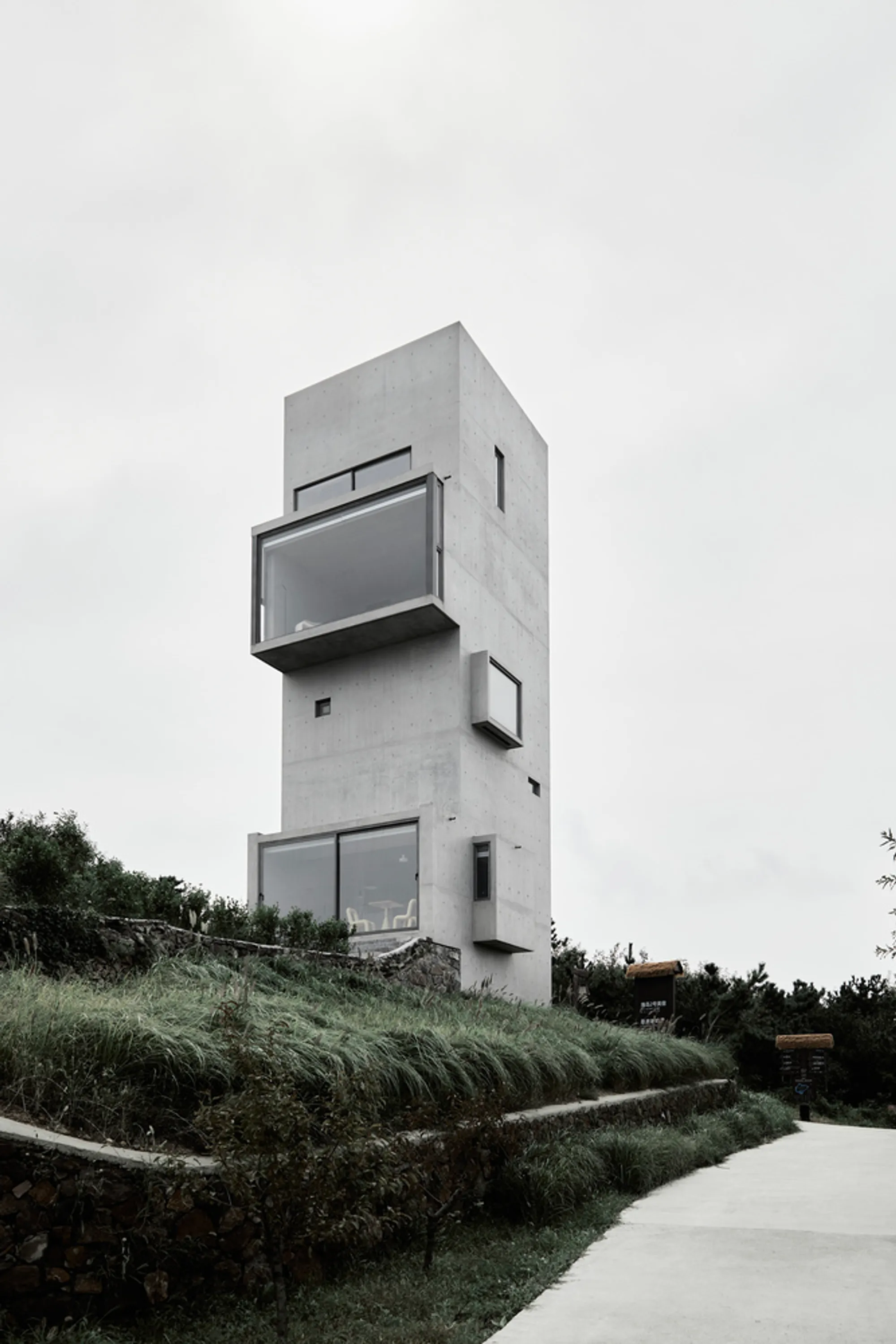
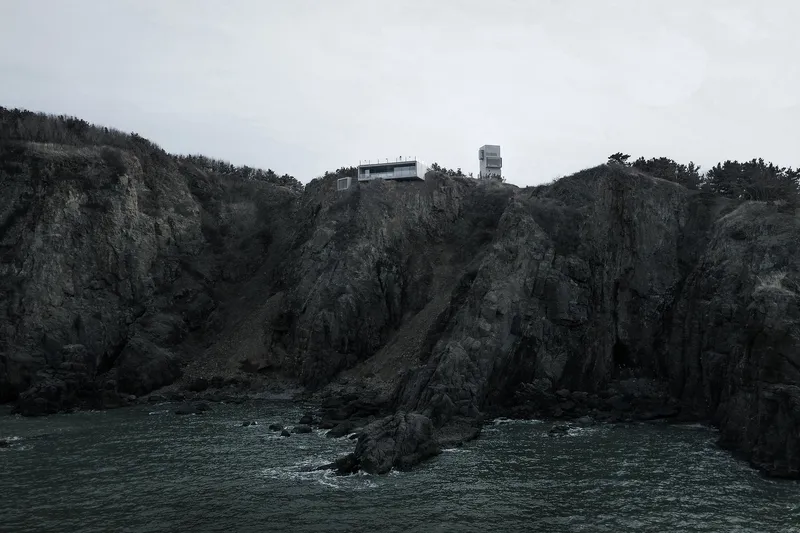
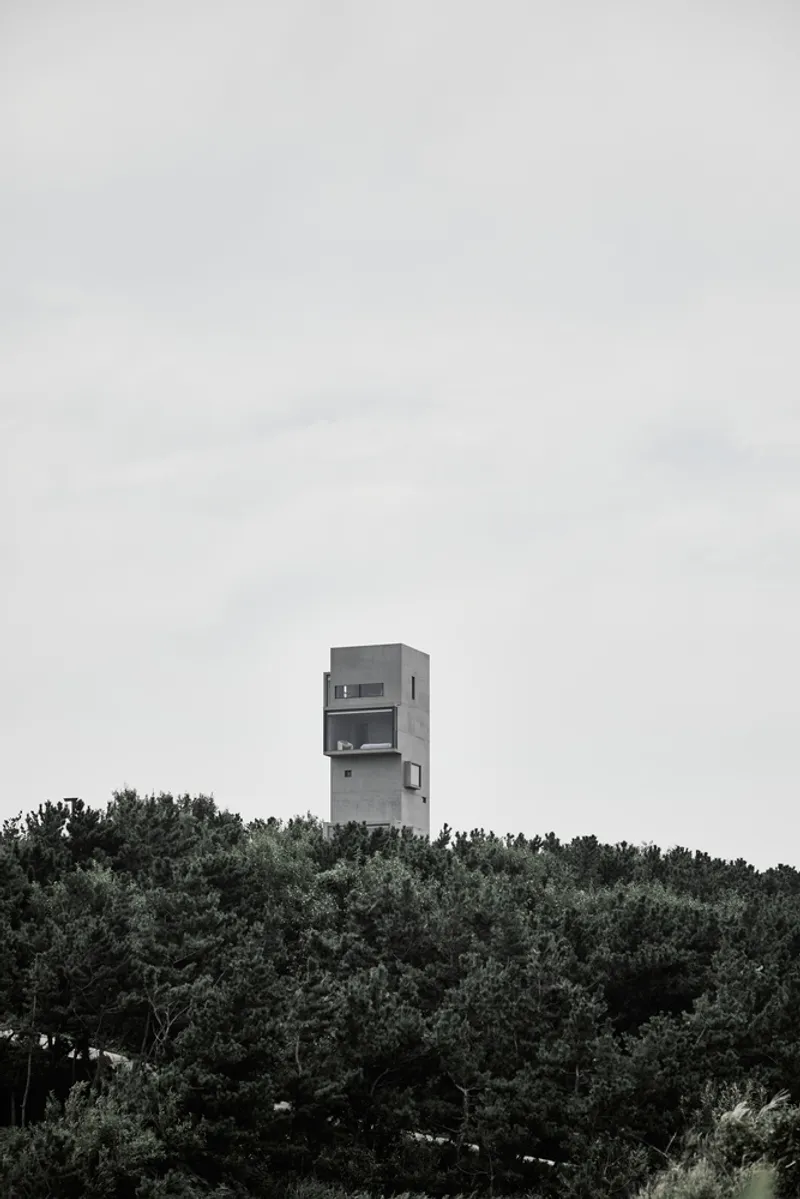
Perched dramatically on the edge of a cliff on Jiming Island in Weihai, China, the Cliff Café and Tower House by TAO - Trace Architecture Office is a poetic response to nature's grandeur. Designed by lead architect Li Hua, this minimalist concrete structure merges seamlessly with its rugged surroundings, blurring the lines between architecture and landscape. Completed in 2022 and spanning 581 square meters, the project captures the elemental tension between land, sea, and sky.
A Place Between Earth and Horizon
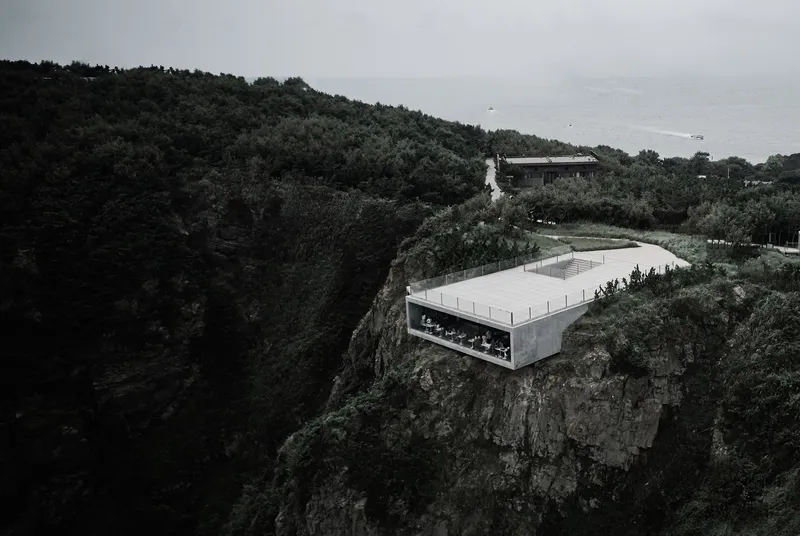
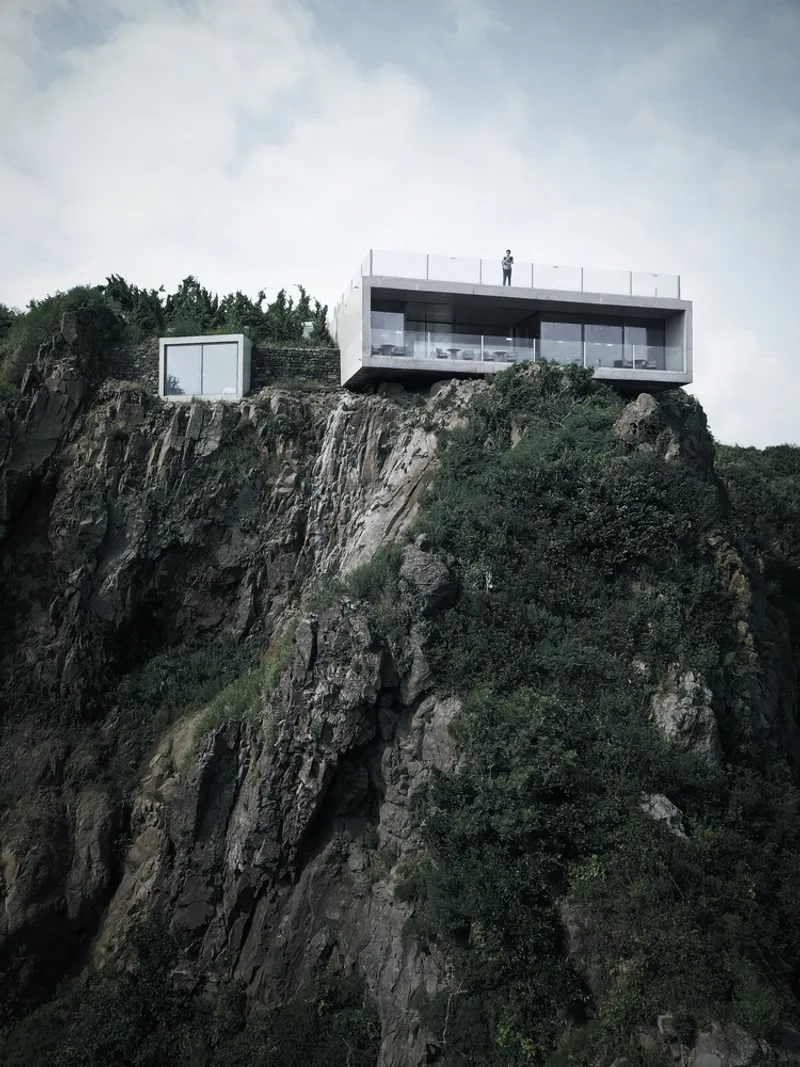
Jiming Island is isolated in the Yellow Sea, far removed from the bustle of city life. Its dramatic coastline, jagged cliffs, and sweeping horizons provide a stunning backdrop for this architecture that defies convention. The Cliff Café and Tower House sits like a sculptural outcrop carved from the mountain itself. On one side, it is rooted into the bedrock, with the roof mimicking the natural slope of the terrain, while the other side cantilevers boldly into the void, evoking a sensation of both weight and weightlessness.
This duality—a constant interplay between gravity and levitation, concealment and exposure—defines the project. The structure is both grounded and airborne, anchoring visitors to the earth while offering an escape toward the infinite expanse of sea and sky.
Journey Through Light and Stone
Visitors descend a series of stairs to enter the building, as though venturing into the mountain’s core. The raw concrete walls, massive and solemn, evoke a cave-like experience. Yet as one approaches the building’s furthest cantilevered edge, the architectural heaviness dissolves into openness. Expansive sea views emerge suddenly, offering a moment of awe and serenity—heightened by a void cut into the floor that reveals the towering drop below.
This visceral spatial sequence—from darkness to light, from compression to expansion—is a recurring narrative throughout the project.
A Café That Frames the Horizon
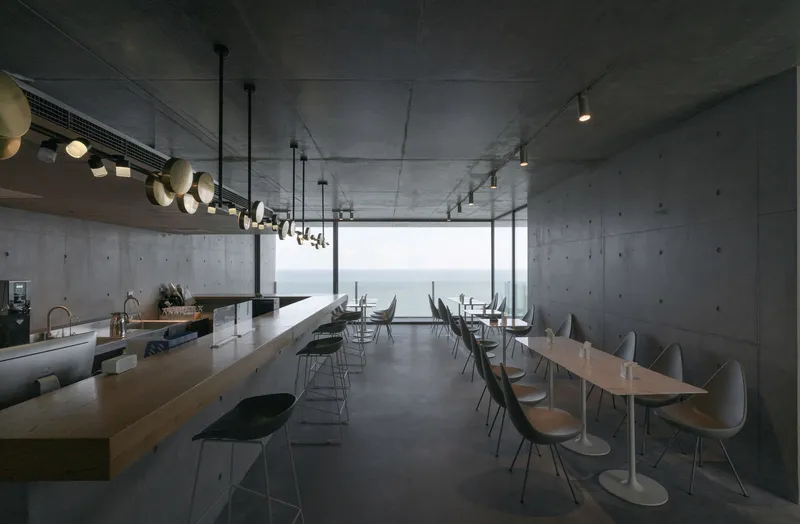
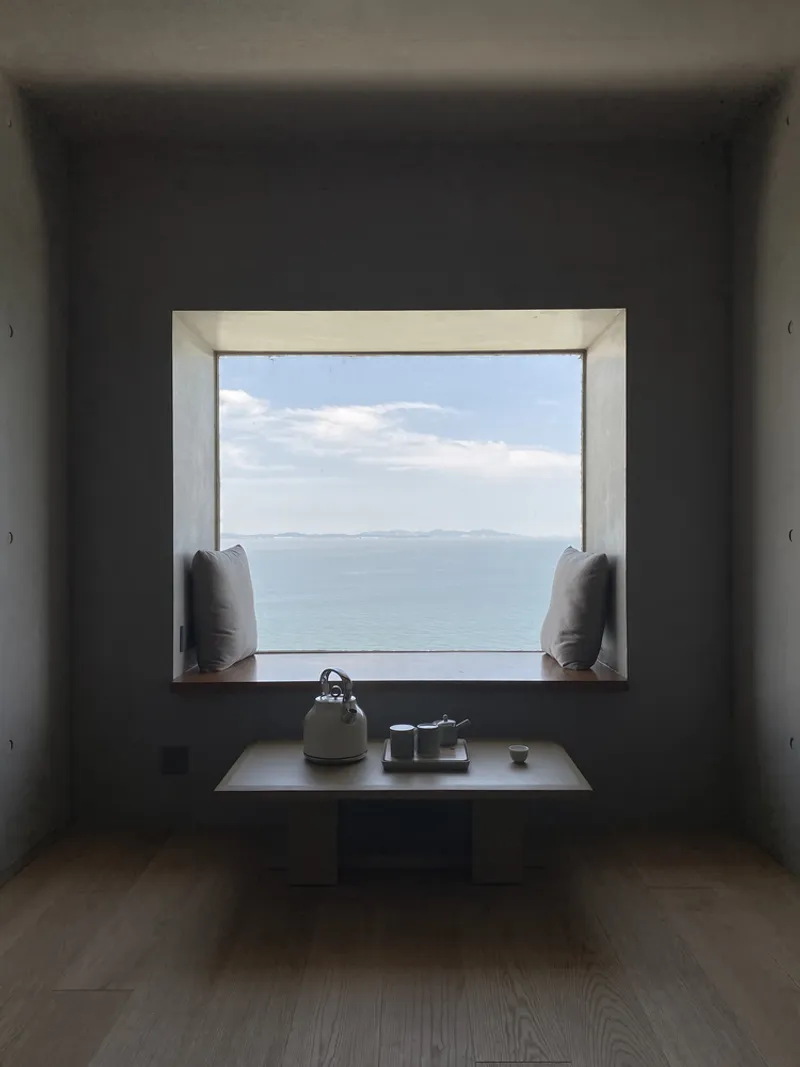
The Cliff Café, designed as a horizontal volume, aligns with the sea’s horizon. It becomes a contemplative platform, extending toward the distant line where the ocean meets the sky. Its minimalist interiors, crafted in concrete and wood, emphasize simplicity and silence, allowing the surrounding nature to take center stage.
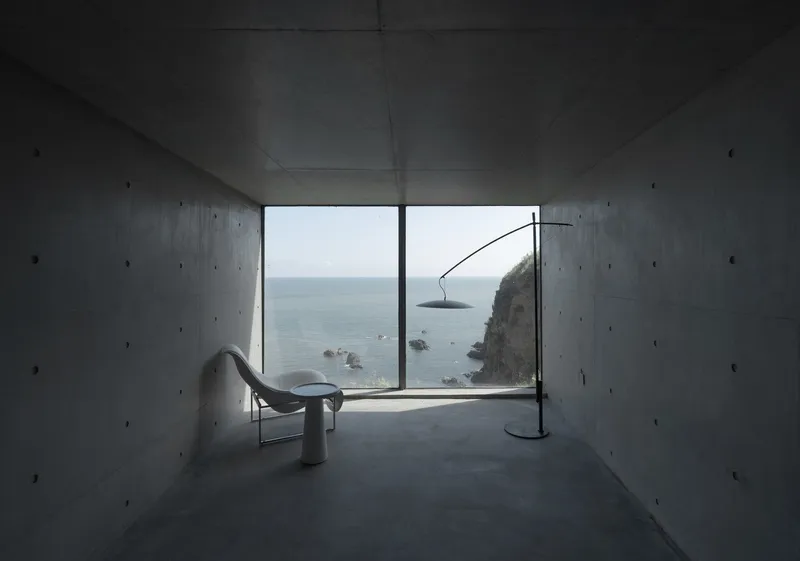
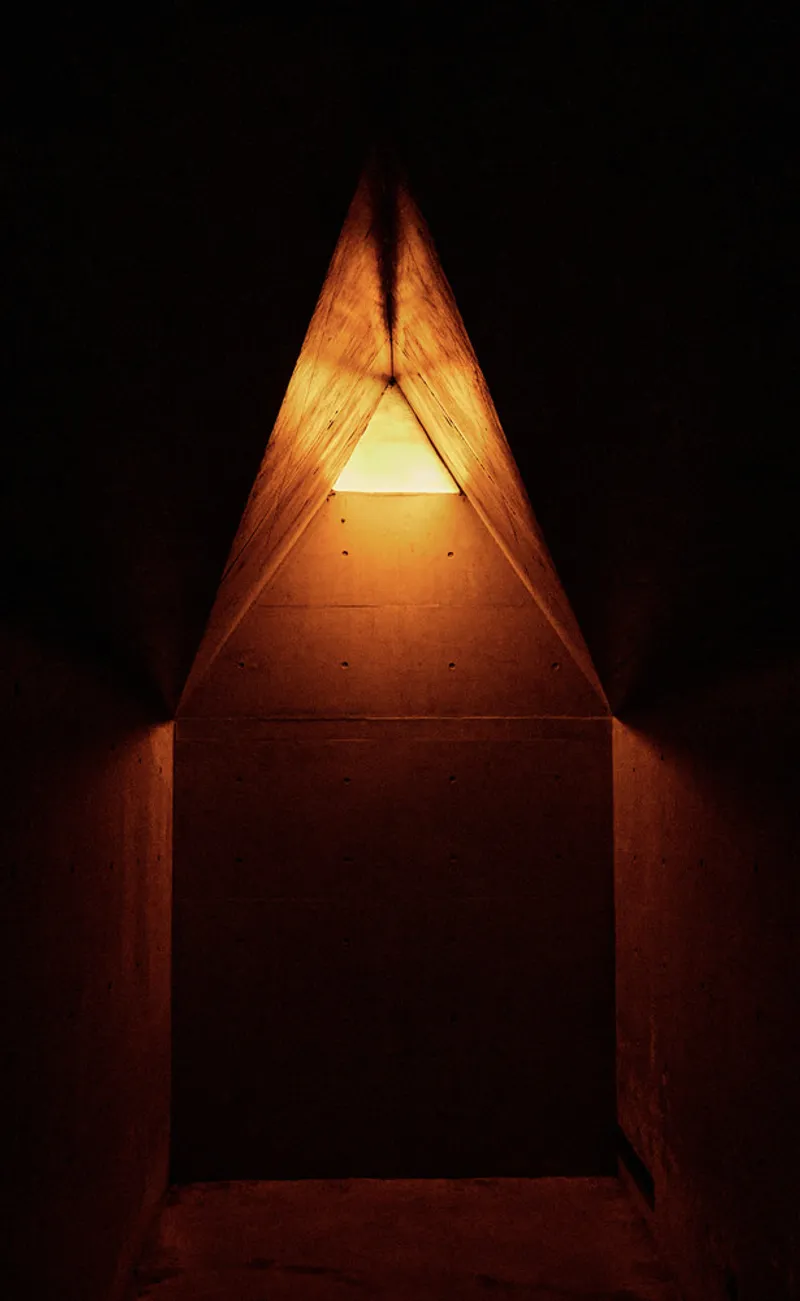
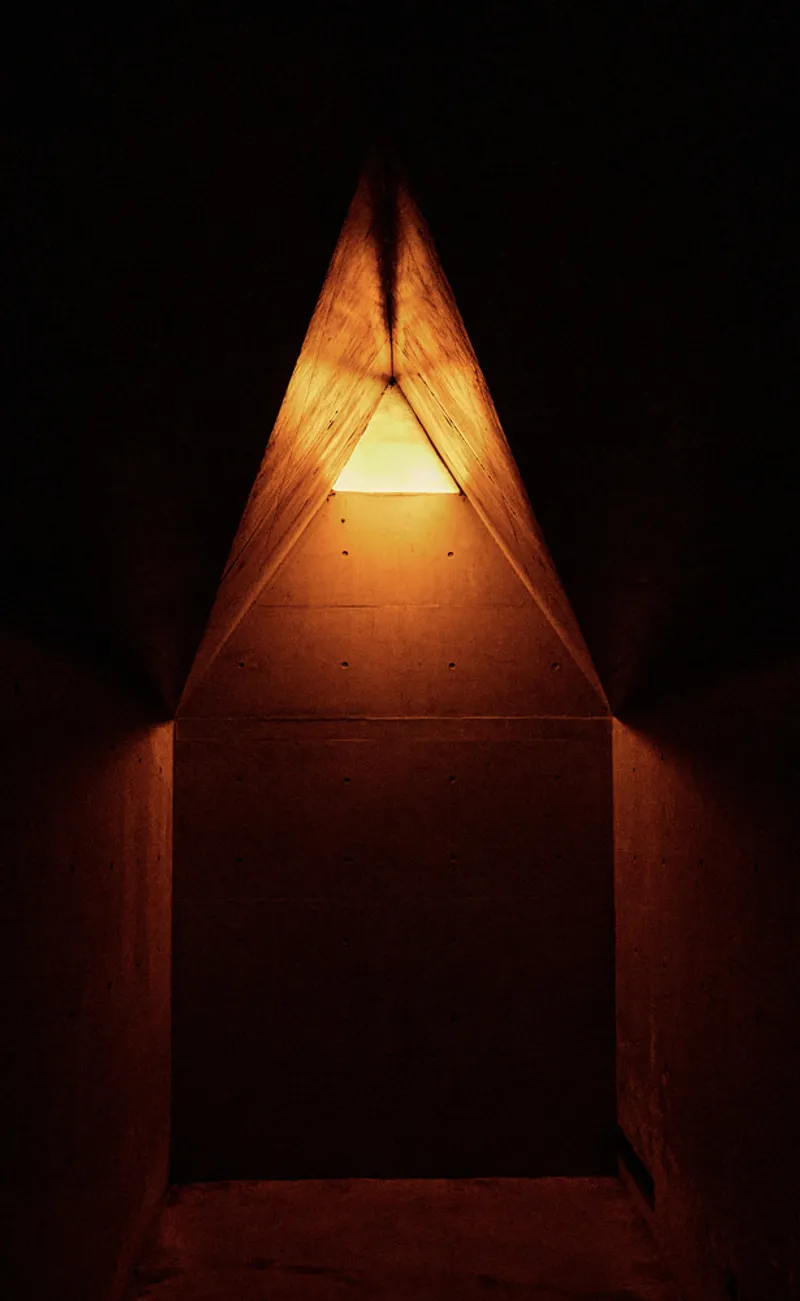
Nestled discreetly behind the café, a tunnel leads to a hidden meditation room—a secluded chamber with a skylight that floods the space with celestial light. Here, the architect invites visitors to pause, reflect, and reconnect with the stillness of nature.
The Tower House: Vertical Living by the Sea
In contrast to the café’s horizontality, the adjacent Tower House rises vertically, reaching skyward with a compact footprint of just 4.5 by 4.5 meters. This slender tower stands as a minimalist dwelling, its scale dwarfed by the vast sea yet imbued with introspective power.
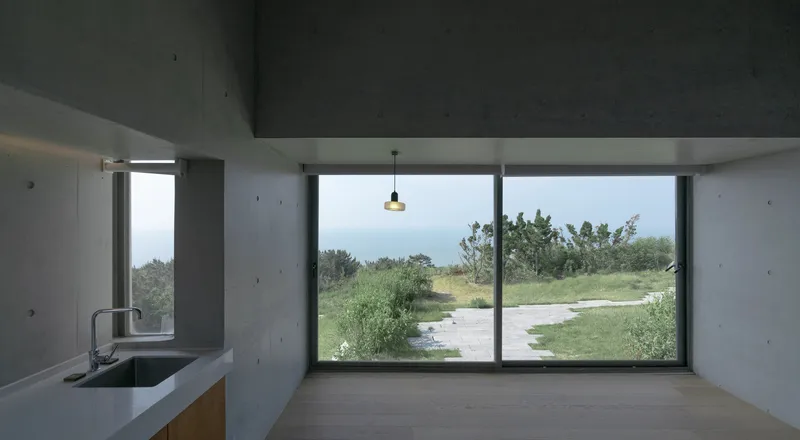
Inside, the house is organized vertically: living room, study, bedroom, and bathroom are stacked one above the other, each floor featuring a strategically placed window offering a unique vantage point. These openings are carefully calibrated to frame different aspects of the surrounding environment—creating dynamic perspectives of the ocean, sky, and rocky terrain.
Architecture as an Extension of Landscape
What makes the Cliff Café and Tower House truly remarkable is not just their sculptural form, but their philosophical depth. The architecture employs basic tectonic gestures—cantilevering, embedding, ascending, and descending—to express our relationship with nature. Through this spatial choreography, the project brings visitors back to a primal awareness of the land, the sea, and the cosmos.
Rather than dominating the environment, the building honors the spirit of place, celebrating the raw beauty and emotional resonance of the site. It is at once a retreat, a lookout, a sanctuary, and a poem in concrete.
Project Details
- Project Name: Cliff Café and Tower House
- Architects: TAO – Trace Architecture Office
- Lead Architect: Li Hua
- Location: Jiming Island, Weihai, China
- Completion Year: 2022
- Total Area: 581 m²
- Photography: Kejia Mei, Xiangzhou Sun



Popular Articles
Popular articles from the community


Hill & Cross Opera: Sculptural Opera House Architecture Shaped by Tallinn’s Landscape and Identity
Hill & Cross Opera reimagines opera house architecture in Tallinn through its sculptural hill, civic plaza, glass wave and a luminous cross.

The Ocean Hive: Sustainable Architecture for a Self-Sufficient Civilization at Sea
The Ocean Hive imagines sustainable architecture at sea, where modular habitats, algae, wave power and ocean waste sustain a growing colony.

Co-life: Sustainable Architecture for Age-Friendly Community Living
Co-life reimagines sustainable architecture for seniors through courtyards, rammed earth, shared gardens, and spaces designed for belonging.

Play: Fragments of Their World
Familiar architecture becomes modular playground design, creating safe spaces where displaced children can learn, connect, imagine and play.


Similar Reads
You might also enjoy these articles


Hodi-Mandai Geram
Project Function: Preservation and revitalization of the Intangible heritage and socio-spatial identity of the Hodi by Housing, Cultural Memory Center, Sacred Grove, landscape, local tourism economy


Olio Towers: A Mid-Rise for Performers That Fuses Housing, Rehearsal, and Stage
Located blocks from Houston's Theater District, this modular tower stacks living units around a central performance atrium.

Oasis: Modular Green Housing Carved into Dhaka's Urban Fabric
A shortlisted Plugin Housing entry reclaims unauthorized settlements in Dhaka with stepped concrete volumes, green roofs, and ventilation-driven design.

Black Hole: A Floating Megastructure for the Post-Physical Era
Emiliano Mazzarotto envisions a spherical, self-scaling arena where e-sports, digital hotels, and holographic stadiums replace traditional public space.


Explore Architecture Competitions
Discover active competitions in this discipline



Challenge to reimagine the Iron Throne


Photograph architecture without architects


Illustrate the lost glory of Angkor Wat - Render Challenge


Design challenge to reuse E-waste
Comments (0)
Please login or sign up to add comments
No comments yet. Be the first to comment!