
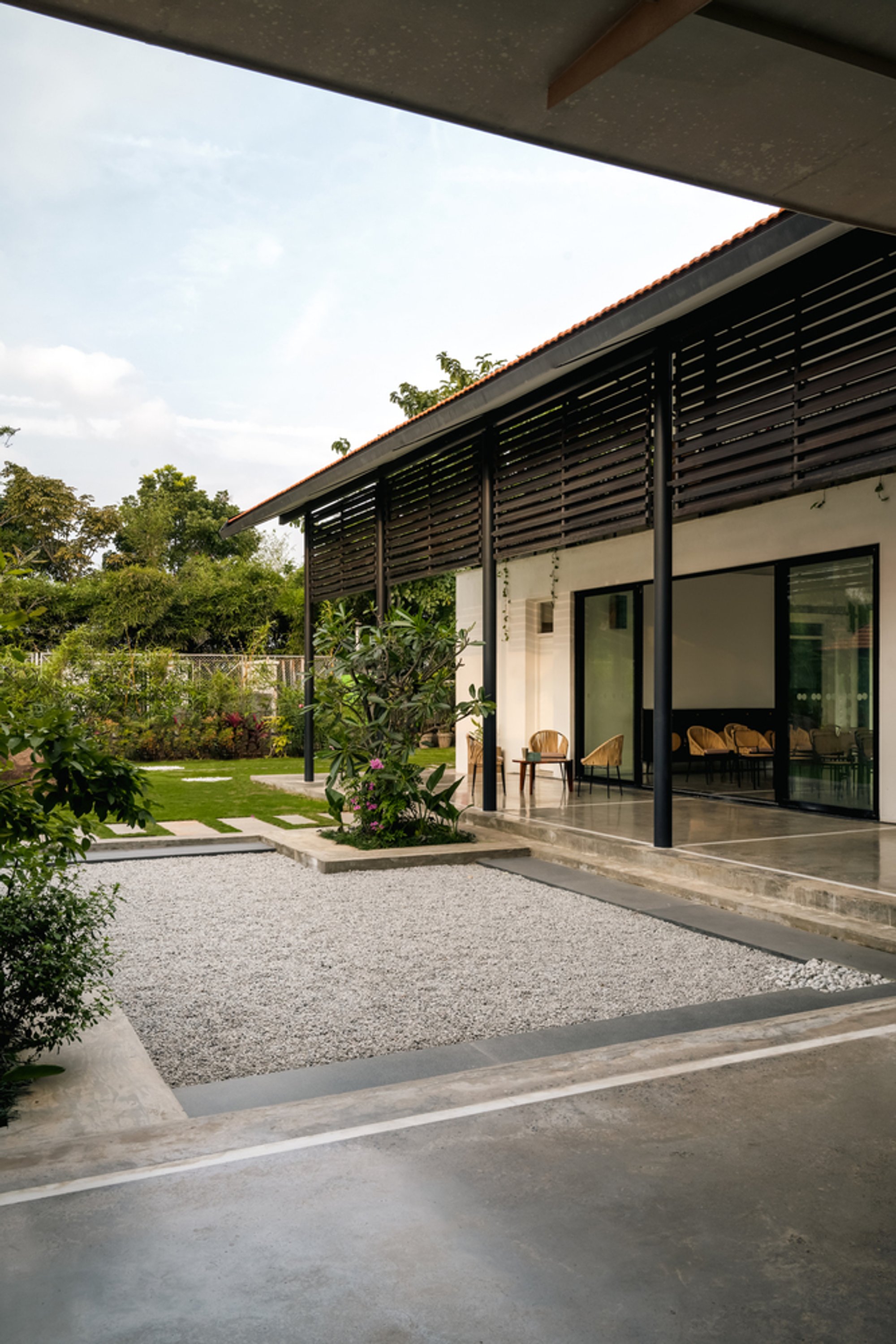
STUDIO MOTLEY Wraps a Bangalore Fitness Club in Deep Eaves and Courtyards
Club of Courts draws on Mangalore tile roofs, polished concrete, and shaded thresholds to ground a 15,000 sq ft clubhouse in its residential park.

Clubhouses in Indian residential developments tend to fall into two camps: overdesigned showpieces that age poorly, or afterthoughts wrapped in granite cladding. The Club of Courts at Eden 144, a 15,000 sq ft fitness and social hub designed by STUDIO MOTLEY, sidesteps both traps. Positioned alongside a landscaped park in Bangalore, the building reads less as an amenity block and more as a series of covered outdoor rooms, each framed by deep overhangs, gravel courts, and planted thresholds that blur the line between inside and out.
What makes the project worth studying is the discipline of its strategy. Rather than relying on mechanical cooling or theatrical gestures, the architects lean on passive tools: wide Mangalore tile eaves that shade the walls, louvered screens that filter light, and courtyards that pull cross-ventilation through the plan. The result is a building that stays cool in Bangalore's warm climate and feels rooted in the region's architectural memory, specifically the verandahs and jagalis of South Indian heritage homes, without becoming a pastiche.
Terracotta and Steel Under One Roof
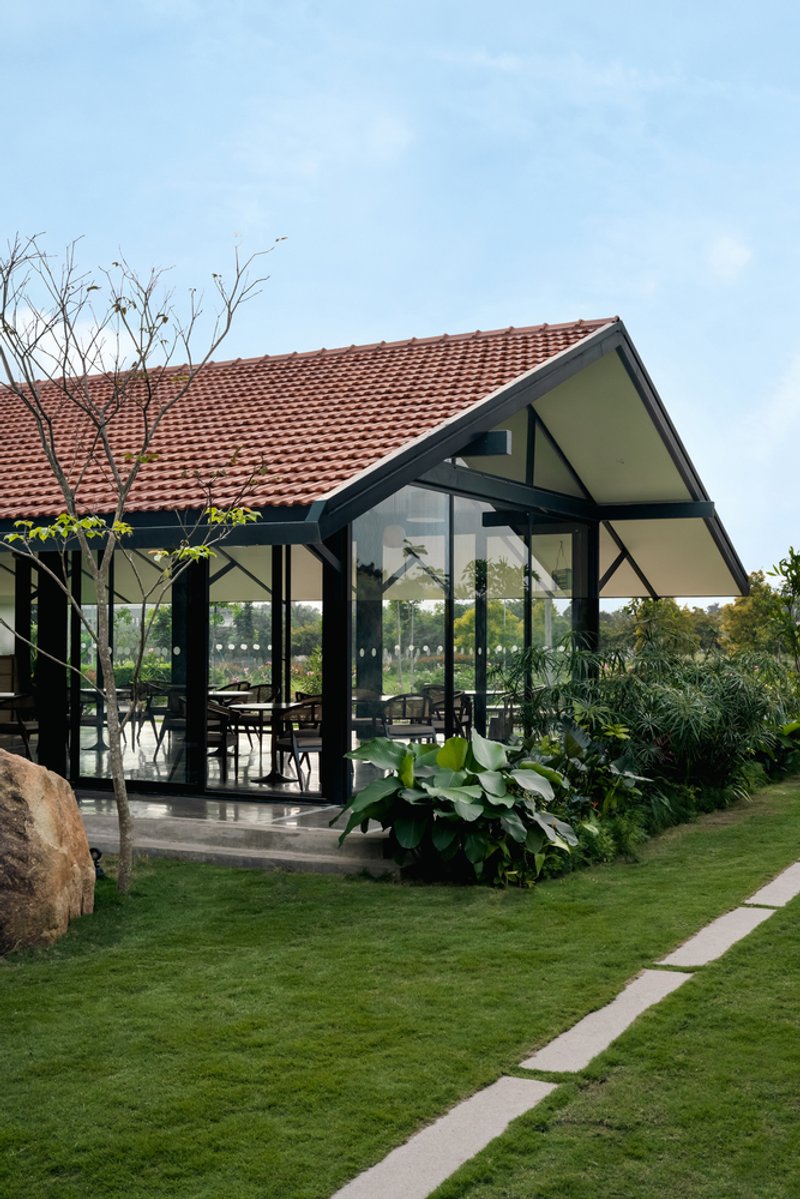
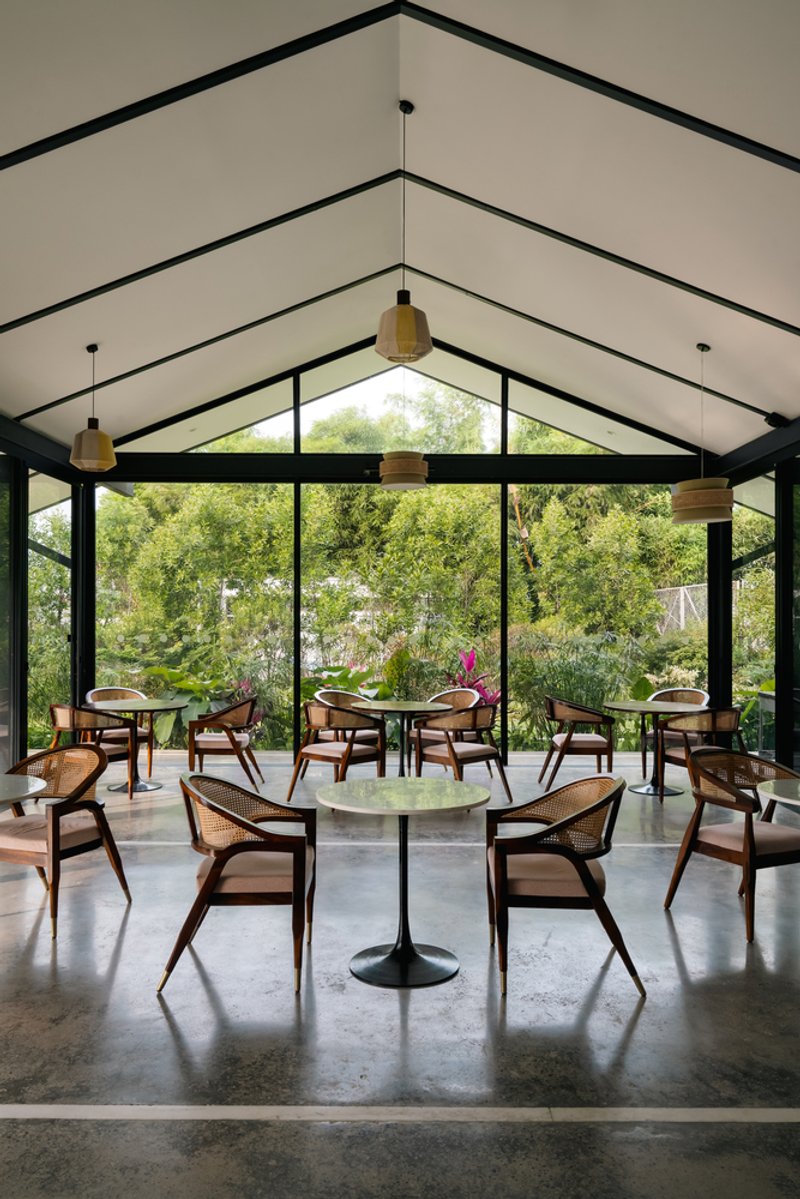
The exterior presents a clean hybrid: gabled roofs clad in traditional Mangalore terracotta tiles sit on a frame of exposed black steel beams. The pairing could feel contradictory, but it works because neither material is asked to pretend it is the other. Steel does the spanning. Tile does the weathering. Floor-to-ceiling glazing beneath the eaves turns the dining pavilion into a lantern at dusk, while the lawn pathways leading to it reinforce the idea that the building is an extension of the park, not a wall against it.
The wide eaves are the real protagonist here. They push shade deep into the interior perimeter, keeping solar gain off the glass while creating a transitional zone, not quite outside, not quite inside, that is comfortable year-round without air conditioning working overtime.
Courtyards as Climate Engines
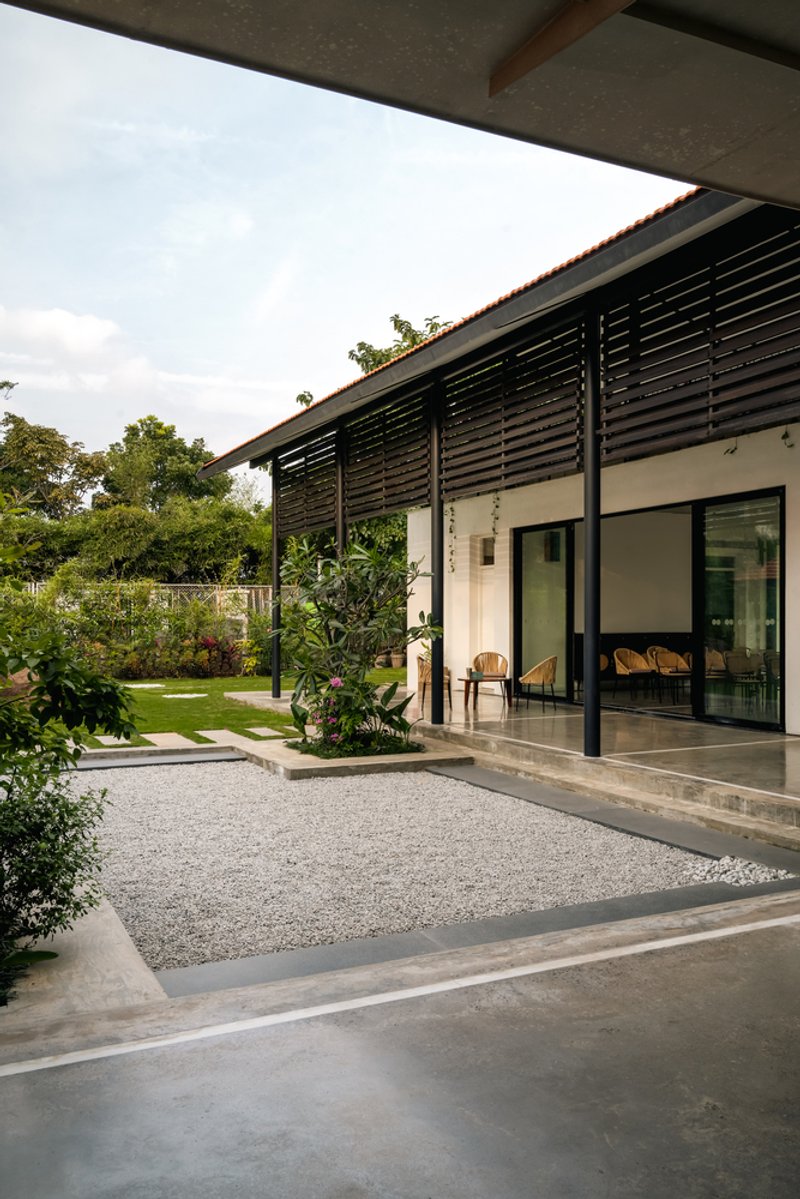
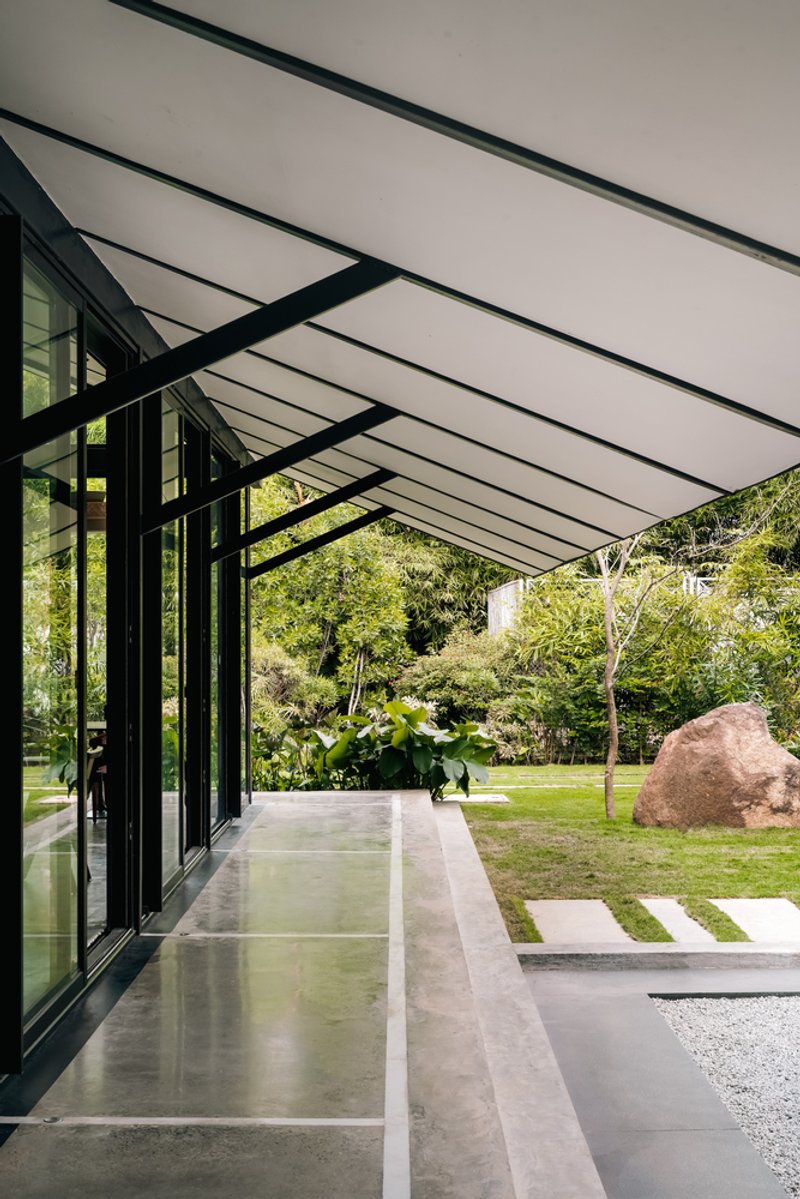
The courtyard framed by gravel paving, concrete banding, and black louvered screens is the spatial heart of the project. It is not decorative. Gravel absorbs less heat than hard paving, the concrete bands channel drainage, and the louvered screens below the eave overhang control glare while admitting air. Every element does double duty: aesthetic and thermodynamic.
Under the covered porch, polished concrete floors extend outward to meet the landscape, and black-framed sliding doors vanish into wall pockets so that the boundary between the interior and the court effectively disappears. It is a strategy borrowed from traditional Indian domestic architecture, where the courtyard is the room and the rooms merely border it.
Polished Concrete and Sadarhalli Stone
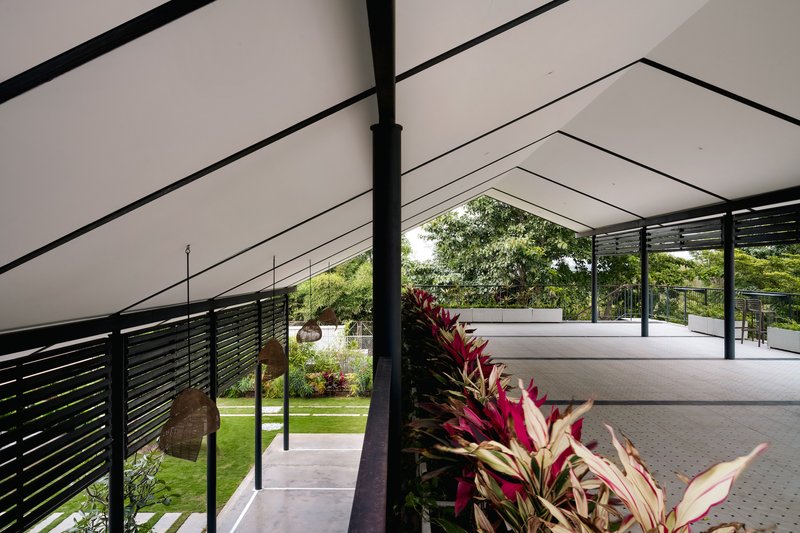
The material palette is deliberately restrained. Polished concrete with white marble inlays covers the primary floor surfaces, providing a cool, reflective base that bounces indirect light deeper into the plan. Sadarhalli stone pavers ground the exterior walkways with a tactile warmth that reads distinctly local. Both materials are durable, low-maintenance, and age gracefully, which matters in a building that will serve a residential community for decades.
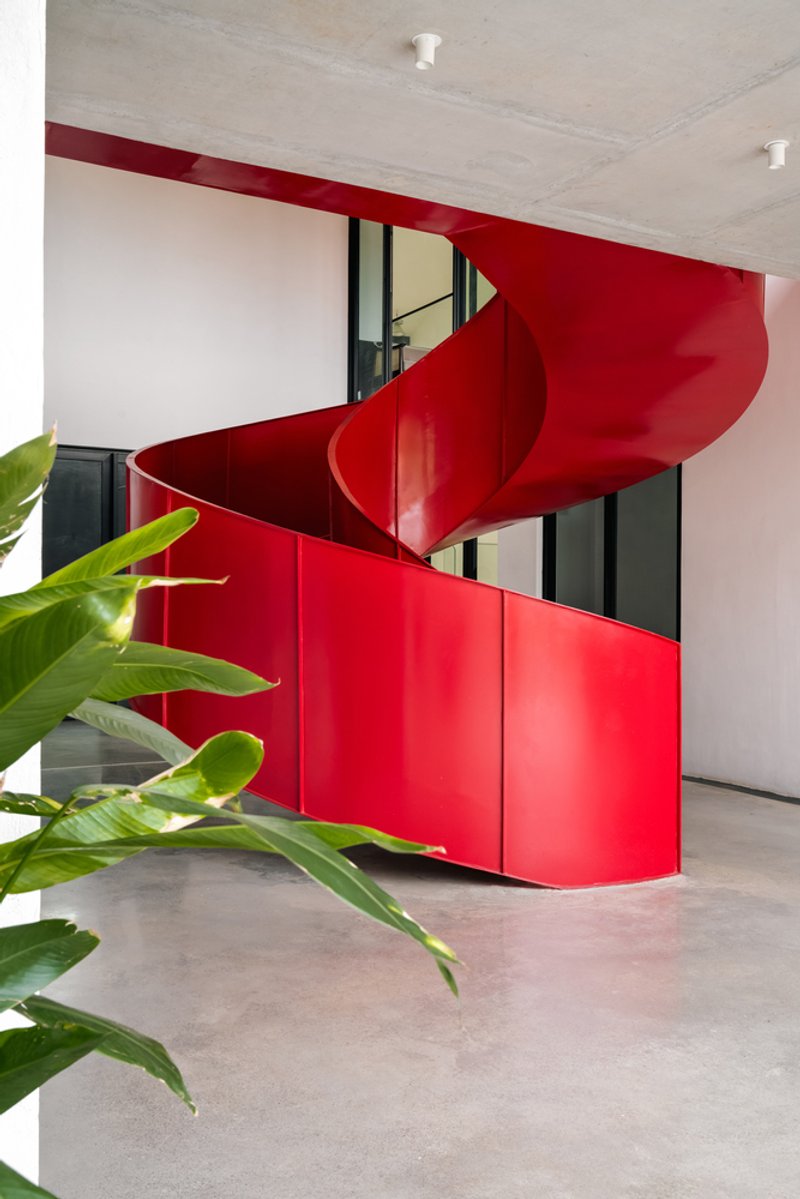
The upper-level hallway captures this restraint at its best: a gabled ceiling lined with black steel purlins, horizontal louvered railings, and a long planted bed that softens the edge. The corridor could easily feel industrial, but the planting and the filtered light give it a domestic calm. A curved red metal staircase wrapping around a white wall provides the one moment of deliberate color in an otherwise neutral scheme, and it lands precisely because there is only one of it.
The Pool Pavilion
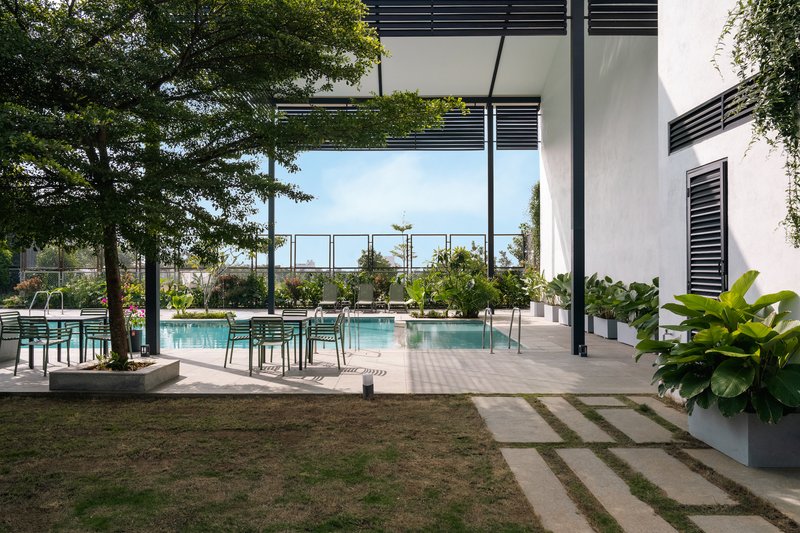
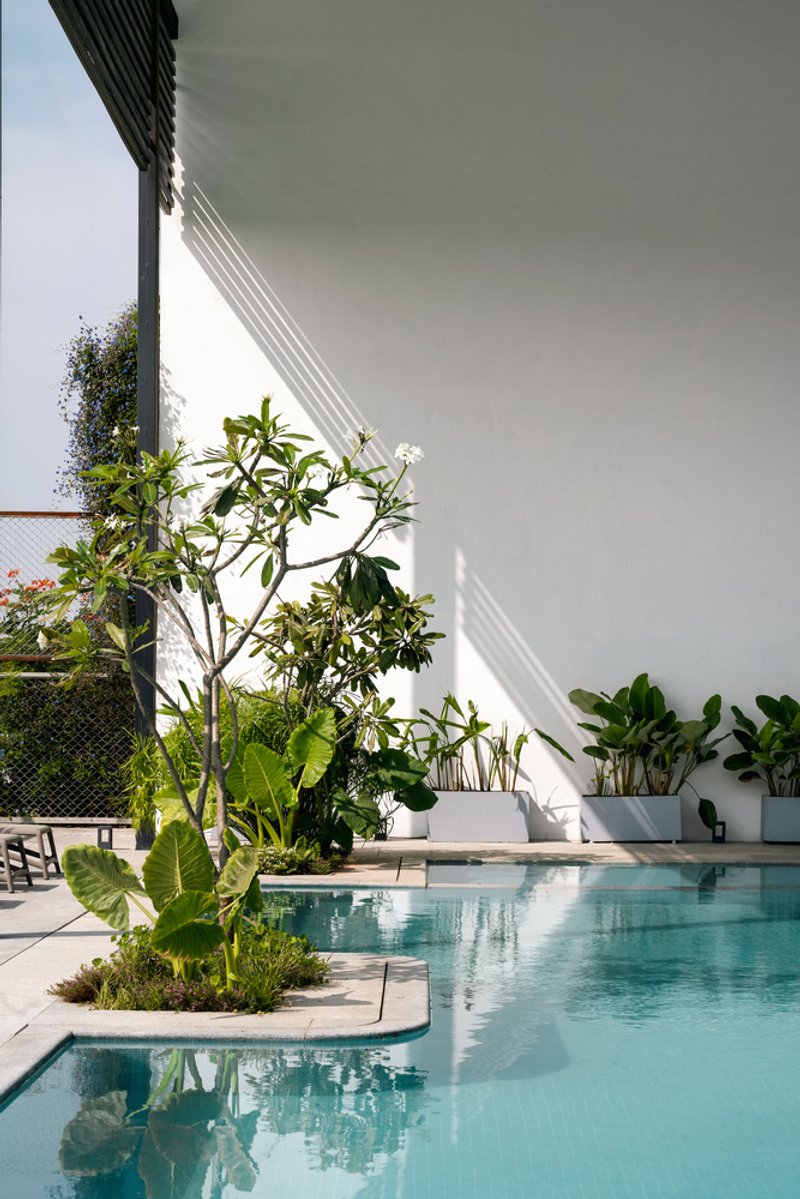
The swimming pool sits beneath a covered outdoor pavilion with glass railings, potted plants, and a clean white wall that catches the shadow patterns of overhead louvres. It is a surprisingly quiet composition for a pool area. No bright tile mosaics, no resort signage. The planted island at the pool's edge softens the hard geometry of the water surface and introduces a fragment of the landscape into the swim zone itself.
The shadow play on the white wall is worth noting. As the sun tracks across the sky, the louvres project moving stripes that animate an otherwise static surface. It is a passive ornament, generated by the building's own climate strategy rather than applied afterward. That kind of incidental beauty is difficult to design deliberately, and the fact that it appears here suggests the architects understood the building's orientation intimately before committing to the detail.
Vertical Circulation and the Rooftop
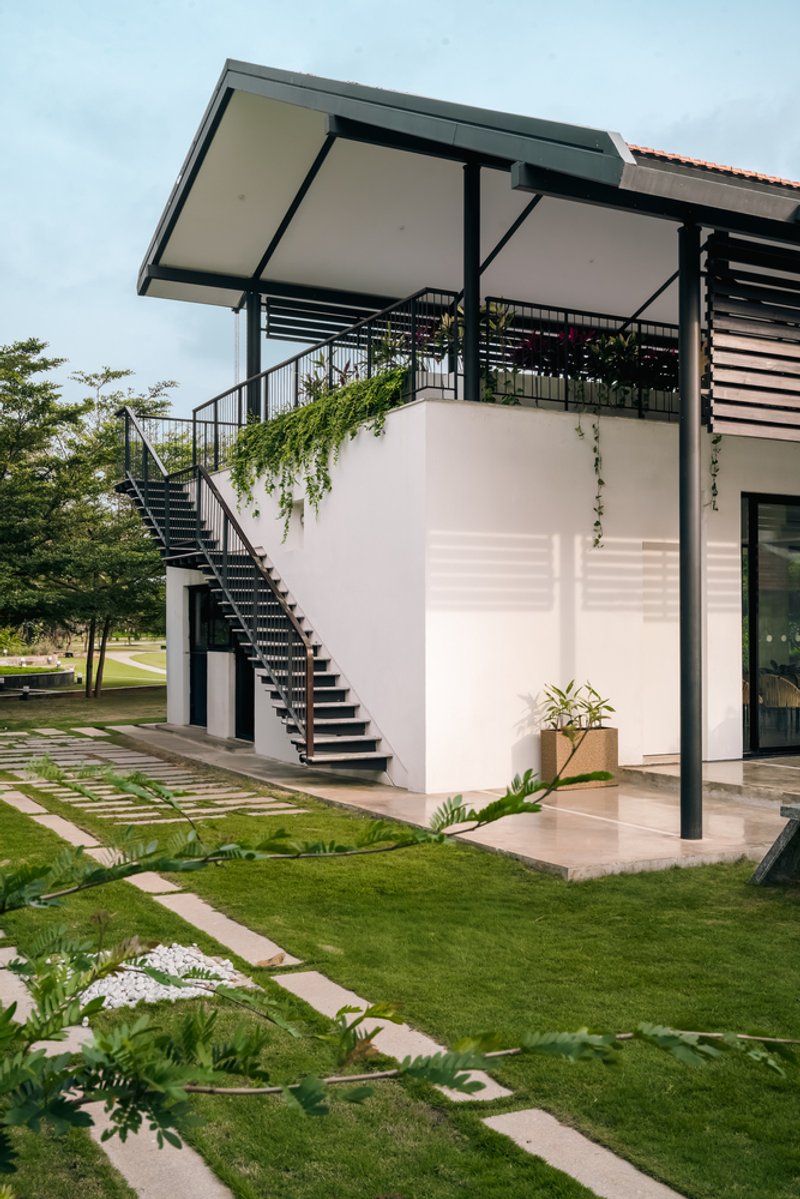
An external steel staircase ascends to a rooftop terrace lined with planter boxes and horizontal louvres. Keeping the vertical circulation on the outside frees interior floor area and turns the act of moving between levels into an encounter with the landscape. The louvred screen at the terrace level provides privacy from neighboring plots without sealing the space off from breezes, a practical move in Bangalore's relatively mild climate.
The curved red staircase inside operates differently: sculptural, compressed, almost theatrical in its spiral around a white cylinder. Where the exterior stair is utilitarian and transparent, this one is opaque and deliberately eye-catching. The contrast suggests the architects thought carefully about which moments of the building deserve drama and which deserve restraint.
Why This Project Matters
The Club of Courts matters because it demonstrates that passive climate design and regional material intelligence do not require nostalgia. Mangalore tiles and deep eaves are centuries-old technologies in South India, but the building never cosplays as a heritage bungalow. Its steel frame, glass walls, and louvered screens are plainly contemporary. The synthesis feels honest because the traditional elements are deployed for performance, not sentiment.
For the broader conversation around community amenity buildings in India, the project offers a useful model. A 15,000 sq ft clubhouse does not need to be a sealed, air-conditioned box to feel comfortable or finished. By investing in overhangs, courtyards, and permeable enclosures, STUDIO MOTLEY has produced a building that consumes less energy, engages more directly with its landscape, and will likely feel more relevant in twenty years than most of its glass-clad competitors.
Club of Courts by STUDIO MOTLEY. Located at Eden 144, Bangalore, Karnataka, India. Area: 15,000 sq ft. Completed in 2024. Photography by Murtaza Gandhi.
About the Studio
Share Your Own Work on uni.xyz
If projects like this are the kind of work you want to make, uni.xyz is a place to publish your own, find collaborators, and enter design competitions.




Popular Articles
Popular articles from the community

IKC de Geluksvogel: Sustainable School Architecture Designed for Free Movement and Digital Learning
IKC de Geluksvogel turns sustainable school architecture into a flexible Maastricht campus for digital learning, nature, and free movement.

Kaffeebühnen: Coffee Shop Architecture Designed as a Civic Stage Between Vienna’s City and Park
Kaffeebühnen turns coffee shop architecture into a civic stage, linking Vienna’s park edge, urban life, warm timber yards, and coffee craft.
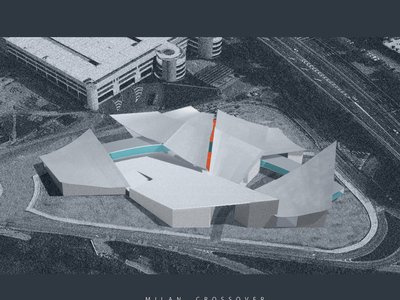
Milan Crossover: Sustainable Architecture for a New Fashion Culture in Milan
Milan Crossover transforms fashion culture through sustainable architecture, linking material libraries, remake studios, and public runways.
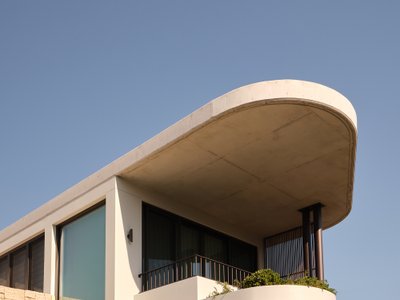
Stanton Architects Sculpts a Curving Family Home into Sydney's Inner West Fabric
Five Dock House uses cantilevers, curved concrete, and layered courtyards to carve out privacy on a tight suburban lot in Sydney.
Similar Reads
You might also enjoy these articles

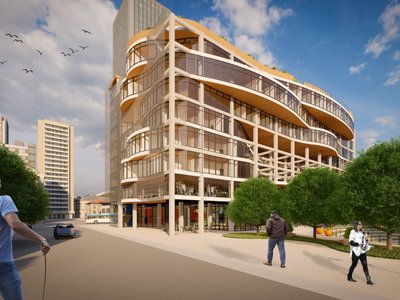
Olio Towers: A Mid-Rise for Performers That Fuses Housing, Rehearsal, and Stage
Located blocks from Houston's Theater District, this modular tower stacks living units around a central performance atrium.

Oasis: Modular Green Housing Carved into Dhaka's Urban Fabric
A shortlisted Plugin Housing entry reclaims unauthorized settlements in Dhaka with stepped concrete volumes, green roofs, and ventilation-driven design.

Black Hole: A Floating Megastructure for the Post-Physical Era
Emiliano Mazzarotto envisions a spherical, self-scaling arena where e-sports, digital hotels, and holographic stadiums replace traditional public space.
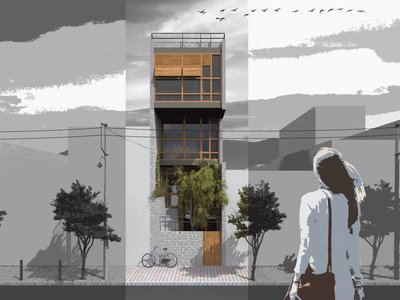
Compact & Sustainable Living in Piraeus: A Four-Level Family Home Built Around Light and Air
A narrow townhouse in one of Greece's densest port cities uses a central atrium and passive strategies to house three generations under one roof.


Explore Housing Competitions
Discover active competitions in this discipline




The International Standard for Design Portfolios


The Global Benchmark for Architecture Dissertation Awards


The Global Benchmark for Graduation Excellence


Challenge to reimagine the Iron Throne
Comments (0)
Please login or sign up to add comments
No comments yet. Be the first to comment!