
Co-existing with nature: Biophilic residence designs in Indonesia
Results for ‘Bio Home’ - Sustainable design competition out now


Since the beginning of time, humankind has lived in natural settings surviving on nature’s unadulterated bounty. Harmony with nature was achieved as they understood their dependency on it for survival and its role in the cycle of life.
Over time, the complicated working of the world has made us forget about our strong relationship with nature and we grew apart. There is segregation, encroachment, and exploitation of nature and its resources for the superficial satisfaction of man’s desires.
In the current trend of urbanization, less and less access to green spaces, natural light, and organic materials is available. Green spaces are desired by everyone, but even so, initiatives to incorporate greenery into living spaces are rarely seen.
Over our evolutionary time, an innate desire to associate with nature is experienced by people. The revival of our inherent connection with nature is significant to humankind’s health and well-being.
Can humans find their way back to nature?
Human habitats are built to fulfill their needs as biological beings, living in a natural setting. Biophilic designing can be used to fulfill this initiative. It is much more than bringing the outside in, it is about making a strong connection with all aspects found in nature like plants, light, materials, textures, and patterns.
Our inclination towards interacting with nature is primal, and we need to strengthen this bond by creating sustained contact in our everyday lives. A majority of our time is spent in our homes, so we need to embed our living quarters with biophilia.
The paradox of built environments is such that most places benefit economically due to their proximity to greenery or view of natural scenery in the city, but at the same time, new construction projects keep coming up in want of more land, so more nature keeps getting wiped out.
How can biophilia be used to resolve this paradox?
Brief: Challenge was to design a single residence for a family, incorporating biophilic design principles. We need to integrate nature into our built environment so that we can co-exist and live as one.
The interventions proposed as part of the biophilic design must be in synergy with the wider environmental context of the site. Reduce the negative impact of design on the environment, by improving building performance, reducing waste, and ensuring comfort for occupants.
The aim of the design was to achieve a balance between the ‘natural’ and ‘built’ parts of the house. It must provide a healthy atmosphere for all living organisms in space. The effects of the elements on each other must be explored.
Privacy and interaction must be guided in the layout as per the nature of the activity. Manage aesthetics and functionality, as well as open and closed spaces. The design must be an integrated system suitable to contemporary lifestyles.
The jury for the competition consisted of esteemed designers, professionals, and academicians from around the world. The Lead Jurors for the competitions were as follows:
Dr. Tan Loke Mun, Director, Archicentre +, Malaysia
Erick Kristanto, Principal Architect / Founder, Studio Kota, Jakarta, Indonesia
Some of the Best competition projects are as follows:
Winning Project: Omah Gapura
By: Prabhu Raj & Pooja Prakash
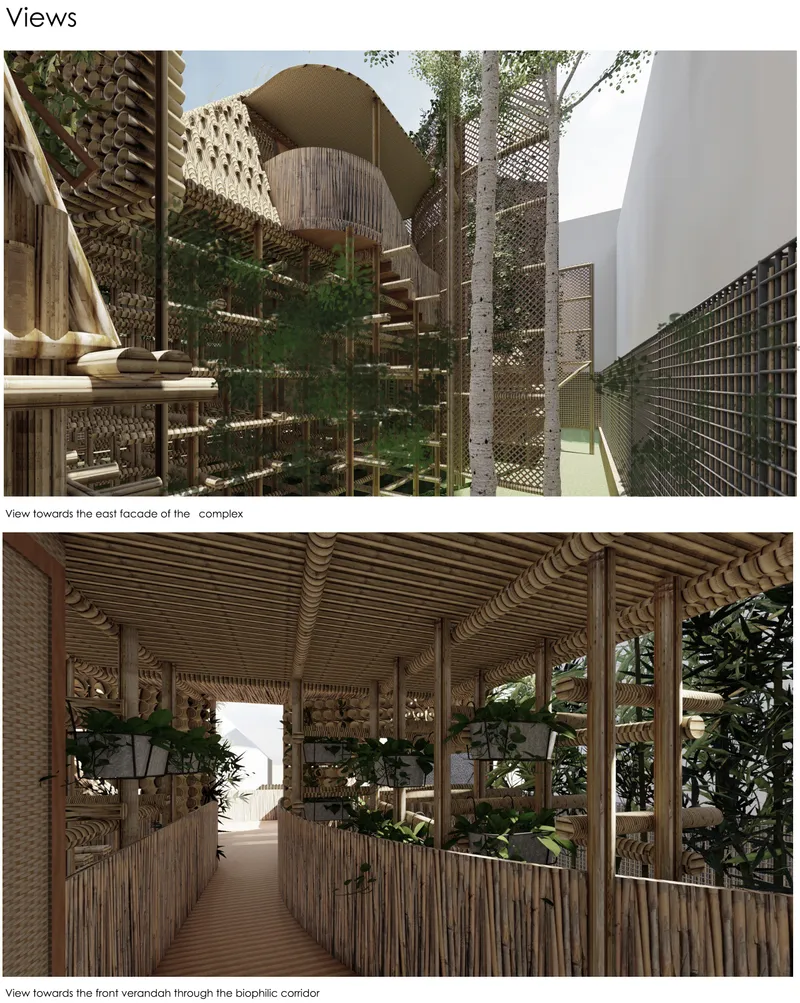
Fig: 1 Site views
Description: Retrofitting life in Kota. Segregation and integration of spaces via movement through biophilic Nusanthara architecture. “Omah” meaning “house”, “Gapura” meaning gateway. Omah Gapura acts as a gateway to retrofit the dense residential life of Jakarta. Jakarta is the second-largest city in the world in 2020. Which have a variety of origins and populations.
-----------------
People’s Choice: In Praise of Shadows
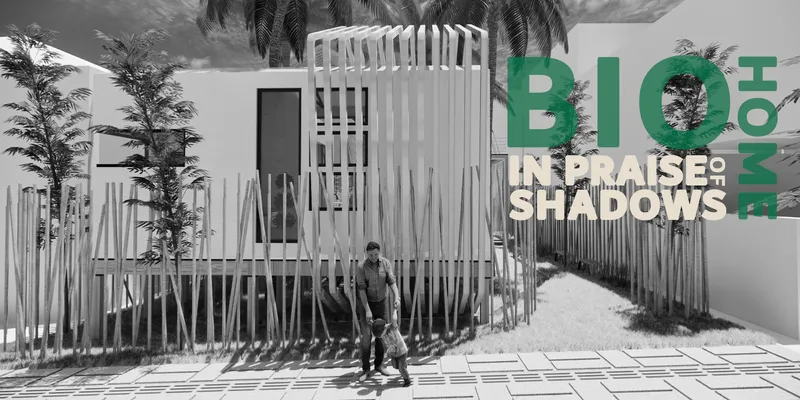
Fig: 2 Cover image
Description: It had probably happened to all of us that when we were children, we used to lift rocks near the riverbed to surprise the strange insects hiding under them in the dark. We, humans, are no different from those insects in terms of preferring the safe space of shadows. That's why we chose shadows to design our house.
-----------------
Editor’s Choice: House of Alam
By: Ava Kaboli & Elnaz Modaresnia
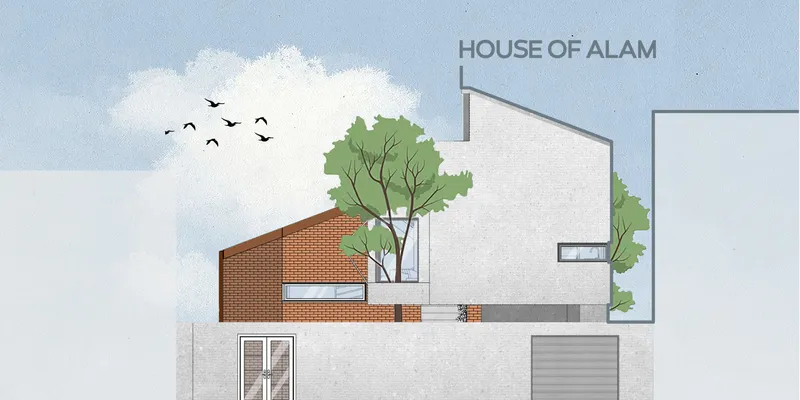
Fig: 3 Cover image
Description: House of "Alam" or "Nature" is a biophilic house designed for a better life. The main concept of this design is ventilation, which is the most important thing when designing a house in a humid environment. To accomplish this the two volumes were separated by a staircase that serves as a binder that connects the spaces on either side.
------------------------
Editor’s Choice: BIO-HOME: Window to sustainable living
By: Ritu Deshmukh
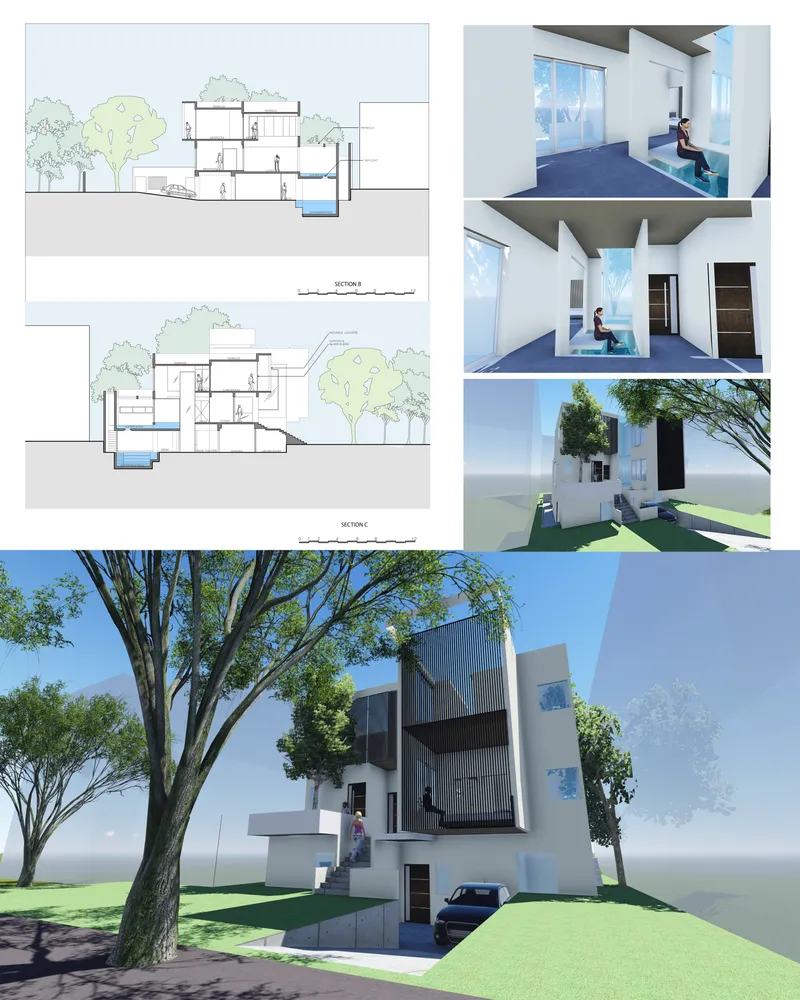
Fig: 4 Section plan, Exterior and interior view
Description: Our Earth provides for everyone's needs but not for everyone's greed.. and yet we wish to build left, right, and center with conventional materials and would not think about the alternatives we have which are sustainable and do not leave any footprint on this planet.
------------------------
Editor’s Choice: House A
By: Zekai zhong
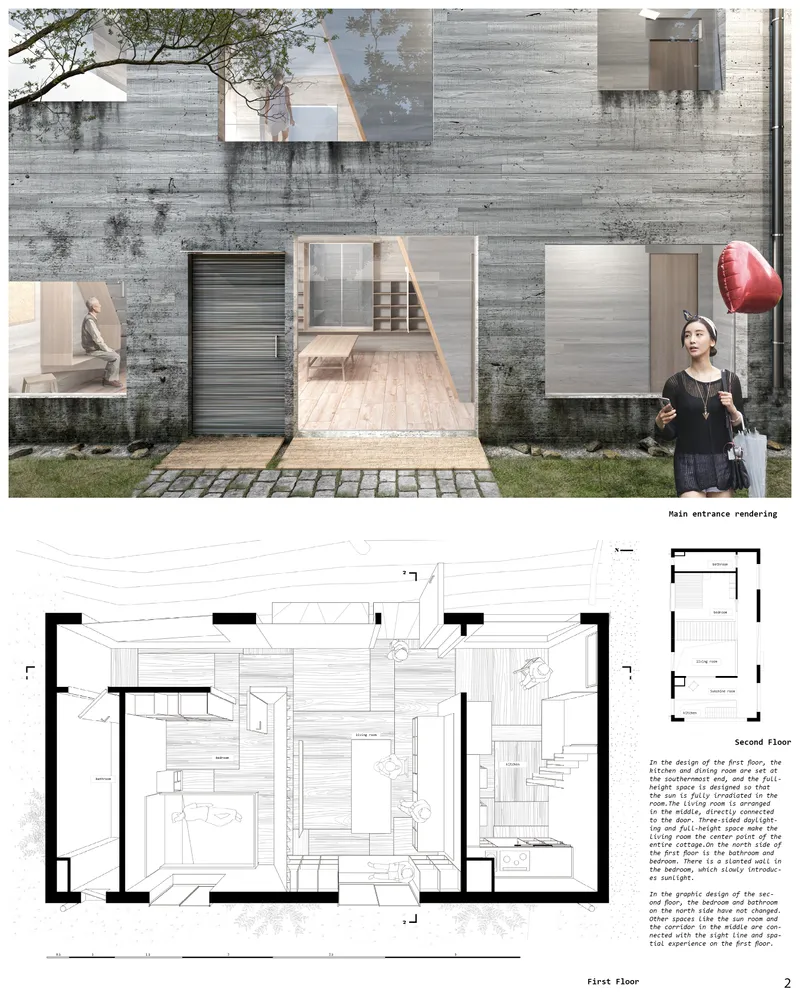
Fig: 5 Main entrance rendering and floor plan
Description: The whole design revolves around low carbon and environmental protection. Try to create a building that is closely related to nature. There is a cistern around the building to collect rainwater through rainy weather. Long area windows on the building maximize natural ventilation and day lightening
------------------------
Editor’s Choice: Bio-Home
By: Ten Dsgn
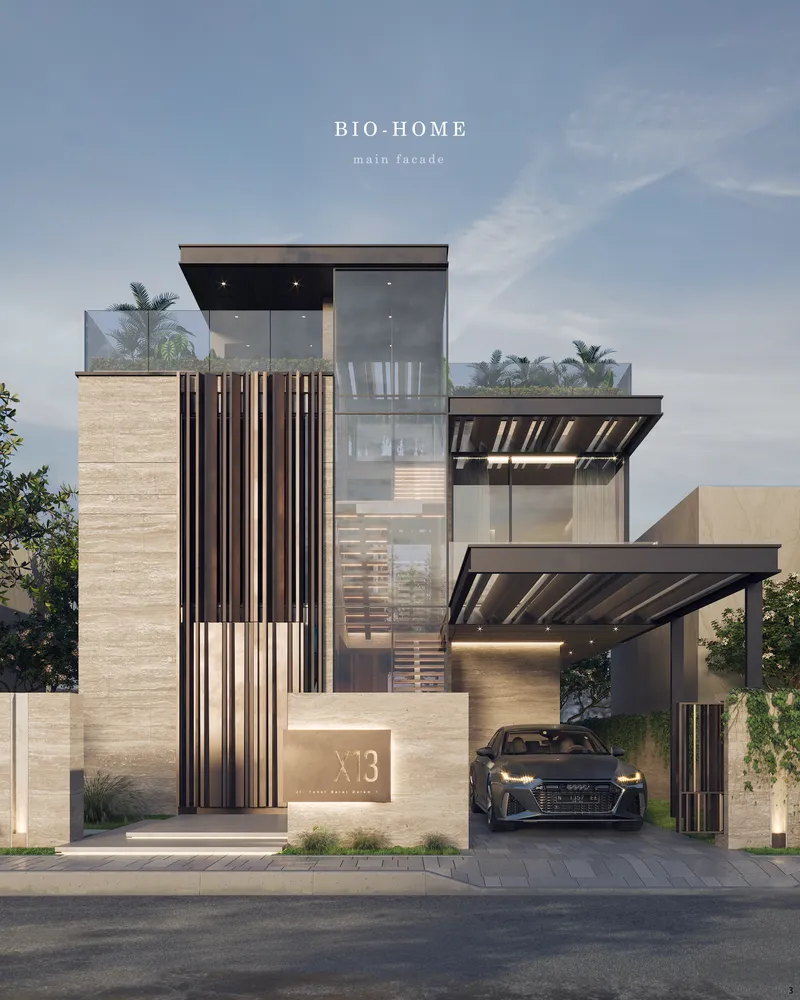
Fig: 6 Main facade view
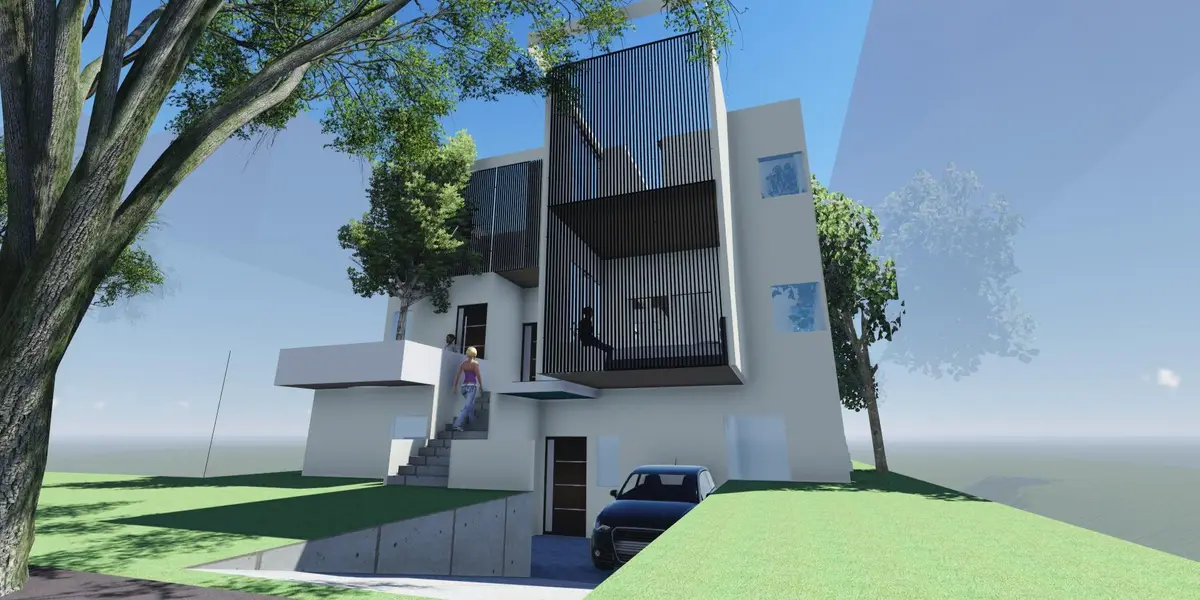
Description: Single-family home project.
------------------------
Follow us on social media: Facebook | Instagram | LinkedIn | Twitter | Youtube
References (3)


Popular Articles
Popular articles from the community


LT2A and OPEN Architectes Thread a Brick and Glass High School Through a Wooded Belgian Campus
In Braine-l'Alleud, a 3,000 m² wing for Collège Cardinal Mercier pairs pale brick with a glazed colonnade, deferring to a small chapel and a dense wood.


The Amber Palace Opera: A Geological Fiction Surfaces on Tallinn's Baltic Waterfront
Pierre Brillard reimagines a Baltic legend as a public landscape, opera house, and waterfront promenade rooted in Tallinn's coastal identity.

FCC Arquitectura Expands a Portuguese Granite House with a Board-Marked Concrete Wing
In Portugal, JV House pairs a cleaned-up whitewashed and granite dwelling with a timber-shuttered concrete extension, courtyards and a garden pool.

David Ortega Stacks a Two-Story Mexico City Penthouse Around a Steel Stair and a Pergola-Shaded Roof Terrace
In Colonia Roma, a 300 m² penthouse uses oak joinery, a planted steel stair and a slatted roof pergola to make a new-build apartment feel like a house.

Similar Reads
You might also enjoy these articles

Aquadapt: An Underwater Habitat That Rewrites Its Rooms by the Hour
Curved modules ring the seabed while one shell shifts from breakfast room to cinema, farm and football pitch as residents' needs change.

Play: Fragments of Their World: Remembered Architecture Rebuilt as a Modular Playground for Refugee Camps
Tom Gardner abstracts domes, arches and towers from the homelands of displaced families into a kit of child-scaled play parts for camp settlements.
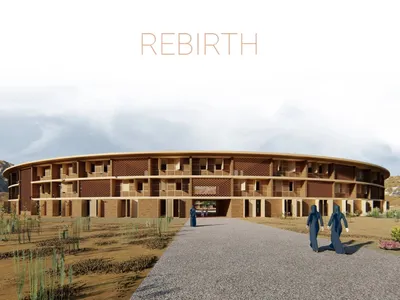
REBIRTH: A Circular Settlement Where Afghan Widows and Their Children Rebuild Life Together
A shortlisted Resile entry turns the circle into a protective ring of timber and brick, gathering homes, classrooms and gardens around a shared landscape.
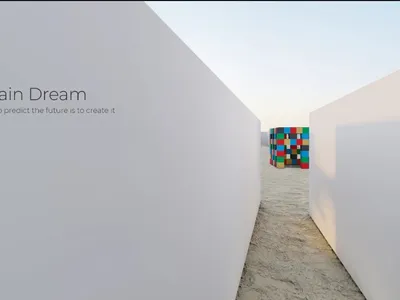
The Main Dream: A Recycled Plastic Kit That Lets Refugee Children Build Their Own Playground
Thirty-centimetre interlocking cubes that connect on three axes turn play into construction, letting children author the spaces they occupy.


Comments (0)
Please login or sign up to add comments
No comments yet. Be the first to comment!