

Čoarvemátta Cultural and Educational Hub
Čoarvemátta unites Sámi theatre and education through low-lying timber architecture, cultural symbolism, geothermal sustainability, and deep integration with Arctic landscape.


Snøhetta + 70°N Arkitektur + Joar Nango| Kautokeino, Norway
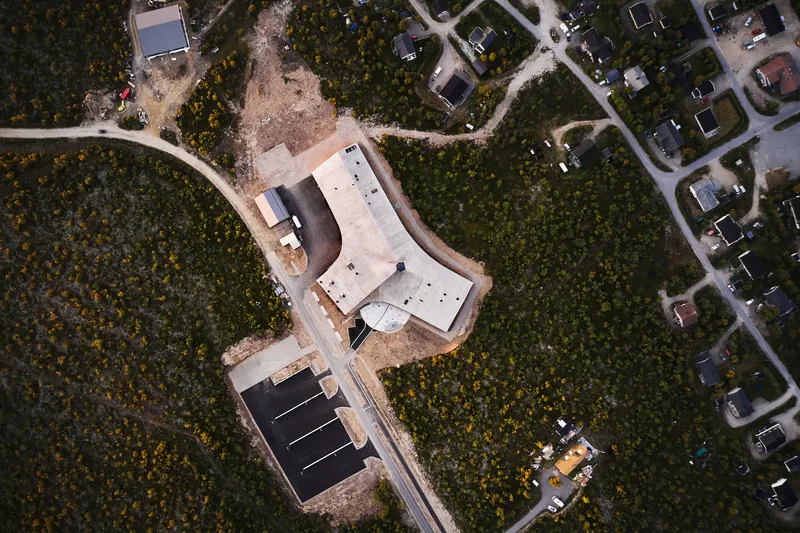
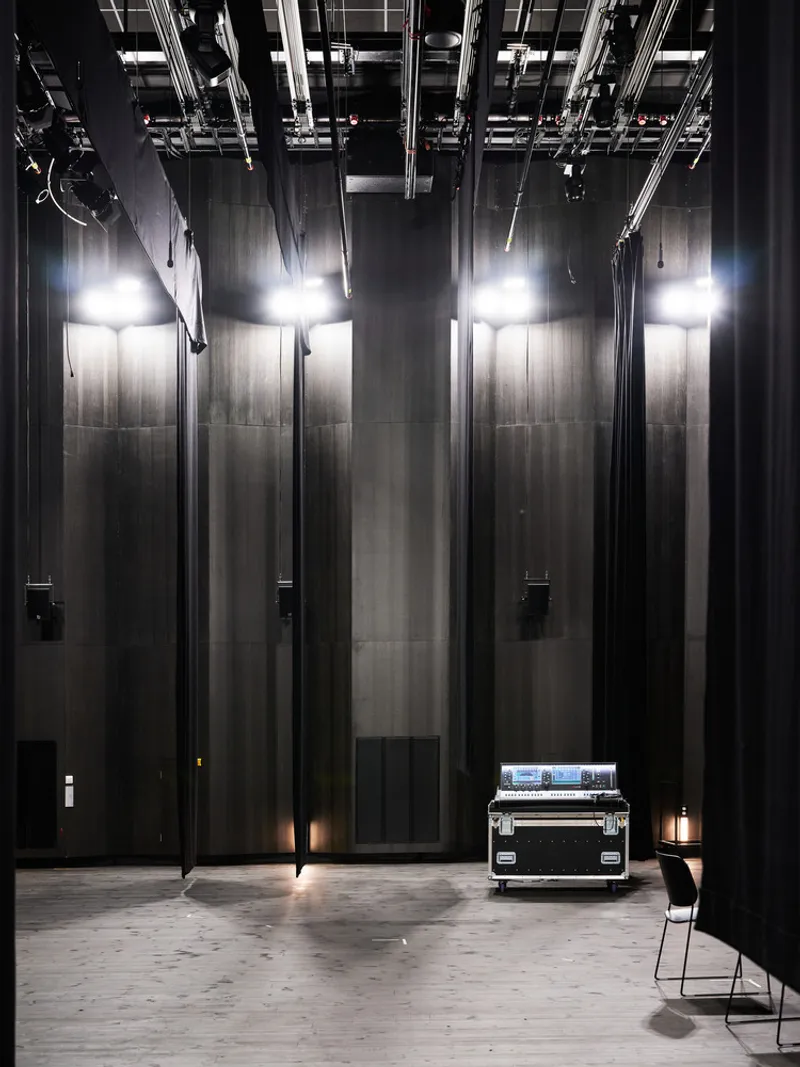
Located in the heart of Finnmarksvidda, Norway’s vast northern plateau, Čoarvemátta Cultural and Educational Hub stands as a powerful architectural expression of Sámi culture, knowledge, and continuity. Designed by Snøhetta in collaboration with 70°N Arkitektur and Sámi artist Joar Nango, the 7,200 m² project brings together two previously separate institutions, the Sámi National Theatre Beaivváš and the Sámi High School and Reindeer Herding School, within a single, unified structure.
Completed in 2024, the building emerged from a competition-winning proposal in 2021 and has since become a significant cultural landmark in Kautokeino, reinforcing architecture’s role as both a social connector and a cultural vessel.
A Name Rooted in Sámi Identity
The name Čoarvemátta derives from Sámi words meaning horn and root, referencing the innermost and strongest part of a reindeer antler. This symbolism reflects resilience, interconnectedness, and shared strength, qualities deeply embedded in Sámi culture. Much like the antler’s core binds structure and purpose, the building acts as a unifying force for education, performance, craftsmanship, and community life.
Architectural Concept and Spatial Organization
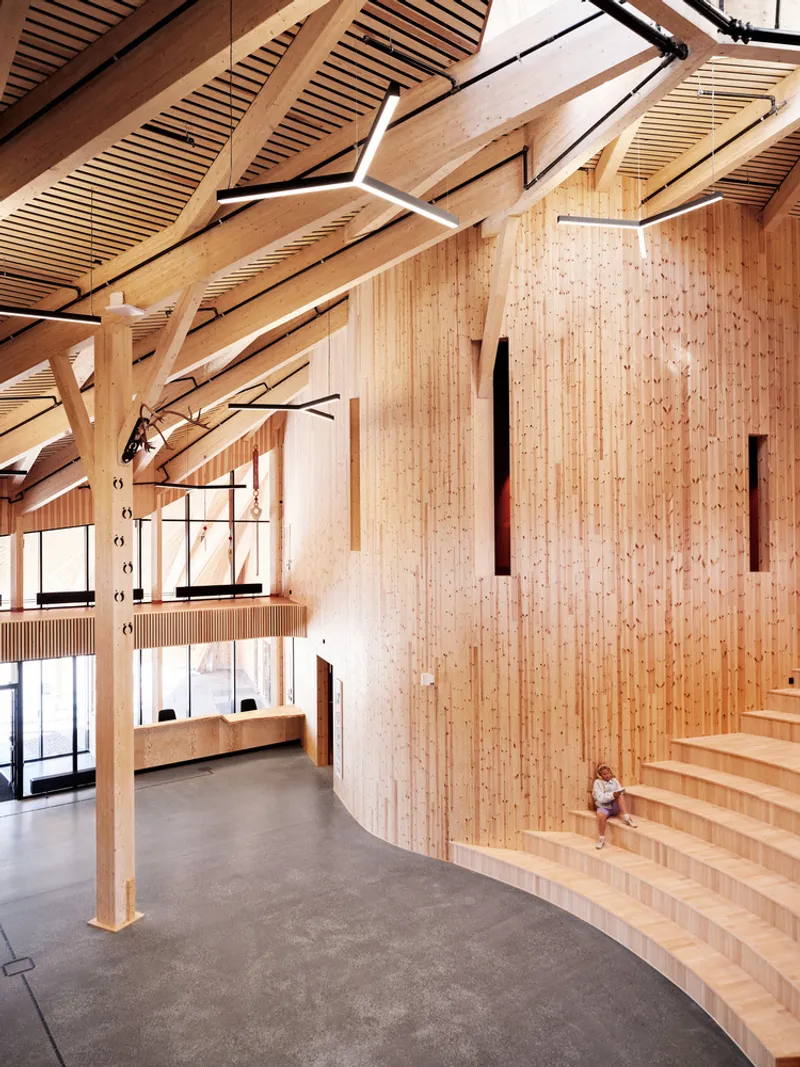
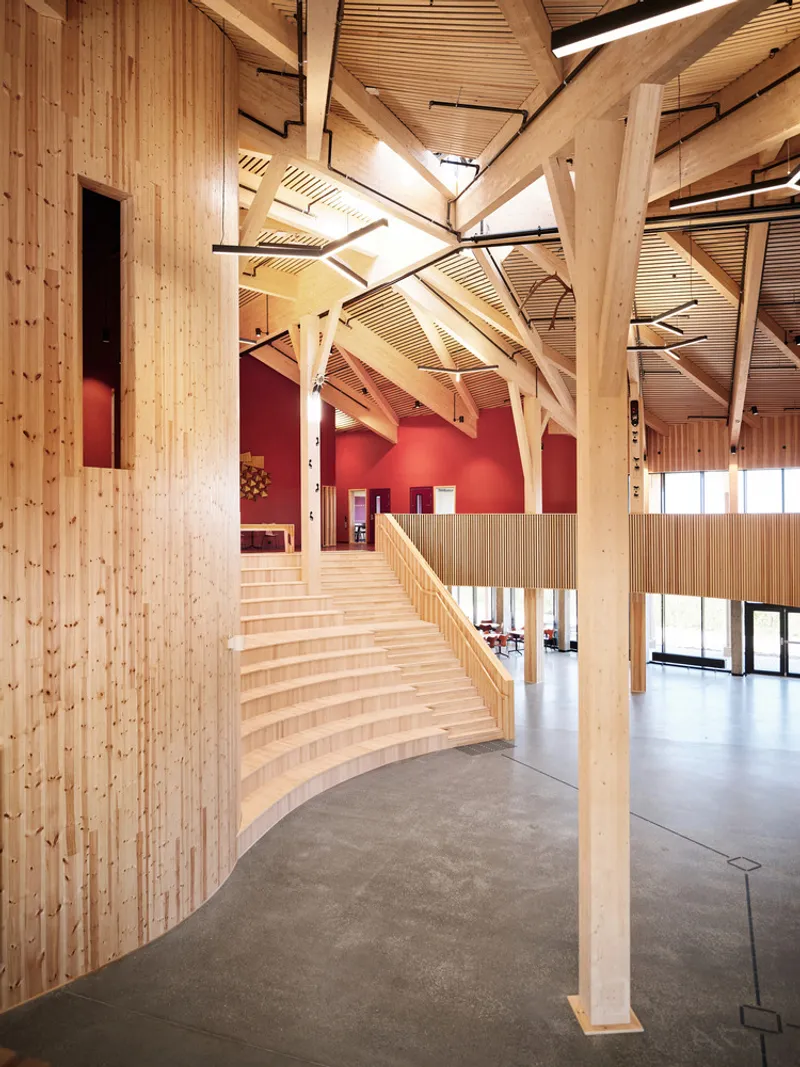
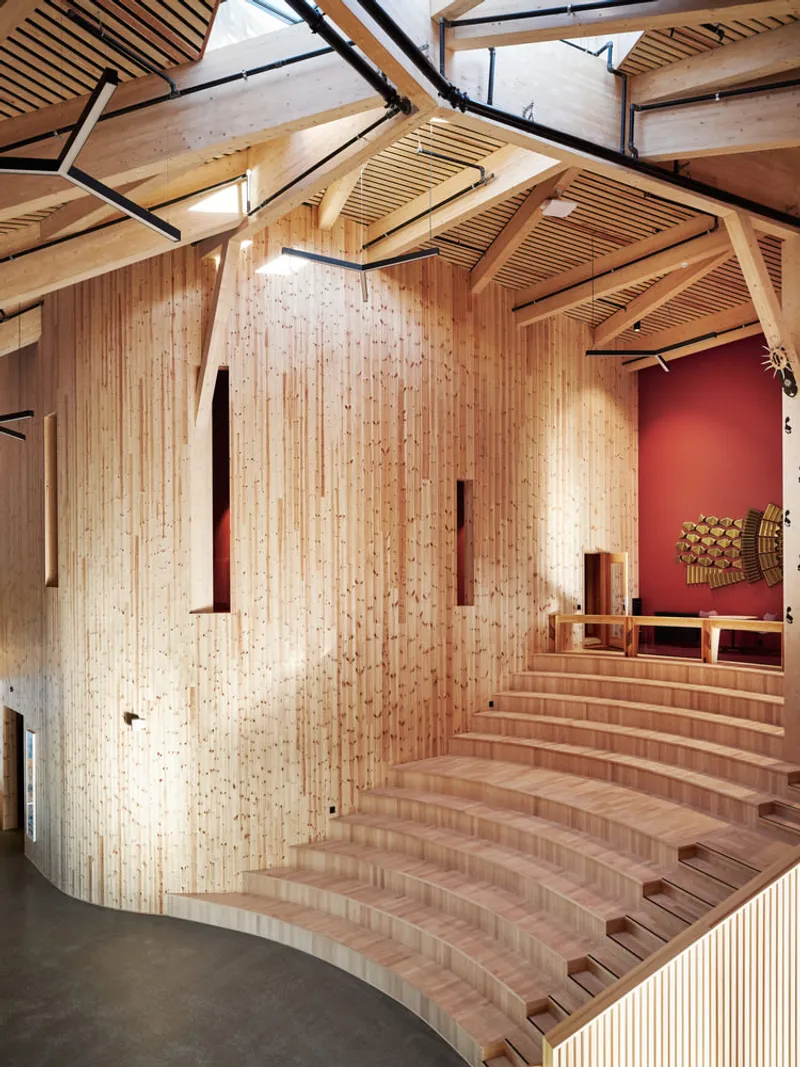
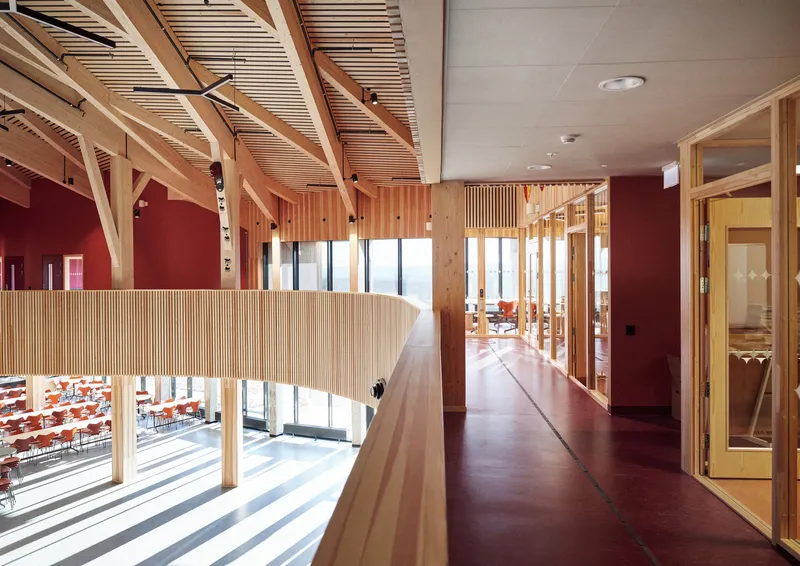
Set low within the open landscape, the building carefully negotiates scale, climate, and context. Its soft, branching form extends in three directions from a central gathering space that serves as the heart of the project. This central vestibule: flooded with daylight from skylights inspired by the reahpen (smoke hole of the traditional lávvu): connects the theatre, teaching spaces, workshops, and administrative areas.
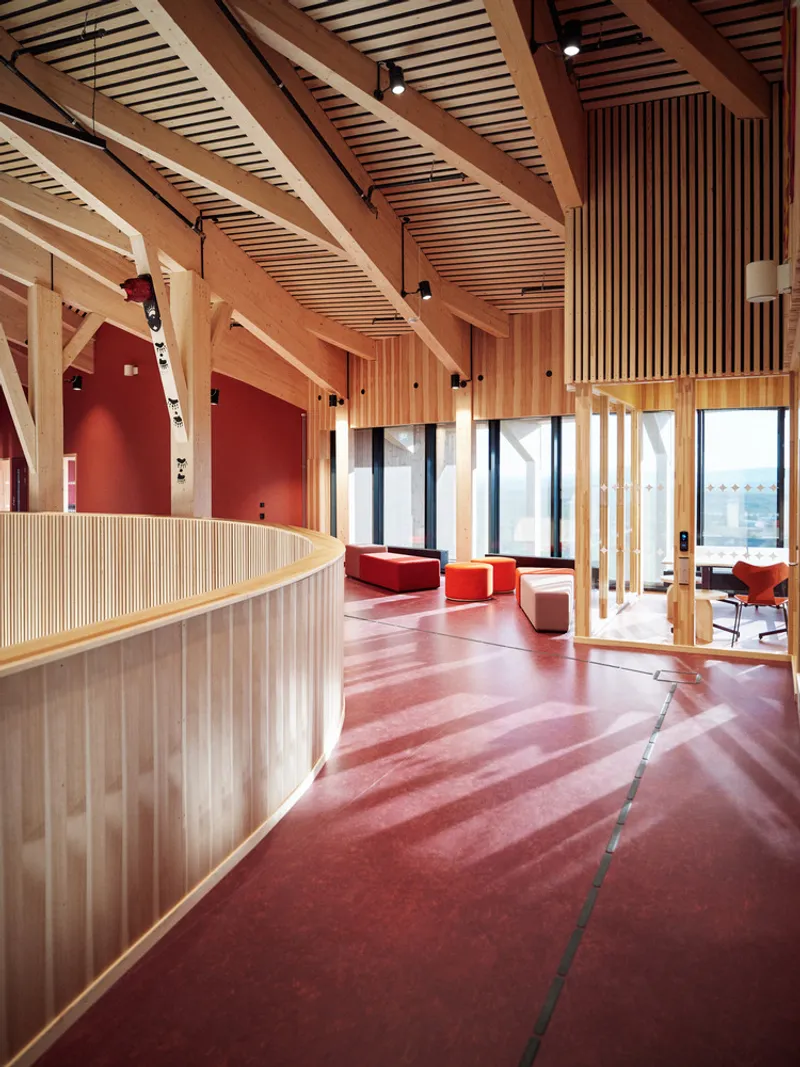
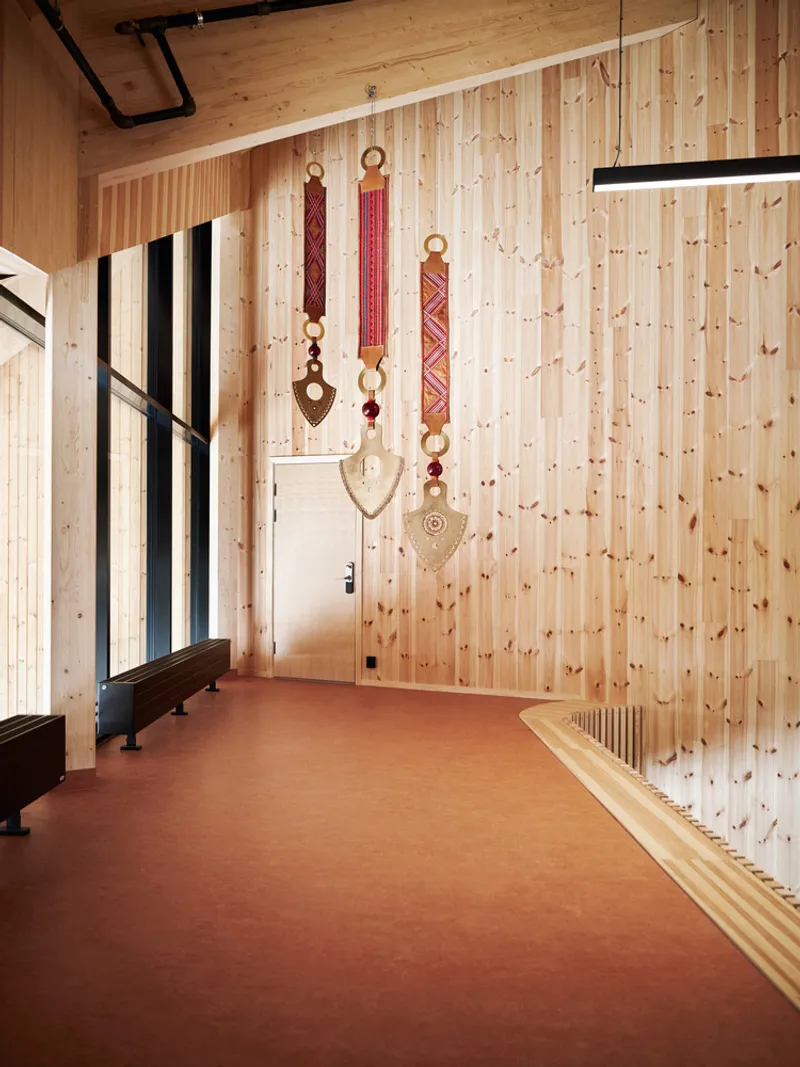
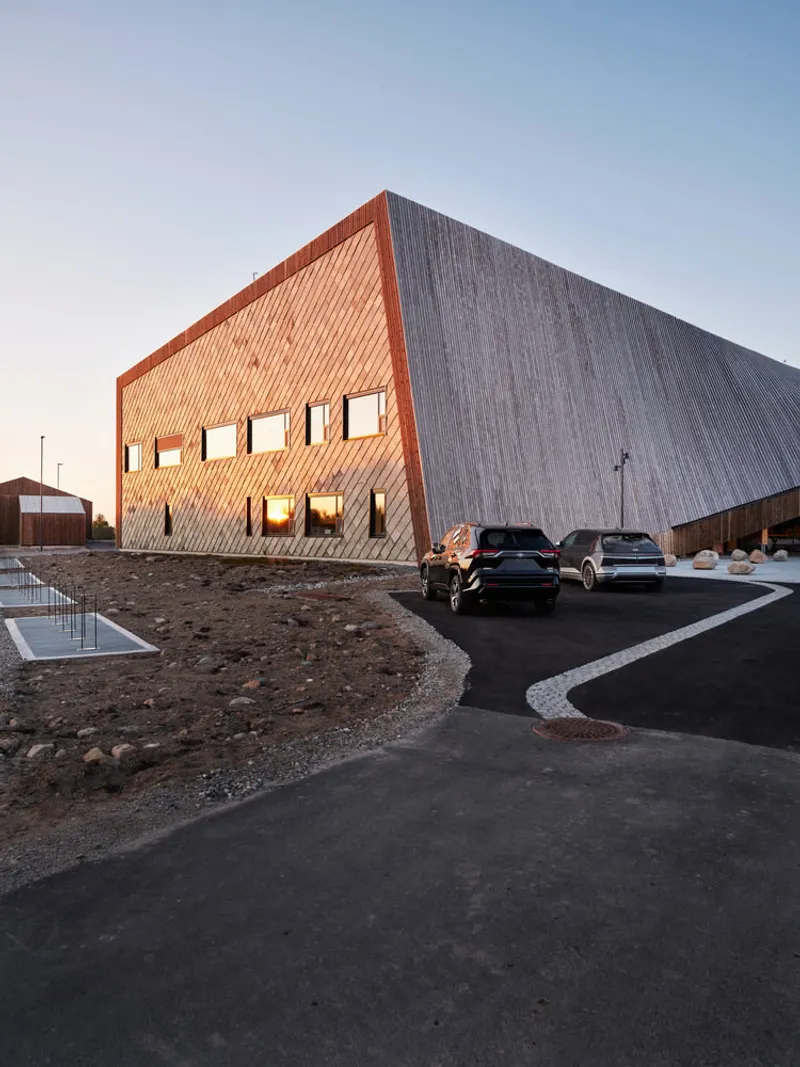
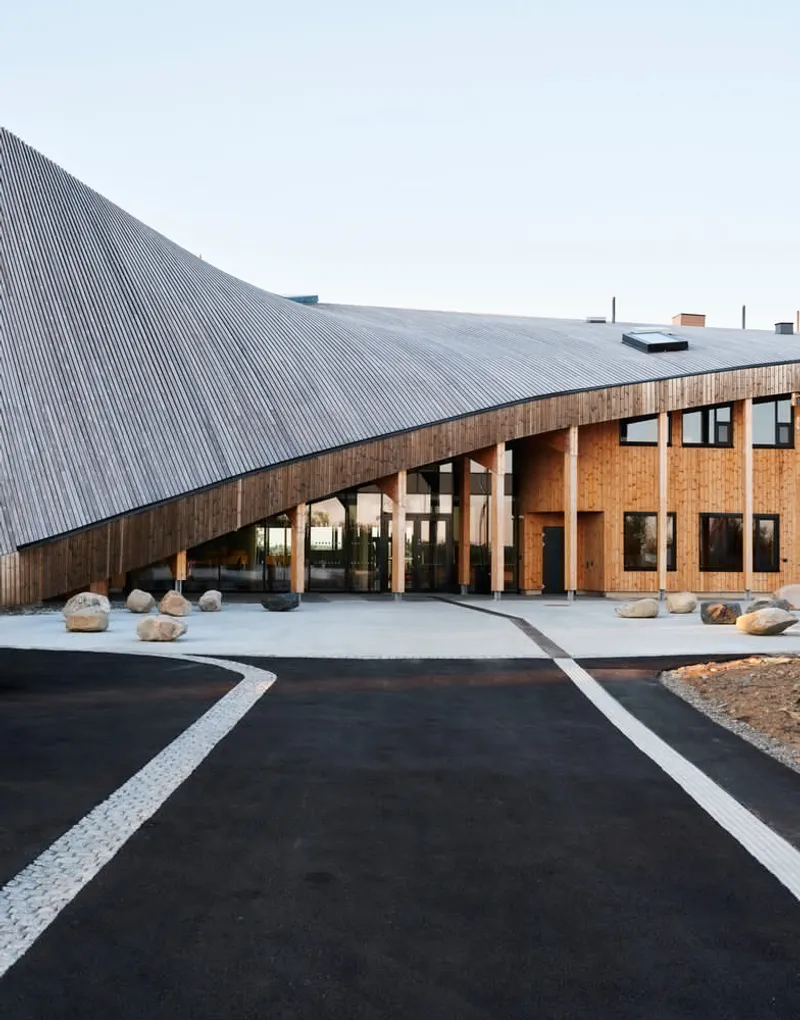
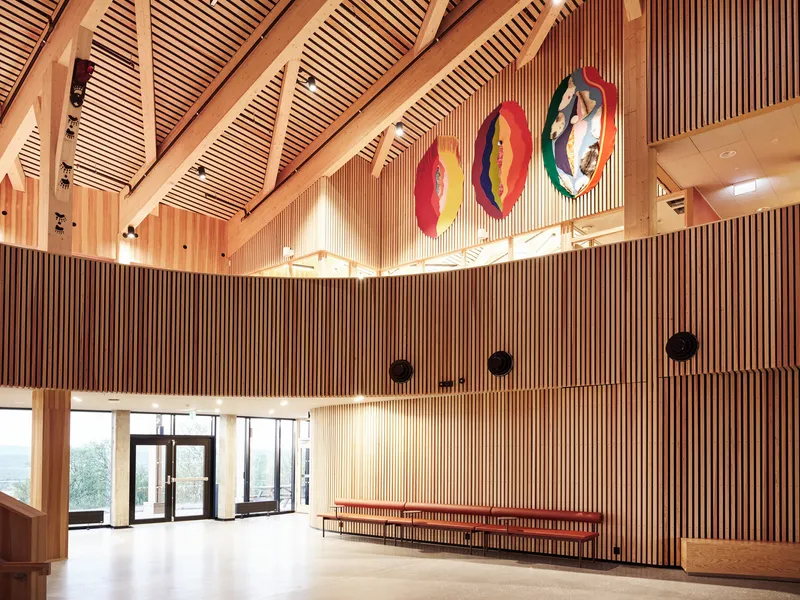
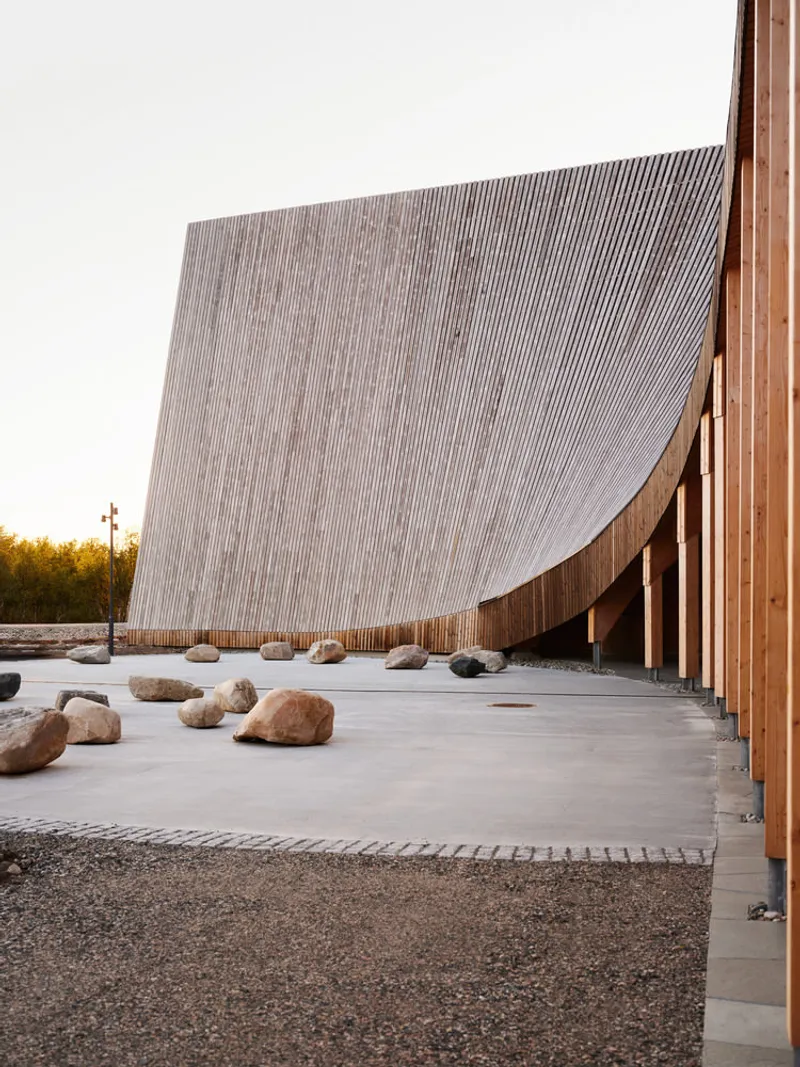
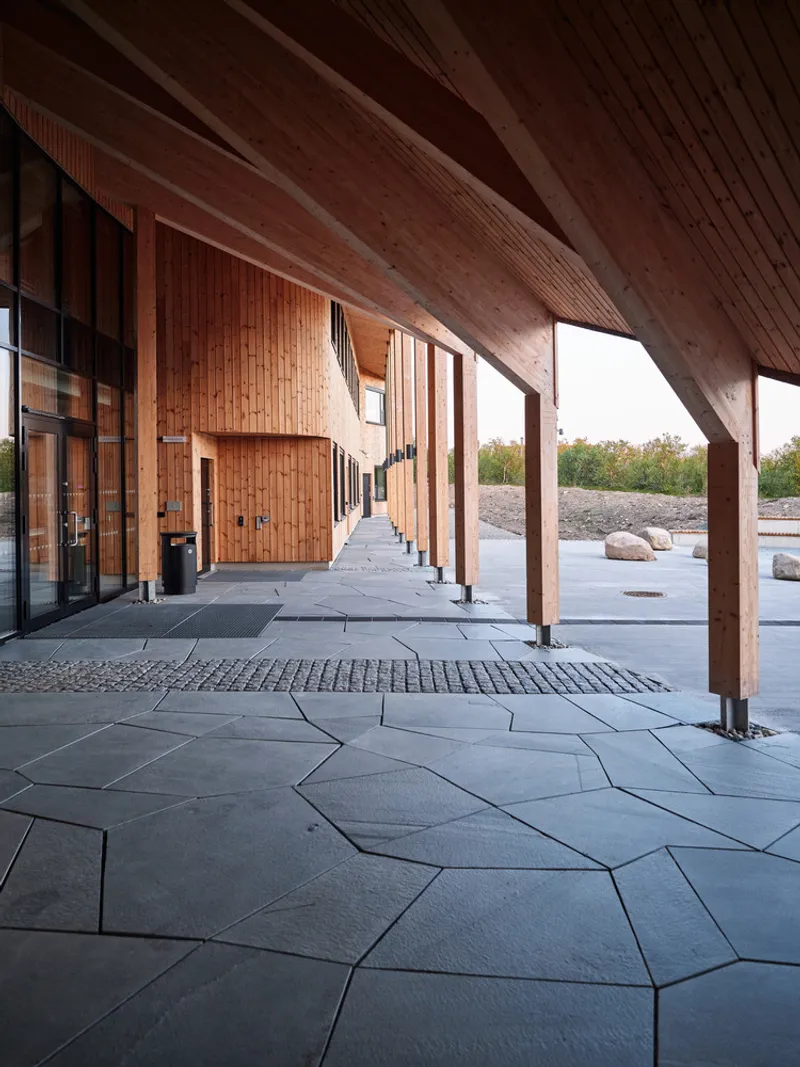
The architecture avoids sharp angles and dominant gestures, instead echoing the organic contours of the surrounding hills. Sloping roof planes on the north and south reduce the perceived mass when viewed from afar, while subtly guiding visitors toward the main entrance from the southwest. The visible timber load-bearing structure, curved lines, and unifying roof form draw directly from Sámi building traditions, translating vernacular principles into a contemporary architectural language.
Materiality, Color, and Craft
Material choices emphasize durability, reuse, and local relevance. The façade is clad in standing ore pine, while the expansive roof, nearly 5,000 m², is finished with 34,000 meters of Kebony wood, ensuring longevity in harsh Arctic conditions. Notably, Alta slate stone from the village’s demolished primary school has been reused on the theatre’s gable wall, reinforcing a circular approach to construction and memory.
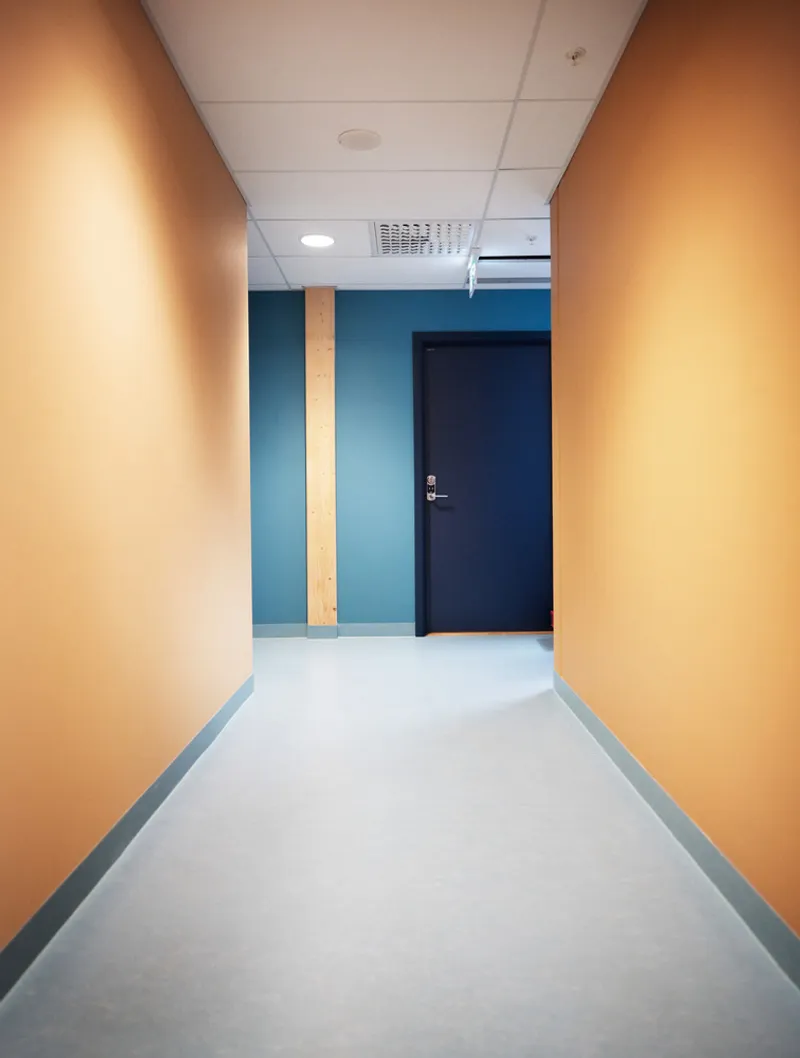
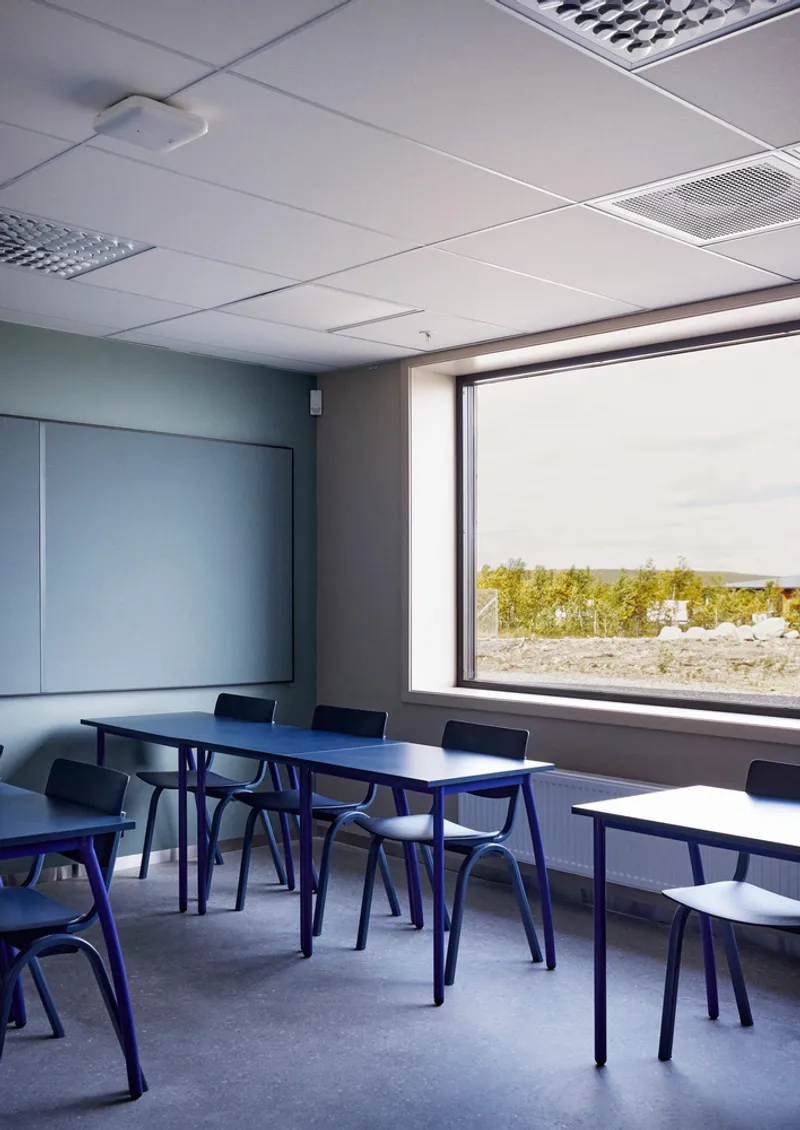
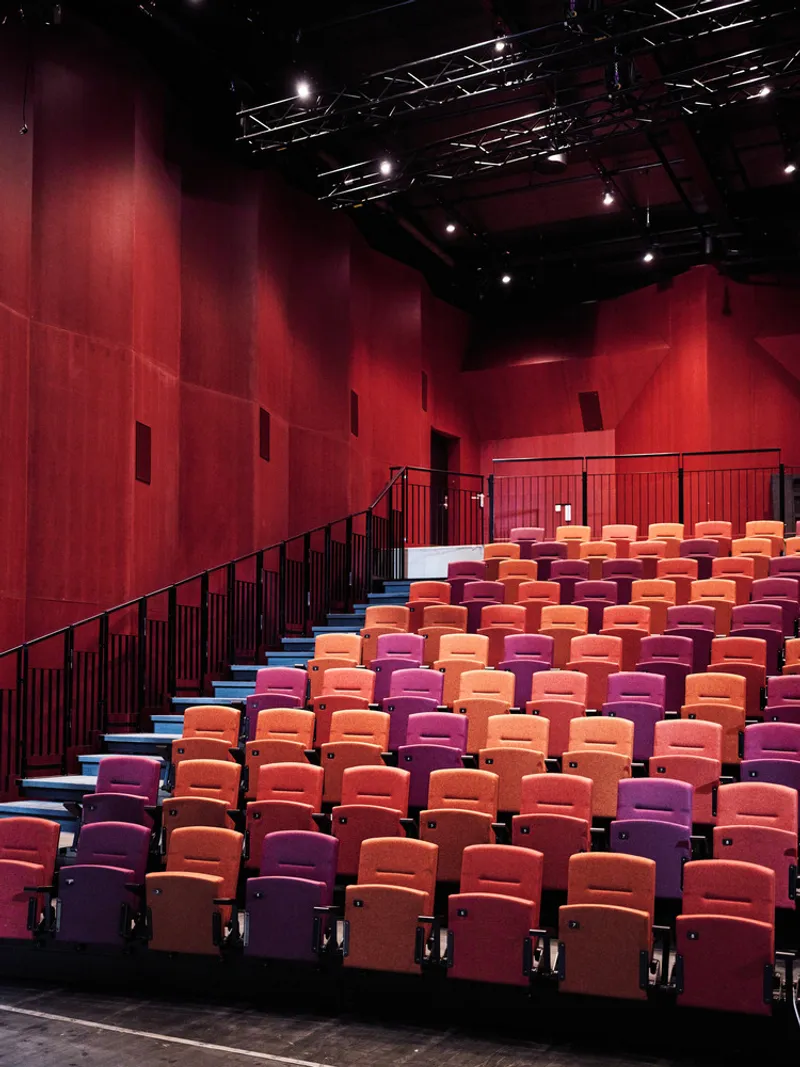
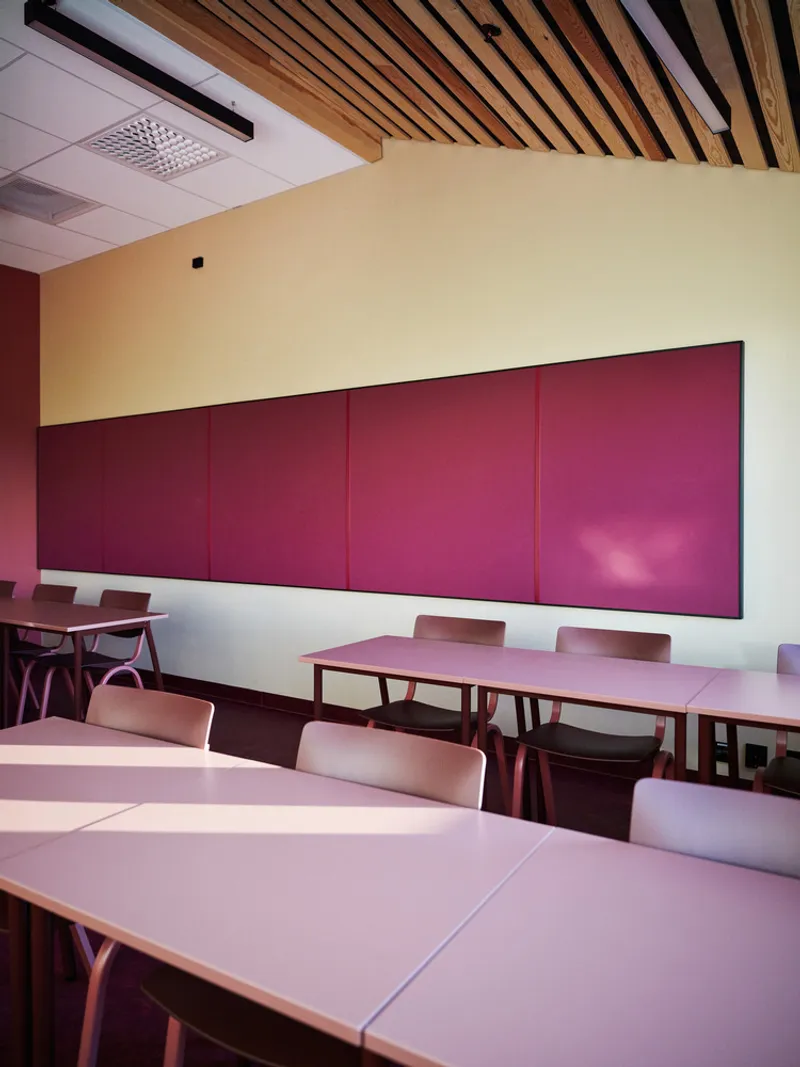
Inside, polished concrete floors reference the surrounding ground, incorporating locally sourced slate and masi quartzite in muted greys and greens. Color transitions throughout the building are deliberate: warm red tones concentrate around the foyer and theatre spaces, gradually shifting to cooler blues toward the ends of the wings. These contrasts reflect traditional Sámi color use, while creating intuitive spatial orientation for users.
Landscape Integration and Outdoor Spaces
The building’s branching geometry naturally defines three distinct outdoor areas. To the south, the main forecourt forms a circular, intimate gathering space with an arrán (fire pit), seating stones, and a small amphitheater. Stones sourced directly from the plateau reinforce a tactile connection to place.
To the west, a sheltered outdoor workshop area supports the school’s building trade programs, protected from Finnmarksvidda’s prevailing winds. To the north, reindeer fences connect directly to the reindeer herding facilities inside, designed and built with local expertise. On the east, the natural plateau landscape meets the building with minimal intervention, preserving existing vegetation and terrain.

Sustainability and Passive Design
Čoarvemátta meets Passive House standards, achieving exceptionally low energy consumption and a high-quality indoor climate. The building is 90% self-sufficient for heating and cooling, powered by 40 geothermal wells drilled 250 meters into the ground. Excess heat is stored and reused, with electric backup systems only required during extreme winter conditions.
Excavated soil from construction was carefully preserved and returned to the site to protect native seed banks. Rather than imposing a landscaped park, the design allows the plateau to reclaim the building over time, aligning with Sámi cultural perspectives that place humans within nature, not apart from it.

Signage, Art, and Cultural Expression
Snøhetta also designed the project’s signage and wayfinding system, using powder-coated steel and pine with clear iconography to support multilingual use across Northern, Southern, and Lule Sámi, as well as Bokmål. Typography and pictograms align seamlessly with the architectural language.
Public art plays a vital role in the building’s identity. Commissioned by KORO, six new artworks were created for the project, including a stage curtain by Máret Ánne Sara and the embroidered work Miin Duoddarat / Our Plains by Britta Marakatt-Labba. In addition, significant existing artworks by Aage Gaup and Iver Jåks were relocated from the old school, reinforcing continuity between past and present.
A Living Cultural Landmark
More than a school or theatre, Čoarvemátta Cultural and Educational Hub is a living framework for Sámi culture: one that supports learning, performance, craftsmanship, and community gathering under a single roof. Rooted in tradition yet forward-looking in its sustainability and spatial design, the project exemplifies how contemporary architecture can respectfully engage with Indigenous knowledge, climate, and landscape.

All photographs are works of Lars Petter Pettersen


Popular Articles
Popular articles from the community


Cube Design Draws an Ecological Corridor Between Two Shenzhen Hills with the Nankai Building
Beside Shenzhen's container docks, the Nankai Building pairs stacked balconies with a climbing green screen to connect two hillsides across its height.

Juan García Correa, John González and Claudia Rueda Sink a Circular Amphitheater into a Manizales Engineering Building
On the La Nubia campus in Manizales, Colombia, the S1 Building folds labs and offices into a hillside of ramped lawns that double as a campus route.

Architekt Andreas Gruber Scatters 23 Dark Timber Chalets Across a South Tyrolean Forest Edge
In Molini di Tures, Amonti Chalets breaks a resort into a hamlet of gabled timber houses, with parking, storage and services pushed into the slope.

David Ortega Stacks a Two-Story Mexico City Penthouse Around a Steel Stair and a Pergola-Shaded Roof Terrace
In Colonia Roma, a 300 m² penthouse uses oak joinery, a planted steel stair and a slatted roof pergola to make a new-build apartment feel like a house.

Similar Reads
You might also enjoy these articles


Hodi-Mandai Geram
Project Function: Preservation and revitalization of the Intangible heritage and socio-spatial identity of the Hodi by Housing, Cultural Memory Center, Sacred Grove, landscape, local tourism economy


Olio Towers: A Mid-Rise for Performers That Fuses Housing, Rehearsal, and Stage
Located blocks from Houston's Theater District, this modular tower stacks living units around a central performance atrium.

Oasis: Modular Green Housing Carved into Dhaka's Urban Fabric
A shortlisted Plugin Housing entry reclaims unauthorized settlements in Dhaka with stepped concrete volumes, green roofs, and ventilation-driven design.

Black Hole: A Floating Megastructure for the Post-Physical Era
Emiliano Mazzarotto envisions a spherical, self-scaling arena where e-sports, digital hotels, and holographic stadiums replace traditional public space.

Explore Educational Building Competitions
Discover active competitions in this discipline

Challenge to design public laboratory

Challenge to reimagine the Iron Throne

Photograph architecture without architects

Illustrate the lost glory of Angkor Wat - Render Challenge
Comments (0)
Please login or sign up to add comments
No comments yet. Be the first to comment!