
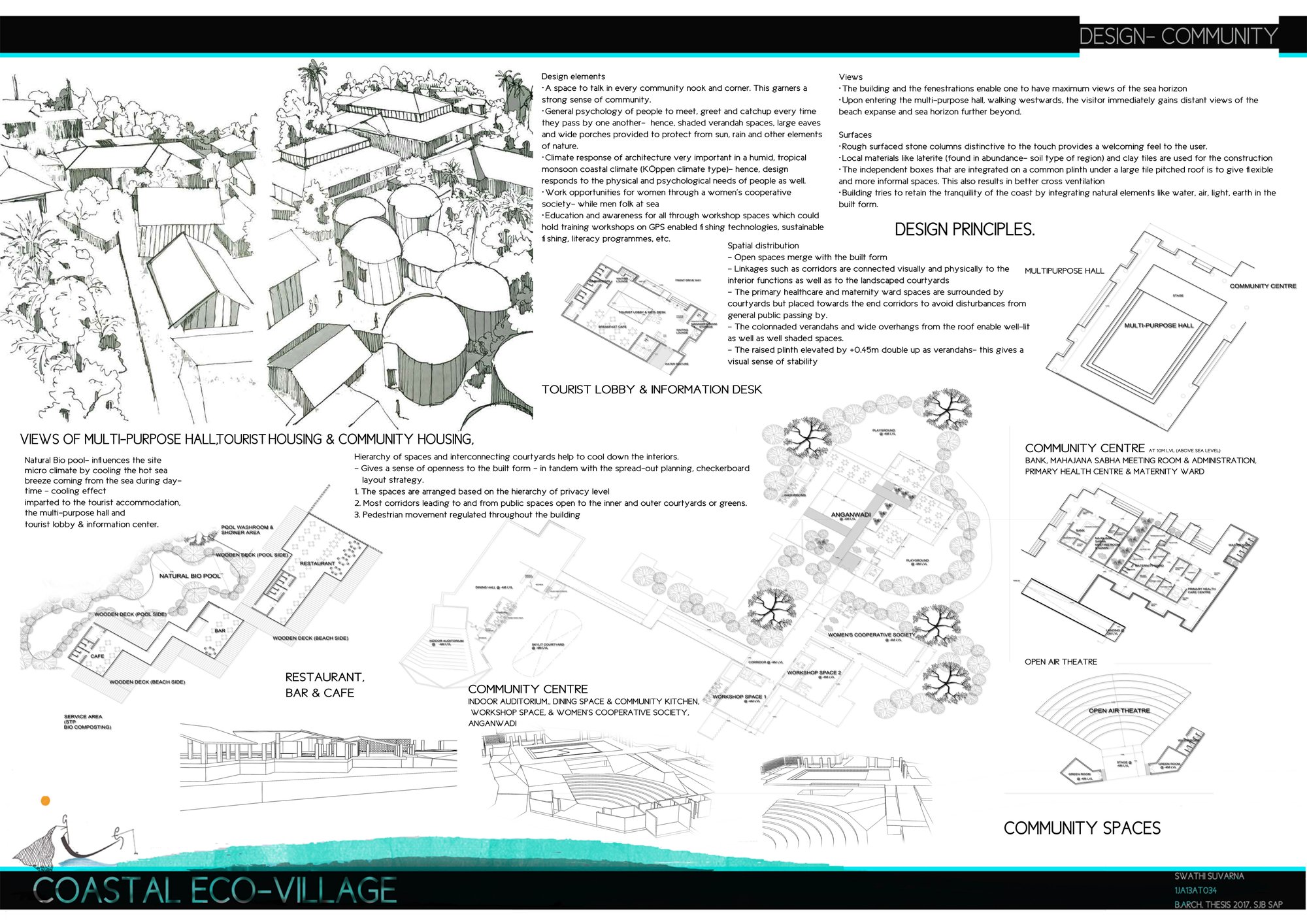
Coastal Eco-village | Sustainable Coastal Architecture
A sustainable coastal architecture proposal that revitalizes a fishing village by blending community life, ecology, and tourism along India’s fragile shoreline.

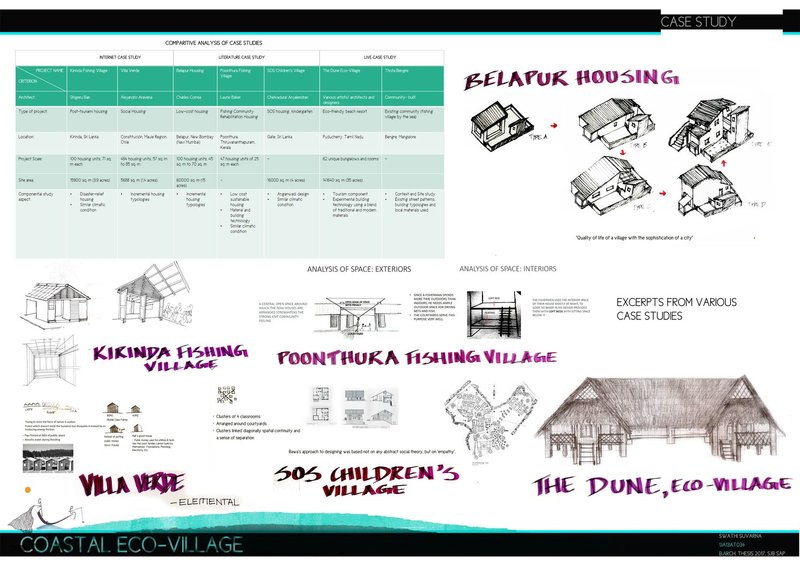
"Coastal Eco-Village" - A revitalization of an existing community is a comprehensive architectural proposal aimed at the revitalization of an existing fishing community along the coast of Karnataka, India. Rooted in the principles of sustainable coastal architecture, the project reimagines everyday village life at the edge of land and sea: where tourism, livelihood, ecology, and culture coexist rather than compete.
What many experience as a beach vacation: the warmth of the sun, the cooling sea breeze, the salt‑laden air, and sand beneath bare feet: is, for local fishermen, a way of life shaped by tides, seasons, and collective effort. This project acknowledges that duality and proposes an architectural framework that strengthens the community while responsibly opening it to tourism.
Designed by Swathi S, the Coastal Eco‑Village focuses on improving living conditions, upgrading infrastructure, and creating shared community spaces, all while respecting sensitive coastal ecosystems and existing social structures.
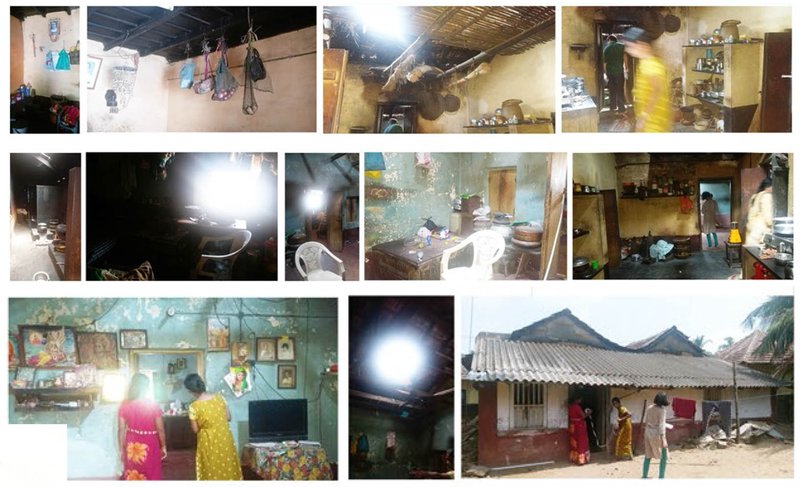
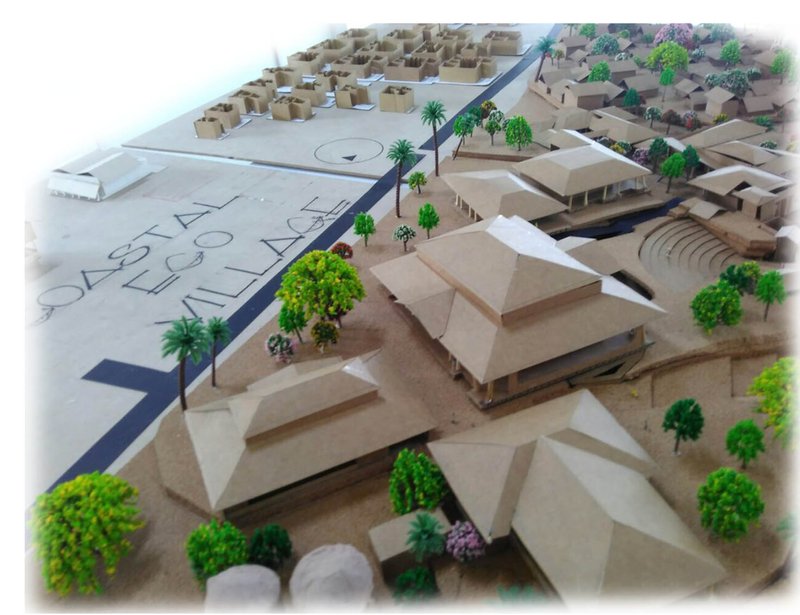
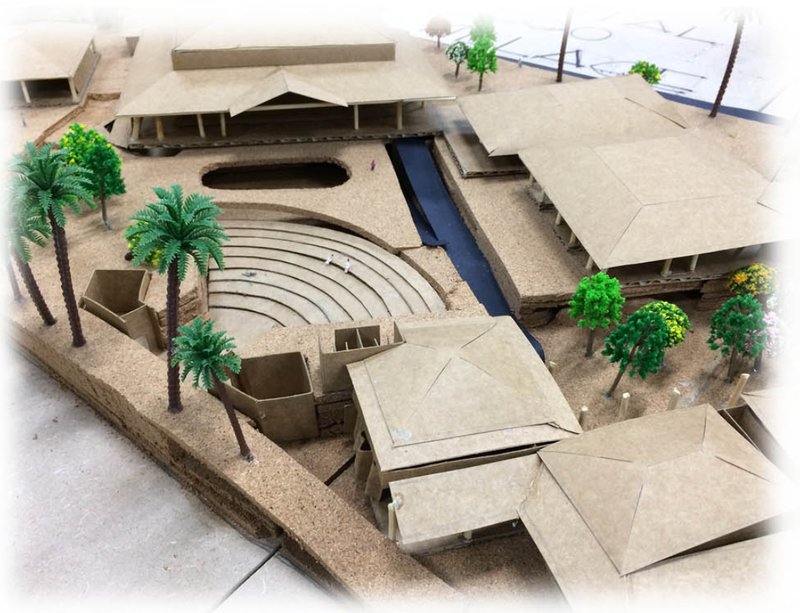
Context: Bengre Fishing Village, Mangalore
The site is located in Thota Bengre, a fishing village on the Bengre Peninsula near Mangalore. The settlement is uniquely positioned between the Arabian Sea, the Gurupura River, and the Nethravathi River, making it ecologically sensitive and culturally rich.
Historically, the community was relocated from the Goodeshe Nireshevala Bundar area without formal compensation, resulting in long‑standing issues related to land rights, infrastructure, and access to services. Despite these challenges, the village has evolved into a resilient settlement of thousands of households, with fishing as its primary economic activity.
The project responds to this layered history by proposing development that is inclusive, incremental, and rooted in local identity, an essential approach in sustainable coastal architecture.
Design Intent and Objectives
The core aim of the Coastal Eco‑Village is to create a self‑sustaining coastal community that balances local livelihood with tourism‑driven economic opportunities. The key objectives include:
- Providing sustainable housing solutions for fishermen within the existing settlement pattern
- Enhancing community infrastructure such as schools, health centers, cooperative spaces, and markets
- Integrating tourism facilities without displacing residents or eroding cultural identity
- Establishing vocational training and workshop spaces linked to fishing and allied activities
- Ensuring continuity, comfort, and a strong sense of belonging for the community
- Creating a masterplan that aligns with Coastal Regulation Zone (CRZ) guidelines
Sustainable Coastal Architecture Approach
Given the fragile coastal ecosystem, the project adopts a design philosophy that works with nature rather than against it. The architectural response is shaped by climate, topography, wind patterns, and existing settlement morphology.
Key strategies include:
- Climate‑responsive design: Building orientation, shaded verandahs, courtyards, and double‑roof systems address heat, humidity, and monsoon rainfall.
- Low‑impact materials: Locally available laterite stone, clay tiles, lime plaster, and timber reduce embodied energy and maintain visual continuity with the village fabric.
- Passive ventilation: Narrow streets, open courtyards, and cluster housing layouts enhance airflow and thermal comfort.
- Landscape integration: Natural dunes, vegetation buffers, and open space networks help manage erosion and microclimates.
This approach ensures that sustainable coastal architecture is not merely a visual language but a functional system embedded in everyday life.
Masterplanning and Zoning
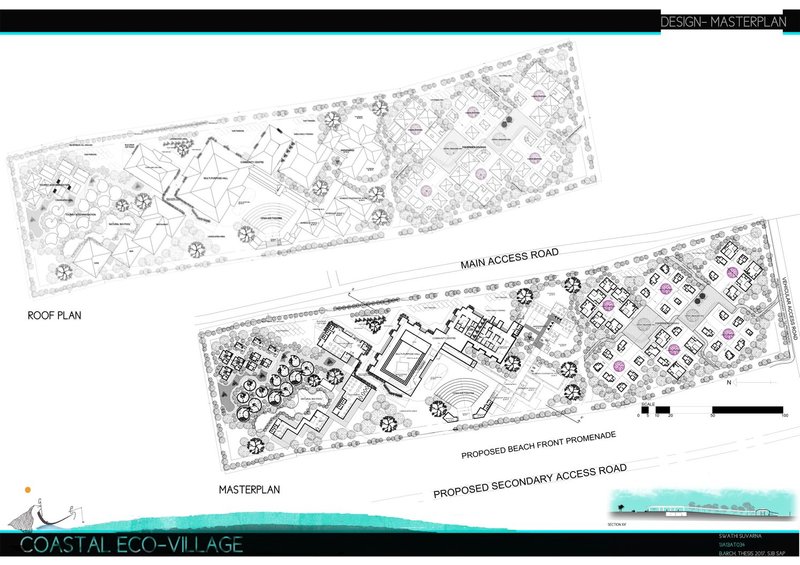
The masterplan organizes the site into interconnected zones that allow tourism and community life to function independently yet collaboratively:
- Fishing Community Housing: Cluster‑based housing prototypes designed for incremental growth and shared courtyards.
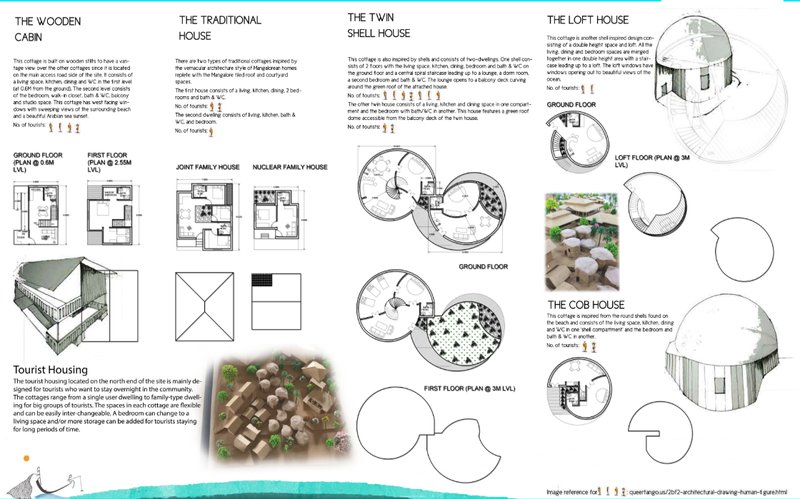
- Tourist Accommodation: Low‑rise, dispersed units that minimize visual and ecological impact while offering views of the sea.
- Community Core: Multipurpose halls, cooperative offices, training workshops, and women‑led enterprises.
- Public Promenade: A beach‑front walkway that serves both residents and visitors, encouraging interaction without intrusion.
- Open Space Network: Playgrounds, shaded gathering spaces, and green buffers connecting different parts of the village.
Circulation paths are layered to distinguish tourist movement from daily community routines, preserving privacy while enabling engagement.
Housing Typologies for Fishermen
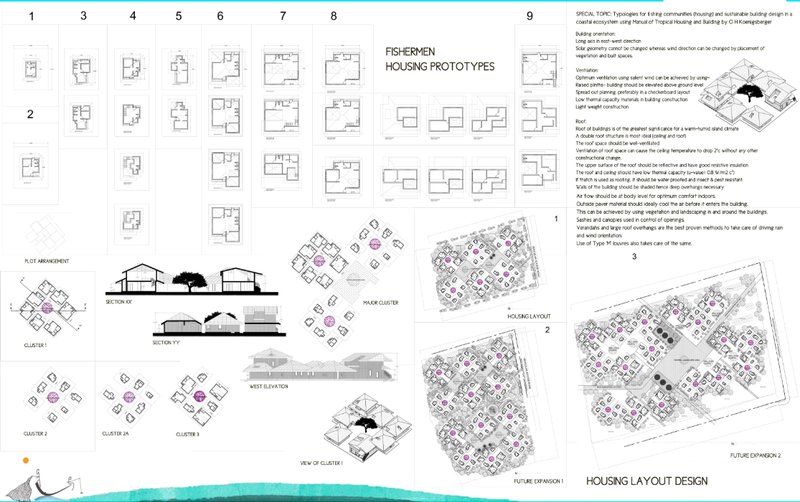
The fishermen housing prototypes are central to the project. Designed as flexible modules, they respond to family size, economic conditions, and future expansion.
Key features include:
- Compact yet efficient floor plans
- Courtyards for social interaction and passive cooling
- Verandahs as transitional spaces between private and public realms
- Cluster arrangements that strengthen community bonds
These housing models prioritize dignity, resilience, and adaptability, core values of sustainable coastal architecture.
Tourism as a Community Asset
Rather than treating tourism as an external imposition, the Coastal Eco‑Village integrates it as a complementary layer. Seasonal tourism aligns with fishing off‑seasons, providing secondary income sources through:
- Homestays and eco‑lodges
- Guided fishing and boat‑building workshops
- Local cuisine, markets, and cultural events
- Craft and vocational training centers
This model ensures that tourism revenue circulates within the community, supporting long‑term economic stability.
Community Spaces and Social Infrastructure
Community life is reinforced through thoughtfully designed shared spaces:
- Multipurpose halls for gatherings, festivals, and meetings
- Open‑air theatres for cultural performances
- Community kitchens and cooperative workspaces
- Primary health and maternity centers
These spaces act as social anchors, reinforcing collective identity and shared ownership of the village’s future.
The Coastal Eco‑Village demonstrates how sustainable coastal architecture can serve as a catalyst for social, economic, and environmental renewal. By respecting existing settlement patterns, empowering local livelihoods, and carefully integrating tourism, the project offers a replicable model for coastal communities across India.
Designed by Swathi S, this proposal moves beyond architecture as mere form‑making. Instead, it positions architecture as a tool for resilience: one that strengthens communities, preserves ecosystems, and redefines how we inhabit the edge between land and sea.




Popular Articles
Popular articles from the community

20 Most Popular Office Building Projects of 2025
From biophilic workspaces in India to net-positive energy offices in New Delhi, 20 office building projects that defined architecture in 2025.

3dor Concepts Wraps a Kerala Home in Mirrored Concrete Arcs Around a Courtyard Tree
In the Western Ghats foothills of Thamarassery, a 270 m² single-story house uses two curved volumes to frame nature as its center.
Bernardes Arquitetura Stretches a Timber Roof Along a Reservoir's Edge in Minas Gerais
Dam House in Itaúna lets a sweeping wooden canopy dissolve the boundary between hillside terrain and open water.
Fausto Terán and Toro Fuse Japanese Craft with Mexican Tradition in a Lakeside Retreat
Nakamura House pairs Shou-Sugi-Ban charred pine with handmade clay tile at the foot of Atlangatepec Lagoon in Mexico.


Similar Reads
You might also enjoy these articles

Urban Forest: A Vertical Ecosystem for 5,000 Workers in Singapore's Changi Business Park
Radially stacked pods and layered green decks turn a 7-acre plot into 47 acres of ecological workspace projected for 2040.
interACT: A Wearable Transit Object That Turns Commuting Into Social Infrastructure
A backpack-mounted foldable device transforms walking, waiting, and riding into moments of shared comfort across Jakarta's transit network.
Lean On Barrier System: Where Traffic Safety Meets Chai Culture in Ahmedabad
A modular steel barrier doubles as informal seating and lean-on furniture at one of Ahmedabad's busiest intersections, keeping vendors in place.

The Black Bagh: A Living Monument Built from Water, Light, and Memory
On the banks of the Yamuna, two designers replace the myth of a marble mausoleum with a regenerative landscape of reflection and ritual.





Comments (0)
Please login or sign up to add comments
No comments yet. Be the first to comment!