

Coburg and Moreland Stations by Wood/Marsh: Redefining Melbourne’s Rail Infrastructure with Civic Architecture and Community Focus
Coburg and Moreland Stations transform Melbourne’s rail hubs into vibrant, community-focused spaces blending heritage architecture with modern infrastructure.


Location: Coburg, Australia Architects: Wood/Marsh Project Area: 2,159 m² Year Completed: 2023 Photography: Peter Clarke Landscaping: Tract
The Coburg and Moreland Stations, designed by acclaimed architects Wood/Marsh, are key components of the transformative Bell to Moreland Level Crossing Removal Project in Melbourne. This project successfully reimagines railway infrastructure as vibrant, community-centered civic spaces, blending historical reverence with modern design to enhance the urban rail experience.
A Civic Architectural Response Celebrating Railway Heritage
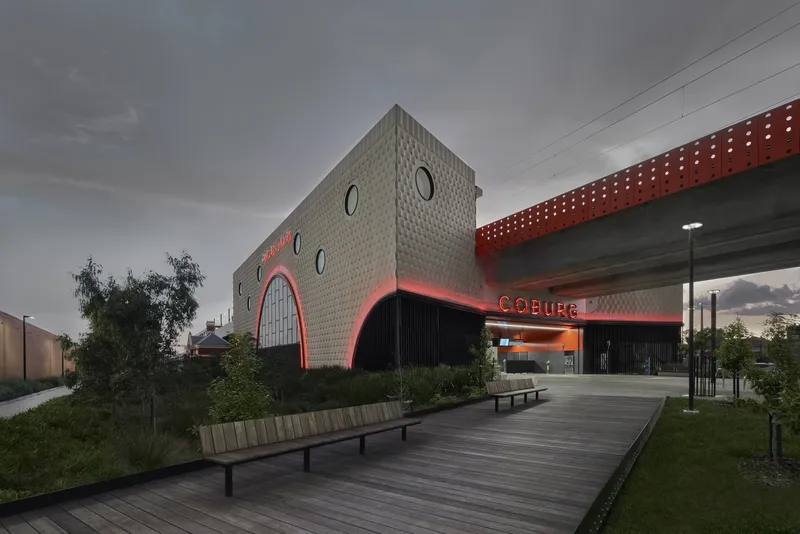
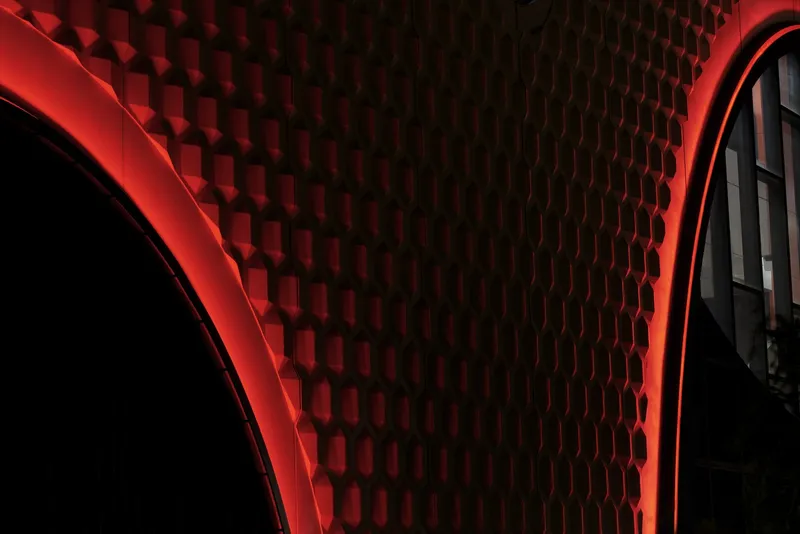
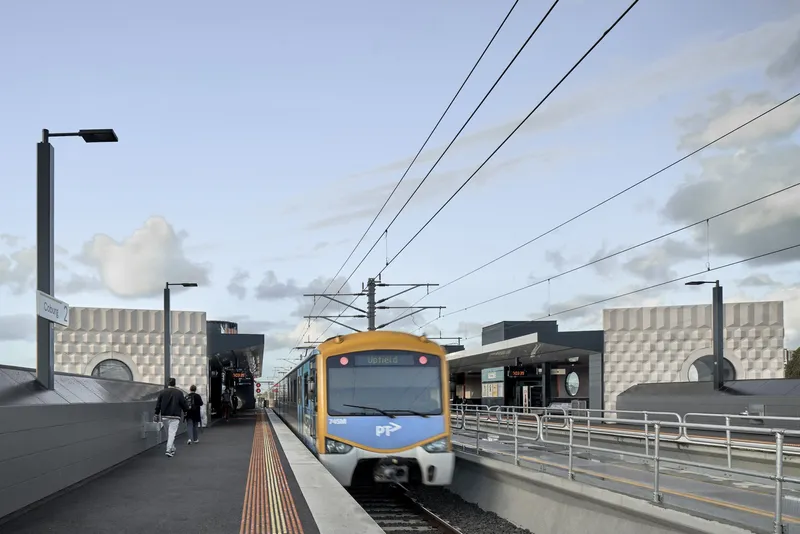
Wood/Marsh’s design thoughtfully honors Melbourne’s rich railway history. The Coburg Station embodies a civic gesture through its architectural language, drawing abstract inspiration from classical motifs. The façade is adorned with decorative friezes, architraves, and intricate hexagonal reliefs on pre-cast concrete elements that dynamically play with daylight, enlivening the exterior throughout the day.
On both the east and west sides, grand arched windows pay homage to Melbourne landmarks such as Flinders Street Station and the National Gallery of Victoria. These elements create a direct visual and cultural link, celebrating Melbourne’s civic architectural heritage while establishing Coburg Station as a memorable landmark.
Interior Design: A Grand Arrival Experience
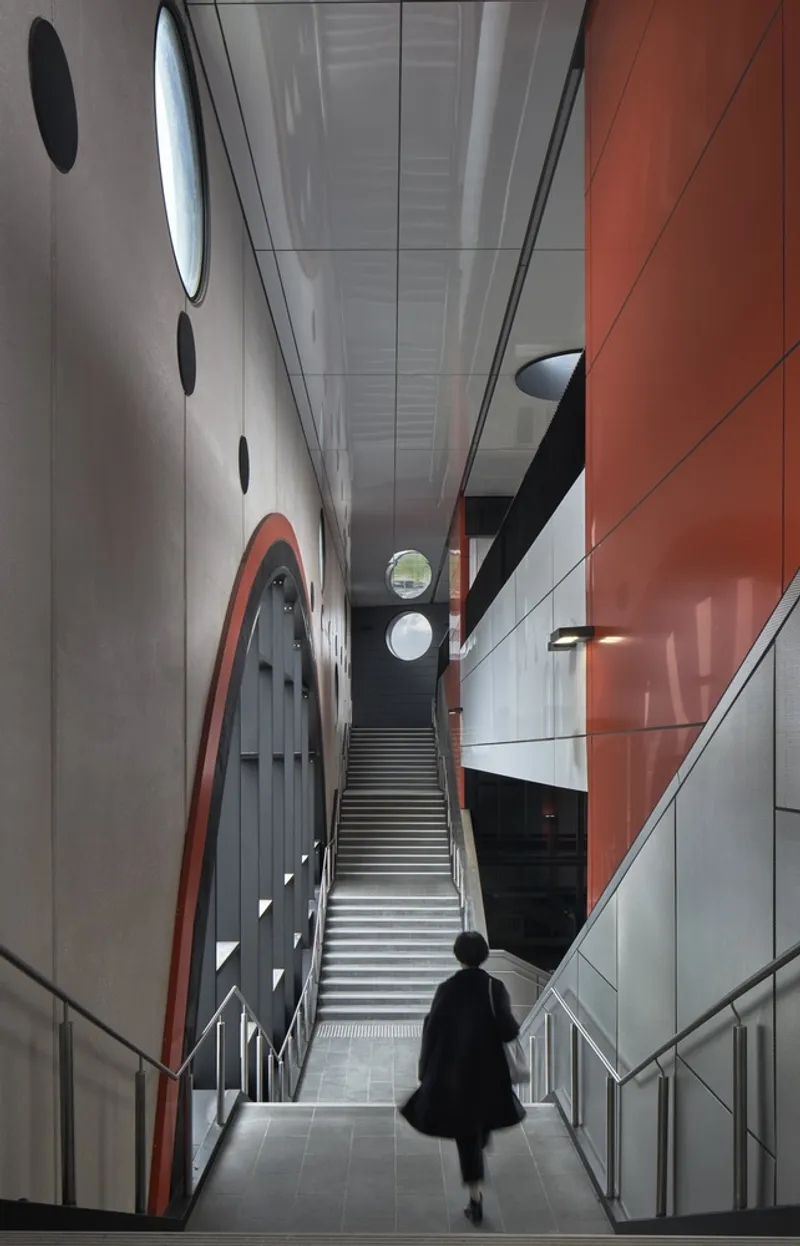
Inside Coburg Station, the atmosphere evokes the grandeur of historic transport hubs like Grand Central Station in New York. The double-height concourse is flooded with natural light pouring through the expansive arched windows, crafting an inviting and open environment. Split-level staircases guide passengers smoothly through the space, enhancing circulation and user experience.
Moreland Station: Heritage Meets Modern Comfort
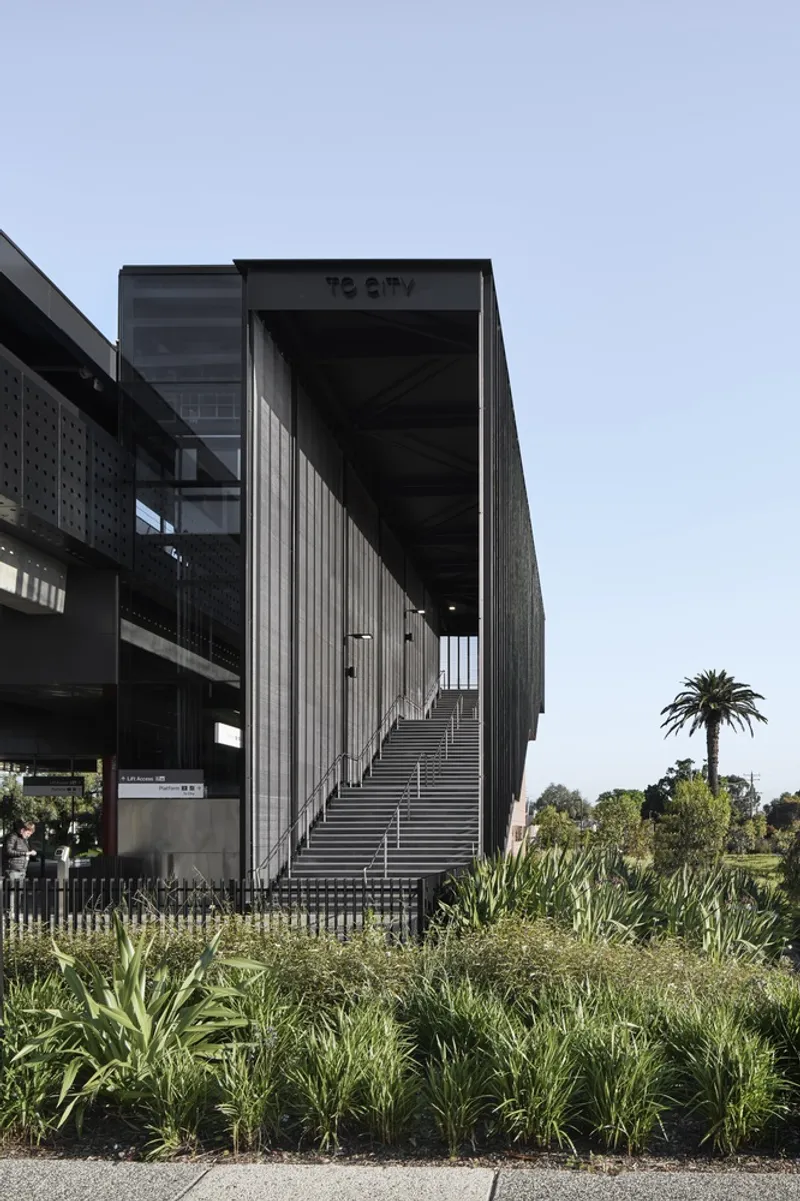
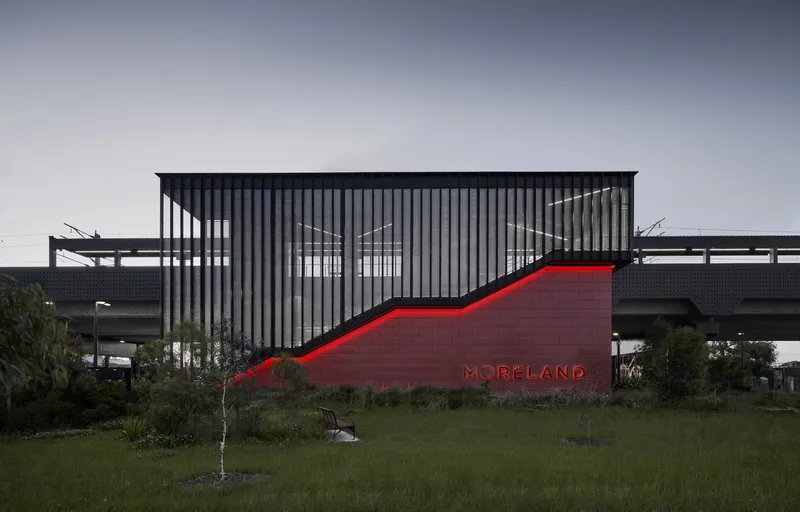
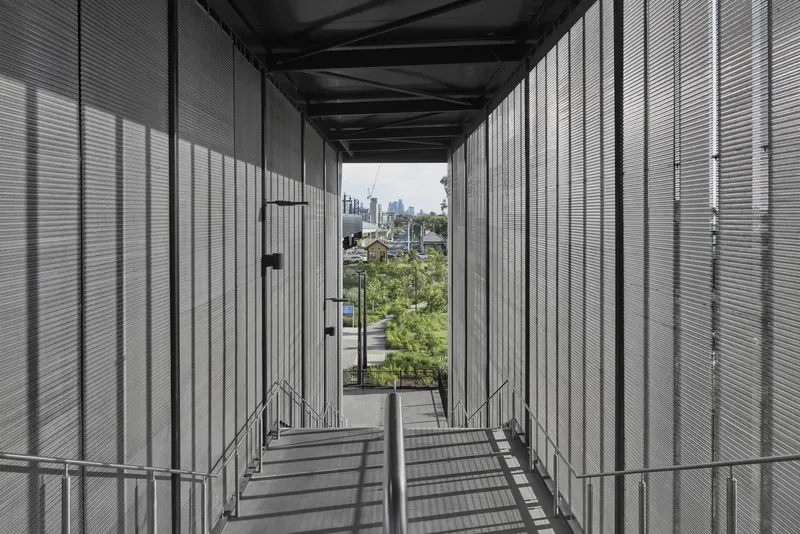
At Moreland Station, the design pays respect to the adjacent historic railway building by referencing its red brickwork through terracotta-paneled bases. Grand stairs appear to float above this base, supported by delicate metal mesh screens that provide weather protection while allowing cross-ventilation. This screen also maintains visual connectivity to the nearby Gandolfo Gardens and the surrounding neighborhood, integrating nature and community within the station’s design.
Both stations feature warm, vibrant orange architectural accents and lighting, creating a playful identity and a welcoming ambiance that enhances their role as local transport hubs.
Infrastructure and Urban Design Integration
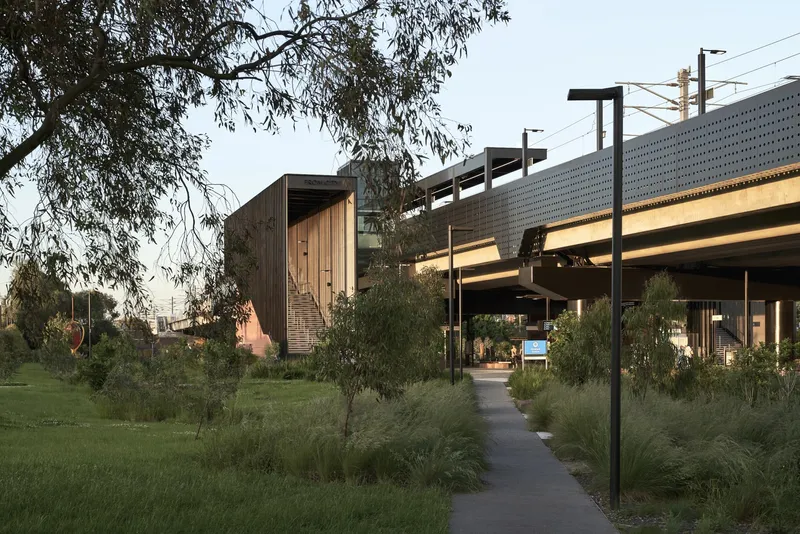
Referencing historic rail infrastructure, the elevated rail lines incorporate visual motifs inspired by rivets and gantries. These are reflected in the architectural screening of the rail bridge and the supergraphics on the retaining walls, linking past and present visually.
Importantly, the elevated rail opens up 22.5 hectares of previously inaccessible space along the Upfield Line for public use. The urban design, developed in collaboration with Tract, activates this new open space by introducing amenities such as:
- Gathering spaces
- Cycling and walking paths
- Skate parks
- Exercise and sports facilities
- Playgrounds
- Parklands
These amenities foster community engagement, encourage active lifestyles, and create vital green corridors within the suburban fabric.
Enhancing Connectivity and Community Life
More than mere transit points, Coburg and Moreland Stations serve as civic places of arrival and departure that connect Melbourne’s northern suburbs to the broader metropolitan area. The project prioritizes safe, equitable access and integrates recreational and social opportunities, underscoring how infrastructure can be a catalyst for community enrichment.


Popular Articles
Popular articles from the community


The Amber Palace Opera: A Geological Fiction Surfaces on Tallinn's Baltic Waterfront
Pierre Brillard reimagines a Baltic legend as a public landscape, opera house, and waterfront promenade rooted in Tallinn's coastal identity.


graciastudio Turns a Viewless Tijuana Lot Inward Around a Courtyard of Concrete, Timber and Trees
In Tijuana, Jorge Gracia's GA2 House stacks a timber-clad private floor over exposed concrete and replaces a missing view with a planted interior patio.

ETEH Reworks the Shared Spaces of São Domingos School in Brazil Around Timber, Color and Hanging Plants
At São Domingos School in Brazil, 436 m² of hall, refectory and library are recast with timber joinery, a yellow and blue code and trailing greenery.

Manzana Morphosis: Stretching Barcelona's Grid into a Living Landscape for 2050
A radical reworking of the Eixample manzana turns density into a tool for generous public space, vertical ecology, and environmental performance.

Similar Reads
You might also enjoy these articles


Hodi-Mandai Geram
Project Function: Preservation and revitalization of the Intangible heritage and socio-spatial identity of the Hodi by Housing, Cultural Memory Center, Sacred Grove, landscape, local tourism economy


Olio Towers: A Mid-Rise for Performers That Fuses Housing, Rehearsal, and Stage
Located blocks from Houston's Theater District, this modular tower stacks living units around a central performance atrium.

Oasis: Modular Green Housing Carved into Dhaka's Urban Fabric
A shortlisted Plugin Housing entry reclaims unauthorized settlements in Dhaka with stepped concrete volumes, green roofs, and ventilation-driven design.

Black Hole: A Floating Megastructure for the Post-Physical Era
Emiliano Mazzarotto envisions a spherical, self-scaling arena where e-sports, digital hotels, and holographic stadiums replace traditional public space.

Explore Melbourne Competitions
Discover active competitions in this discipline

Challenge to reimagine the Iron Throne

Photograph architecture without architects

Illustrate the lost glory of Angkor Wat - Render Challenge

Design challenge to reuse E-waste
Comments (0)
Please login or sign up to add comments
No comments yet. Be the first to comment!