
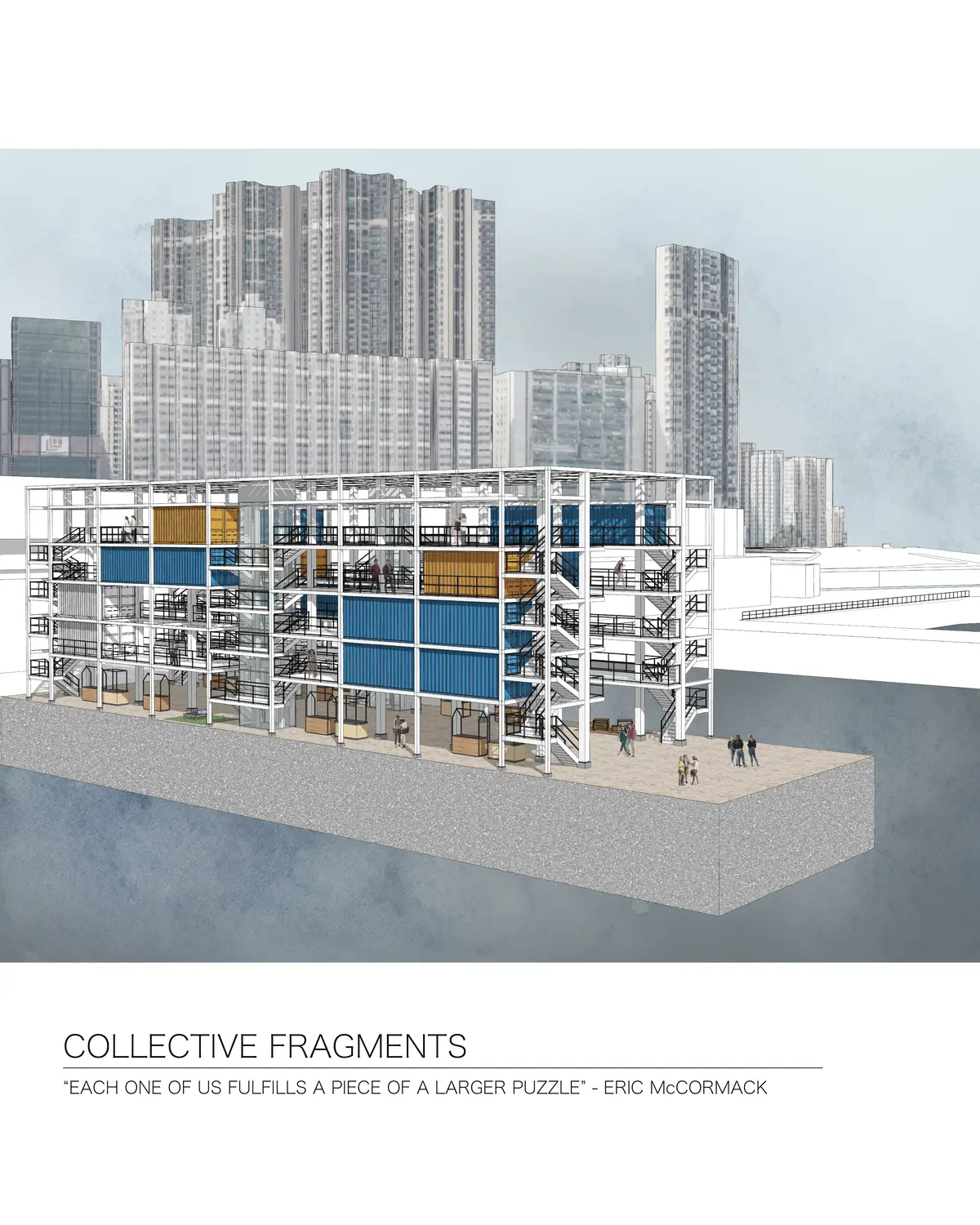
Collective Fragments
Design Concepts
“Each one of us fulfills a piece of a larger puzzle.” - Eric McCormack

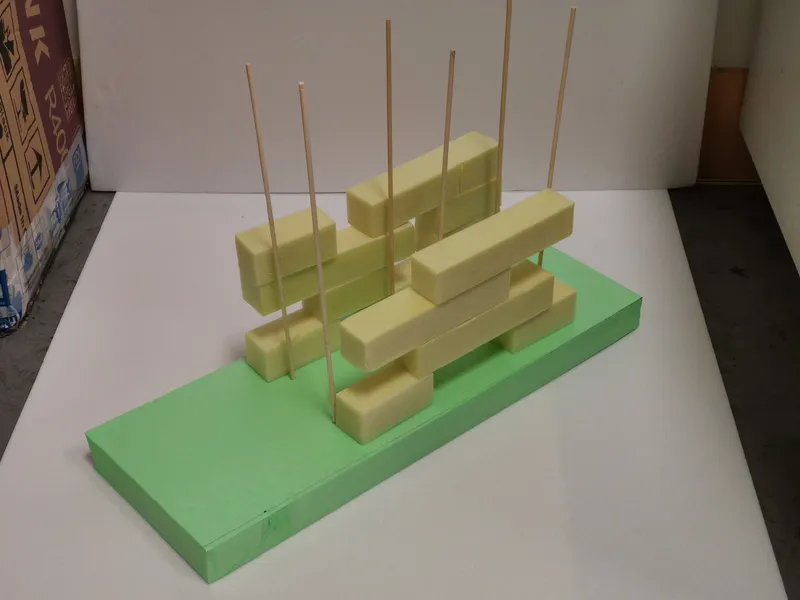
As the name of the project suggests, the container student housing is a home for the residents, who are at the stage of exploration and developing their personal qualities. They are like puzzle pieces, which are unique and have the potential to be placed together and create one whole complete picture. By combining container modules of different programs, numerous variants could be created, which imply the unlimited possibilities for the students to step out of their comfort zone while reaching out something new.
The history of using shipping containers for transportation can be dated back to 1957, when Malcom McLean introduced the modern intermodal shipping container system which revolutionized the worldwide logistic and transportation mode. Viewing the traditional way of handling the containers, including the utilization of container cranes and container handlers which are rather rigid, our team takes a step further and suggests an integrated system, that is through applying a structural grid frame into the building to allow multi directional movement of the containers within there. This could facilitate the transformation and expansion of the container house in the future, attaining a higher design flexibility and adaptability under varying site conditions and over the time.

Passive Environmental Strategies
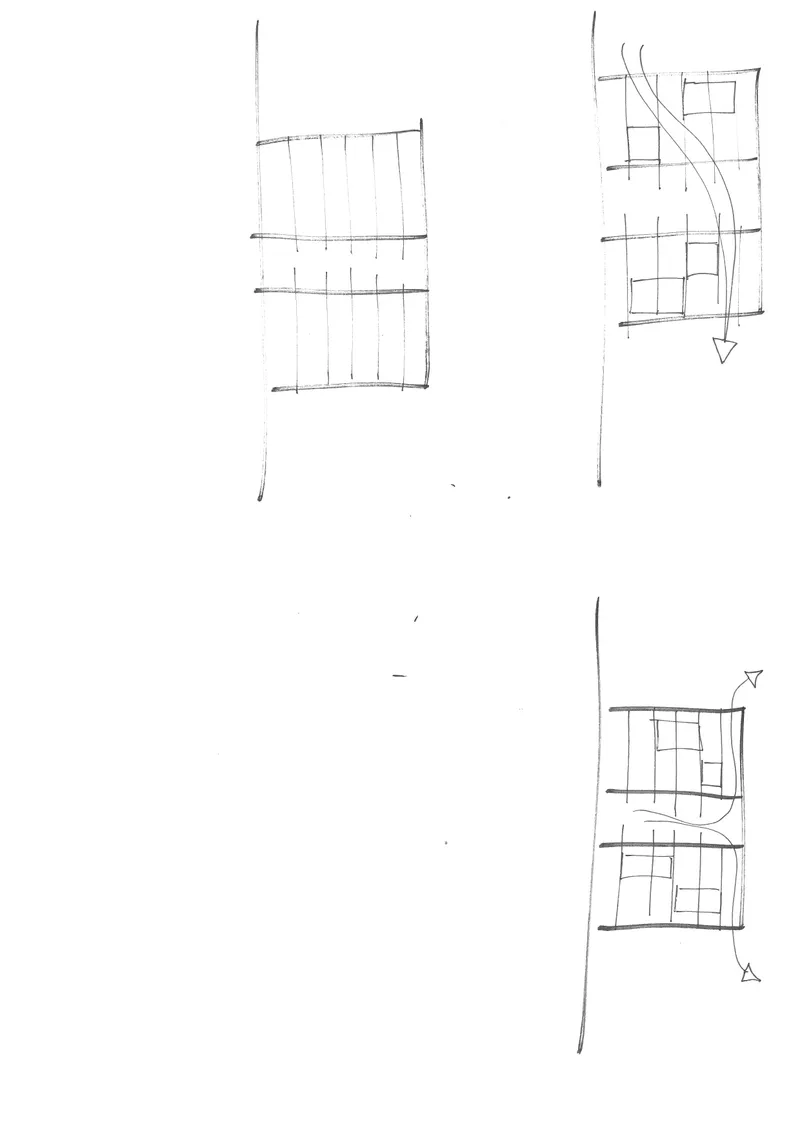
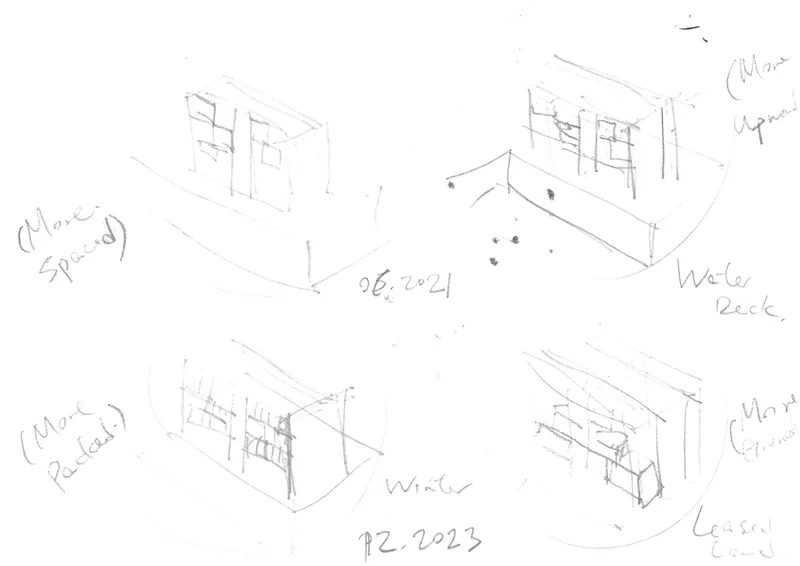
The project adopts several passive environmental strategies. The configuration of containers responds to the climate and season: During the hotter seasons in the year, a dispersed configuration of containers allows natural ventilation to pass through the building, so to serve as passive cooling for the hostel environment. While during winter, a larger number of container modules are instead tightly packed to amplify thermal masses, so to reduce heat loss and keep the interior spaces warm. The roof of the structure also plays a passive environmental role: roof is cladded with solar panels, meanwhile the ceiling glass panels allow natural sunlight to lit up the central atrium space, keeping the atrium illuminated and reduces the reliance on artificial light.
Plug-in’ Architectural Concept and Container Utility
The transformability of container modules to achieve a dynamic scheme design is referenced from Unite d’Habitation by Le Corbusier (1952), in which prefabricated apartment blocks were arranged around a central core. The idea of plug-in architecture is exceptionally suitable for containers which are prefabricated and easy to transport. Containers as modules can be inserted or removed to suit the users’ preference, allowing an organic, ever-changing design.
Quality of Living and Spatial Concept
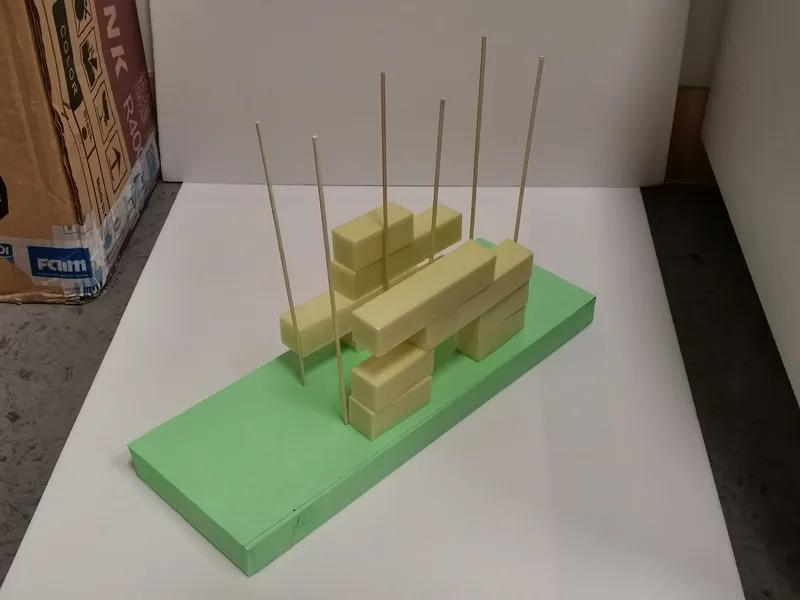
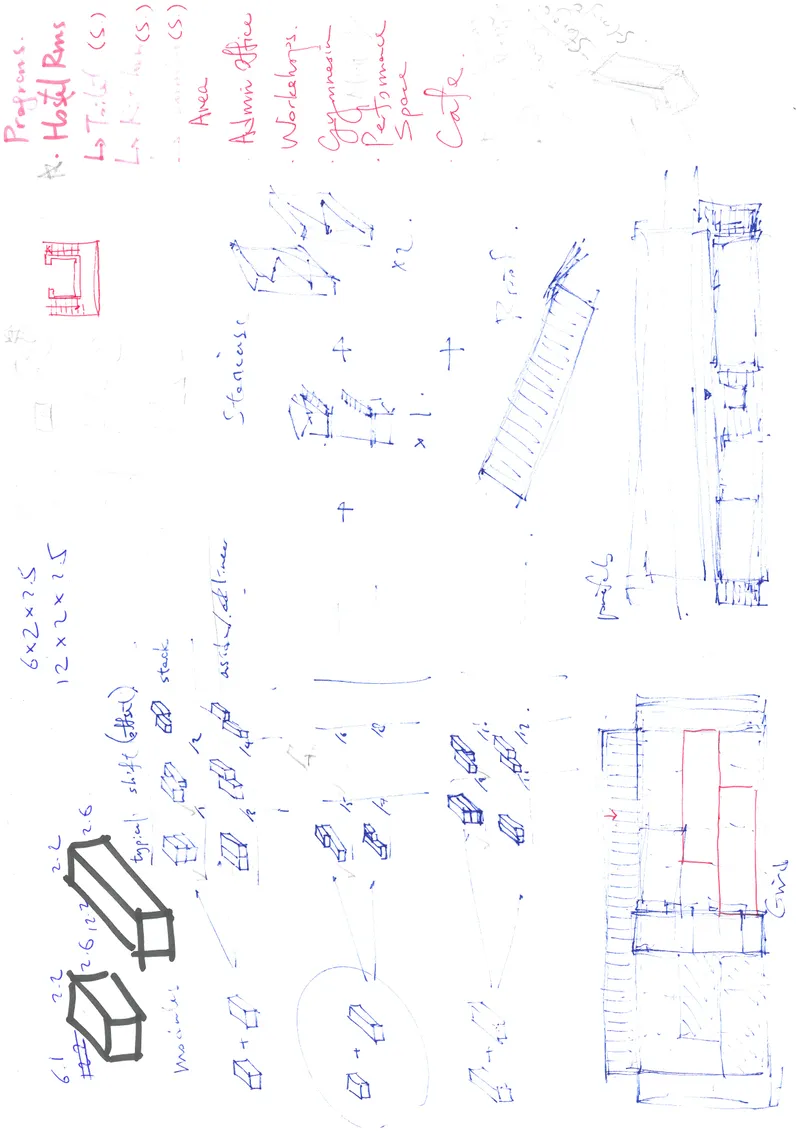
We are aiming to design a student hostel that is transformable and adaptable to different styles of students. The quality of living is enhanced through different combinations of modules to create a range of diversified, personalized living spaces . For instance, a hostel module is mixed with a music room to encourage students to gather and play music together. By merging two containers modules together it also created double height spaces that improve spatial experience.
There is no ‘final’ form in our project. The configuration of programs that we presented is just one of the infinite combinations of programs. What really matters are the preferences and needs of the students. A group of music-loving students might want to live in a room connected to a band studio, while athletic students can have their hostel room linked to a gym container. Even the public programs can be changed depending on the overall needs of all the residing students.
Replicability and Adaptability
The building components of the project are simple, mainly consisting of prefabricated steel for the structural frame which can be duplicated easily. Since the overall structure does not strictly require a specific kind of site, the project can be easily replicated in different construction conditions. Meanwhile, the flexibility brought by the ‘plug-in’ modular concept allows the building to respond to various climatic conditions, further enhancing the adaptability of this hostel concept to different parts of the world.
Adaptation to different users in the future
Hostel residents change overtime. The project is adaptable to different scenarios and suits the needs of different students. Since the project adopts a frame and track system that allows alteration of container positions, the configuration of containers can be freely changed according to the current needs. It can be foreseen that In the future, certain new programs might emerge. These new activities could then be implemented into certain container layouts. In this case, students can always enjoy the activity that they wish to participate in.

Popular Articles
Popular articles from the community


Conexión: Biophilic Design Reimagines High-Rise Living in Hong Kong
Conexión reimagines high-rise living in Hong Kong through biophilic design, green facades, shared spaces, daylight, water and nature within.

ALGAL REALM: A Bio-Integrated Lunar Habitat Design for Life Beyond Earth
ALGAL REALM reimagines lunar habitat design with algae-powered life support, 3D-printed regolith, and vertical living for a lunar future.

Hill & Cross Opera: Sculptural Opera House Architecture Shaped by Tallinn’s Landscape and Identity
Hill & Cross Opera reimagines opera house architecture in Tallinn through its sculptural hill, civic plaza, glass wave and a luminous cross.

Co-Life: Senior Housing Design That Reconnects Older Adults With the City
Co-Life reimagines senior housing design through healing gardens, shared streets, workshops, and a sustainable community across generations.

Similar Reads
You might also enjoy these articles

The Rhythm of Seasons
A Farmers' Market Connecting Nature and the City

More Than a Building-Designing a Living System
More Than a Building-Designing a Living System
Base Beyond
DESERT COMPOUND ARID: TOURISM OF ABSENCE AND ABUNDANCE

Comments (0)
Please login or sign up to add comments
No comments yet. Be the first to comment!