

UNI International Architecture Design Awards - Commercial buildings
Commercial ‘20 - Result Story


Background
Consumerism has taken the world by storm, but like everything, it has its pros and cons. While it has increased global connections and economic output, on the other hand, it has come to be the cause of a lot of social and ecological problems, including a severe misuse of resources, pollution, and a cycle of waste, disparity, and poverty.
With the understanding that our physical environment has a significant influence on cognition, behavior, and perception, can specialized commercial architecture attempts to bridge the gap between built spaces, consumer behavior, and productivity at the workplace, based on a better understanding of interactions between consumers and their immediate surroundings, promoting healthier consumer choices, and mitigating risky behavior.
What does this mean for the dramatically changing consumer environments of today and the future?
Focusing on the most basic of frameworks (typologies) of built spaces, UNI introduces Architecture (A- Z).
Challenge
‘C for Commercial’ aimed to bring together global design talents that explore one of our most primary needs as a population.
This challenge invited entries of commercial spaces that ranged from retail to restaurants to workspaces, this theme aimed to recognize spaces that have evolved with the utmost understanding of its user groups, their function, its adaptability, and its environmental responsibility.
Some of the Best of competition projects are as follows:
Winning Project: E2E Offices
By: Maurizio Angelini & Banjamin Oportot Frigerio
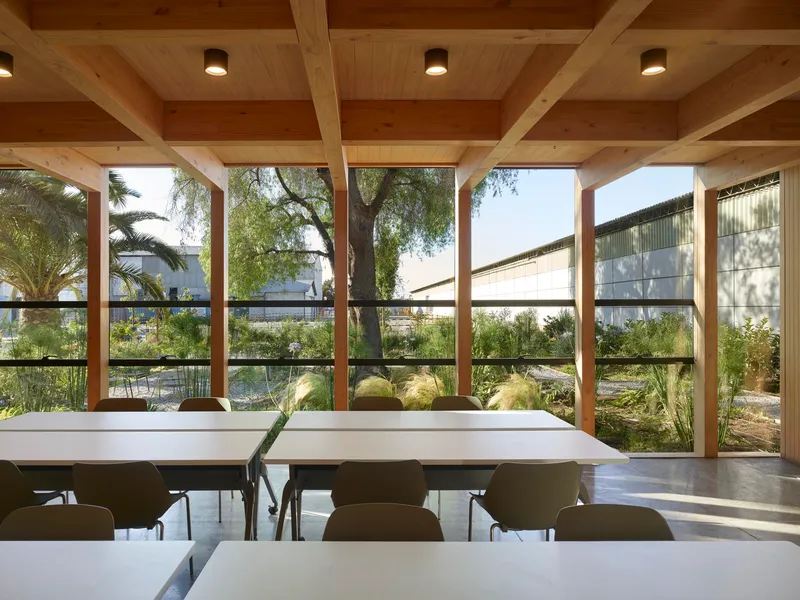
Description: In the middle of an old factory, the project aimed to integrate nature into the workspaces of a new industrialized building solutions company. Through a mass timber structure, based on coffered beams and CLT that allows wider and more flexible spaces, the building exhibits the main materials used in the company production, such as wood and fibre cement.
People’s Choice: The Adsequor
By: Naz Kaplan

Description: The Adsequor is a sustainable hotel project on the seashores of Izmir where the historical Meles Stream forms an important but unfortunately neglected wetland called Meles Delta, around which a skyscraper zone poorly develops. The main objective of the project is to heal both the wetland and the river through a new approach towards the highrise typology.
Jury Commendation: FAMA Restaurant
By: Paulo Martins

Description: The FAMA restaurant is the first gastronomic project of chef Luis Lavrador. Located in a recent building, in a relatively new zone of the city of Aveiro, this restaurant aims to be a meeting point, a place for lingering over a meal, and a reference.
Jury Commendation: PLANSTONE
By: Paulo Martins
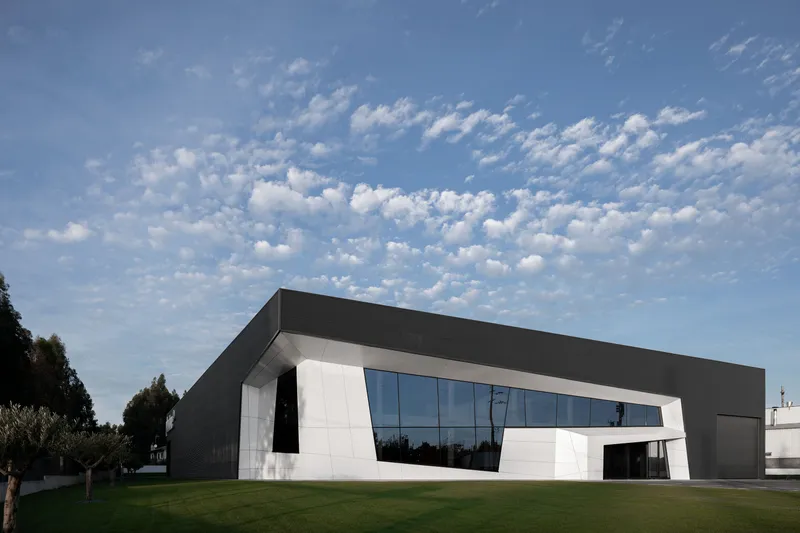
Description: This industrial warehouse is located in an area without any architectural references and surrounded by forest. With no relevant references and a layout which consists of a warehouse area for finished product storage, a cargo area, and office space, the proposal is intended to reflect the simplicity of the solution, given the simplicity of the requirements.
Jury Commendation: Araksa Tea House
By: Jan Jakob Glasmeier
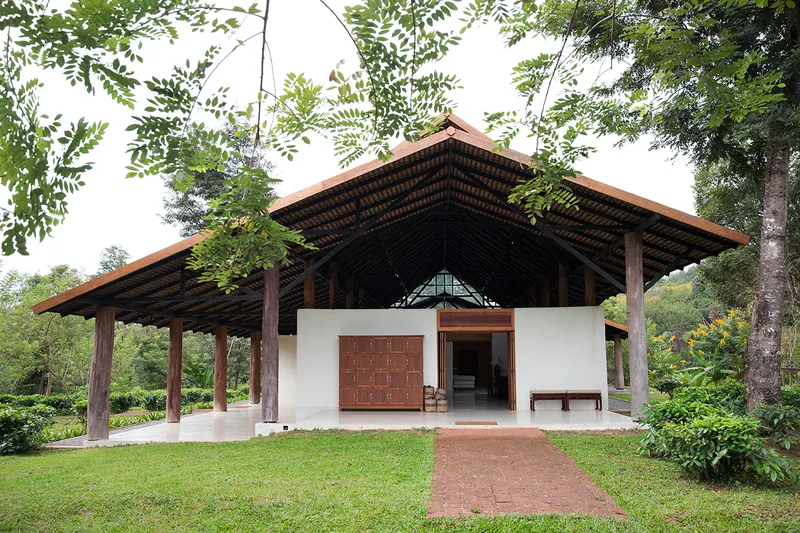
Description: Araksa Tea Garden is situated on the foothills of the rich forest of Mae Tang, Thailand. This boutique tea garden produces high-quality organic tea that achieved EU Organic certification. Simple Architecture was approached to design a Tea House by using sustainable and locally available material. The goal was to embed the building into its natural habitat.
Discover the design brief here: https://uni.xyz/competitions/commerical/info/about
Discover the full results here: https://uni.xyz/competitions/commerical/entries
Follow us on social media: Facebook | Instagram | LinkedIn | Twitter | Youtube
Discover other design competitions to participate here: https://uni.xyz/competitions


Popular Articles
Popular articles from the community


longwave studio Reorganizes a 112 m² Tainan Apartment Around the Daily Routines of a Family and Two Cats
In Tainan, Taiwan, birch plywood, rust-red furniture and a freestanding plaster wall link arrival, storage, work and family life in one apartment.

LT2A and OPEN Architectes Thread a Brick and Glass High School Through a Wooded Belgian Campus
In Braine-l'Alleud, a 3,000 m² wing for Collège Cardinal Mercier pairs pale brick with a glazed colonnade, deferring to a small chapel and a dense wood.

GROUP A Strips a 1969 Rotterdam Harbor Headquarters to Its Frame and Wraps It in Timber Louvers
In Rotterdam's M4H harbor district, Ferro Offices reuses a 1969 frame, adds one timber storey and reaches BREEAM-NL Outstanding.

David Macias Steps a Doorless Stone and Plaster House Down a Tropical Colombian Hillside
In the humid hills of Colombia, Threshold House replaces the front door with an open void and terraces its 850 m² down the slope instead of fighting it.

Similar Reads
You might also enjoy these articles


Aquadapt: An Underwater Habitat That Rewrites Its Rooms by the Hour
Curved modules ring the seabed while one shell shifts from breakfast room to cinema, farm and football pitch as residents' needs change.

Play: Fragments of Their World: Remembered Architecture Rebuilt as a Modular Playground for Refugee Camps
Tom Gardner abstracts domes, arches and towers from the homelands of displaced families into a kit of child-scaled play parts for camp settlements.
REBIRTH: A Circular Settlement Where Afghan Widows and Their Children Rebuild Life Together
A shortlisted Resile entry turns the circle into a protective ring of timber and brick, gathering homes, classrooms and gardens around a shared landscape.
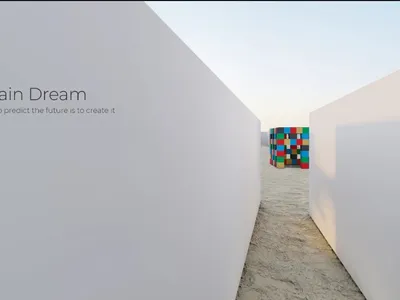
The Main Dream: A Recycled Plastic Kit That Lets Refugee Children Build Their Own Playground
Thirty-centimetre interlocking cubes that connect on three axes turn play into construction, letting children author the spaces they occupy.


Comments (0)
Please login or sign up to add comments
No comments yet. Be the first to comment!