

Common Ground Collective Garden by el.em studio: A Vision of Community and Sustainability in Israel
The Common Ground Collective Garden by el.em studio transforms a historic site into a community-driven, sustainable, and interactive space.


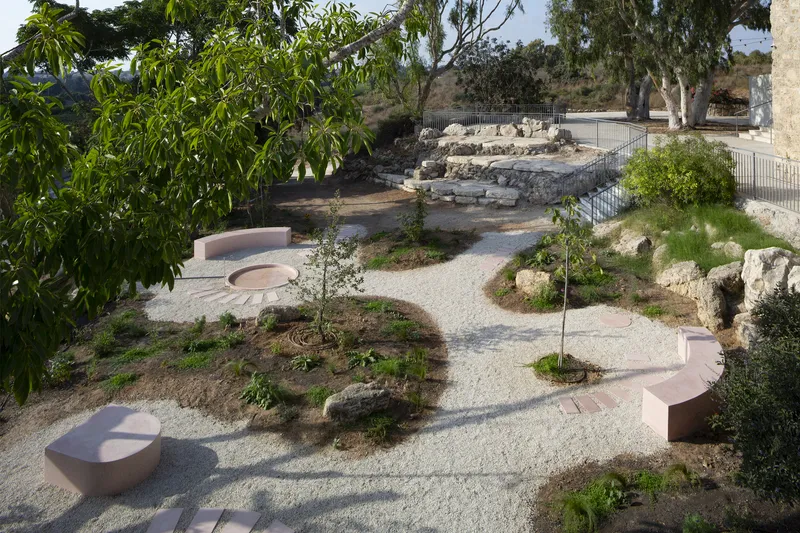
Located in the heart of the Hefer Valley, the Common Ground Collective Garden by el.em studio is a captivating example of sustainable and community-driven design. Nestled within the historic Beit Harishonim house, this 200 m² garden offers a unique blend of nature, culture, and collective effort. The project, completed in 2023, aims to transform the outdoor space of a once-abandoned house into a vibrant, cultivated garden that invites local participation and celebrates the surrounding landscape.

A Collective Effort for Cultural and Environmental Integration
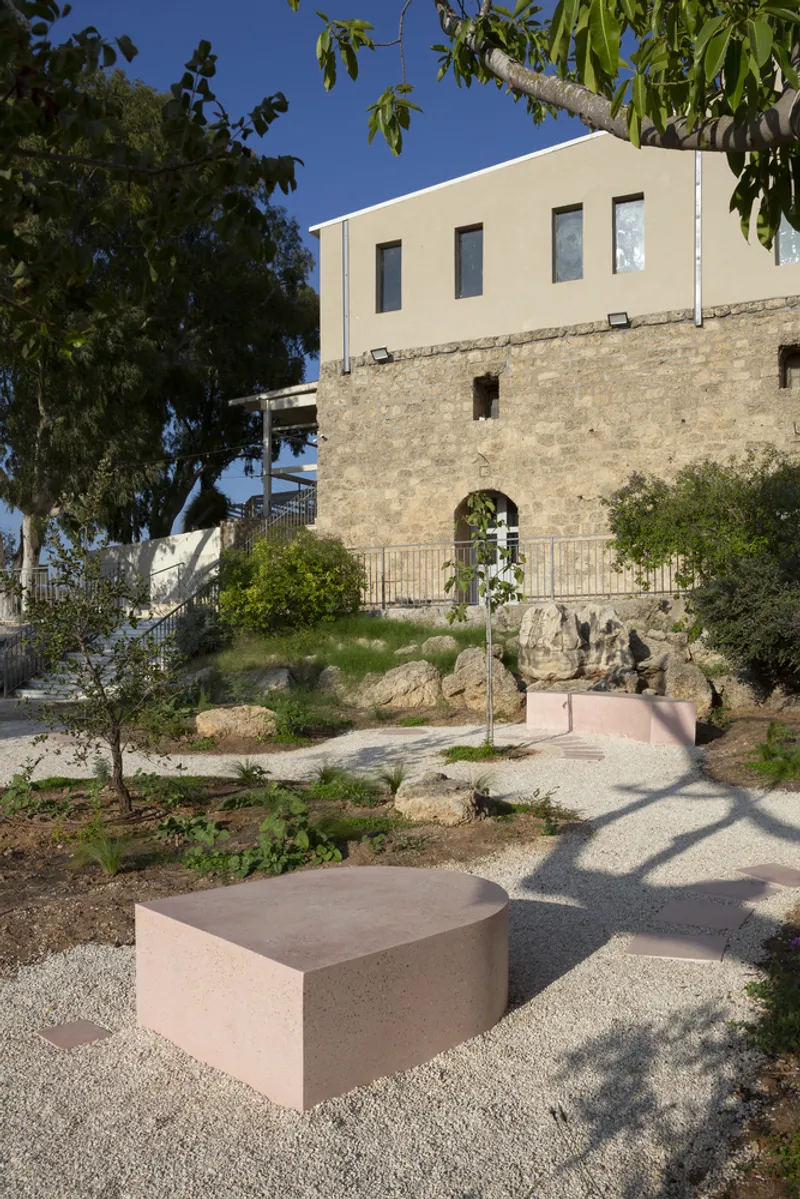
Beit Harishonim sits on a limestone ridge, offering breathtaking views of the Hefer Valley. After years of abandonment, the Hefer Valley Regional Council decided to reopen the house as a local cultural and art center. The transformation of the surrounding garden into Common Ground became more than just a landscaping project—it became a collaborative endeavor.
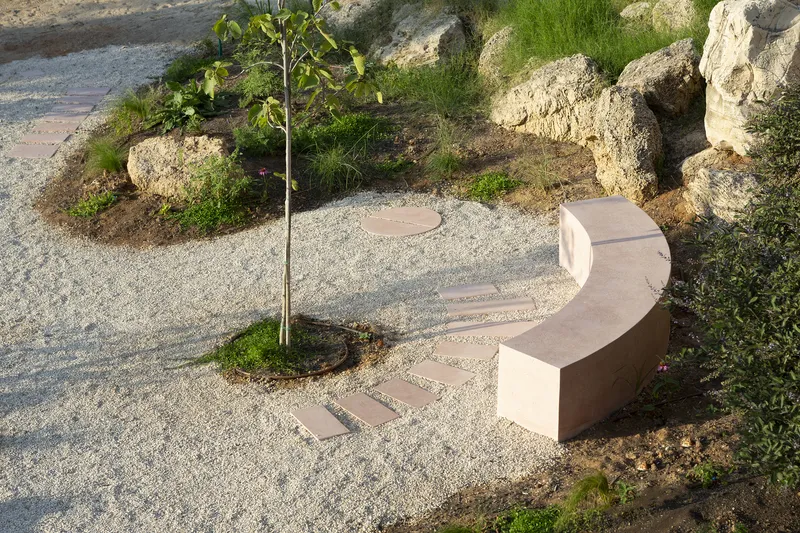
Instead of following the conventional model of architecture as a final object, Common Ground was developed as an ongoing process. The construction stage was opened to the community through public calls, inviting local residents to engage in building the space. Together, they tightened the soil, cast custom concrete benches, and planted native wildflowers. This approach turned the construction process into a shared experience, with gardening remaining an evolving project.

The Design: Blending Tradition with Modern Elements
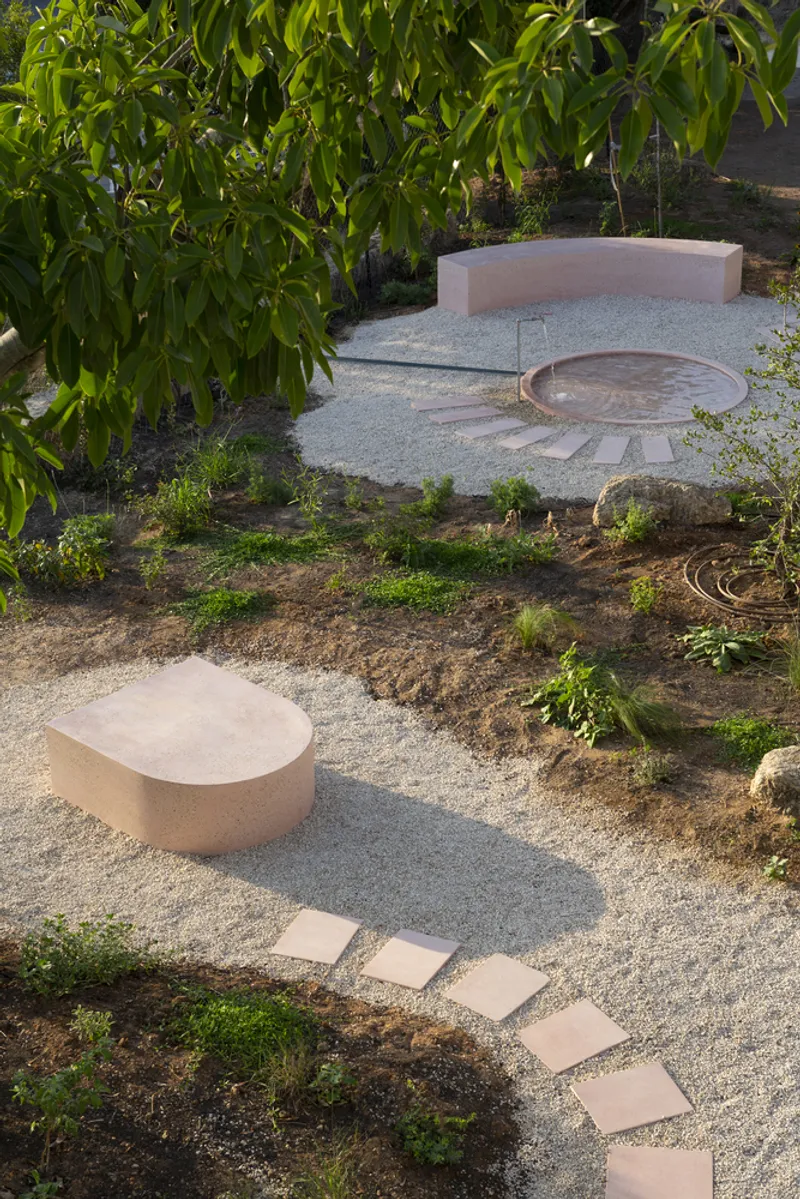
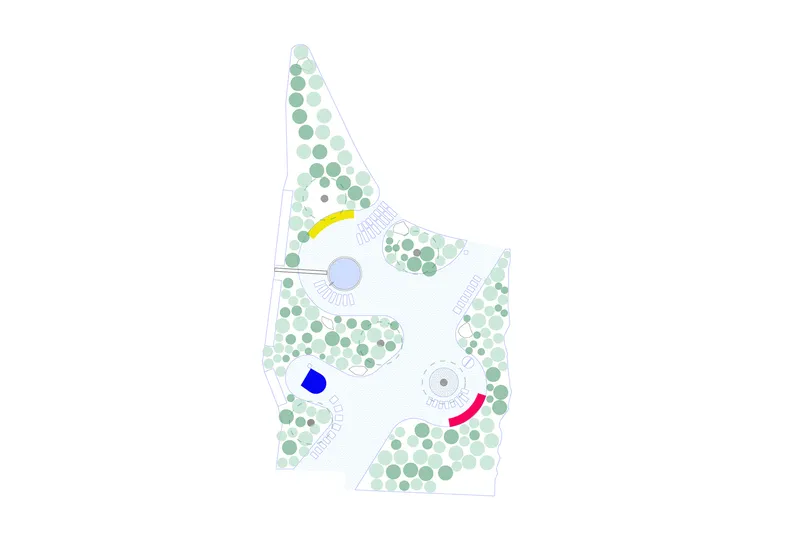
The layout of Common Ground is inspired by traditional English gardens, yet it’s designed on a more intimate scale. The central path branches off into smaller trails, each offering distinct perspectives of the Hefer Valley landscape. Hidden seating areas encourage visitors to explore, rest, and absorb the surroundings. A striking feature of the garden is a custom concrete terrazzo element, which reflects both historical and modern design sensibilities.
Among the first two concrete elements are intimate benches designed for relaxation, while the third element is a symbolic nod to the past—a ghost element resembling an 18th-century water pool. This reflection pool once carried water to the eastern slopes of the property. The new pool symbolizes the potential for interaction between people, animals, and plants, serving as a space for play and gathering. Water flows toward the western slope, where wild plants will grow, creating an entranceway that leads to the house.

Sustainability and Local Flora
The garden's design incorporates local wild plants, which are characteristic of the Hefer Valley region. These plants not only provide a beautiful aesthetic but also enhance the local biodiversity. Five trees were planted along the garden’s paths, offering shade and fruit for visitors. A small selection of cultivated plants were also introduced, ensuring multi-seasonal blossoms that will enrich the garden throughout the year.
A Space for Future Collaboration and Community Engagement
Once fully realized, Common Ground will evolve beyond its physical form. It will become a dynamic venue where artists, creators, volunteers, gardeners, and visitors converge to participate in workshops, exhibitions, and events. The garden is designed as a space that fosters ongoing collaboration and engagement, making it an ever-changing project that reflects the spirit of community.
The Common Ground Collective Garden is a powerful example of how landscape architecture can foster cultural connections, celebrate local heritage, and promote sustainability. Through its collaborative design process, this garden not only enhances the physical environment but also brings together people of all backgrounds, ensuring that its legacy will continue to grow long after its completion.

All Photographs are works of Mikaela Burstow


Popular Articles
Popular articles from the community


Extended Shell: Retrofitting Kolkata's Balconies as Living Urban Thresholds
A modular retrofit system recovers the social and environmental intelligence of Kolkata's historic verandas for contemporary Park Street residents.

Temporary Home for Dogs: A Reversed Zoo Rethinks Animal Shelter Architecture
In Bucharest, a sinuous corridor and freed landscape flip the logic of containment, designing a shelter that works to make itself unnecessary.

Tsunami Convergenics: Turning Catastrophic Ocean Forces into Underwater Housing Infrastructure
A speculative underwater settlement off the coast of Onagawa, Japan, treats tsunamis and typhoons as energy sources rather than threats.

Cloaked Colonization: A Mobile Underwater Habitat That Moves Like a Fish
Micah Abaya's shortlisted EHC Pacific entry reimagines ocean settlement as a dispersed network of self-sustaining architectural organisms.

Similar Reads
You might also enjoy these articles


Hodi-Mandai Geram
Project Function: Preservation and revitalization of the Intangible heritage and socio-spatial identity of the Hodi by Housing, Cultural Memory Center, Sacred Grove, landscape, local tourism economy


Olio Towers: A Mid-Rise for Performers That Fuses Housing, Rehearsal, and Stage
Located blocks from Houston's Theater District, this modular tower stacks living units around a central performance atrium.

Oasis: Modular Green Housing Carved into Dhaka's Urban Fabric
A shortlisted Plugin Housing entry reclaims unauthorized settlements in Dhaka with stepped concrete volumes, green roofs, and ventilation-driven design.

Black Hole: A Floating Megastructure for the Post-Physical Era
Emiliano Mazzarotto envisions a spherical, self-scaling arena where e-sports, digital hotels, and holographic stadiums replace traditional public space.

Explore Community Garden Competitions
Discover active competitions in this discipline

Challenge to reimagine the Iron Throne

Photograph architecture without architects

Illustrate the lost glory of Angkor Wat - Render Challenge

Bring back Drive In's
Comments (0)
Please login or sign up to add comments
No comments yet. Be the first to comment!