

Concrete Memories: A Modern Multigenerational Home by Greyscale Design Studio
A multigenerational Bengaluru home blending concrete, light, and courtyards, balancing memory and modernity through crafted spaces, sculptural walls, and warm materiality.


Heirlooms in Concrete by Greyscale Design Studio is a 5000 ft² contemporary residence in Bengaluru, India, that reinterprets multigenerational living for today’s rapidly transforming urban fabric. Designed in 2024 by lead architects Girish Mysore, Magesh Manohar, and Ninu Ahluwalia, the home balances emotional continuity with architectural innovation—honoring past memories while shaping new futures.
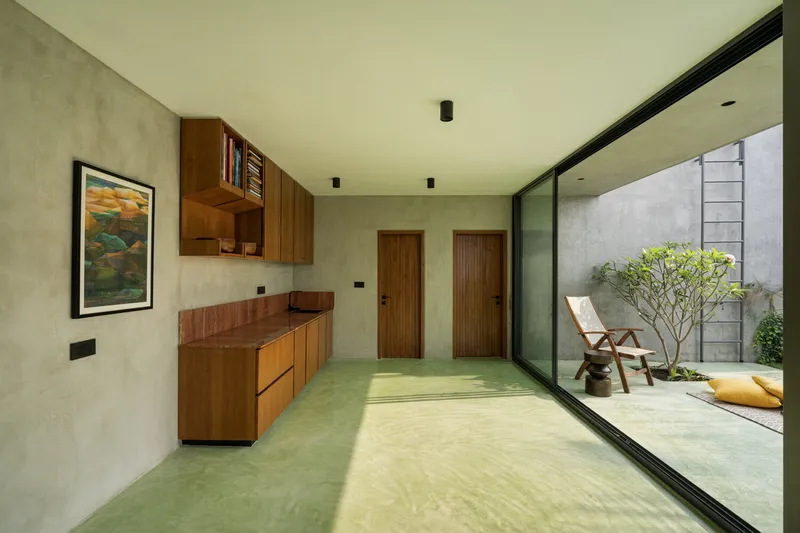
A Home That Evolves with Its Family
Located in an established residential neighborhood, the site previously housed a home that had sheltered two decades of family history. As lifestyles shifted and spatial needs grew more complex, the family chose not to simply renovate but to rebuild—a decision rooted in both sentiment and necessity. Their brief to the architects was nuanced: create a home that is modern, functional, and attuned to contemporary design sensibilities, yet deeply respectful of the emotional legacy of the place.
Heirlooms in Concrete responds with a sensitive architectural strategy that preserves the spirit of the original home while shaping a future-ready residence that supports generational coexistence.
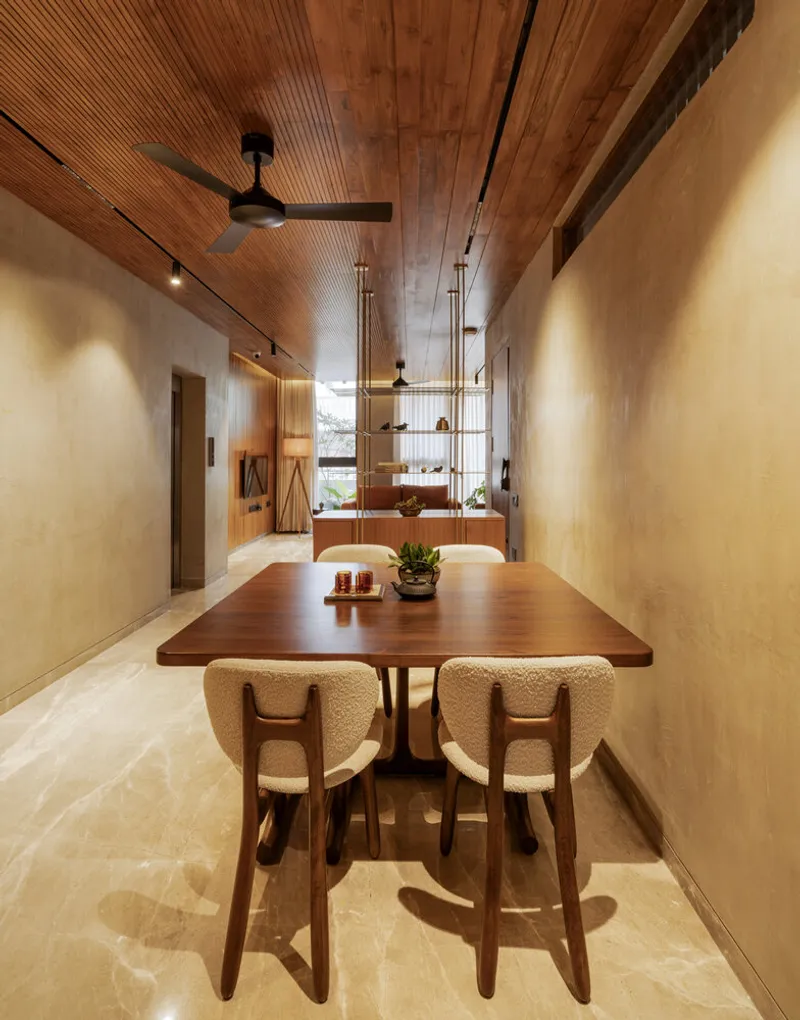
A Twin House for Two Generations
To accommodate the evolving needs of an extended family, the architects envisioned a vertically layered twin home.
- Lower Floors – Older Generation: Close to the street and garden, these floors prioritize accessibility, rootedness, and social connectivity.
- Upper Floors – Younger Generation: Introverted and sky-facing, these spaces emphasize openness, privacy, and fluid movement.
This vertical division preserves autonomy while nurturing proximity, creating a model for contemporary Indian multigenerational living that blends independence with interdependence.
The Sculptural Courtyard Wall – A Moving Facade
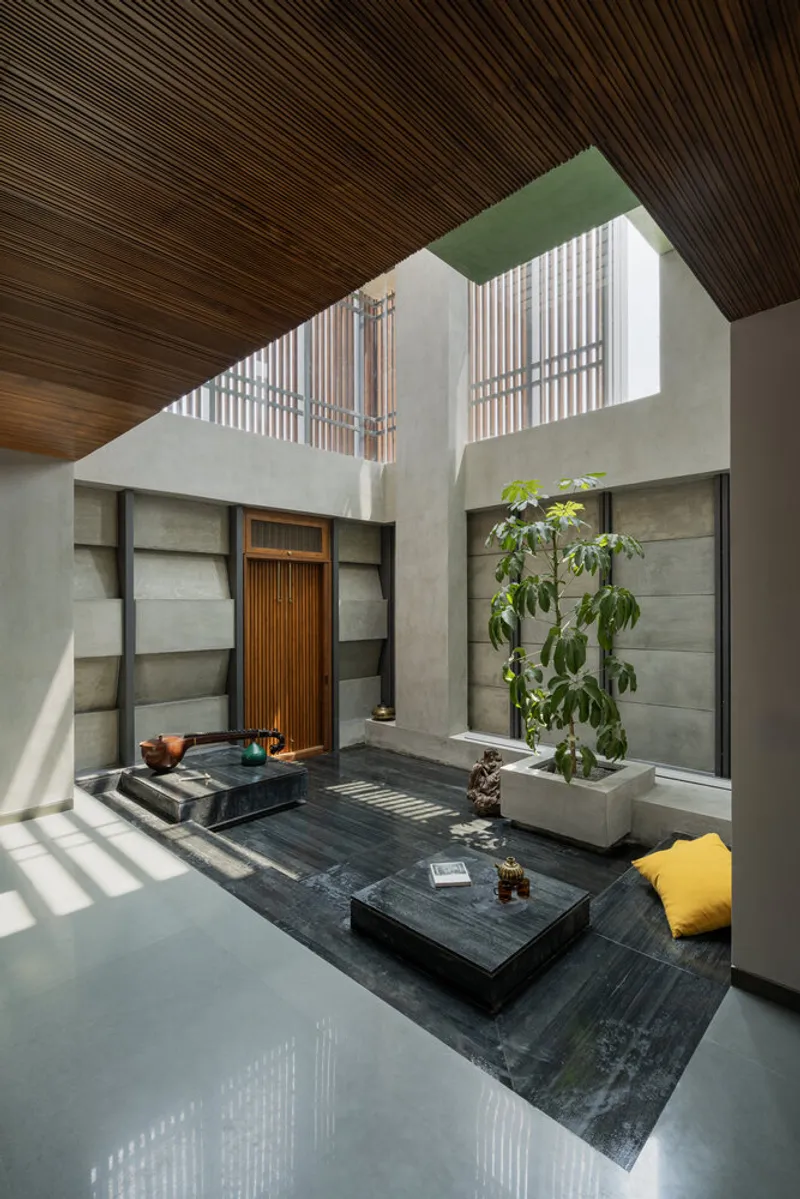
One of the defining architectural gestures is the sculptural enclosing wall that wraps the courtyard. Originally imagined as sloped precast panels, the design evolved into a rhythmic sequence of alternating angles that animate the facade with shifting light and shadow. Made from raw, unfinished concrete framed in matte steel and accented with corten steel fins, the wall is both expressive and honest, embracing material imperfections rather than concealing them.
Behind its kinetic presence lies an intelligent system of sealed joints and concealed gutters, ensuring durability in Bengaluru’s monsoon climate.
The Courtyard as a Breathing Spine
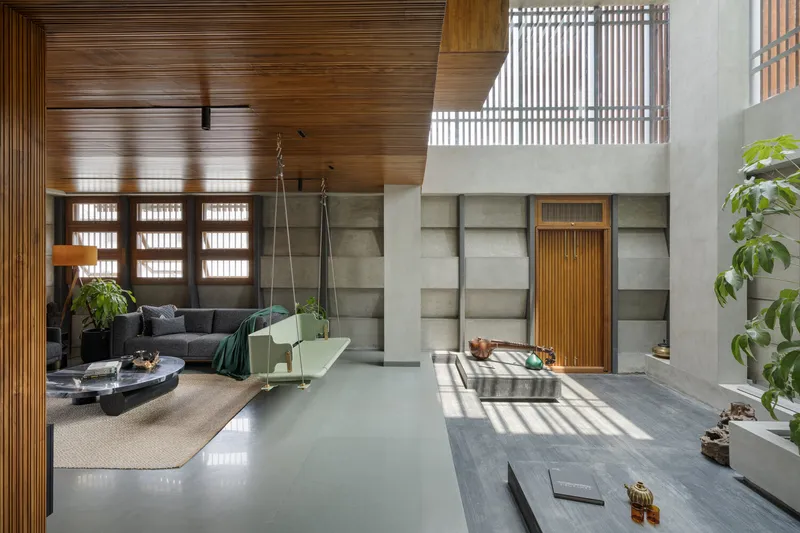
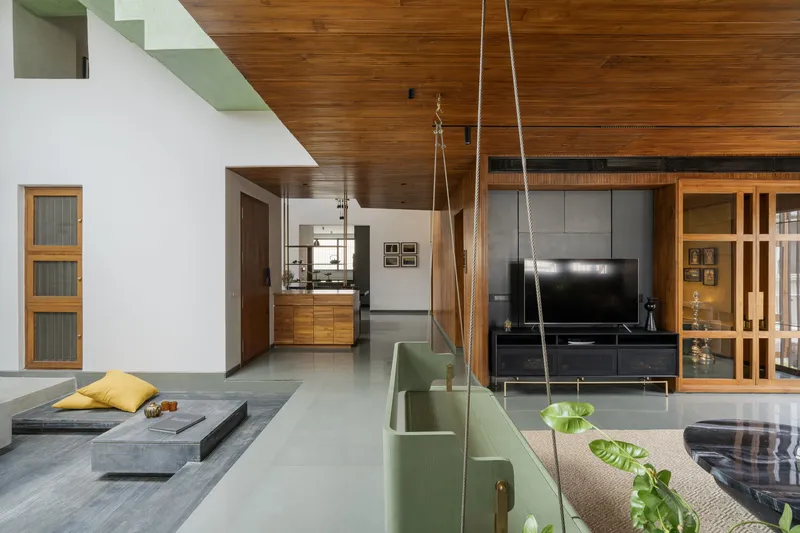
At the heart of the home is a double-height courtyard, a reinterpretation of an age-old Indian typology. This central volume creates:
- Constantly diffused natural light
- Cross-ventilation across floors
- Visual and social interaction between generations
A pastel green swing with brass detailing hangs lightly within this space—an emblem of nostalgia and modernity coexisting. The courtyard becomes the family’s shared anchor for conversation, celebration, and everyday pause.
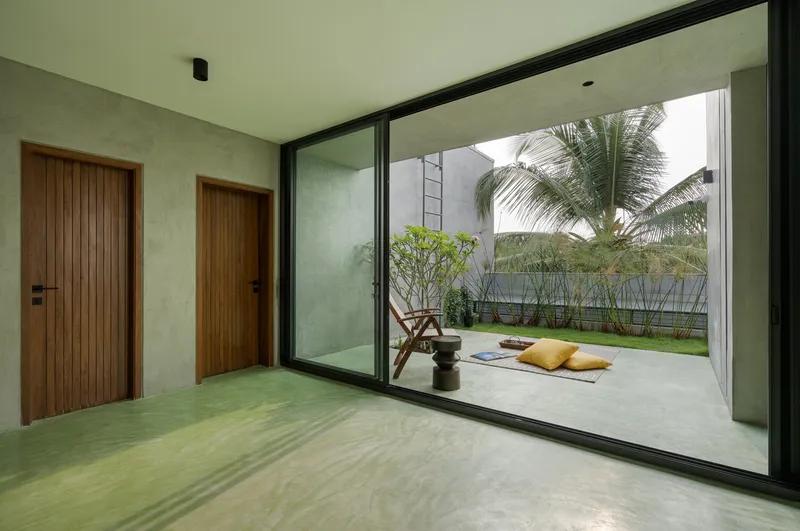
Materiality and Spatial Sensitivity
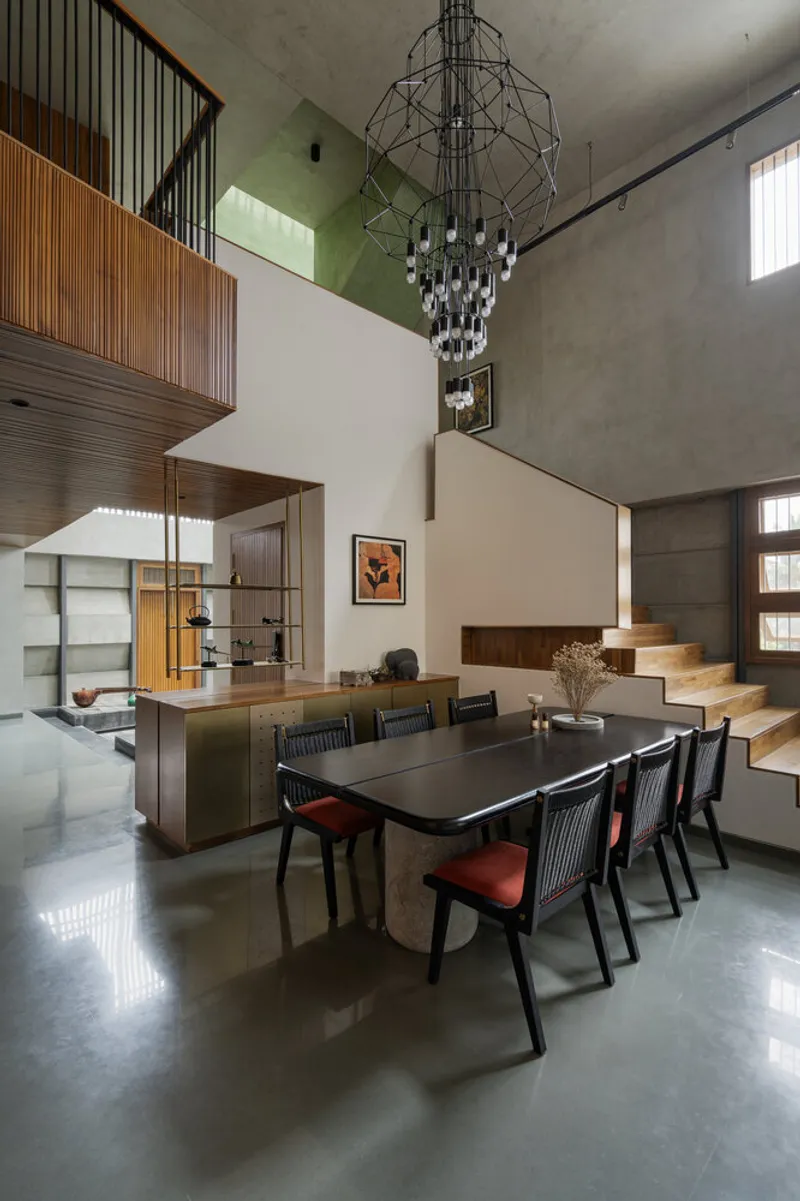
The architecture embraces a contemporary minimalism grounded in material clarity. Key design elements include:
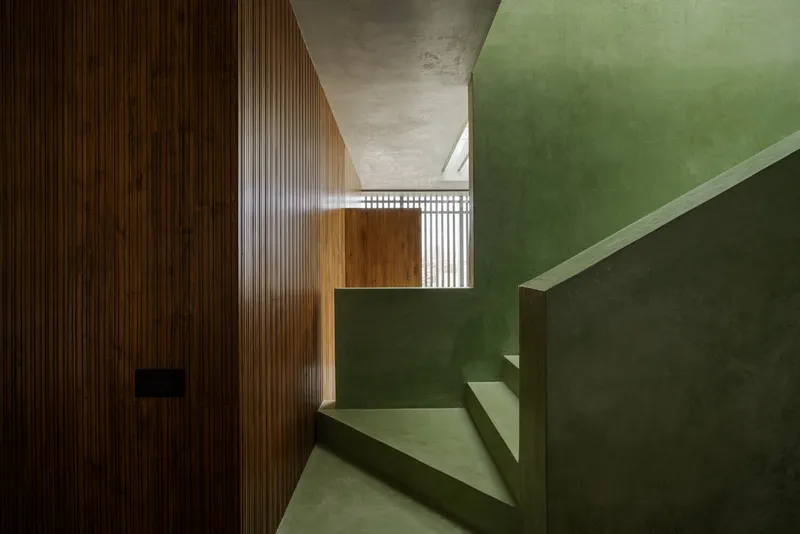
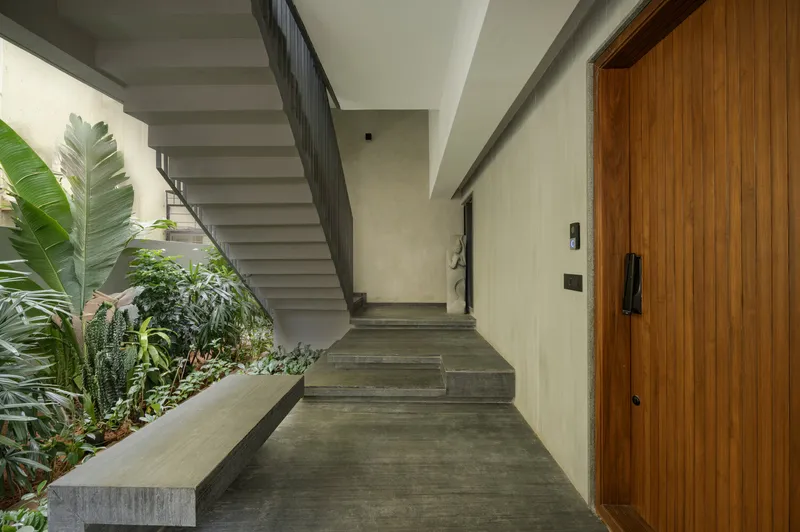
- Stone and oxide flooring for thermal comfort
- Timber and metal accents for warmth and balance
- Cavity walls for passive insulation
- Skylights with mesh ventilators enabling hot air escape
All photographs are works of Anand Jaju


Popular Articles
Popular articles from the community


Jaramillo Van Sluys Arquitectura and Urbanismo Turn a Demolished Registry Lot in Quito into an Orchard Plaza
In Quito's Centro Histórico, a 2,800 m² plaza exposes the San Agustín convent wall and redraws its lost Augustinian orchard in volcanic stone.

Cube Design Draws an Ecological Corridor Between Two Shenzhen Hills with the Nankai Building
Beside Shenzhen's container docks, the Nankai Building pairs stacked balconies with a climbing green screen to connect two hillsides across its height.

David Macias Steps a Doorless Stone and Plaster House Down a Tropical Colombian Hillside
In the humid hills of Colombia, Threshold House replaces the front door with an open void and terraces its 850 m² down the slope instead of fighting it.

U.GA Architects Wraps an Oval Rooftop Pool in Curved Board-Formed Concrete on Busan's Jeollidan-gil
In Busan's Jeonpo-dong, a 454 m² mixed-use block stacks a neighborhood facility, guest rooms and an oval rooftop pool inside spiraling concrete walls.

Similar Reads
You might also enjoy these articles


Hodi-Mandai Geram
Project Function: Preservation and revitalization of the Intangible heritage and socio-spatial identity of the Hodi by Housing, Cultural Memory Center, Sacred Grove, landscape, local tourism economy


Olio Towers: A Mid-Rise for Performers That Fuses Housing, Rehearsal, and Stage
Located blocks from Houston's Theater District, this modular tower stacks living units around a central performance atrium.

Oasis: Modular Green Housing Carved into Dhaka's Urban Fabric
A shortlisted Plugin Housing entry reclaims unauthorized settlements in Dhaka with stepped concrete volumes, green roofs, and ventilation-driven design.

Black Hole: A Floating Megastructure for the Post-Physical Era
Emiliano Mazzarotto envisions a spherical, self-scaling arena where e-sports, digital hotels, and holographic stadiums replace traditional public space.

Explore Housing Competitions
Discover active competitions in this discipline

Challenge to reimagine the Iron Throne

Photograph architecture without architects

Illustrate the lost glory of Angkor Wat - Render Challenge

Design challenge to reuse E-waste
Comments (0)
Please login or sign up to add comments
No comments yet. Be the first to comment!