
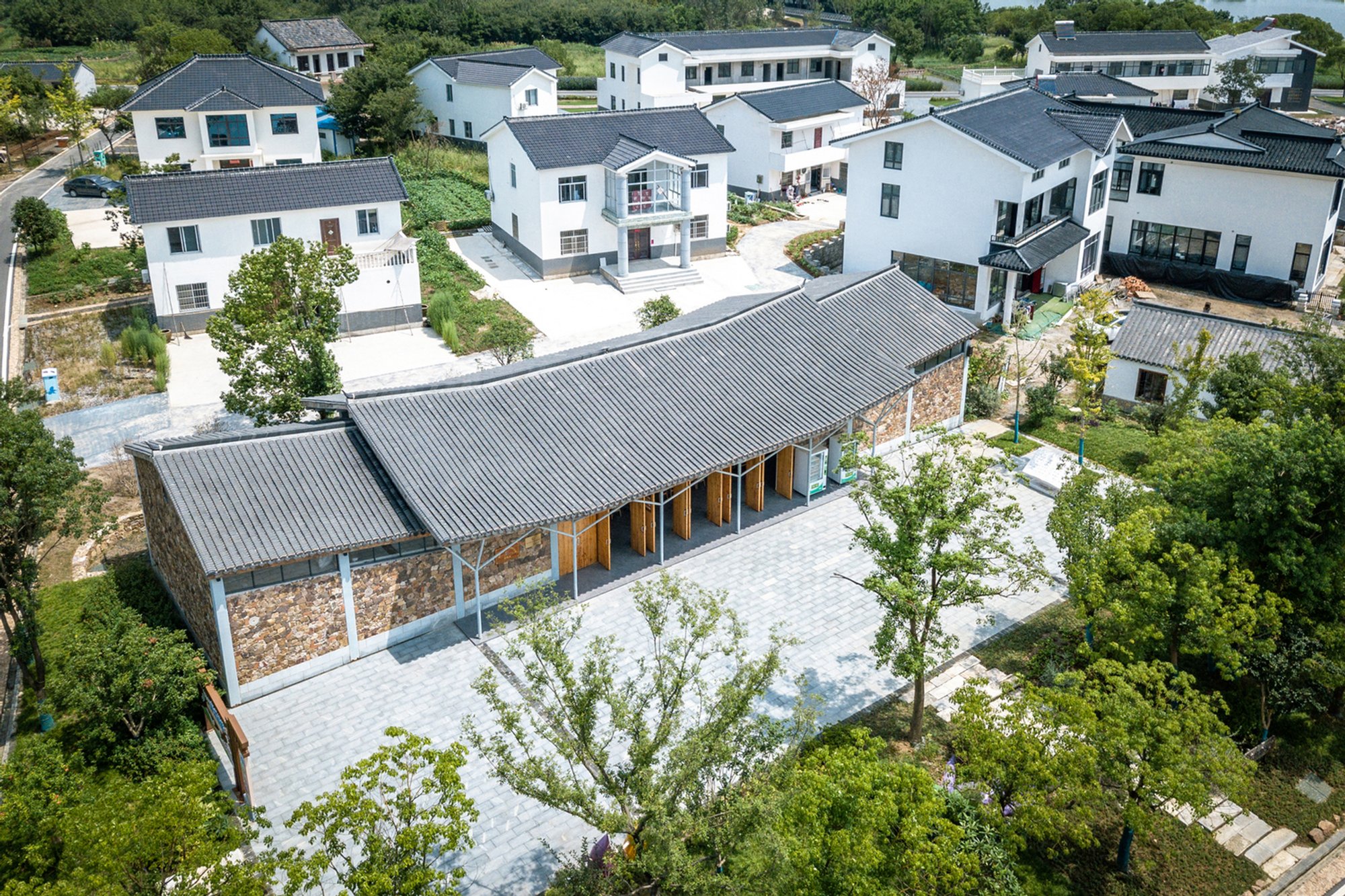
Conference Hall in Niumatang by Atelier RenTian: A Contemporary Reinterpretation of Wenzhou Architectural Heritage
The Niumatang Conference Hall blends Wenzhou architectural heritage with modern steel design, creating a sustainable, community-focused gathering space.

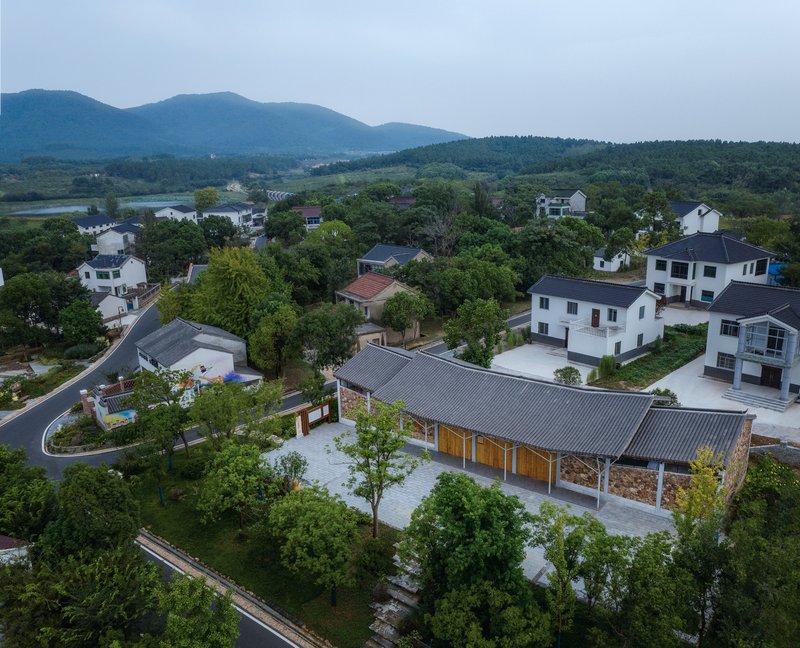
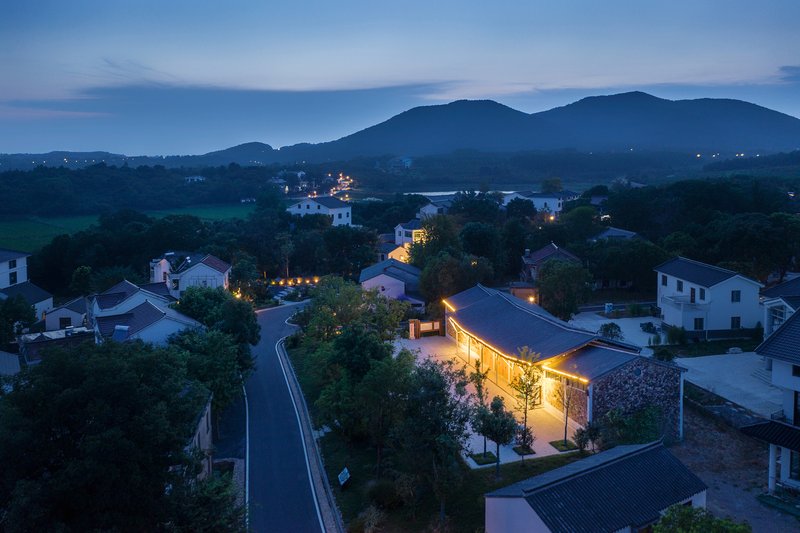
The Conference Hall in Niumatang, designed by Atelier RenTian, is located at the heart of Niumatang village in Liyang, China. The building, which occupies a space of 304 m², was completed in 2019. This project was envisioned as a modern assembly hall that pays homage to the village’s unique heritage while responding to its practical needs. The site, originally a small grove, was a popular gathering space for local villagers, making it the ideal location for a community-centric structure that would host meetings, cultural exhibitions, and neighborhood interactions.
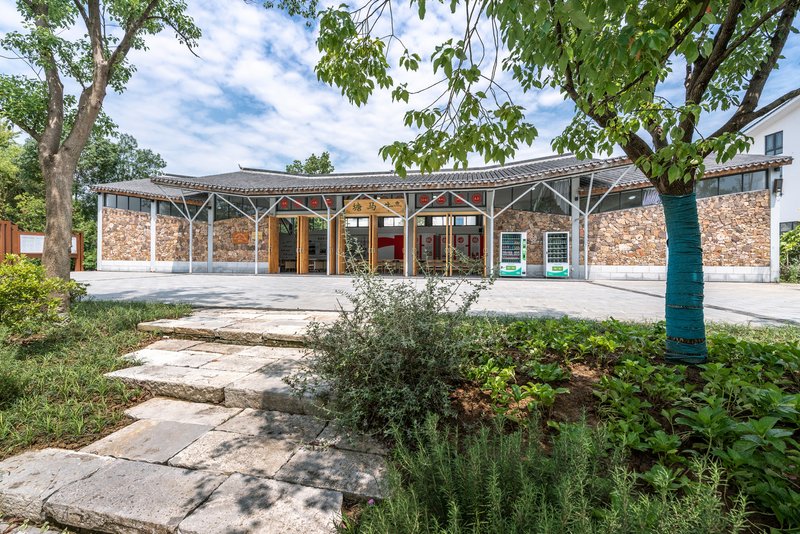
Design Concept: Blending Tradition with Modernity
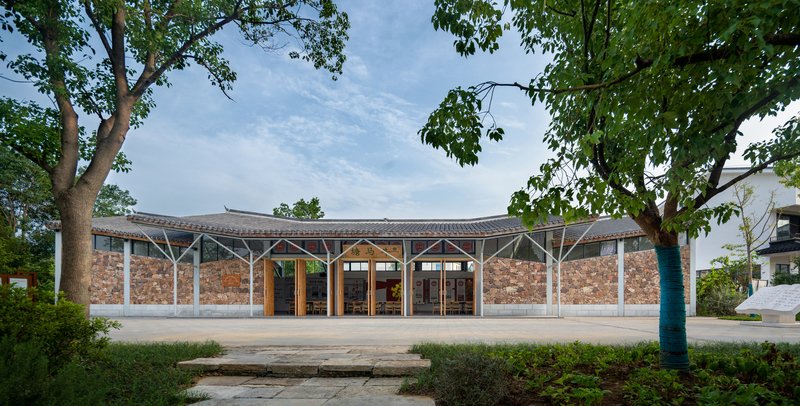
In this project, Atelier RenTian carefully considered the cultural significance of the space. Niumatang village is home to descendants of Wenzhou immigrants, and the local leadership aimed to create a building that echoed the distinct architectural features of Wenzhou’s traditional ancestral halls. These ancestral halls have long been central to village life, embodying the hopes and heritage of the community. The design of the Niumatang Conference Hall was therefore inspired by the architectural elements of Wenzhou residences, particularly the unique Ou-style architecture found in the Yongjia region, which is known for its flat ridge beams, double eaves, and upturned ends.
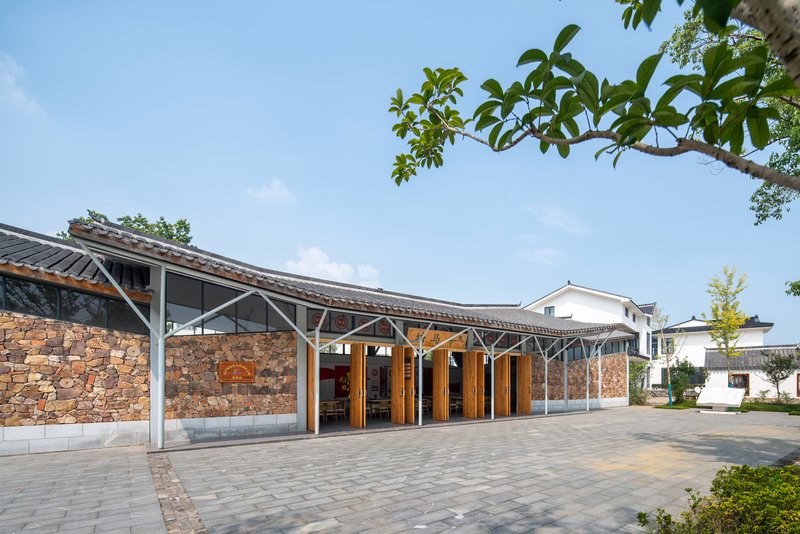
Structural Innovation: Steel Meets Tradition
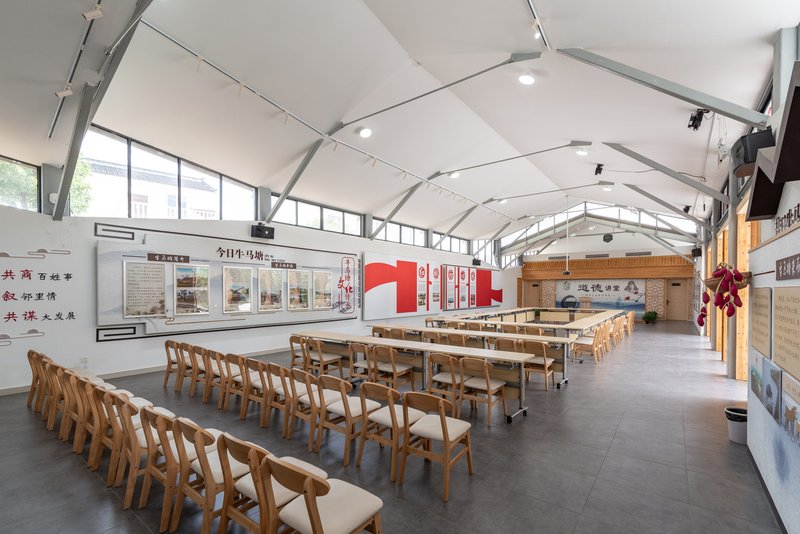
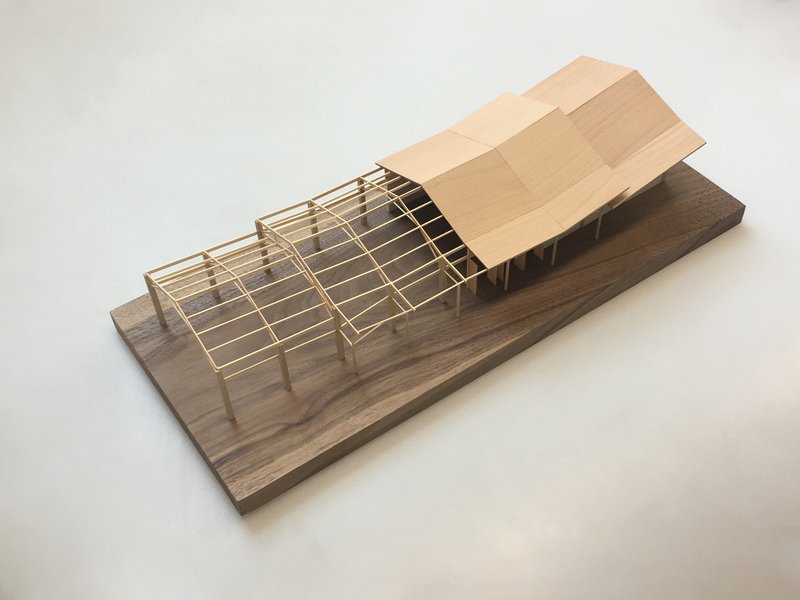
To address modern construction challenges, the designers opted for a steel structure rather than the traditional wooden framework. This decision allowed for a larger, column-free interior, creating a more spacious and flexible environment. The use of steel also resulted in reduced construction costs and a shorter building timeline, as the steel components were prefabricated in a factory and then welded and installed on-site. This efficient approach ensured that the hall could be built quickly while still maintaining the traditional roofline that is central to the Ou-style aesthetic.
The hall’s exterior walls feature a combination of hollow bricks and local stones, laid in a mosaic pattern, which not only echoes the village’s architectural history but also aligns with sustainable building practices. The use of recycled materials, including discarded bricks, stones, and broken tiles, showcases a commitment to sustainability. These materials were repurposed to create the mosaic infill walls, which breathe new life into the traditional construction methods. The steel columns are exposed on the façade, emphasizing the contrast between the modern steel structure and the traditional materials.
Sustainability and Community Focus
The Niumatang Conference Hall is designed to be both an architectural tribute to the village’s heritage and a functional space for community engagement. By combining modern steel construction with traditional design elements and sustainable building practices, the project strikes a balance between the past and the present. The use of local materials and recycled components not only respects the region’s architectural history but also reflects the project’s commitment to environmental responsibility.
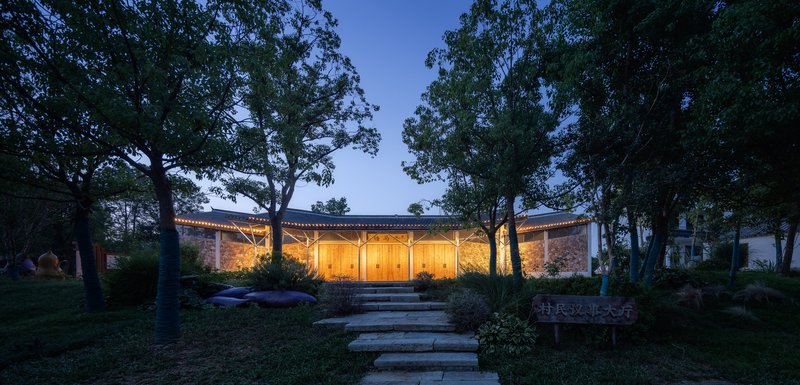
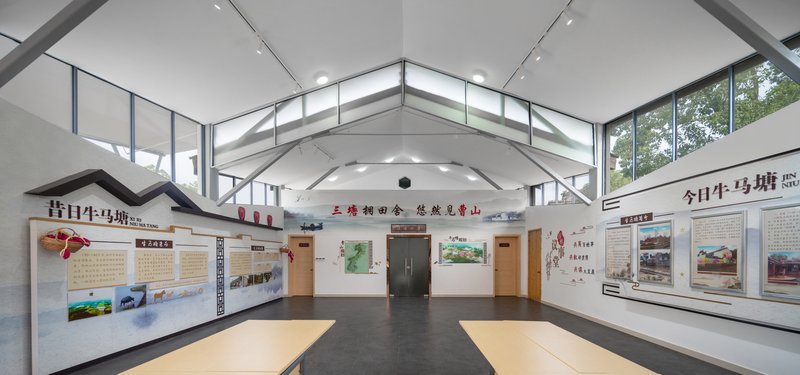
The building’s open, column-free interior allows for flexible use of the space, making it adaptable for various events, from local meetings to cultural exhibitions. The design ensures that the hall serves as a hub for communication and social interaction, offering the community a place to gather and share ideas, while also honoring the rich history of the village.
A Modern Landmark Rooted in Tradition
The Conference Hall in Niumatang exemplifies how contemporary design can thoughtfully integrate with local culture and history. By utilizing modern materials and techniques such as steel and prefabricated components, the building creates a functional, sustainable community space that respects and reinterprets the architectural language of Wenzhou heritage. This innovative approach ensures that the hall not only serves the needs of the village today but also preserves the cultural significance for future generations.
All the photographs are works of Atelier RenTia, Inter_mountain images




Popular Articles
Popular articles from the community

gru.a Builds a 70 m² Timber Shelter That Opens Like a Farm Door in Brazil's Valley of the Vines
In the mountainous region near Rio de Janeiro, a compact retreat uses plywood panels and deep eaves to blur the line between inside and out.
BAUEN Builds Two Rammed Earth Volumes in Paraguay Inspired by the Ovenbird's Nest
In San Bernardino, a house of compacted earth channels the instinct of a constructive bird to shelter life from the Paraguayan summer.
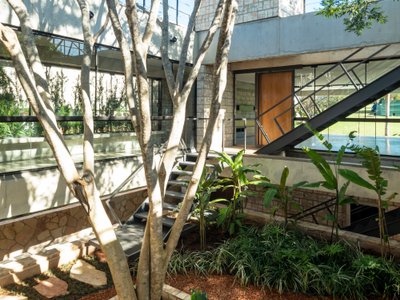
OMCM arquitectos Builds a Summer House in Paraguay from Quarry Waste Blocks and Three Sacred Trees
In the young hillside neighborhood of Altos, a 696-square-meter concrete volume hovers on six pillars around three preserved native Yvyraju trees.
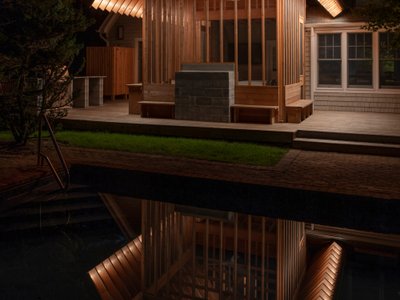
BLDUS Turns a 250-Square-Foot Screened Porch into a Pine Forest Temple in East Hampton
A gabled cedar pavilion mimics the rhythm of surrounding pines, anchoring a 1990s wooded home to its hollow in Long Island.


Similar Reads
You might also enjoy these articles

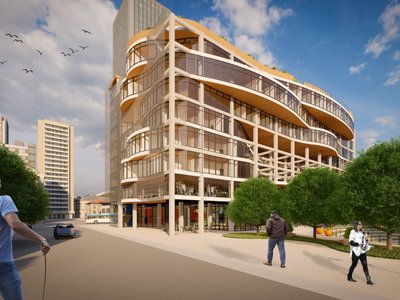
Olio Towers: A Mid-Rise for Performers That Fuses Housing, Rehearsal, and Stage
Located blocks from Houston's Theater District, this modular tower stacks living units around a central performance atrium.

Oasis: Modular Green Housing Carved into Dhaka's Urban Fabric
A shortlisted Plugin Housing entry reclaims unauthorized settlements in Dhaka with stepped concrete volumes, green roofs, and ventilation-driven design.

Black Hole: A Floating Megastructure for the Post-Physical Era
Emiliano Mazzarotto envisions a spherical, self-scaling arena where e-sports, digital hotels, and holographic stadiums replace traditional public space.
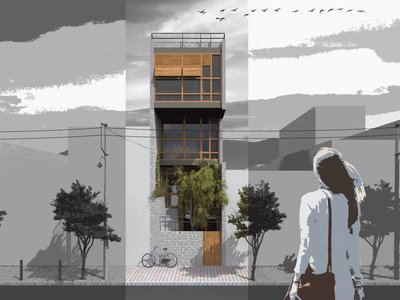
Compact & Sustainable Living in Piraeus: A Four-Level Family Home Built Around Light and Air
A narrow townhouse in one of Greece's densest port cities uses a central atrium and passive strategies to house three generations under one roof.


Explore Architecture Competitions
Discover active competitions in this discipline




The International Standard for Design Portfolios


The Global Benchmark for Architecture Dissertation Awards


The Global Benchmark for Graduation Excellence


Challenge to reimagine the Iron Throne
Comments (0)
Please login or sign up to add comments
No comments yet. Be the first to comment!