
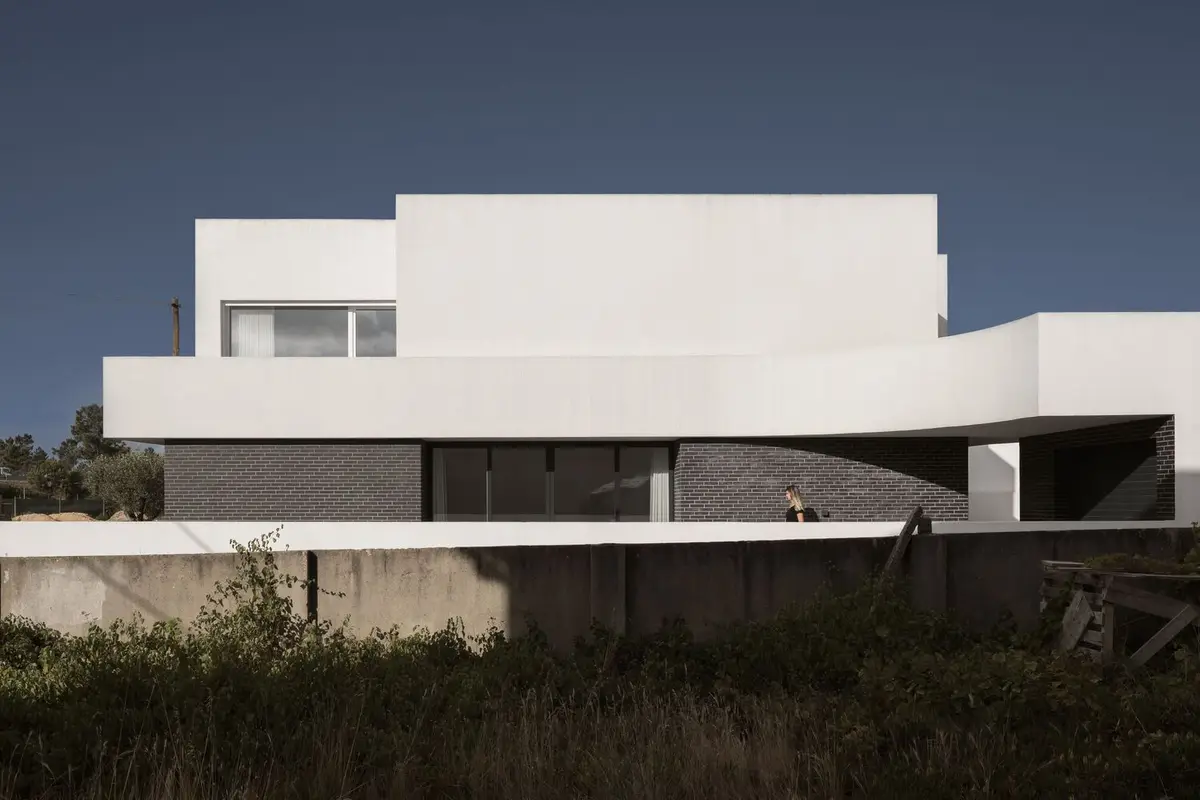
Contemporary House Design in Portugal: House Pinhal Conde da Cunha by Estúdio AMATAM
A sculptural home in Amora, Portugal that redefines suburban living through spatial fluidity, light choreography, and architectural clarity.


Architecture Beyond Boundaries in Amora, Portugal
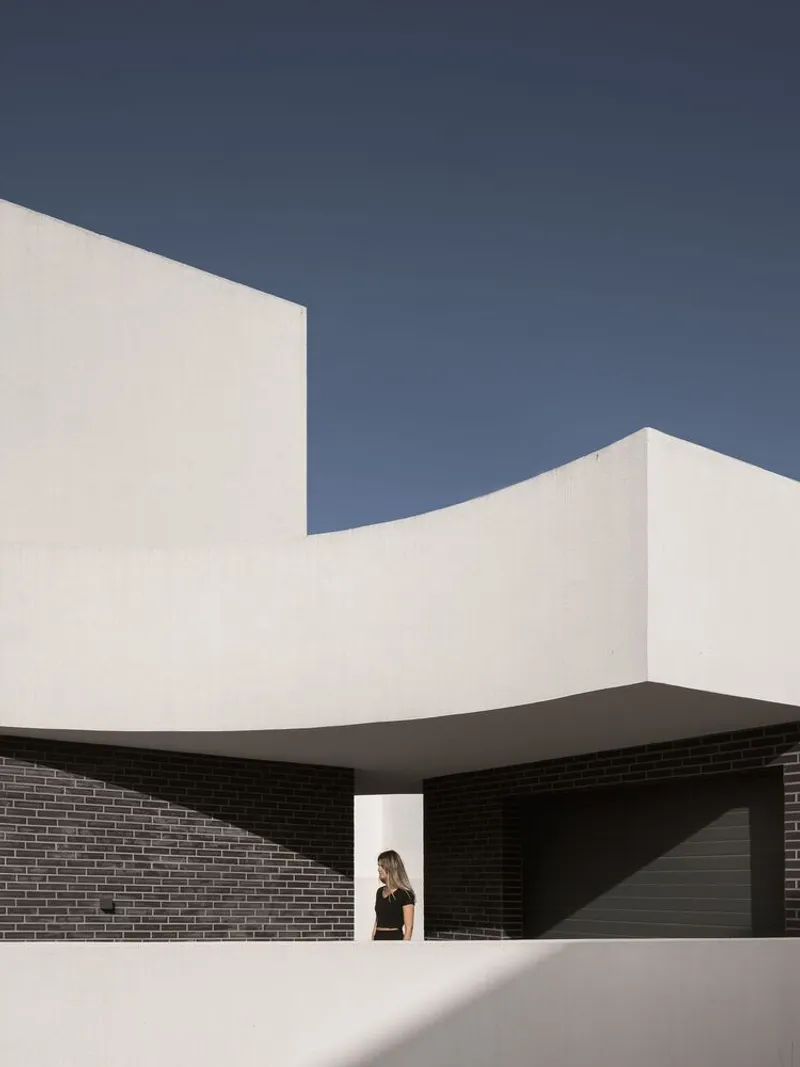
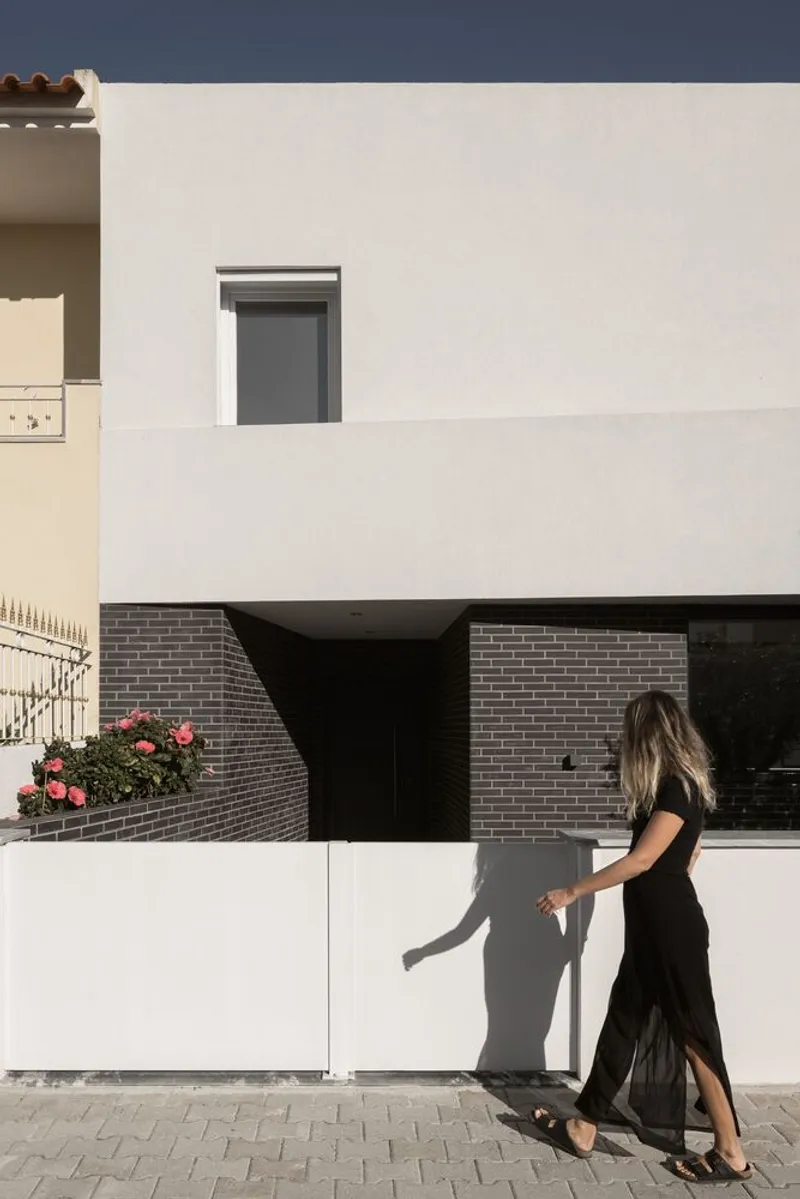
Located in Amora, a suburban area near Lisbon, House Pinhal Conde da Cunha by Estúdio AMATAM redefines contemporary house design in Portugal by transforming regulatory limitations into architectural opportunity. In a neighborhood defined by repetitive forms and rigid plot regulations, this 170 m² residence introduces spatial fluidity, lightness, and expressive form. The project embodies a conceptual and material resistance to the generic, forging an identity that balances contextual awareness with bold architectural clarity.
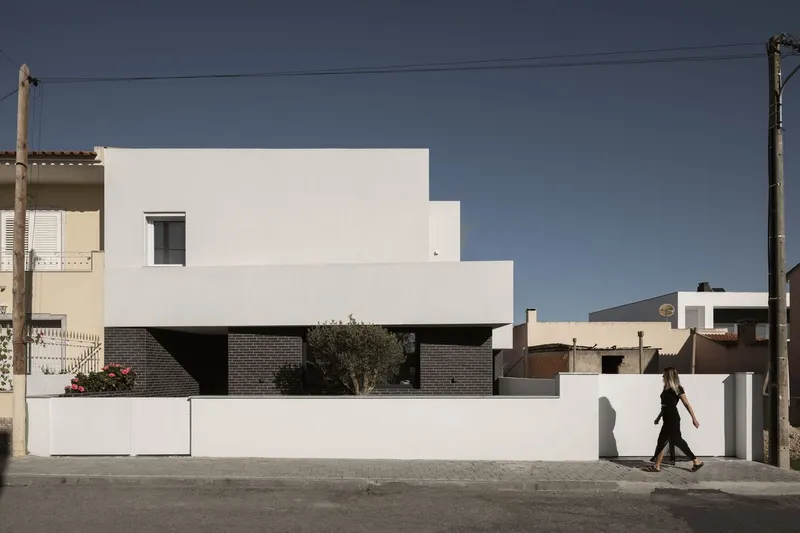
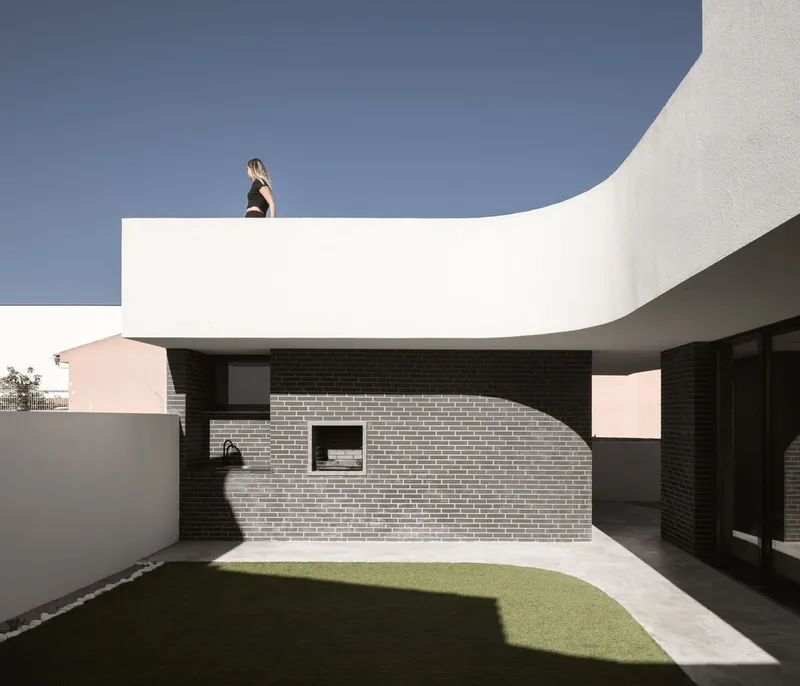
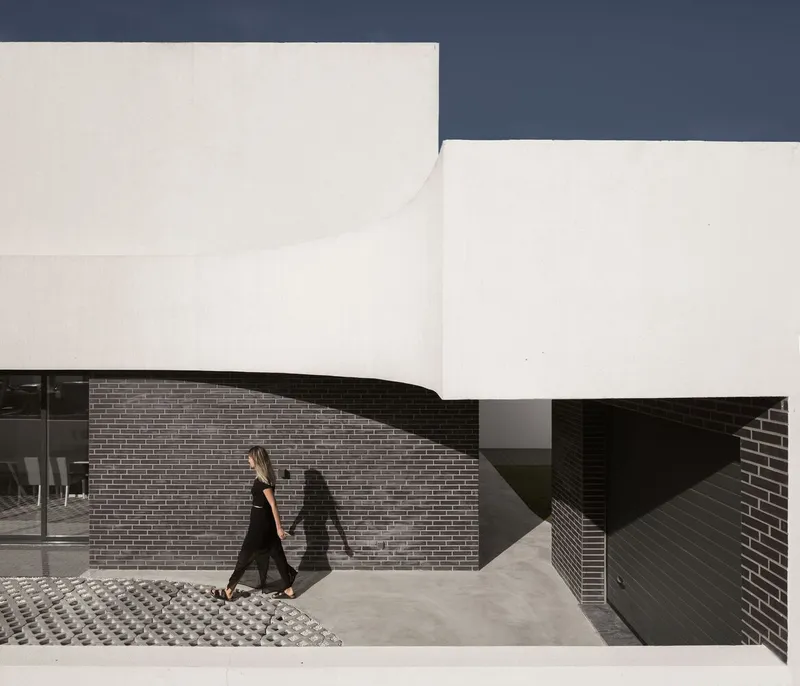
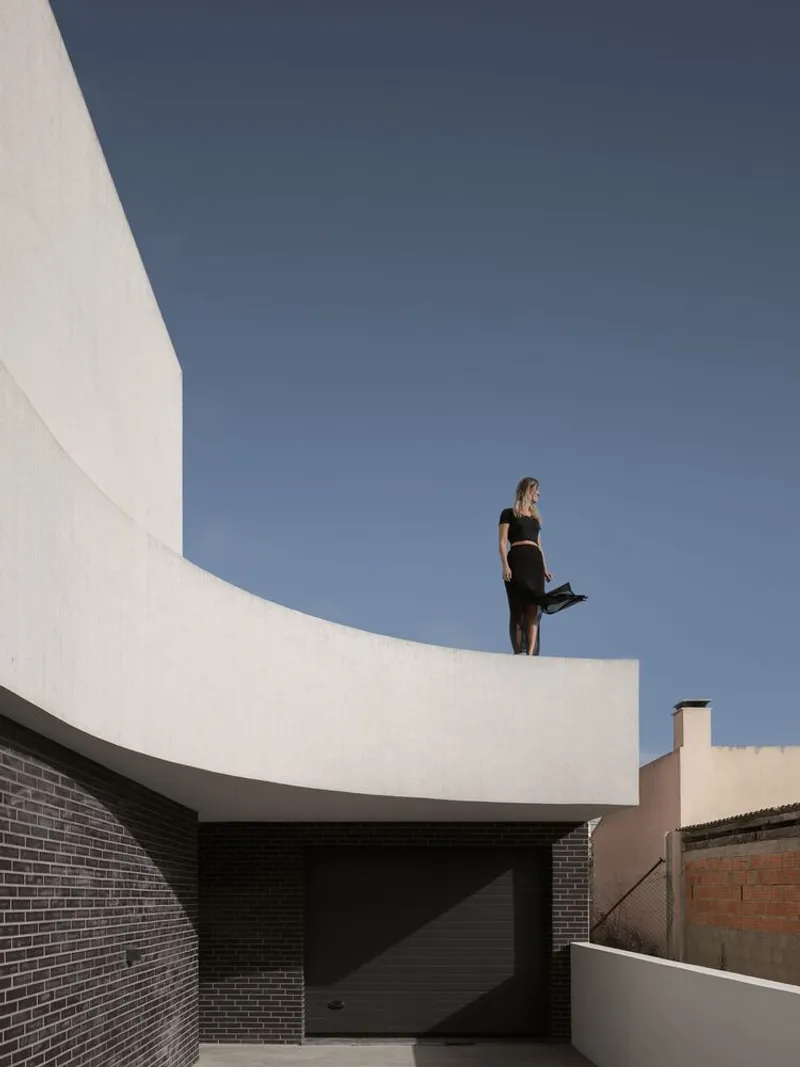
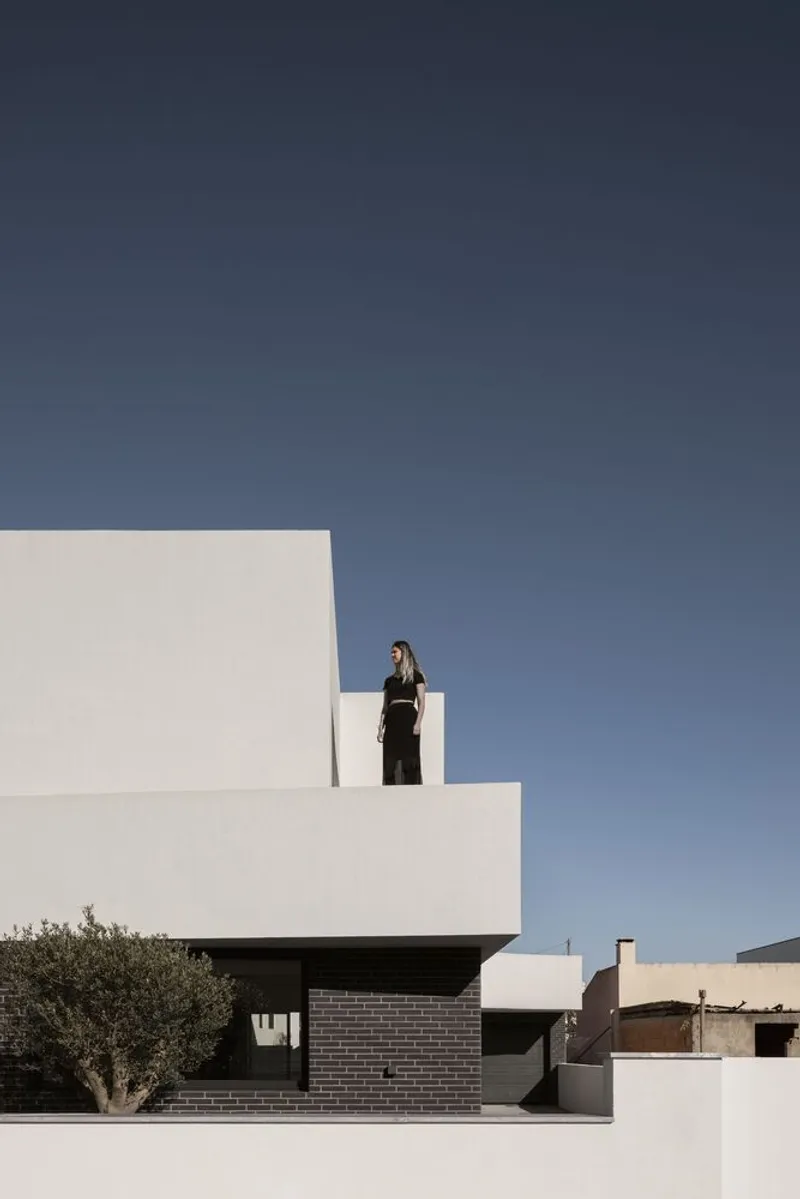
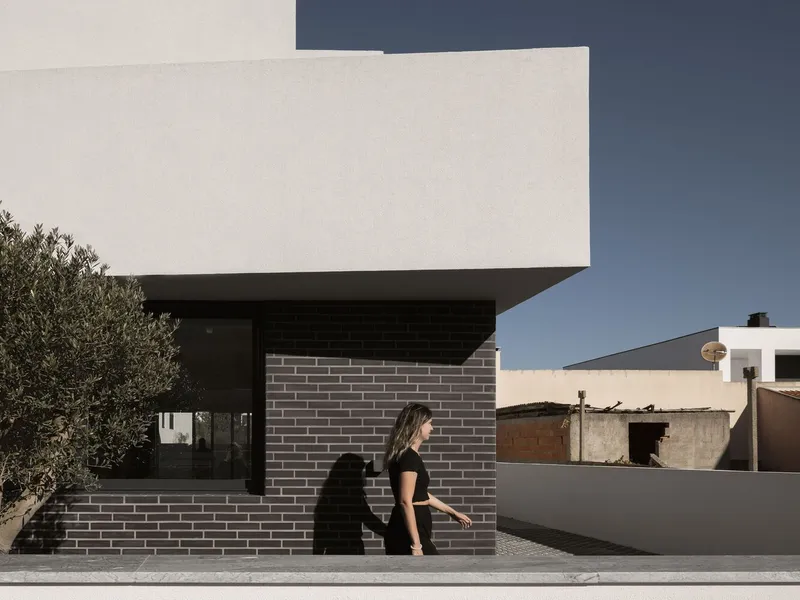
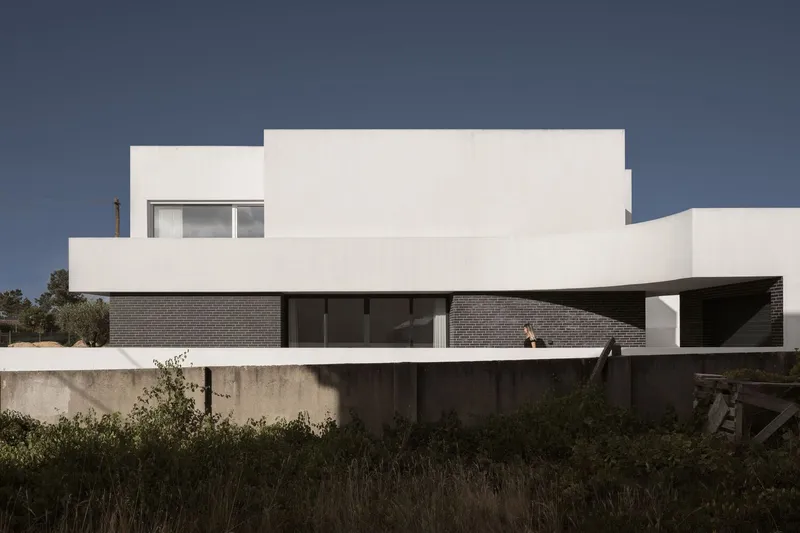
The house occupies a compact plot with subdivision rules that often suppress creativity. Rather than accept these limitations, the architects responded with a design that embraces continuity—between volumes, inside and outside, and across the thresholds of domestic life. The result is a unified architectural gesture, conceived as a ribbon of shadow and light, which folds across the site to enclose both the main residence and an annexed garage in one sculptural form.
From Volume to Void: A Strategy of Subtraction
The design began with a monolithic volume that was carefully carved through subtractions and openings to introduce rhythm and light. These voids create a sense of spatial breath, dissolving the weight of the mass and allowing natural light to animate the surfaces throughout the day. The interplay of light and shadow becomes essential to the building’s character, marking time and enhancing spatial awareness.
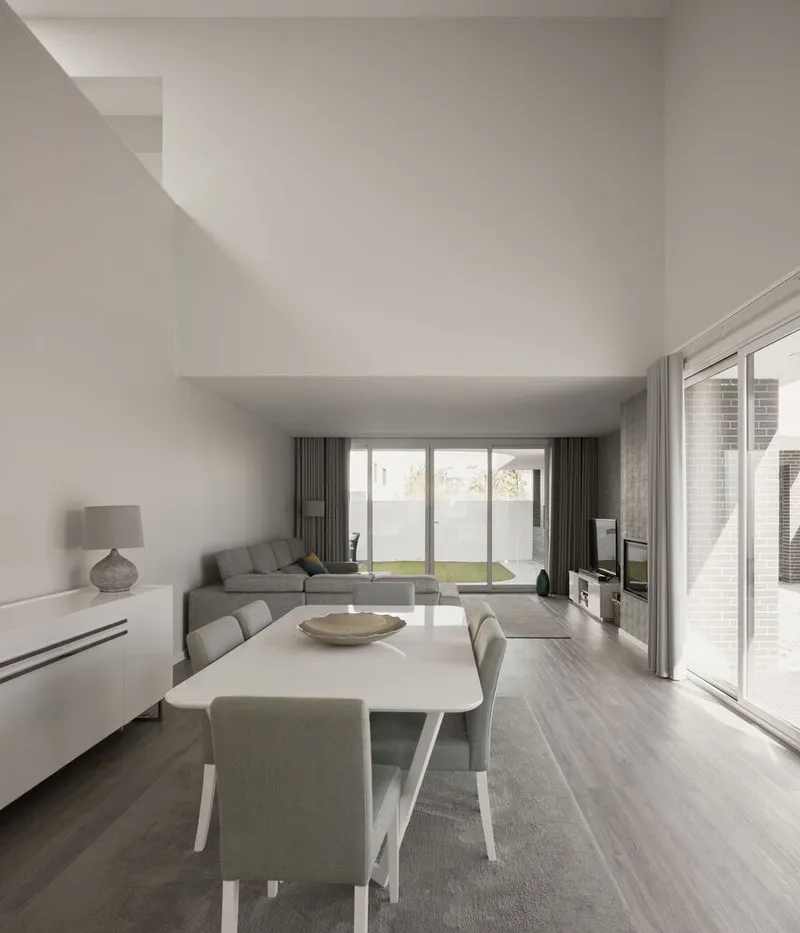
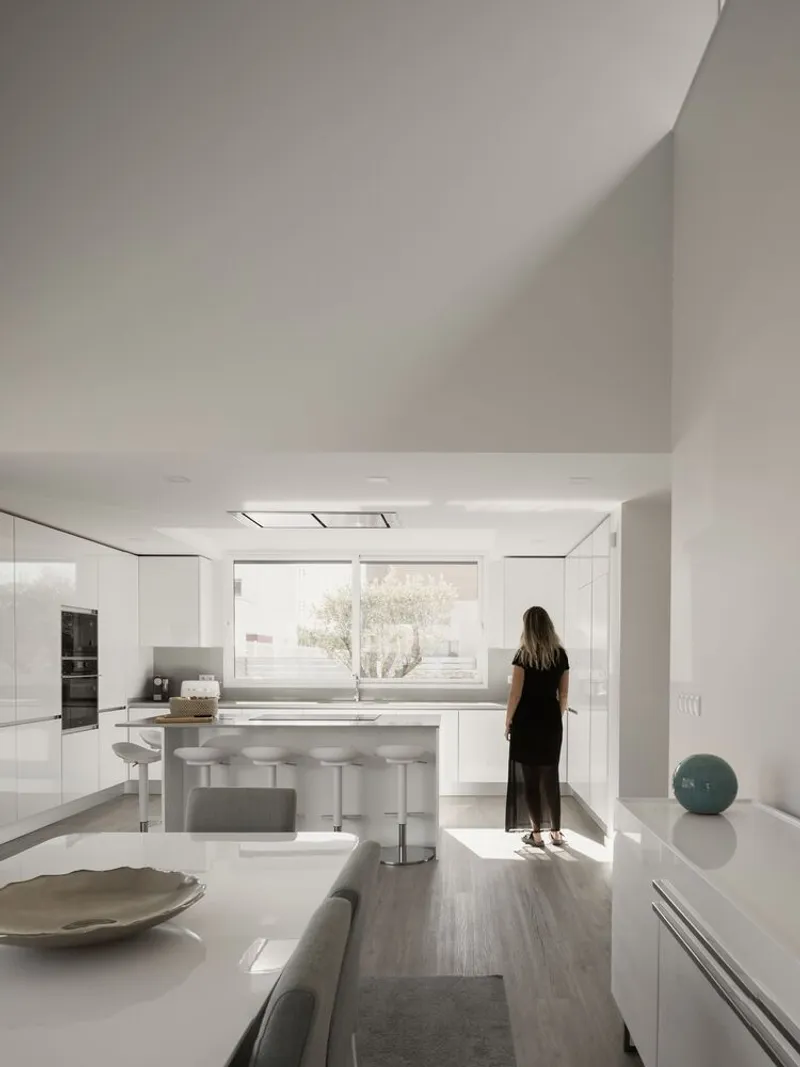
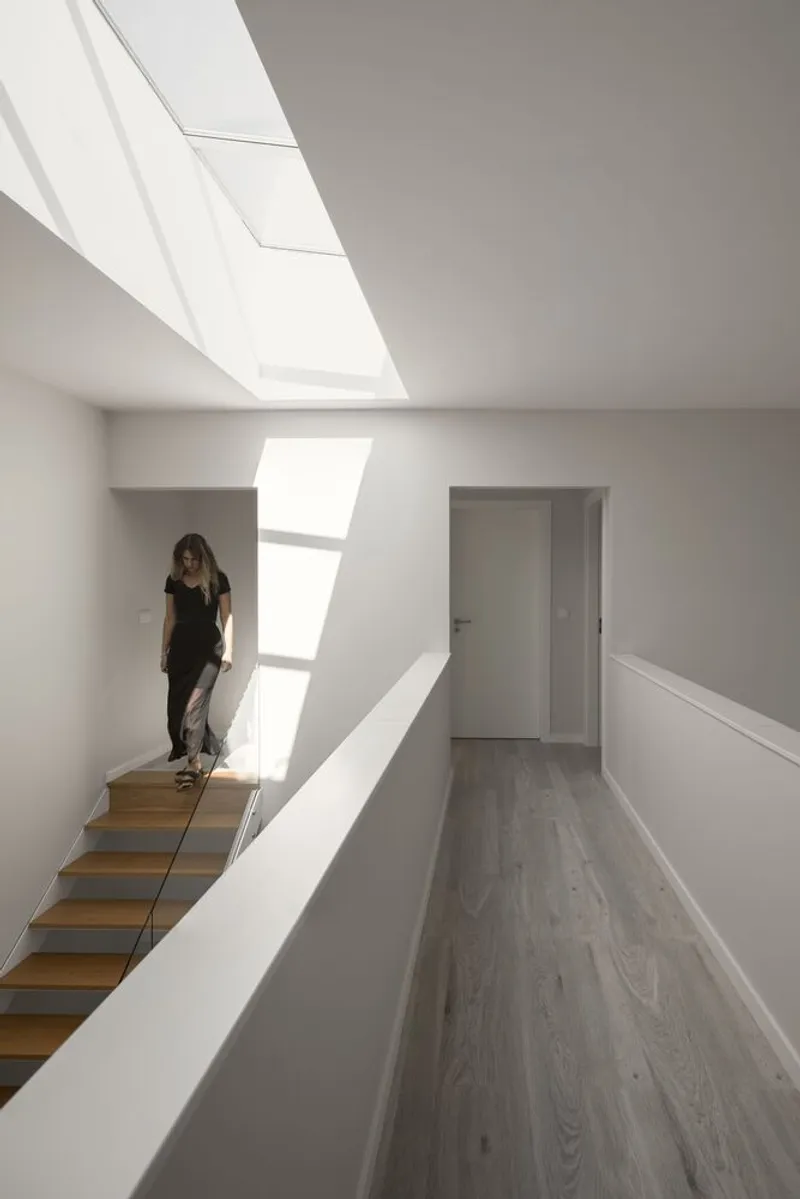
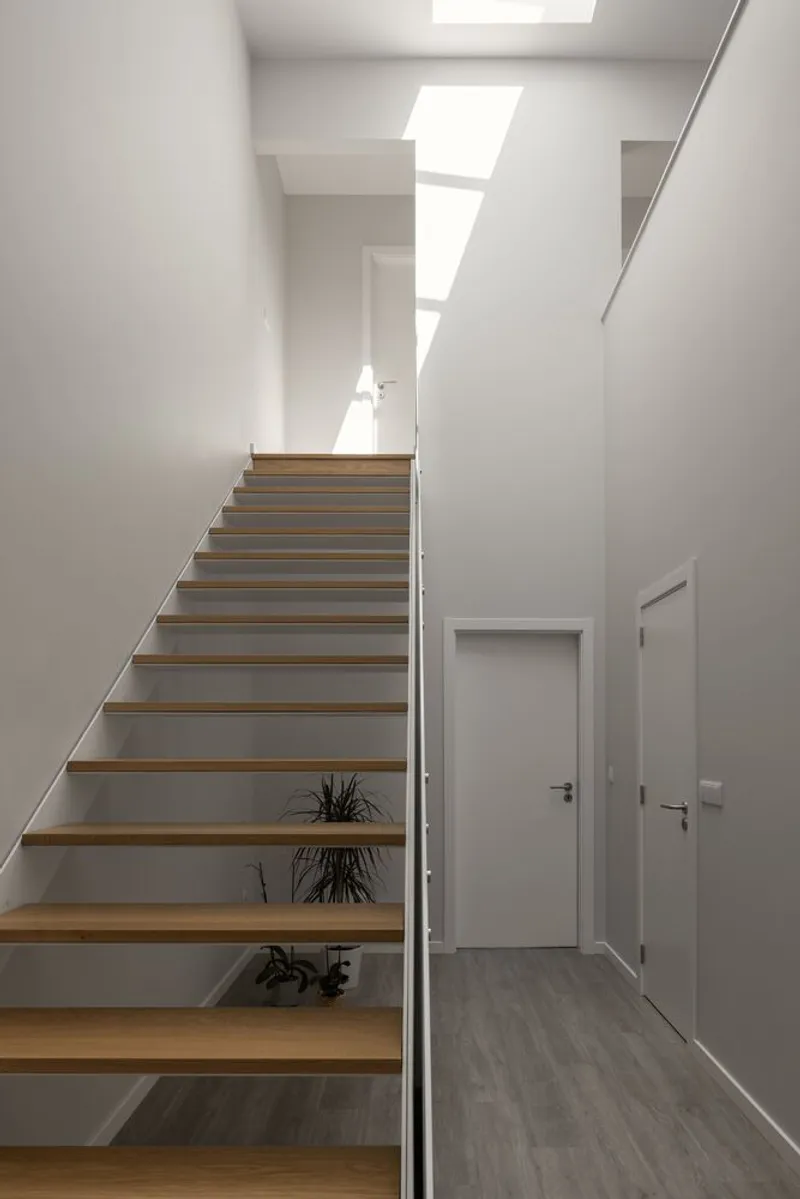
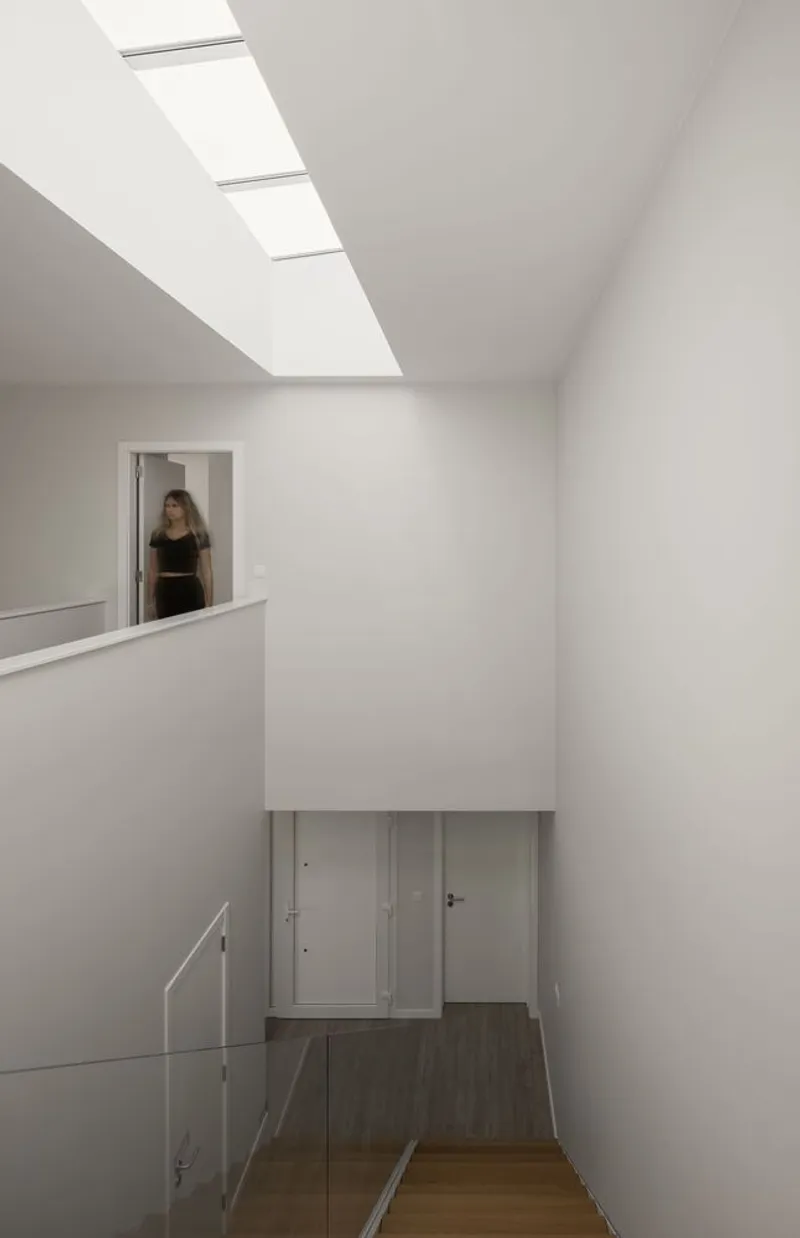
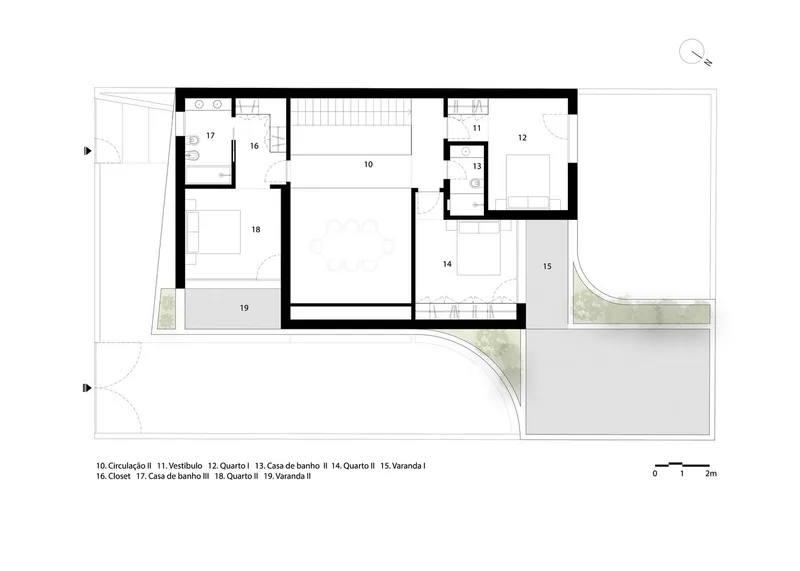
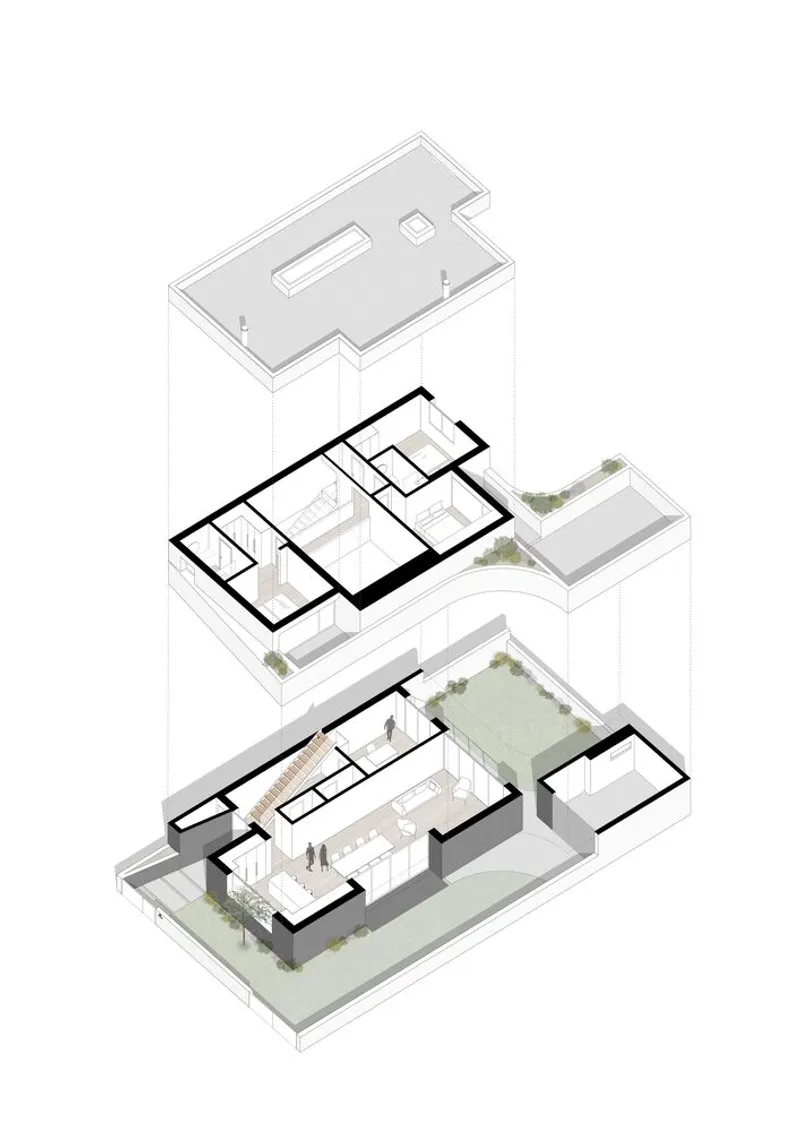
Solar orientation and the creation of an internal void guided both the formal and functional aspects of the design. This atrium—an interior courtyard open to the sky—organizes the plan and sections while distributing light into the core of the home. It serves as a visual anchor, connecting levels and separating functions, while inviting introspection and tranquility.

Merging Architecture with Emotion and Identity
To avoid disjointed forms due to programmatic needs, Estúdio AMATAM proposed a volumetric fusion that connects the house and garage through a continuous architectural ribbon. This gesture not only unites both programs but also articulates a distinctive silhouette. The form responds poetically to the site and context, offering a composition that is both grounded and seemingly weightless.
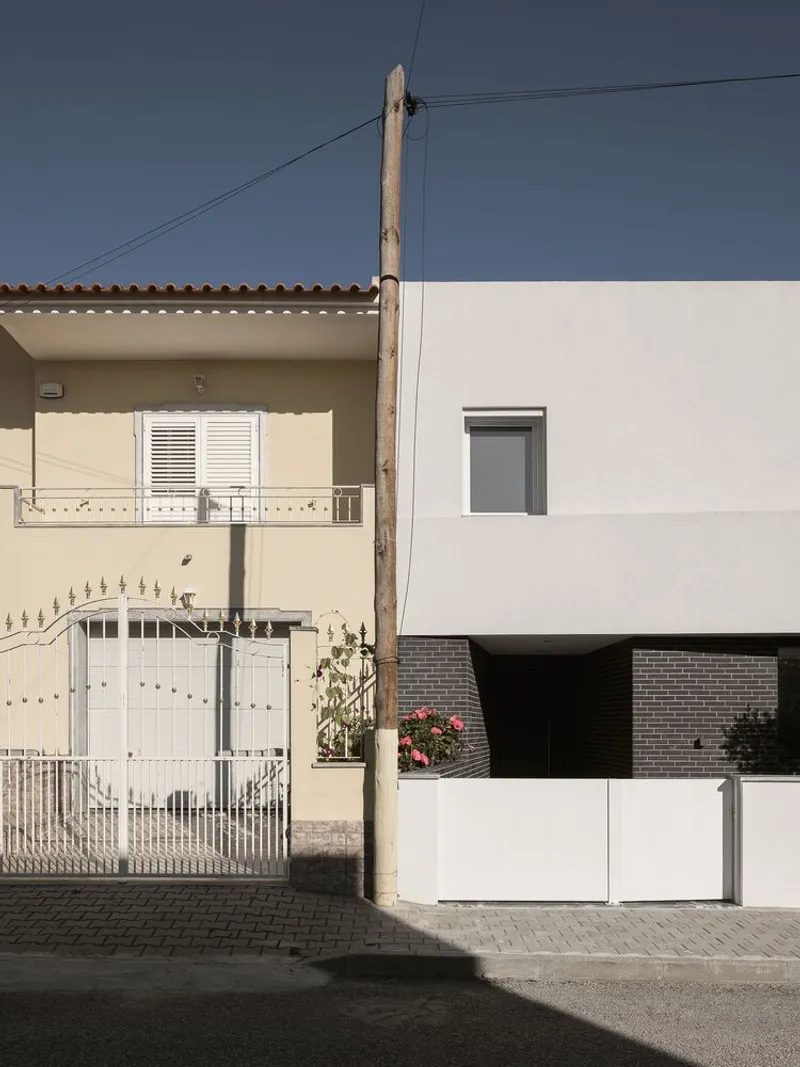
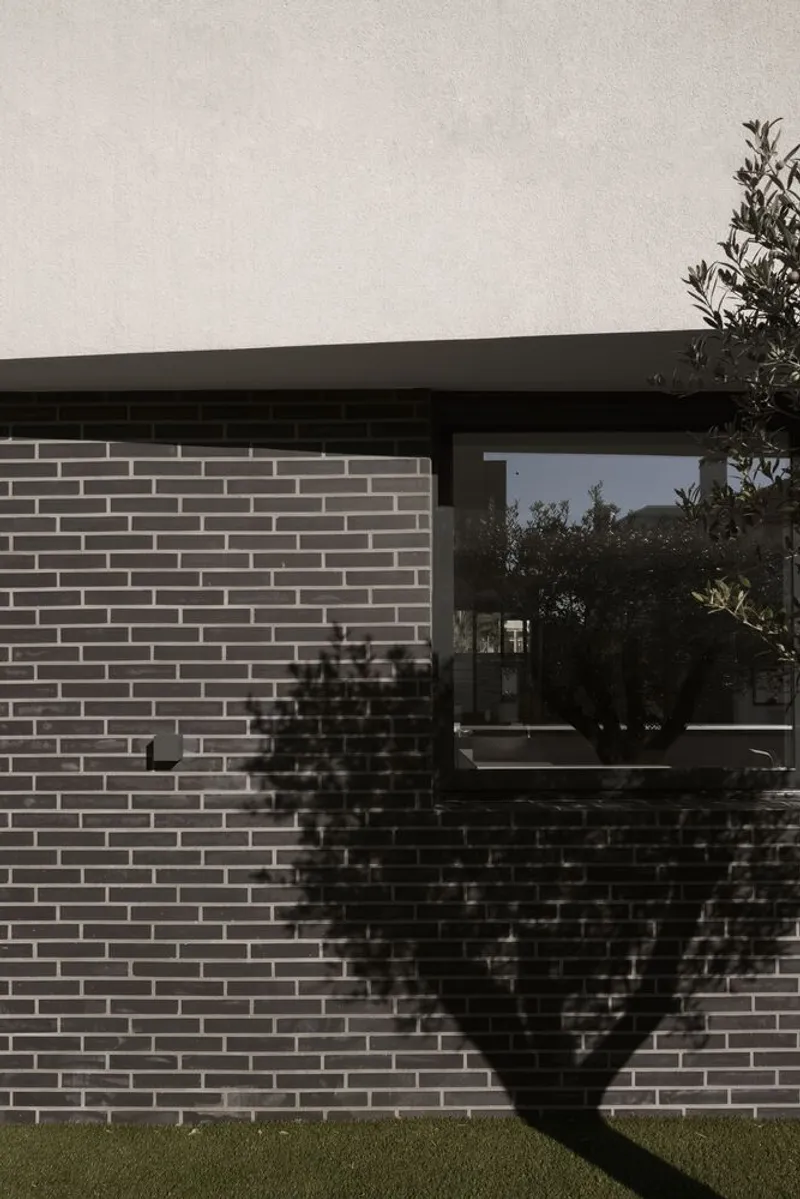
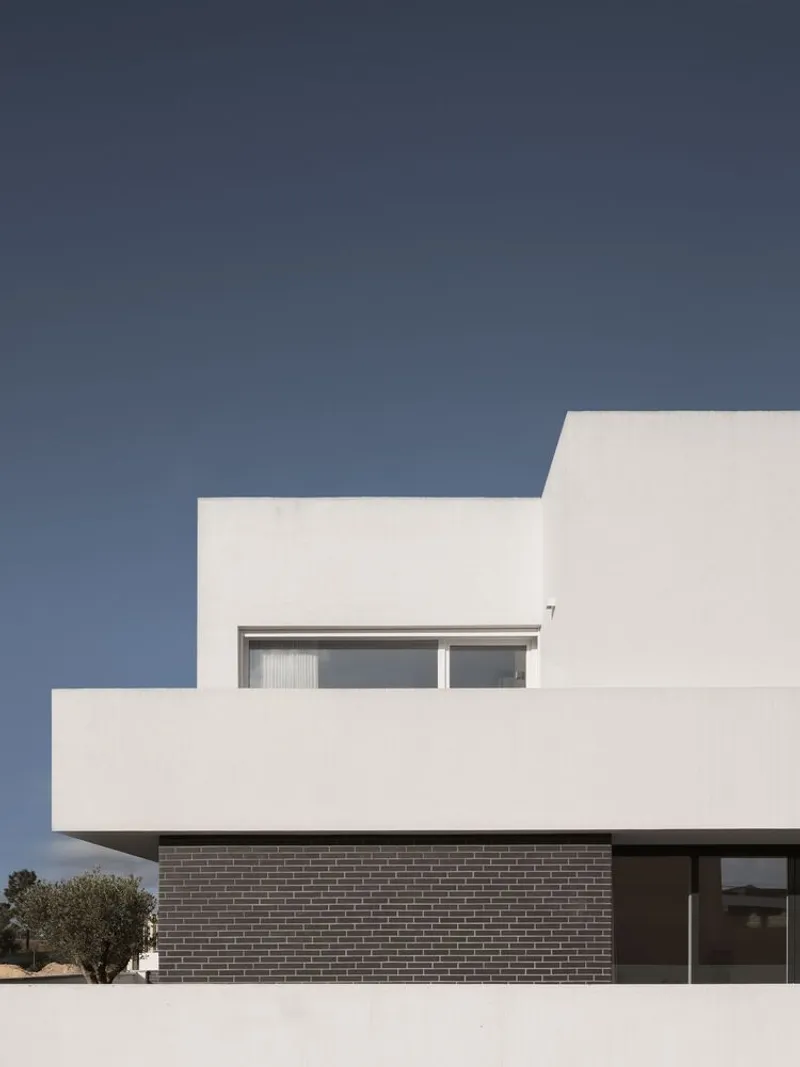
The dark ceramic base grounds the house, creating a tactile contrast with the lighter concrete above. This chromatic division emphasizes horizontality and enhances the illusion of levitation, as though the upper structure hovers gently above its foundation. Materiality here becomes narrative: it reflects restraint, precision, and the emotional tone of the architecture.
Interior Lightness and Spatial Clarity
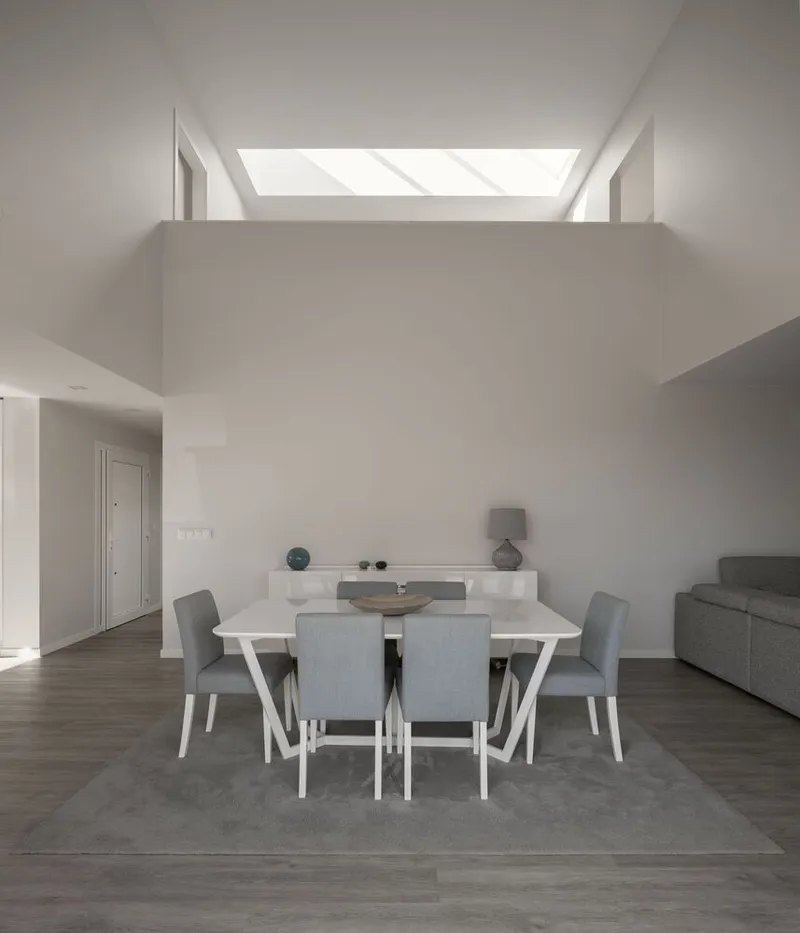
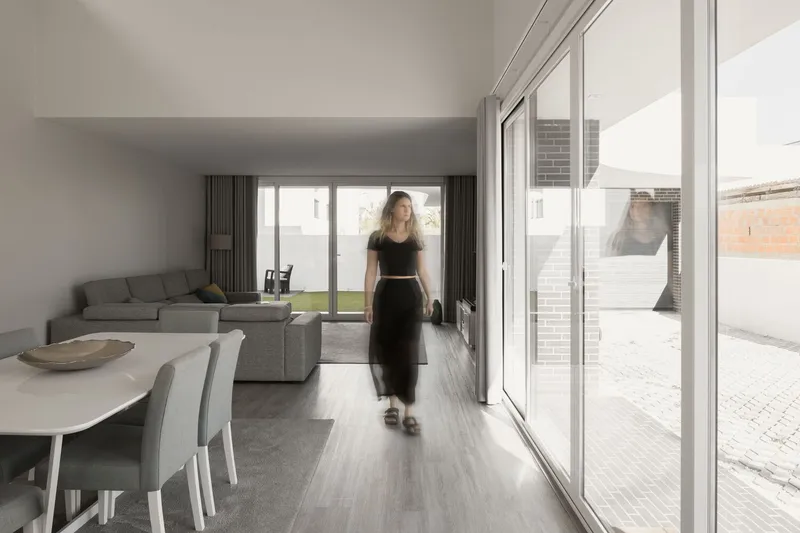
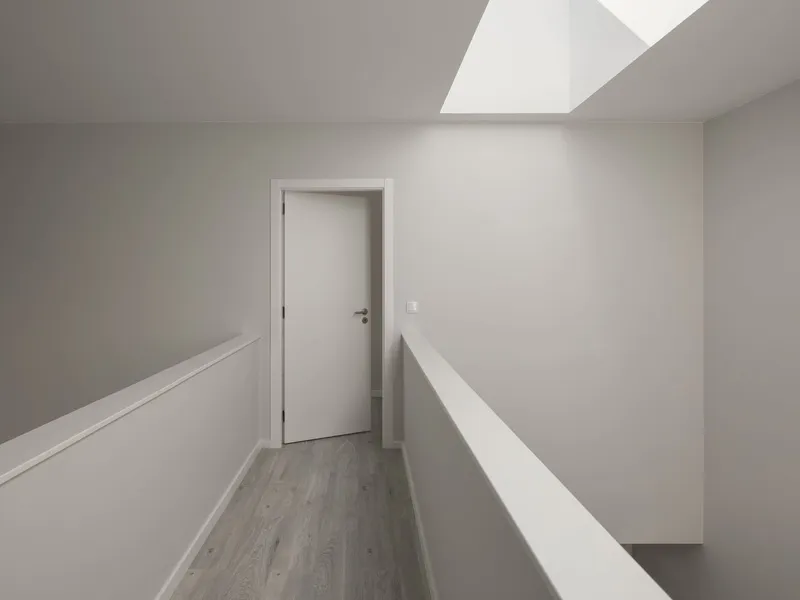
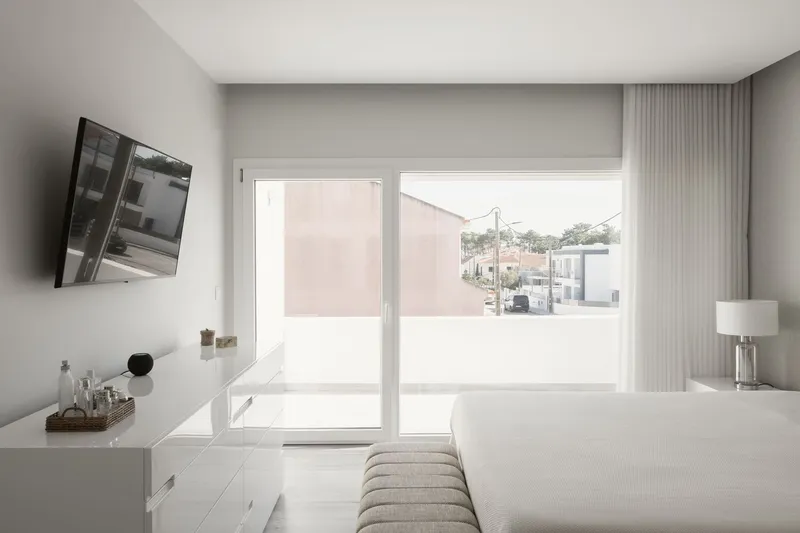
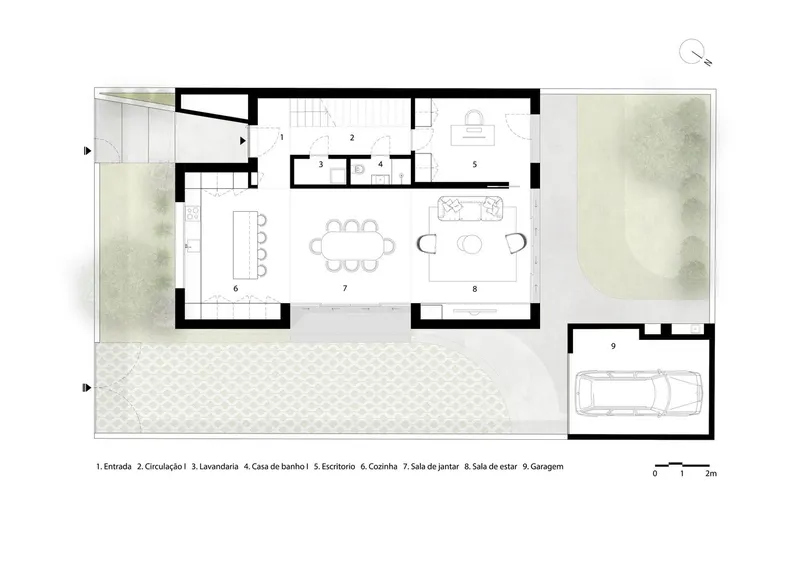
Inside, the material language is restrained and calming. A neutral palette of whites, greys, and subtle textures reinforces the contemplative quality of the spaces. The home is organized vertically, with the upper level dedicated to private rooms and the ground floor housing social and workspaces. These zones are linked by the central void, which acts as a lightwell and circulation core.
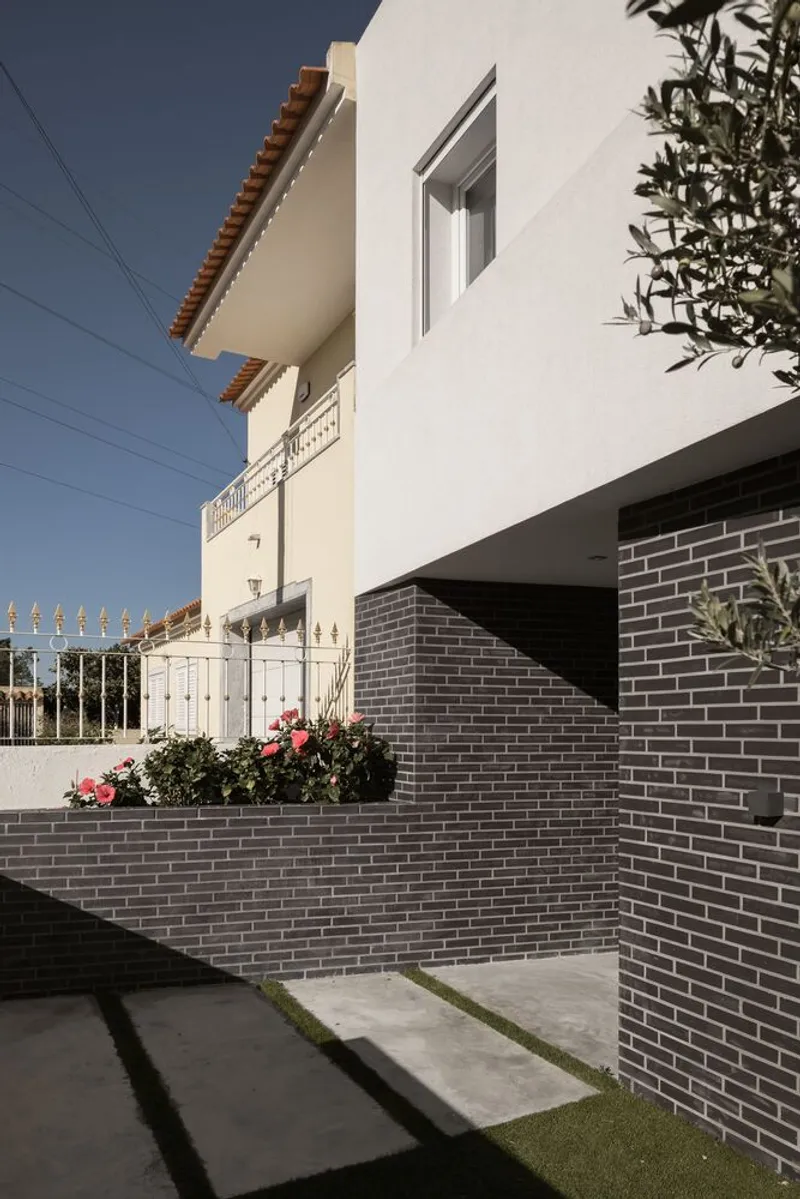
As sunlight pours from above, shadows dance across the monochromatic surfaces, adding a scenographic dimension to everyday life. The simplicity of finishes, combined with thoughtful detailing and proportion, creates an atmosphere of clarity, comfort, and refined elegance. Every element, from stair treads to wall textures, contributes to a cohesive spatial experience.
A New Language for Suburban Portuguese Living
House Pinhal Conde da Cunha is more than a dwelling—it is a manifesto for how contemporary house design in Portugal can challenge conformity and reveal the potential within constraint. The house presents an architectural dialogue between expressive form and spatial restraint, between community regulations and individual identity.
Rather than resist the suburban context, the project reframes it. The architecture speaks quietly but confidently, offering a new model for suburban development that is emotionally resonant, environmentally responsive, and spatially inventive. Through form, light, and material, the house invites its inhabitants to experience domesticity not as enclosure, but as a continuum of light, space, and silence.
All the photographs are works of Garcês


Popular Articles
Popular articles from the community


Co-Life: Senior Housing Design That Reconnects Older Adults With the City
Co-Life reimagines senior housing design through healing gardens, shared streets, workshops, and a sustainable community across generations.

Lunar Spiral: Space Architecture Shaped by the Mathematics of the Universe
Lunar Spiral reimagines space architecture through Fibonacci geometry, lunar regolith, levitating habitats, and self-sustaining Moon living.

Hill & Cross Opera: Sculptural Opera House Architecture Shaped by Tallinn’s Landscape and Identity
Hill & Cross Opera reimagines opera house architecture in Tallinn through its sculptural hill, civic plaza, glass wave and a luminous cross.

Play: Fragments of Their World
Familiar architecture becomes modular playground design, creating safe spaces where displaced children can learn, connect, imagine and play.

Similar Reads
You might also enjoy these articles

FAMM Arquitectura Organizes Ten Villas Around Courtyards and Jungle in Nosara, Costa Rica
El Molino pairs two elongated volumes with deep overhangs and timber louvers to build a compact coastal community five minutes from the beach.
Oscar Niemeyer's Ibirapuera Park Pavilions Define São Paulo's Cultural Identity in Concrete and Curve
A constellation of modernist volumes set within São Paulo's most important urban park, conceived for the city's 400th anniversary in 1954.
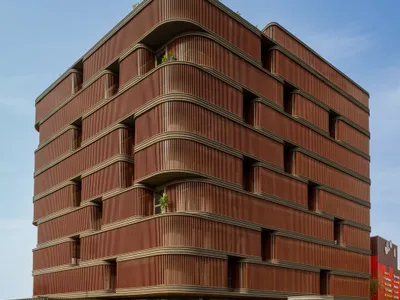
Sanjay Puri Architects Wraps a Jaipur Office Tower in Capsule-Shaped Green Buffers
A nine-level climate-responsive workplace near Jaipur Airport uses stacked planter terraces and aluminium screens to fight 40°C heat.
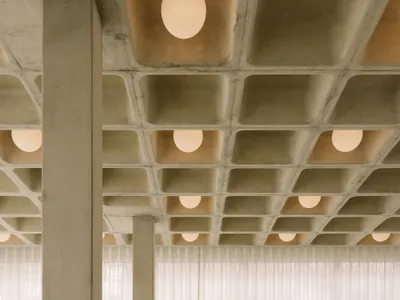
RHO Converts a Berlin Spree-Side Industrial Courtyard into Enkime's 1,000 m² Agency Headquarters
A social media agency's new home in Charlottenburg trades glossy branding for concrete waffle ceilings, glazed tile, and sheer curtains.

Explore Contemporary Design Competitions
Discover active competitions in this discipline

Challenge to reimagine the Iron Throne

Photograph architecture without architects

Illustrate the lost glory of Angkor Wat - Render Challenge

Design challenge to reuse E-waste
Comments (0)
Please login or sign up to add comments
No comments yet. Be the first to comment!