

Convergence: A Futuristic Mixed-Use Architecture for Digital Nomads in Singapore
A visionary mixed-use architecture project redefining urban living for digital nomads through flexible workspaces, communal housing, and sustainable design.


As cities evolve alongside rapidly shifting lifestyles and work cultures, architecture must respond with adaptable and human-centered environments. Convergence explores this transformation through a futuristic mixed-use architecture proposal designed specifically for digital nomads and modern urban residents in Singapore. Conceived as a dynamic residential and workplace ecosystem, the project investigates how architecture can merge living, working, social interaction, and wellness into a single vertical community.
Designed by 지호 안, 주은 정, 백 준혁, and Jeong Goeun, Convergence was a shortlisted entry in the NomadHouse 2020 competition. The proposal reflects the growing global movement toward flexible living, remote work culture, and highly integrated urban environments.
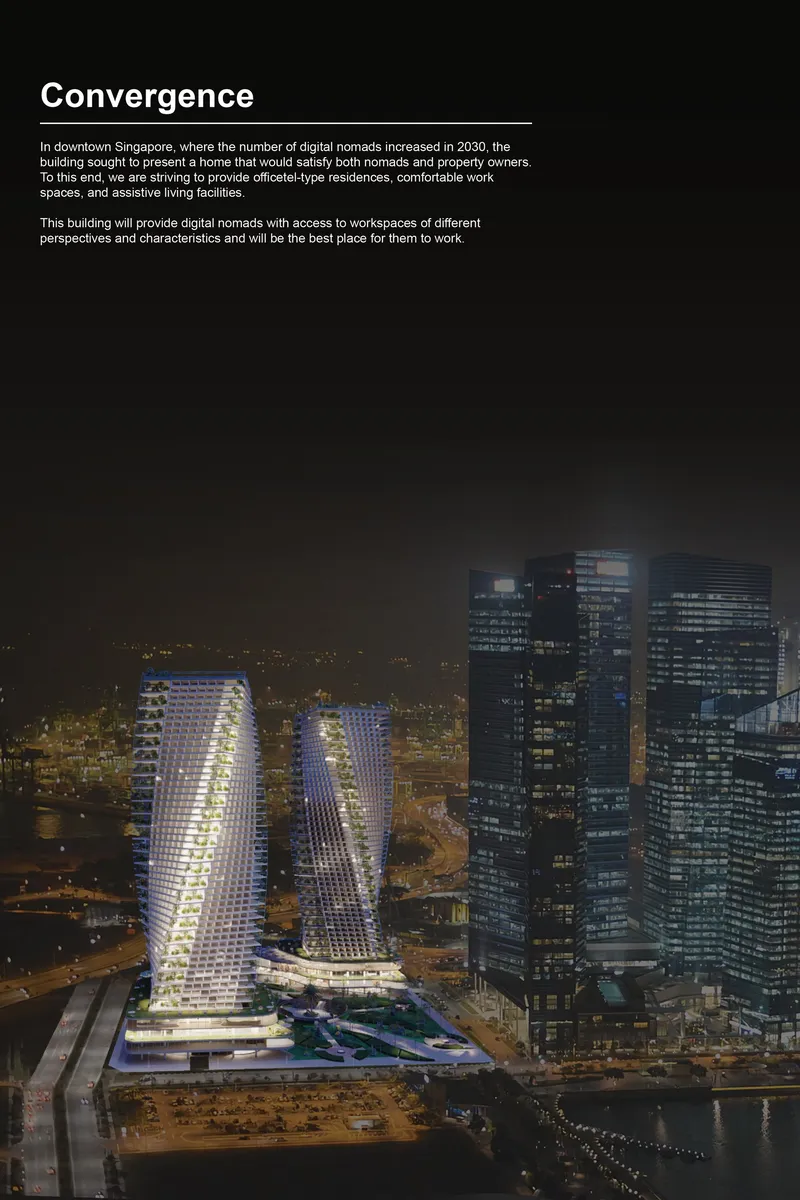
Located within downtown Singapore near Marina Bay, the project responds to the anticipated rise of digital nomads by 2030. Instead of separating office spaces from residential life, the design creates a seamless coexistence between productivity and everyday living. The result is a contemporary mixed-use development that prioritizes convenience, accessibility, social connection, and spatial flexibility.


Architecture Designed Around Lifestyle Flexibility
The central idea behind Convergence is the separation and balance of office work and residential living while still maintaining strong communal relationships between inhabitants. The project recognizes that digital nomads require more than temporary accommodation. They need adaptable work environments, opportunities for social engagement, restorative spaces, and efficient infrastructure that supports both short-term and long-term living.
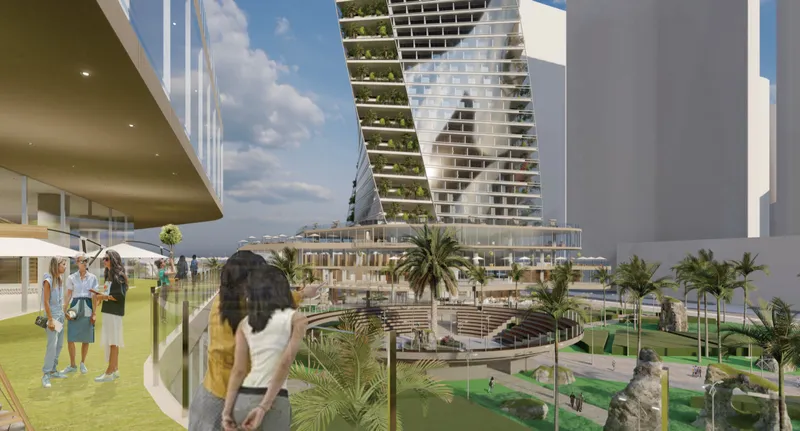
The twin towers rise as sculptural forms within the Singapore skyline, each carefully rotated and shaped to maximize views, ventilation, daylight, and spatial variation. The twisting geometry is not merely aesthetic. It actively contributes to environmental comfort and urban connectivity while offering residents diverse perspectives across the city and waterfront.
At the urban scale, the proposal organizes circulation around central public squares and pedestrian pathways. These outdoor areas become active communal landscapes where residents, visitors, and workers naturally intersect. The architecture blurs the boundaries between private residence, public activity, and professional collaboration.
A Vertical Community for Digital Nomads
Unlike conventional residential towers that isolate inhabitants within repetitive floor plates, Convergence introduces layered communal experiences throughout the building. Every level incorporates green terraces, rest zones, collaborative spaces, and informal meeting areas to encourage interaction and productivity.
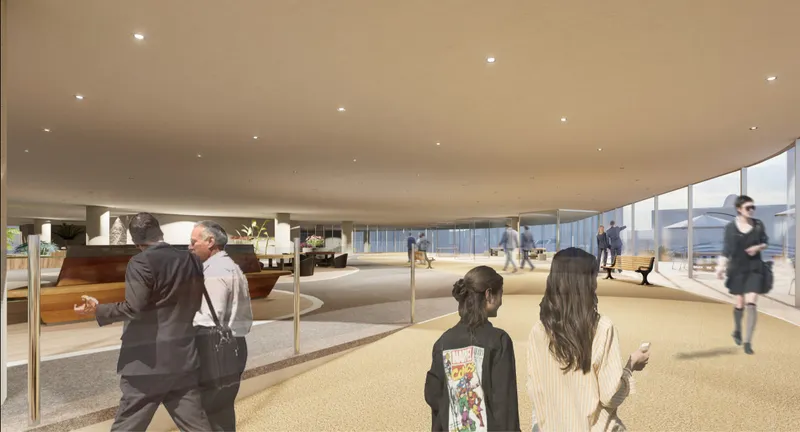
The lower floors are dedicated to highly public and social functions including cafés, markets, music halls, food courts, fitness centers, and lounges. These programs transform the base of the tower into an urban gathering hub rather than a purely commercial podium.
The middle levels focus on dynamic workspaces tailored for flexible working styles. Open discussion areas, meeting rooms, collaboration lounges, and reservable conference spaces allow residents to work according to their needs and schedules. Instead of fixed office layouts, the project proposes adaptable environments where work can happen anywhere.
Upper residential floors prioritize comfort, ventilation, and wellness. Housing units vary from compact single-bed residences to larger shared apartments, allowing both short-term and long-term occupants to coexist. Outdoor office terraces and shared kitchens reinforce the concept of collective living while maintaining personal privacy.

Sustainable High-Rise Architecture with Human-Centered Design
A major strength of the project lies in its environmental and social responsiveness. The architecture uses passive design strategies to improve comfort in Singapore’s tropical climate. Open-air terraces, cross ventilation systems, shaded outdoor workspaces, and integrated greenery reduce dependence on mechanical cooling while improving indoor air quality.
The tower form itself supports these environmental ambitions. Rotated floor plates create multiple viewing angles while simultaneously improving airflow through the structure. Voids and open circulation areas allow light and ventilation to penetrate deep into communal spaces.
Green terraces appear consistently throughout the project, creating a biophilic atmosphere that softens the dense urban condition. Rather than treating greenery as decoration, the proposal integrates landscape as a core component of productivity, mental health, and social life.
The rooftop extends this philosophy further by offering recreational amenities including swimming pools, lounges, meeting zones, and relaxation decks overlooking Marina Bay. These elevated communal spaces transform the top of the building into an urban retreat for residents and visitors alike.
Designing for Productivity and Recovery
One of the most compelling aspects of Convergence is its understanding of the relationship between productivity and recovery. The project acknowledges that modern work culture requires environments that support focus, relaxation, and psychological wellbeing equally.
Instead of creating purely functional office floors, the design inserts rest areas, walking trails, lounge spaces, and open discussion zones throughout the building. Residents can transition fluidly between work and leisure without leaving the architectural environment.
This approach aligns with emerging trends in workplace architecture where wellbeing, flexibility, and human interaction are becoming central to spatial design. By integrating workspaces with restorative environments, Convergence proposes a healthier and more sustainable future for urban living.
A Future-Oriented Vision for Urban Housing
As cities continue to densify and remote work becomes increasingly normalized, architecture must evolve beyond rigid typologies. Convergence demonstrates how mixed-use architecture can respond to future lifestyles by combining residential, professional, and communal functions into a cohesive vertical ecosystem.
The project does not simply propose another residential tower. It rethinks how urban housing can support changing social behaviors, economic conditions, and patterns of mobility. Through its integration of flexible living arrangements, collaborative workplaces, communal amenities, and environmentally responsive design, the proposal creates a framework for future-ready urban life.
In many ways, Convergence represents a broader architectural shift toward adaptable, experience-driven environments that prioritize human needs over static programming. It imagines a city where living and working no longer exist as separate realities, but as interconnected experiences shaped by architecture itself.
Created by 지호 안, 주은 정, 백 준혁, and Jeong Goeun, this shortlisted NomadHouse 2020 proposal offers a compelling vision for the future of mixed-use architecture in rapidly evolving urban centers like Singapore.


Popular Articles
Popular articles from the community


The Earth Pod: 3D Printed Homes for Resilient Refugee Communities
The Earth Pod reimagines refugee housing through 3D printed homes made from clay, combining resilience, self-sufficiency, and rapid shelter.

Co-Life: Senior Housing Design That Reconnects Older Adults With the City
Co-Life reimagines senior housing design through healing gardens, shared streets, workshops, and a sustainable community across generations.

Riyadh For All: Intergenerational Urban Design for Active Aging in Rabat
Riyadh For All reimagines urban design in Rabat with intergenerational co-living, adaptive courtyards, and Moroccan cultural exchange today.
AL-JANNAH: Sustainable Architecture and Permaculture for Afghan Widows
AL-JANNAH uses sustainable architecture and permaculture to create resilient oasis of housing, learning, work and renewal for Afghan widows.

Similar Reads
You might also enjoy these articles

Eco Chapel: A Green Architecture Pavilion Designed in Symbiosis with the Forest
Eco Chapel uses green architecture to weave prayer, learning and reuse into a forest pavilion shaped by modular hexagonal canopies for life.
Kaffeebühnen: Coffee Shop Architecture Designed as a Civic Stage Between Vienna’s City and Park
Kaffeebühnen turns coffee shop architecture into a civic stage, linking Vienna’s park edge, urban life, warm timber yards, and coffee craft.
Healing Façade: Sustainable Architecture for Reforestation, Community, and Sacred Ecology in Ethiopia
Healing Façade reimagines sustainable architecture as a living wall that restores soil, catches water and renews Ethiopia's forest churches.


Urban Forest: A Vertical Ecosystem for 5,000 Workers in Singapore's Changi Business Park
Radially stacked pods and layered green decks turn a 7-acre plot into 47 acres of ecological workspace projected for 2040.




Comments (0)
Please login or sign up to add comments
No comments yet. Be the first to comment!