

Conversion of an Old Locksmith Shop by ALAS Alarcón Linde Architects
Adaptive reuse in Berlin transforms former locksmith shop into sustainable live-work spaces, blending history, craftsmanship, green design, and contemporary architecture.


The Conversion of an Old Locksmith Shop byALAS Alarcón Linde Architects stands as a compelling example of adaptive reuse architecture in Berlin. Located in the vibrant district of Neukölln, this 1931 structure has undergone multiple transformations: from garages to an art warehouse, exhibition space, locksmith workshop, and finally into a hybrid of residential apartments and creative studios.
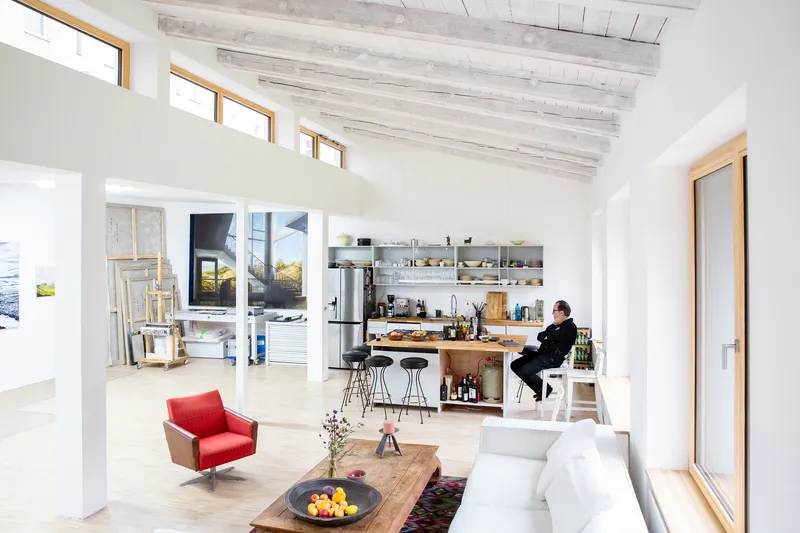
Acquired in 2018 by a collective of artists and creatives, the building reflects a growing trend in sustainable architecture and urban regeneration, where existing structures are reimagined instead of demolished. This project highlights how industrial heritage can be preserved while adapting to contemporary living needs, making it a key reference in renovation architecture.

Spatial Narrative: Courtyard Typology and Urban Layers
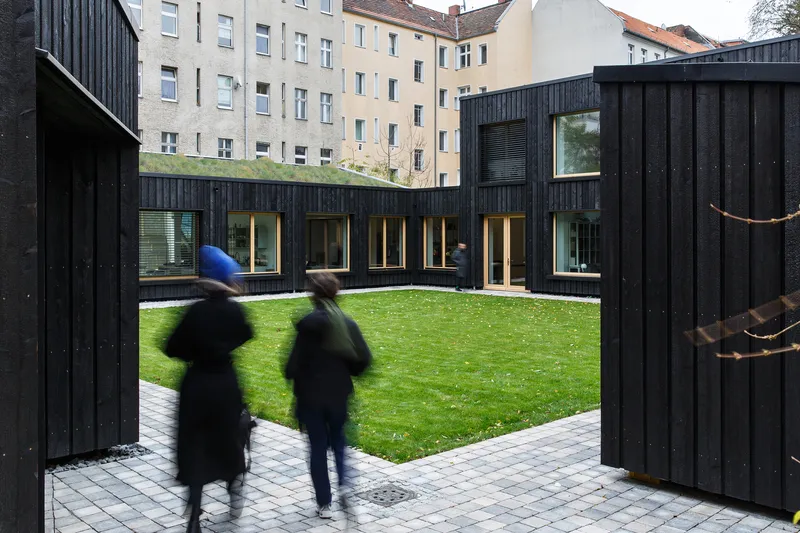
The building is organized in a U-shaped configuration around a central courtyard, reminiscent of the traditional German Dreiseitenhof typology. This inward-facing spatial arrangement creates a layered experience within the dense urban block, described metaphorically as “layers of an onion.”
The varying heights of the east, north, and west wings maintain the original volumetric hierarchy, while new interventions subtly redefine spatial relationships. The courtyard becomes the heart of the project, reinforcing community living and shared spaces, a critical aspect of modern co-housing design.
Material Innovation: Shou Sugi Ban Facade Strategy
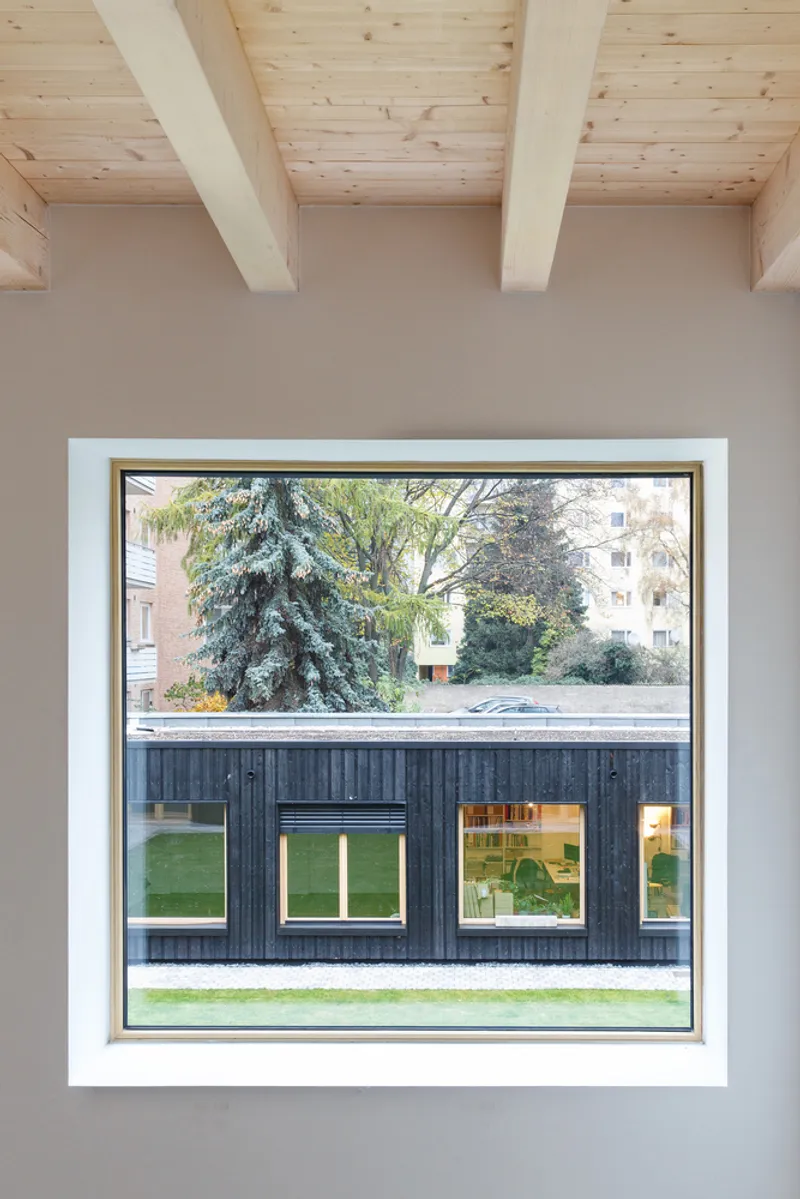
A defining feature of the renovation is the application of the traditional Japanese wood preservation technique known as Shou Sugi Ban. The original masonry façade has been thermally upgraded using thick wood fiber insulation panels and clad in charred pine wood.
This technique not only enhances durability against weather and insects but also introduces a striking blackened timber aesthetic, aligning with contemporary architectural trends. The use of locally sourced pine from the Baltic region reinforces the project’s commitment to sustainable materials and regional craftsmanship.
Windows as Spatial Elements
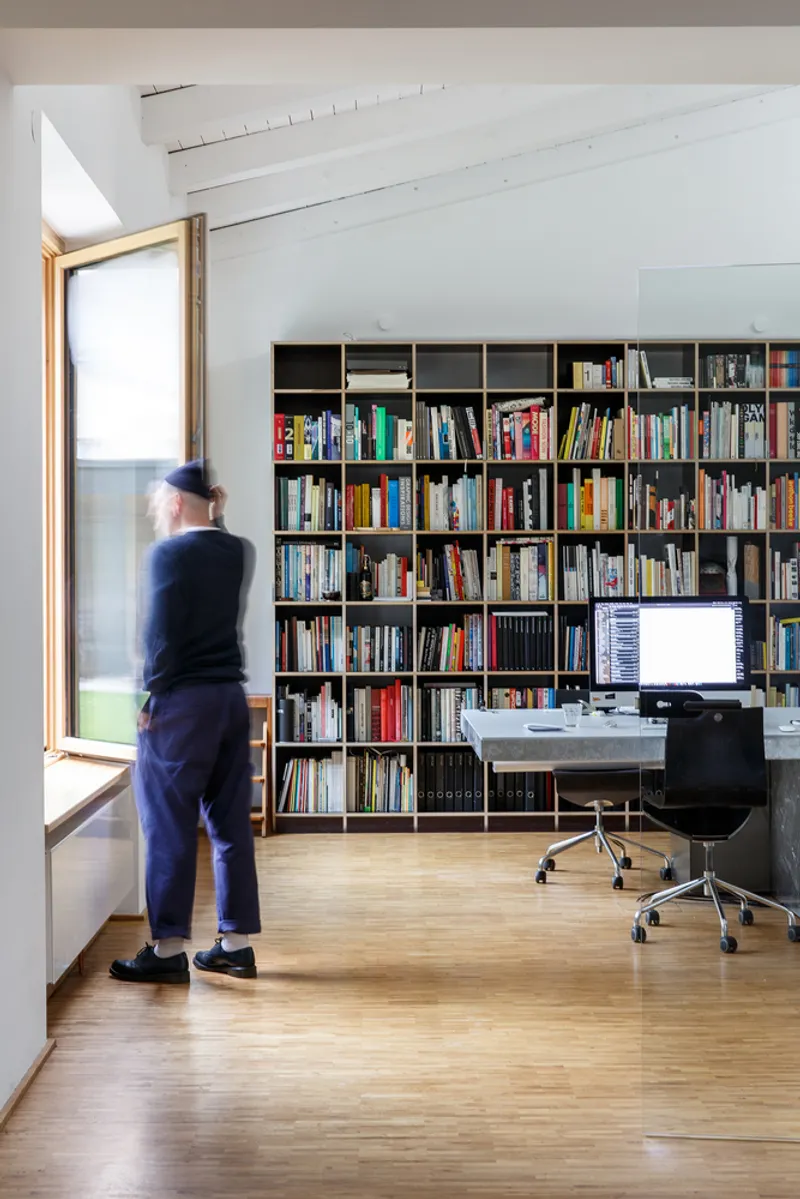
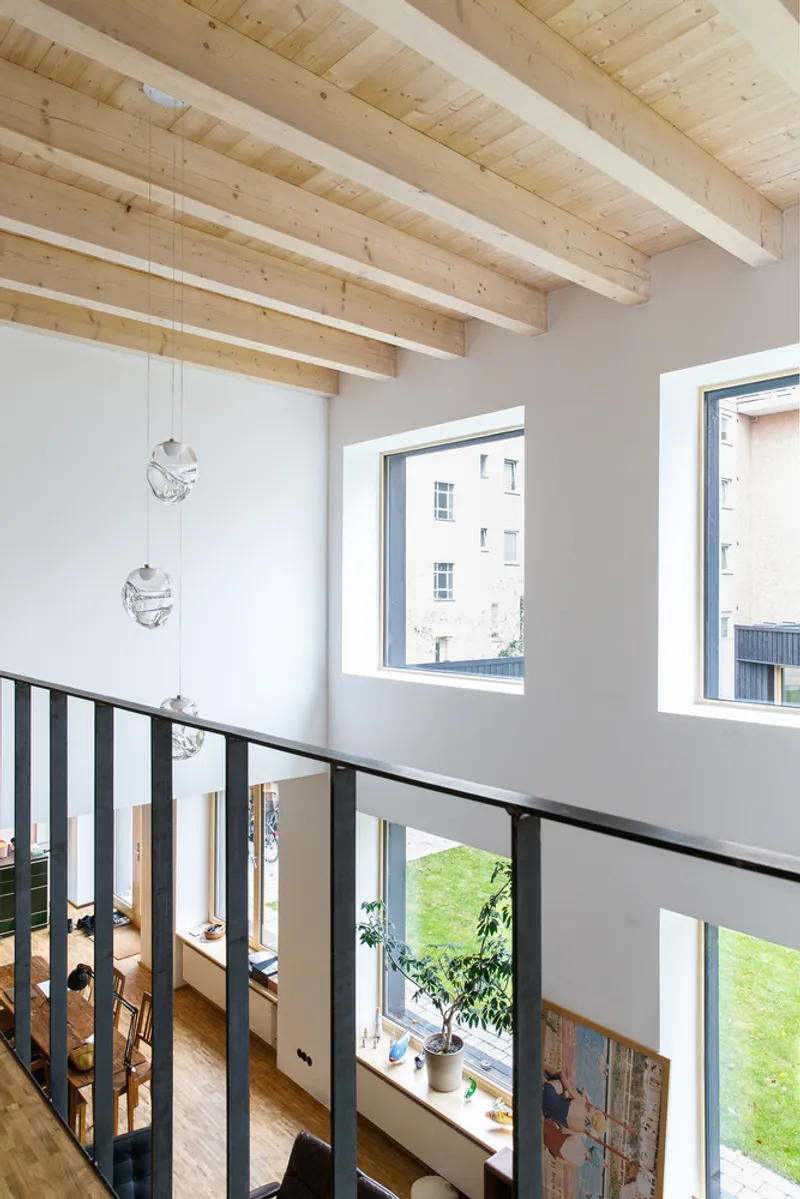
In this project, windows are reimagined as architectural experiences rather than mere openings. By lowering parapets and integrating deep wooden sills, the architects transform windows into functional seating areas. These elements blur the boundary between interior and exterior, enhancing daylight penetration and spatial comfort.
This thoughtful approach contributes to a human-centered design strategy, where everyday architectural elements gain new purpose.

Renaturation and Landscape Integration
A key sustainability move in the project is the renaturation of the central courtyard. Previously covered in asphalt and used for vehicular access, the space has been reclaimed as a green oasis. The introduction of soil, grass, and a centrally planted walnut tree establishes a natural focal point.
Additionally, green roofs and thermal upgrades improve environmental performance, aligning the project with biophilic design principles and climate-responsive architecture.
Minimal Intervention: Preserving the Building’s Memory
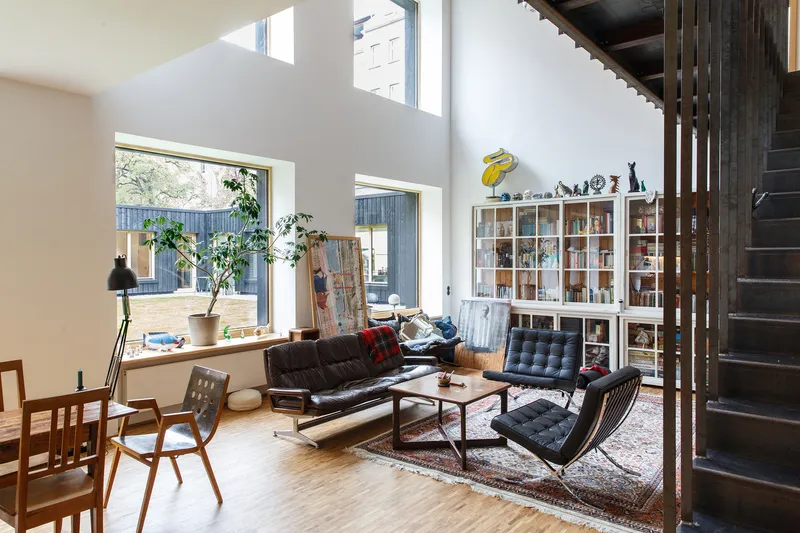
The interior transformation follows a philosophy of “the smallest possible intervention.” Instead of erasing the past, the architects preserved and revealed it. Original masonry walls are exposed through sandblasting, while selective coatings maintain material authenticity.
New partitions and openings are carefully inserted to enhance functionality without compromising the building’s character. This approach celebrates material honesty and architectural storytelling, allowing the building’s layered history to remain visible.

A Model for Sustainable Urban Transformation
This project demonstrates how adaptive reuse, material innovation, and minimal intervention can converge to create meaningful architecture. By balancing preservation with modern needs, ALAS Alarcón Linde Architects deliver a space that is both functional and deeply rooted in its context.
The Conversion of an Old Locksmith Shop is not just a renovation, it is a dialogue between past and present, offering valuable lessons for sustainable urban design and creative reuse strategies.

All photographs are works of
Ronald Patrick


Popular Articles
Popular articles from the community

Extended Shell: Retrofitting Kolkata's Balconies as Living Urban Thresholds
A modular retrofit system recovers the social and environmental intelligence of Kolkata's historic verandas for contemporary Park Street residents.

Singing Woman: An Opera House That Performs Before the Curtain Rises
Ovidiu Cristian Pavel's conceptual opera house translates Estonia's choral identity into a sculpted waterfront landmark facing the Baltic Sea.
Opera by the Sea Estonia: Three Shells Dissolving Architecture into Tallinn's Coastline
A winning opera house proposal replaces monumental form with interconnected shells that blur the boundary between building, park and Baltic Sea.

Opera on the Sea: Driftwood Logic Shapes a Timber Opera House on Estonia's Coast
Trevor Orgill's opera house translates the entangled drift of floating timber into a civic building where wood, water, and music converge.

Similar Reads
You might also enjoy these articles

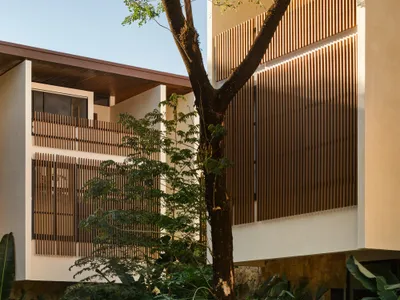
FAMM Arquitectura Organizes Ten Villas Around Courtyards and Jungle in Nosara, Costa Rica
El Molino pairs two elongated volumes with deep overhangs and timber louvers to build a compact coastal community five minutes from the beach.
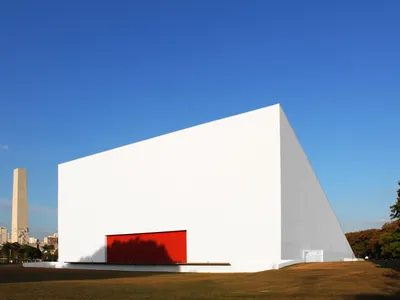
Oscar Niemeyer's Ibirapuera Park Pavilions Define São Paulo's Cultural Identity in Concrete and Curve
A constellation of modernist volumes set within São Paulo's most important urban park, conceived for the city's 400th anniversary in 1954.
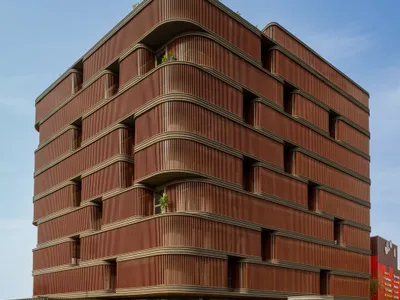
Sanjay Puri Architects Wraps a Jaipur Office Tower in Capsule-Shaped Green Buffers
A nine-level climate-responsive workplace near Jaipur Airport uses stacked planter terraces and aluminium screens to fight 40°C heat.
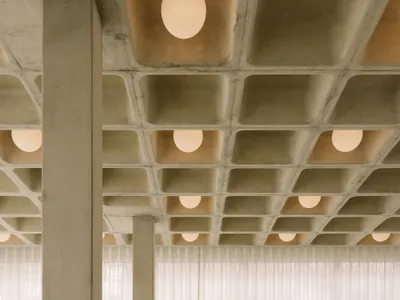
RHO Converts a Berlin Spree-Side Industrial Courtyard into Enkime's 1,000 m² Agency Headquarters
A social media agency's new home in Charlottenburg trades glossy branding for concrete waffle ceilings, glazed tile, and sheer curtains.

Explore Adaptive Reuse Competitions
Discover active competitions in this discipline

Challenge to reimagine the Iron Throne

Photograph architecture without architects

Illustrate the lost glory of Angkor Wat - Render Challenge

Design challenge to reuse E-waste
Comments (0)
Please login or sign up to add comments
No comments yet. Be the first to comment!