

Conversion of an Old Locksmith Shop By ALAS Alarcon Linde Architects – Berlin, Germany
Adaptive reuse of a historic Berlin locksmith shop transformed into creative workshops and apartments, blending heritage, sustainability, and modern architectural design.


The Conversion of an Old Locksmith Shop by ALAS Alarcon Linde Architects in Berlin’s vibrant Neukölln neighborhood showcases the adaptive reuse of a 1931 building with a rich and layered history. Originally constructed as garages, the building evolved into an art warehouse and exhibition hall, later functioning as a locksmith shop, before falling into disuse. In 2018, a collective of artists and creatives acquired the site, transforming it into functional workshops and apartments while retaining the building’s historical character.
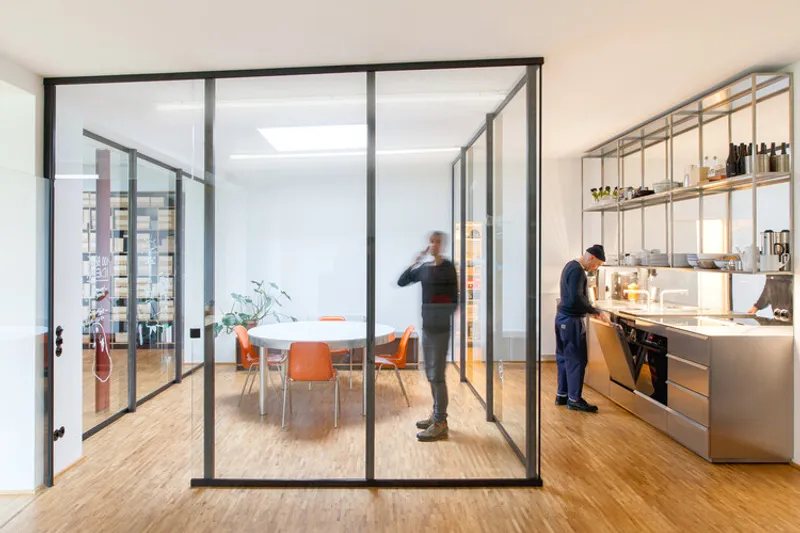
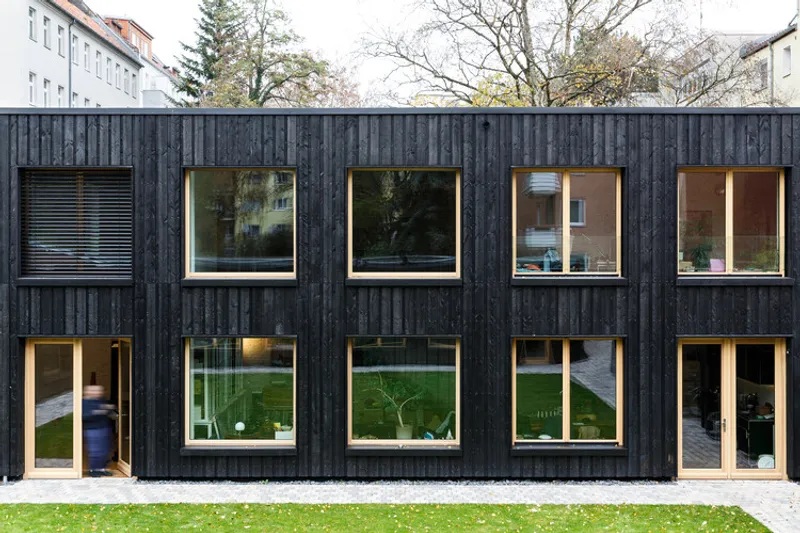
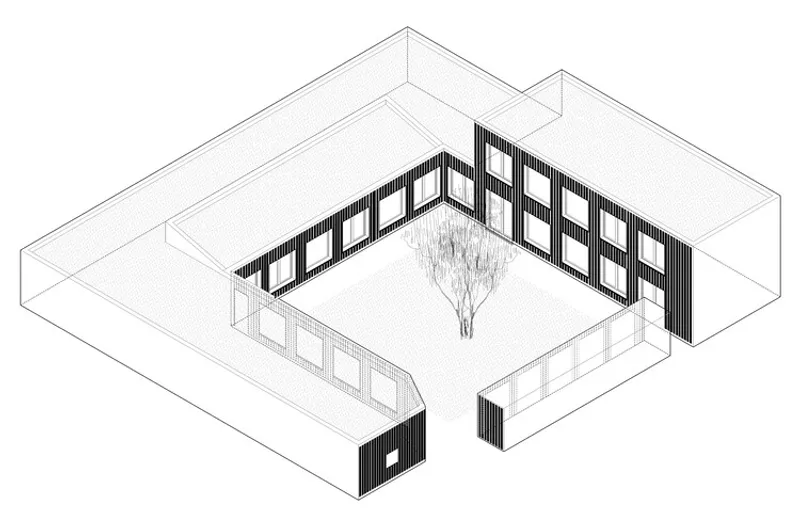
The project is organized around a U-shaped structure that embraces a central courtyard, reminiscent of the traditional Dreiseitenhof farmhouse layout. The building’s east and north wings consist of a single floor, while the west wing rises two stories, reflecting its previous office use. This layering creates a spatial “onion effect,” offering depth, privacy, and light throughout the ensemble.
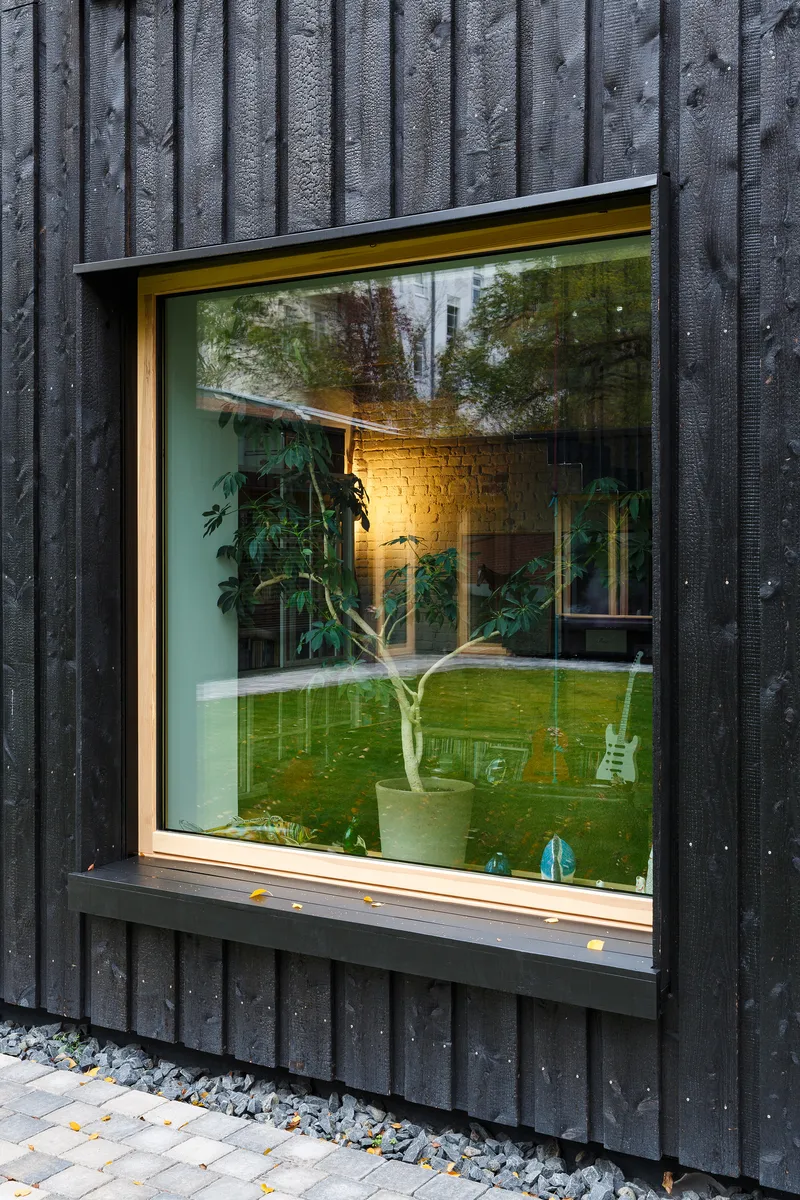
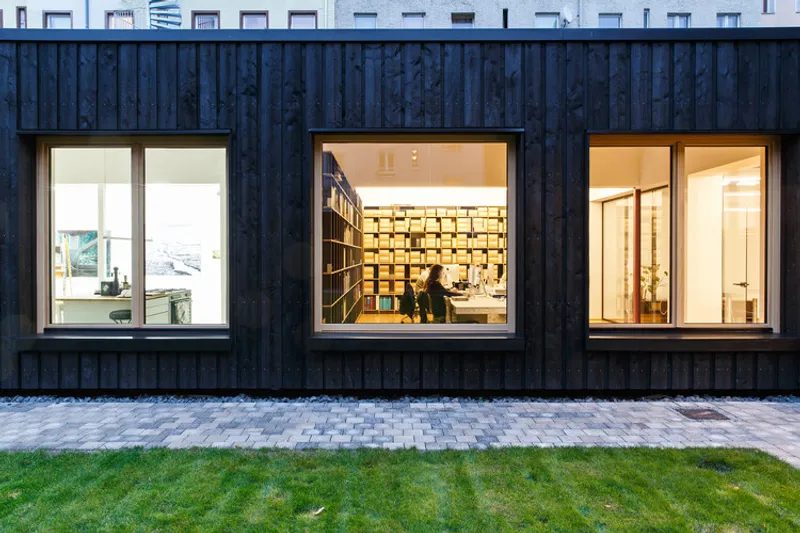
A central theme of the renovation was a new façade inspired by traditional Japanese Shou Sugi Ban technique, which carbonizes wood to enhance durability against weather and pests. The architects utilized pine from local Usedom forests, treated and charred by a regional craftsman, resulting in a protective yet aesthetic exterior that honors both sustainability and heritage.
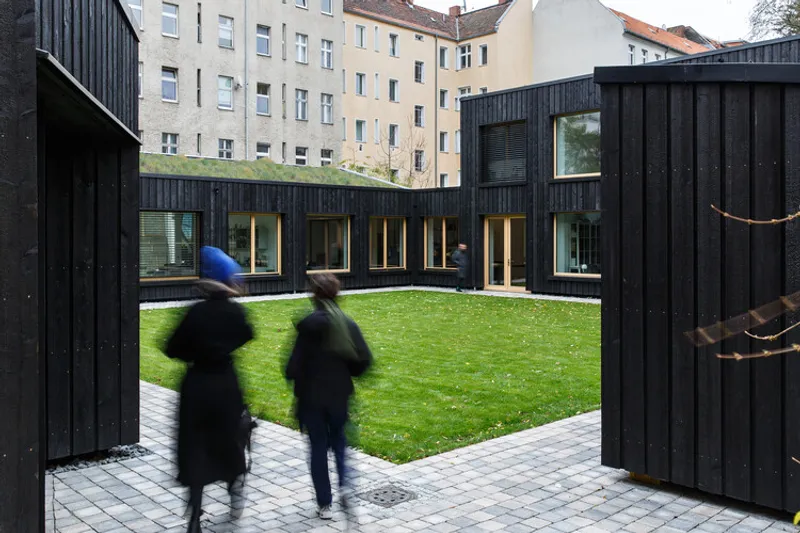

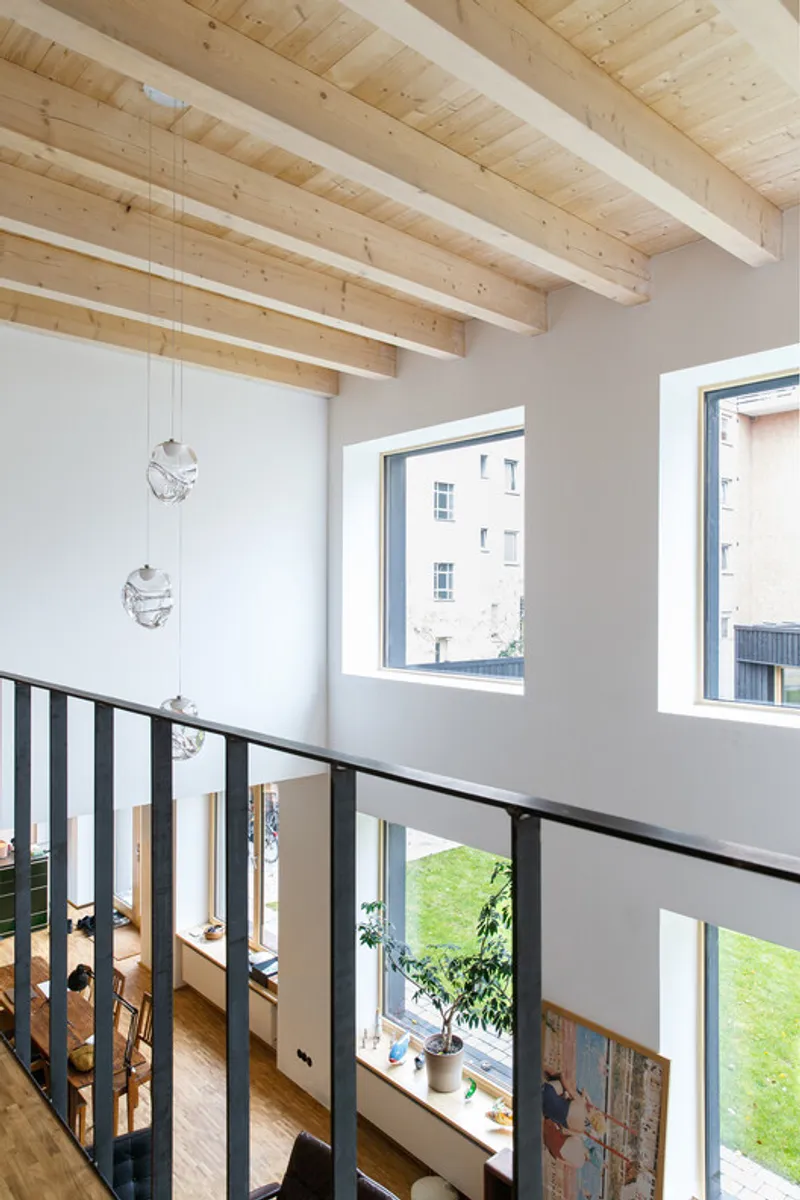
Inside, the windows were thoughtfully redesigned with lowered parapets and wide wooden sills, doubling as seating areas that encourage interaction and engagement with both interior and exterior spaces. The building’s roofs were structurally reinforced, thermally insulated, and covered with a vegetal green layer, further enhancing the project’s eco-conscious design.

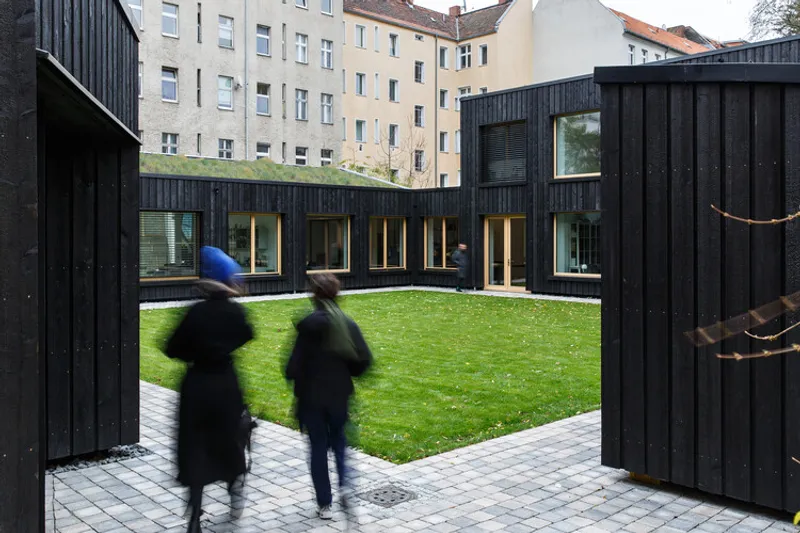
The courtyard was renatured by removing asphalt and planting a central walnut tree, creating a natural focal point that reinforces the concept of urban regeneration and biophilic design. Internally, surgical interventions were executed with minimal impact, introducing new openings, partitions, and subtle adjustments to improve light, circulation, and spatial experience while celebrating the building’s original masonry, textures, and historical materiality.
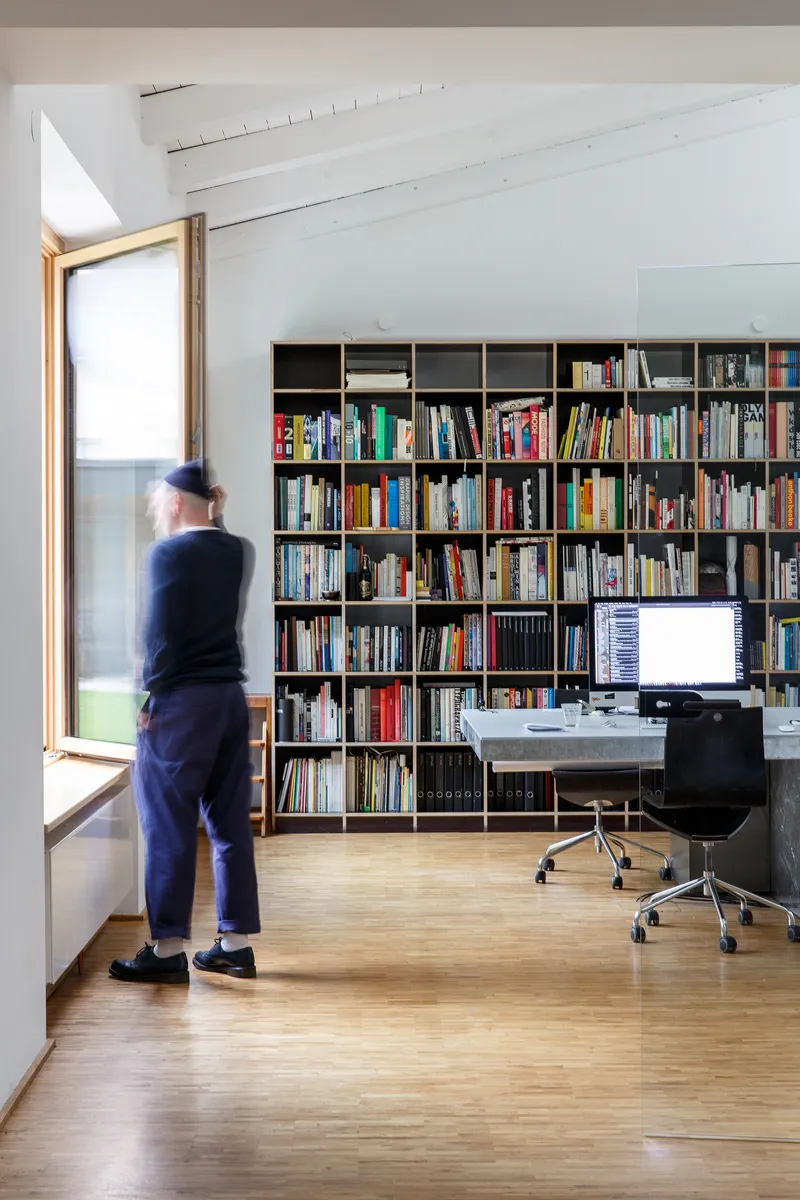
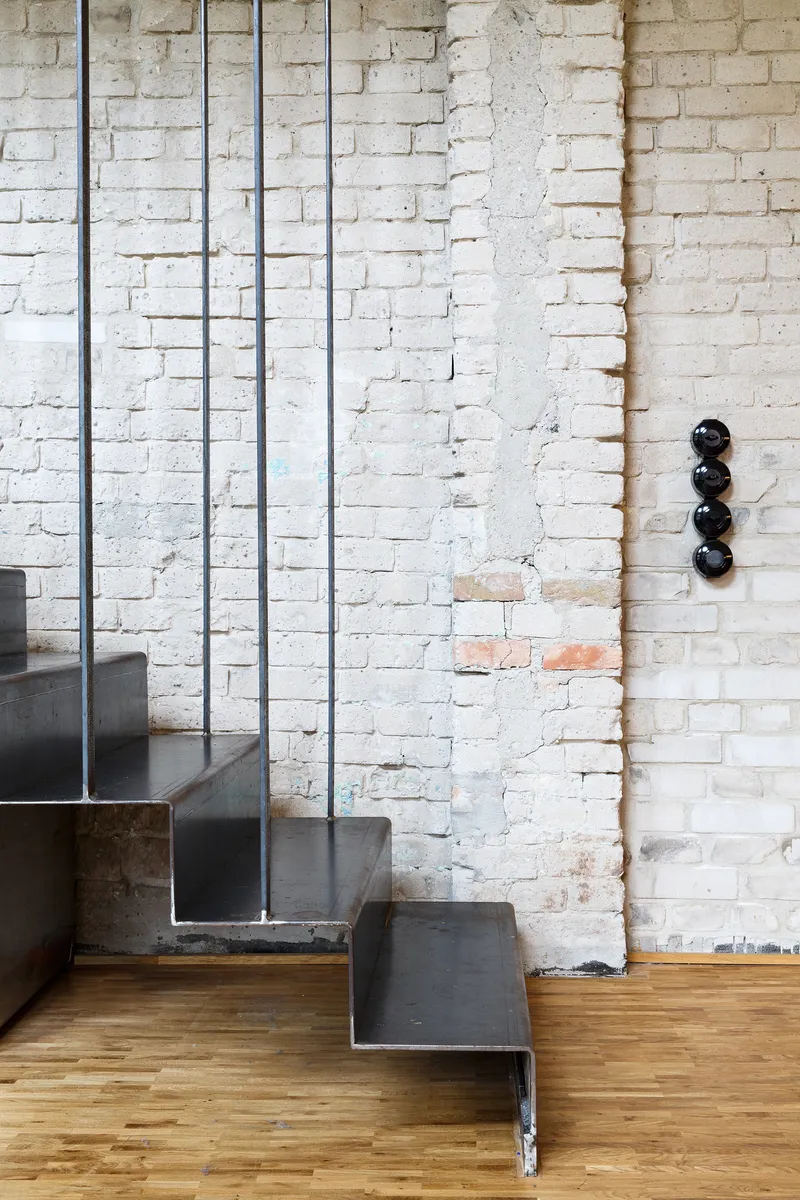
By blending historic preservation, sustainable materials, and modern functionality, the project exemplifies how careful architectural interventions can revive neglected urban structures into lively, multi-purpose spaces. ALAS Alarcon Linde Architects successfully merge past and present, creating a Berlin landmark that fosters creativity, community, and continuity.
All the photographs are works of Ronald Patrick


Popular Articles
Popular articles from the community


Jaramillo Van Sluys Arquitectura and Urbanismo Turn a Demolished Registry Lot in Quito into an Orchard Plaza
In Quito's Centro Histórico, a 2,800 m² plaza exposes the San Agustín convent wall and redraws its lost Augustinian orchard in volcanic stone.

U.GA Architects Wraps an Oval Rooftop Pool in Curved Board-Formed Concrete on Busan's Jeollidan-gil
In Busan's Jeonpo-dong, a 454 m² mixed-use block stacks a neighborhood facility, guest rooms and an oval rooftop pool inside spiraling concrete walls.

Cube Design Draws an Ecological Corridor Between Two Shenzhen Hills with the Nankai Building
Beside Shenzhen's container docks, the Nankai Building pairs stacked balconies with a climbing green screen to connect two hillsides across its height.

GROUP A Strips a 1969 Rotterdam Harbor Headquarters to Its Frame and Wraps It in Timber Louvers
In Rotterdam's M4H harbor district, Ferro Offices reuses a 1969 frame, adds one timber storey and reaches BREEAM-NL Outstanding.

Similar Reads
You might also enjoy these articles


Hodi-Mandai Geram
Project Function: Preservation and revitalization of the Intangible heritage and socio-spatial identity of the Hodi by Housing, Cultural Memory Center, Sacred Grove, landscape, local tourism economy


Olio Towers: A Mid-Rise for Performers That Fuses Housing, Rehearsal, and Stage
Located blocks from Houston's Theater District, this modular tower stacks living units around a central performance atrium.

Oasis: Modular Green Housing Carved into Dhaka's Urban Fabric
A shortlisted Plugin Housing entry reclaims unauthorized settlements in Dhaka with stepped concrete volumes, green roofs, and ventilation-driven design.

Black Hole: A Floating Megastructure for the Post-Physical Era
Emiliano Mazzarotto envisions a spherical, self-scaling arena where e-sports, digital hotels, and holographic stadiums replace traditional public space.

Explore Architecture Competitions
Discover active competitions in this discipline

Challenge to reimagine the Iron Throne

Photograph architecture without architects

Illustrate the lost glory of Angkor Wat - Render Challenge

Design challenge to reuse E-waste
Comments (0)
Please login or sign up to add comments
No comments yet. Be the first to comment!