

Cotton Park Vitality Island Store by SpaceStation: A Fluid Retail Landscape in Suzhou
Fluid modular retail space blending café, fashion, and family zones through lightweight structures, creating immersive, adaptive, and experiential architecture.


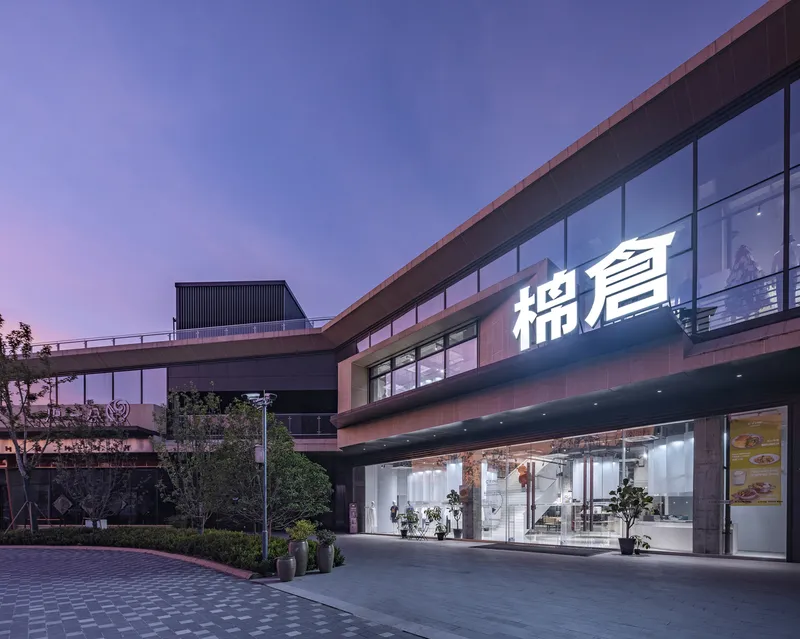
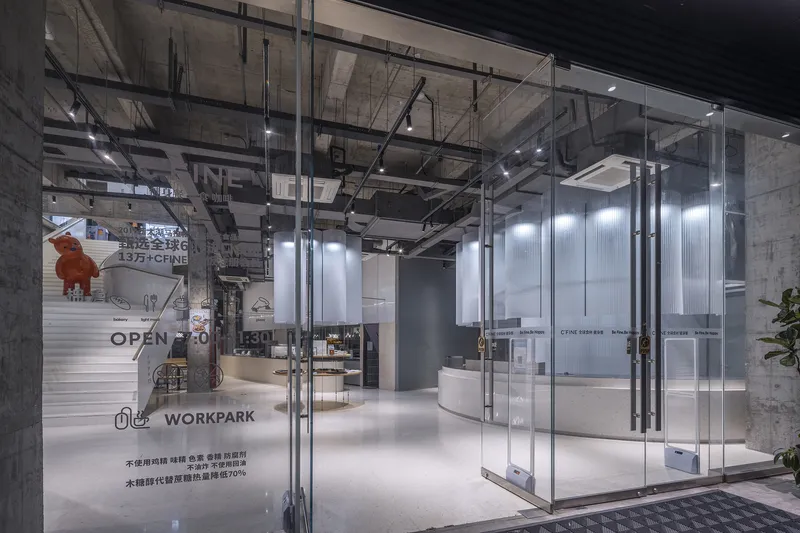
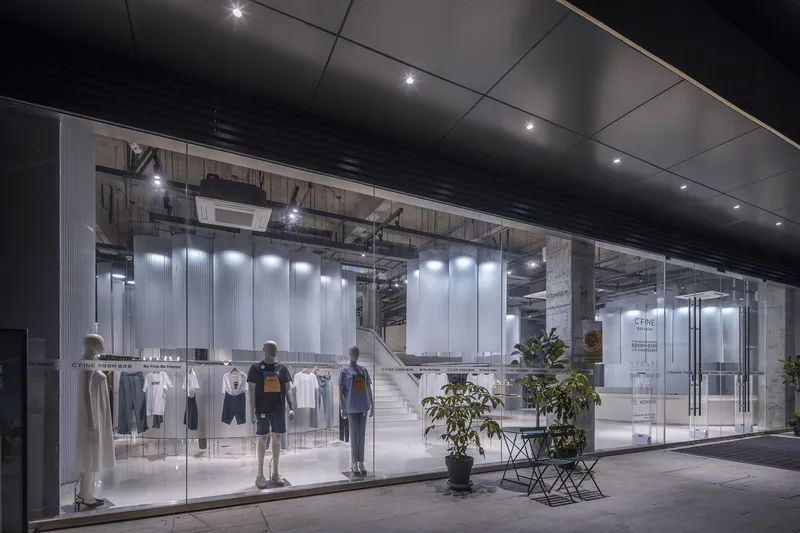
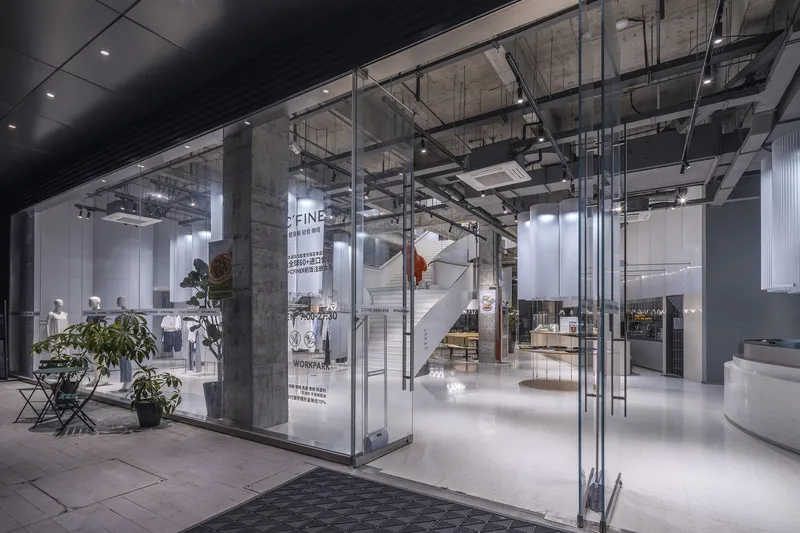
Located in Suzhou, China, the Cotton Park Vitality Island Store by SpaceStation challenges conventional retail architecture by dissolving rigid functional zoning. Spanning 1100 square meters, this innovative commercial interior integrates coffee culture, clothing retail, and parent-child interaction into a seamless, immersive environment. Rather than segmenting the program into distinct zones, the design adopts a homogeneous spatial strategy, allowing architecture to evolve organically through adaptive structural units.
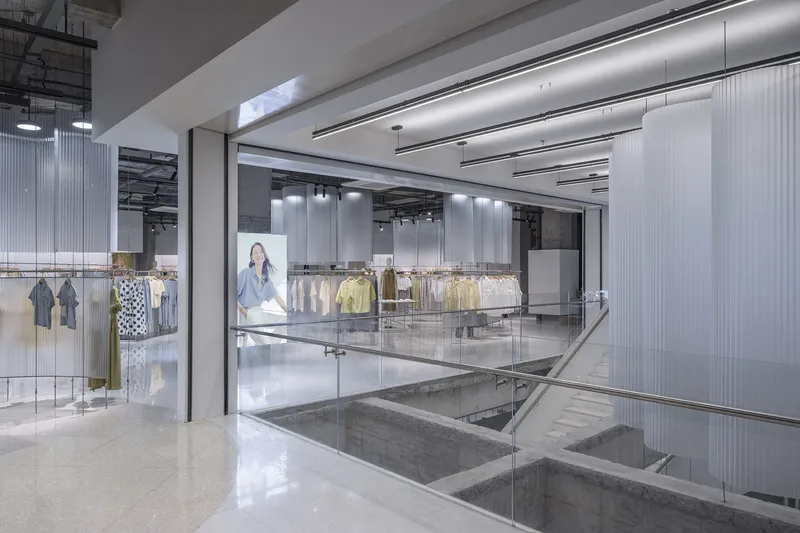
This forward-thinking approach emphasizes experiential design over traditional planning, where spatial qualities such as scale, enclosure, and movement are prioritized before functional layering. The result is a dynamic retail environment that encourages exploration and interaction, redefining the relationship between users and space.
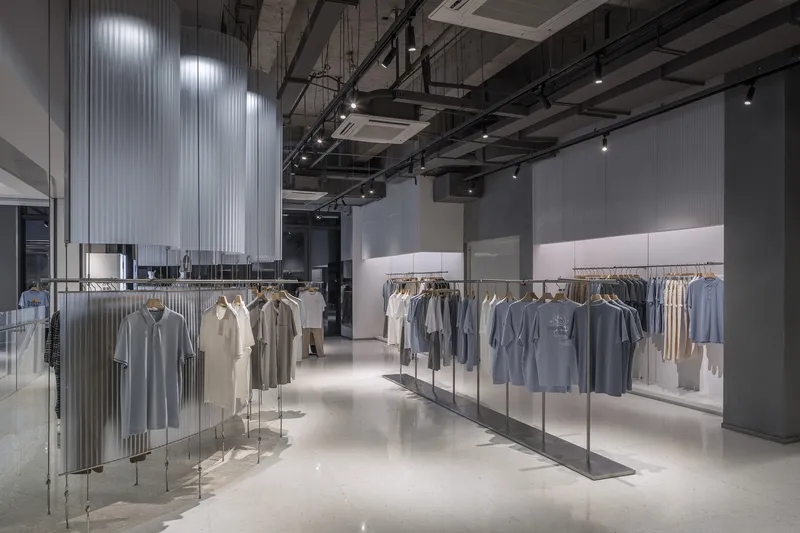
Organic Spatial Systems and Adaptive Design
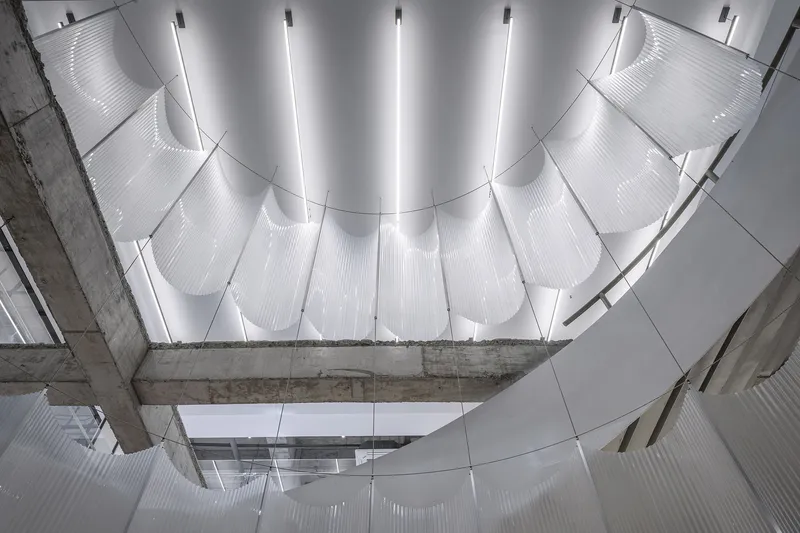
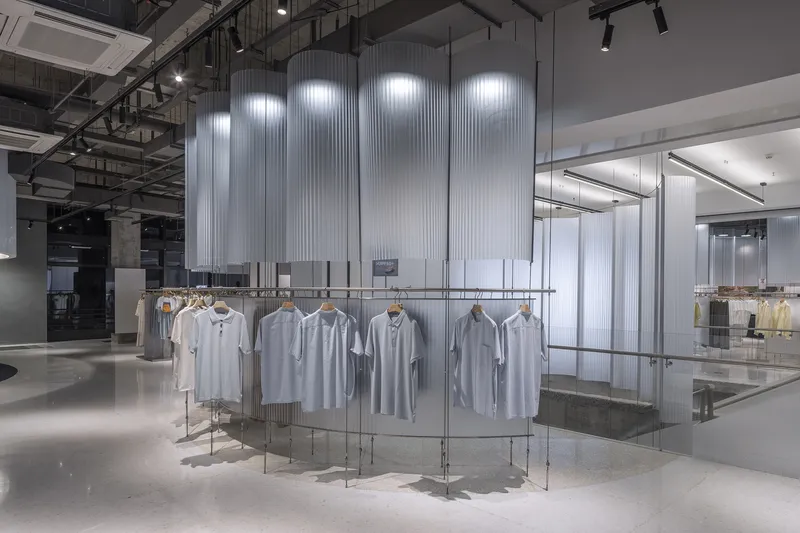
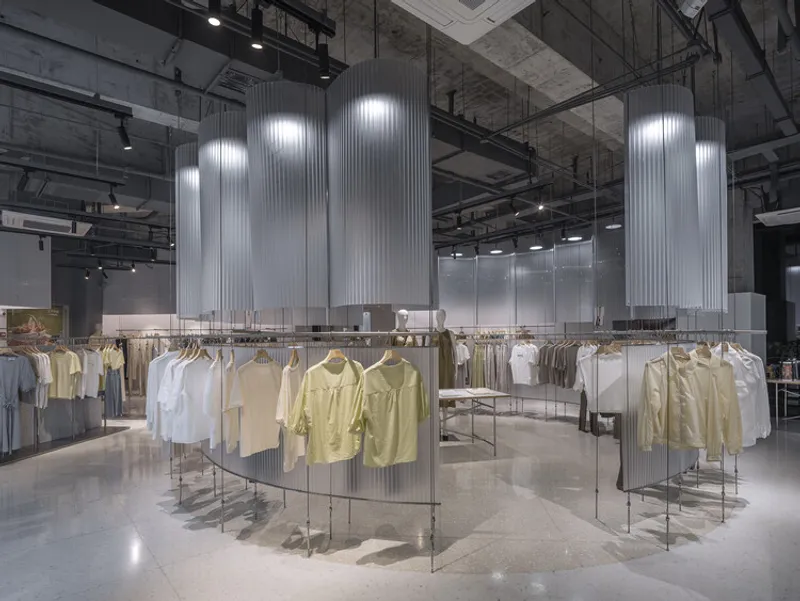
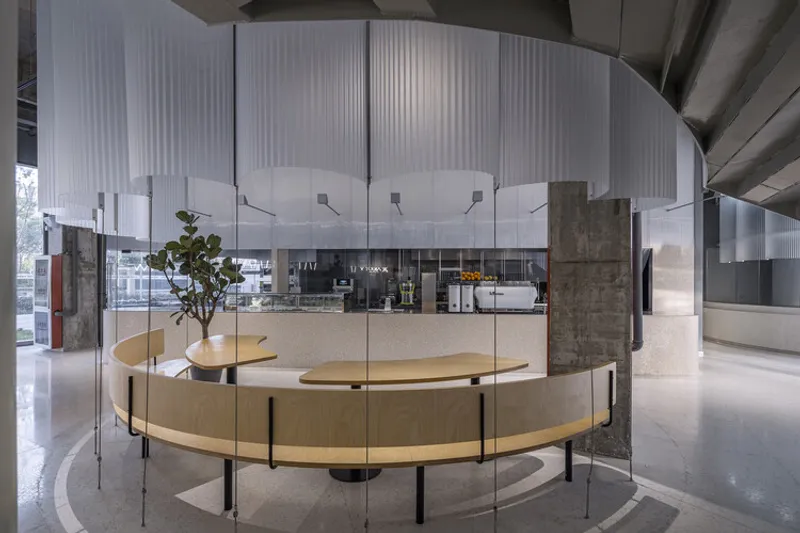
At the heart of the project lies a modular structural system based on lightweight curved units. These units are constructed using tensile steel cables combined with translucent polycarbonate wave panels, creating a flexible and responsive architectural language. The delicate cable framework supports a soft, undulating surface that subtly reacts to human touch, producing a kinetic effect reminiscent of insect wings in motion.
This innovative system not only defines the architectural identity of the store but also integrates furniture elements such as seating and hanging rods. These components emerge directly from the structure, blurring the boundaries between architecture and interior design while maintaining human-scale functionality.
The modular nature of the units allows them to be replicated and adjusted across varying radii, accommodating different spatial requirements within the store. This adaptability ensures that each zone: whether retail, café, or activity space, retains a consistent design language while responding to its specific functional needs.
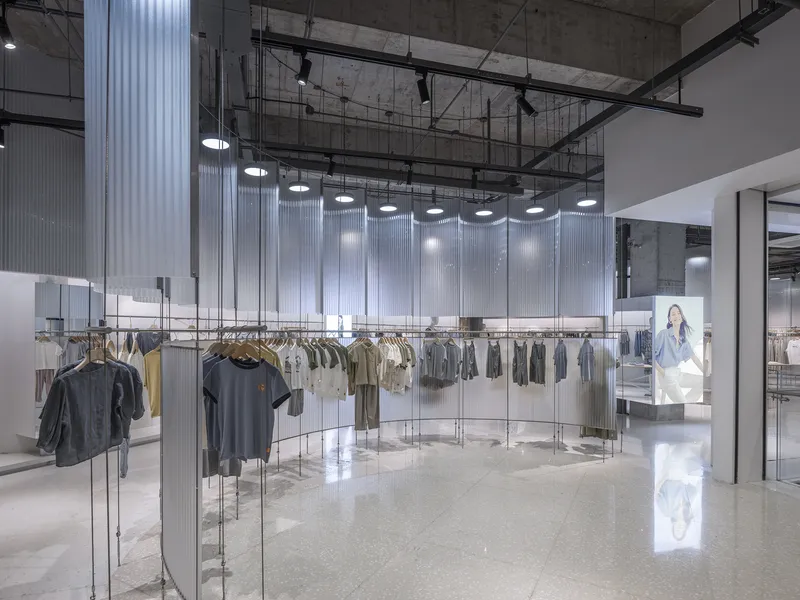
Contrasting Materiality and Site Memory
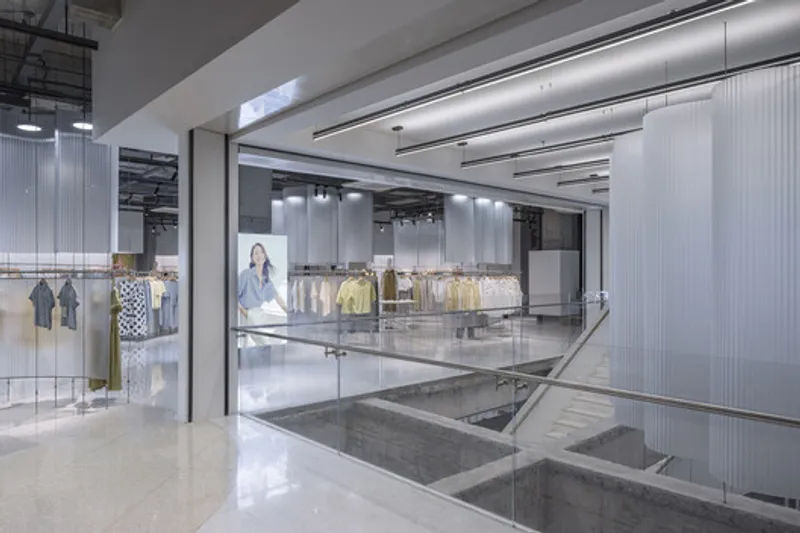
One of the most striking aspects of the Cotton Park Vitality Island Store is its deliberate contrast between the new intervention and the existing structure. The lightweight, translucent system is distinctly separated from the original rough concrete shell, creating a dialogue between past and present.
This contrast enhances spatial perception, allowing visitors to clearly distinguish between the historical framework of the building and the contemporary insertion. The design respects the integrity of the existing site while introducing a fresh architectural narrative, reinforcing the concept of adaptive reuse and contextual sensitivity.
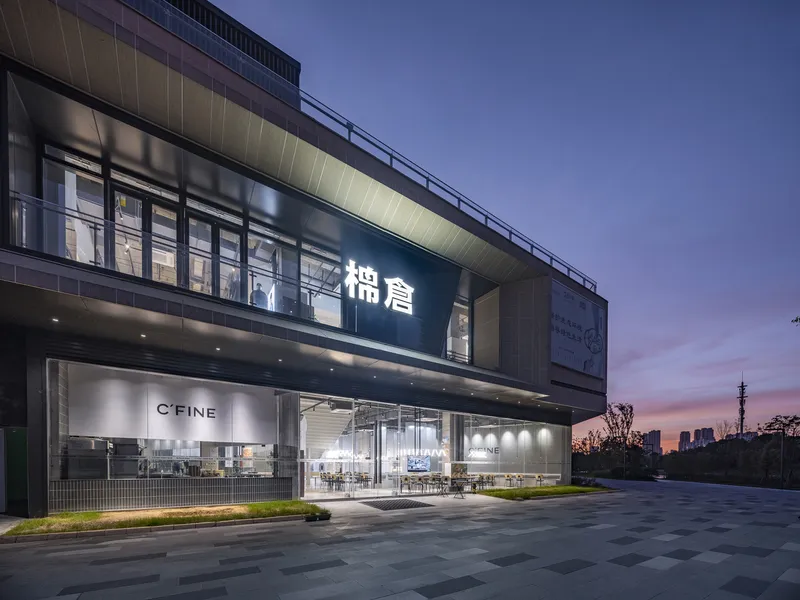
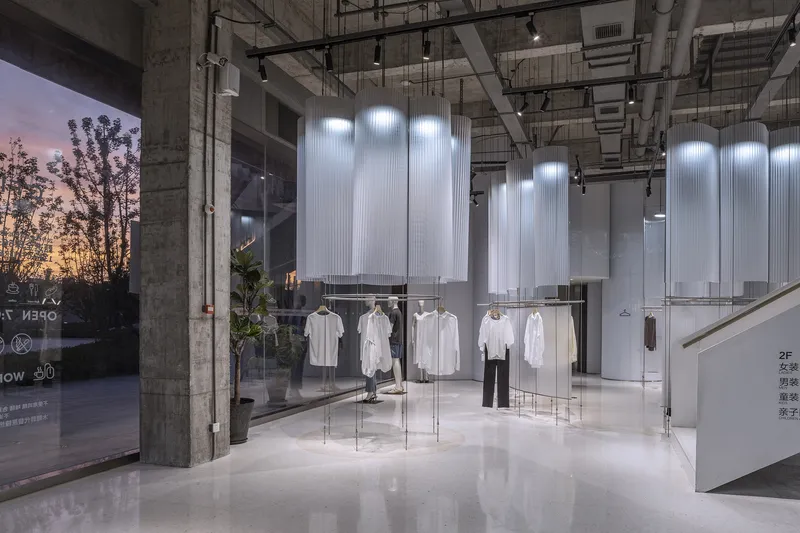
A Unified Experience Across Functions
Despite accommodating diverse functions, the store maintains a strong sense of continuity. The same structural units extend across all programmatic areas, eliminating visual and spatial fragmentation. This consistency enables a fluid transition between different zones, encouraging users to discover spaces organically as they move through the environment.
The design concept of “finding while walking” transforms the store into an experiential journey rather than a static commercial layout. Visitors are invited to explore, interact, and engage with the space in a more intuitive and dynamic way, enhancing both retail and social experiences.
A New Paradigm in Retail Architecture
The Cotton Park Vitality Island Store exemplifies a progressive approach to commercial interior design, where flexibility, material innovation, and spatial continuity converge. By prioritizing experiential qualities and adaptive systems, SpaceStation creates a retail environment that is both functional and emotionally engaging.
This project sets a benchmark for future retail architecture, demonstrating how design can transcend traditional boundaries to create immersive, user-centered spaces that evolve with their context and users.
All photographs are works of
Weiqi Jin


Popular Articles
Popular articles from the community


LT2A and OPEN Architectes Thread a Brick and Glass High School Through a Wooded Belgian Campus
In Braine-l'Alleud, a 3,000 m² wing for Collège Cardinal Mercier pairs pale brick with a glazed colonnade, deferring to a small chapel and a dense wood.

David Macias Steps a Doorless Stone and Plaster House Down a Tropical Colombian Hillside
In the humid hills of Colombia, Threshold House replaces the front door with an open void and terraces its 850 m² down the slope instead of fighting it.

Architekt Andreas Gruber Scatters 23 Dark Timber Chalets Across a South Tyrolean Forest Edge
In Molini di Tures, Amonti Chalets breaks a resort into a hamlet of gabled timber houses, with parking, storage and services pushed into the slope.

Jaramillo Van Sluys Arquitectura and Urbanismo Turn a Demolished Registry Lot in Quito into an Orchard Plaza
In Quito's Centro Histórico, a 2,800 m² plaza exposes the San Agustín convent wall and redraws its lost Augustinian orchard in volcanic stone.

Similar Reads
You might also enjoy these articles

Gil Mello Arquitetura Tilts a Single Roof Toward the Waterfalls on a Plateau Above Aiuruoca, Brazil
In Aiuruoca, Minas Gerais, a 200 m² house of local labor and reclaimed poles pairs a low valley veranda with a tall mountain one.

U.GA Architects Wraps an Oval Rooftop Pool in Curved Board-Formed Concrete on Busan's Jeollidan-gil
In Busan's Jeonpo-dong, a 454 m² mixed-use block stacks a neighborhood facility, guest rooms and an oval rooftop pool inside spiraling concrete walls.

Felipe Hess Arquitetos Turns a Blind Stone Wall to the Street and Opens a Brazilian House onto a Courtyard and Canal
A canal-front house in Brazil hides behind painted stone and planting, then opens to an olive-tree courtyard, a reed-ceilinged porch and a curving pool.
David Macias Steps a Doorless Stone and Plaster House Down a Tropical Colombian Hillside
In the humid hills of Colombia, Threshold House replaces the front door with an open void and terraces its 850 m² down the slope instead of fighting it.

Explore Architecture Competitions
Discover active competitions in this discipline

Challenge to design luxury tourism on rails

Challenge to reimagine the Iron Throne

Photograph architecture without architects

VR headsets Storefront design competition
Comments (0)
Please login or sign up to add comments
No comments yet. Be the first to comment!