
CQFD Architecture Builds a Stone and Timber Social Residence That Cools Its Paris Block
Nineteen furnished units in the 17th arrondissement use quarry stone, recycled earth brick, and a renaturalized courtyard to dignify low-income housing.

A pension de famille is a peculiar French housing type: a permanent social residence for people living on very low incomes, often in situations of isolation or exclusion. The resident quoted in the project brief put it simply: "This is my home for as long as I wish." That promise of permanence demands architecture that does more than stack rooms efficiently. It demands dignity, and the 19-unit building that CQFD Architecture completed in 2026 on a narrow plot in Paris's 17th arrondissement takes the obligation seriously, deploying load-bearing Vassens quarry stone, timber-framed facades, recycled rammed earth brick, and a renaturalized courtyard garden to deliver spatial quality that most private-market apartments in the same neighborhood cannot match.
What makes the project genuinely interesting is the way it stacks environmental ambitions without losing architectural composure. The building heats itself with waste energy from Qarnot computing servers. Its interior partitions are made from rammed earth brick salvaged from Grand Paris Express tunnel excavations. Its courtyard depermeabilizes the soil to create a cooling island in a dense urban block. Yet none of these strategies announce themselves from the street. From the sidewalk, you see a faceted stone facade with deep, sculpted window reveals that hold their own between ornate Haussmann neighbors. The technology is quiet. The architecture is not.
A Faceted Stone Face on a Narrow Street
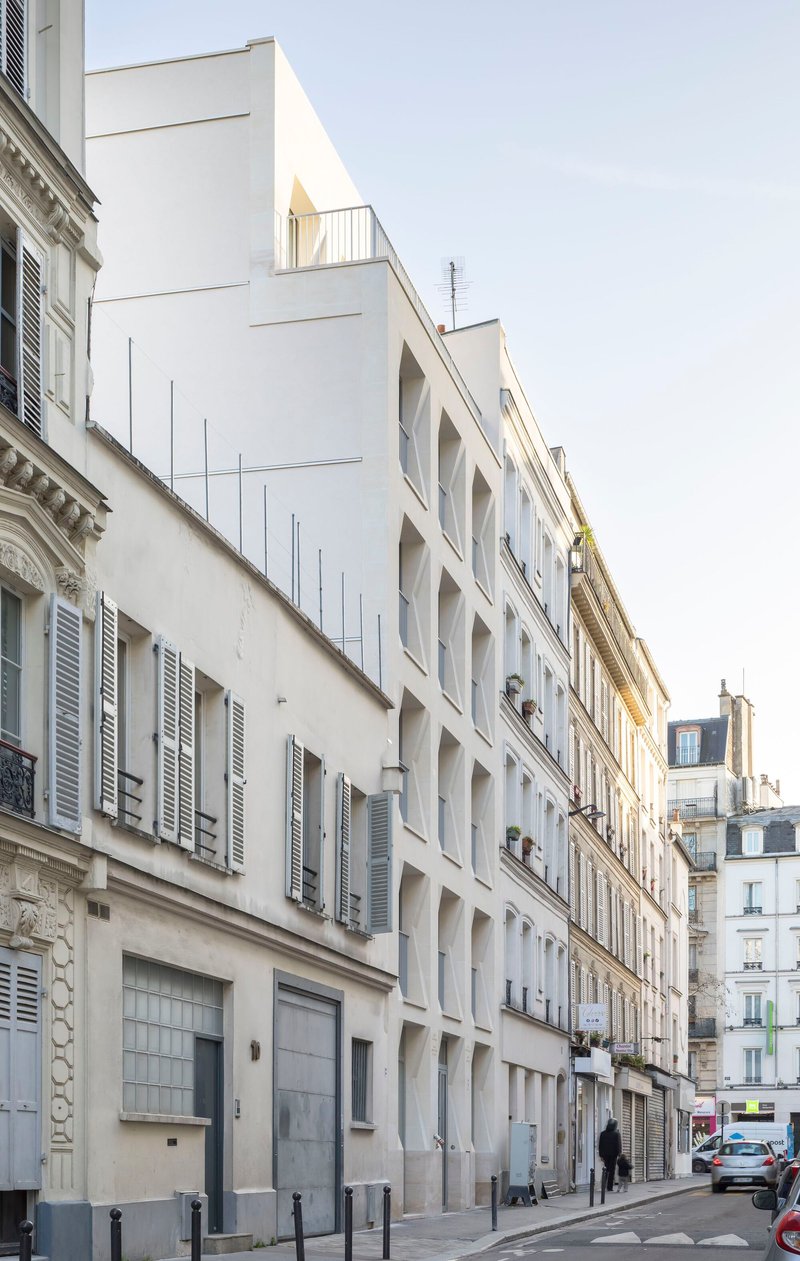
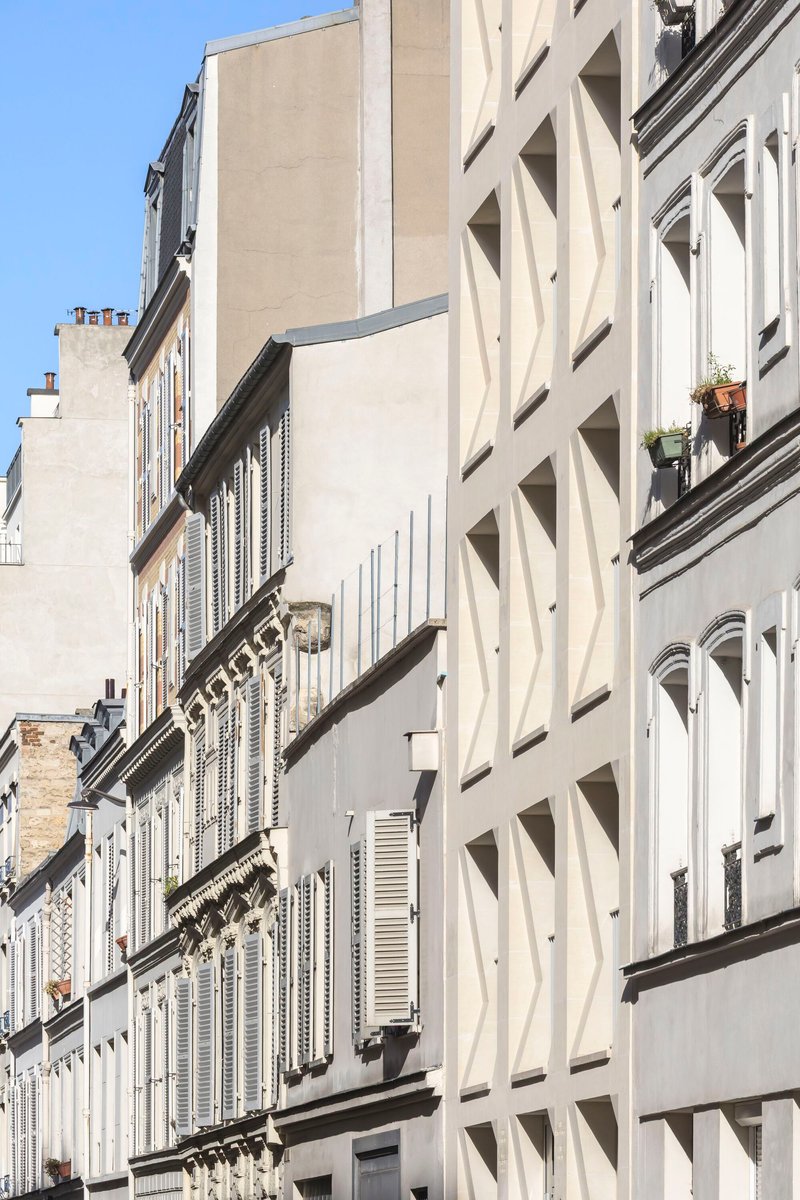
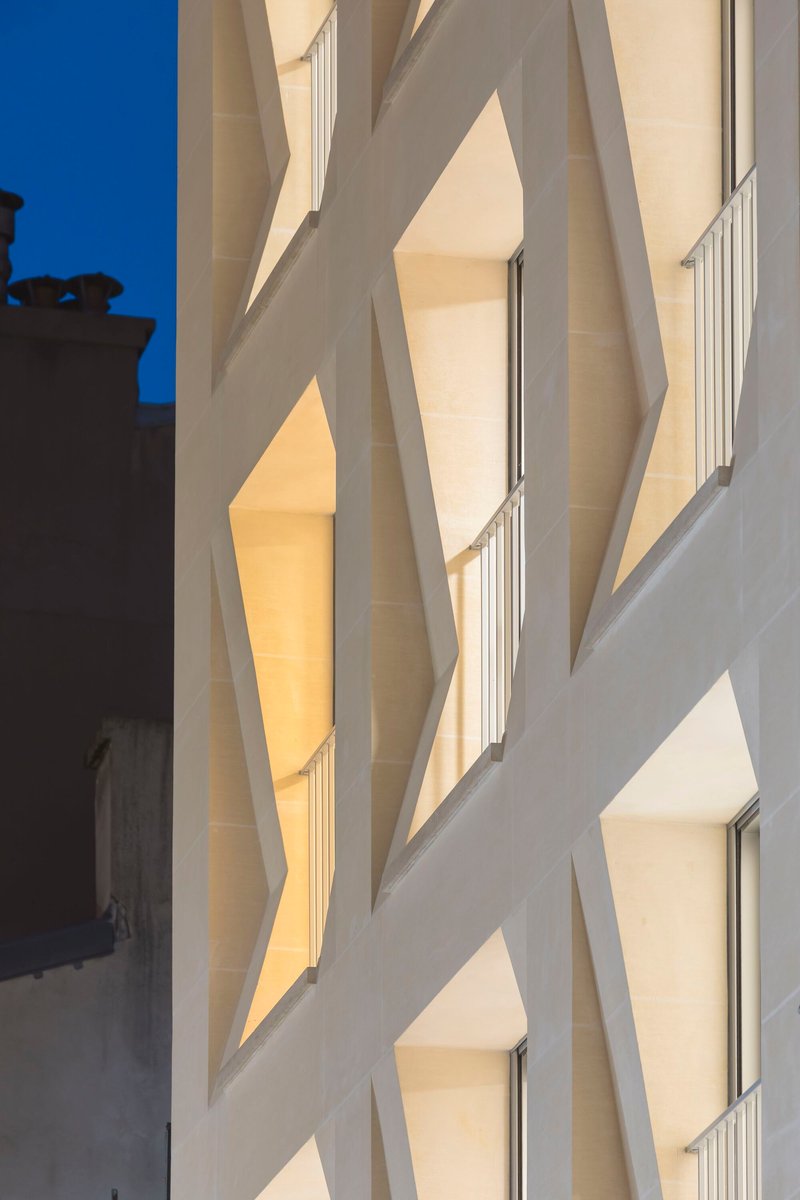
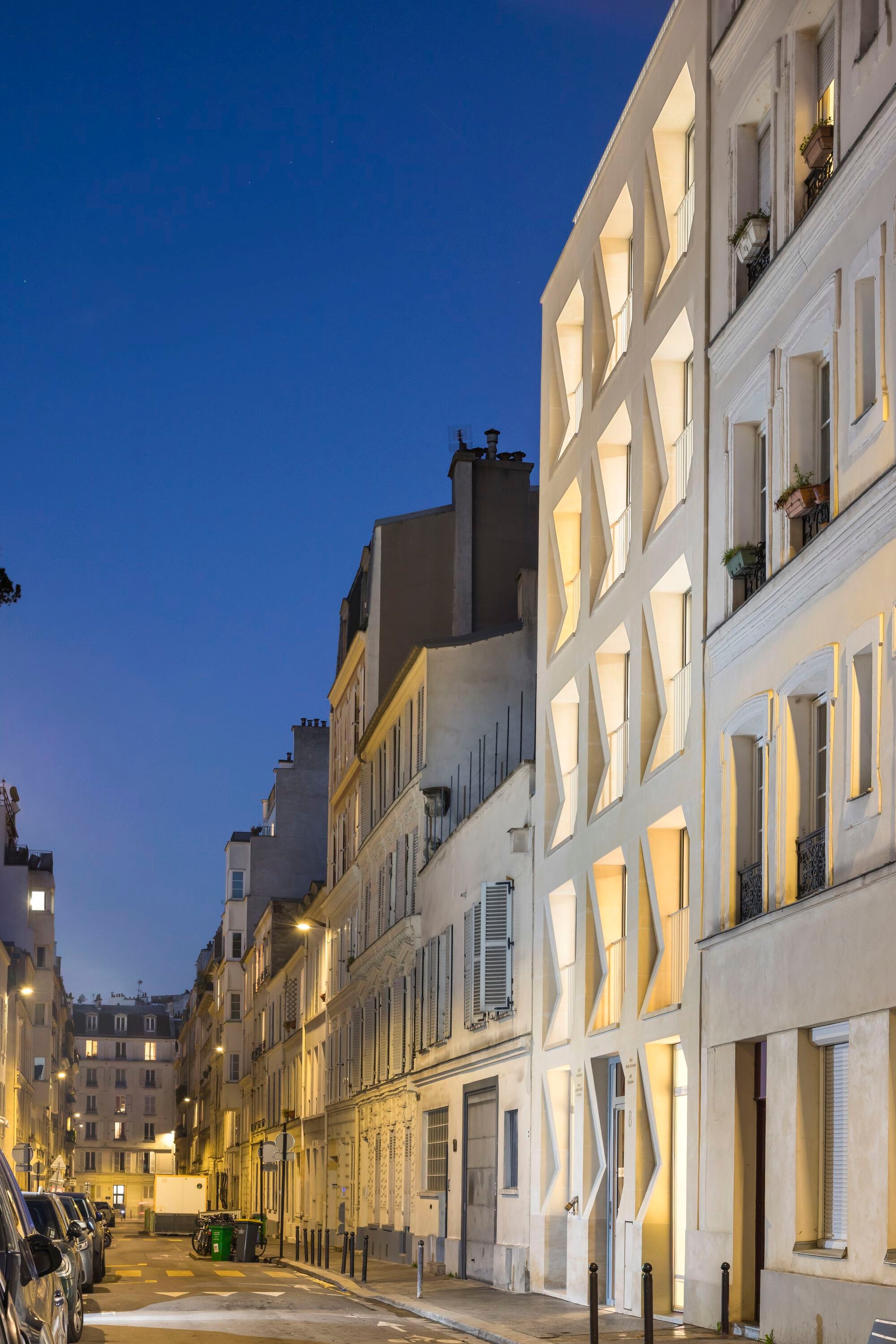
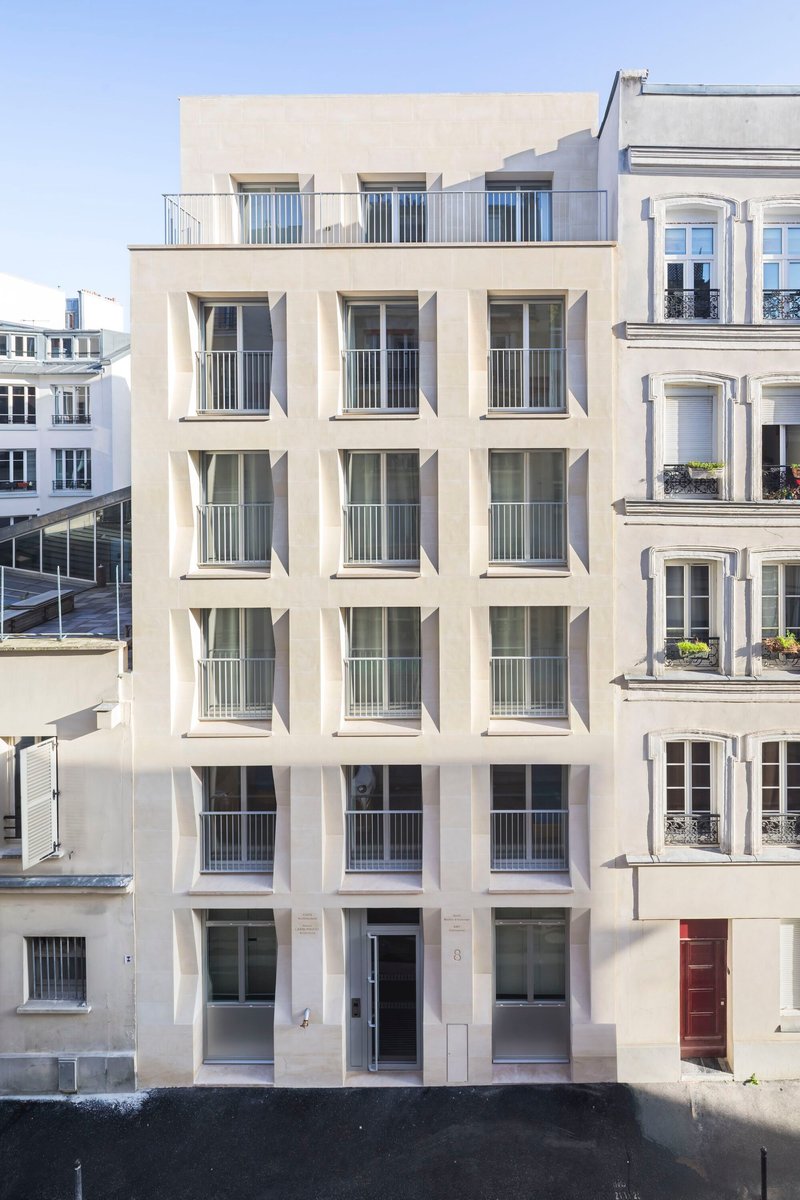
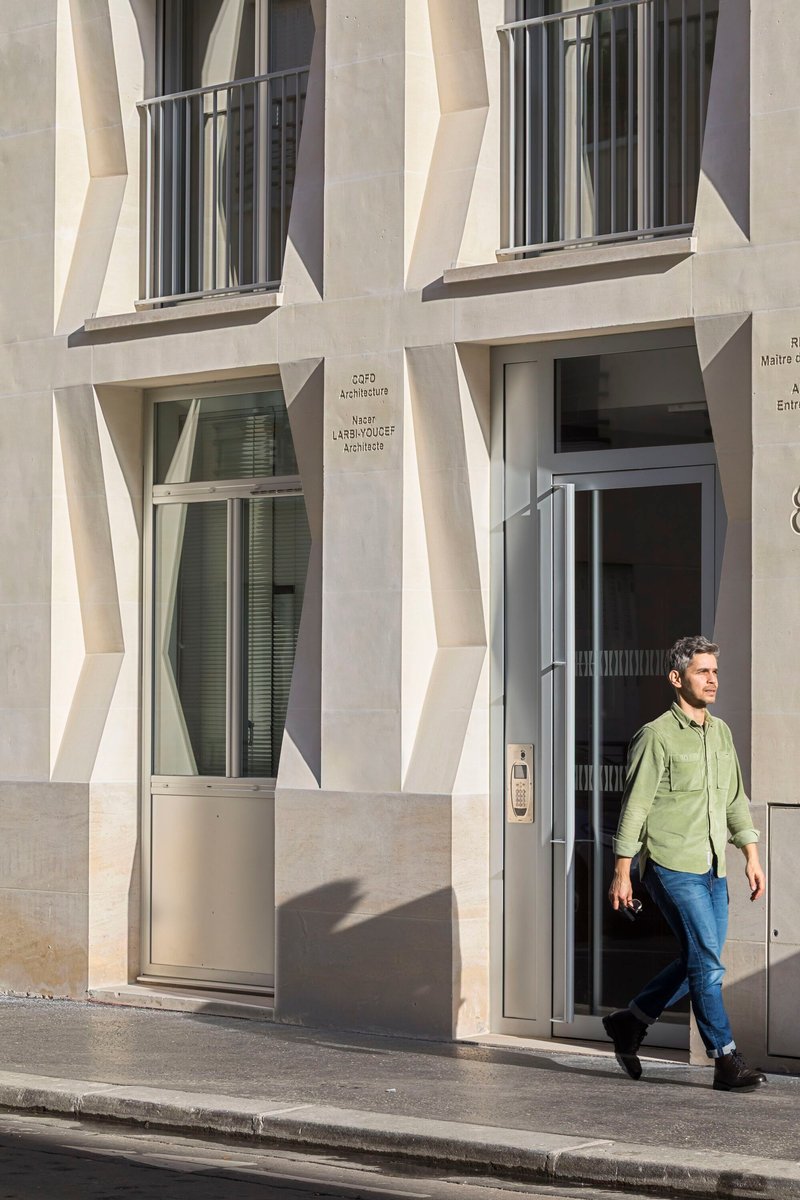
The street facade is the project's most publicly assertive gesture: massive load-bearing stone cut from Vassens quarries, shaped into a series of tapered window openings that give the surface a folded, almost crystalline depth. Six stories tall (R+5 in Parisian counting), the building holds the cornice line of its neighbors while refusing to mimic their ornamental vocabulary. The stone is pale, almost white, and the deep reveals cast dramatic shadows that shift throughout the day. At dusk, warm interior light fills each recess, turning the facade into a lantern on an otherwise unremarkable residential street.
The choice of structural stone is not decorative indulgence. Stone is the primary load-bearing material for both the street and courtyard elevations. Combined with a timber frame for the party-wall facades, the building achieves a mixed structure that keeps embodied carbon in check while providing the thermal mass that helps regulate interior temperatures in a compact volume. CQFD Architecture treats the stone honestly: no thin veneer, no cladding panel. The wall is the structure, and the structure is the expression.
Deep Reveals and Diagonal Frames
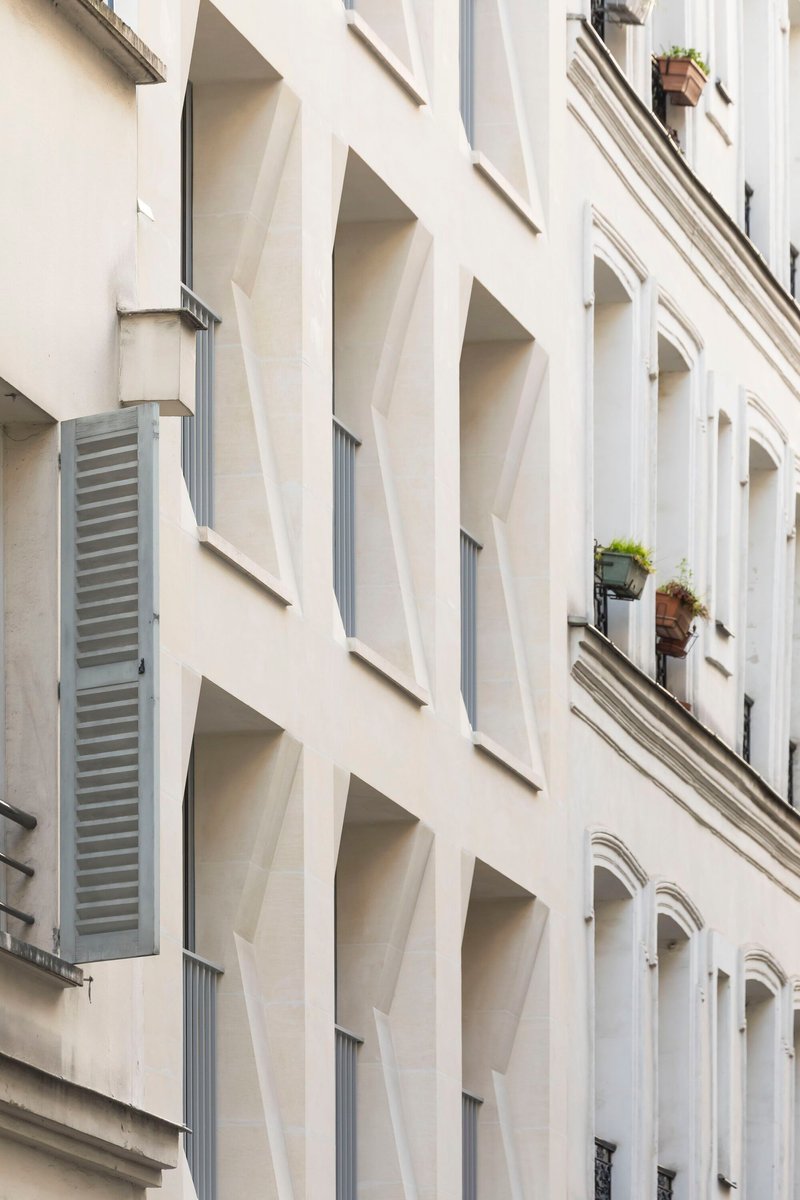
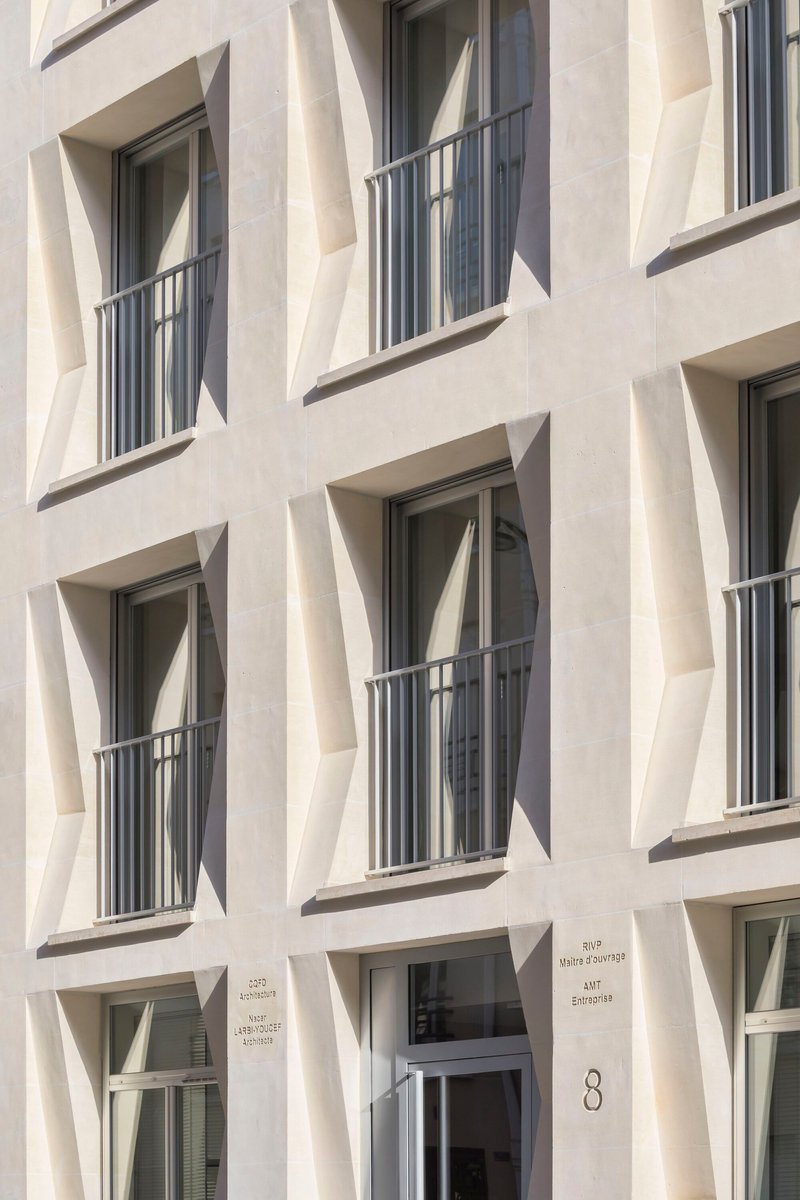
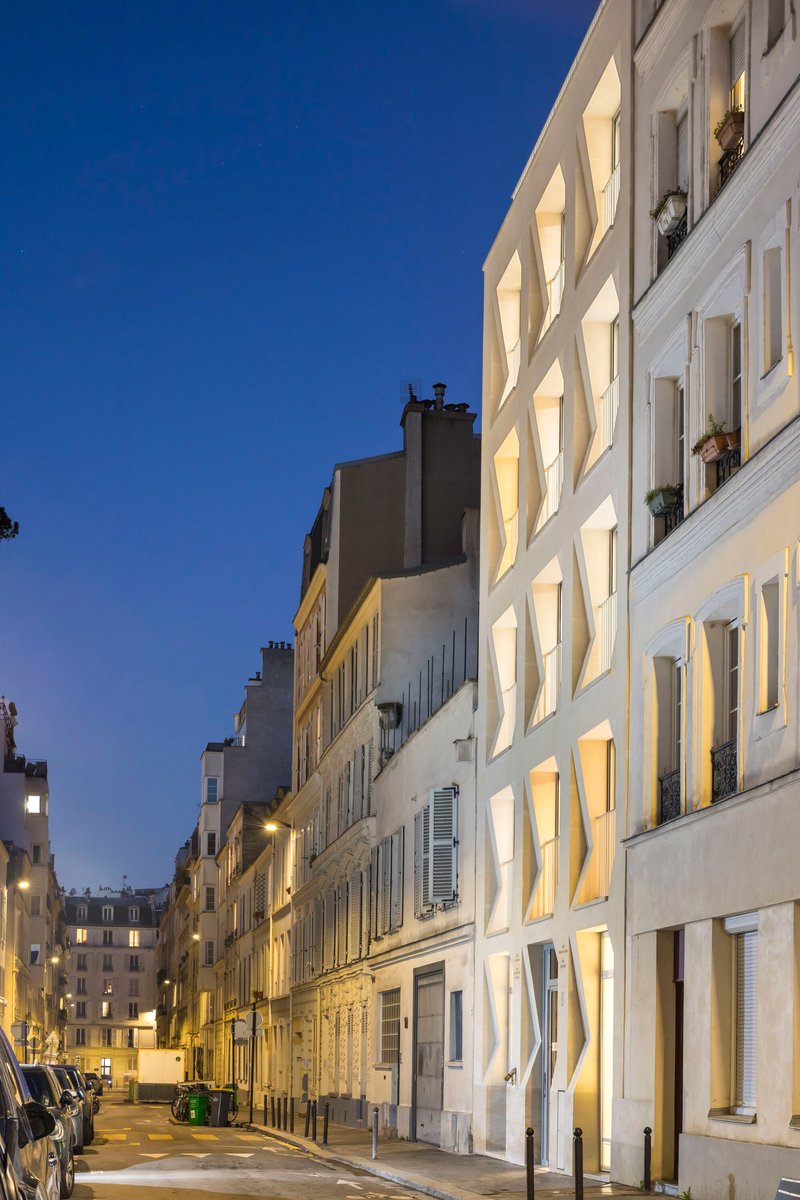
Look closely at the window openings and you notice the geometry is not perpendicular. The reveals taper inward, each one framing the view like a small funnel for daylight. On the courtyard side, stacked balconies sit within diagonal precast frames, their metal balustrades providing a secondary layer of depth. The effect across both elevations is a building that breathes through its openings rather than punching identical holes into a flat plane.
Grey louvered shutters appear at the corners, a functional response to privacy and solar gain that also softens the transition between the sculpted stone and the neighboring party walls. The overall palette stays restrained: stone, metal, glass, grey paint. Nothing competes for attention; the geometry does the talking.
A Courtyard Garden Reclaimed from Asphalt
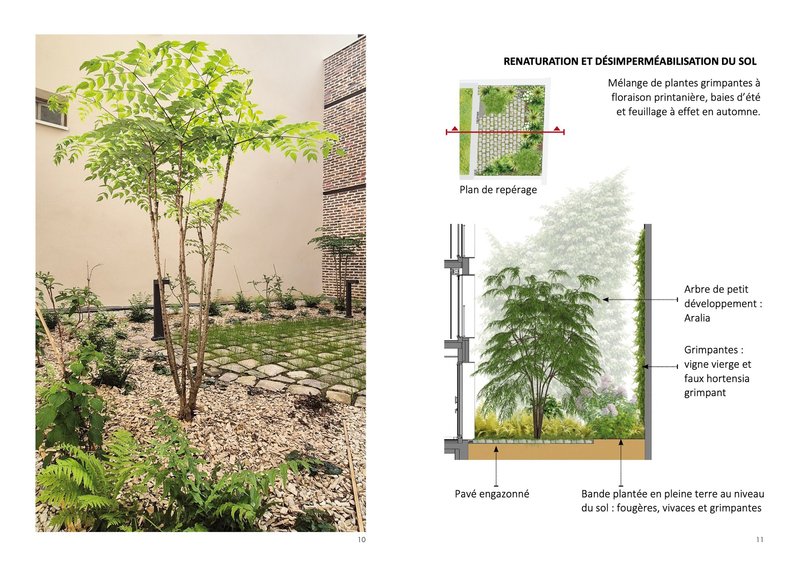
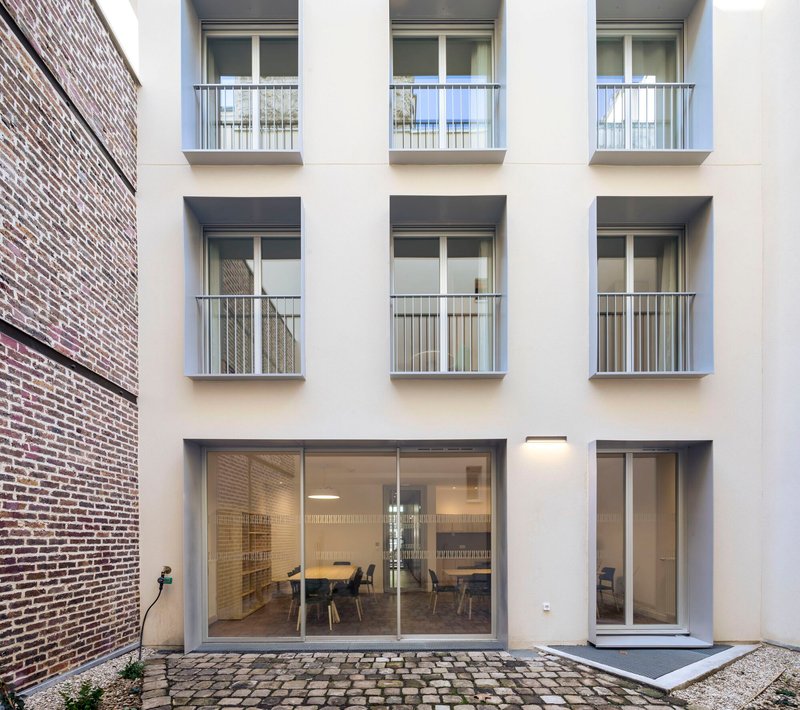
The previous building on this site covered the entire parcel, leaving no permeable ground. CQFD Architecture's replacement carves out a courtyard garden at natural soil level, planted with young trees and gravel beds between existing brick party walls. The courtyard is not merely amenity space. It is the project's primary climate strategy: depermeabilizing the soil to absorb rainwater and creating what the architects call an "urban cooling island" in the dense block interior. In a city that increasingly bakes through summer heatwaves, this is infrastructure disguised as landscape.
The ground floor opens onto the courtyard through a fully glazed facade, collapsing the boundary between common interior space and garden. Cobblestone paving provides a durable transition zone, and the upper courtyard facade adopts a simpler grid of recessed windows that lets the garden remain the focal point. Upstairs, a vegetalized roof terrace extends the green strategy vertically, offering residents vegetable gardens for small-scale urban agriculture.
Compact Units Built for Permanence
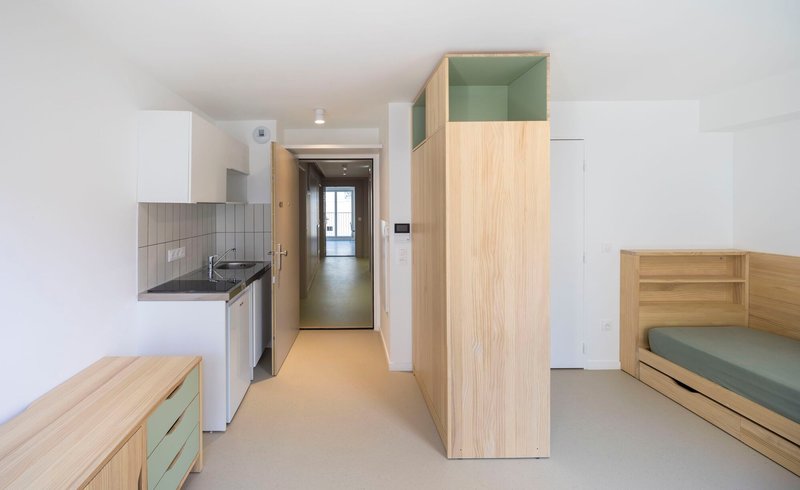
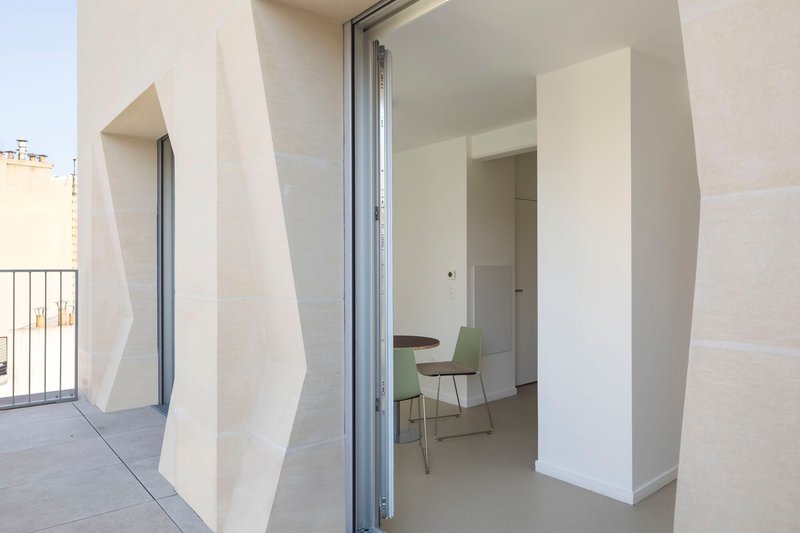
Each of the 19 units, ranging from T1 studios to T2 one-bedroom apartments, is furnished and autonomous. The interiors shown here are spare but warm: timber wardrobes, built-in bed platforms, compact kitchenettes, pale resin flooring. The rammed earth brick partitions between units are not just a carbon story; they bring texture and mass into rooms that could easily feel thin-walled and temporary. These are rooms designed for people who have often known only temporary accommodation, and the material solidity communicates that the promise of permanence is real.
Thresholds receive particular care. The angular white reveals that appear on the facade extend inward, framing views from terraces through to dining spaces beyond. Even at this modest scale, 691 square meters across six floors, the architecture insists on generosity at every transition between inside and outside, between private room and shared corridor, between building and street.
Circular Materials and Quiet Technology
The material story runs deeper than the stone. Rammed earth bricks reuse excavation waste from the Grand Paris Express metro construction. Metalwork, tiles, parquet flooring, and joinery were salvaged from the existing building before demolition. Wood fiber insulation is biosourced. The project holds certifications including Biosourced, Cerqual Habitat & Environnement HQE, Plan Climat Paris, and BBC Effinergie 2017 with a Bbio reduction of 30 percent. Heating and domestic hot water come from a heat pump system paired with QB-1 servers from Qarnot Computing, which repurpose computation waste heat as a building energy source.
None of these systems are visible. The building does not wear its environmental credentials on its sleeve, and that restraint is a design choice worth noting. Too many low-carbon projects telegraph their virtue through exposed technical elements or didactic signage. Here, the technology disappears into the walls and the soil, leaving residents with rooms that feel like rooms, not demonstration units.
Plans and Drawings
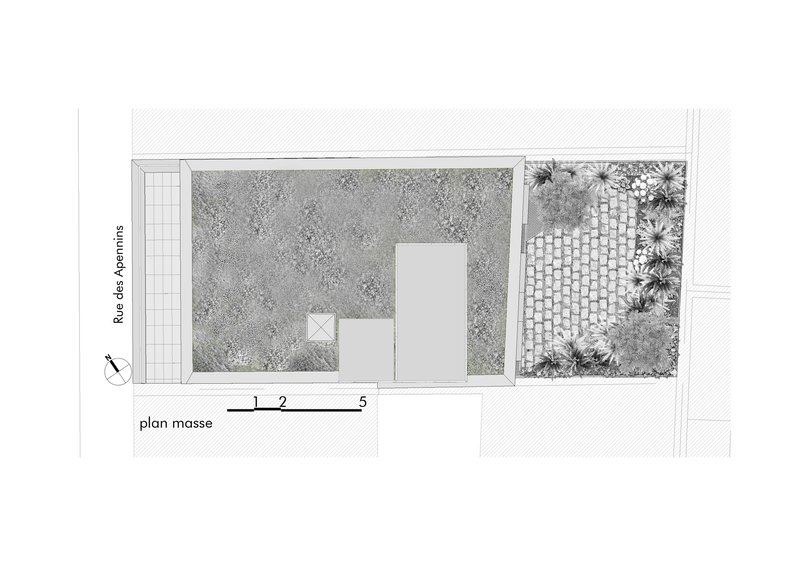
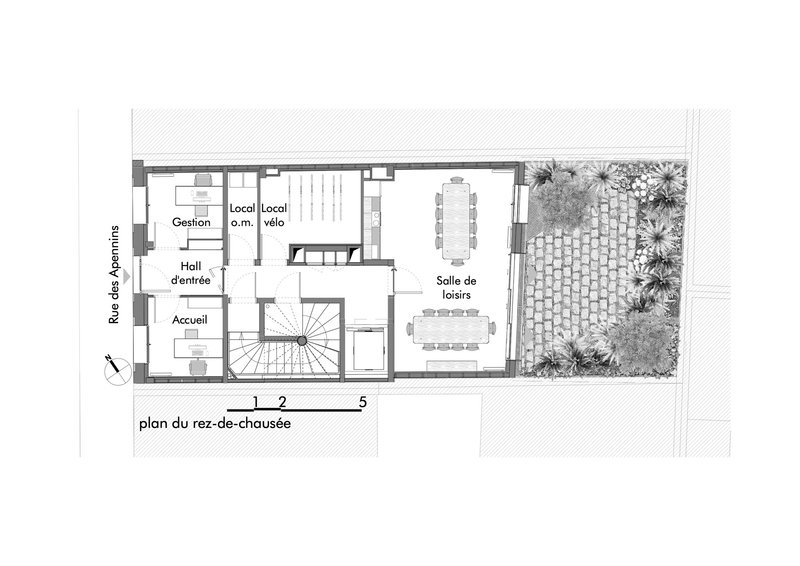
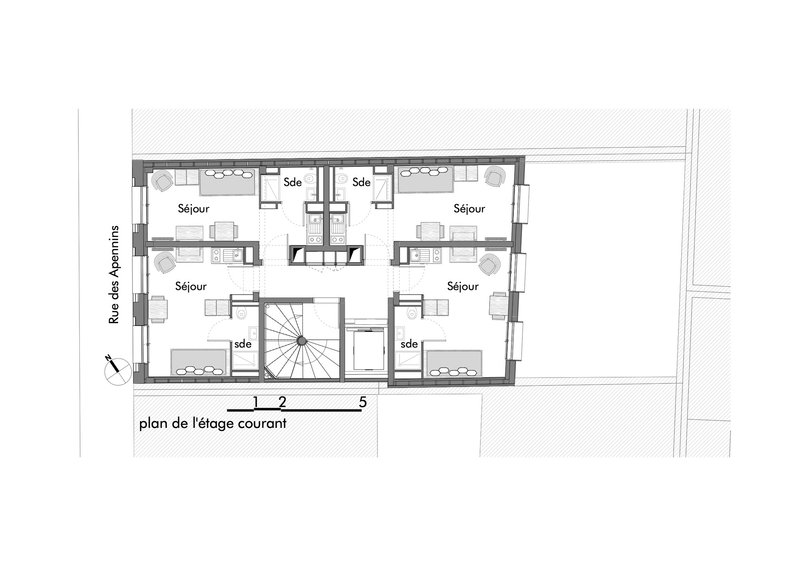
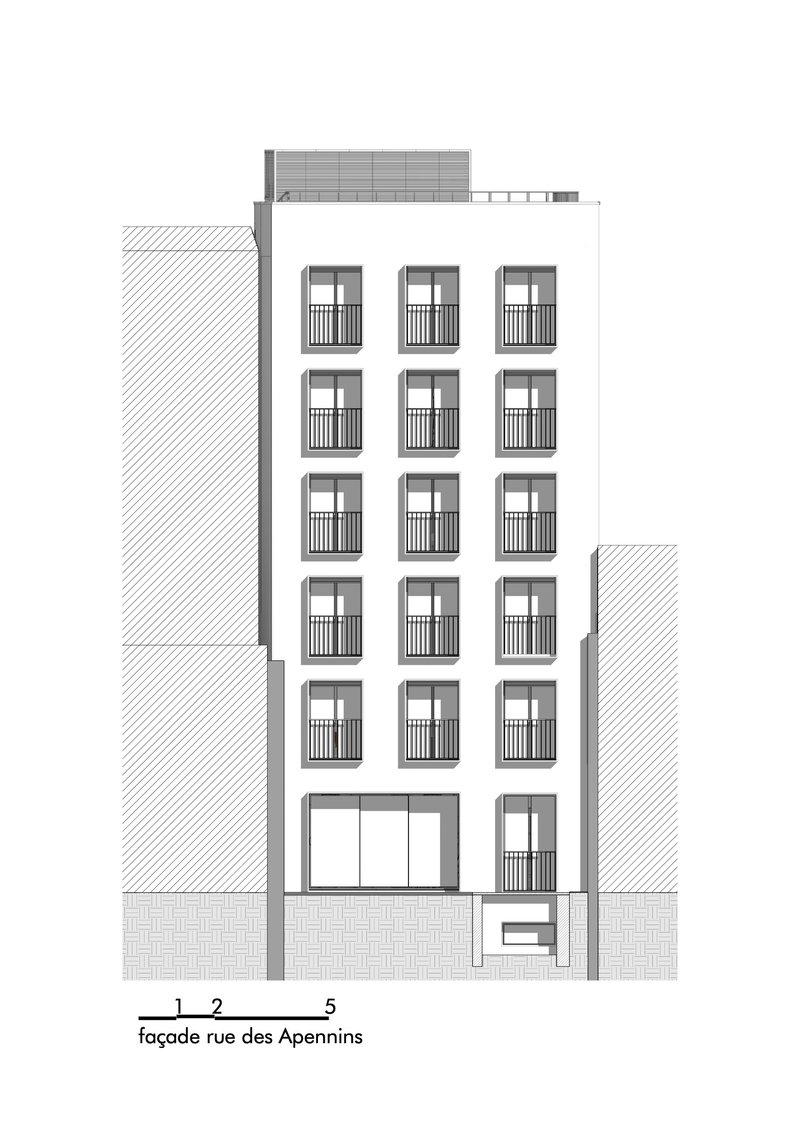
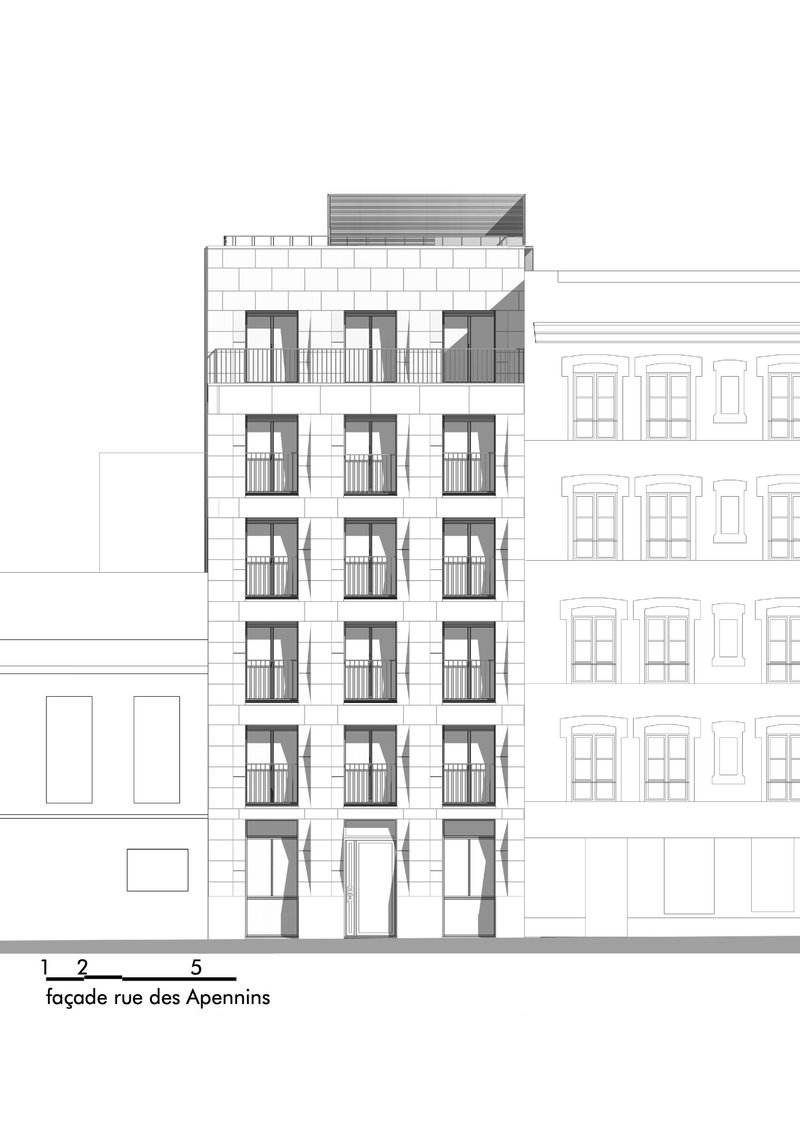
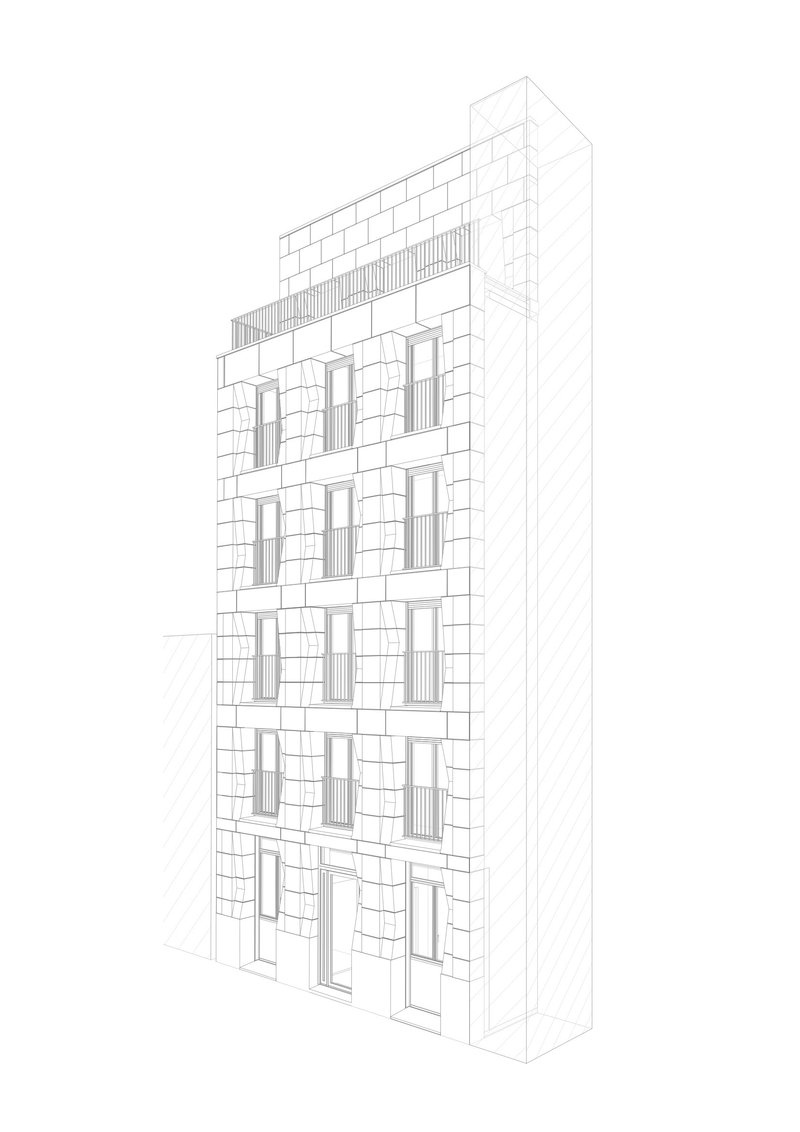
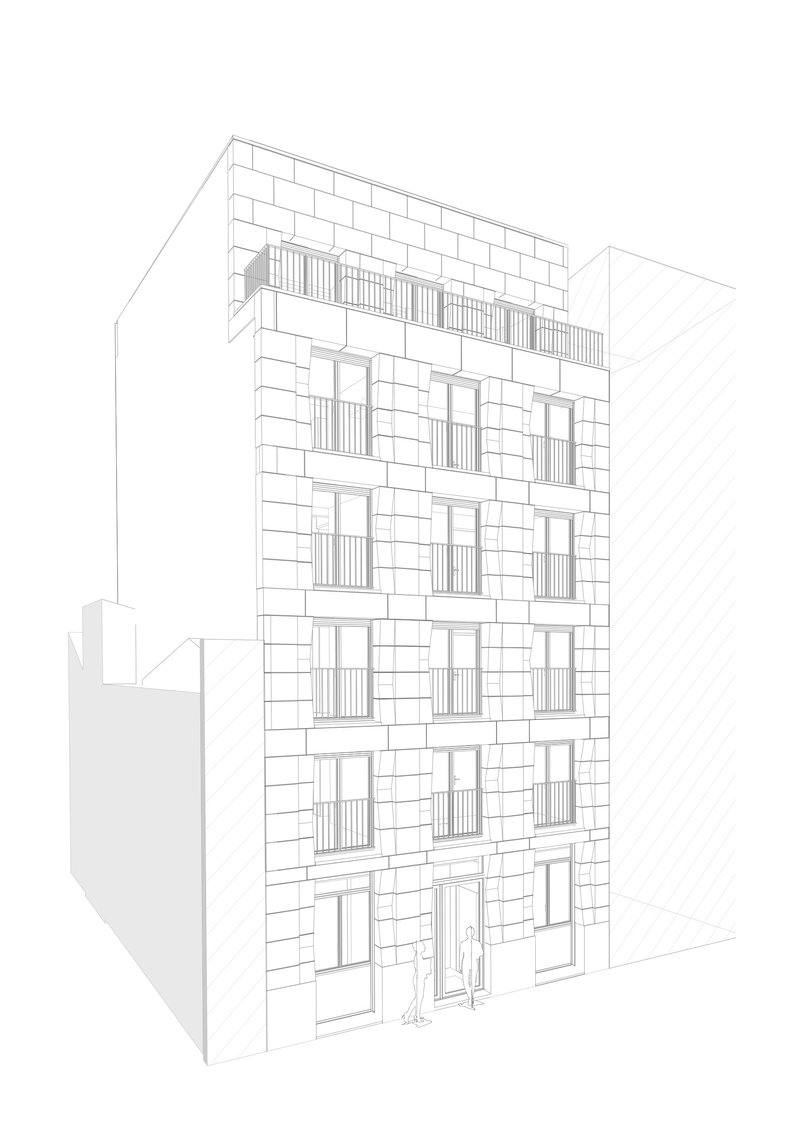
The site plan reveals the tight constraints: a sliver of a parcel wedged into a deep block, with the courtyard garden occupying the only available gap between party walls. The ground floor plan shows a central staircase flanked by reception areas, opening directly onto the paved courtyard with its planted trees. Upper floors arrange four units symmetrically around a compact core of stair and elevator, maximizing frontage onto both street and courtyard for natural light and cross-ventilation.
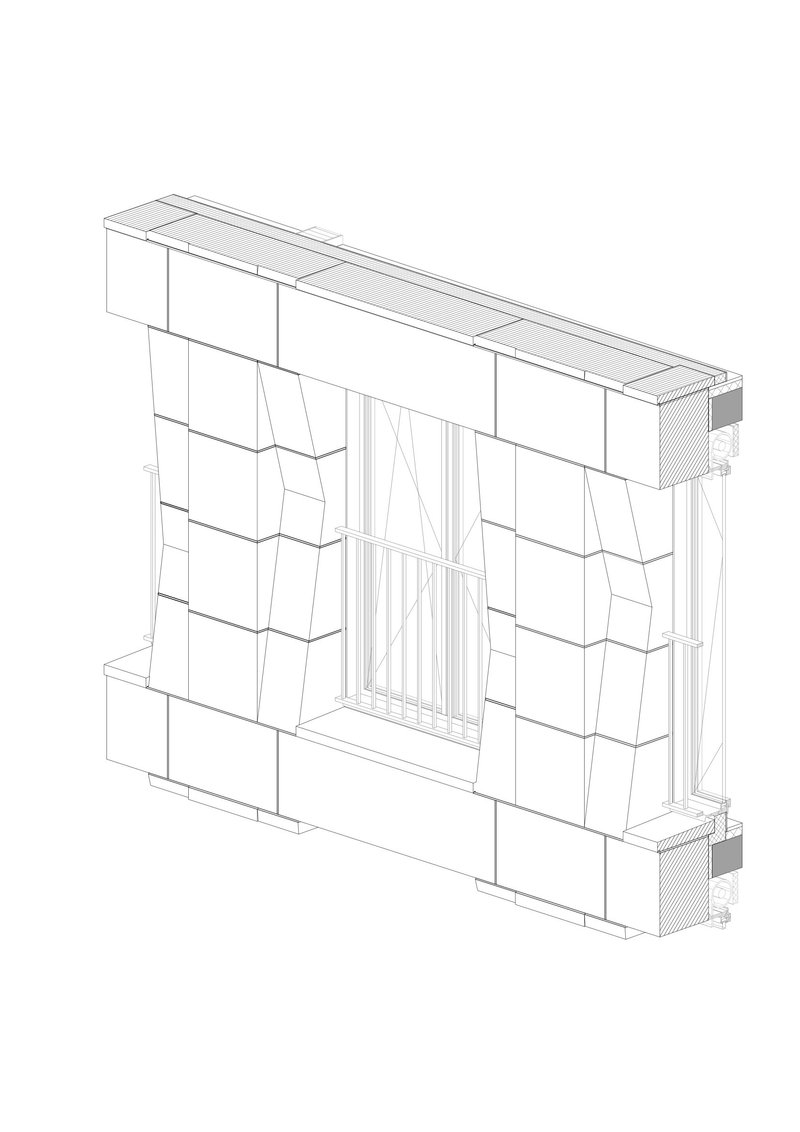
The street elevation in context drawing is revealing. Rendered alongside its neighbors in outline, the building's faceted surface reads as a deliberate counterpoint to the flat planes on either side. The axonometric studies dissect the facade assembly layer by layer: stone structure, window opening, cladding panel, balcony frame. These drawings confirm what the photographs suggest, that the depth of the facade is not a superficial appliqué but an integral consequence of the structural and environmental logic driving the entire project.
Why This Project Matters
Social housing in Paris carries enormous political and architectural weight. The city's commitment to the pension de famille model, permanent furnished residences for people in precarious situations, is itself an act of policy ambition. But policy ambitions die quietly when the architecture fails to match them. A pension de famille built cheaply, with thin walls and fluorescent-lit corridors, tells its residents that permanence is a bureaucratic category, not a spatial reality. CQFD Architecture's building at the Apennins does the opposite. It invests in materials that age well, spaces that admit daylight generously, and a courtyard that gives residents a genuine piece of ground in a city where ground-level greenery is vanishingly scarce.
The project also demonstrates that the circular economy agenda and the low-carbon agenda do not require architectural sacrifice. Load-bearing quarry stone, recycled rammed earth, salvaged finishes, computation waste heat, soil depermeabilization: these are serious technical commitments delivered within a budget of 2.62 million euros. The building stands on a narrow Parisian street looking like it belongs there, its faceted stone facade a quiet argument that environmental performance and urban character are not competing values but reinforcing ones. For 19 people who needed a permanent home, the argument is already won.
Pension de famille des Apennins, by CQFD Architecture. Paris, France. 691 m². Completed 2026. Photography by Sergio Grazia.
About the Studio
Share Your Own Work on uni.xyz
If projects like this are the kind of work you want to make, uni.xyz is a place to publish your own, find collaborators, and enter design competitions.




Popular Articles
Popular articles from the community

GGR Architectes Anchors a New Neighborhood in Frouzins with a Brick and Timber School Complex
A cruciform plan of terracotta brick and exposed wood frames four courtyards for 140 students outside Toulouse, France.
Cro&Co Architecture Builds a 150-Meter Tower on Top of a Seven-Lane Highway in La Défense
Trinity Tower reimagines the office high-rise as a bioclimatic organism threaded with terraces, trees, and public ground in Paris's business district.

The Flow: Coffee Shop Interior Design Where Time, People, and Process Intertwine
The Flow reimagines Viennese coffee culture through arched forms, warm interiors, music, reading, work, and social gathering.
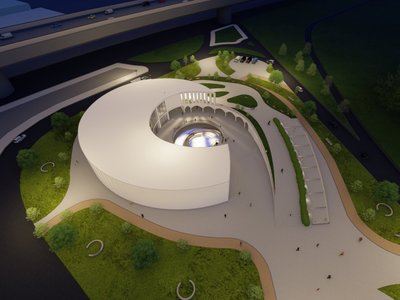
The Heart of Milano: Slow Fashion Architecture for a New Circular Culture
The Heart of Milano turns slow fashion architecture into a civic landmark where learning, making, sharing, and circular culture meets daily.

Similar Reads
You might also enjoy these articles
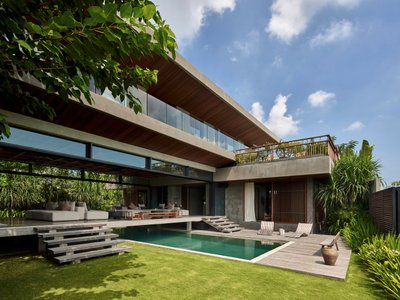
Freebird Residence by Alexis Dornier: A Tropical Modernist Sanctuary in Bali
Floating living pavilion above pool anchors H-shaped tropical villa, blending Japanese minimalism, sustainable strategies, lush landscape, and sculptural interiors.
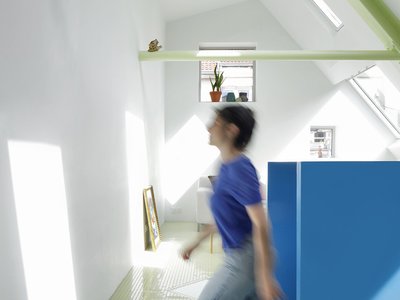
127af Flips a Tiny Bagnolet Rowhouse Upside Down with a Handcrafted Roof Extension
A 55-square-meter terraced house on the edge of Paris gains a luminous upper living floor through lightweight timber and steel.
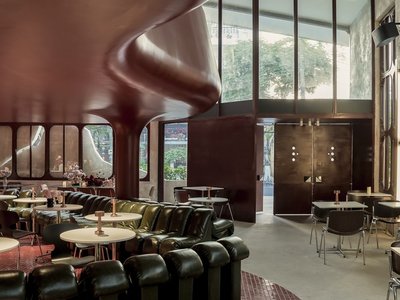
1.61 Design Workshop Wraps a 600-Square-Meter Café in Vietnam in Sculptural Burgundy Drama
Reden Café & Bistro pairs a helical staircase, mosaic floors, and deep red interiors to rethink Vietnamese hospitality space.

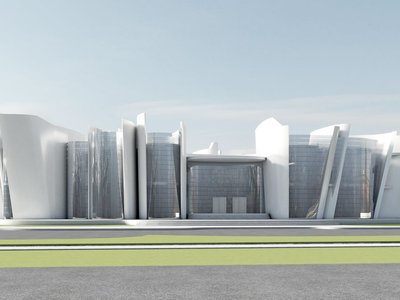
The Unbound Brain: A School Shaped by Cognitive Architecture
Cylindrical learning pods radiate like neurons from a central cortex, turning the floor plan into a spatial model of human thought.


Explore Landscape Design Competitions
Discover active competitions in this discipline




The International Standard for Design Portfolios


The Global Benchmark for Architecture Dissertation Awards


The Global Benchmark for Graduation Excellence


Challenge to reimagine the Iron Throne
Comments (0)
Please login or sign up to add comments
No comments yet. Be the first to comment!