
Cracker by NOMAL: Reviving Sinchon’s Cultural Heritage Through Architectural Renewal
Adaptive reuse project in Seoul transforming a decayed 1960s building into a cultural landmark celebrating Sinchon’s heritage through brick and light.

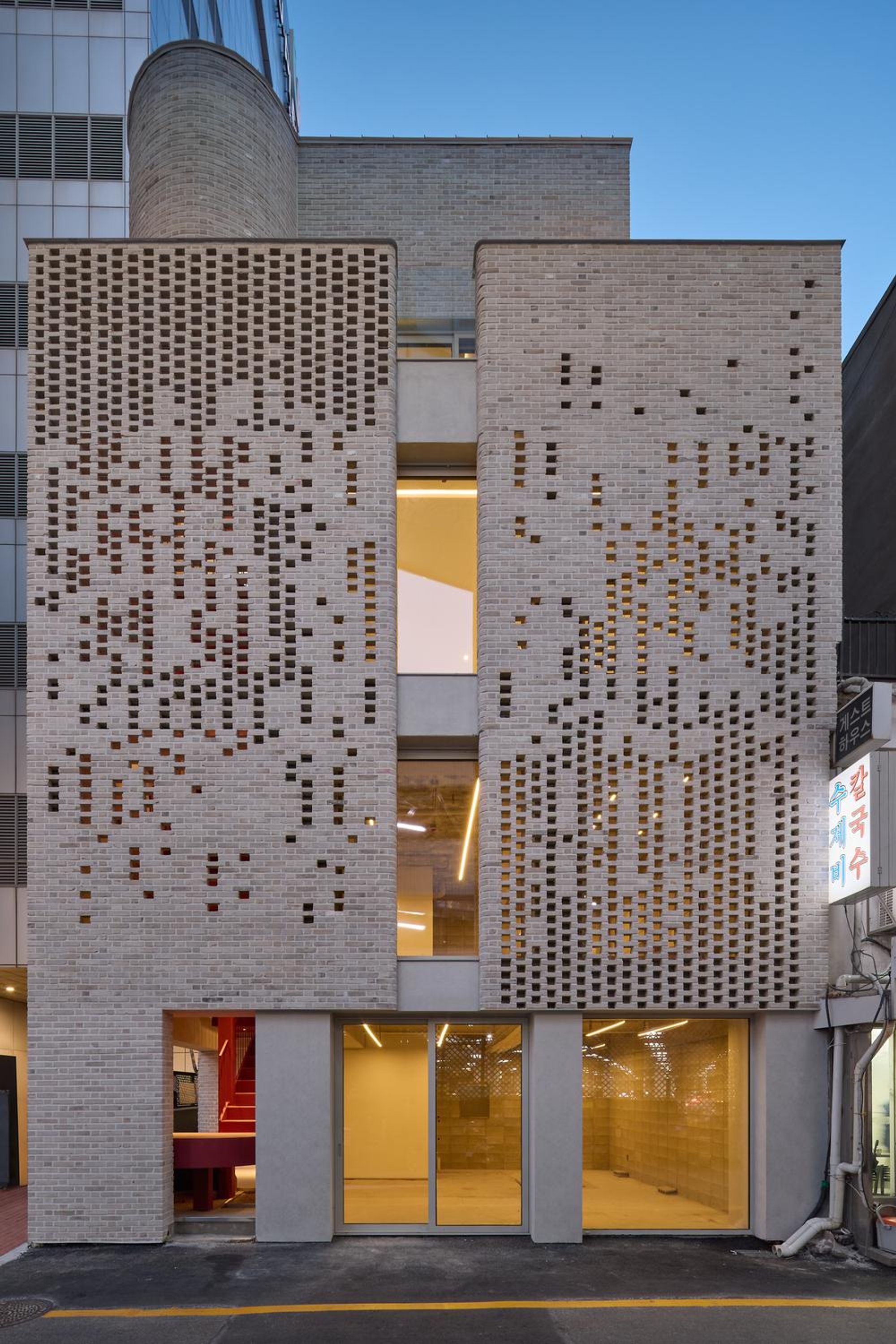
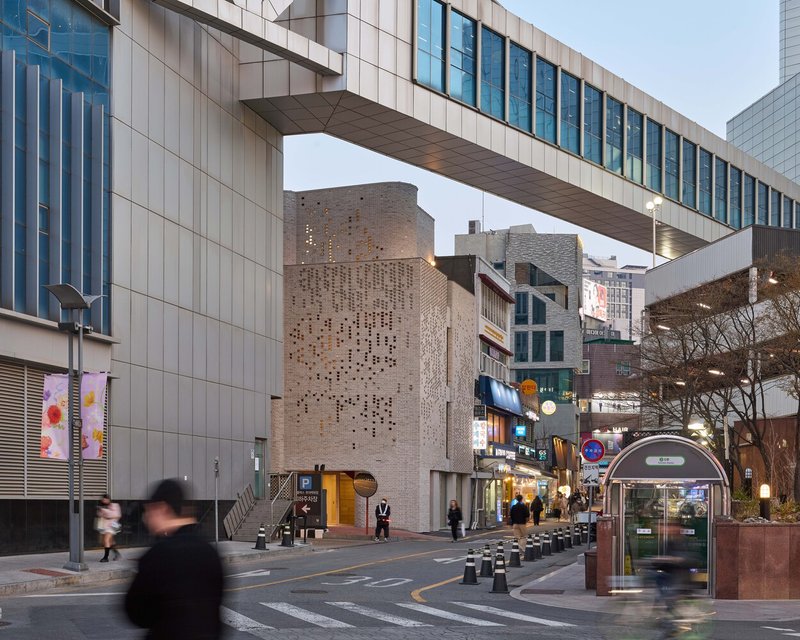
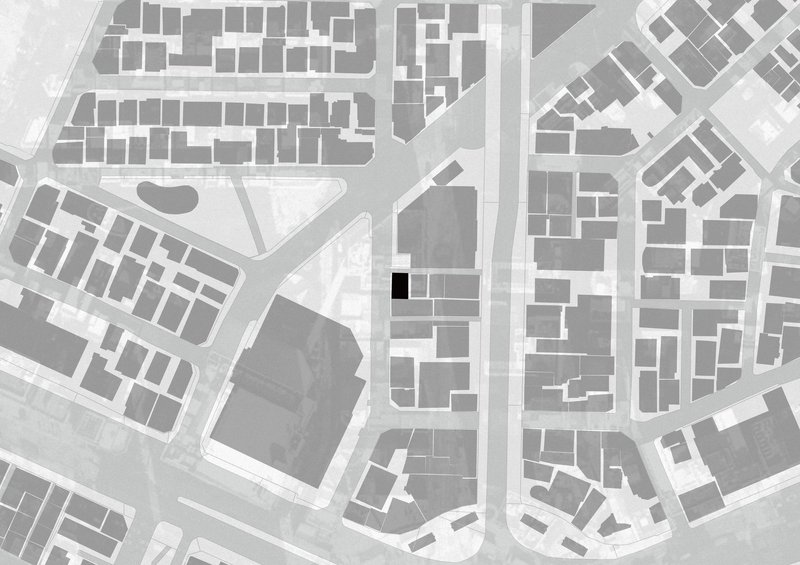
In Seoul’s historic Sinchon district, an area once at the heart of Korea’s cultural and creative energy, a modest 1966 structure has been transformed into Cracker, a contemporary urban landmark by NOMAL Architects. Designed by Minyuk Chai, Bokki Lee, and Seyeon Cho, the project reimagines the architectural and cultural legacy of Sinchon while addressing the technical and spatial challenges of working within extreme urban constraints.
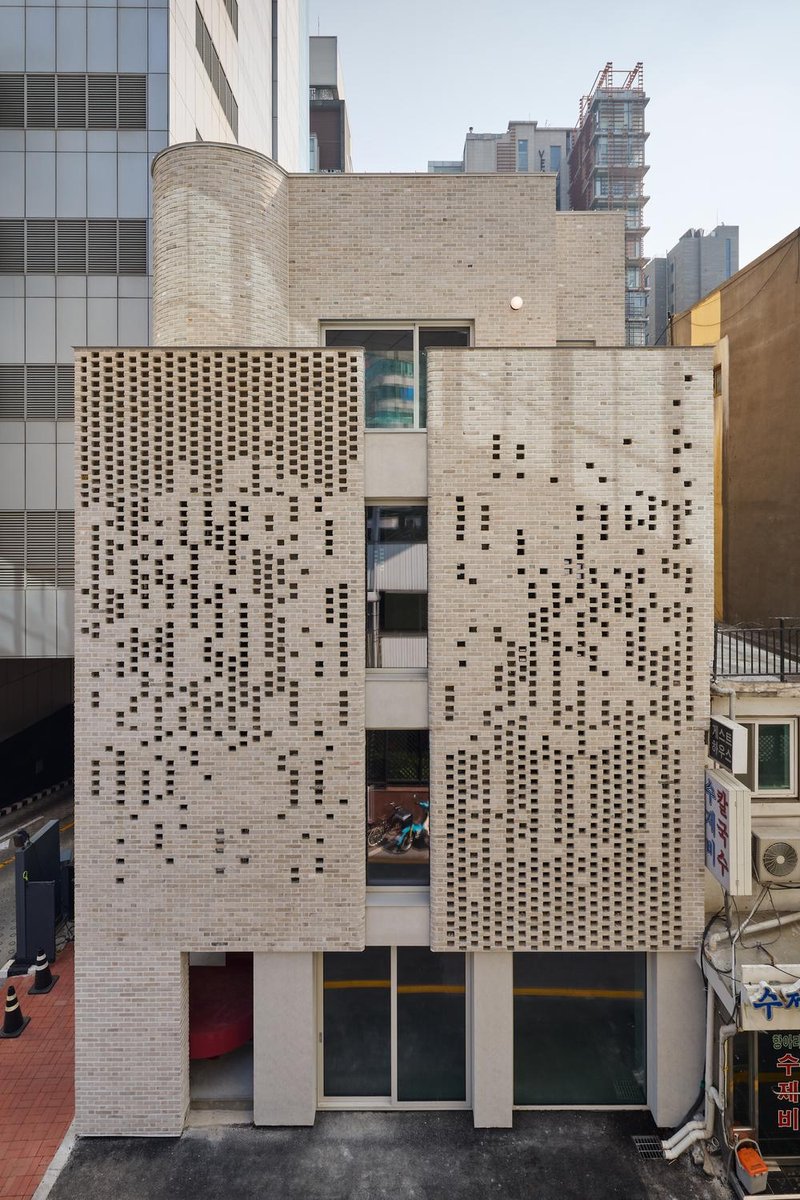
With a total area of 247 square meters, the renovated four-story building stands as both a cultural statement and a structural restoration—a blend of memory and modernity.
Urban Context and Historical Background
Originally built during South Korea’s postwar modernization boom, the building reflects a period of rapid urbanization and informal construction. Over decades, it evolved into a mixed-use structure of mismatched materials and improvised additions. Foundations were independent, columns extended beyond site boundaries, and upper floors were built from masonry and lightweight steel without structural coherence.
By the time NOMAL began the project, the building had deteriorated severely, mirroring the decline of the district itself. Sinchon, once a hub for university culture, music, and art from the 1970s through the 1990s, had lost its creative pulse. Gentrification and mass commercialization in the 2000s replaced small studios and performance cafés with large franchises, eroding local identity. Cracker was conceived as a response—an architectural attempt to reignite Sinchon’s lost energy and cultural resilience.
Design Objectives and Constraints
Strict urban regulations, including floor area ratio limits and parking requirements, made demolition and new construction impossible. NOMAL instead pursued a strategy of adaptive reuse and structural reinforcement, turning constraint into opportunity.
The renovation involved four key interventions:
- Rebuilding columns that projected beyond the plot into rightful boundaries.
- Reinforcing foundations and replacing unstable masonry.
- Reconstructing the structurally weak third and fourth floors.
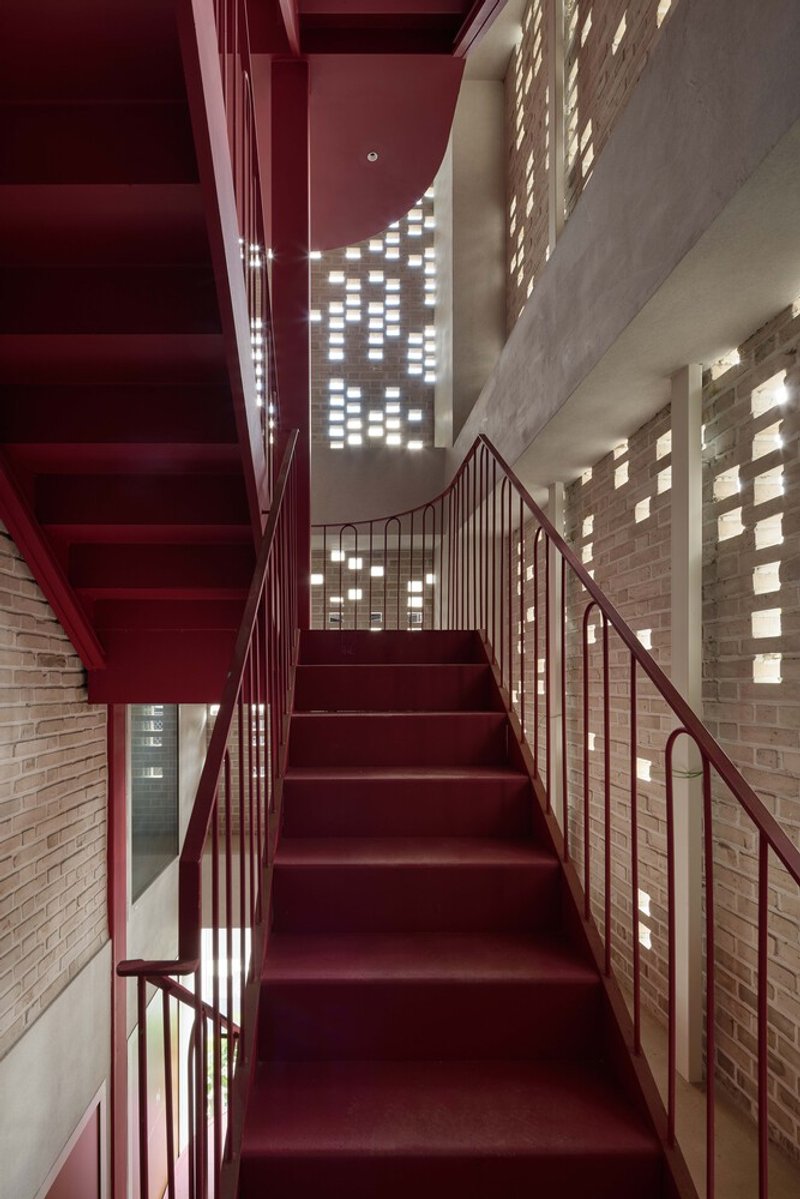
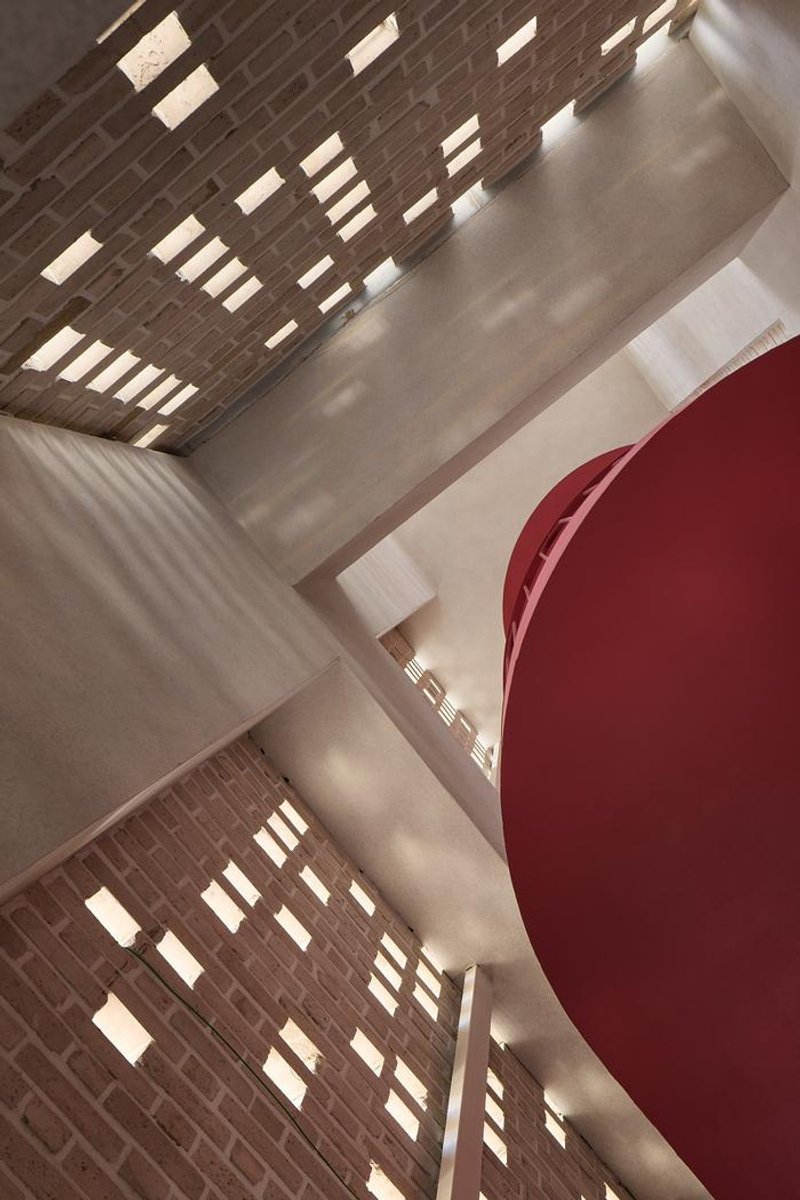
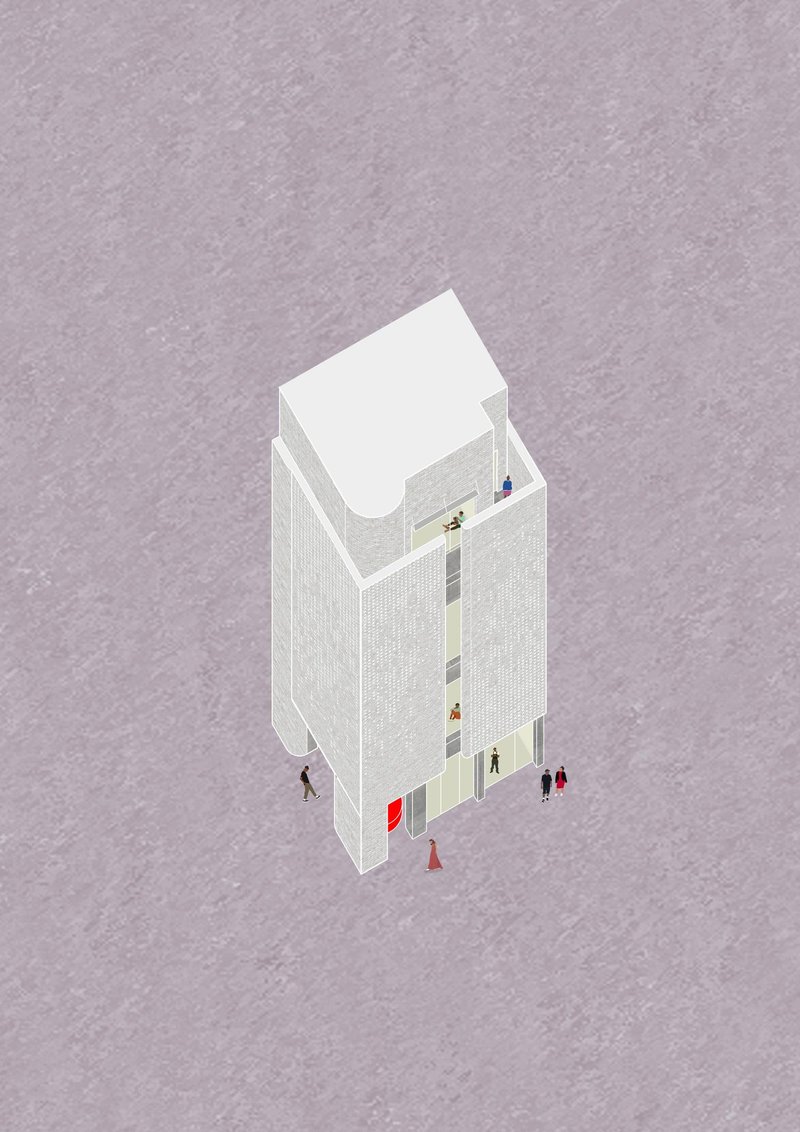
- Introducing a new vertical circulation bay with an elevator and stairway for accessibility.
This process balanced preservation with technical renewal, enabling the building to continue its urban life with renewed integrity and purpose.
Architectural Composition and Material Strategy
NOMAL’s methodology sought to respect the material identity of the old structure while expressing new urban vitality. Two of the building’s three bays now serve as interior spaces, while the third contains the circulation core. The brick façade, both reconstructed and reinterpreted, establishes continuity between past and present.
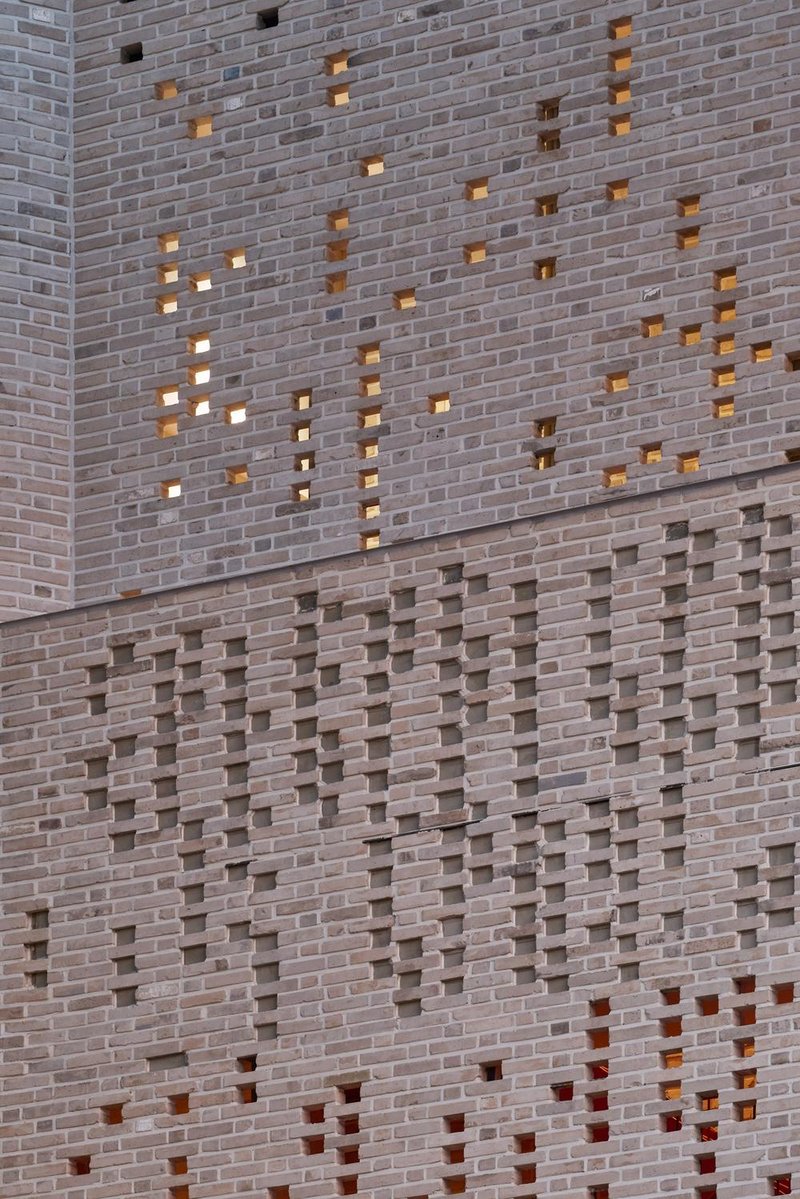
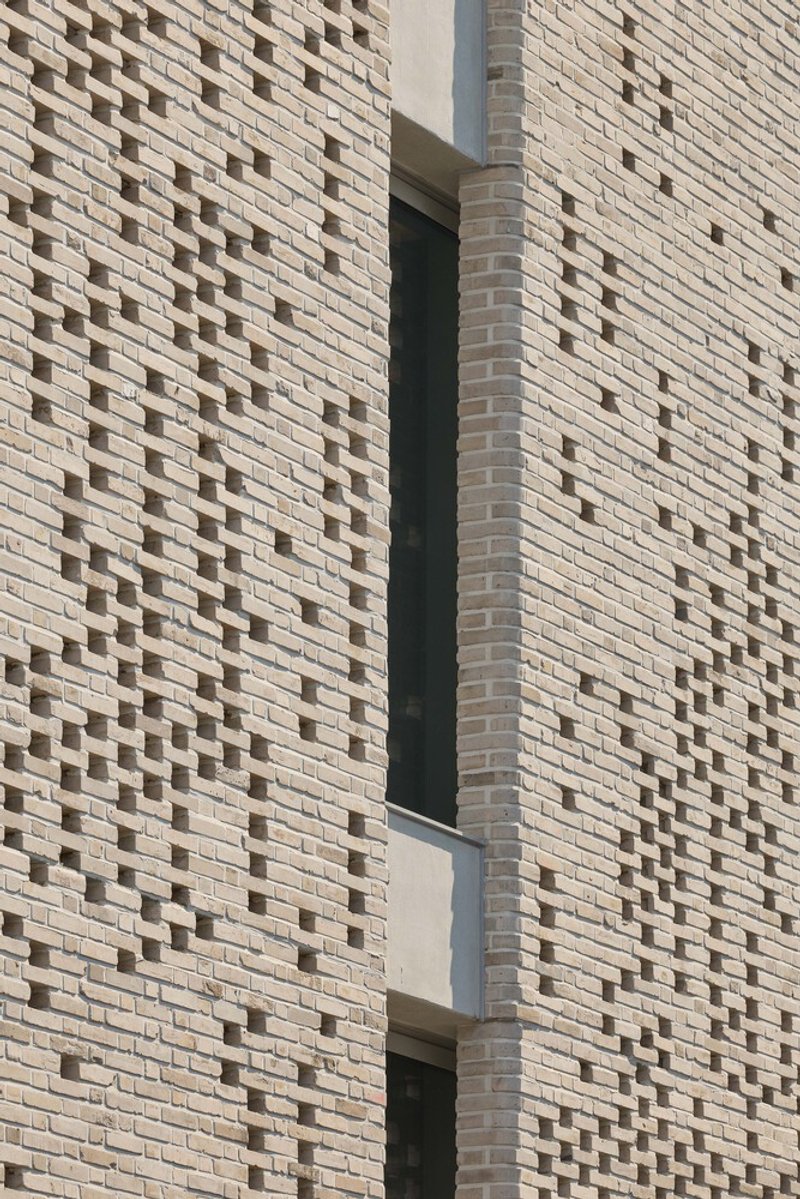
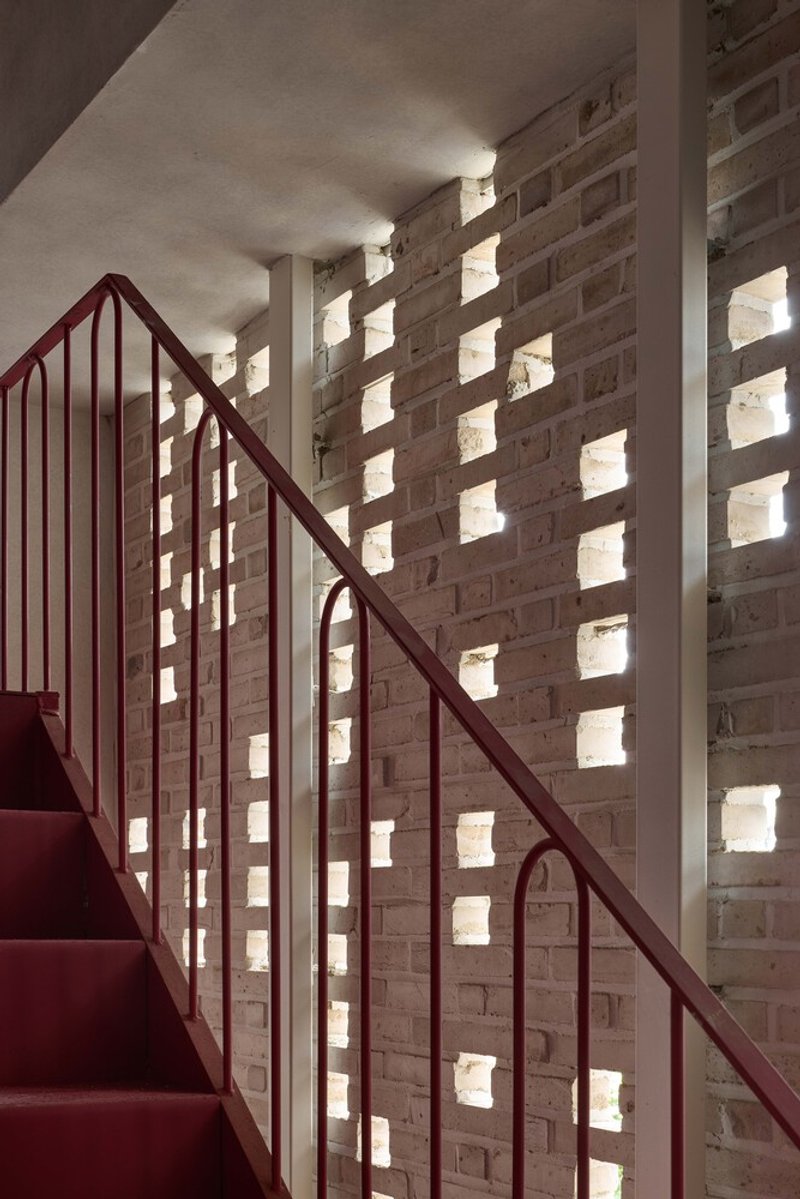
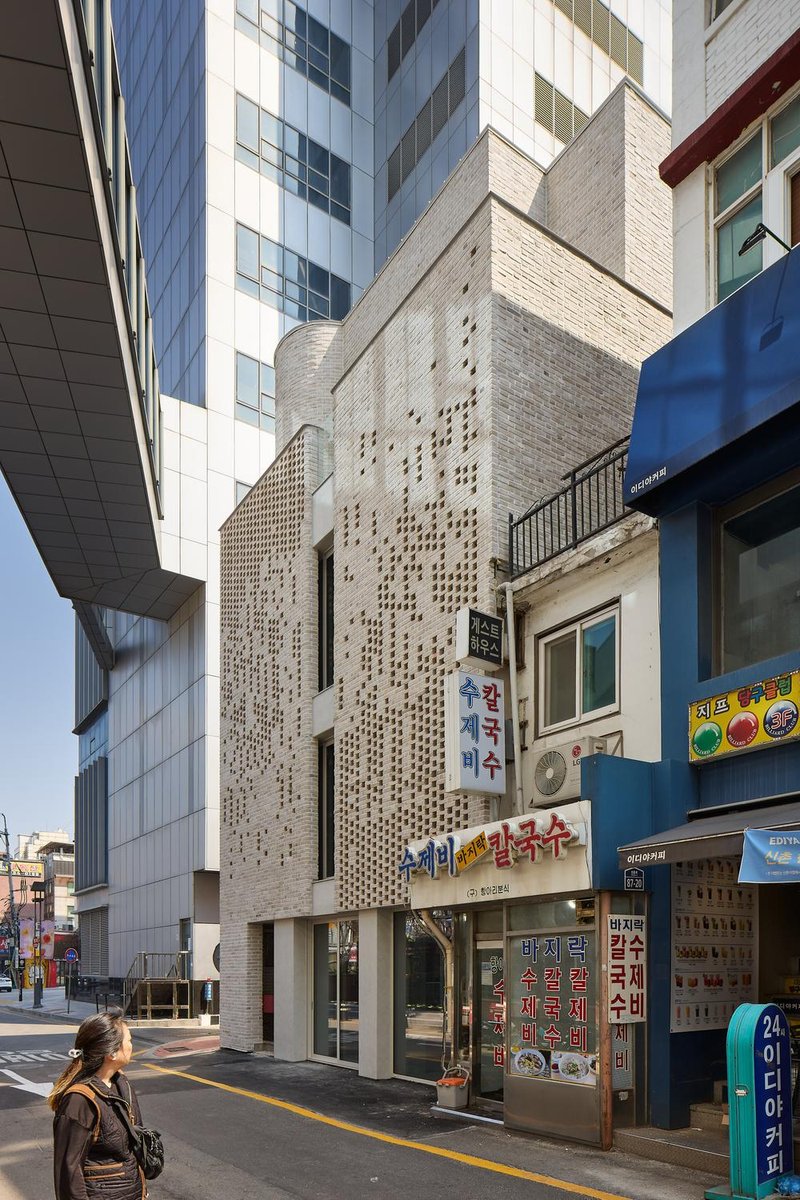
On the upper floors—now designed as guest accommodations—a perforated brick skin creates a porous, rhythmic texture that mediates between interior and exterior. This tactile elevation allows daylight to permeate softly during the day, while emitting a warm, lantern-like glow at night, reinvigorating the street with quiet vibrancy.
Conceptual Framework: Music and Memory
For NOMAL, Cracker is more than structural renewal—it's an architectural composition inspired by sound. Sinchon’s lost tradition of live music venues influenced the façade’s pattern language. The perforated brickwork translates the visual rhythm of digital audio waves into an architectural motif, capturing the pulse of a neighborhood once alive with acoustic and artistic energy.
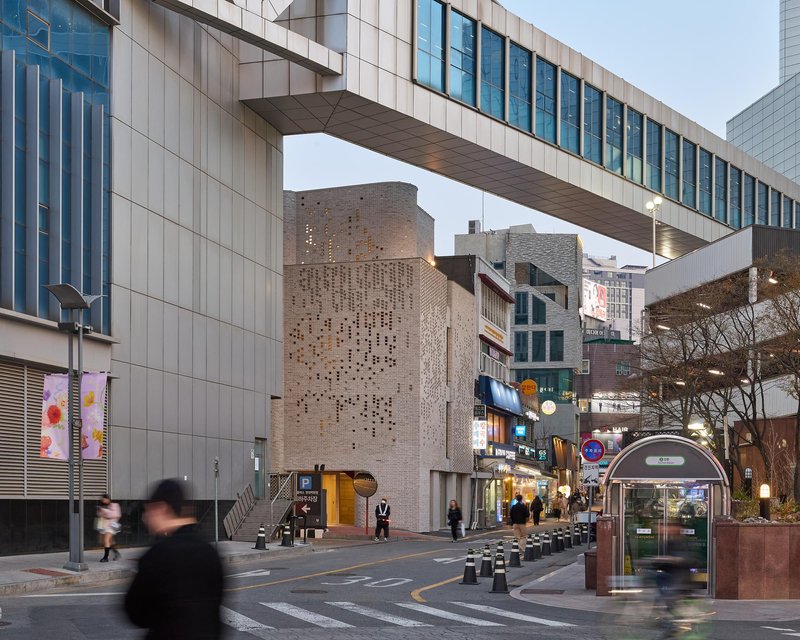
This design approach bridges generations. For older residents, the building recalls Sinchon’s musical past; for younger visitors, its dynamic visual identity engages through abstract form and light. The architecture serves as both a memorial and a reawakening of collective cultural memory through design.
Urban Regeneration and Cultural Continuity
While the architects acknowledge that a single building cannot reverse urban decline, Cracker offers a model for localized regeneration—a small but meaningful transformation capable of influencing surrounding renewal efforts. It stands as a symbolic catalyst that redefines what adaptive reuse can mean in Seoul’s dense urban core.
Through spatial logic, material sensitivity, and historical awareness, NOMAL demonstrates that architecture can serve as a repository of memory while remaining open to change. The project’s success lies in its restraint, its refusal to erase the past, and its commitment to articulate continuity across time.
All the photographs are works of Roh Kyung



Popular Articles
Popular articles from the community

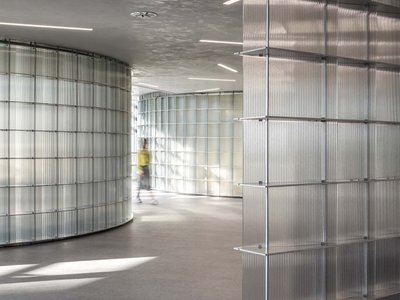
HCCH Studio Wraps a Shanghai High-Rise Office in Curved Walls of Translucent Glass
A 1,000 square meter fit-out in Lujiazui replaces the typical tech-office palette with layered glass, micro-cement, and quiet rigor.
Ippolito Fleitz Group Identity Architects Turn Eight Floors in Shanghai into a Vertical Creative City
Publicis Groupe's new headquarters in Xintiandi reimagines the office as a courtyard-driven urban landscape stacked across eight floors.
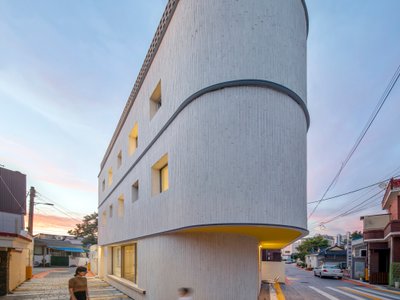
YOAP Architects Round a Corner in Yeongcheon with a Cylindrical Community Hub
A 197-square-meter brick and ribbed-clad tower turns a forgotten alley corner in South Korea into a public garden with a low threshold.

20 Most Popular Office Building Projects of 2025
From biophilic workspaces in India to net-positive energy offices in New Delhi, 20 office building projects that defined architecture in 2025.


Similar Reads
You might also enjoy these articles
Olio Towers: A Mid-Rise for Performers That Fuses Housing, Rehearsal, and Stage
Located blocks from Houston's Theater District, this modular tower stacks living units around a central performance atrium.
Oasis: Modular Green Housing Carved into Dhaka's Urban Fabric
A shortlisted Plugin Housing entry reclaims unauthorized settlements in Dhaka with stepped concrete volumes, green roofs, and ventilation-driven design.

Black Hole: A Floating Megastructure for the Post-Physical Era
Emiliano Mazzarotto envisions a spherical, self-scaling arena where e-sports, digital hotels, and holographic stadiums replace traditional public space.
Compact & Sustainable Living in Piraeus: A Four-Level Family Home Built Around Light and Air
A narrow townhouse in one of Greece's densest port cities uses a central atrium and passive strategies to house three generations under one roof.


Explore Architecture Competitions
Discover active competitions in this discipline




The International Standard for Design Portfolios


The Global Benchmark for Architecture Dissertation Awards


The Global Benchmark for Graduation Excellence


Challenge to reimagine the Iron Throne
Comments (0)
Please login or sign up to add comments
No comments yet. Be the first to comment!