

Cranberry Pond House: A Biophilic Retreat in the Catskills
Cranberry Pond House blends biophilic design, sustainability, and natural materials, creating a peaceful, energy-efficient retreat in the Catskills.


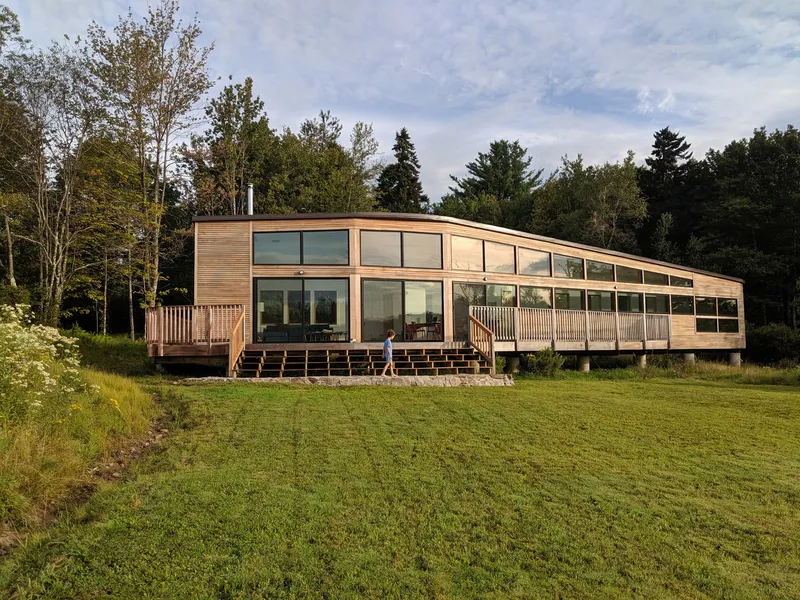
The Cranberry Pond House, designed by Bryce de Reynier, is a stunning example of architecture that blends seamlessly with its natural surroundings. Located in the foothills of the Catskills Mountains, New York, this biophilic home offers a unique refuge for its owners, providing a connection to nature while offering modern comforts and energy efficiency. This 1,150 sq ft home embraces the beauty of its environment, featuring sweeping views of a spring-fed pond and lush woodlands, creating an immersive and restorative living experience.
Location and Context: Embracing the Catskills Landscape
Nestled on a former farm that is transforming into a vibrant woodland, the Cranberry Pond House overlooks a serene pond that attracts an array of wildlife, from frogs and turtles to osprey and ducks. The home is designed to rise above the landscape, allowing the natural ecology and hydrology of the site to flow freely beneath the house. This thoughtful approach to design not only preserves the integrity of the environment but also creates a seamless integration between the house and its natural surroundings.
Sustainable Design for a Restorative Experience
The design of the Cranberry Pond House is rooted in biophilic architecture principles, particularly the concepts of Refuge and Prospect. The house is carefully positioned to feel both protected by its surroundings while providing expansive views of the calming pond. The open design and connection to the landscape create a sense of openness and tranquility, even within the modest 1,150 sq ft footprint.

Refuge and Prospect: The Balance of Space and Views
One of the key aspects of the house is its design around biophilic concepts that promote both privacy and connection. The home's linear form ensures privacy between spaces, while creating a feeling of openness. The public areas, including the living room, are marked by dramatically high ceilings, fostering a sense of expansiveness. In contrast, the more private spaces, such as the bedrooms and bathrooms, are designed to provide a more intimate, calming experience. The parents' bedroom, in particular, feels like a private cabin, offering solitude at the far end of the house.

Energy Efficiency: Passive Design and Sustainable Materials
Designed with a focus on sustainability, the Cranberry Pond House minimizes its environmental impact while maintaining a high level of energy efficiency. The house’s south-easterly orientation ensures maximum passive solar heating, which is supplemented by a wood-burning stove and small fan-coil units. The home’s high-performance insulated windows exceed energy code requirements, reducing energy consumption and maintaining a comfortable indoor climate year-round.
Instead of incorporating solar panels, the family has chosen to offset the house’s operational carbon footprint through the use of renewable grid energy. This decision reflects the owners' commitment to sustainability and energy independence, while reducing the complexity of the home’s design.

Natural Materials and Durability: A Home Built for Longevity
The Cranberry Pond House has been built with long-lasting, natural materials that not only blend beautifully with the environment but also minimize the need for future maintenance. The exterior is finished with durable materials that resist the wear and tear of time, and the home is designed to be straightforward to build, with economical lumber sizes and minimal use of concrete. These design choices ensure that the house remains both functional and sustainable for many years to come.

A Home That Connects to Nature
Living in the Cranberry Pond House is more than just inhabiting a building; it is about living within the landscape itself. The design allows for continuous engagement with nature, with every aspect of the home— from the views of the pond to the sounds of birdsong and the scents of the surrounding woodland—enhancing the residents' daily lives. The house offers a dynamic, ever-changing experience: the sun rises, storms roll in, moonlit nights and rainbows can be viewed from the windows, and the rain patters on the metal roof, creating a soothing atmosphere.
The house was built over several years by the architect and his family, who sought a necessary escape from the chaos of city life in Manhattan. The Cranberry Pond House has become a restorative sanctuary, a retreat where the stresses of urban living are left behind in favor of a life that is attuned to the rhythms of nature.

The Cranberry Pond House as a Model of Sustainable, Biophilic Living
The Cranberry Pond House exemplifies the principles of biophilic design through its connection to nature, thoughtful use of sustainable materials, and energy-efficient features. By embracing its natural surroundings and integrating them into the fabric of the home, the design offers an unparalleled living experience. The home’s sculptural form and intimate relationship with the landscape create a place of refuge, offering both protection and expansive views of the Catskills. This project serves as a model for sustainable living, where architecture and nature coexist harmoniously, providing a deeply restorative and calming environment for its inhabitants.




Popular Articles
Popular articles from the community


The Ocean Hive: Sustainable Architecture for a Self-Sufficient Civilization at Sea
The Ocean Hive imagines sustainable architecture at sea, where modular habitats, algae, wave power and ocean waste sustain a growing colony.

Co-life: Sustainable Architecture for Age-Friendly Community Living
Co-life reimagines sustainable architecture for seniors through courtyards, rammed earth, shared gardens, and spaces designed for belonging.

Conexión: Biophilic Design Reimagines High-Rise Living in Hong Kong
Conexión reimagines high-rise living in Hong Kong through biophilic design, green facades, shared spaces, daylight, water and nature within.
EW PARK: Sustainable Architecture Reimagines the Future of Urban Parking
EW PARK reimagines city parking as a modular wooden tower combining automation, solar energy, electric mobility, and adaptable urban design.


Similar Reads
You might also enjoy these articles


Hodi-Mandai Geram
Project Function: Preservation and revitalization of the Intangible heritage and socio-spatial identity of the Hodi by Housing, Cultural Memory Center, Sacred Grove, landscape, local tourism economy


Olio Towers: A Mid-Rise for Performers That Fuses Housing, Rehearsal, and Stage
Located blocks from Houston's Theater District, this modular tower stacks living units around a central performance atrium.

Oasis: Modular Green Housing Carved into Dhaka's Urban Fabric
A shortlisted Plugin Housing entry reclaims unauthorized settlements in Dhaka with stepped concrete volumes, green roofs, and ventilation-driven design.

Black Hole: A Floating Megastructure for the Post-Physical Era
Emiliano Mazzarotto envisions a spherical, self-scaling arena where e-sports, digital hotels, and holographic stadiums replace traditional public space.


Explore Housing Competitions
Discover active competitions in this discipline



Challenge to reimagine the Iron Throne


Photograph architecture without architects


Illustrate the lost glory of Angkor Wat - Render Challenge


Design challenge to reuse E-waste
Comments (0)
Please login or sign up to add comments
No comments yet. Be the first to comment!