
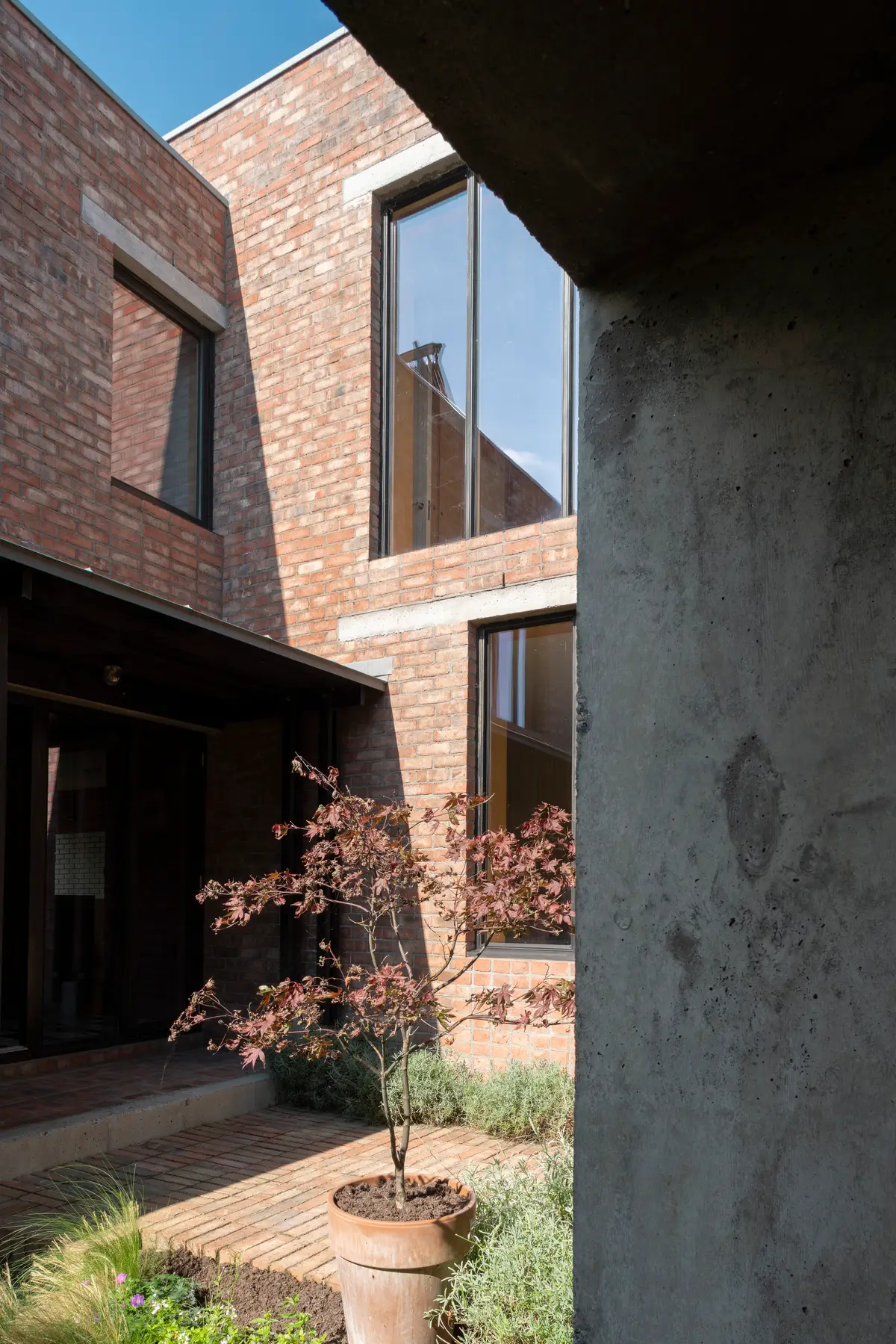
Culligan Architects Weaves a Red Brick Family House into a Dublin Coach House Garden
Behind a listed Georgian house in Blackrock, a restrained material palette and layered gardens produce an RIAI award-winning home.


Rear gardens of listed Georgian houses are tricky sites. They come with conservation constraints, irregular geometries, and the obligation to defer to a building that has been standing for two centuries. In Blackrock, south Dublin, Culligan Architects took on exactly that challenge, inserting a 230 square metre family house alongside an existing 19th-century coach house on a plot that had sat idle for years. The result, completed in 2019, won the RIAI 2020 Irish Architecture Award for Best House, and looking through the project it is not hard to see why.
What makes this project compelling is its refusal to treat the site as a leftover. Instead of a single building crammed into odd proportions, Culligan breaks the programme into a sequence of rooms and outdoor spaces, each carefully calibrated for light, level, and prospect. The existing granite-faced coach house is not absorbed but respected as a standalone entity, and the new red brick volumes negotiate with it through courtyards, passages, and planted thresholds. The architecture is quiet but never passive. Every joint, every shift in level, every framed view is deliberate.
A Courtyard Carved from Irregular Geometry
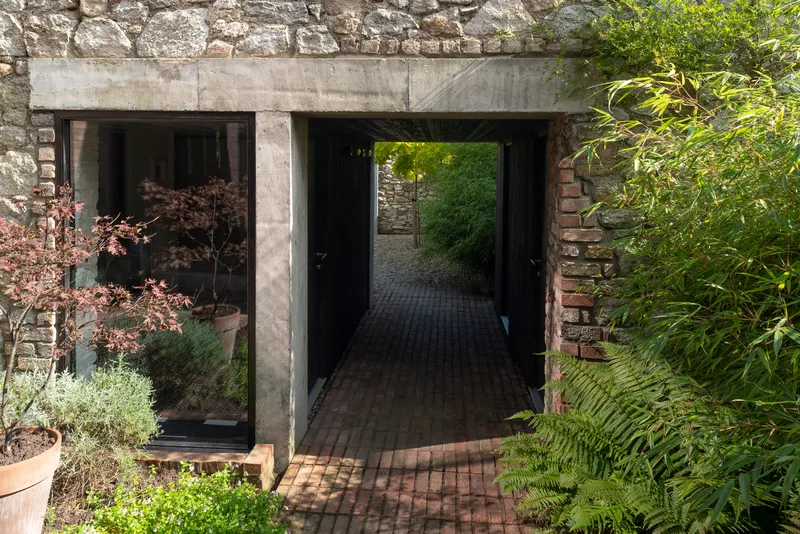
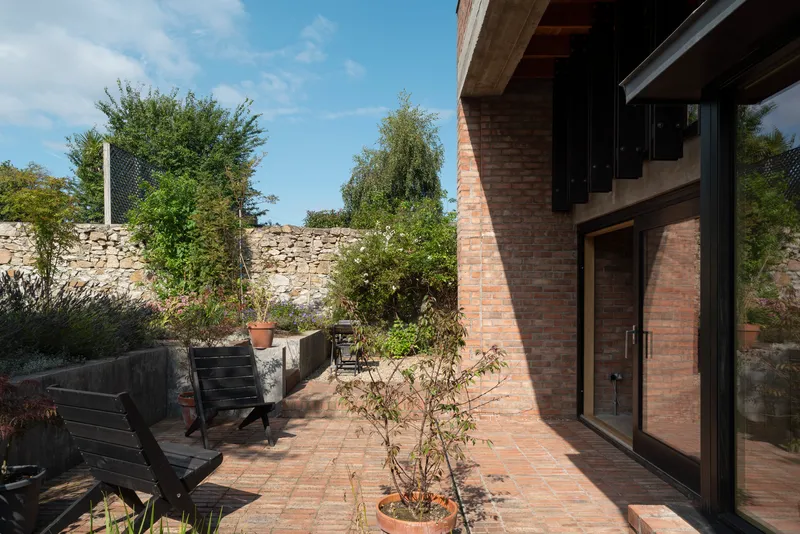

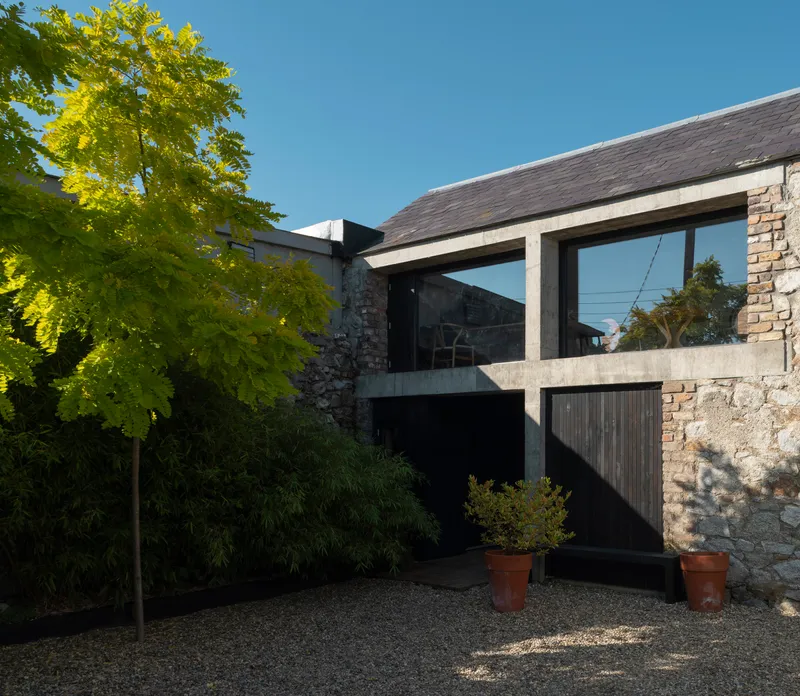
The irregular shape of the site could have been a liability. Culligan turns it into a virtue by placing an external courtyard between the existing coach house and the new build, taking advantage of the angled boundaries to create a sheltered outdoor room. Golden Robinia trees in pots punctuate the brick paving, and a concrete portal frames the passage beneath the coach house arch. The courtyard does double duty: it gives the new house breathing room and establishes a visual relationship with the older structure that feels earned rather than forced.
The strategy of front, middle, and rear garden spaces means that no room in the house is far from planted ground. Ferns, lavender, and shrubs are not decorative afterthoughts but spatial tools, softening hard edges and filtering light before it reaches interior walls.
Red Brick Inside and Out

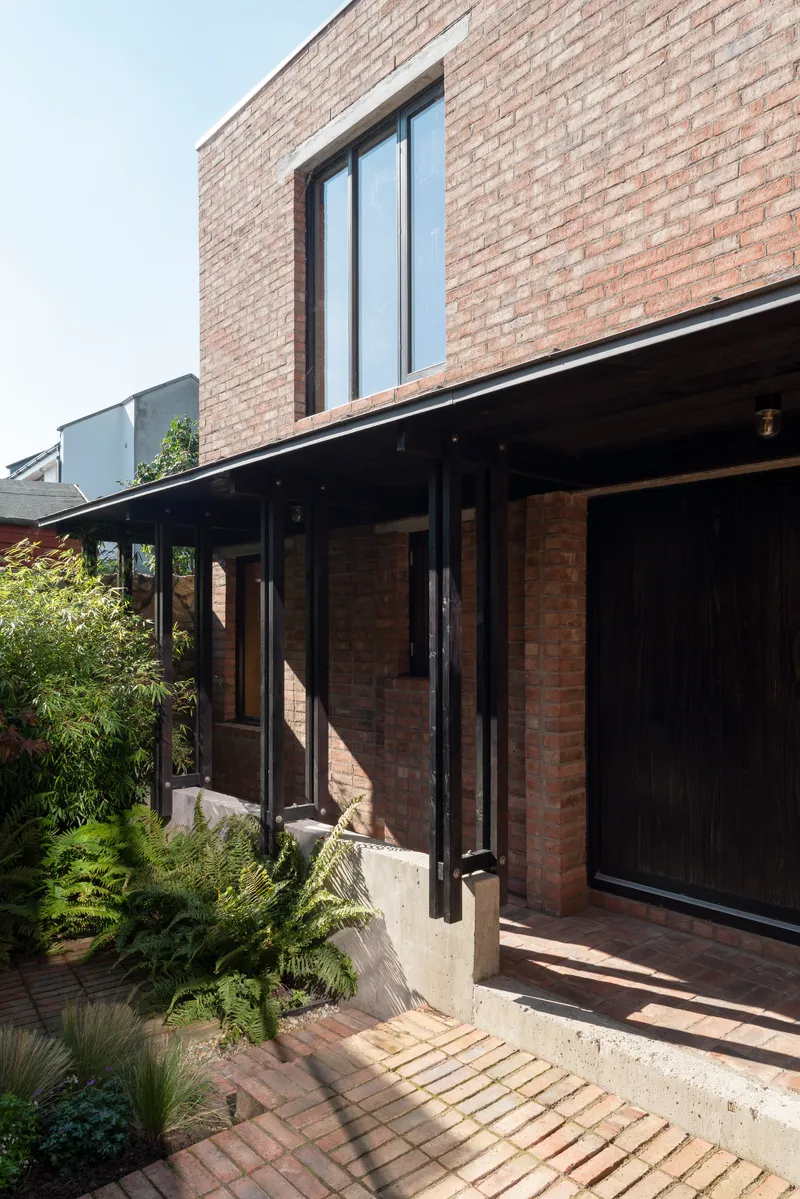

The defining material here is red brick, chosen to match the brick surrounds of the coach house windows. Culligan uses it with a discipline that borders on monastic: the same brick runs inside and outside, wall to floor, room to corridor. It is a decision that gives the house a cohesive identity without making it monotonous, because the architects introduce enough variation in surface, shadow, and companion materials to keep things visually alive.
Concrete bands, black-framed glazing, and cantilevered roof planes punctuate the brickwork with a sharpness that prevents any hint of nostalgia. The brick is not playing at tradition. It is a contemporary building that happens to share a material language with its 19th-century neighbour, and the difference in attitude is palpable.
The Double-Height Living Room


At 31 square metres with ceiling heights reaching four metres and 3.8 metre tall windows, the living room is the spatial centrepiece of the house. Exposed timber beams span overhead, and clerestory windows wash the upper brick walls with light that shifts throughout the day. Below, a brick fireplace with built-in bookshelves anchors the room with the kind of low-key domesticity that all the volumetric ambition could easily have lost.
The scale is generous without being theatrical. The room succeeds because it is proportioned to feel tall, not cavernous, and because the warmth of the materials, timber above, brick on every side, polished concrete underfoot, keeps it grounded.
Thresholds, Corridors, and Changes in Level

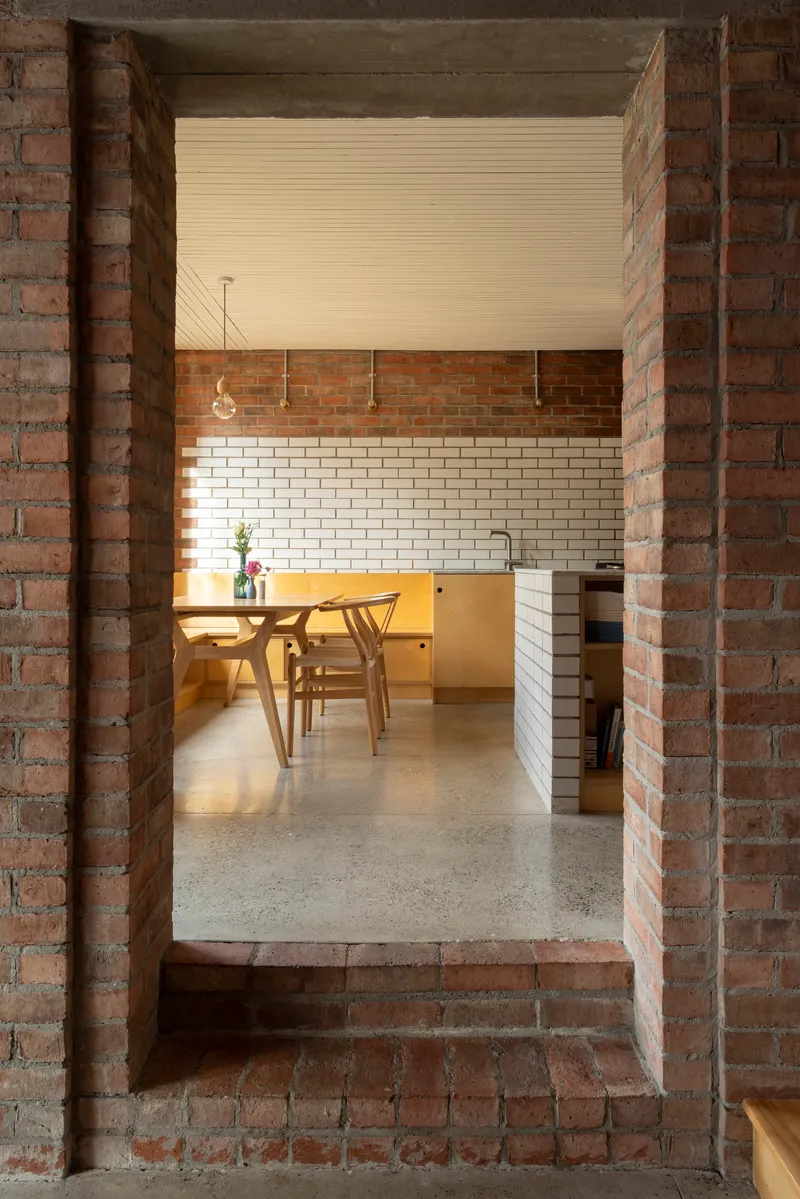

One of the most distinctive qualities of this house is the way it handles transition. Corridors are not neutral connectors but atmospherically charged spaces in their own right: dark timber ceilings compress overhead, brick walls tighten, and glazed doors at the end pull in views of garden or stone. The kitchen sits 300 millimetres above the living room and hall, reached by two steps that mark the shift from the communal scale of the main room to the compact intensity of a 21 square metre workspace.
These changes in level run through the entire house, inside and outside. They register the gentle topography of the site and give each space a distinct sense of position. You always know where you are in this house, and you always know what is adjacent.
Timber, Concrete, and Craft


Alongside brick, the material palette is deliberately restrained: wood, concrete, steel. The glazed corridor that links volumes uses a steel frame to throw sharp geometric shadows across brick walls and paving, while the cantilevered upper floor, with exposed steel beams and a concrete soffit, reads as a muscular structural fact rather than an aesthetic gesture. Where the new house meets the existing stone boundary wall, concrete, black timber cladding, and weathered granite layer together in a kind of geological cross-section.
The timber work deserves particular attention. Rhythmical vertical timber fins along the clerestory glazing cast dramatic shadows across internal walls, turning sunlight into a kinetic element. The project was highly commended at the Wood Awards Ireland 2020, a recognition that speaks to the quality of detailing throughout.
Upper Rooms and Plywood Joinery


Upstairs, the character shifts. Wainscoting and maple floors replace polished concrete, and plywood joinery takes over from brick. A full wall of open shelving and storage sits beneath exposed rafters and a mezzanine level, turning what could be leftover attic space into something purposeful. A window seat framed by plywood panels and steel columns offers the kind of quiet domestic pleasure that no amount of architectural heroics can replicate.
The upper rooms feel more intimate and lighter in material terms, which creates a welcome contrast with the earthbound solidity of the ground floor. It is a house that changes character as you move through it vertically, not just horizontally.
Interior Passages and Garden Views


Throughout the house, planted beds and garden views are never far from sight. Potted monstera plants on a concrete ledge, ferns pressing against glass doors, a view of the slate-roofed extension through potted trees: the boundary between inside and outside is deliberately thin. The south-west facing garden, accessed through a sliding door, extends the living space in warm weather, and the careful positioning of windows and glazed doors means the house tracks the changing light and seasons.
The climate strategy is passive and sensible. Polished concrete floors store heat from underfloor systems, the A2 BER rating confirms serious energy performance, and the planted courtyards provide natural cooling and air movement. None of this is foregrounded in the design, which is as it should be.
Plans and Drawings
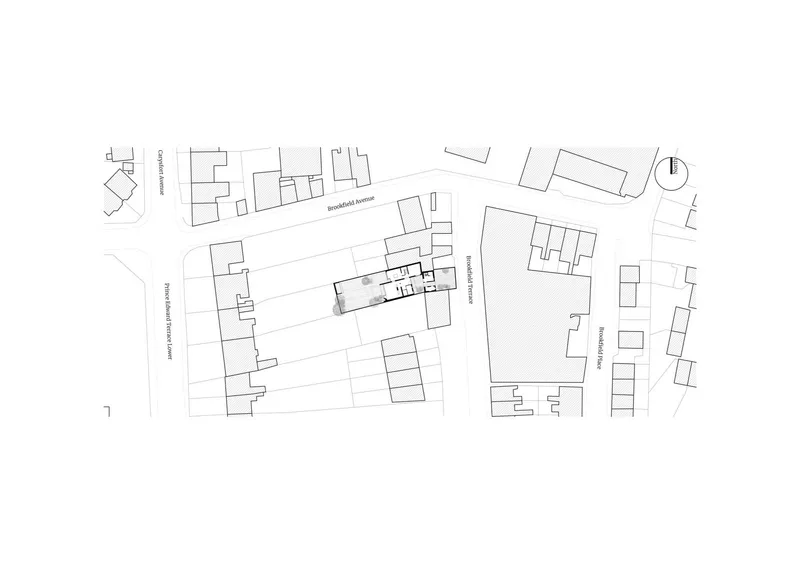
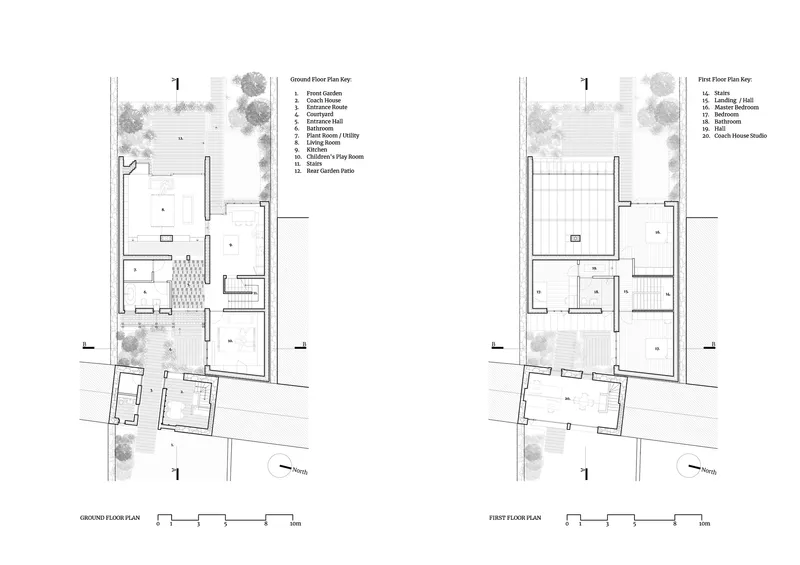
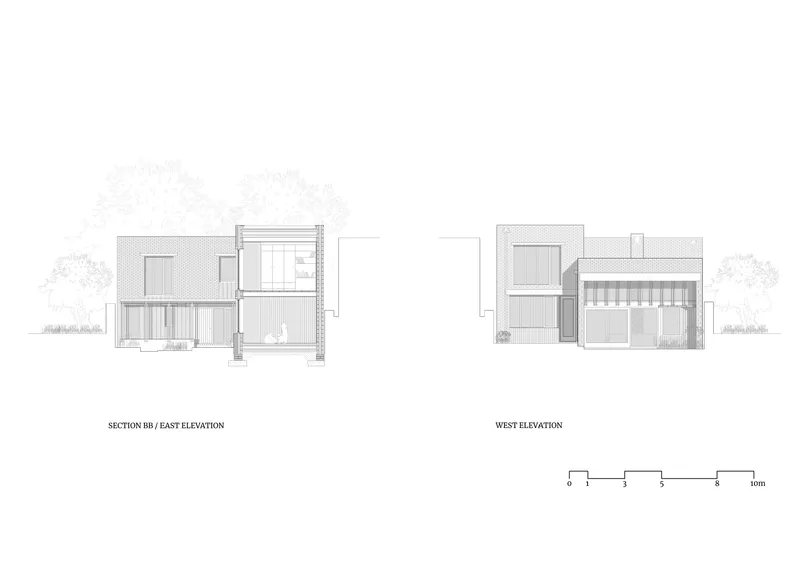


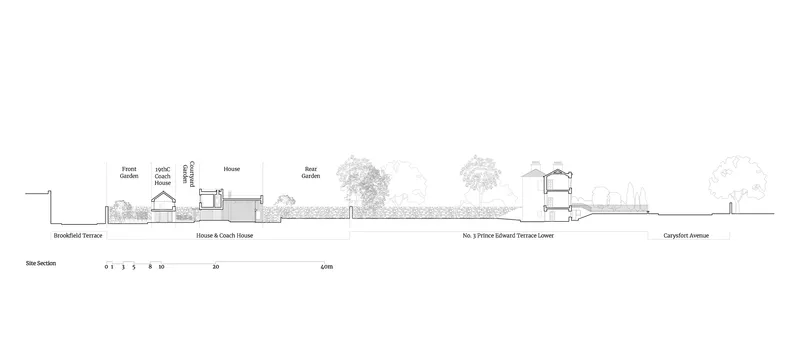
The site plan reveals the project's urban logic: the new house and coach house occupy a tight pocket within a dense Blackrock block, threaded between mature trees and neighbouring walls. The ground and first floor plans show how Culligan organises the programme around a series of garden and courtyard spaces, each one earning its place in the sequence. Sections and elevations document the level changes, the double-height volume, and the way the new build sits below the roofline of the coach house, deferring to the existing structure.
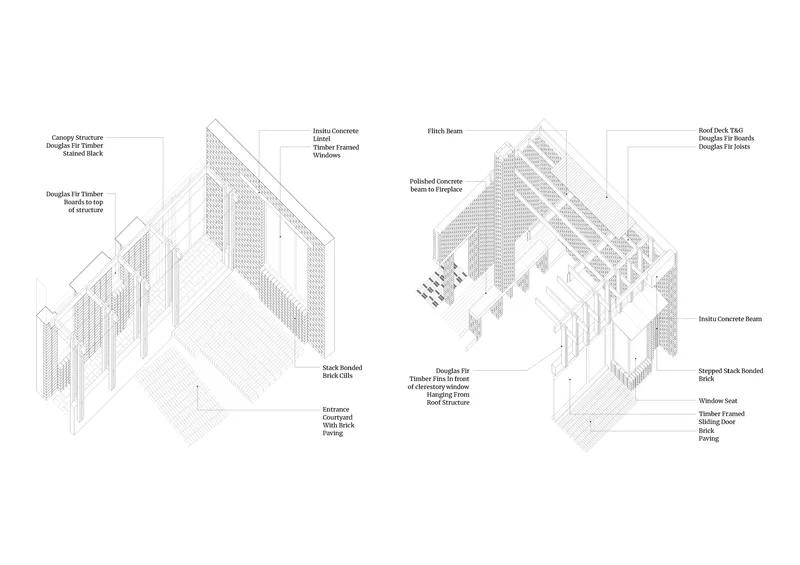
The exploded axonometric is especially revealing. It lays bare a layered construction assembly: concrete beams, timber framing, and brick skin working together in a system that is rational and honest. The east and west elevations of the coach house record its granite texture and window proportions, confirming the visual cues that the new brick was designed to answer.
Why This Project Matters
Dublin's inner suburbs are full of underused plots behind listed houses, and the temptation is usually to either over-develop them or leave them alone. Culligan Architects demonstrates a third way: build with precision, respect the existing structures, and let the garden do the mediating. The project is a textbook study in contextual design that avoids pastiche, using a shared material to link old and new while keeping the architectural language firmly contemporary.
At a time when urban infill housing in Ireland is often dominated by bland developer typologies, this house makes a case for craft, specificity, and spatial generosity. The RIAI award was deserved. The project proves that a backland site, an irregular boundary, and a heritage context are not constraints to survive but opportunities to design with.
A House, Coach House & Garden by Culligan Architects. Located in Blackrock, Dublin, Ireland. 230 m². Completed in 2019. Photography by Fionn McCann and Alice Clancy.
About the Studio
Share Your Own Work on uni.xyz
If projects like this are the kind of work you want to make, uni.xyz is a place to publish your own, find collaborators, and enter design competitions.


Popular Articles
Popular articles from the community


Opera on the Sea: Driftwood Logic Shapes a Timber Opera House on Estonia's Coast
Trevor Orgill's opera house translates the entangled drift of floating timber into a civic building where wood, water, and music converge.

The Amber Palace Opera: A Geological Fiction Surfaces on Tallinn's Baltic Waterfront
Pierre Brillard reimagines a Baltic legend as a public landscape, opera house, and waterfront promenade rooted in Tallinn's coastal identity.


graciastudio Turns a Viewless Tijuana Lot Inward Around a Courtyard of Concrete, Timber and Trees
In Tijuana, Jorge Gracia's GA2 House stacks a timber-clad private floor over exposed concrete and replaces a missing view with a planted interior patio.

Aquadapt: An Underwater Habitat That Rewrites Its Rooms by the Hour
Curved modules ring the seabed while one shell shifts from breakfast room to cinema, farm and football pitch as residents' needs change.

Similar Reads
You might also enjoy these articles

LAVA Architecten Gives Vocational Education a Sawtooth-Roofed Face on a Mechelen School Campus
In Mechelen, Belgium, a 2,053 m² STEM school on a 6×6 m grid turns workshops and classrooms into rooms that can be rearranged as teaching changes.

KEMA Studio Turns a Derelict Marvila Attic into a 60 m² Lighthouse Apartment Above Lisbon
In Lisbon's Marvila district, a rebuilt roof, four skylights and two plywood volumes turn an unlivable attic into a bright home facing the Tagus.

Pixel Gardens: One Repeated Module Stacked Into a Terraced Social Housing Tower for Famagusta
Salem Bader's shortlisted housing tower builds a vertical neighbourhood from one repeated module, offsetting units to carve terraces, light and air.

Bao Huynh Watercolor Atelier: A Serene Art Retreat in Hội An
Bao Huynh Watercolor Atelier in Hội An blends multifunctional art spaces, sustainable design, local materials, and family-friendly living in a serene environment.


Comments (0)
Please login or sign up to add comments
No comments yet. Be the first to comment!