

CYBRARIUM; explore. share. connect.
3 important questions to reevaluate the library typology after the 4th Industrial Revolution.

In a library design that promotes a digital flexibility, we asked 3 questions that searches for not just a new typology but also a new definition for the whole process of architectural design. These questions minds about the function, life and social aspects of a library to create a spatial flexibility and a significant social interconnectedness.
1) Why we should create an IoT (Internet of Things) system to create a digital layer in a building ?
Upon examining the landscape of various sectors—construction, technology, and indeed a vast majority of industries integral to metropolitan life—we witness a widespread integration of Internet of Things (IoT) systems. The emergence of robotic settlements, digital products, and automation systems have offered innovative solutions to longstanding issues. These strides extend beyond mere climate control and energy conservation, prompting us to ponder the rationale behind incorporating IoT into the physical architecture of buildings.
Ultimately, our deliberations led us to a realization: the necessity to foster a sense of community among digitally savvy generations. In an era where social interaction is increasingly mediated through digital platforms, architects must embrace these shifting paradigms. The design of physical spaces needs to account for the pervasive use of digital devices like smartphones. Inspired by this understanding, we developed an app integrated with a robotic system, capable of dynamically organizing space, locating books, tracking events, and facilitating social interaction within the building. This represents a new stride in architectural design, where technology enables buildings to better respond to their inhabitants' needs.
2) How we can create a flexible spaces with the robotic devices ?
In essence, the purpose of creating flexible spaces with robotic devices lies in the transformative potential of architecture. It is a concept of building design where spaces adapt to users' needs, rather than requiring users to adapt to the spaces. The constant, dynamic change in how humans use and perceive spaces necessitates a corresponding adaptability in architectural design. Robotic devices become the enablers in this scenario.
Implementing robotic devices for space transformation is like breathing a digital life into the building. They can be designed to move walls, furniture, or even entire sections of the building, effectively reshaping the layout according to specific requirements of the moment - be it a quiet reading space, an interactive workshop zone, or a communal gathering area. This interaction is facilitated by an app, which communicates with the IoT infrastructure of the library to control these robotic elements. The digital layer is thus not merely a feature, but the heartbeat of the building, enabling it to adapt, transform, and evolve, creating a symbiotic relationship between the architecture and its inhabitants. By this mechanism, we can cultivate an environment that invites the communal spirit of a new digital age while retaining the essential purpose of a library.
3) How we can make the libraries more social and intriguing spaces ?
While libraries traditionally lean towards being more secluded spaces, we envision a future where they evolve into multi-functional environments encompassing educational spaces, event hubs, and workplaces. To achieve this, we designed a versatile open floor plan, with furniture that can effortlessly transform to suit varying layouts. We also introduced a smartphone app to facilitate access to books, provide event updates, and encourage social interactions among users. In essence, we are redefining the library typology, transitioning it from a solitary sanctuary to a vibrant, connected, and adaptable space.

Popular Articles
Popular articles from the community


Opera on the Sea: Driftwood Logic Shapes a Timber Opera House on Estonia's Coast
Trevor Orgill's opera house translates the entangled drift of floating timber into a civic building where wood, water, and music converge.

Opera by the Sea Estonia: Three Shells Dissolving Architecture into Tallinn's Coastline
A winning opera house proposal replaces monumental form with interconnected shells that blur the boundary between building, park and Baltic Sea.

The Amber Palace Opera: A Geological Fiction Surfaces on Tallinn's Baltic Waterfront
Pierre Brillard reimagines a Baltic legend as a public landscape, opera house, and waterfront promenade rooted in Tallinn's coastal identity.

Singing Woman: Contemporary Architecture Inspired by Estonia’s Voice and the Sea
Singing Woman turns Estonia’s song culture into flowing opera house architecture, blending public life, landscape, sea, and national memory.

Similar Reads
You might also enjoy these articles

Day and Night Park: A Time-Based Urban Newsstand in Beijing
A temporary urban newsstand in Beijing blending travel, light, and reading through poetic colors, compact form, and community-focused design.

Modernist Patio Renovation in El Masnou, Barcelona by Oliver Segura Arquitectura + Cebrià Arquitectura
Modernist patio renovation blending tradition and innovation with a movable pool, leveled floors, and Catalan materials in El Masnou.
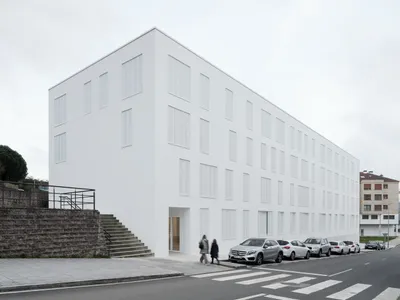
Alto Residencial Coop: Cooperative Housing Development in Santiago de Compostela by Carbajo Barrios Arquitectos
A linear cooperative housing complex blending white volumes and perforated metal façades, enhancing community living, natural light, privacy, and urban integration.
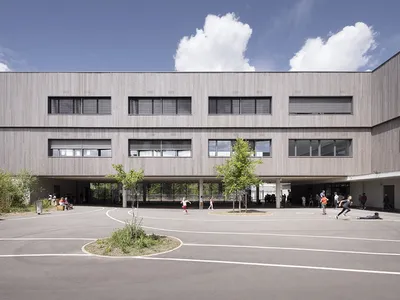
Vil Genis School by BPA ARCHITECTURE – Massy, France
Vil Genis School in Massy, France, features sustainable design, south-facing classrooms, community integration, accessible spaces, and modern educational architecture.

Explore Architecture Competitions
Discover active competitions in this discipline


Challenge to reimagine the Iron Throne

Photograph architecture without architects

Illustrate the lost glory of Angkor Wat - Render Challenge

Design challenge to reuse E-waste
Comments (0)
Please login or sign up to add comments
No comments yet. Be the first to comment!