

Daaji’s Home – A Masterpiece of Biophilic and Biomorphic Architecture by The Grid Architects
Daaji’s Home blends biophilic design, biomorphic forms, and sustainable materials, creating a serene, nature-integrated sanctuary in Hyderabad.


More Than Just a House
Daaji’s Home is not merely a residence; it is a living embodiment of biophilic design and biomorphic architecture, where nature doesn’t just inspire the structure—it defines it. Designed for Daaji, the global spiritual leader of the Sahaj Marg (Heartfulness) meditation path, this home is a tranquil sanctuary that celebrates togetherness, simplicity, and harmony with nature.
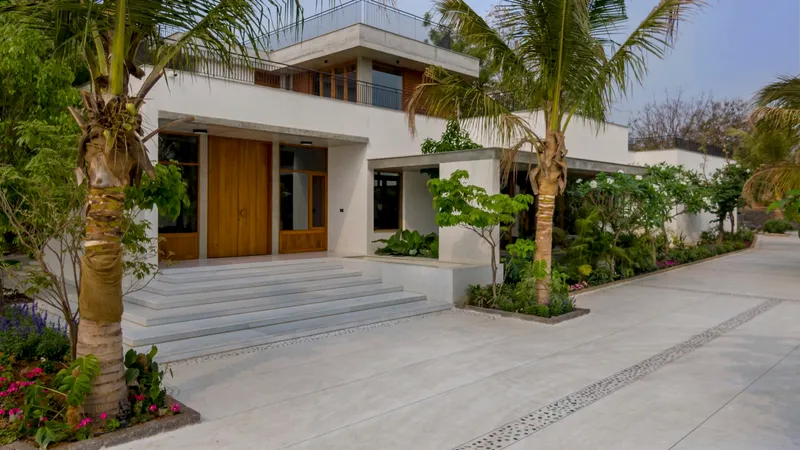

The architects embraced Daaji’s vision of a home as a place where ‘you’ and ‘I’ dissolve into ‘us,’ creating an environment that fosters connection, peace, and love. Only one-fourth of the plot is built upon; the remaining three-fourths is preserved for natural landscaping, trees, and rock formations that predate human civilization.
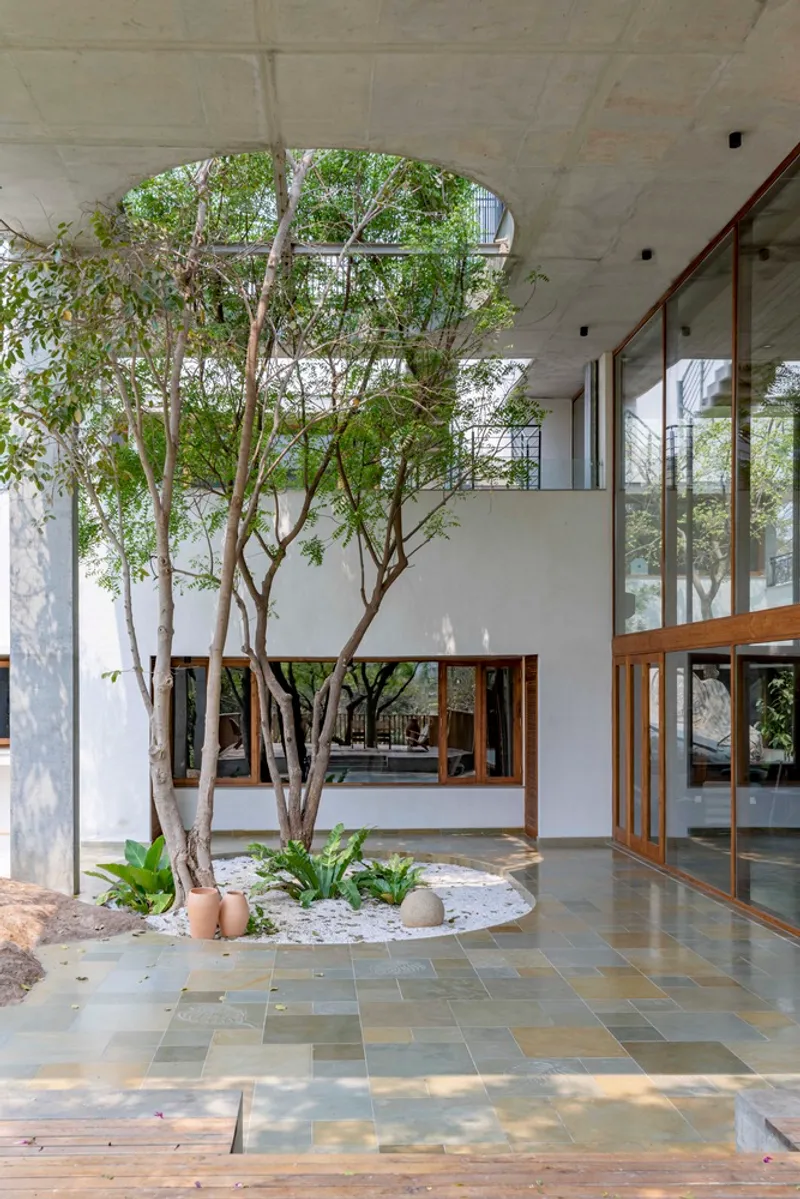
Site Context – Preserving the Ancient Landscape
Nestled within the Heartfulness Centre at Kanha Shantivanam, the plot was initially strewn with massive prehistoric rocks and dotted with mature native trees. Recognizing their historical and ecological value, Daaji insisted on retaining them in place. This directive shaped every design decision—resulting in a home that flows around the rocks and trees rather than displacing them.
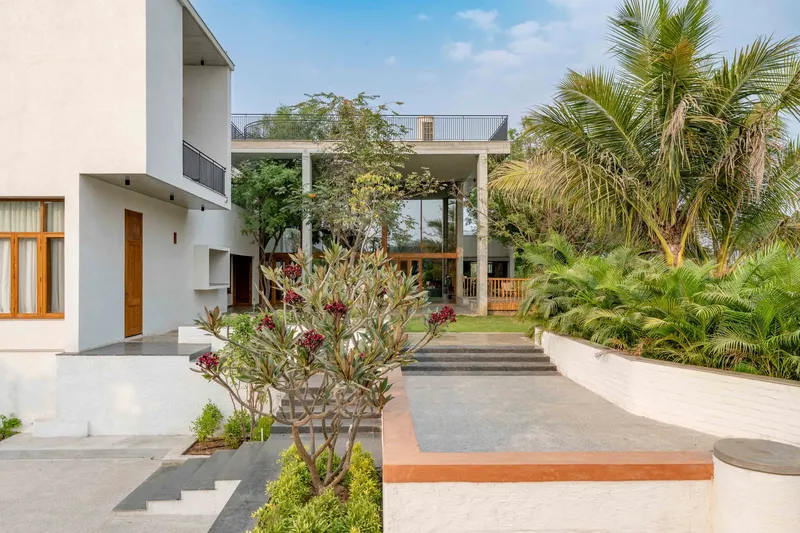
The surrounding environment includes rainwater-harvesting ponds, lush communal gardens, and the world’s largest meditation hall, making the site a unique blend of natural serenity and spiritual energy.
Design Philosophy – Flowing Like Water


The Grid Architects took inspiration from the fluidity of water, creating a low-lying, horizontal plan that organically wraps around existing elements. The structure embraces a free-flowing, non-linear footprint, allowing nature to dominate the visual experience while the architecture plays a humble supporting role.

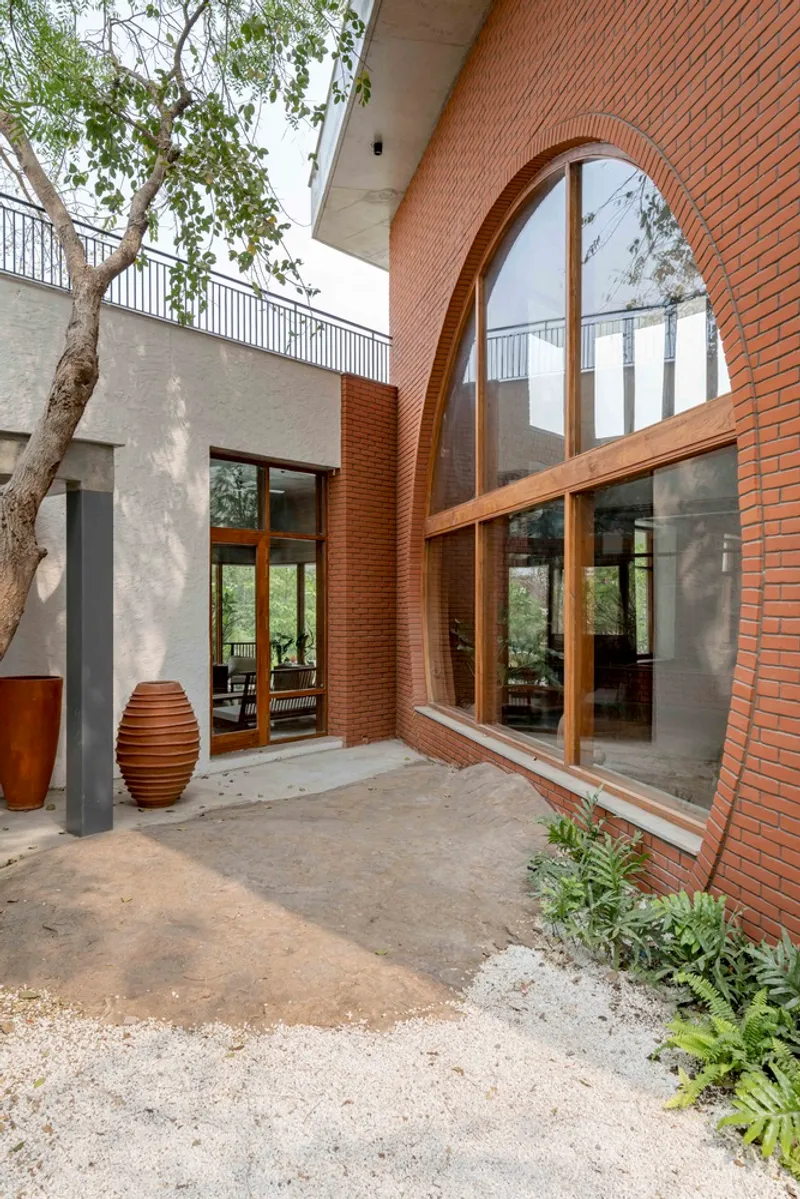
The form responds directly to the site’s topography—skewed walls accommodate boulders, cut-out verandah walls allow trees to grow through them, and open courtyards create a seamless indoor-outdoor connection.


Materiality – Earth as the Primary Palette
Daaji’s Home showcases a commitment to sustainable, locally sourced materials:
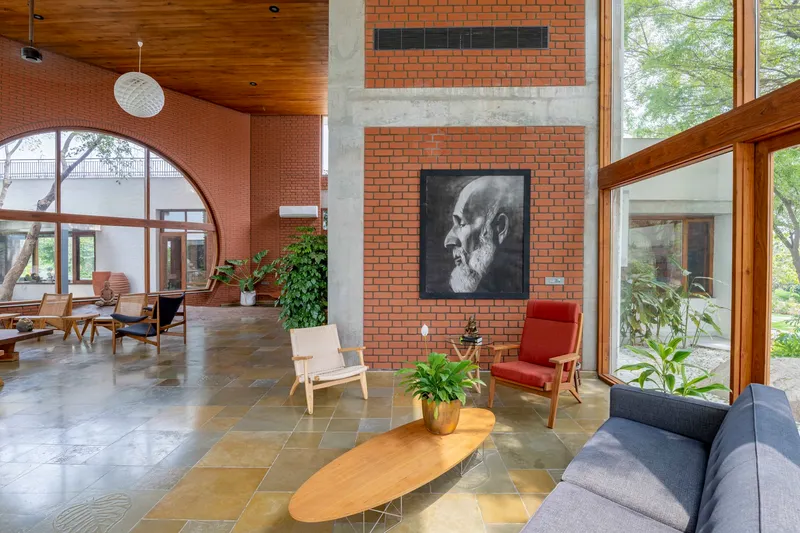
- Red bricks for masonry, made on-site
- Kota stone flooring for its cooling properties
- Lime plaster for breathable, timeless walls
- Charcoal as a natural soil enhancer for the landscape

These earthy elements are paired with natural ventilation, abundant daylight, and fully glazed openable windows that invite breezes, reduce energy consumption, and enhance human well-being.
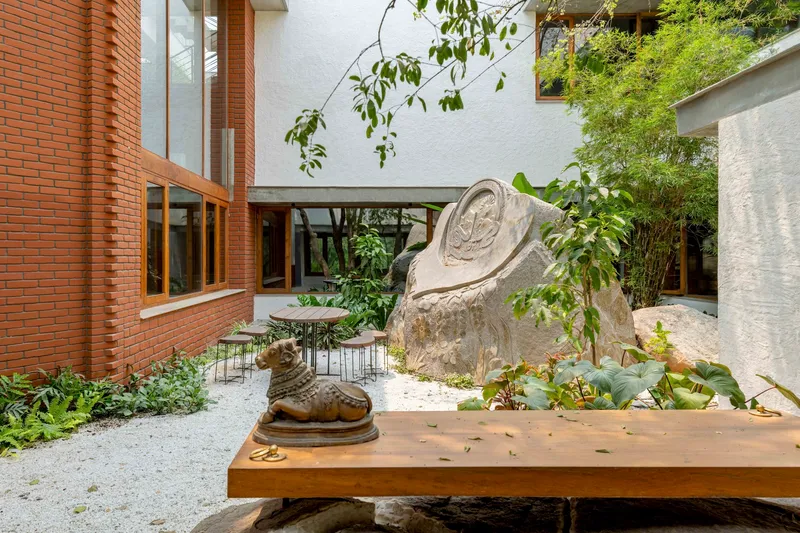
Interior Layout – Privacy Meets Openness
The home is organized to respect both public gatherings and private retreats:
- North Entrance opens to a vestibule dividing into two passages—one leading to the public living areas, the other to Daaji’s private quarters.
- Ground Floor: Large living room, dining area, and kitchen (with separate wet & dry zones for large-scale cooking).
- Upper Floor: Private bedrooms and guest suites.
- Living Room: Oversized to host frequent visitors, connected to an open platform overlooking gardens.
- Dining Area: Bathed in north light, with views of the central courtyard.

Integration with Nature – Biophilia in Action
Every design element emphasizes coexistence with the environment:
- A skewed living room wall incorporates a monolithic rock partly indoors and partly in a courtyard.
- Courtyards and green pockets are positioned to be visible from nearly every space.
- Rainwater-harvesting ponds irrigate both the private gardens and communal landscapes.
- Building height is deliberately kept below the treetops to avoid architectural dominance.
Sustainability Features
- Locally sourced earth-based materials reduce carbon footprint.
- Natural stone enhances energy efficiency.
- Mature trees act as natural sun-breakers.
- Rainwater harvesting ensures sustainable irrigation.
- Charcoal-enriched soil promotes biodiversity.
- Indoor-outdoor transitions improve mental health and air quality.


All the photographs are works of Vinay Panjwani




Popular Articles
Popular articles from the community


The Ocean Hive: Sustainable Architecture for a Self-Sufficient Civilization at Sea
The Ocean Hive imagines sustainable architecture at sea, where modular habitats, algae, wave power and ocean waste sustain a growing colony.

Hill & Cross Opera: Sculptural Opera House Architecture Shaped by Tallinn’s Landscape and Identity
Hill & Cross Opera reimagines opera house architecture in Tallinn through its sculptural hill, civic plaza, glass wave and a luminous cross.
AL-JANNAH: Sustainable Architecture and Permaculture for Afghan Widows
AL-JANNAH uses sustainable architecture and permaculture to create resilient oasis of housing, learning, work and renewal for Afghan widows.
EW PARK: Sustainable Architecture Reimagines the Future of Urban Parking
EW PARK reimagines city parking as a modular wooden tower combining automation, solar energy, electric mobility, and adaptable urban design.


Similar Reads
You might also enjoy these articles


Hodi-Mandai Geram
Project Function: Preservation and revitalization of the Intangible heritage and socio-spatial identity of the Hodi by Housing, Cultural Memory Center, Sacred Grove, landscape, local tourism economy


Olio Towers: A Mid-Rise for Performers That Fuses Housing, Rehearsal, and Stage
Located blocks from Houston's Theater District, this modular tower stacks living units around a central performance atrium.

Oasis: Modular Green Housing Carved into Dhaka's Urban Fabric
A shortlisted Plugin Housing entry reclaims unauthorized settlements in Dhaka with stepped concrete volumes, green roofs, and ventilation-driven design.

Black Hole: A Floating Megastructure for the Post-Physical Era
Emiliano Mazzarotto envisions a spherical, self-scaling arena where e-sports, digital hotels, and holographic stadiums replace traditional public space.


Explore Architecture Competitions
Discover active competitions in this discipline



Challenge to reimagine the Iron Throne


Photograph architecture without architects


Illustrate the lost glory of Angkor Wat - Render Challenge


Design challenge to reuse E-waste
Comments (0)
Please login or sign up to add comments
No comments yet. Be the first to comment!