

Dapur Naga Communal Kitchen and Dining Space by Bamboo U: A Sculptural Bamboo Landmark in Bali’s Tropical Landscape
A flowing bamboo pavilion in Bali featuring a sculptural roof, natural ventilation, handcrafted details, and communal dining inspired by movement and landscape.


A Living Pavilion Inspired by Movement and Nature
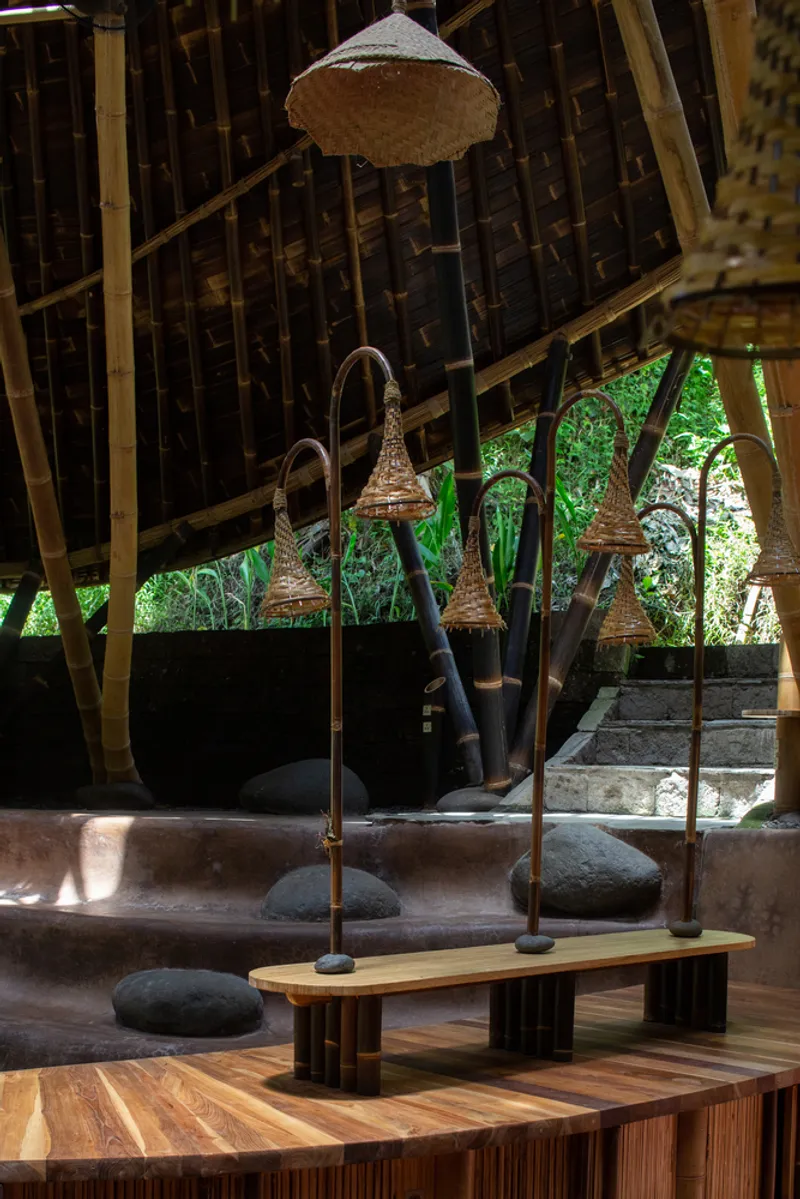
Dapur Naga Communal Kitchen and Dining Space is a groundbreaking architectural experiment by Bamboo U, located within the lush, humid landscapes of Bali. Designed by lead architects Orin Hardy, Jules De Laage, and Elora Hardy from IBUKU, the 220-square-meter pavilion redefines sustainable hospitality architecture through its expressive bamboo structure and deep sensitivity to the land. Completed in 2021, the project functions as a shared kitchen and dining environment capable of hosting more than 50 people, making it both a cultural gathering hub and a living classroom for bamboo innovation.
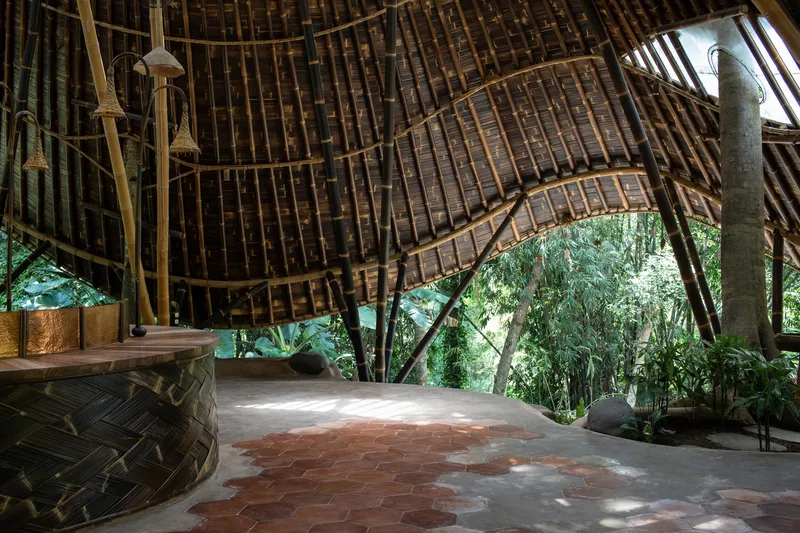
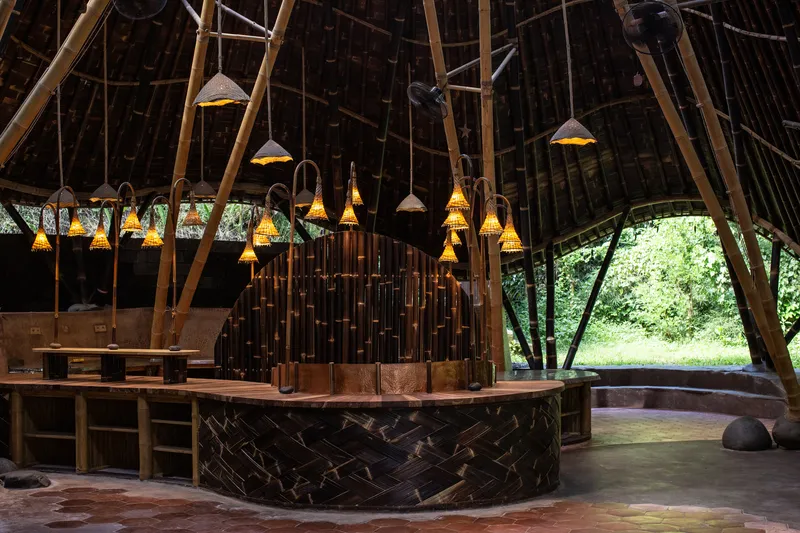
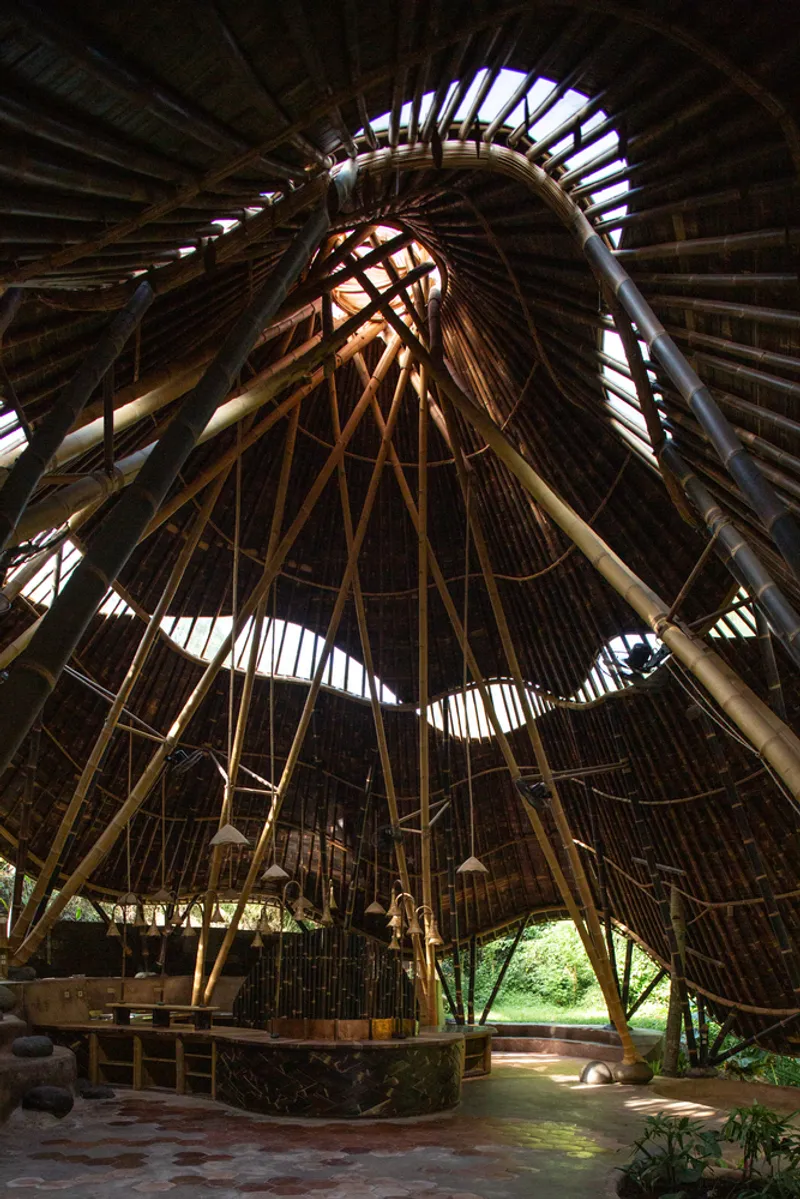
Drawing inspiration from the flowing motion of a whirling Sufi skirt, the pavilion’s architecture captures a sense of continual movement. This conceptual foundation guides the building’s sweeping anticlastic roof, designed to mimic the fluidity of dance while framing panoramic views of the surrounding rainforest. The form works both as a visual statement and a climate-responsive device, encouraging natural breezes to cool the interior and creating a sheltered, open-air space that feels connected to the landscape.
Topography-Responsive Architecture Rooted in Craft
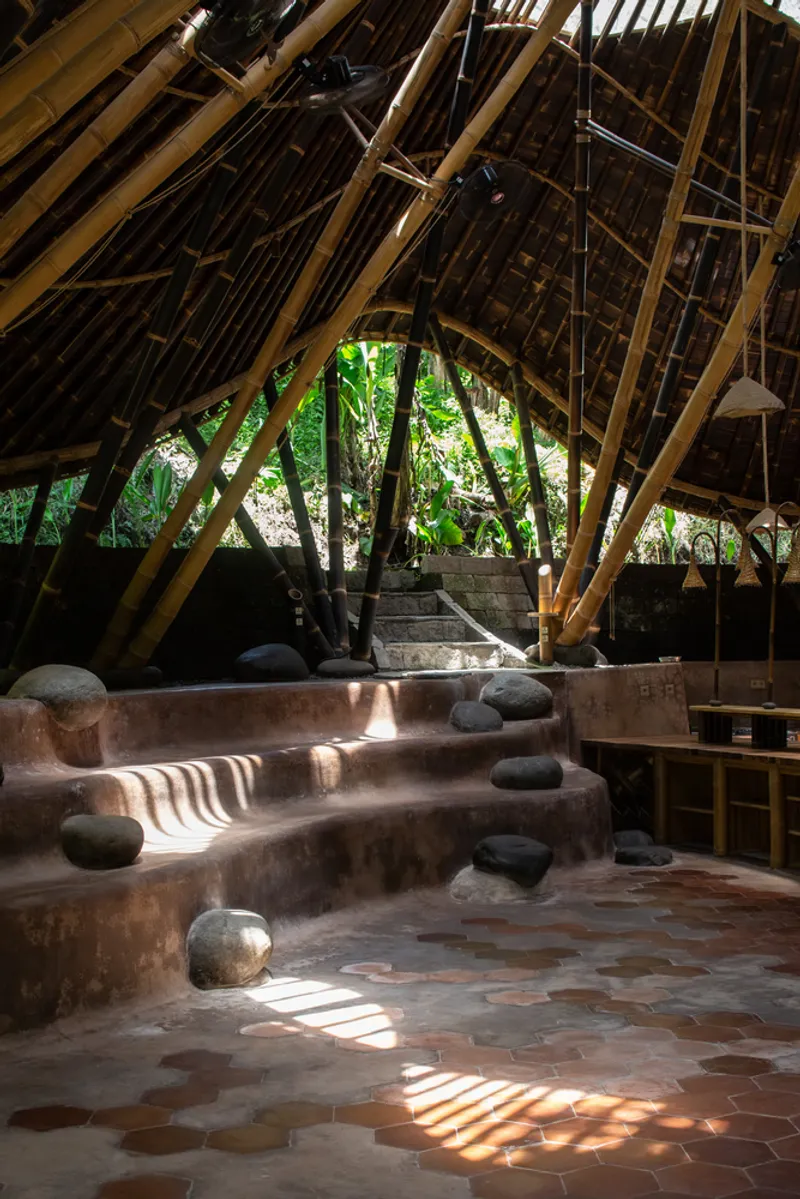
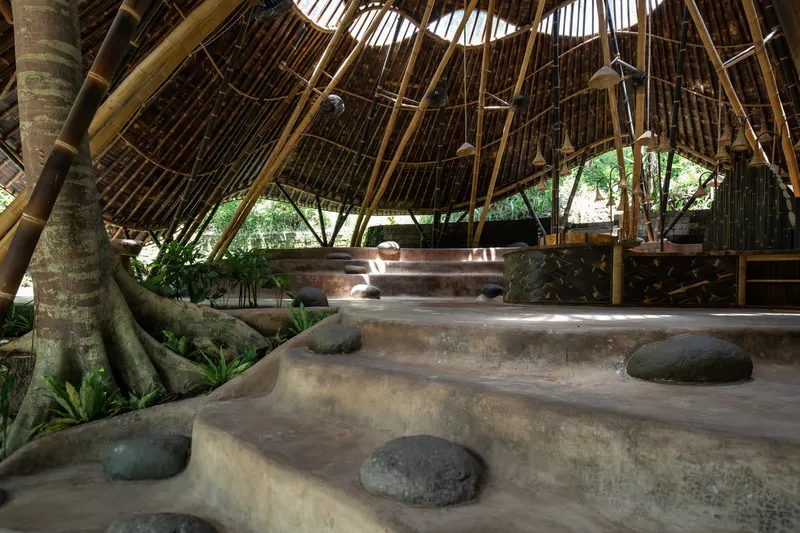
Set on a steep sloping site with three distinct level changes, the project demanded a design strategy that embraced the natural contours of the land rather than resisting them. Instead of flattening the terrain, the architects leveraged the site’s vertical transitions to position the central reciprocal tower—an elegant structure with a wider base and slim neck—so it bridges multiple levels. This anchoring element supports the pavilion’s dynamic form, adding structural coherence to the organic geometry.
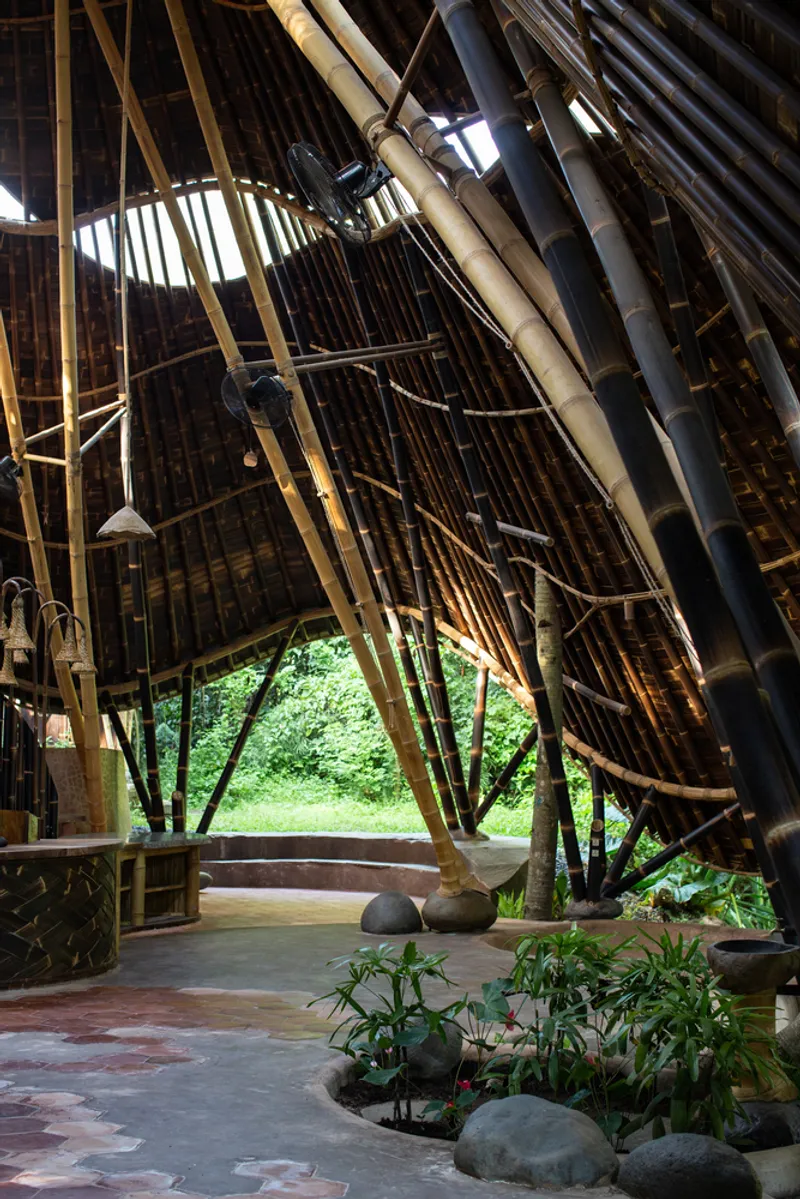
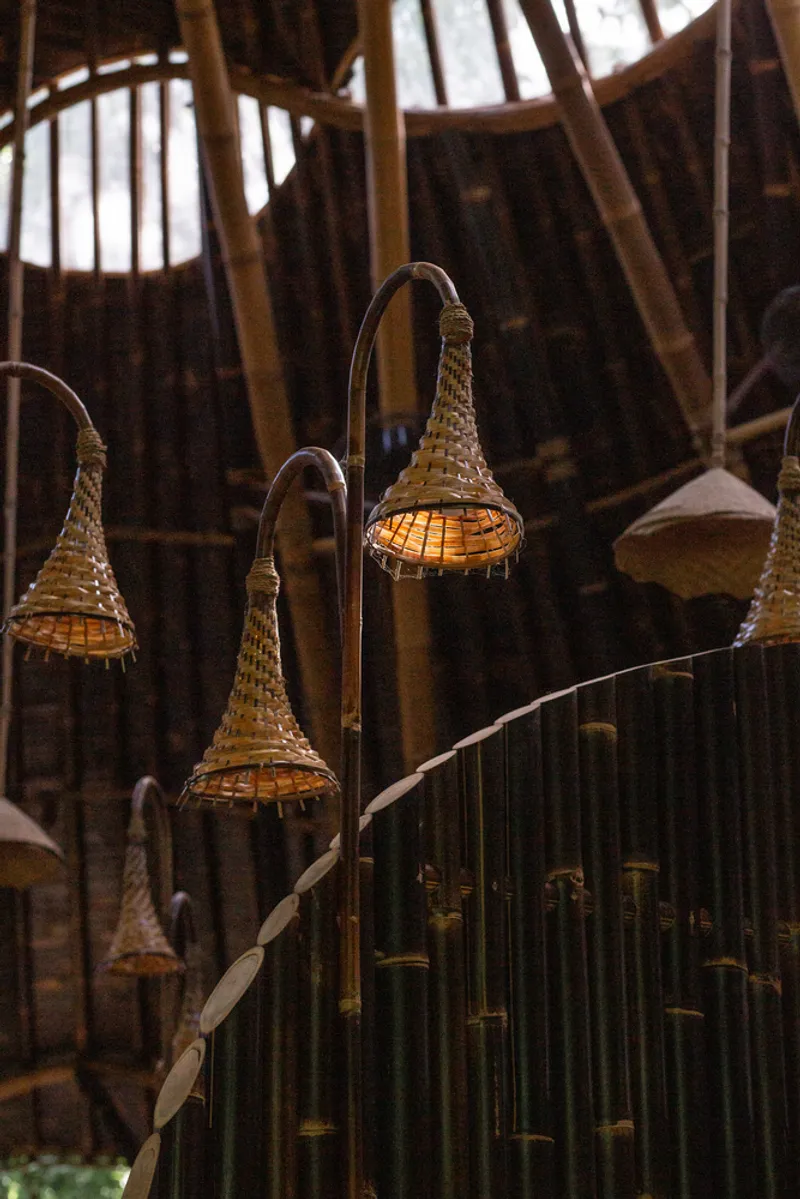
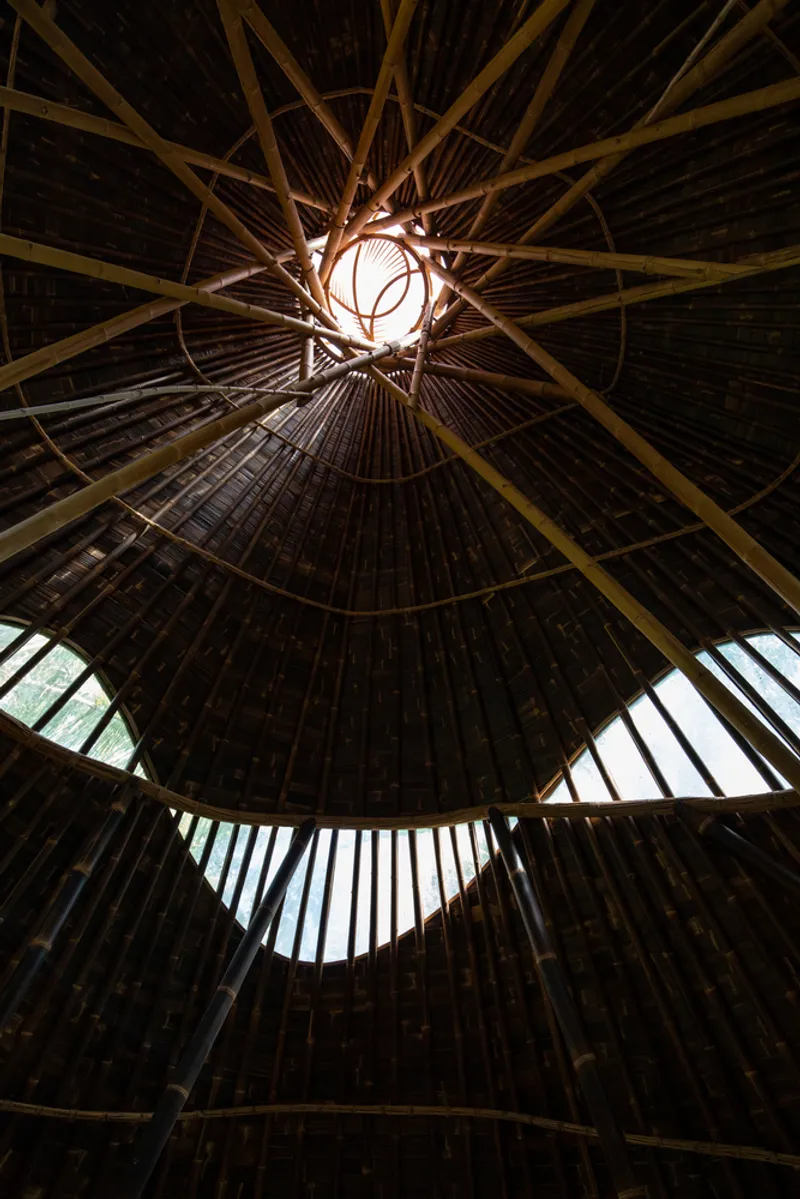
Radiating from this central tower are fan-shaped bamboo posts and lidi bundles that hold the roof’s dramatic curves. Each component was prototyped at a true 1:1 scale, ensuring material performance, stability, and construction feasibility. These prototypes also served as valuable teaching tools during Bamboo U’s workshops, where participants explored full-scale bamboo engineering and craftsmanship under the guidance of local experts.
Craft, Community, and Material Honesty
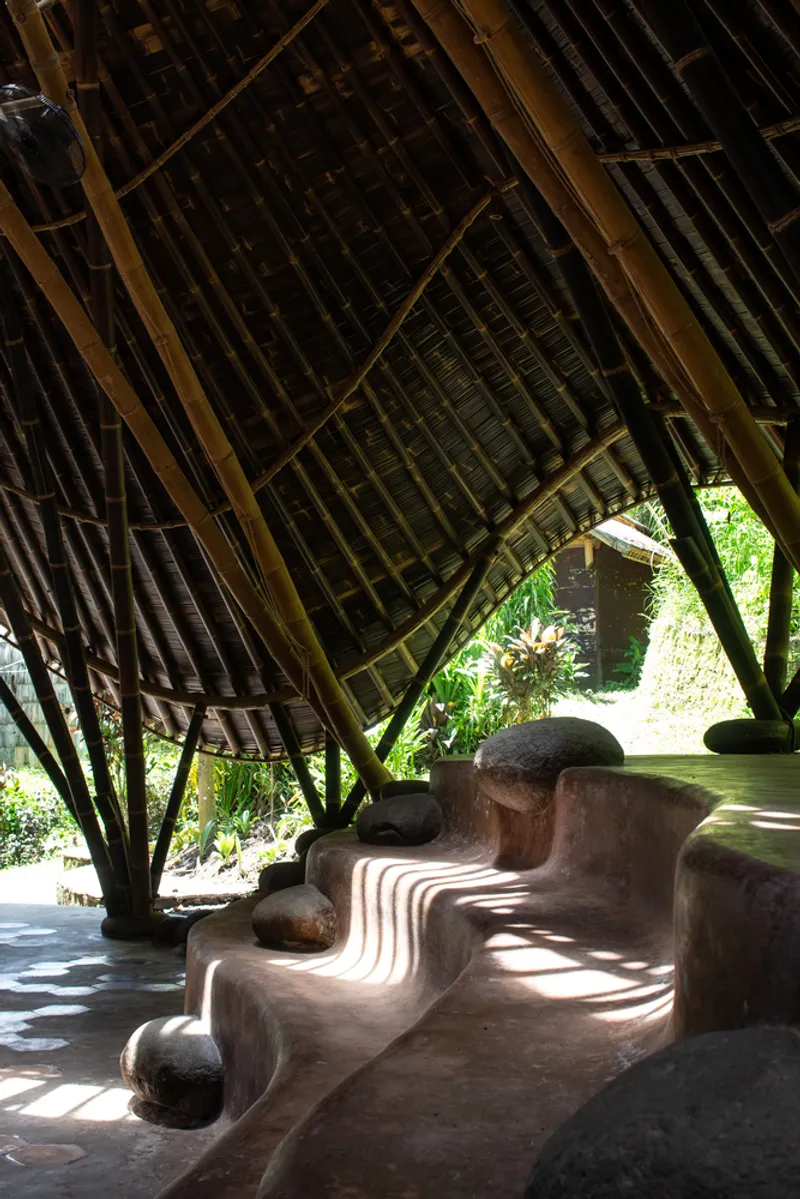
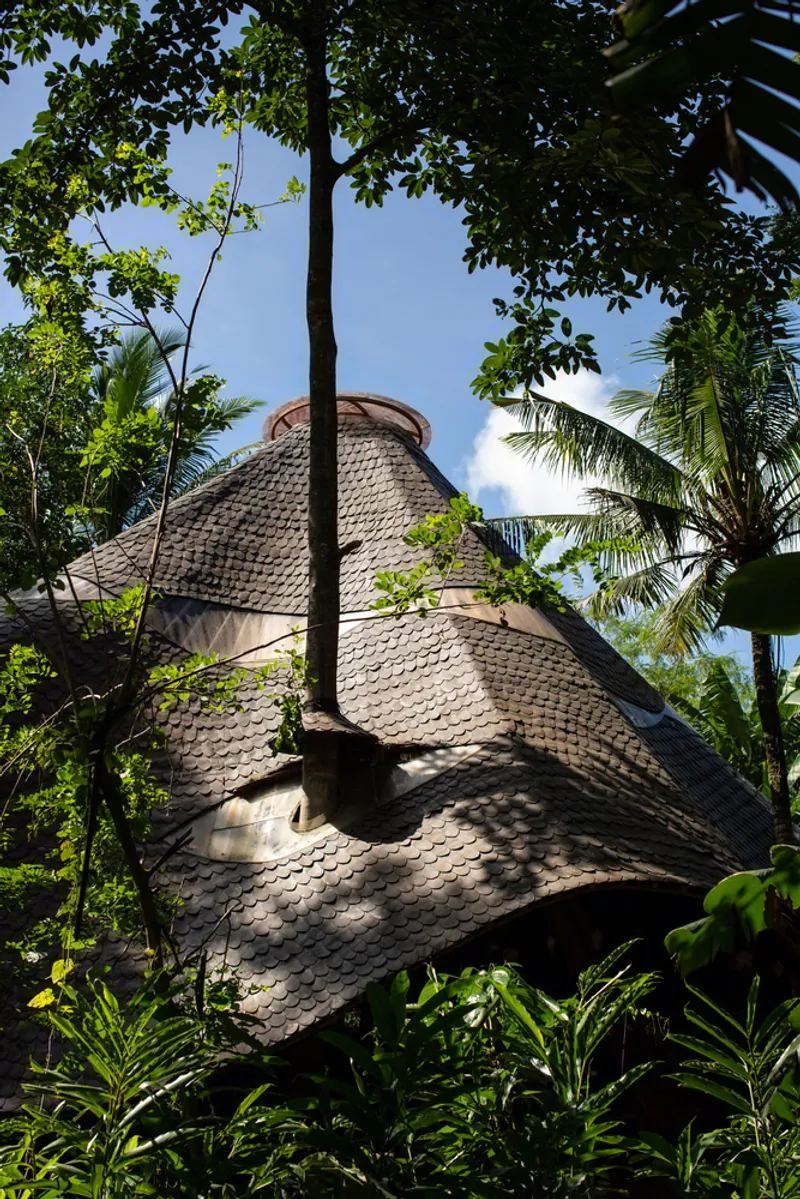
One of the defining qualities of Dapur Naga is its commitment to material authenticity and local craft traditions. The project preserves all existing trees on the site, integrating the architecture seamlessly into the dense tropical vegetation. Foundations made from river stones give the impression that the structure naturally rises from the earth, reinforcing its attachment to the landscape.
The roof, covered in handcrafted copper shingles made by nearby villagers, creates a shimmering skin that transforms with sunlight and humidity. Acrylic skylights puncture the roof in key areas, creating a play of natural illumination that changes throughout the day. These skylights frame the sky, cast gentle shadows, and contribute to the pavilion’s warm, welcoming atmosphere.
Across the building, a palette of lime, burnt clay, Jember tiles, cement tiles, and terracotta introduces tactile richness while maintaining environmental responsiveness. These materials age gracefully in Bali’s tropical climate, adding depth and visual continuity between the structure and its surroundings.
A Participatory Architecture Built Through Learning
Dapur Naga is not just a building; it is the result of an ongoing educational ecosystem. Throughout its design and construction, Bamboo U integrated participants from its bamboo design and building courses directly into the process. Attendees collaborated on shaping the roof curvature, assembling bamboo beams, and installing skylights, transforming the architecture into a collaborative, community-built project. This participatory approach reinforces the building’s purpose as a shared kitchen and dining venue where learning, making, and gathering coexist.
A New Model for Sustainable Bamboo Architecture
The finished pavilion stands as a testament to the potential of bamboo as a primary architectural material. Dapur Naga successfully merges innovation and tradition—celebrating local craftsmanship while testing new engineering methods. Its sculptural presence, sustainable construction, and integration with Bali’s natural environment position it as a model for future hospitality and communal projects rooted in ecological sensitivity.
All photographs are works of Bamboo U


Popular Articles
Popular articles from the community


Tsunami Convergenics: Turning Catastrophic Ocean Forces into Underwater Housing Infrastructure
A speculative underwater settlement off the coast of Onagawa, Japan, treats tsunamis and typhoons as energy sources rather than threats.

Cloaked Colonization: A Mobile Underwater Habitat That Moves Like a Fish
Micah Abaya's shortlisted EHC Pacific entry reimagines ocean settlement as a dispersed network of self-sustaining architectural organisms.

Opera by the Sea Estonia: Three Shells Dissolving Architecture into Tallinn's Coastline
A winning opera house proposal replaces monumental form with interconnected shells that blur the boundary between building, park and Baltic Sea.
Extended Shell: Retrofitting Kolkata's Balconies as Living Urban Thresholds
A modular retrofit system recovers the social and environmental intelligence of Kolkata's historic verandas for contemporary Park Street residents.

Similar Reads
You might also enjoy these articles


Hodi-Mandai Geram
Project Function: Preservation and revitalization of the Intangible heritage and socio-spatial identity of the Hodi by Housing, Cultural Memory Center, Sacred Grove, landscape, local tourism economy


Olio Towers: A Mid-Rise for Performers That Fuses Housing, Rehearsal, and Stage
Located blocks from Houston's Theater District, this modular tower stacks living units around a central performance atrium.

Oasis: Modular Green Housing Carved into Dhaka's Urban Fabric
A shortlisted Plugin Housing entry reclaims unauthorized settlements in Dhaka with stepped concrete volumes, green roofs, and ventilation-driven design.

Black Hole: A Floating Megastructure for the Post-Physical Era
Emiliano Mazzarotto envisions a spherical, self-scaling arena where e-sports, digital hotels, and holographic stadiums replace traditional public space.

Explore Bamboo Construction Competitions
Discover active competitions in this discipline

Challenge to reimagine the Iron Throne

Photograph architecture without architects

Illustrate the lost glory of Angkor Wat - Render Challenge

Design challenge to reuse E-waste
Comments (0)
Please login or sign up to add comments
No comments yet. Be the first to comment!