
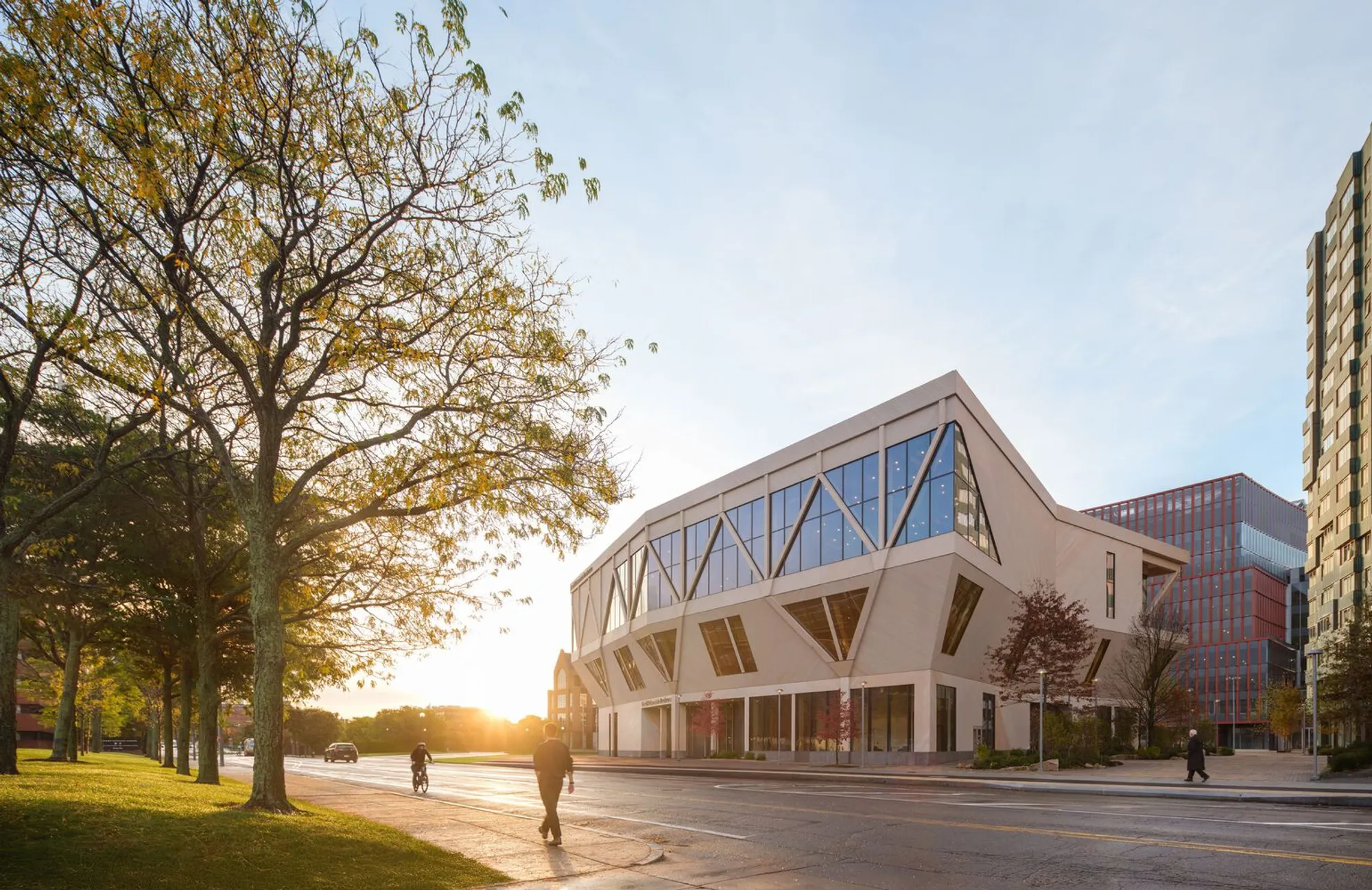
David Rubenstein Treehouse at Harvard University: A Sustainable Mass-Timber Landmark by Studio Gang
Harvard’s first mass-timber hub by Studio Gang, the Rubenstein Treehouse fosters innovation with sustainable design, collaborative spaces, biophilic interiors, and campus connectivity.


A New Era for Harvard’s Campus in Allston
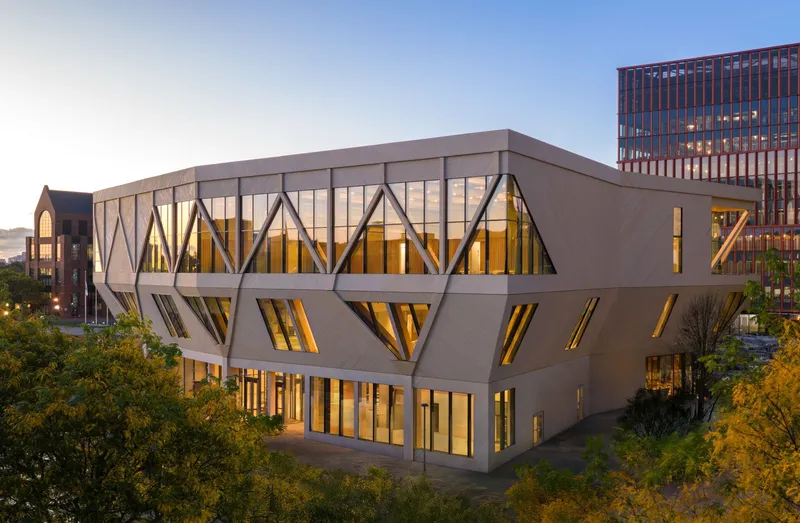
The David Rubenstein Treehouse at Harvard University, designed by internationally acclaimed firm Studio Gang, marks a defining moment in sustainable campus architecture. As Harvard’s first university-wide hub dedicated to collaboration and innovation, the project anchors the expanding Enterprise Research Campus (ERC) in Allston, Boston — reimagining academic space as a civic, ecological, and social destination.
Completed in 2025 and spanning 55,000 square feet, this pioneering educational building introduces Harvard’s first mass-timber structure, setting a powerful benchmark for low-carbon, future-forward campus development in Boston and beyond.
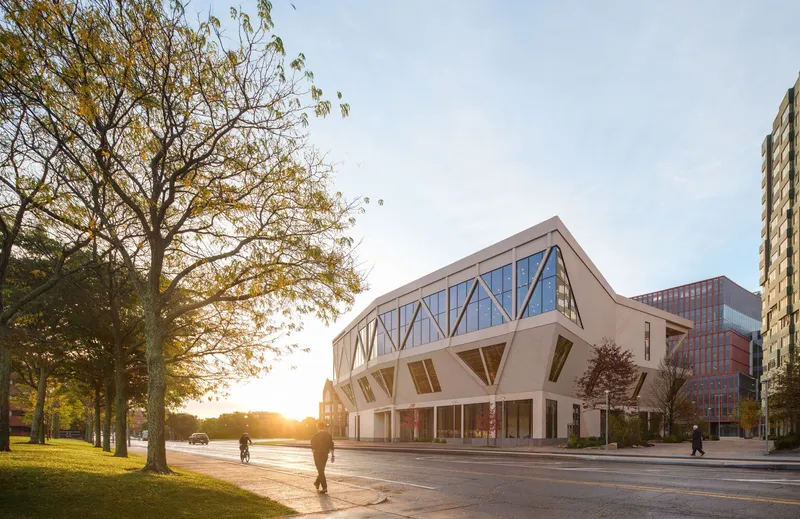
Architecture Vision: A Welcoming Treehouse for Harvard’s Future
Studio Gang, led by Jeanne Gang — Harvard alumna, architect, and educator — envisioned a building that embodies openness, connectivity, and natural warmth. Inspired by climbing into a tree canopy, the Treehouse celebrates biophilic design, structural timber expression, and democratic academic space.
“The Rubenstein Treehouse opens itself up and welcomes all people — visually and socially — serving as a new anchor for the ERC,” notes Jeanne Gang. “Its exposed mass-timber structure demonstrates Harvard’s commitment to a more sustainable future.”
Spatial Experience and Program
Ground-Level Connectivity & Community Flow
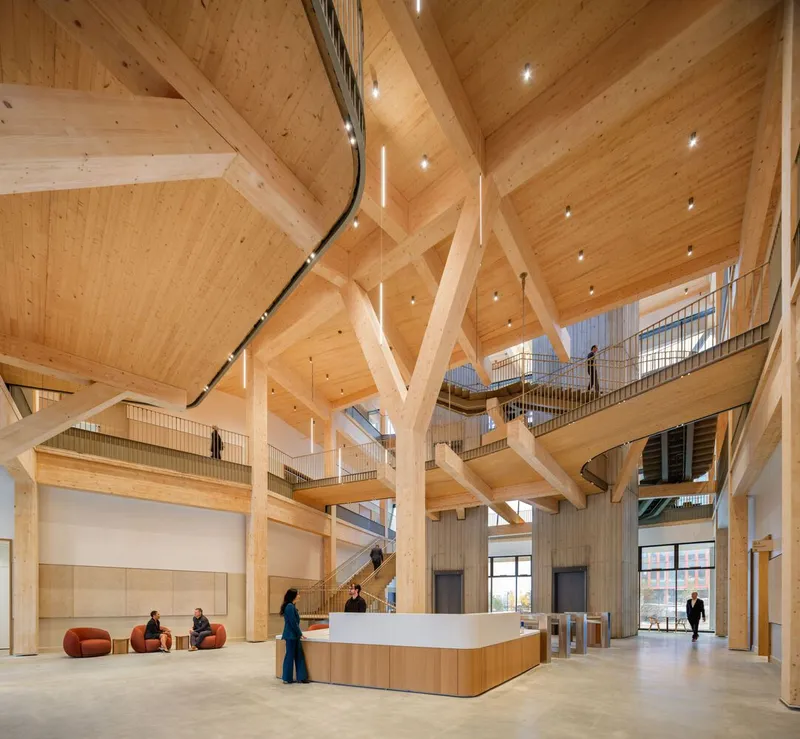
Three public entrances lead to a sweeping double-height atrium, opening seamlessly to outdoor porches and pedestrian pathways. The design prioritizes:
- Inclusive access for students, faculty, and global visitors
- Intuitive campus circulation
- Indoor-outdoor gathering spaces usable year-round
Vertical Journey Through Timber
A skylit central staircase evokes the sensation of ascending through a tree canopy, reinforcing the building’s tactile, nature-rooted atmosphere. Upper floors include:
- Flexible event rooms and meeting zones
- Informal collaboration areas on every level
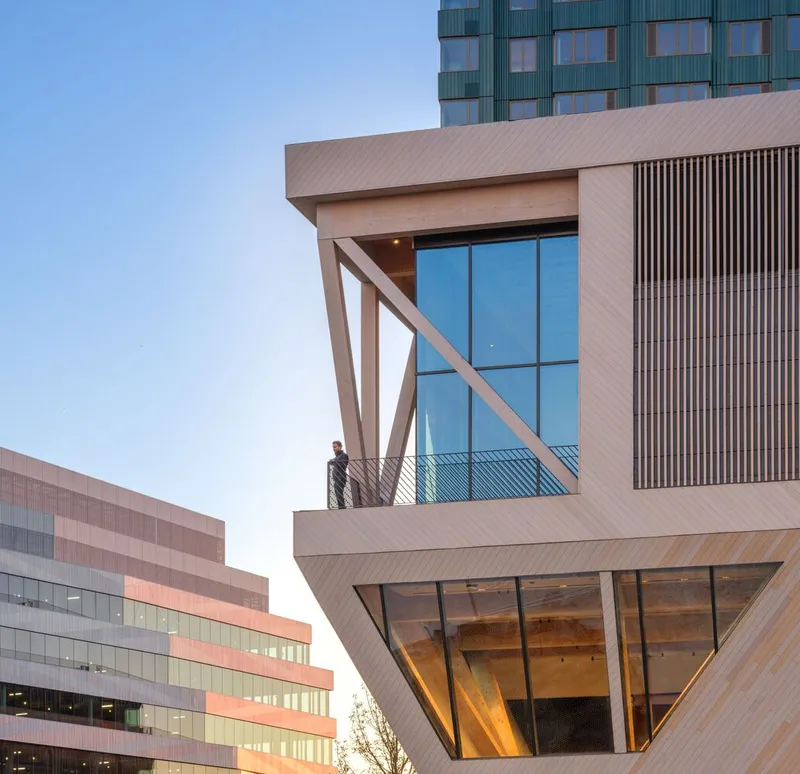
- The Canopy Hall, a signature space with panoramic city views and a generous outdoor terrace
The result is an adaptive, future-proof building designed for academic exchange, innovation forums, global summits, and community engagement.
Architectural Expression: Timber Structure as Identity
The exposed mass-timber frame is both structural and symbolic. Canted timber columns branch outward, supporting cantilevered upper floors and echoing natural tree growth patterns. The façade subtly shifts around each elevation — outward, to welcome, and inward, to preserve pedestrian movement — creating a harmonious dialogue between building and neighborhood.
Natural daylight, warm wood tones, and sculpted timber detailing establish a calm, uplifting interior environment that enhances focus and well-being.
Sustainability & Material Innovation
The David Rubenstein Treehouse is a model for regenerative university architecture, targeting Living Building Challenge Core and Petal Certification. Key sustainability strategies include:
- 55% reduction in embodied carbon vs. comparable conventional buildings
- Mass timber from responsibly sourced forests
- Concrete incorporating ground-glass pozzolan from recycled post-consumer glass
- Zero on-site fossil fuel combustion
- Passive daylighting + self-shading façade geometry
- Rooftop solar energy generation
- Raised floor system to optimize thermal comfort and conceal services
- Connection to Harvard’s District Energy Facility for clean utilities
Indoor health is elevated through PFAS-free materials, healthy finishes, and filtered air strategies. Outside, a biodiverse landscape and bioswale system supports pollinator habitat, stormwater management, and year-round environmental performance.
Urban Context: Gateway to Harvard’s Enterprise Research Campus
As one of the first buildings completed in the ERC masterplan — developed by Studio Gang, Henning Larsen, SCAPE, and Utile — the Treehouse transforms former industrial land into an accessible innovation district. It bridges Harvard’s academic tradition with a future built on collaboration, sustainability, and global impact.
The David Rubenstein Treehouse is not only a building — it is a milestone in university architecture, demonstrating how mass-timber design, climate-conscious strategies, and academic innovation can converge into a compelling architectural landmark. With warmth, openness, and ecological responsibility, Studio Gang’s design redefines Harvard’s campus identity while shaping the future of sustainable learning environments.
All photographs are works of Jason O Rear



Popular Articles
Popular articles from the community


The Musturak Paradise: Senior Living Architecture for a Connected Future in Temara, Morocco
The Musturak Paradise reimagines senior living architecture in Temara via private homes, social spaces, culture, community, and shared care.
AL-JANNAH: Sustainable Architecture and Permaculture for Afghan Widows
AL-JANNAH uses sustainable architecture and permaculture to create resilient oasis of housing, learning, work and renewal for Afghan widows.

Co-life: Sustainable Architecture for Age-Friendly Community Living
Co-life reimagines sustainable architecture for seniors through courtyards, rammed earth, shared gardens, and spaces designed for belonging.
EW PARK: Sustainable Architecture Reimagines the Future of Urban Parking
EW PARK reimagines city parking as a modular wooden tower combining automation, solar energy, electric mobility, and adaptable urban design.

Similar Reads
You might also enjoy these articles


Hodi-Mandai Geram
Project Function: Preservation and revitalization of the Intangible heritage and socio-spatial identity of the Hodi by Housing, Cultural Memory Center, Sacred Grove, landscape, local tourism economy


Olio Towers: A Mid-Rise for Performers That Fuses Housing, Rehearsal, and Stage
Located blocks from Houston's Theater District, this modular tower stacks living units around a central performance atrium.

Oasis: Modular Green Housing Carved into Dhaka's Urban Fabric
A shortlisted Plugin Housing entry reclaims unauthorized settlements in Dhaka with stepped concrete volumes, green roofs, and ventilation-driven design.

Black Hole: A Floating Megastructure for the Post-Physical Era
Emiliano Mazzarotto envisions a spherical, self-scaling arena where e-sports, digital hotels, and holographic stadiums replace traditional public space.


Explore Sustainable Design Competitions
Discover active competitions in this discipline



Challenge to reimagine the Iron Throne


Photograph architecture without architects


Illustrate the lost glory of Angkor Wat - Render Challenge


Design challenge to reuse E-waste
Comments (0)
Please login or sign up to add comments
No comments yet. Be the first to comment!