
De Leerboom Halle: A Space for Creative Learning by BRUT Architecture and Urban Design
Innovative school design in Halle by BRUT Architecture promotes creative learning, outdoor interaction, and seamless integration with the urban context.

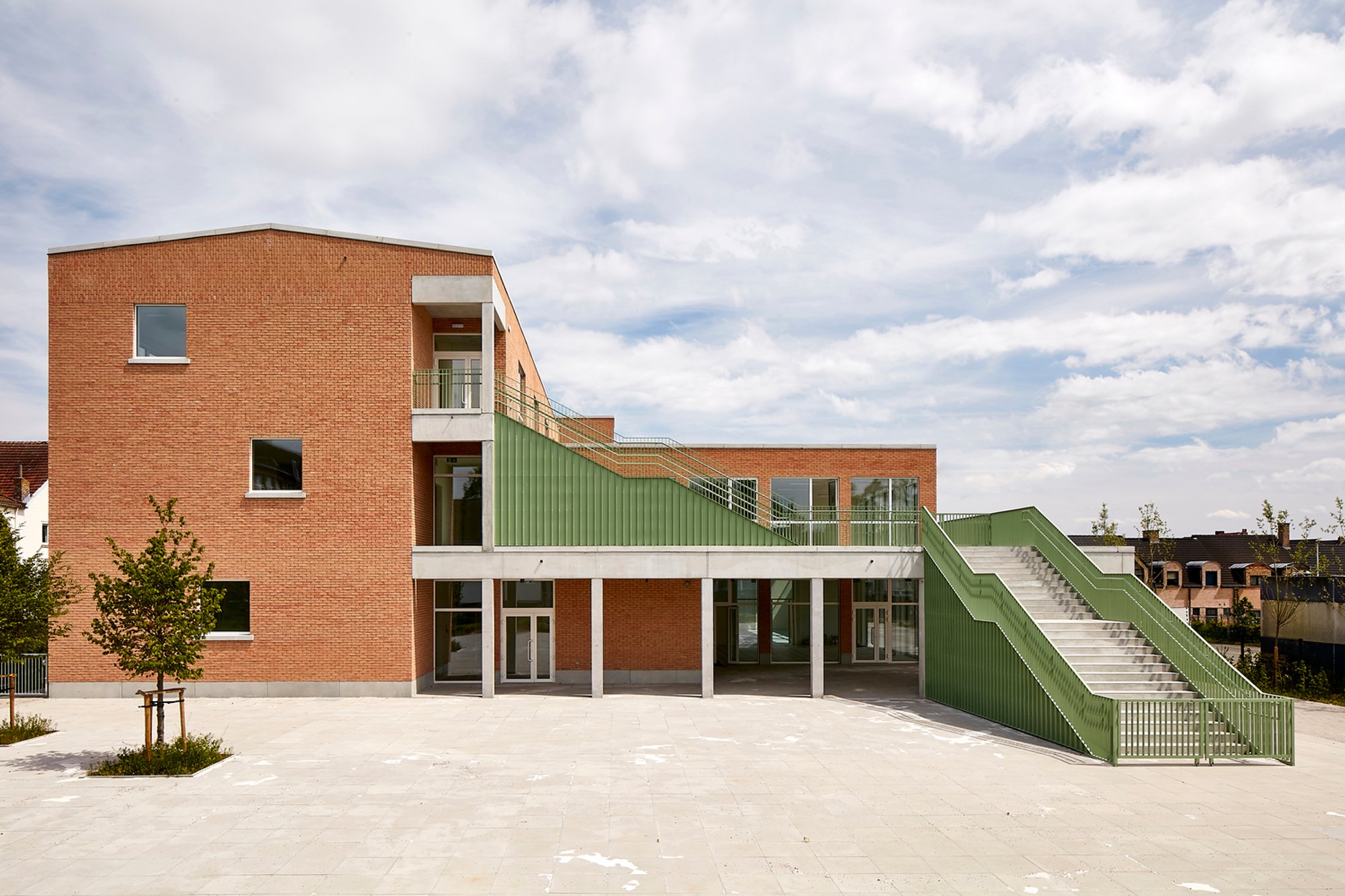
Located in Halle, Belgium, De Leerboom Halle is a transformative educational project designed by BRUT Architecture and Urban Design. The project revitalizes an existing school campus, creating a dynamic and inclusive learning environment for kindergarten, elementary, and middle school students. Completed in 2019, this 1,750 m² facility redefines how space, interaction, and learning converge.
Urban Integration and Campus Identity
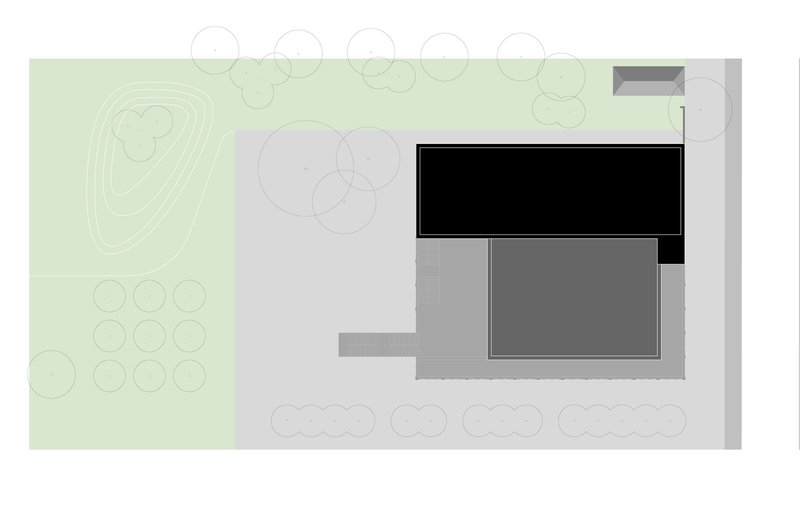
To enhance visibility and engagement with the community, the new volume is placed perpendicular to the street, creating a welcoming face for the school and opening up the campus toward the surrounding neighborhood. This strategic orientation also minimizes the building's impact on the streetscape, preserving the visual character of the area.
A newly designed bicycle and pedestrian path lines the building, establishing a safe and inviting entrance. This path forms a new, clearly defined address for the primary school, reinforcing its presence in the urban context.
Spatial Organization and Educational Functionality
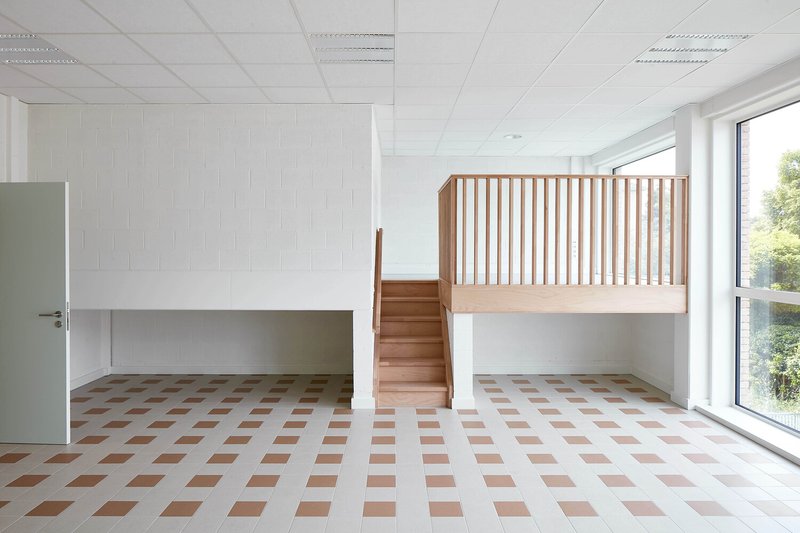
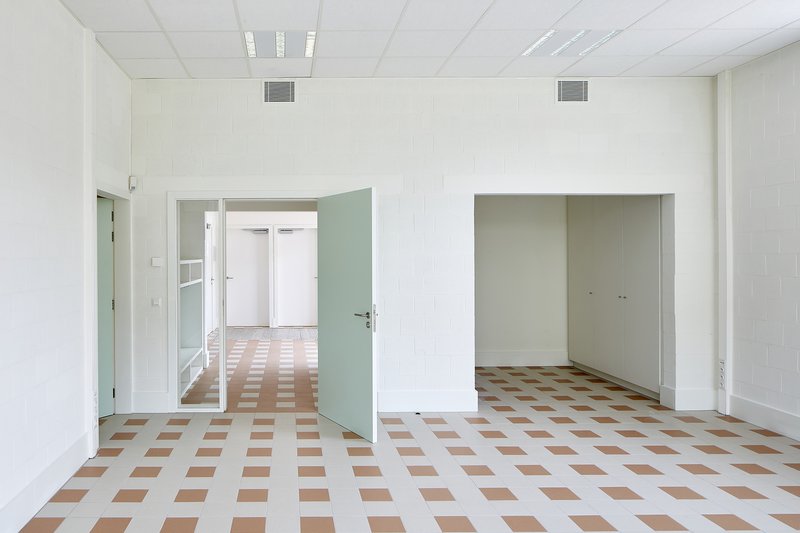
The building is structured around a three-floor layout, each containing four classrooms. This compact and functional design optimizes land use and allows room for a much-needed outdoor playground. Classrooms are arranged in clusters along the northern facade, with wide, light-filled circulation areas that promote visibility and movement.
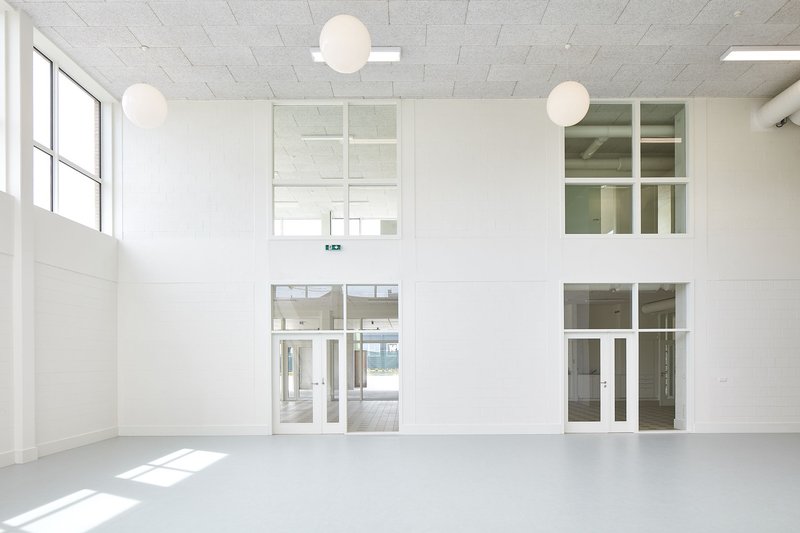
These hallways are not just for transit—they serve as meeting zones and breakout spaces, fostering cross-grade interactions and supporting creative learning practices. This layout breaks down traditional barriers between grade levels, encouraging collaboration, socialization, and informal learning.
Outdoor Connectivity and Vertical Interaction
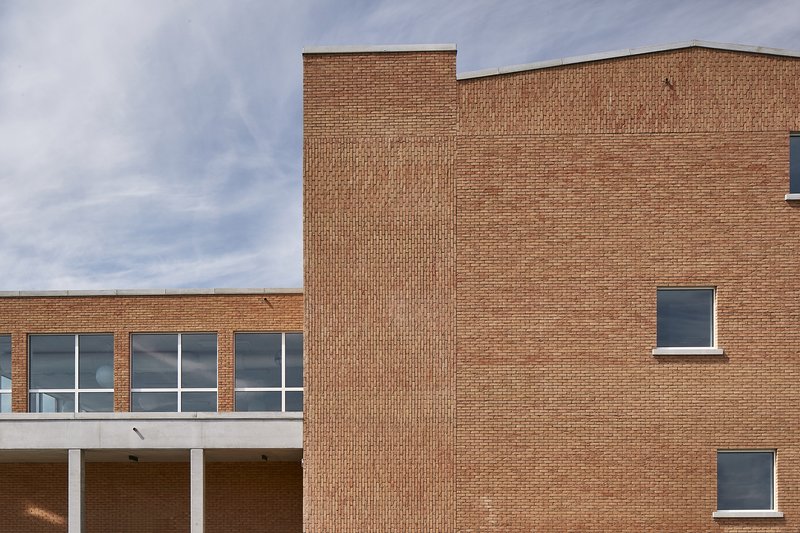
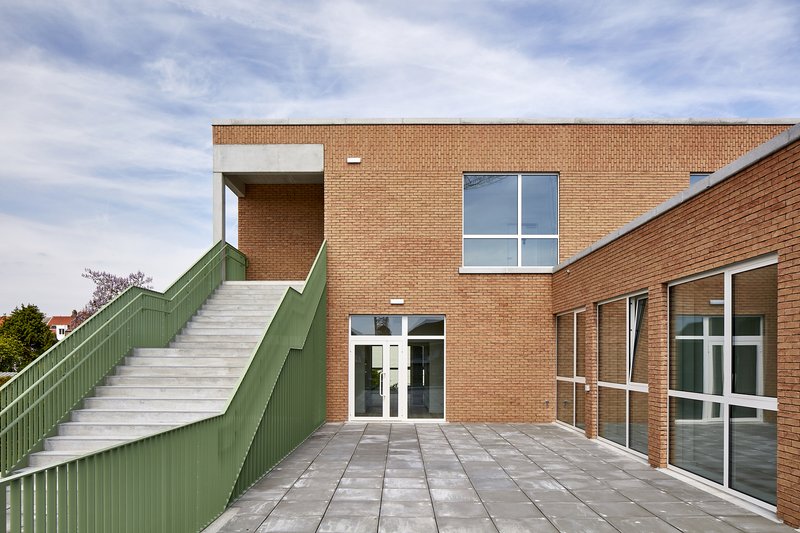
On the southern side, a multifunctional canopy links several key components of the school: the dining hall, a double-height polyvalent room, and the administrative offices on the first floor. Above the canopy, an outdoor classroom acts as a vibrant central gathering space, visually and functionally connecting all three levels of the school.
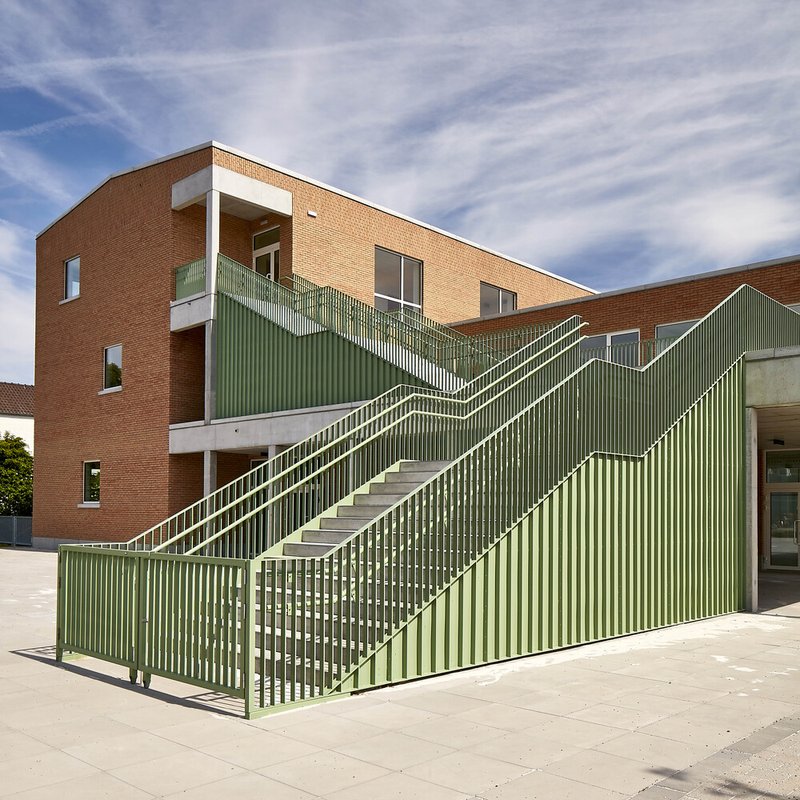
A bold external staircase becomes a central architectural element—offering not just circulation, but a symbolic and practical link between indoor and outdoor learning environments. This continuous flow encourages exploration, creativity, and engagement with nature, all while supporting the school’s pedagogical goals.
De Leerboom Halle exemplifies how thoughtful architecture can enhance educational experiences, foster community connections, and promote holistic child development. BRUT Architecture and Urban Design’s approach celebrates flexibility, accessibility, and creative spatial strategies that turn a traditional school into a lively learning landscape.
All photographs are works of Steven Neyrinck




Popular Articles
Popular articles from the community

Milan Crossover: Sustainable Architecture for a New Fashion Culture in Milan
Milan Crossover transforms fashion culture through sustainable architecture, linking material libraries, remake studios, and public runways.

Inside a Timeless Mumbai Residence by Aether Studio
Aether Studio's 2,250 sq ft apartment in Malad, Mumbai uses marble, brass, boucle, and disciplined restraint to build a quiet retreat from the city.
CRACK: Winery Architecture Carved Into the Landscape
CRACK reimagines winery architecture as a buried path through vineyard terrain, linking production, tasting, lodging, landscape and culture.
Eco Chapel: A Green Architecture Pavilion Designed in Symbiosis with the Forest
Eco Chapel uses green architecture to weave prayer, learning and reuse into a forest pavilion shaped by modular hexagonal canopies for life.
Similar Reads
You might also enjoy these articles

Olio Towers: A Mid-Rise for Performers That Fuses Housing, Rehearsal, and Stage
Located blocks from Houston's Theater District, this modular tower stacks living units around a central performance atrium.

Oasis: Modular Green Housing Carved into Dhaka's Urban Fabric
A shortlisted Plugin Housing entry reclaims unauthorized settlements in Dhaka with stepped concrete volumes, green roofs, and ventilation-driven design.

Black Hole: A Floating Megastructure for the Post-Physical Era
Emiliano Mazzarotto envisions a spherical, self-scaling arena where e-sports, digital hotels, and holographic stadiums replace traditional public space.
Compact & Sustainable Living in Piraeus: A Four-Level Family Home Built Around Light and Air
A narrow townhouse in one of Greece's densest port cities uses a central atrium and passive strategies to house three generations under one roof.

Explore Educational Building Competitions
Discover active competitions in this discipline




The International Standard for Design Portfolios


The Global Benchmark for Architecture Dissertation Awards


The Global Benchmark for Graduation Excellence


Challenge to design public laboratory
Comments (0)
Please login or sign up to add comments
No comments yet. Be the first to comment!