
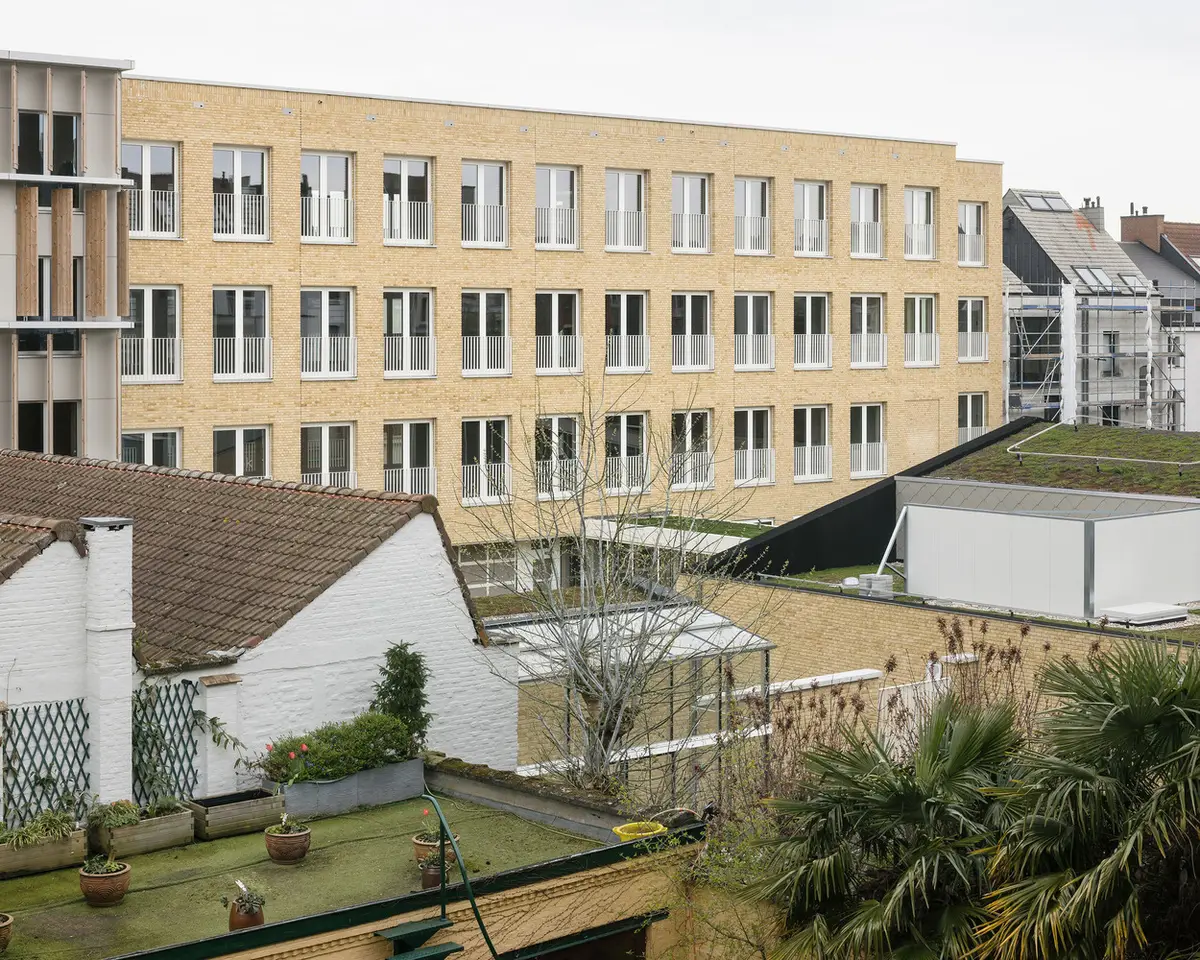
De Watergroep Office Building by evr-Architecten
Sustainable Ghent office by evr-Architecten integrates flexible workspaces, brick facades, green courtyards, roof gardens, and biodiversity-driven urban densification strategies successfully.


Urban Integration and Architectural Concept
Architects: evr-Architecten
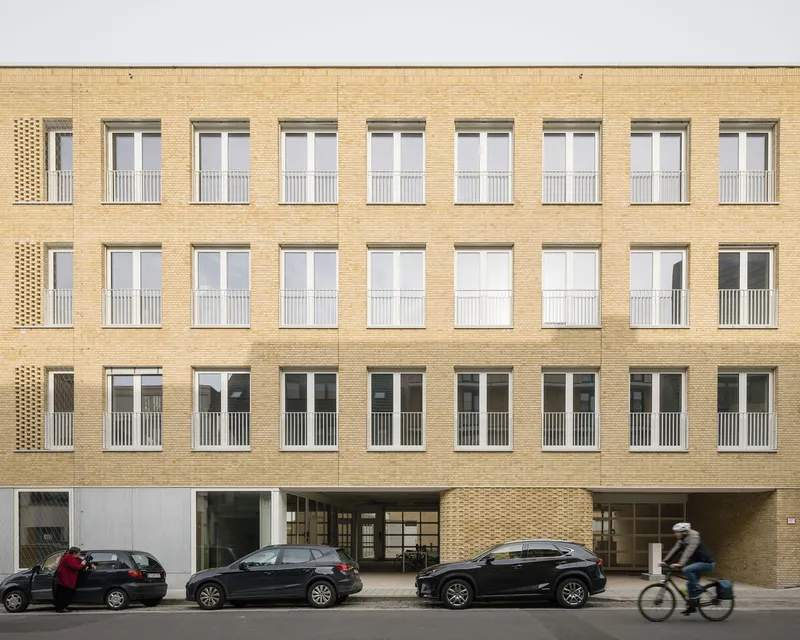
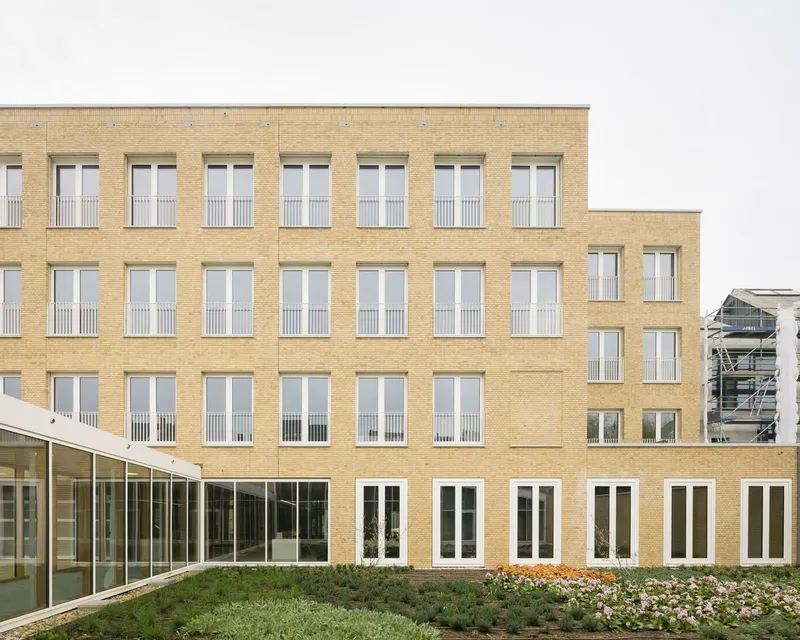
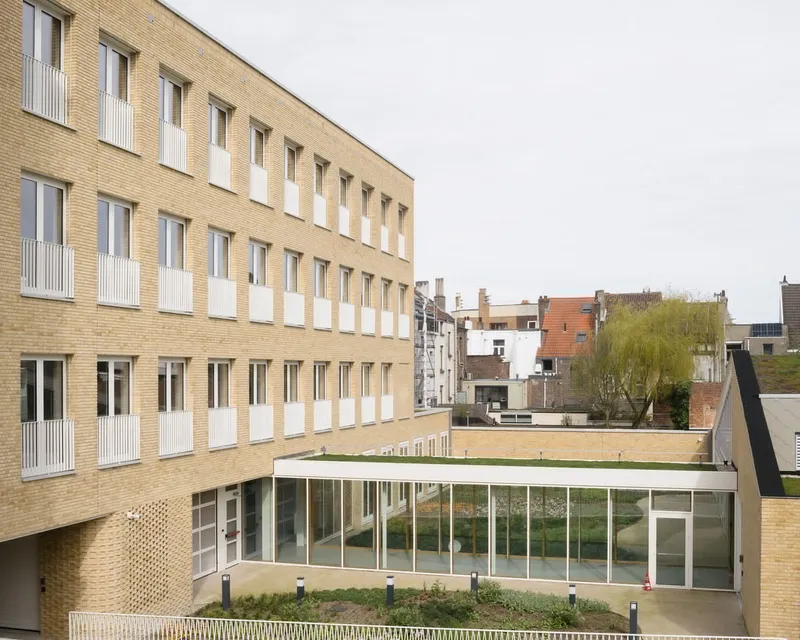
Set above an underground parking structure, the project consists of a four-story primary office volume facing the street and a secondary garden building housing shared amenities at the rear of the site. This dual-volume composition allows the building to balance urban presence with interior calm, creating a clear distinction between workspaces and collective functions. The architectural strategy is rooted in a careful reading of the surrounding street elevation, responding to the rhythm, scale, and materiality of neighboring residential buildings.
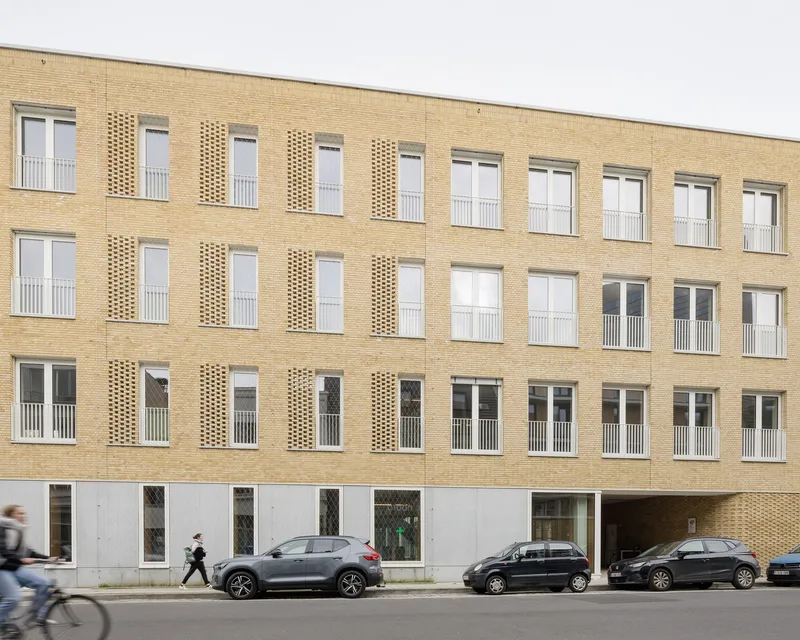
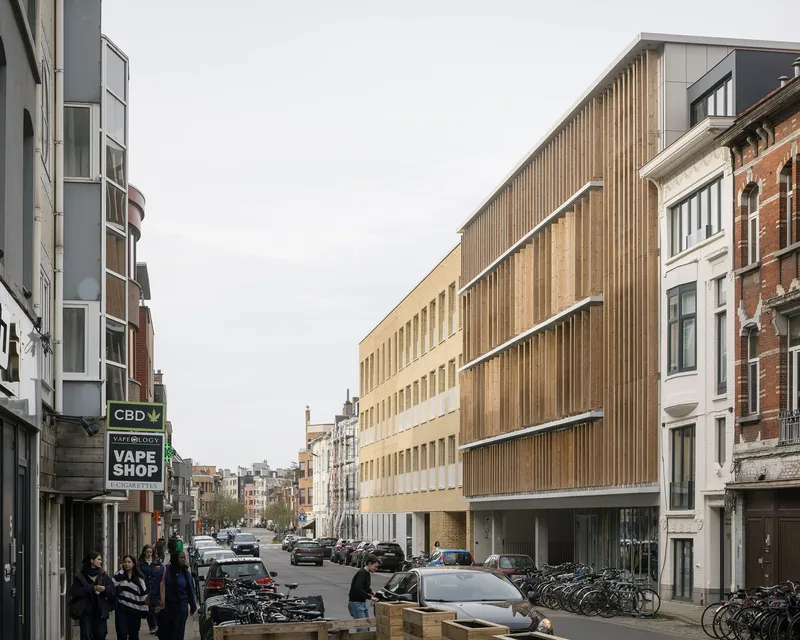
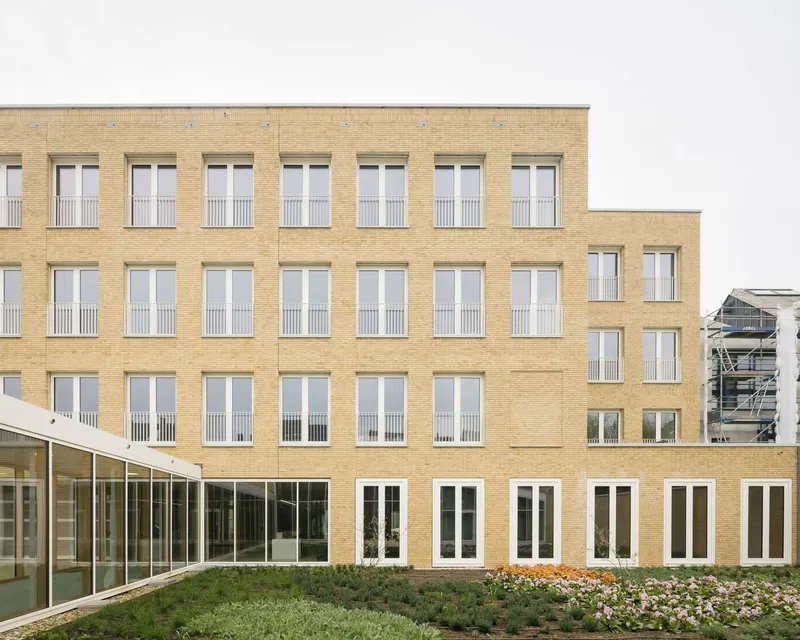
The facade design translates this contextual analysis into a contemporary expression. Horizontal articulation is emphasized through a pronounced plinth and subtle detailing in the brickwork, window placement, and lintel parapets. Vertical articulation is introduced through a centrally positioned green facade, breaking down the building’s scale and reinforcing its relationship to the residential character of the street. This layered approach results in an office building that feels both precise and approachable within its urban setting.
Spatial Organization and Workplace Flexibility
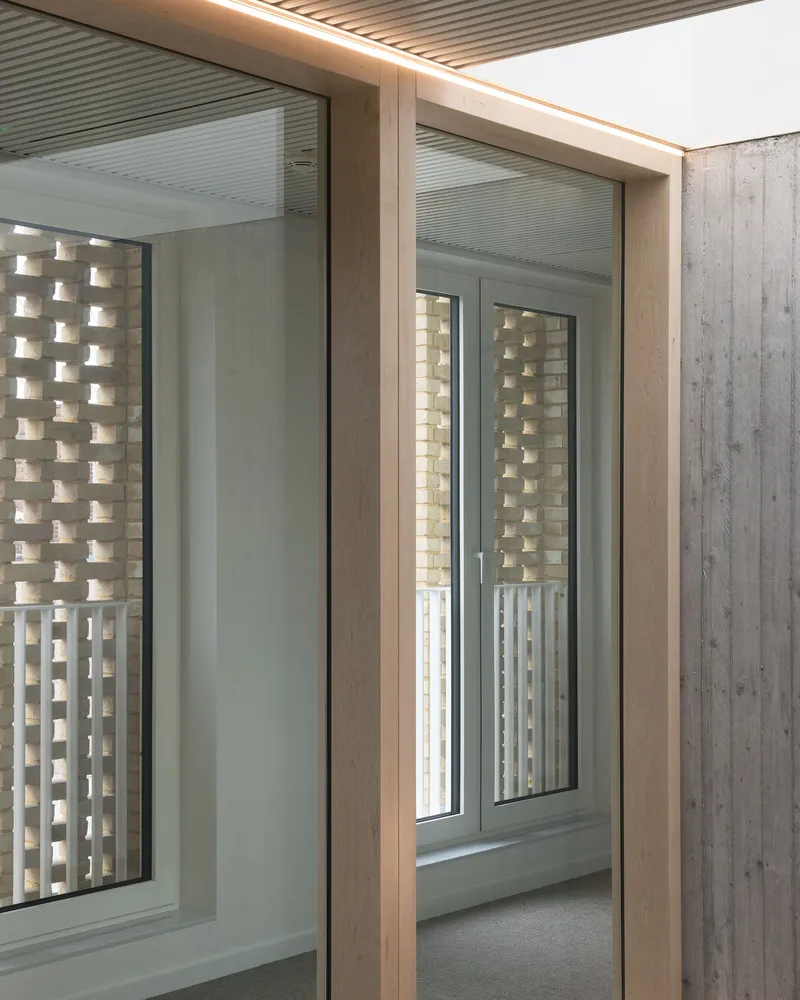
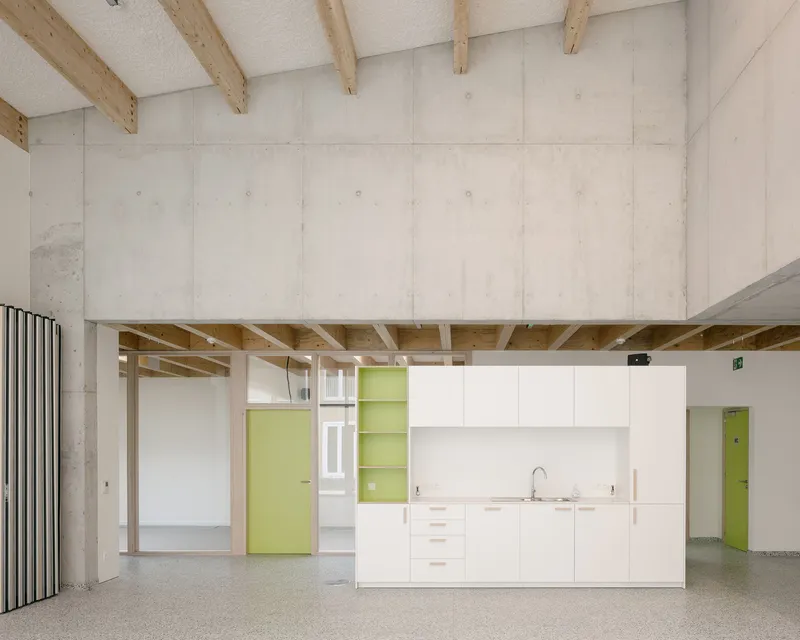
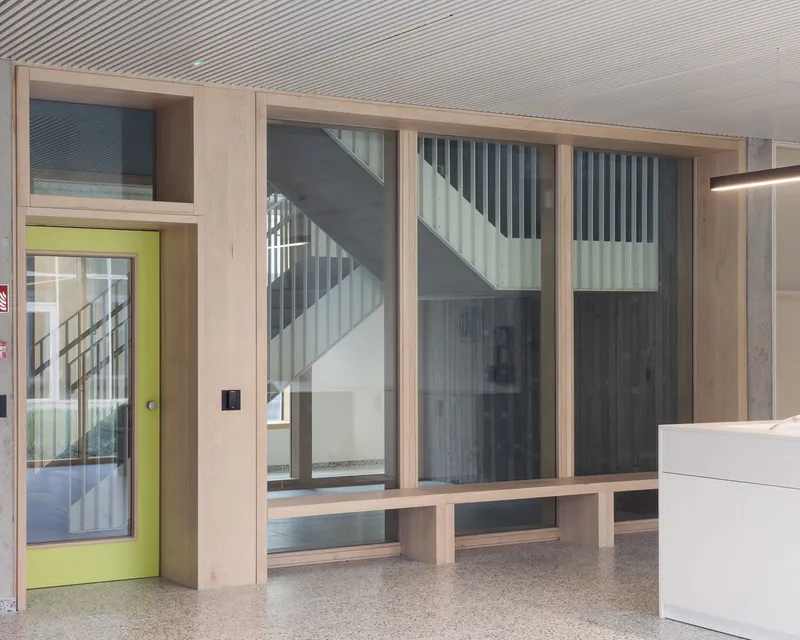
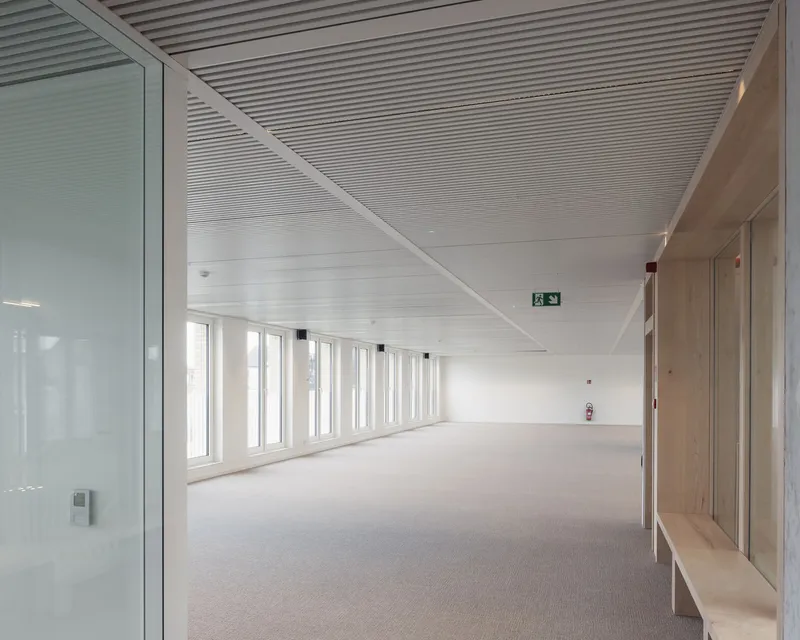
Internally, the De Watergroep Office Building is conceived as a highly adaptable workplace. The main street-facing volume is designed as a multi-tenant office structure, allowing each floor to function independently if required. Office platforms support a wide range of configurations, from open-plan environments to more traditional cellular offices, without requiring major technical modifications.
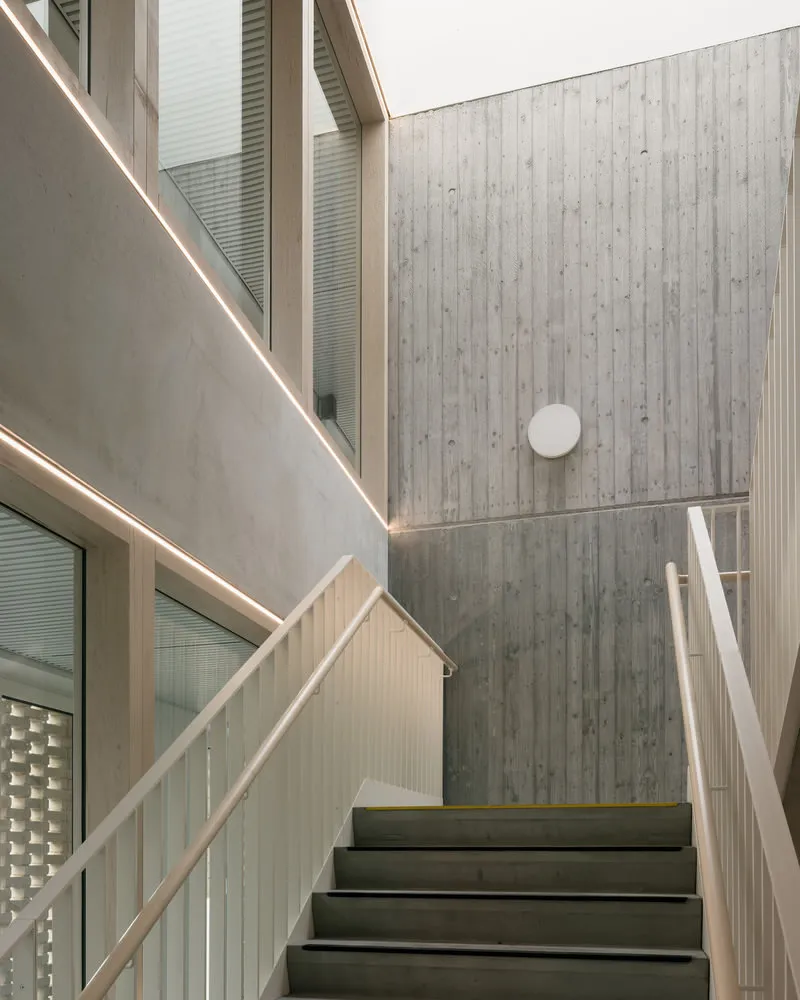
A modular system enables internal partitions to be added or removed at predefined points, ensuring long-term flexibility as organizational needs evolve. This adaptability supports contemporary workplace models while extending the building’s lifecycle. Circulation is organized around a generous, covered access corridor that unifies entrances for pedestrians, cyclists, and vehicles, reinforcing accessibility and spatial clarity.
Courtyard, Patio, and Collective Spaces
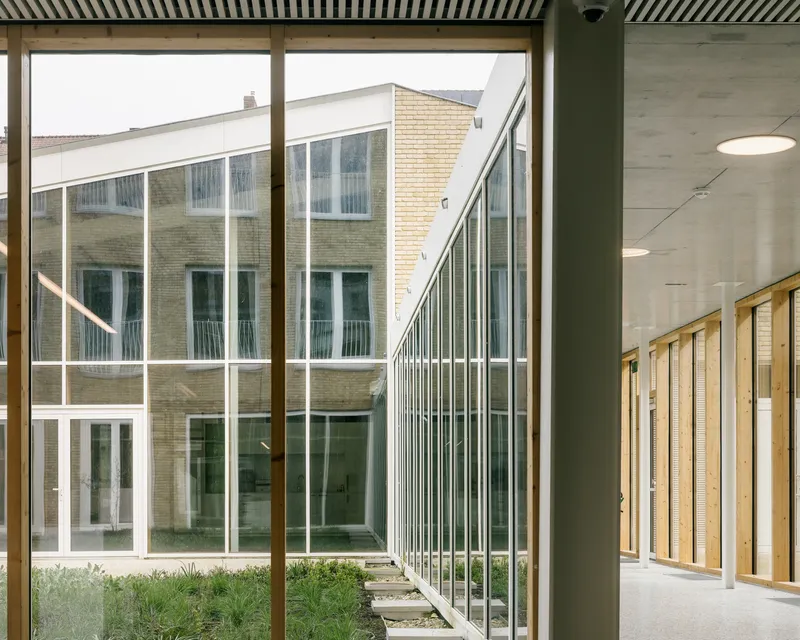
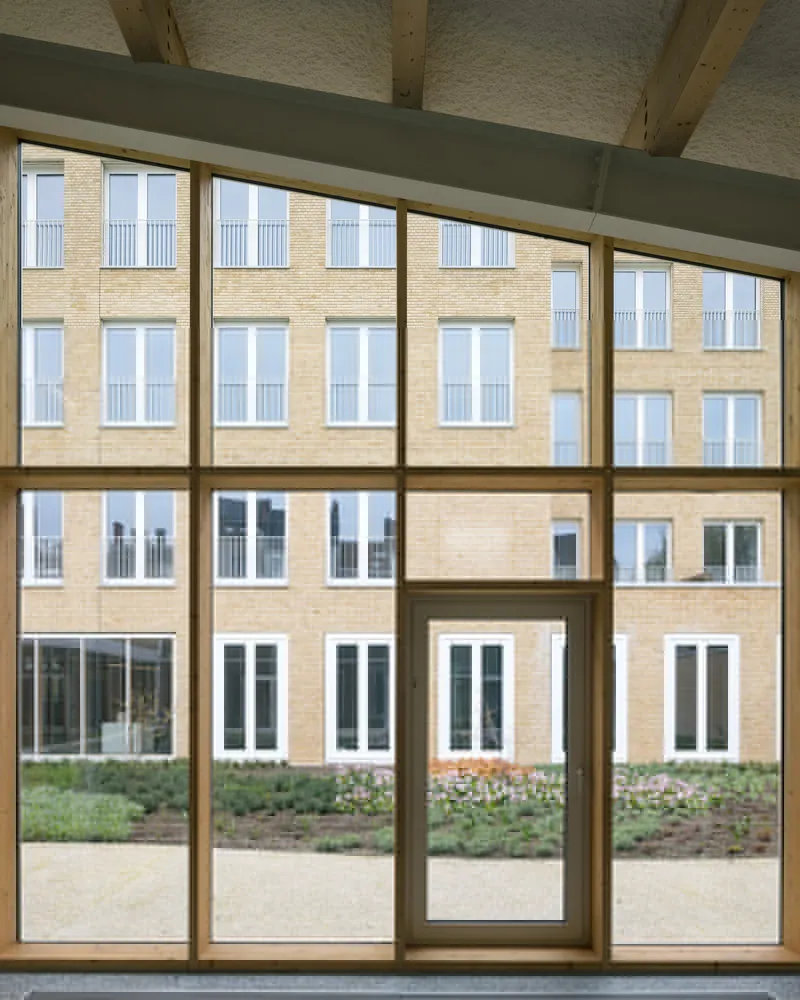
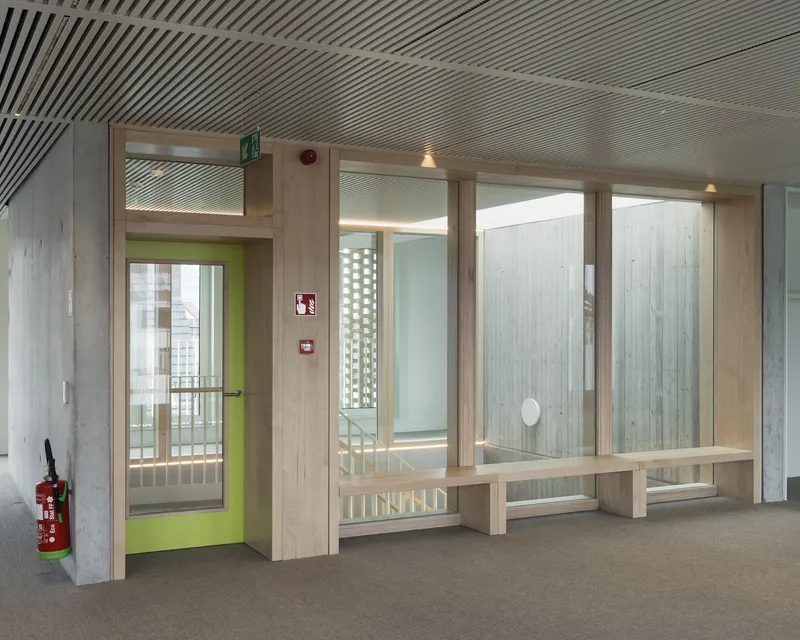
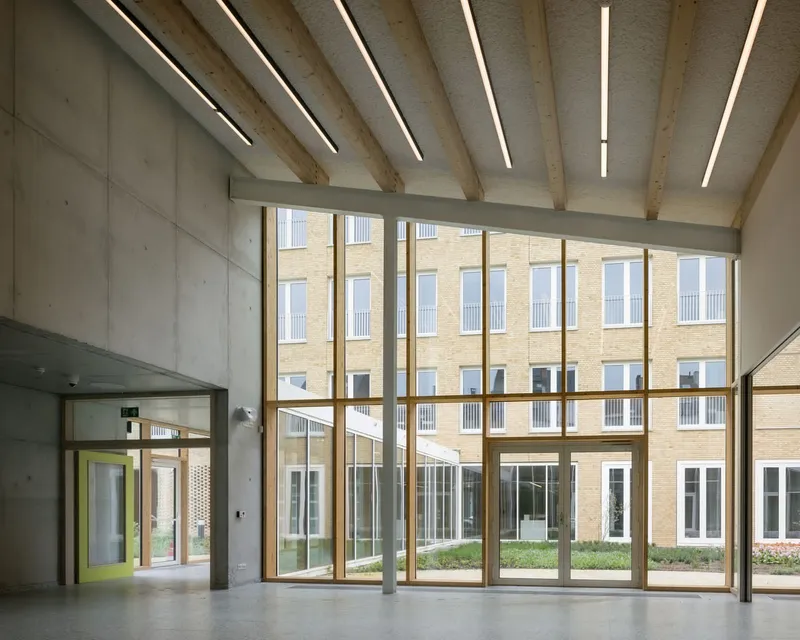
At the heart of the project lies a landscaped patio that connects the two building volumes through a glazed axis. This semi-open space functions as a visual and social anchor, offering views into a green interior courtyard designed by Denis Dujardin. The patio provides a tranquil retreat from the city while enhancing daylight penetration and natural ventilation throughout the building.
The rear garden volume accommodates meeting rooms, a cafeteria, bicycle storage, and sanitary facilities, all oriented toward the landscaped courtyard. A spacious terrace extends from the meeting facilities, supporting informal gatherings and reinforcing the relationship between interior spaces and nature. The project also introduces a new entrance to the adjacent restaurant garden, strengthening connections within the urban block.
Sustainability Strategy and BREEAM Excellence
Sustainability was a core driver throughout the design process, resulting in the building receiving the BREEAM Excellent certification. The project replaces a fully paved site with a green, permeable environment, transforming the office building into an ecological asset rather than an isolated urban object.
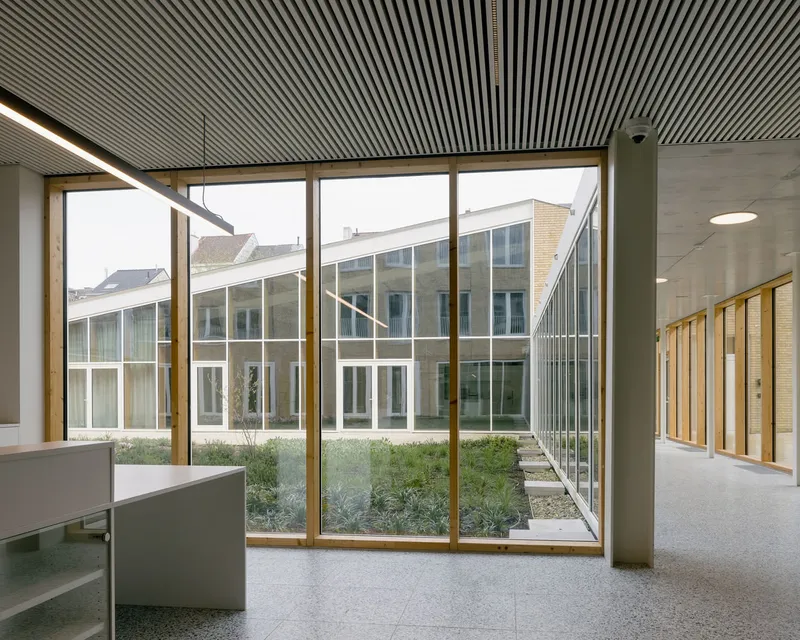
All roofs are designed as green roofs, including a substantial roof garden above the parking structure with substrate depths reaching up to one meter. This allows for robust planting and contributes significantly to thermal regulation, water retention, and urban biodiversity. Climbing plants are integrated into street-facing and interior facades, softening the building’s appearance and supporting micro-ecosystems.
Biodiversity and Ecological Design
In collaboration with Corridor cvba, an extensive ecological analysis was conducted to enhance the site’s biodiversity. The study identified the swift and the black redstart as key bird species to support within the area. Nesting boxes for these species were seamlessly integrated into the architecture, ensuring ecological interventions became part of the building’s identity rather than an afterthought.
Plant selections emphasize flowering species that attract insects, creating a food chain that supports bird populations. Maintenance strategies were also reconsidered to reduce biomass transport, with minimal pruning and cutting. An oak tree trunk placed on one of the flat roofs is intentionally left to decay naturally, providing habitat for insects and contributing to long-term ecological cycles within the built environment.
A Green Urban Office Model
The De Watergroep Office Building stands as a compelling example of how office architecture can move beyond functional efficiency to actively contribute to urban life and environmental resilience. By combining contextual facade design, flexible workplace planning, and a deeply integrated sustainability strategy, evr-Architecten has created a building that redefines the role of contemporary offices in European cities. Rather than remaining a paved island, the project becomes a green anchor within the urban block, offering long-term value to its users, neighbors, and the broader ecological network.
All photographs are works of
Stijn Bollaert


Popular Articles
Popular articles from the community

Temporary Home for Dogs: A Reversed Zoo Rethinks Animal Shelter Architecture
In Bucharest, a sinuous corridor and freed landscape flip the logic of containment, designing a shelter that works to make itself unnecessary.

Opera on the Sea: Driftwood Logic Shapes a Timber Opera House on Estonia's Coast
Trevor Orgill's opera house translates the entangled drift of floating timber into a civic building where wood, water, and music converge.

Tsunami Convergenics: Turning Catastrophic Ocean Forces into Underwater Housing Infrastructure
A speculative underwater settlement off the coast of Onagawa, Japan, treats tsunamis and typhoons as energy sources rather than threats.

Opera by the Sea Estonia: Three Shells Dissolving Architecture into Tallinn's Coastline
A winning opera house proposal replaces monumental form with interconnected shells that blur the boundary between building, park and Baltic Sea.

Similar Reads
You might also enjoy these articles

FAMM Arquitectura Organizes Ten Villas Around Courtyards and Jungle in Nosara, Costa Rica
El Molino pairs two elongated volumes with deep overhangs and timber louvers to build a compact coastal community five minutes from the beach.
Oscar Niemeyer's Ibirapuera Park Pavilions Define São Paulo's Cultural Identity in Concrete and Curve
A constellation of modernist volumes set within São Paulo's most important urban park, conceived for the city's 400th anniversary in 1954.
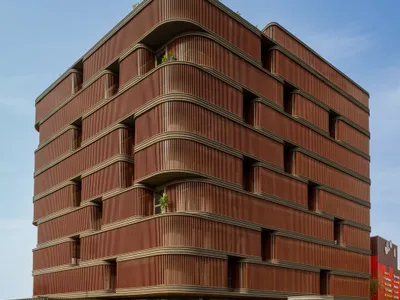
Sanjay Puri Architects Wraps a Jaipur Office Tower in Capsule-Shaped Green Buffers
A nine-level climate-responsive workplace near Jaipur Airport uses stacked planter terraces and aluminium screens to fight 40°C heat.
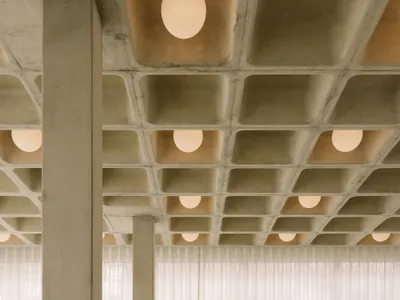
RHO Converts a Berlin Spree-Side Industrial Courtyard into Enkime's 1,000 m² Agency Headquarters
A social media agency's new home in Charlottenburg trades glossy branding for concrete waffle ceilings, glazed tile, and sheer curtains.

Explore Open Building Competitions
Discover active competitions in this discipline

Challenge to reimagine the Iron Throne

Photograph architecture without architects

Illustrate the lost glory of Angkor Wat - Render Challenge

Design challenge to reuse E-waste
Comments (0)
Please login or sign up to add comments
No comments yet. Be the first to comment!