
Design by 83 Channels Busan's Rivers and Coastline into a 133-Room Boutique Hotel
Hotel TT in Buk-gu translates the meeting of sea and river into undulating ceilings, fieldstone walls, and panoramic dining.


Busan's Buk-gu district is not the obvious setting for a boutique hotel. Gupo is largely residential, quiet, pressed against the Nakdong River with mountains rising behind a natural ecological park. But that is precisely the point of Hotel TT: Design by 83 built the project's identity around its overlooked context, treating the scenery of South Gyeongsang's coastal province not as backdrop but as raw material for the interior architecture itself.
What makes the project worth studying is its willingness to break typical hotel conventions. The 133 rooms across 20 floors follow a standard commercial logic, but the two public floors, the ground-level lobby and the 20th-floor restaurant, abandon generic hospitality finishes for something rougher, stranger, and more site-specific. The lobby ceiling undulates in tinfoil-wrapped wave panels that mimic the nearby sea. The restaurant wraps itself in fieldstone walls and heavy timber beams. Neither space looks like it belongs in a chain hotel, and that is the design's central argument: that a simple palette rooted in natural elements can do more for a guest's experience than polished luxury ever could.
A Lobby That Moves Like Water
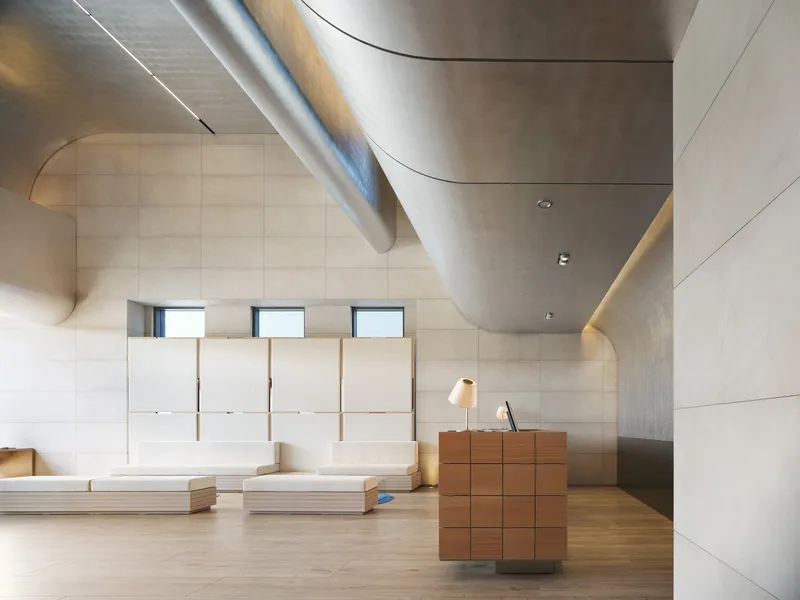
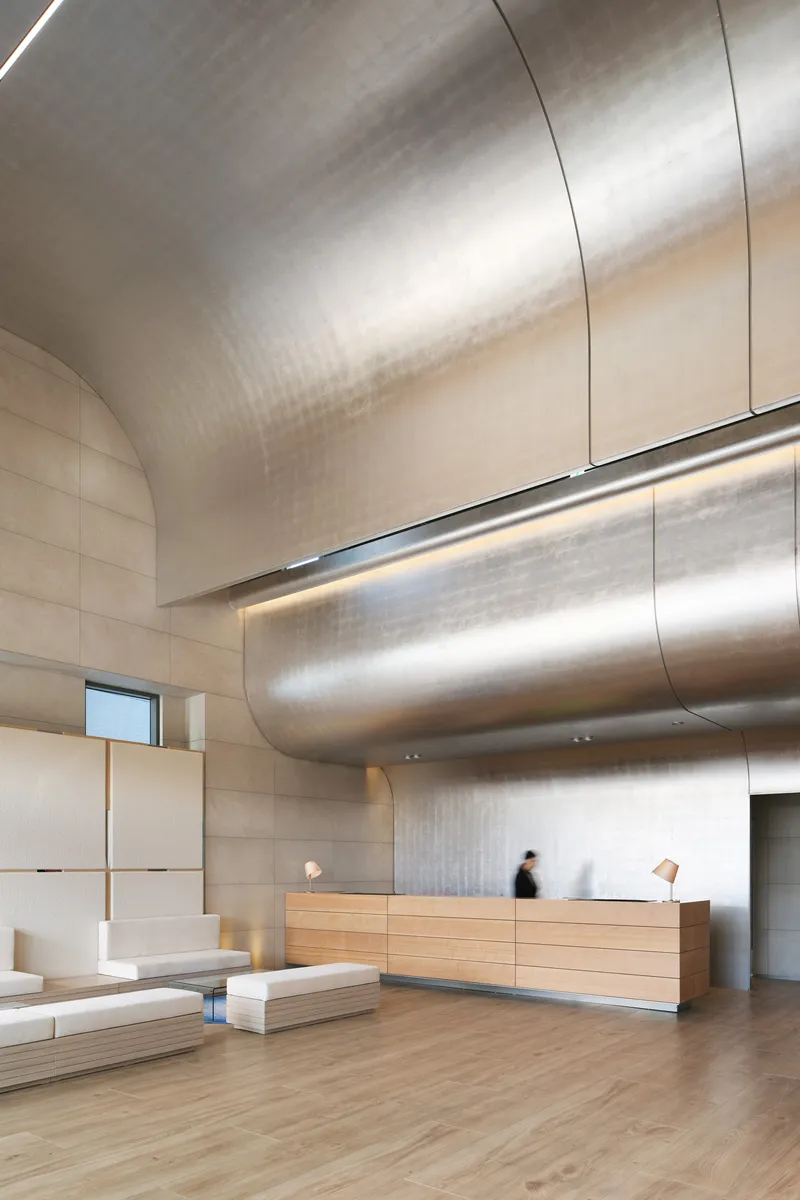
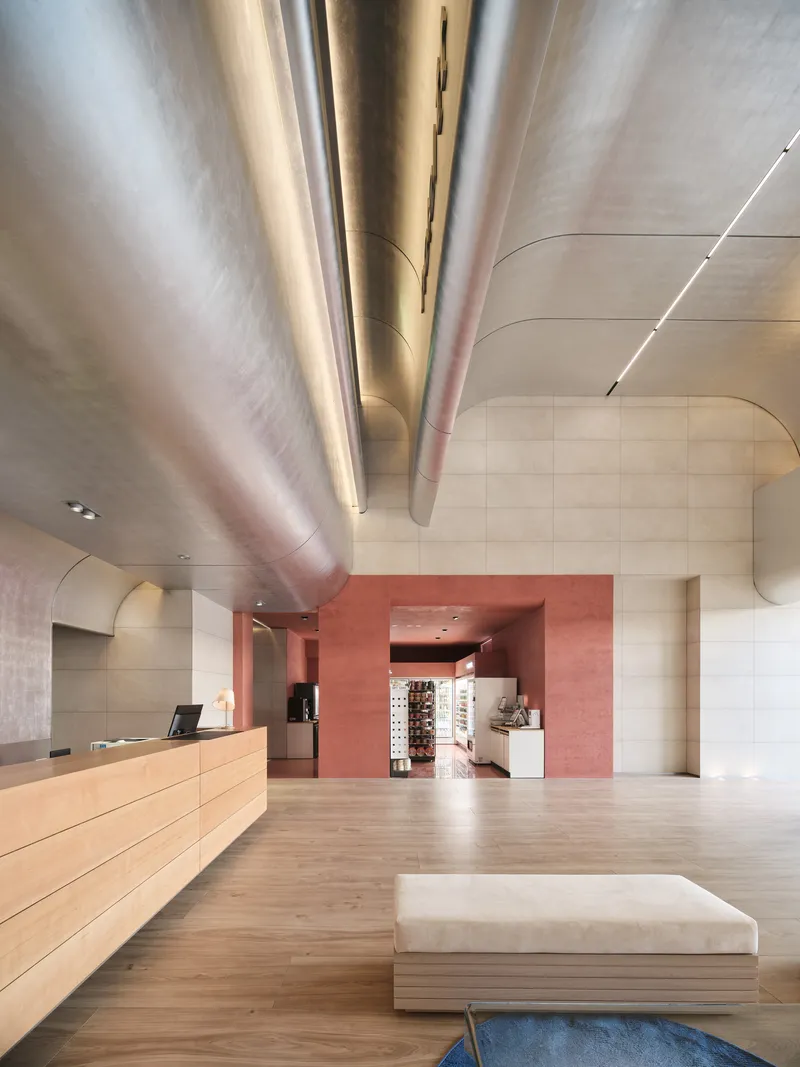
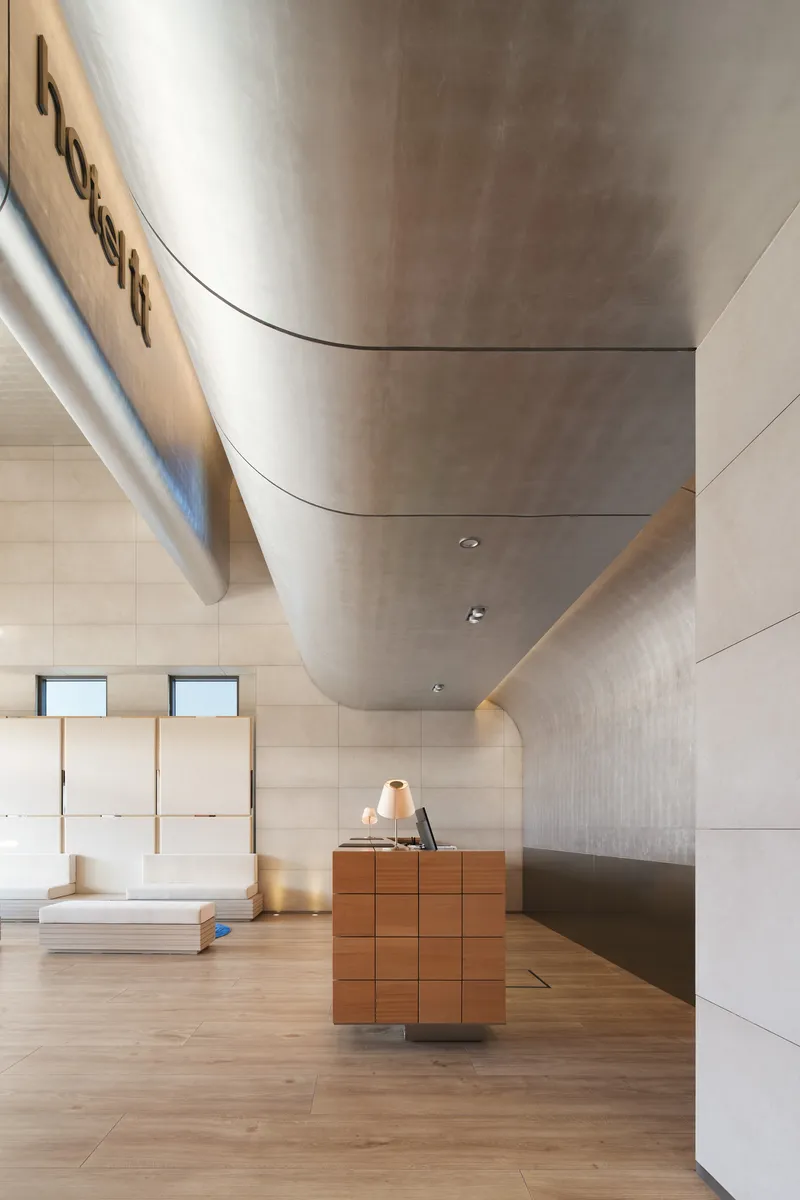
The 150-square-meter lobby is dominated by a single gesture: a serpentine metallic duct that snakes across the ceiling, its curves loosely evoking the movement of river water. Wrapped in brushed stainless steel, the ductwork is deliberately exposed rather than concealed, turning mechanical infrastructure into sculptural presence. Below it, pale wood paneling and a stepped timber reception desk keep the material language warm and restrained, letting the ceiling carry the drama.
Indirect lighting runs along wall slots and platform edges, avoiding the harsh downlighting typical of hotel lobbies. The effect is a space that feels both voluminous and intimate, the undulating ceiling making the room appear larger than its modest footprint while pulling the eye through the double-height volume.
Layered Seating and Threshold Details
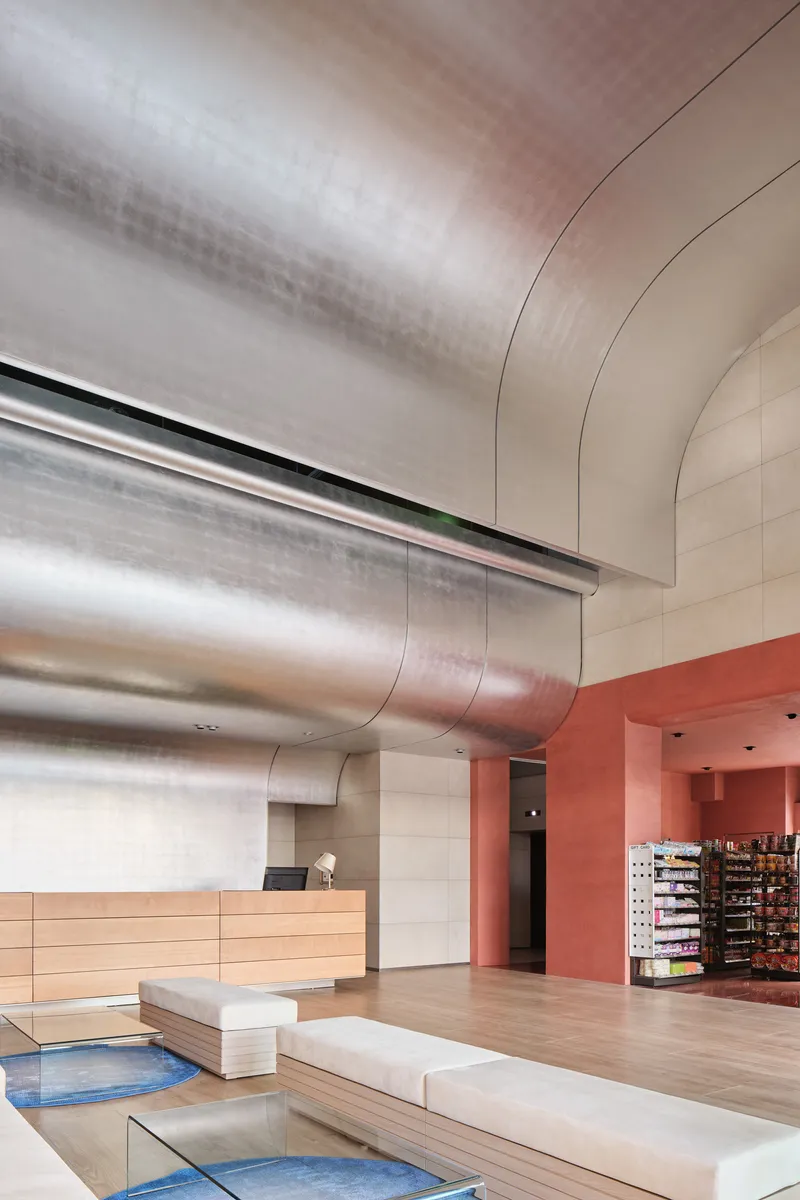
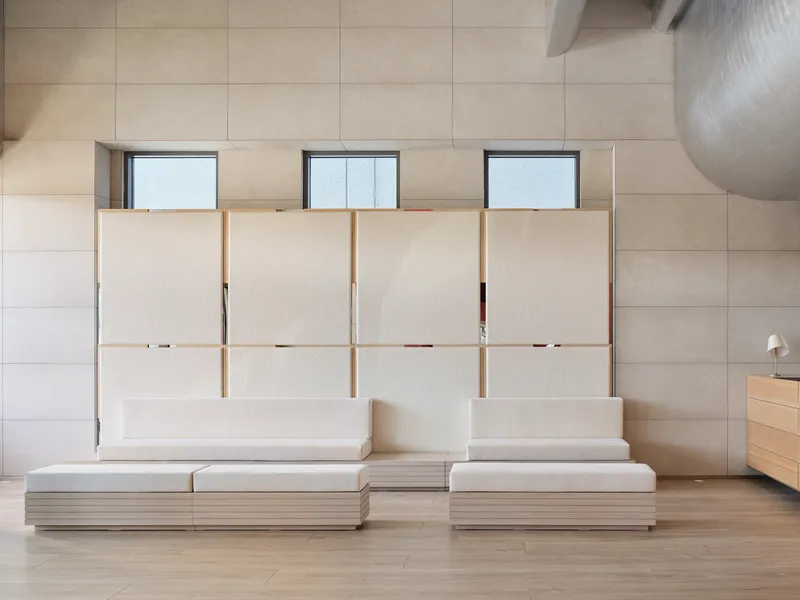
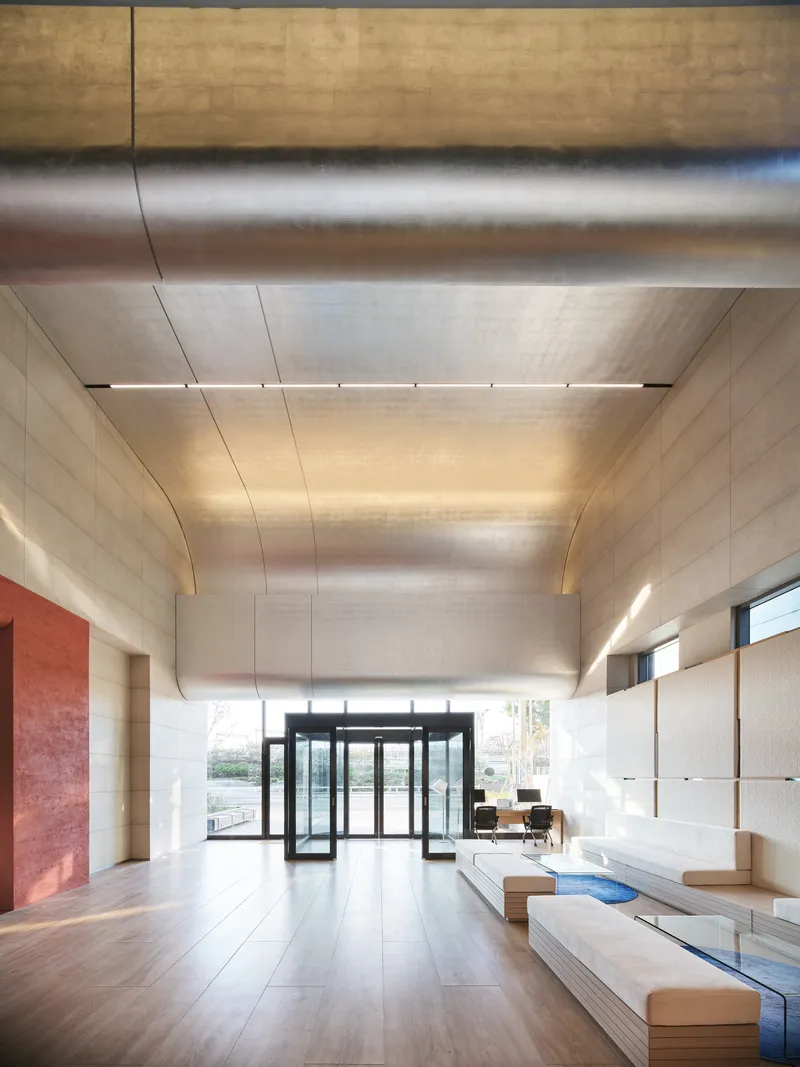
Rather than filling the lobby with conventional furniture, Design by 83 carved seating directly into the architecture. Stepped timber platforms create low lounge zones with blue glass accents, while translucent sliding panels along one wall allow the space to be partially enclosed or opened depending on the time of day. Built-in benches along the entrance vestibule reinforce the sense that every surface in the lobby is doing double duty.
These details reward close attention. The toe-kick lighting beneath platforms, the high-backed upholstered benches tucked against large-format wall panels, the way the curved duct meets the wood paneling at carefully resolved junctions: all of it suggests a design team thinking in terms of joinery and craft rather than decorative finish.
The Coral Portal and Retail Alcove
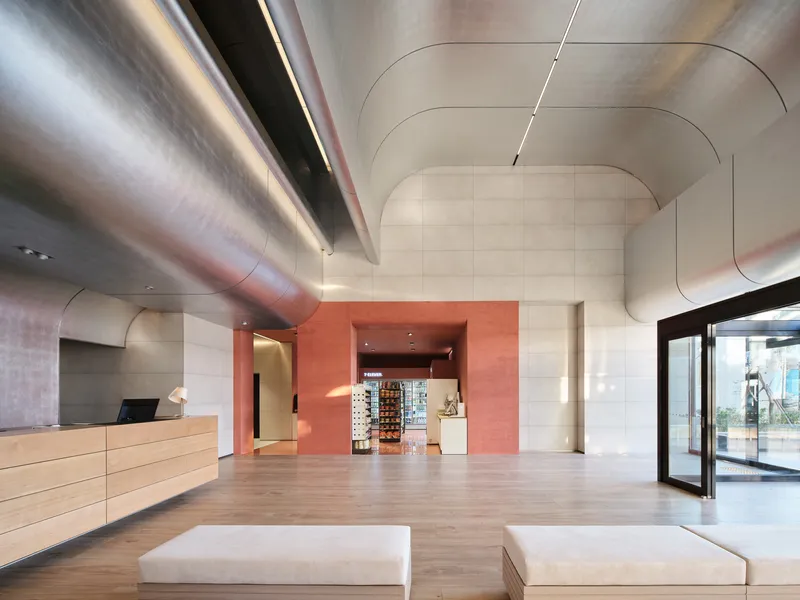
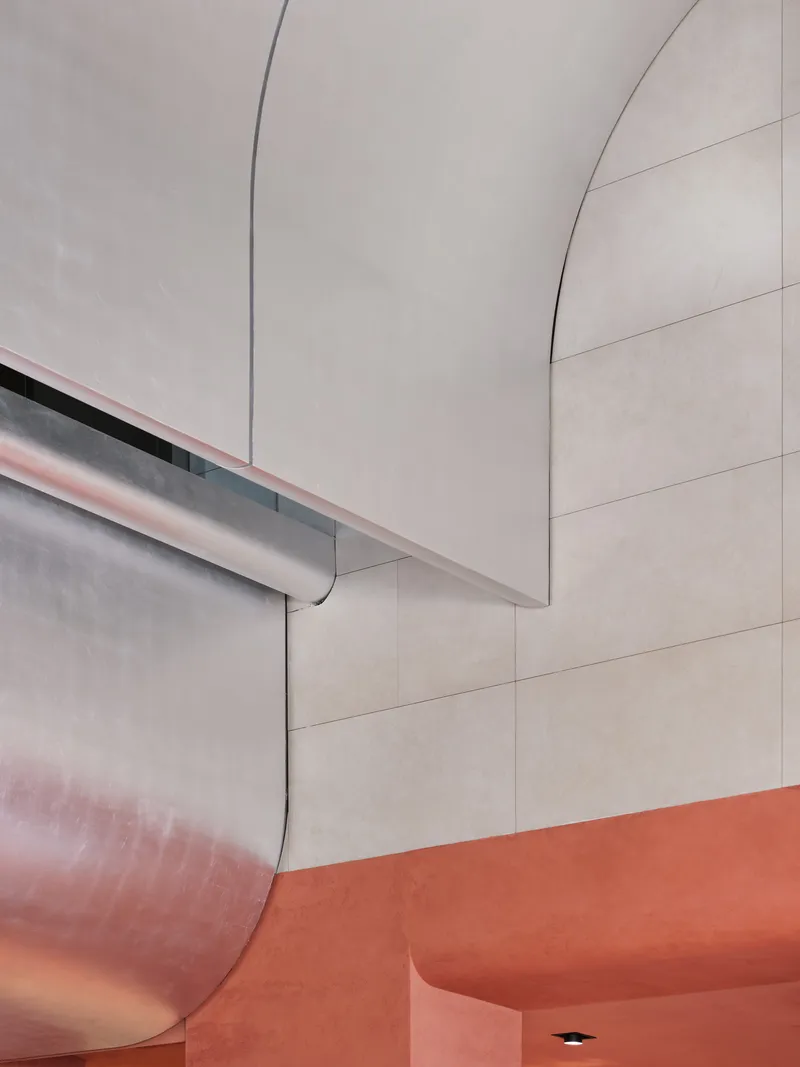
One of the lobby's most striking moments is the coral-colored portal visible from the reception area, framing a small retail alcove in a warm terracotta tone that contrasts sharply with the cool metallic ceiling above. It is a surprisingly bold chromatic move in an otherwise neutral palette, and it works because it is confined to a single threshold rather than spread across the room.
Nearby, curved plaster wall forms with recessed lighting meet an orange resin floor, introducing organic geometry at a smaller scale. These softer, rounder elements act as counterpoints to the angular timber platforms and linear ductwork, creating a spatial rhythm that shifts as guests move through the ground level.
Stone, Timber, and the 20th-Floor Restaurant
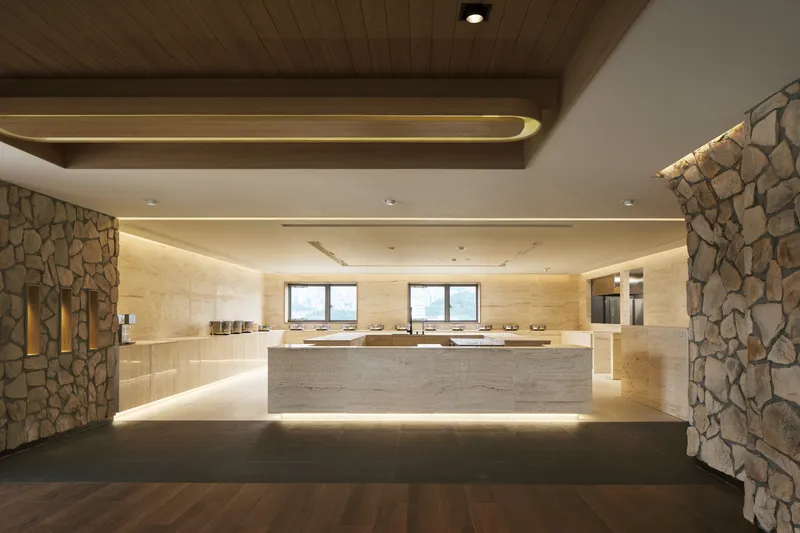
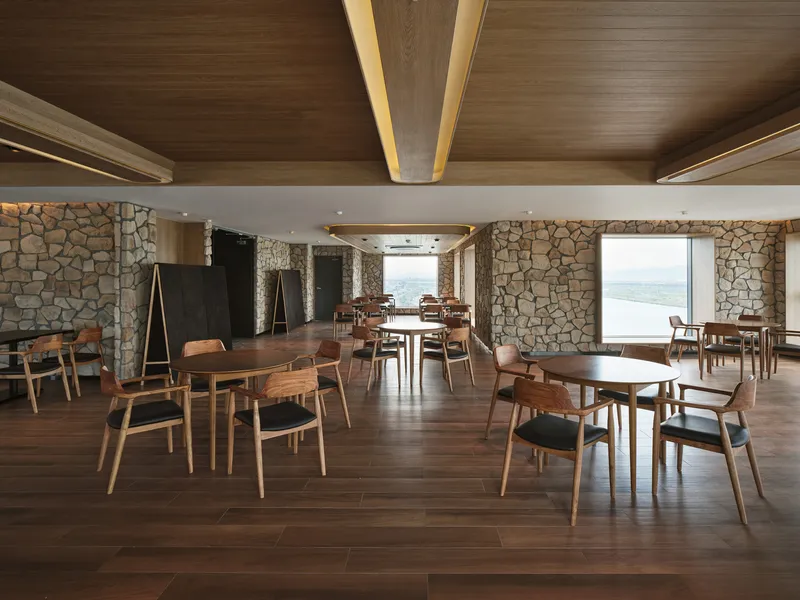
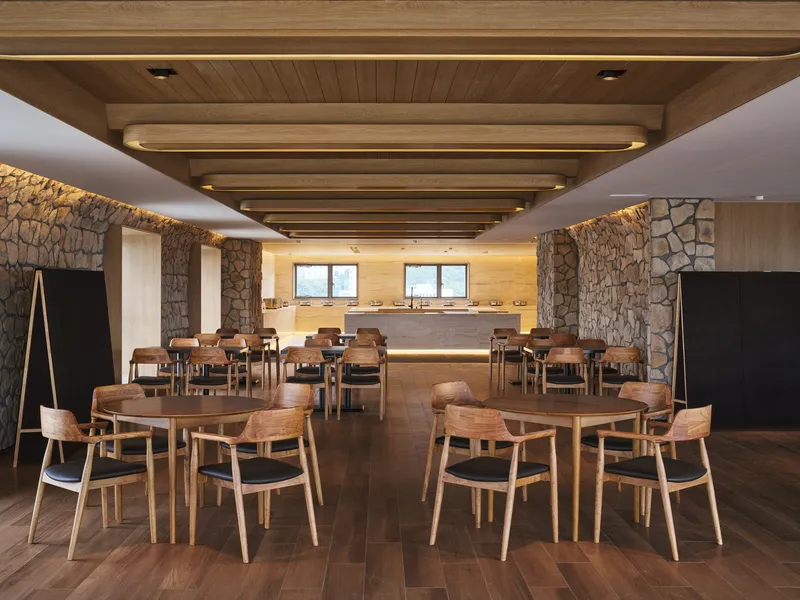
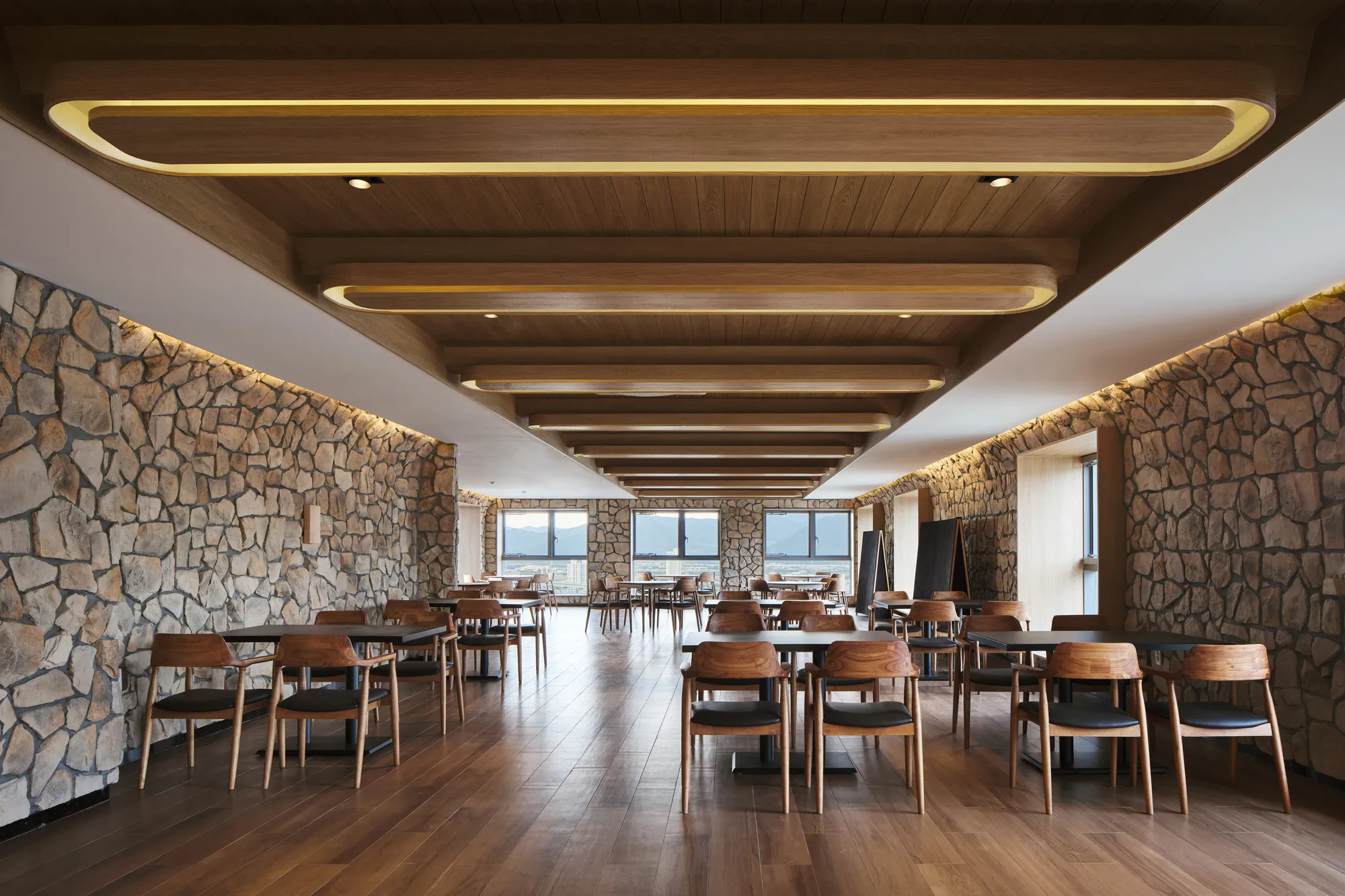
The restaurant occupying the top floor is a different world from the lobby below. Where the ground level is metallic and sleek, the 20th floor is mineral and heavy: fieldstone columns and walls, timber ceiling beams, a backlit travertine service counter. The stone mosaic covering gives the walls a rough, almost archaeological texture that grounds the dining experience in something tactile and permanent.
Design by 83 acknowledged a significant constraint on this floor: long corridor traffic lines leading from the elevator to the buffet area and then into the main dining room. Their solution was to line those corridors with large windows wrapping around the venue, transforming what could have been tedious circulation into a gradual reveal of the river, park, and mountain scenery beyond. By the time guests reach their seats, they have already absorbed the landscape.
Framing the Nakdong
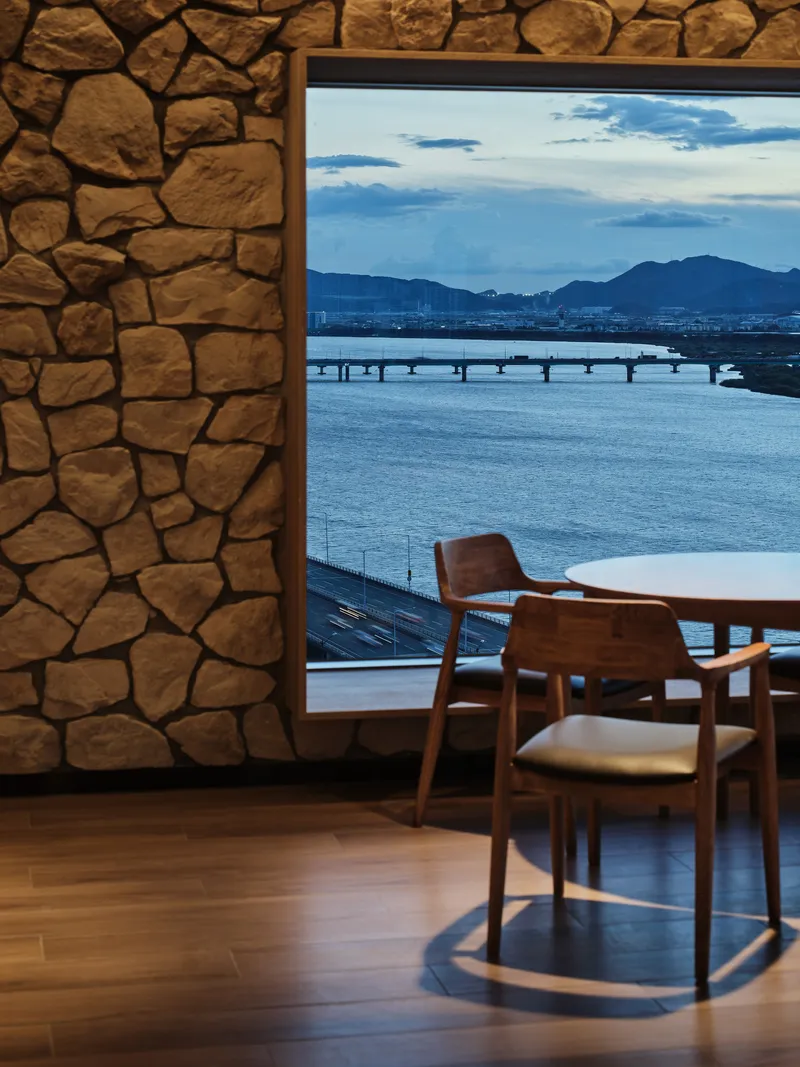
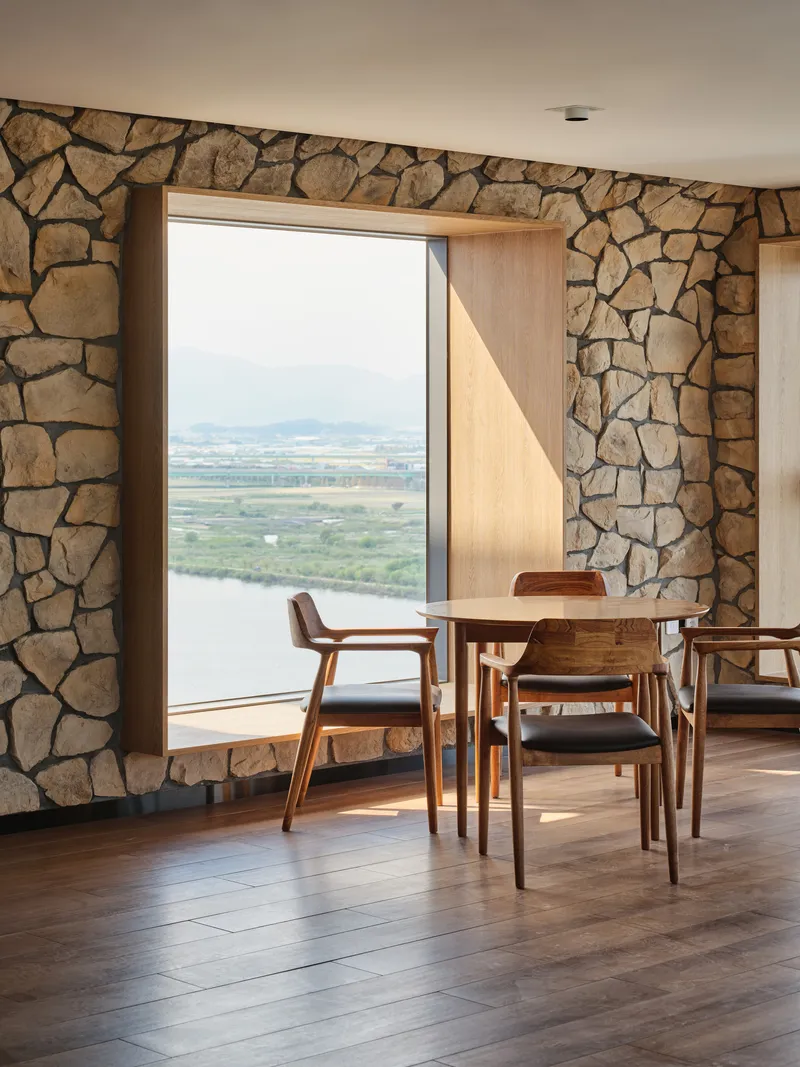
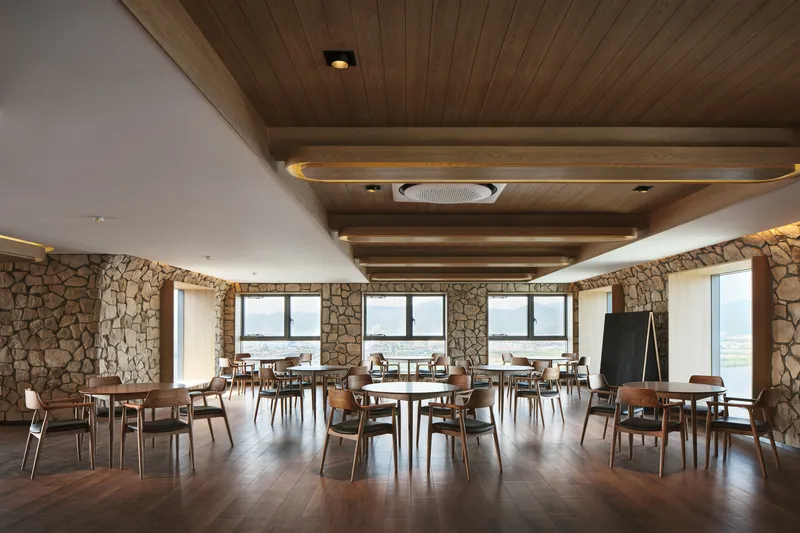
The payoff of the restaurant's material strategy becomes clear at the windows. Timber chairs face out toward the Nakdong River and distant mountains through carefully proportioned openings, some punched through the rough stone walls to create deep frames that crop the panorama into discrete compositions. The result is less panoramic glass box and more inhabited viewfinder, each table offering a slightly different relationship to the water below.
Natural daylight floods the dining hall through these openings, reducing the need for artificial illumination. The interplay of stone texture, polished walnut flooring, and diffused light gives the room a quality that shifts throughout the day, from sharp morning clarity to warm golden-hour softness. It is a straightforward environmental strategy that also happens to be the restaurant's strongest aesthetic asset.
Ceiling as Landscape
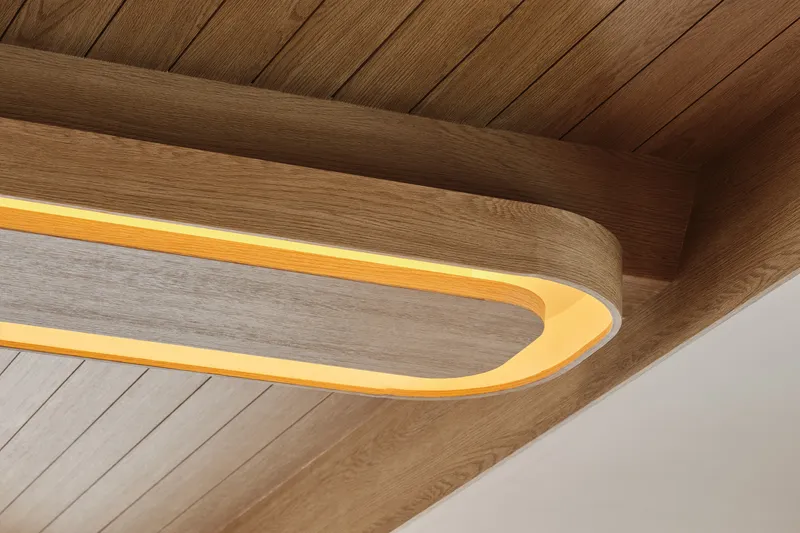
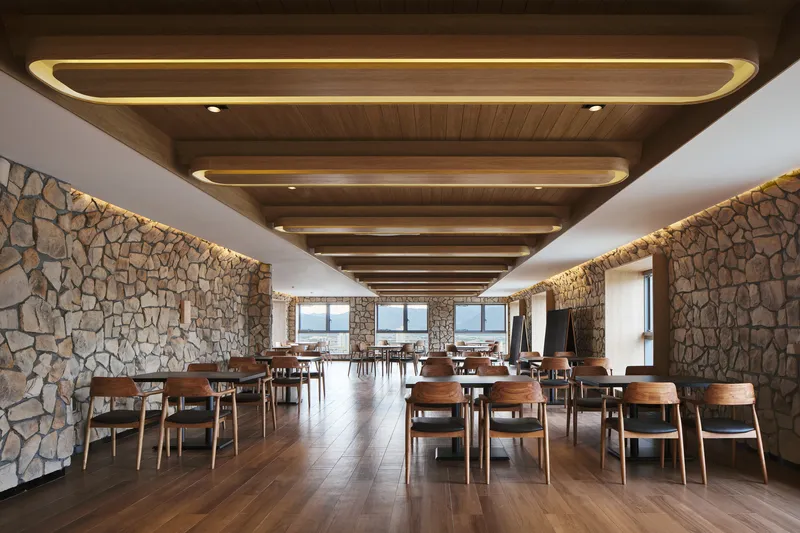
Both the lobby and restaurant use the ceiling as primary design surface, but with entirely different vocabularies. Upstairs, timber-slatted panels step down at intervals, creating a rhythm of recessed and projecting volumes that adds depth to the long dining hall. Rounded timber elements with integrated lighting punctuate this system, softening what might otherwise read as a rigid grid.
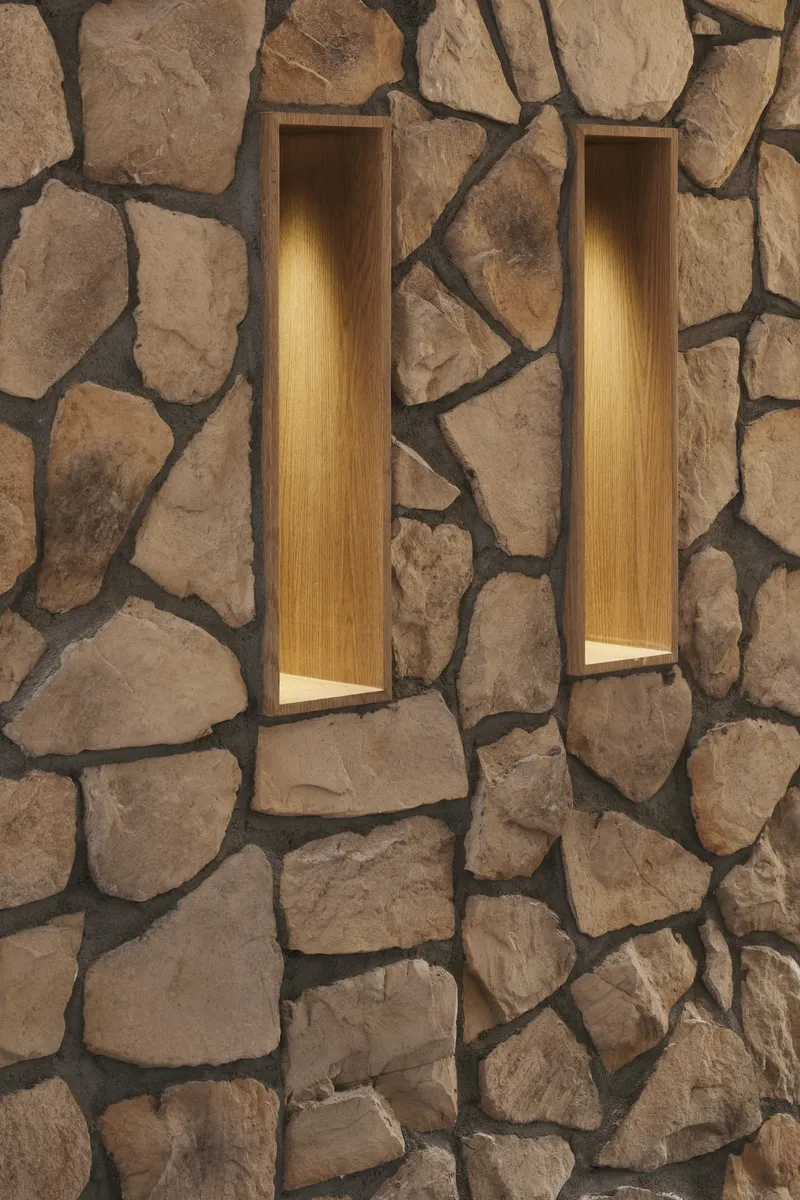
Two vertical illuminated niches recessed into the irregular fieldstone wall offer another moment of quiet intensity. They are simple interventions, just light inside stone, but they anchor the room's spiritual center and suggest a deliberate reference to the traditional Korean interest in framed voids. Whether conscious or not, the move works: it gives the eye a resting point amid the rich texture of stone and timber.
Arrival and Exterior
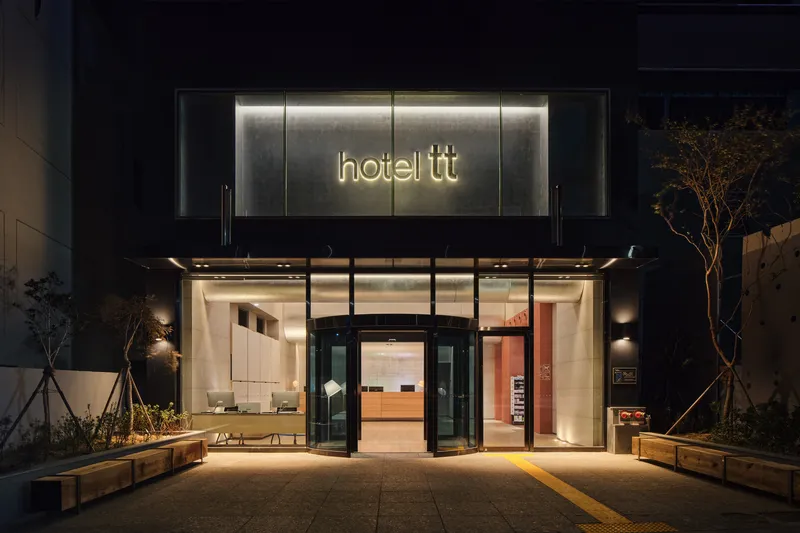
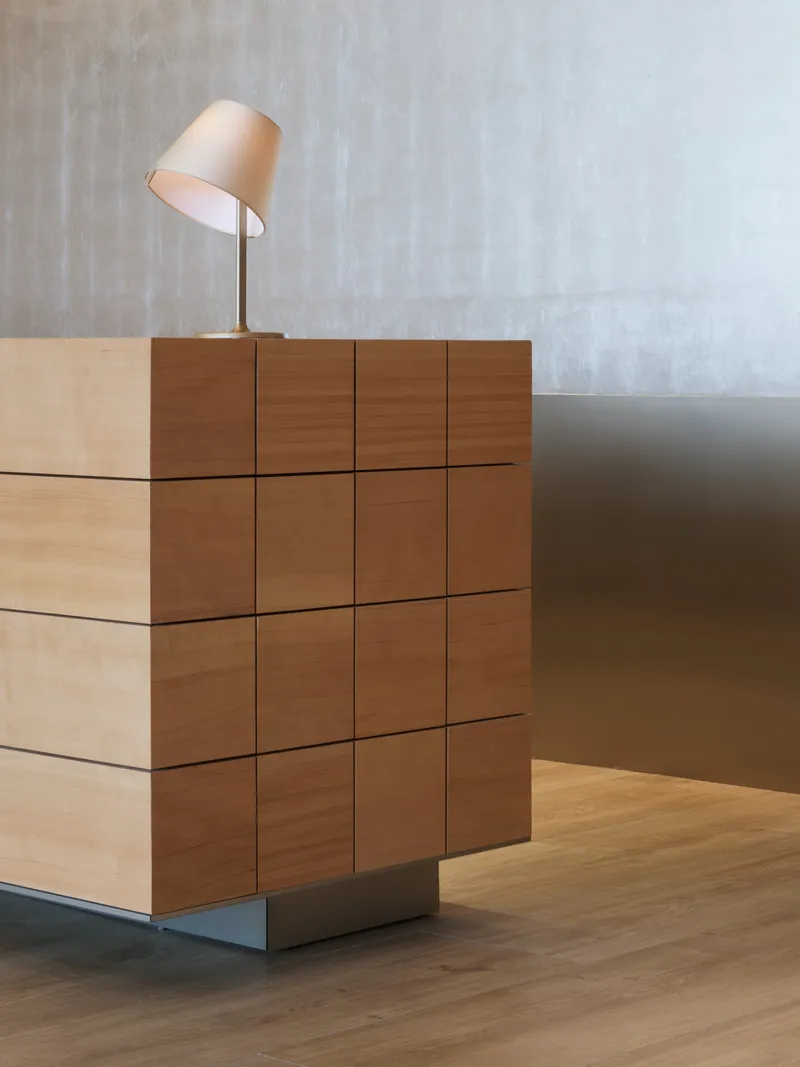
The hotel's exterior entrance is modest: glass revolving doors, illuminated signage, planted beds. It does not attempt a grand architectural statement at street level, which is consistent with the project's broader logic. The spectacle is reserved for the interior, where material investment is concentrated on the two floors guests actually inhabit communally. The reception desk detail, a stepped timber block with a table lamp against a textured grey wall, captures this philosophy in miniature: understated, warm, and quietly specific.
Plans and Drawings
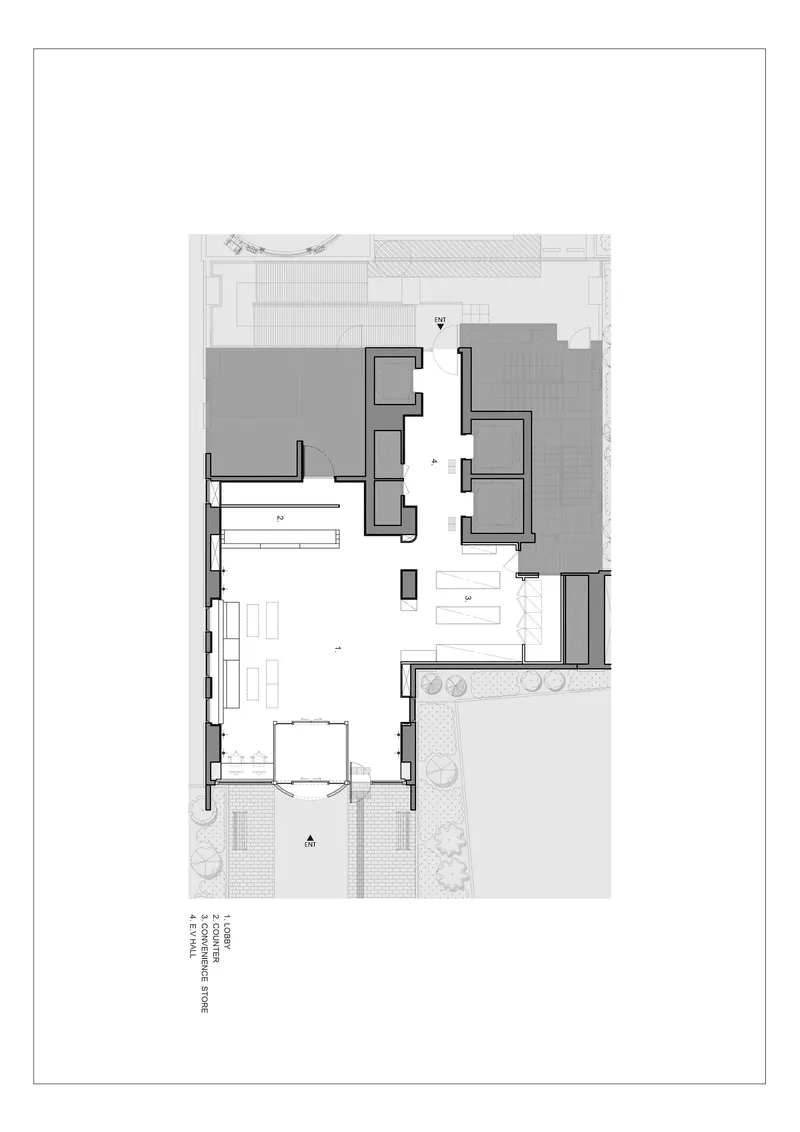
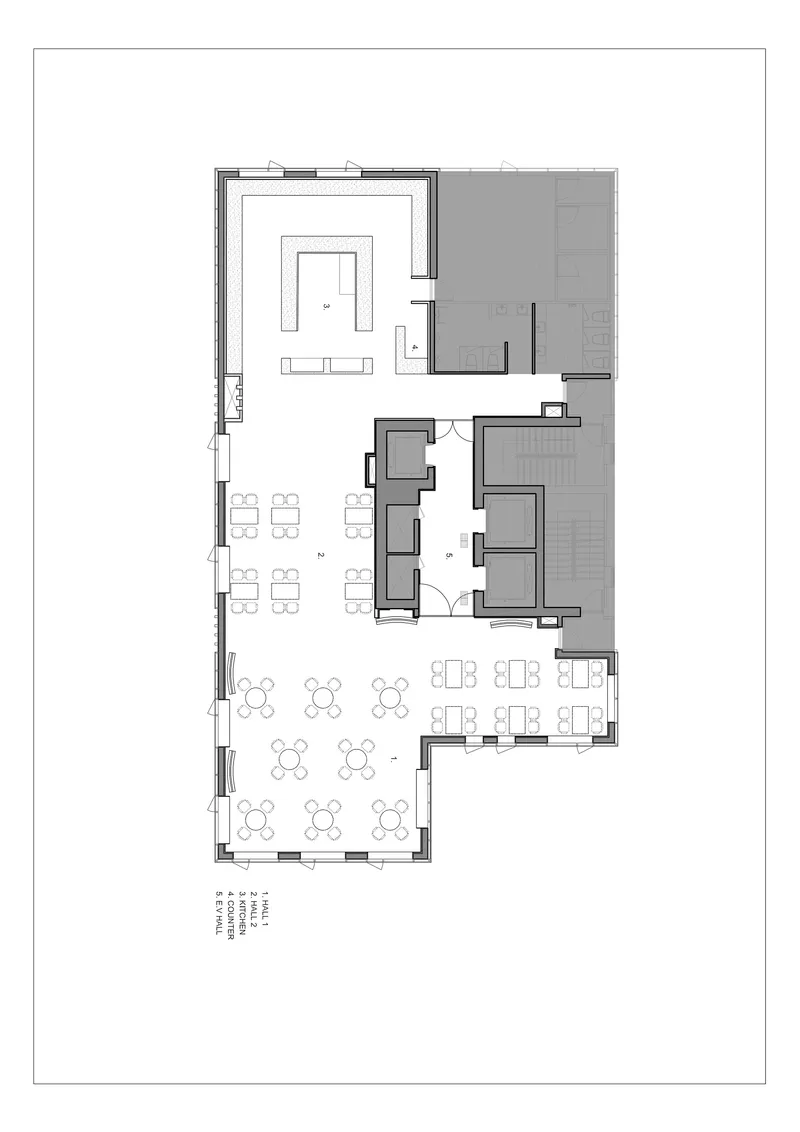
The floor plans reveal the spatial logic behind both key levels. The lobby plan shows an open reception volume with service cores pushed to one side and an outdoor terrace extending the public realm. The restaurant plan distributes dining areas around a central service core, with outdoor terraces on multiple sides capturing different orientations toward the river and mountains. The long traffic lines that concerned the design team are clearly visible, running the full length of the floor plate before opening into the main dining volume.
Why This Project Matters
Hotel TT is a reminder that boutique hospitality does not require a resort setting or a blue-chip address. Gupo's residential quietness and its proximity to the Nakdong River offered Design by 83 something more useful than prestige: a genuine landscape to respond to. The decision to focus design energy on just two floors, lobby and restaurant, while leaving the 133 guest rooms to standard efficiency, is pragmatic and honest. It concentrates experience where it counts.
The material choices carry the argument. Tinfoil-wrapped wave panels and exposed ductwork in the lobby, fieldstone and heavy timber in the restaurant: these are not expensive materials, but they are used with conviction. They reference the coastal environment without literalism, creating atmospheres that feel connected to Busan's geography without resorting to themed decoration. In a market flooded with generic lifestyle hotels, that specificity is the project's real luxury.
Hotel TT, designed by Design by 83, Buk-gu, Busan, South Korea. 429 m². Completed 2022. Photography by Donggyu Kim.
About the Studio
Share Your Own Work on uni.xyz
If projects like this are the kind of work you want to make, uni.xyz is a place to publish your own, find collaborators, and enter design competitions.




Popular Articles
Popular articles from the community


Riyadh For All: Intergenerational Urban Design for Active Aging in Rabat
Riyadh For All reimagines urban design in Rabat with intergenerational co-living, adaptive courtyards, and Moroccan cultural exchange today.

The Ocean Hive: Sustainable Architecture for a Self-Sufficient Civilization at Sea
The Ocean Hive imagines sustainable architecture at sea, where modular habitats, algae, wave power and ocean waste sustain a growing colony.

Play: Fragments of Their World
Familiar architecture becomes modular playground design, creating safe spaces where displaced children can learn, connect, imagine and play.

The Musturak Paradise: Senior Living Architecture for a Connected Future in Temara, Morocco
The Musturak Paradise reimagines senior living architecture in Temara via private homes, social spaces, culture, community, and shared care.


Similar Reads
You might also enjoy these articles

Bao Huynh Watercolor Atelier: A Serene Art Retreat in Hội An
Bao Huynh Watercolor Atelier in Hội An blends multifunctional art spaces, sustainable design, local materials, and family-friendly living in a serene environment.

Atelier Macri Concept Store Interior Design by CASE-REAL
Atelier Macri store features a "ko" counter, walnut wood details, cork displays, blending retail, gallery, and seamless customer experiences.

Manuel Vargas Izquierdo Stadium and High-Performance Sports Center: Architectural Excellence in Jalpa de Méndez
The Manuel Vargas Izquierdo Stadium blends sustainable design, inclusive sports facilities, and cultural-inspired architecture, revitalizing Jalpa de Méndez’s public spaces.

KAKR Buluh Awar Hall: Revitalizing Community and Ecology Through Bamboo Architecture
Community built bamboo hall revitalizes Buluh Awar village, empowering youth, restoring ecology, celebrating vernacular craftsmanship through sustainable architecture and culture.


Comments (0)
Please login or sign up to add comments
No comments yet. Be the first to comment!