
Design Studio Minwoo Carves a Subterranean Temple to Steam Cuisine Beneath Seoul's Financial District
Buried under Yeouido's Yuhwa Securities Building, a 695-square-meter restaurant splits into two geological worlds of stone and light.

Restaurants in Seoul's Yeouido district tend to serve their atmospheres pre-packaged: polished granite lobbies, LED panels, corporate neutrality. Design Studio Minwoo* went the opposite direction for Seiromushi Cuisine, a 695-square-meter seiromushi (Japanese steam cooking) restaurant occupying basement level one of an existing securities building. Rather than fighting the subterranean condition, the studio doubled down on it, treating the descent as a passage from the city into something slower, older, and deliberately geological.
What makes the project genuinely interesting is its refusal to settle on a single mood. The space is organized around a forked path from the entrance, splitting into two main hall environments that share a material vocabulary of stone, timber, and black marble but feel atmospherically distinct. One hall pushes upward through a faceted ceiling void that channels light like a mineral fissure. The other contracts around you with dark paneling and backlit stone screens. The studio calls the governing concept "Timeless Modernity," a phrase that could easily be empty branding but here maps onto a real spatial strategy: classical proportions and natural materials deployed with sharp geometric discipline.
The Forked Path: Two Atmospheres from One Entrance
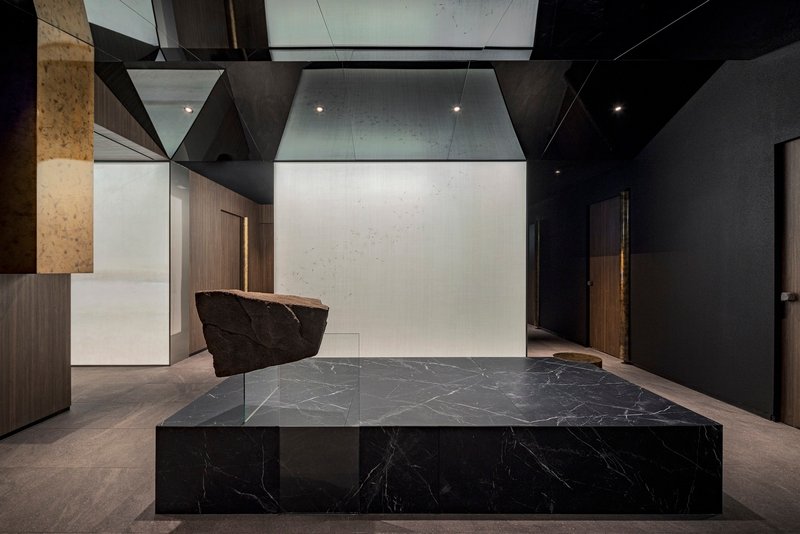
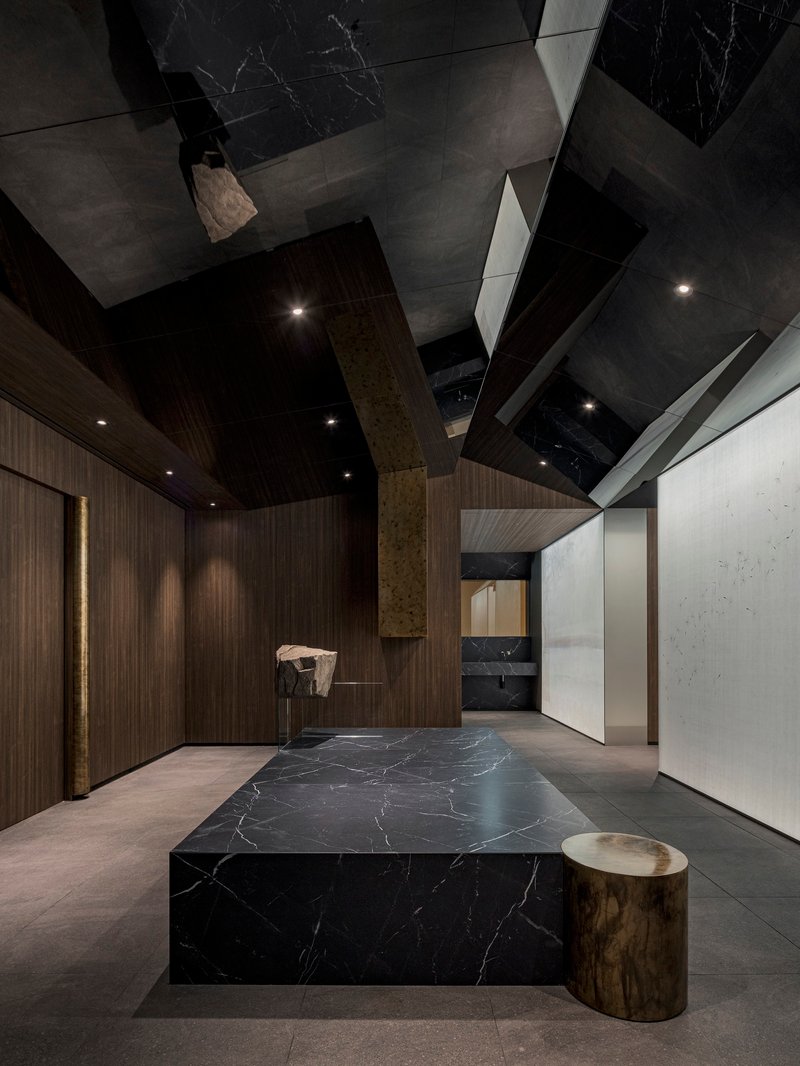
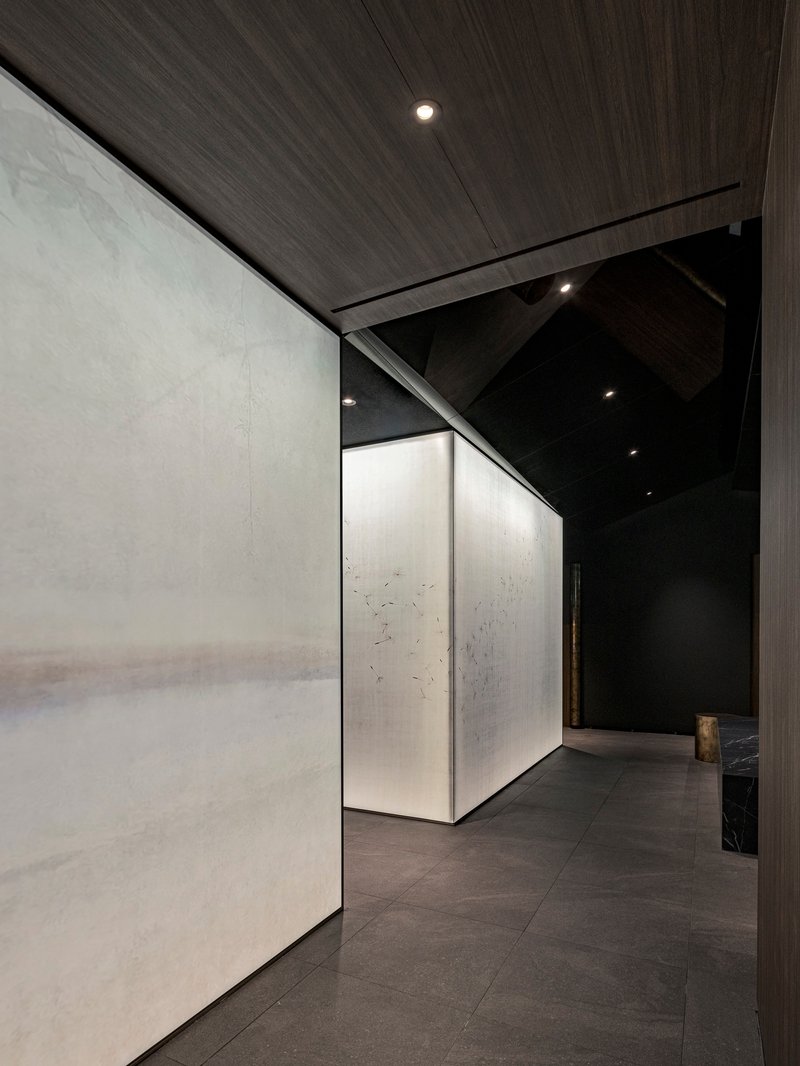
The entry sequence begins at a black marble reception counter, above which a raw tree trunk fragment hangs from the faceted ceiling like a geological specimen pinned for display. A cylindrical brass stool and the marble platform below it establish the tonal register: heavy, grounded, but precisely cut. From here, the corridor divides. Pale stone wall panels and a timber ceiling guide guests past a pivoting corner volume that separates the two dining worlds. The architecture is doing the work of a maître d', directing movement without signage.
The choice to split the plan into two experientially different routes is the sharpest decision in the project. It means the restaurant can serve a boisterous group at a communal table in the open hall and a quiet business dinner in a private room without either party sensing the other exists. The forked path is not decorative; it is operational infrastructure dressed in stone.
The Main Hall: Light Falling Through a Geological Void
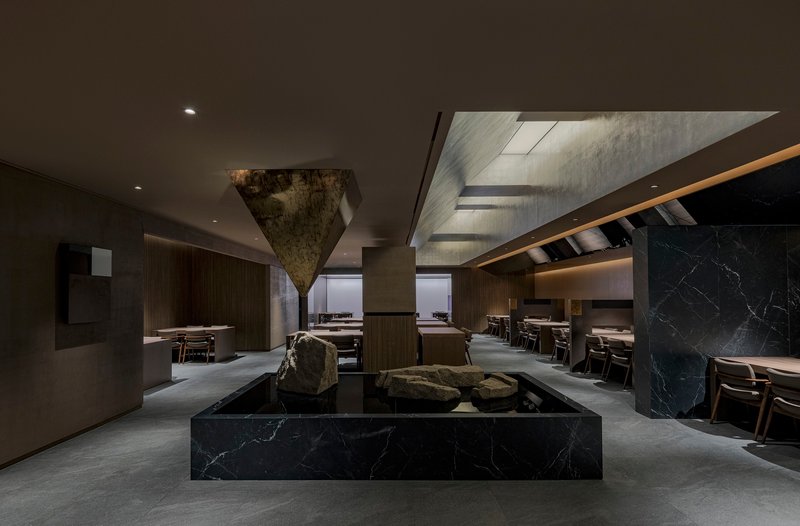
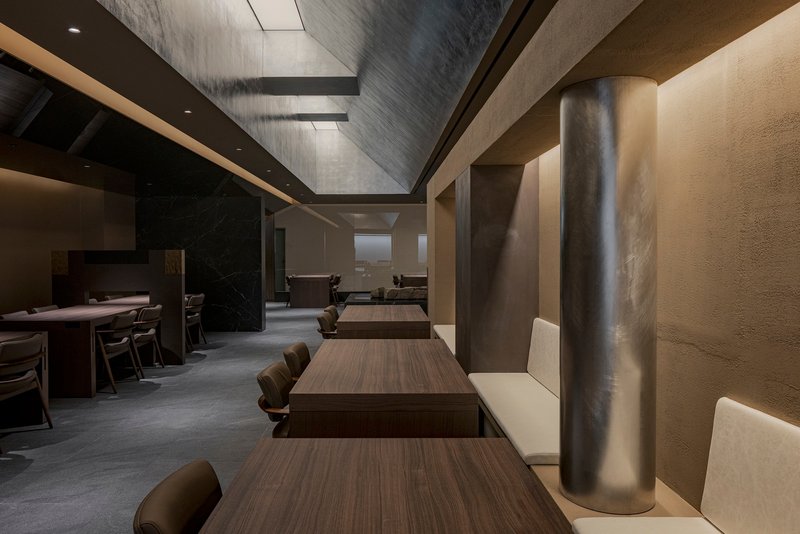
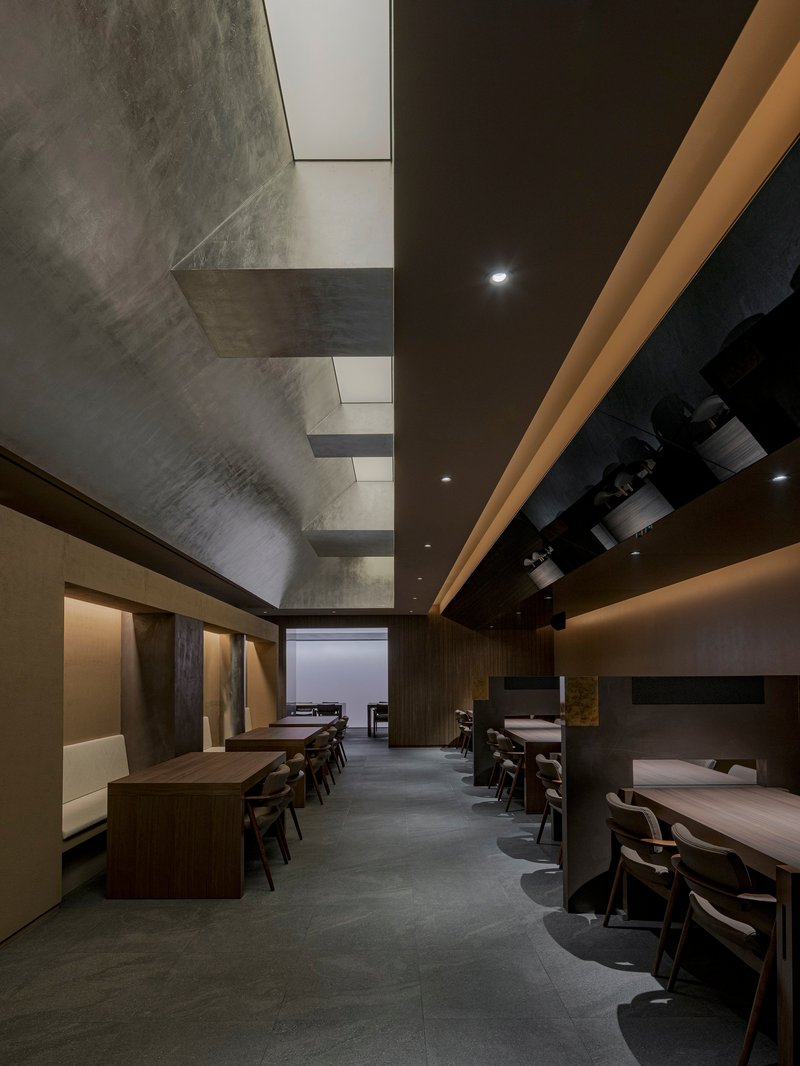
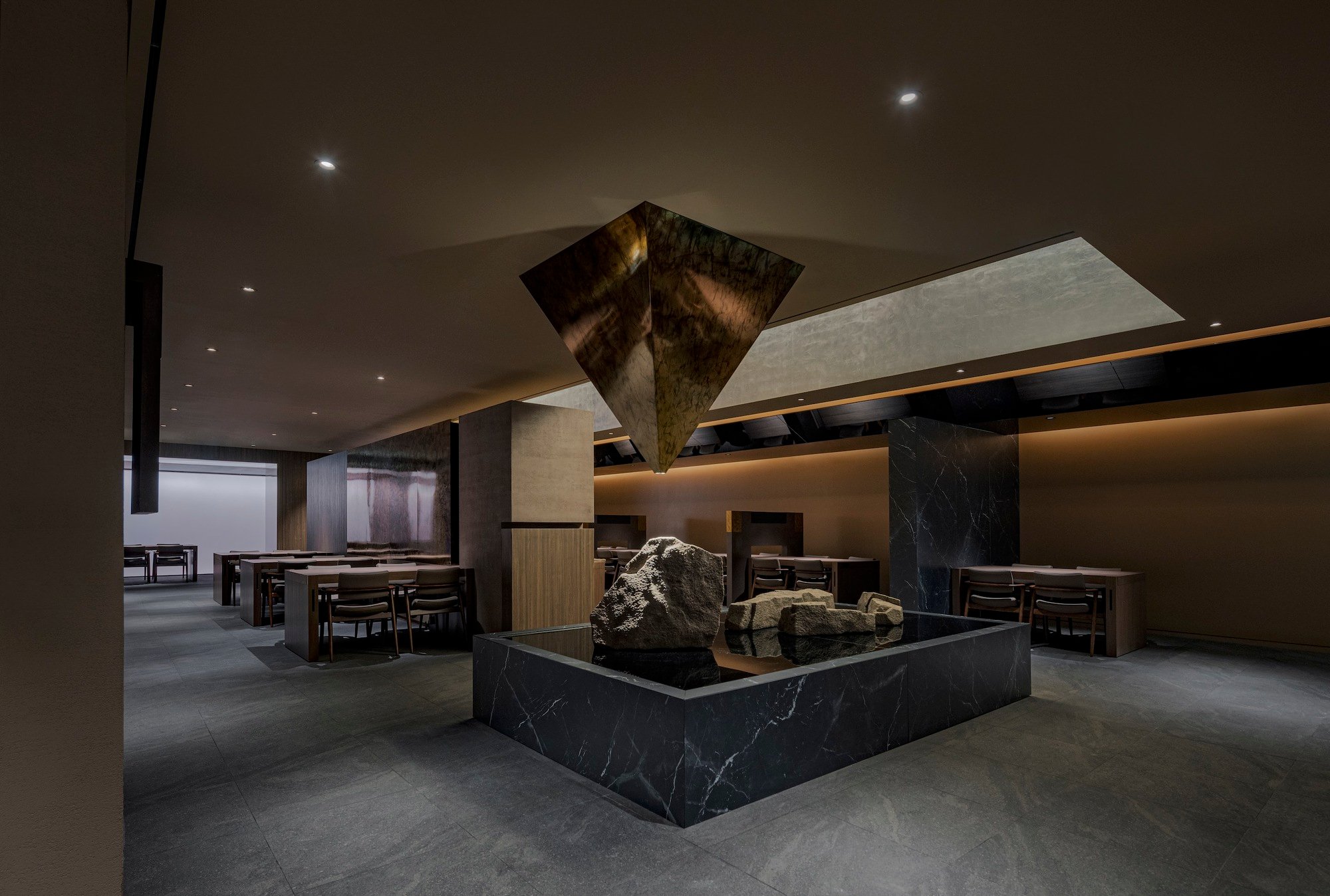
The first hall is the project's set piece. An inverted pyramid skylight opens above a black marble plinth on which artist Tae-soo Lee's stone compositions sit like offerings on an altar. The ceiling originates from different heights, its faceted planes expressing the geometry of the original building's structure overhead. Light falls from above in a way that shifts through the day, from a pale wash at noon to warm amber by evening, supported by a lighting system tuned to change with season and time of day.
Timber tables run in long rows beneath this ceiling, and a cylindrical column anchors the room without interrupting sightlines. The effect is cavernous but not cold. The stone, the warm timber, and the controlled light sources give the room weight and presence. You feel like you are eating inside a mountain, which, for a basement-level restaurant dedicated to steam cooking, is not the worst metaphor.
Stone as Protagonist
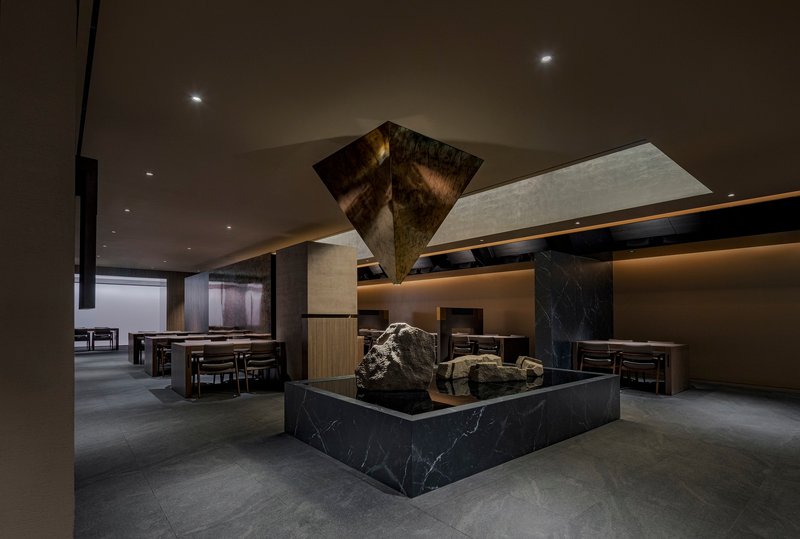
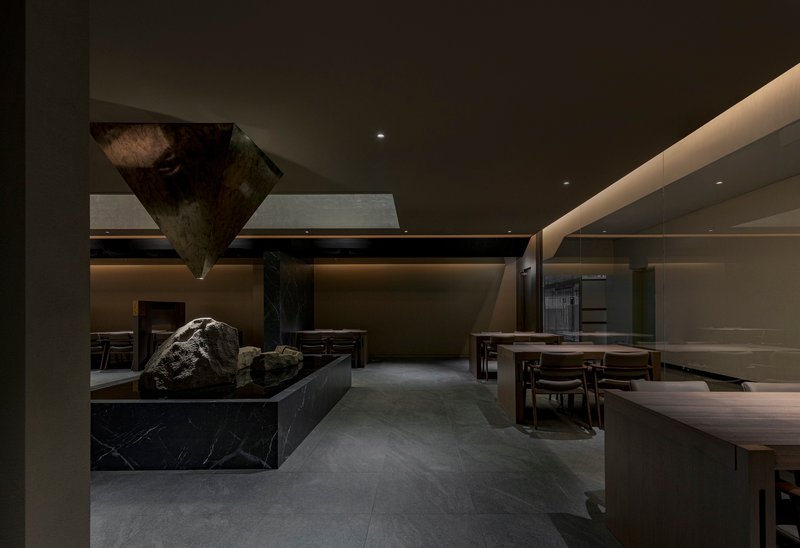
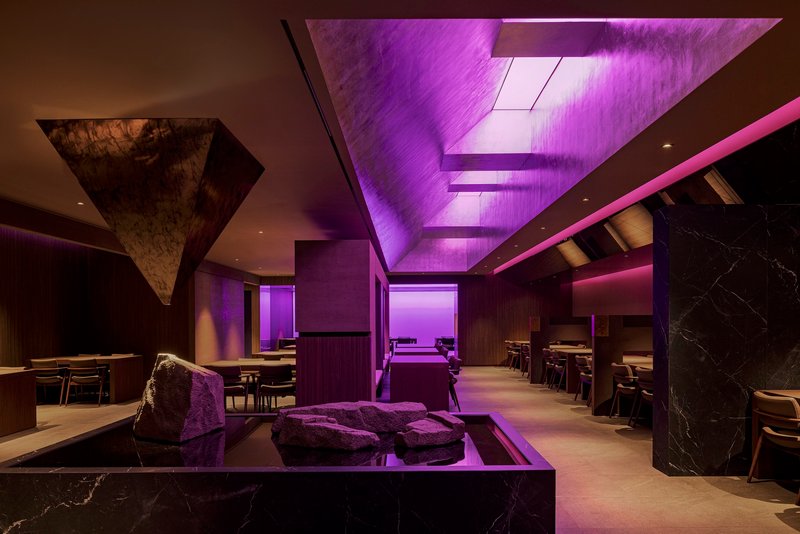
The central stone installation deserves its own reading. Tae-soo Lee's triangular horn objects, each with different physical properties, sit on the polished black marble plinth beneath an angular mirrored ceiling element that reflects and distorts them. Under daytime lighting the sculptures read as raw geological fragments. Under the purple-lit ceiling panels visible in evening mode, they become something almost ceremonial. The mirror above amplifies the ambiguity, doubling the stones so they appear to float in an infinite shaft.
This is art direction that actually earns its presence. The stones are not decoration applied to a finished interior; they are the spatial anchor around which the hall is organized. Remove them and the room would feel empty in a way that no amount of furniture could fix.
The Corridor: Compression Before Release
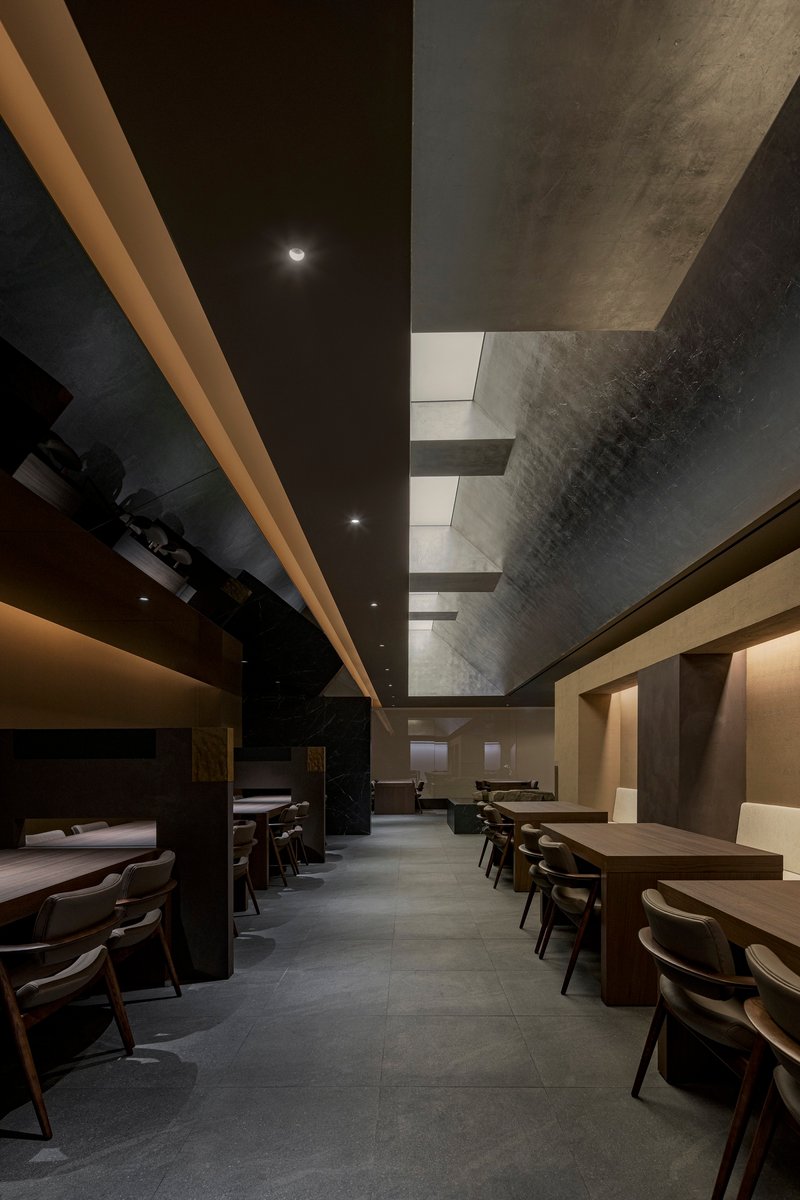
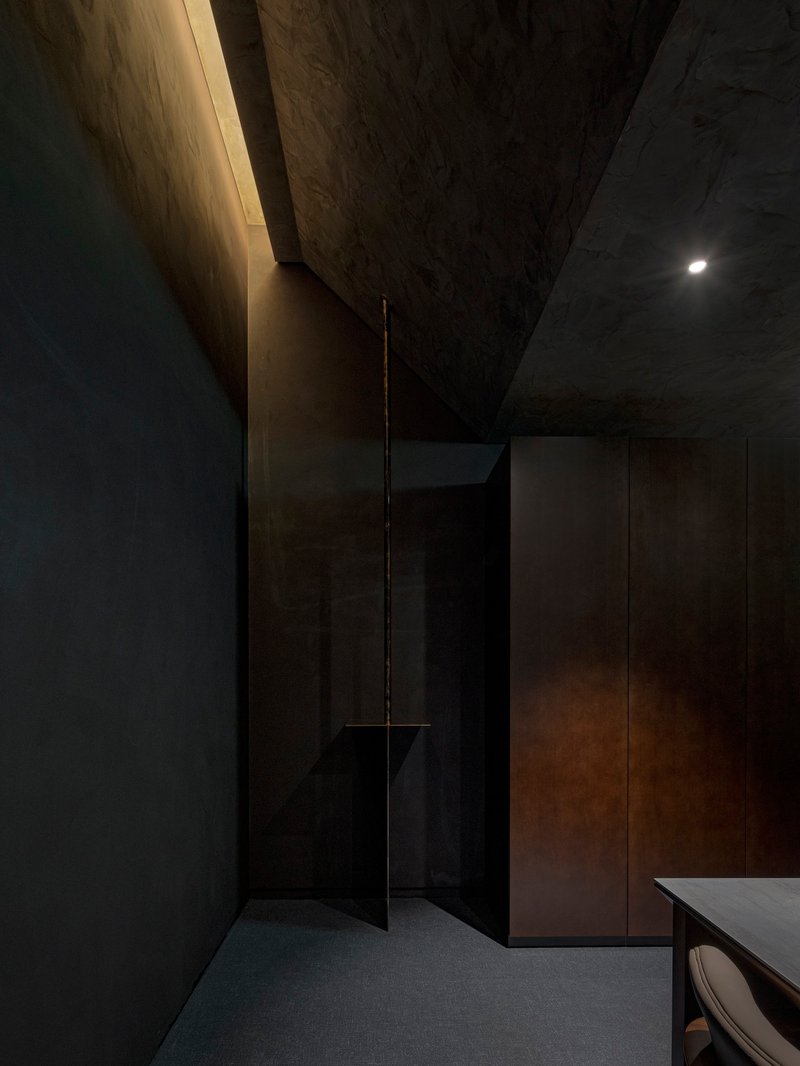
The corridors between zones are deliberately narrow, with exposed concrete ceilings, narrow illuminated slots along timber walls, and suspended slot skylights that compress your attention to a thin line of light overhead. It is a classic sequencing technique: make the passage tight so the destination hall feels expansive by contrast. The dining corridor with rows of tables beneath the slot skylight manages to feel both functional and processional. Guests are not just walking to their seats; they are moving through a spatial narrative.
Private Rooms: Tall Ceilings and Introverted Calm
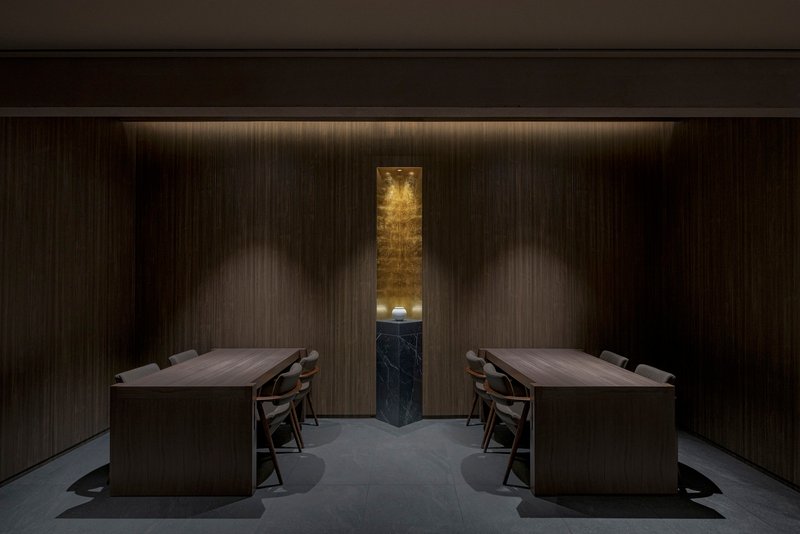
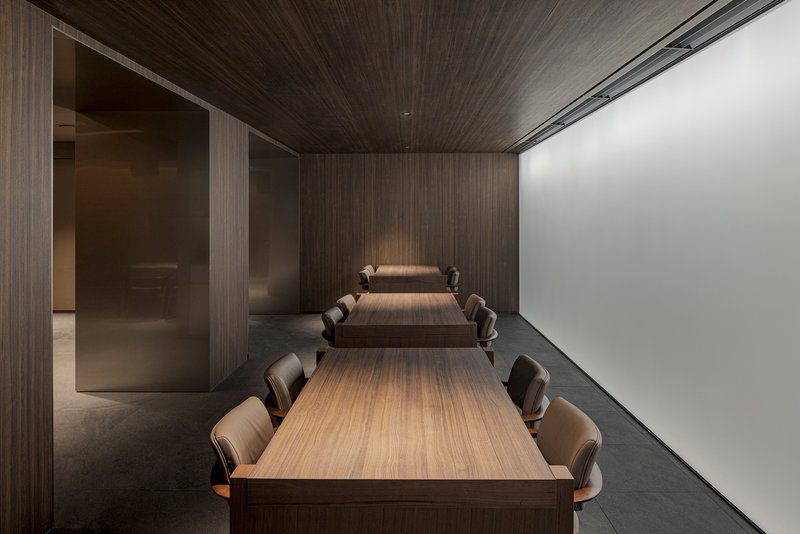
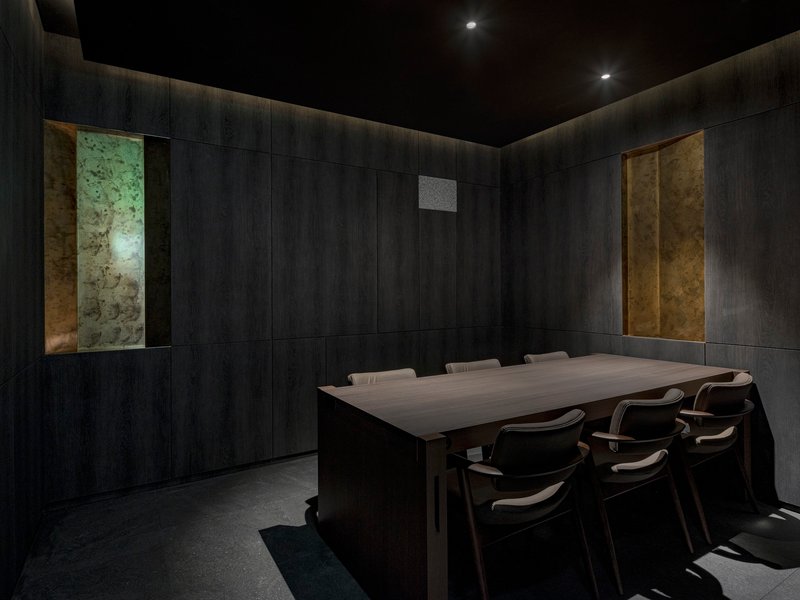
The private dining rooms are where the design becomes most restrained and, arguably, most successful. High ceilings evoke magnificence and stability without resorting to decorative excess. Dark timber-paneled walls, mirrored table surfaces, and backlit stone panels create rooms that feel hermetic and precious. A vertical black marble niche with gold leaf in one room provides the only overt gesture of luxury. Everything else is material texture and proportion doing the talking.
The translucent wall panels, illuminated from behind in the semi-private spaces, soften the boundary between private and communal zones. Light passes through but vision does not. It is a simple move, but it keeps the private rooms from feeling like sealed boxes, lending them a gentle atmospheric permeability.
Ceiling Geometry as Structural Expression
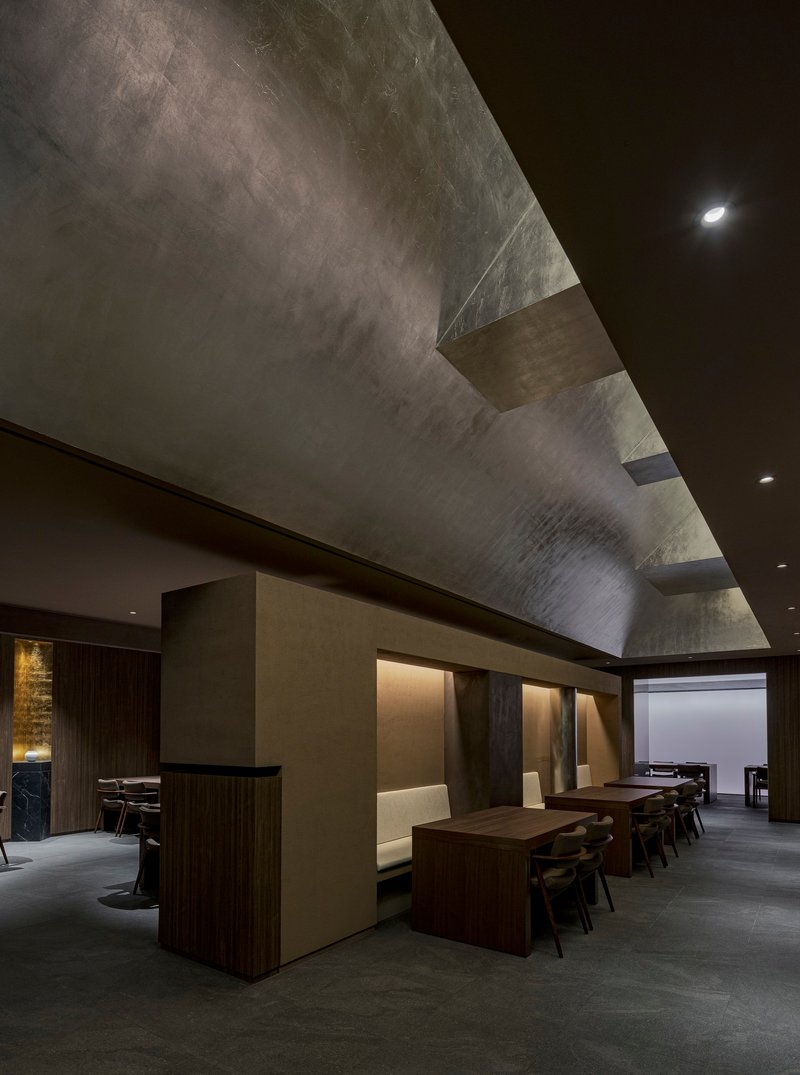
Throughout the project, the ceiling is the most architecturally active surface. Angled skylights cast natural light across textured surfaces. Recessed planes create voids that read as excavated rock. The faceted concrete ceiling in the main hall does not hide the building above; it translates its structural logic into an interior topography. For a basement fit-out, this is an unusually ambitious relationship with the host building. Rather than dropping a generic suspended ceiling and forgetting what is overhead, the studio allowed the original architecture's geometry to dictate the interior's most dramatic moments.
Plans and Drawings
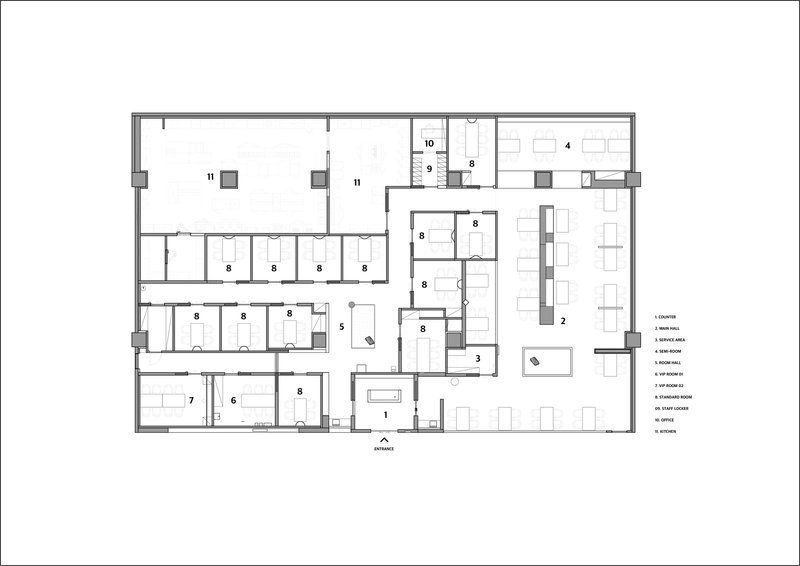
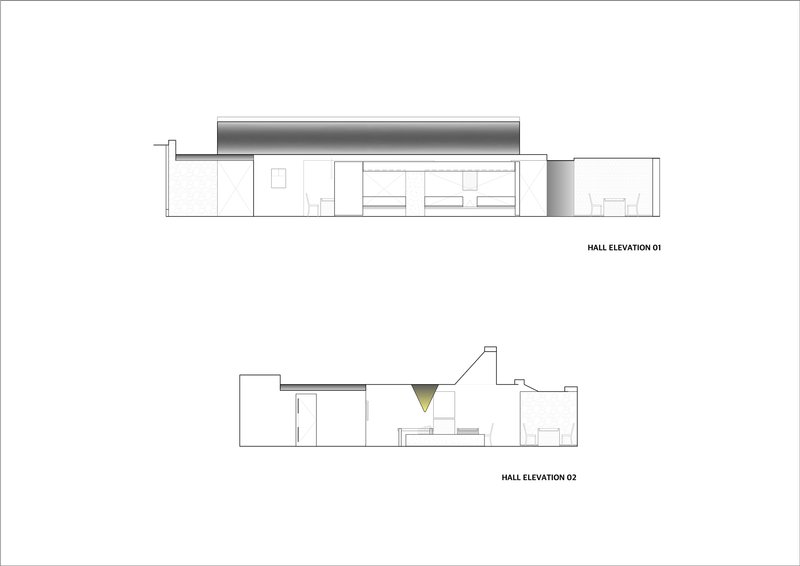
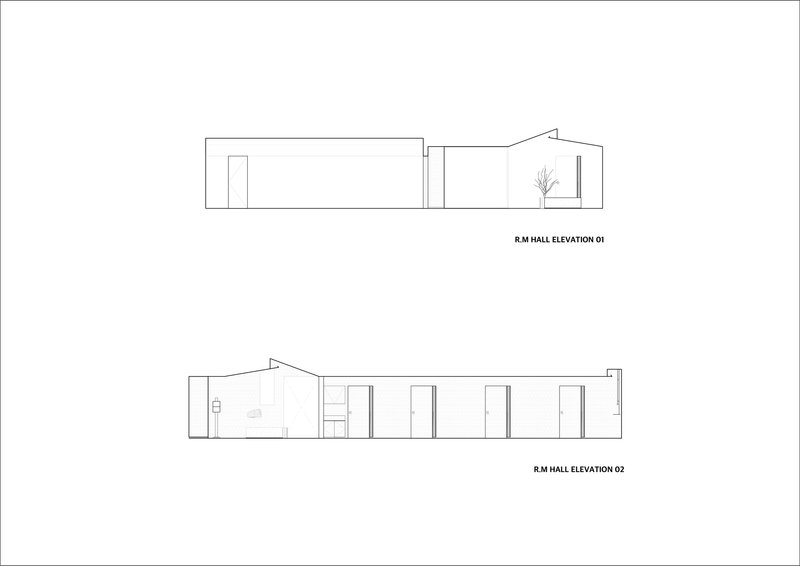
The floor plan confirms the forked-path logic: a central core separates dining areas from the kitchen and service zones, with private rooms wrapping the perimeter. The elevation drawings reveal the inverted cone element suspended in the main hall and the sloped ceiling planes that generate the varying heights throughout. What reads as intuitive and almost organic in the photographs is, on paper, precisely calculated. Every slope and slot has a geometric rationale tied back to the structure above.
Why This Project Matters
Basement restaurants are a genre that rarely gets serious architectural attention. The typical brief is to compensate for the lack of natural light with decorative intensity, to distract diners from the fact that they are underground. Seiromushi takes the opposite approach: it makes the underground condition the entire point. Stone, controlled light, compressed corridors opening into tall halls. The space does not apologize for being below grade; it leverages the depth as an asset, turning a securities building's basement into something that feels deliberately excavated.
Design Studio Minwoo* also demonstrates something increasingly rare in hospitality design: restraint that does not read as austerity. The material palette is narrow, the colors are muted, the geometry is disciplined, yet the spaces feel warm, layered, and genuinely atmospheric. The collaboration with Tae-soo Lee on the stone installations elevates the project beyond fit-out into something closer to environmental art. For a cuisine built around the elemental act of steaming, the architecture delivers an appropriately elemental experience.
Seiromushi Cuisine Restaurant by Design Studio Minwoo*, Yeongdeungpo-gu, Seoul, South Korea. 695 m², completed 2022. Photography by Yong-joon Choi.
About the Studio
Share Your Own Work on uni.xyz
If projects like this are the kind of work you want to make, uni.xyz is a place to publish your own, find collaborators, and enter design competitions.




Popular Articles
Popular articles from the community

Pablo Senmartin Suspends a Steel-and-Timber Refuge Above a River Forest in Córdoba
An 80-square-meter dwelling on pilotis camouflages itself among the trees of Mayu Sumaj, designed to be dismantled without waste.
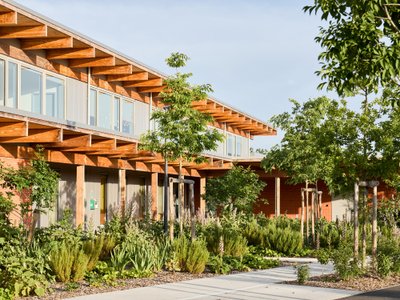
GGR Architectes Anchors a New Neighborhood in Frouzins with a Brick and Timber School Complex
A cruciform plan of terracotta brick and exposed wood frames four courtyards for 140 students outside Toulouse, France.
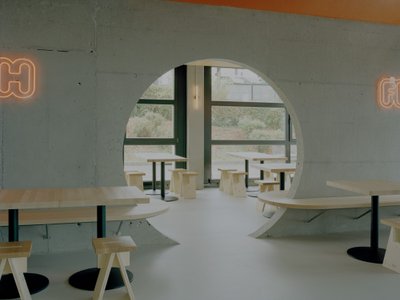
Noue Studio Organizes a Swiss Restaurant Around a Single Concrete Wall
In Granges-Paccot, Switzerland, a 216-square-meter renovation turns raw materials and a central spine into a legible dining experience.
ONA Threads Four Board-Formed Concrete Cabins Along a 260-Meter-Deep Site in Mendoza
At the edge of Argentina's wine country, a set of curved concrete lodges negotiate a razor-thin parcel between city and mountain.


Similar Reads
You might also enjoy these articles

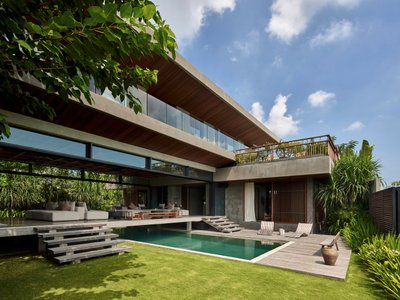
Freebird Residence by Alexis Dornier: A Tropical Modernist Sanctuary in Bali
Floating living pavilion above pool anchors H-shaped tropical villa, blending Japanese minimalism, sustainable strategies, lush landscape, and sculptural interiors.
127af Flips a Tiny Bagnolet Rowhouse Upside Down with a Handcrafted Roof Extension
A 55-square-meter terraced house on the edge of Paris gains a luminous upper living floor through lightweight timber and steel.
1.61 Design Workshop Wraps a 600-Square-Meter Café in Vietnam in Sculptural Burgundy Drama
Reden Café & Bistro pairs a helical staircase, mosaic floors, and deep red interiors to rethink Vietnamese hospitality space.

The Unbound Brain: A School Shaped by Cognitive Architecture
Cylindrical learning pods radiate like neurons from a central cortex, turning the floor plan into a spatial model of human thought.

Explore Commercial Buildings Competitions
Discover active competitions in this discipline




The Global Benchmark for Architecture Dissertation Awards


Challenge to design luxury tourism on rails


VR headsets Storefront design competition

Designing a staircase for a client
Comments (0)
Please login or sign up to add comments
No comments yet. Be the first to comment!