

Designing for Connection and Dignity: A Home for the Elderly in Leiria, Portugal
Redefining Elderly Living: Where Design Meets Dignity in the Heart of Portugal


As societies around the globe grapple with the challenges of aging populations, architecture is increasingly called upon to provide innovative, sensitive, and holistic solutions for elderly care. The Sensitivity to Needs in Leiria, Portugal, designed by Patryk Wlodarczyk, embodies this shift, combining thoughtful universal design principles with a deep understanding of local culture, landscape, and community needs.
Set in the scenic region of Barreira, Leiria, this facility reimagines elderly living as a space that prioritizes well-being, inclusivity, and connection, creating not just a building but a miniature village that fosters meaningful interactions and celebrates the identity of its place.
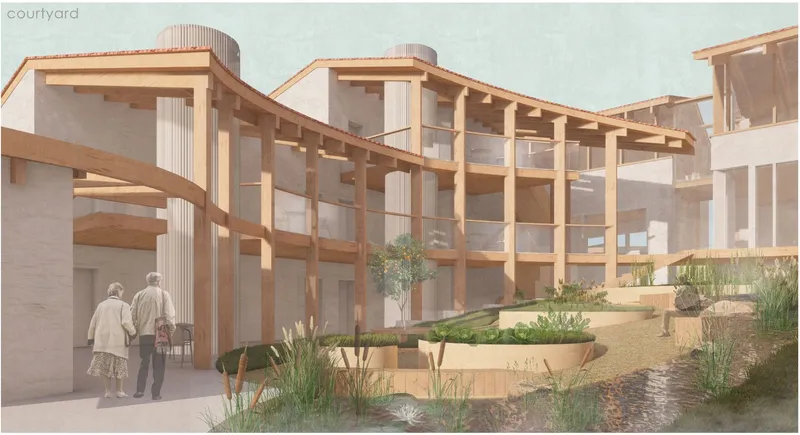
A Village Concept Rooted in Portuguese Identity
The project's design takes inspiration from Leiria's rich cultural heritage and diverse landscape. Nestled between hilly olive groves, vineyards, and the maritime breeze of the Atlantic Ocean, the facility harmonizes with the natural environment through materials, form, and function.
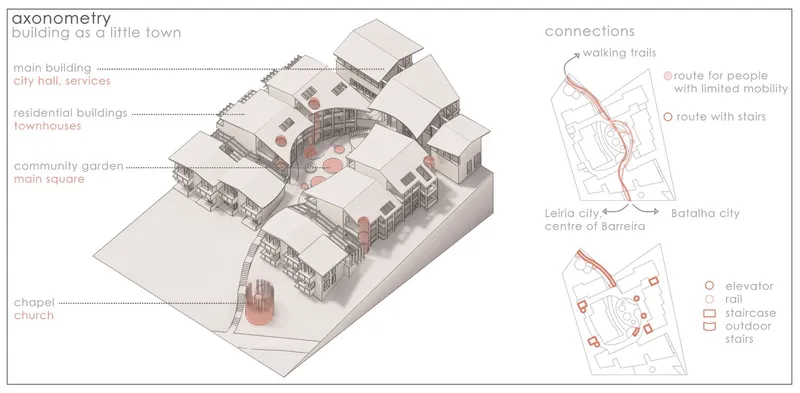
Rather than a monolithic structure, the facility is composed of multiple smaller buildings, mimicking the feel of a traditional Portuguese village. This decentralized approach encourages interpersonal relationships and helps residents form new bonds within a supportive community.
By incorporating traditional Portuguese architectural elements—such as whitewashed façades and orange-tiled roofs—the design pays homage to the region's vernacular style while introducing contemporary adaptations that meet the needs of its residents.
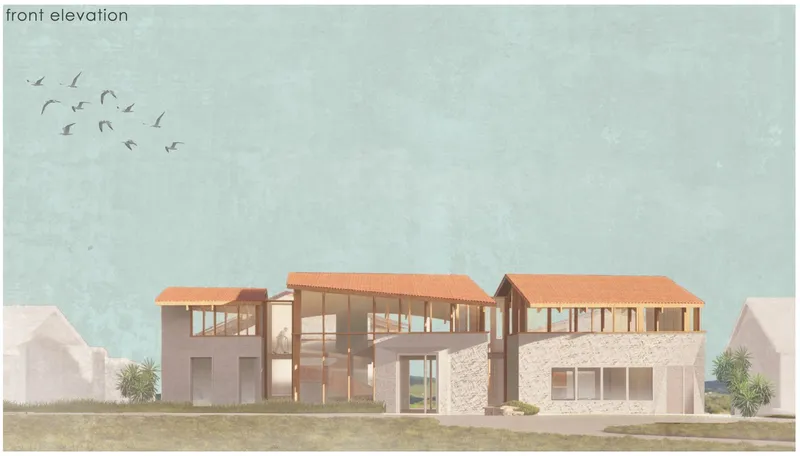
Universal Design for Dignity and Inclusion
At the heart of the design is the principle of universal accessibility, ensuring that residents of all mobility levels can navigate and enjoy the facility without barriers. The project considers the diverse needs of the elderly, including those with limited mobility, those who use wheelchairs, and those seeking spaces for quiet reflection or social interaction.
Key features of the universal design approach include:
Accessible circulation paths: The site plan integrates walking trails, stair-free routes, and elevators that connect different levels seamlessly.
Flexible room typologies: Accommodations include single and double rooms tailored to varying preferences and mobility needs.
Green spaces for all: A lush, central atrium garden becomes the heart of the complex, fostering a sense of calm, connection, and belonging.
This thoughtful design allows every resident to engage with the facility fully, from private spaces to shared amenities.
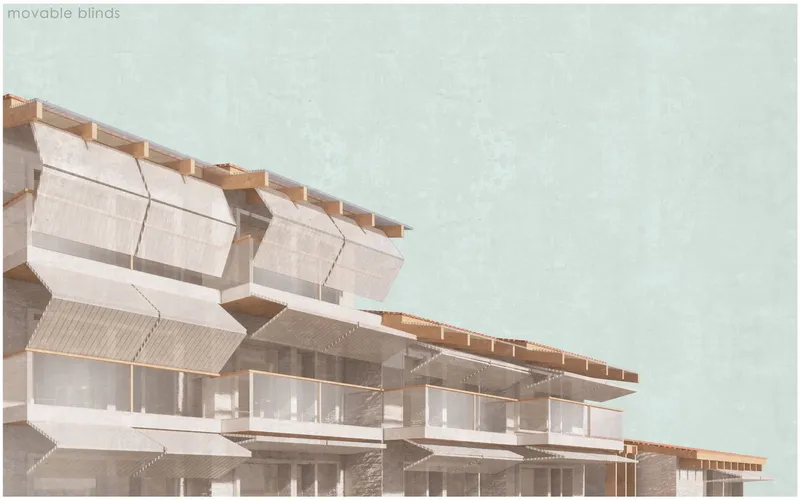
Connecting Nature, Light, and Comfort
In addition to addressing physical accessibility, the project also focuses on the emotional and sensory experiences of its residents. Light, air, and views are carefully calibrated to enhance well-being:
Movable blinds equipped with photovoltaic panels filter sunlight, maintaining interior comfort while generating renewable energy.
Large windows frame views of the surrounding landscape and garden, bringing nature closer to residents.
Therapeutic outdoor spaces, such as community gardens and water features, encourage physical activity and social interaction while soothing the mind.
The interplay of natural elements and design ensures that the elderly are connected not only to each other but also to the world outside.

A Space for Reflection: The Chapel
Understanding the inevitability of life's transitions, the design incorporates a chapel as a place for solitude, spirituality, and reflection. Positioned at the edge of the site, the chapel's design evokes fragility and elevation, symbolizing the passage of life. Its thoughtful form and materiality encourage introspection and offer a serene environment for residents to process their thoughts or grief.
Sustainability and Community Resilience
Environmental sensitivity is another cornerstone of the design. The water management system is an excellent example of this, using features such as:
Retention reservoirs and purifying vegetation to filter and manage water sustainably.
Retention ponds and underground systems to mitigate excess water and nourish the site's greenery.
This focus on self-sufficiency and ecological harmony ensures that the facility not only serves its residents but also minimizes its environmental footprint.
Social Integration Through Public Spaces
Central to the project’s success is the creation of spaces that facilitate interaction and foster community. Inspired by the piazzas of Mediterranean towns, the design features:
A main square where residents and visitors can gather for events or informal conversations.
A community garden that encourages shared activities like gardening, promoting collaboration and engagement.
Indoor spaces such as a dining hall, therapy rooms, and a library, each thoughtfully arranged to balance privacy with openness.
Tailoring Spaces to Individual Needs
Acknowledging that every resident has unique preferences and lifestyles, the project categorizes spaces to suit varying personalities:
Quiet, private spaces for introspective residents overlooking serene landscapes.
Socially vibrant areas near gardens for those who thrive on interaction and community involvement.
Flexible spaces for those whose preferences change, offering a mix of privacy and social engagement.
This approach ensures that no one is left behind, and each resident feels at home.
A Holistic Model for Elderly Living
The Home for the Elderly in Leiria represents a paradigm shift in the design of facilities for aging populations. Its architecture is not just about functionality but about creating a life-enhancing environment where residents can live with dignity, comfort, and connection.
By bridging traditional Portuguese architectural elements with modern sustainability and inclusivity, the project offers a model that other regions can emulate. It underscores the importance of designing for humanity and place, blending practical needs with emotional and cultural dimensions.
As the world continues to age, projects like this serve as a beacon of how architecture can address societal challenges with empathy and ingenuity.


Popular Articles
Popular articles from the community


U.GA Architects Wraps an Oval Rooftop Pool in Curved Board-Formed Concrete on Busan's Jeollidan-gil
In Busan's Jeonpo-dong, a 454 m² mixed-use block stacks a neighborhood facility, guest rooms and an oval rooftop pool inside spiraling concrete walls.

David Macias Steps a Doorless Stone and Plaster House Down a Tropical Colombian Hillside
In the humid hills of Colombia, Threshold House replaces the front door with an open void and terraces its 850 m² down the slope instead of fighting it.

Cube Design Draws an Ecological Corridor Between Two Shenzhen Hills with the Nankai Building
Beside Shenzhen's container docks, the Nankai Building pairs stacked balconies with a climbing green screen to connect two hillsides across its height.

Jaramillo Van Sluys Arquitectura and Urbanismo Turn a Demolished Registry Lot in Quito into an Orchard Plaza
In Quito's Centro Histórico, a 2,800 m² plaza exposes the San Agustín convent wall and redraws its lost Augustinian orchard in volcanic stone.

Similar Reads
You might also enjoy these articles


Vereda Arquitetos Renovates a 40-Square-Meter Apartment Inside Niemeyer's Copan Building
A compact unit in São Paulo's most iconic residential tower gets a material overhaul that pairs exposed concrete with bold blue Formica.

Shakur's House: Exposed Brick as an Interior Organiser in a 168 m² Mashhad Residence
Brick moves indoors in this Mashhad residence, where masonry walls, glass partitions and teal planes sequence a compact home without closing it off.

Day and Night Park: A Time-Based Urban Newsstand in Beijing
A temporary urban newsstand in Beijing blending travel, light, and reading through poetic colors, compact form, and community-focused design.

Modernist Patio Renovation in El Masnou, Barcelona by Oliver Segura Arquitectura + Cebrià Arquitectura
Modernist patio renovation blending tradition and innovation with a movable pool, leveled floors, and Catalan materials in El Masnou.

Explore Ageing-Well Design Competitions
Discover active competitions in this discipline

Challenge to reimagine the Iron Throne

Photograph architecture without architects

Illustrate the lost glory of Angkor Wat - Render Challenge

Design challenge to reuse E-waste
Comments (0)
Please login or sign up to add comments
No comments yet. Be the first to comment!