
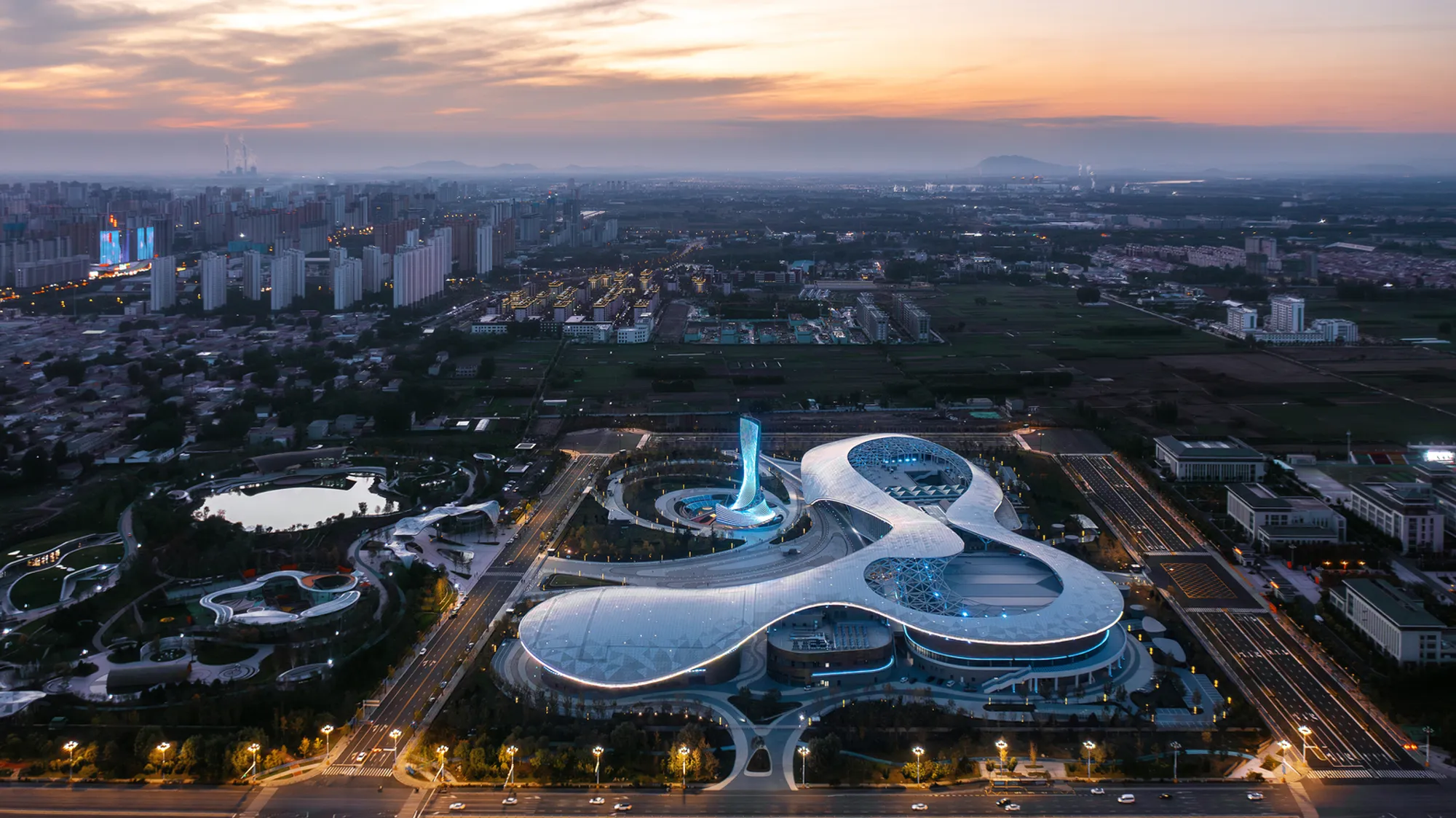
Dingzhou Cultural and Sports Center by THAD: A New Ecological Engine for Urban Transformation
Dingzhou Cultural and Sports Center blends culture, sports, and ecology with parametric design, creating a vibrant, sustainable urban landmark for community life.


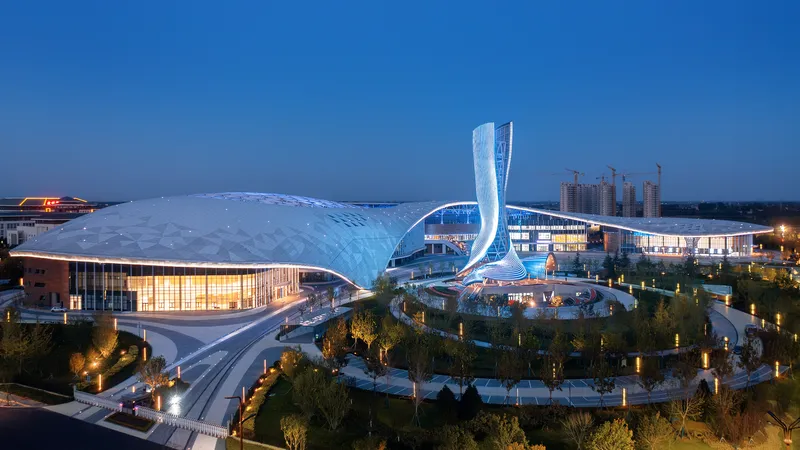
The Dingzhou Cultural and Sports Center, designed by THAD under the leadership of architect Zhuang Weimin, stands as a transformative cultural landmark reshaping the northern ecological district of Dingzhou, China. Rooted in the city's thousand-year history and aligned with its vision for cultural renewal, sustainable development, and regional integration, the project establishes a vibrant hub where architecture, ecology, and public life converge. With a vast site of 14.05 hectares and a total floor area of 136,394 m², the new complex represents the next chapter for Dingzhou—an ancient county reborn with contemporary purpose.
A Catalyst for Dingzhou’s Urban Renaissance
Dingzhou, honored by the UN as a “Millennium County,” is undergoing profound urban growth grounded in four strategic pillars: Culture, Ecology, Technology, and Industry. Positioned just 3 km from the historic Song Dynasty Tower, the Cultural and Sports Center functions as the dynamic core of the city’s new ecological region and a key platform within the Beijing–Tianjin–Hebei Collaborative Development strategy. More than a collection of buildings, it is a multifunctional urban engine strengthening community life, regional synergy, and cultural exchange.
Integrating Culture, Sports, and Ecology
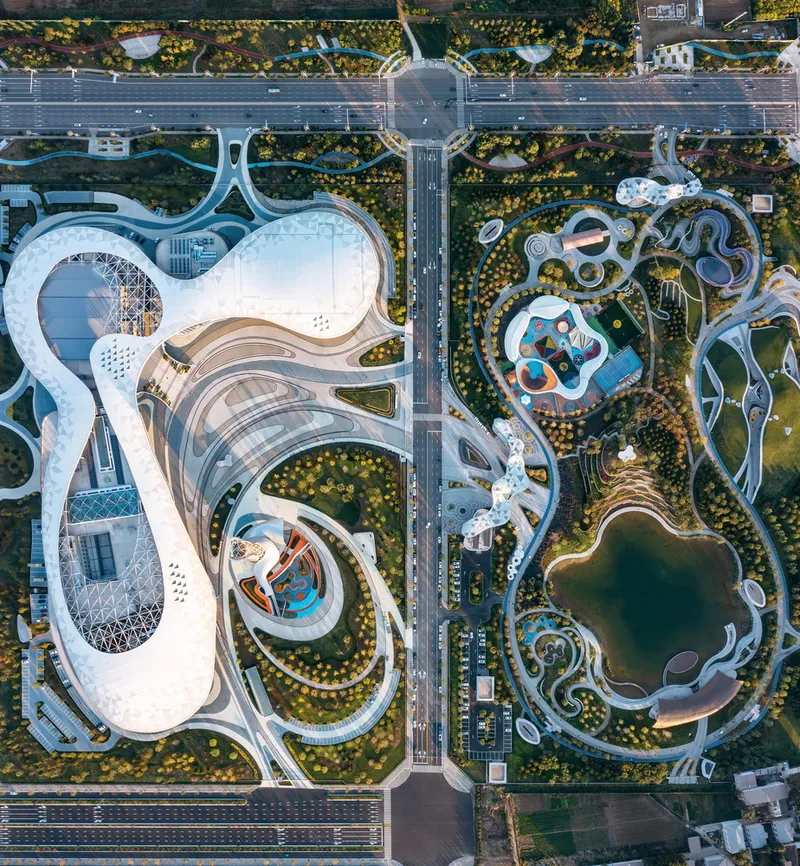
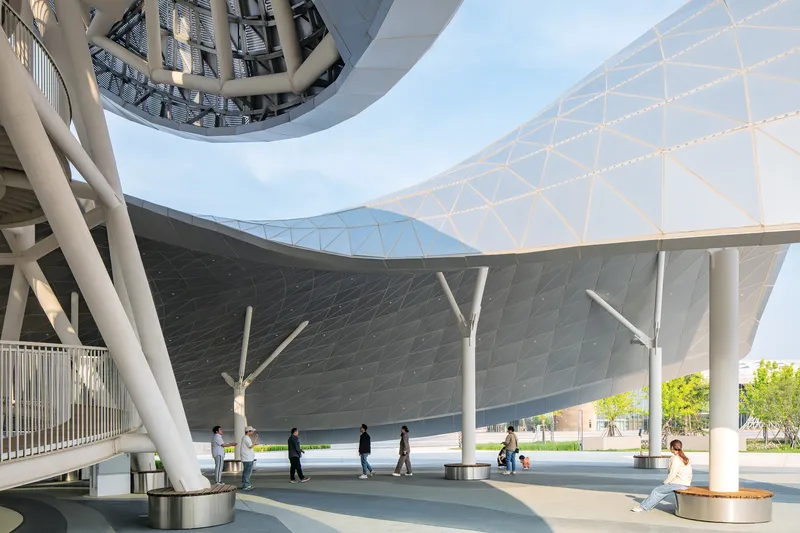
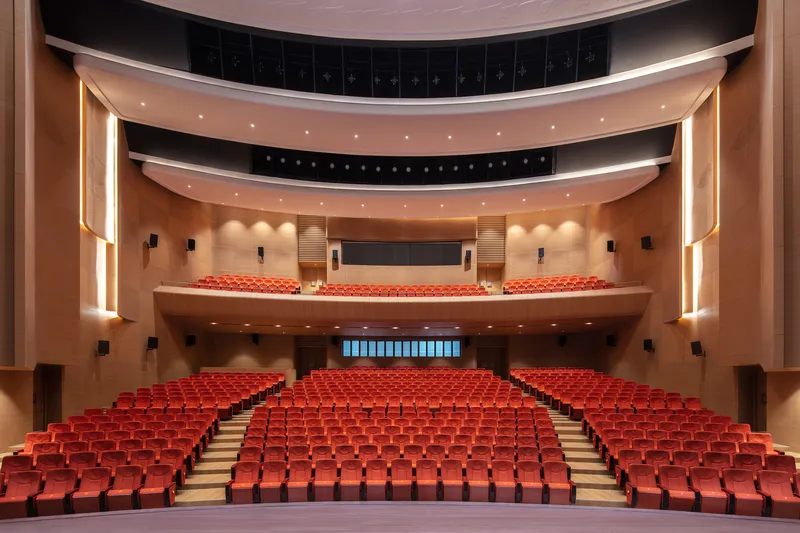
The complex consists of five major programmatic volumes—Theater, Cultural Center, Stadium, Fitness Center, and Exhibition Center—supported by features like the Garden Expo Tower and a network of sunken courtyards. THAD’s design approach emphasizes low-carbon strategies, climate resilience, participatory engagement, and intelligent construction. Together, these elements form a cohesive urban ecological complex, merging leisure, culture, and sports into a seamless public environment.
City-Park Synergy: A Seamless Urban Landscape
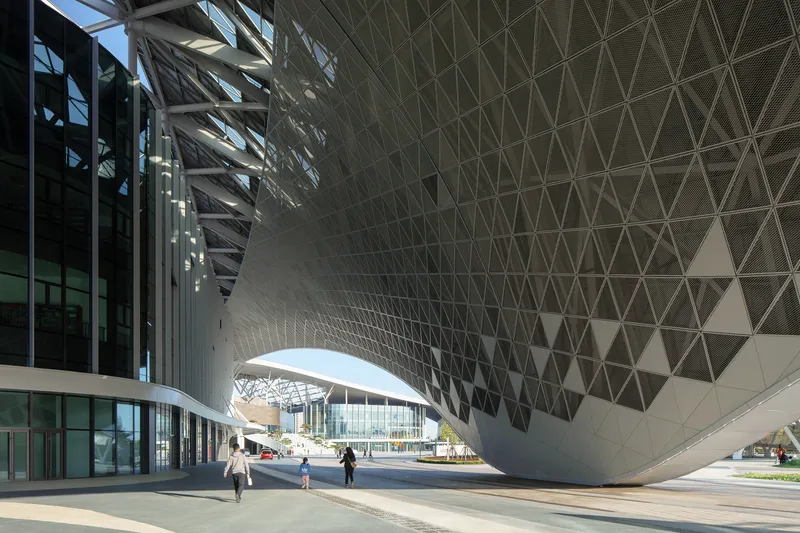
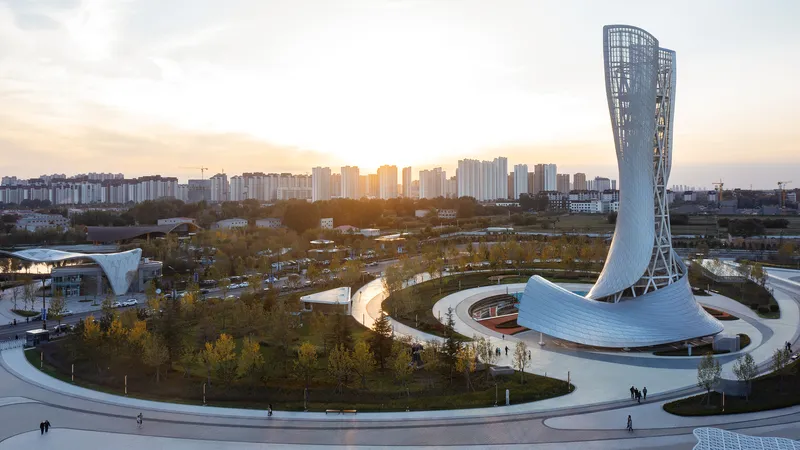
The masterplan adopts a north–south site strategy, positioning the main buildings to the northeast and dedicating the central zone to a park-like public space connected directly to the southern green belt. This layout fosters a city-park integration while enhancing local microclimatic comfort.
- In winter, building masses shield open spaces from northern winds.
- In summer, the lake and greenery enhance wind flow and natural cooling.
Through this climate-responsive approach, the Center reinforces Dingzhou’s vision of an environmentally sustainable urban identity.
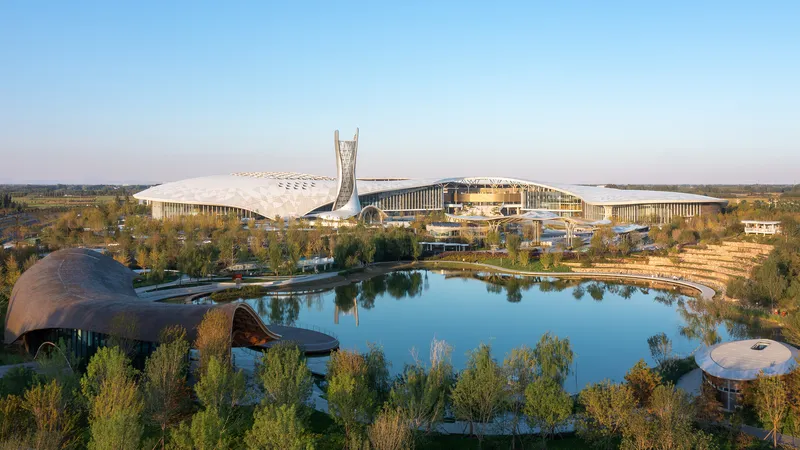
The “Wandering Cloud” Roof: A Parametric Landscape in Motion
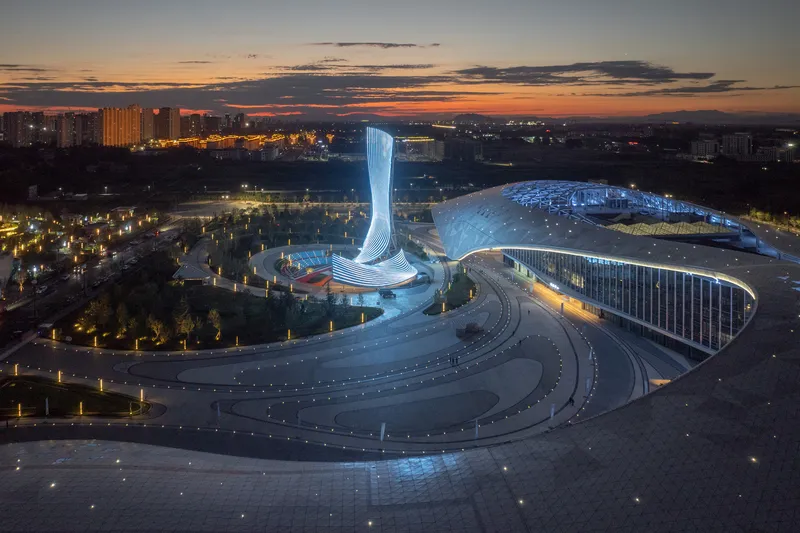
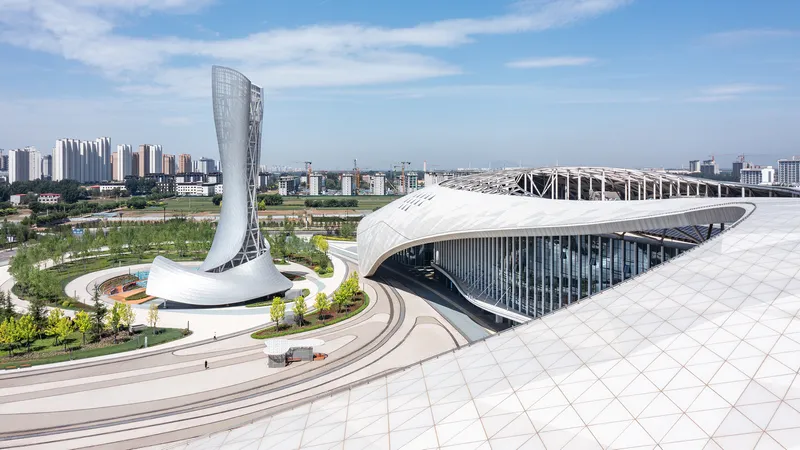
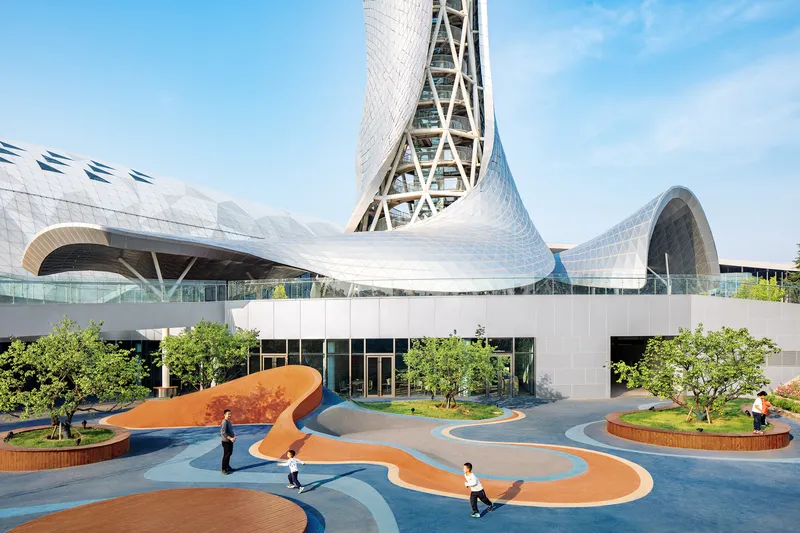
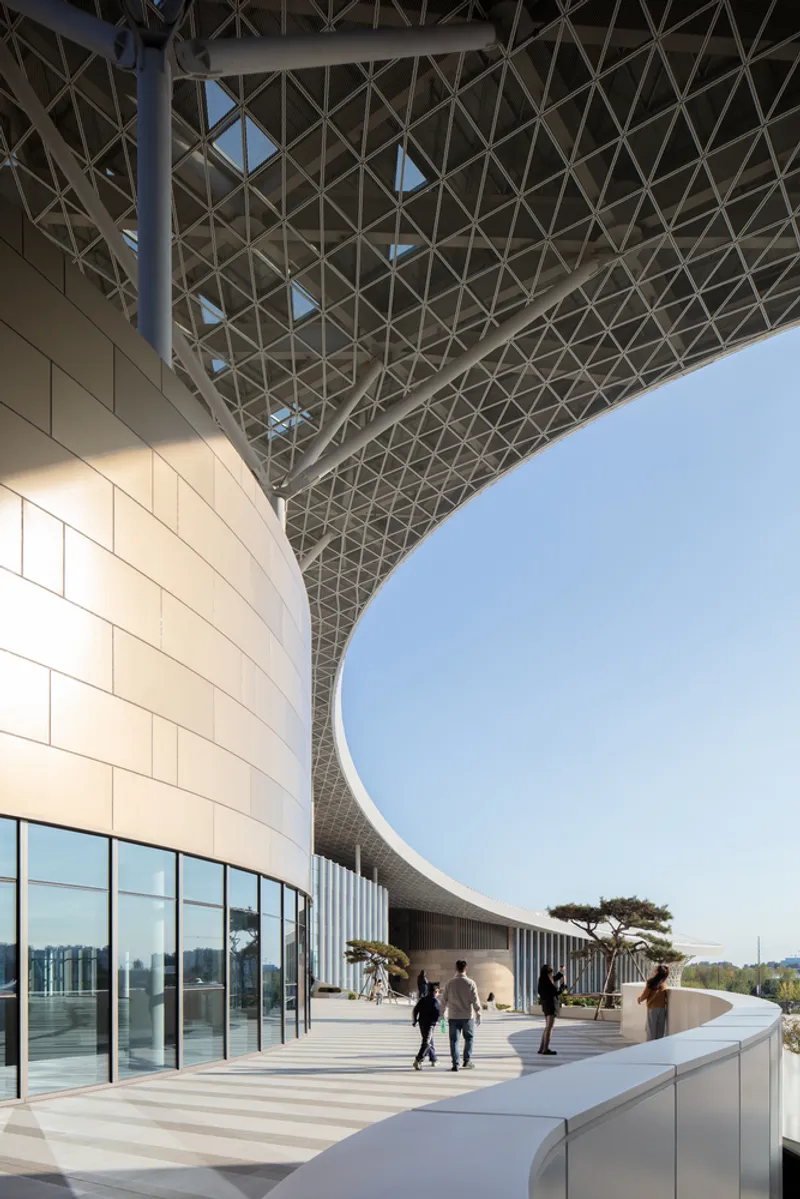
A signature feature of the project is the sweeping “wandering cloud” roofscape, realized through lightweight aluminum panels, mesh ceilings, parametric perforations, and elegant steel columns shaped like branching trees. This organic canopy links the five buildings and forms multi-layered public corridors that blur the boundaries between indoor and outdoor spaces.
Its textures and gradients subtly reference Dingzhou’s historic white porcelain, creating a cultural thread between past craftsmanship and contemporary technology. The Garden Expo Tower, rising above the complex, visually connects to the ancient tower in historic Dingzhou, offering panoramic views and a powerful spatial dialogue between eras.
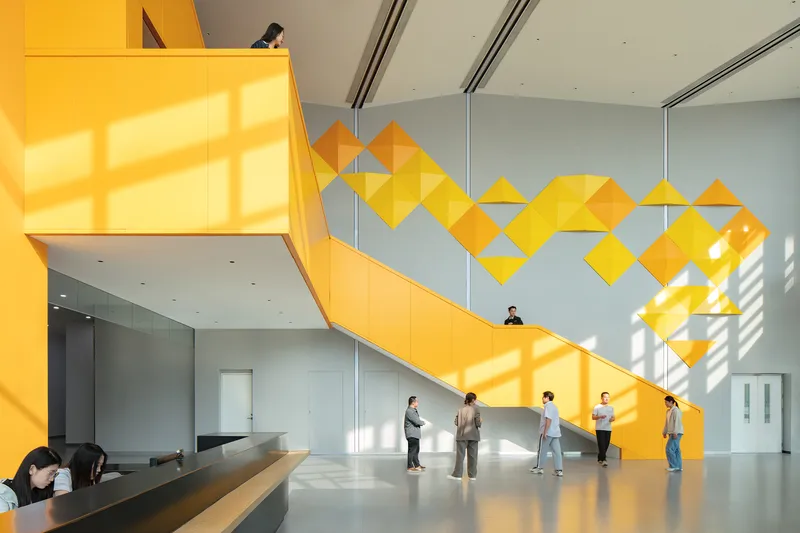
Co-Designing Public Space with Tomorrow’s Citizens
Recognizing the need to revive community engagement, the design team invited students from Dingzhou No.1 High School to participate in envisioning future spaces. This participatory “co-design” approach infused the project with authentic local voices, transforming the architecture into a collective expression of belonging and civic pride. In this process, every user became both a creator and a witness of the city’s future.
Digital Intelligence and Low-Carbon Construction
The project integrates extensive digital workflows—parametric modeling, BIM, CNC fabrication, and MADAS technology—to manage the geometric complexity of the curved roof structure, triangular fractal patterns, and façade units. This human-machine collaboration ensured precision, construction efficiency, and optimization of materials.
Sustainable strategies include:
- Solar energy and air-source heat pumps generating over 80% of domestic and pool hot water
- Annual carbon emission reductions of 22.41 tons (thermal systems) and 204.99 tons (lighting)
- A green area of 46,459 m² sequestering roughly 166.83 tons of carbon annually
These measures position the Center as a forward-thinking model for low-carbon urban development.
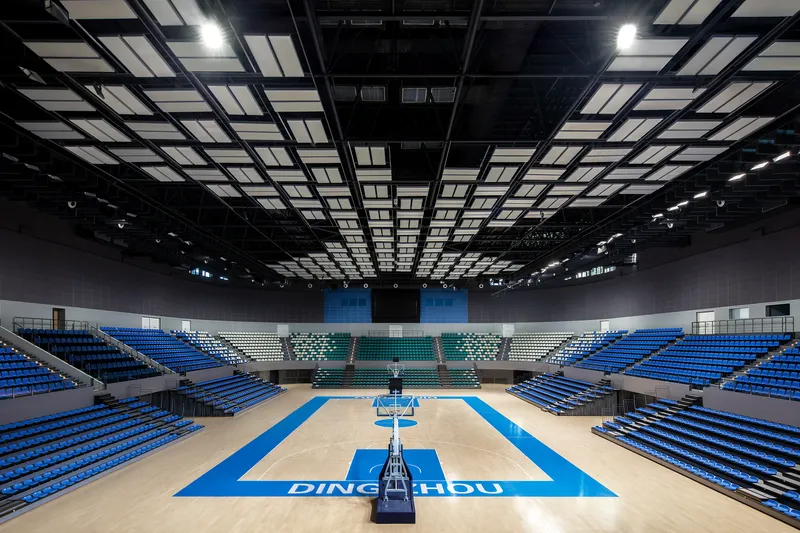
A Vibrant Hub of Culture, Fitness, and Community Life
Since opening in 2024, the Center has rapidly become Dingzhou’s most active civic destination. Its plazas have hosted major public events including National Day drone shows and Lantern Festival celebrations. The Cultural Center has become a key gathering place for local students, while the National Fitness Center emerged as the city’s second-largest gym within two months.
Significant cultural and sporting events include:
- The immersive play “Return: Su Dongpo”
- Performances by the Hebei Bangzi Opera Troupe
- The 2024 CBA Club Cup group stage
- The 2024–2025 Chinese Women’s Volleyball Super League (Hebei Division)
- The 2024 China·Dingzhou Sports Goods Industry Development Conference
- The 2025 Dingzhou Auto Culture Expo
These events reinforce the Center’s role as a catalyst for local culture, sports industry development, and tourism growth.
A Bridge Between Past and Future
The Dingzhou Cultural and Sports Center stands as a holistic civic landscape that connects eras, communities, and environments. By integrating ecological design, advanced technology, cultural symbolism, and public participation, THAD has created a place where nature and city coexist in harmony. The result is a vibrant, poetic, and future-forward landmark that strengthens Dingzhou’s identity while empowering its sustainable transformation.



Popular Articles
Popular articles from the community


Co-Life: Senior Housing Design That Reconnects Older Adults With the City
Co-Life reimagines senior housing design through healing gardens, shared streets, workshops, and a sustainable community across generations.

Play: Fragments of Their World
Familiar architecture becomes modular playground design, creating safe spaces where displaced children can learn, connect, imagine and play.

Lunar Spiral: Space Architecture Shaped by the Mathematics of the Universe
Lunar Spiral reimagines space architecture through Fibonacci geometry, lunar regolith, levitating habitats, and self-sustaining Moon living.

The Ocean Hive: Sustainable Architecture for a Self-Sufficient Civilization at Sea
The Ocean Hive imagines sustainable architecture at sea, where modular habitats, algae, wave power and ocean waste sustain a growing colony.


Similar Reads
You might also enjoy these articles


Hodi-Mandai Geram
Project Function: Preservation and revitalization of the Intangible heritage and socio-spatial identity of the Hodi by Housing, Cultural Memory Center, Sacred Grove, landscape, local tourism economy


Olio Towers: A Mid-Rise for Performers That Fuses Housing, Rehearsal, and Stage
Located blocks from Houston's Theater District, this modular tower stacks living units around a central performance atrium.

Oasis: Modular Green Housing Carved into Dhaka's Urban Fabric
A shortlisted Plugin Housing entry reclaims unauthorized settlements in Dhaka with stepped concrete volumes, green roofs, and ventilation-driven design.

Black Hole: A Floating Megastructure for the Post-Physical Era
Emiliano Mazzarotto envisions a spherical, self-scaling arena where e-sports, digital hotels, and holographic stadiums replace traditional public space.

Explore Cultural Architecture Competitions
Discover active competitions in this discipline



Challenge to reimagine the Iron Throne


Photograph architecture without architects


Illustrate the lost glory of Angkor Wat - Render Challenge

Bring back Drive In's
Comments (0)
Please login or sign up to add comments
No comments yet. Be the first to comment!