
District Development Unit Plugs Modular Timber Housing into Ulaanbaatar's Ger Districts
A 100 square meter prototype in Mongolia pairs the traditional ger with an expandable timber volume to upgrade informal settlements.

Over 840,000 people live in the ger districts of Ulaanbaatar, sprawling zones of traditional felt tents and self-built houses that creep across the hills surrounding Mongolia's capital. These neighborhoods are not slums in the conventional sense; they are organized around family plots, each one fenced, each one evolving incrementally as households grow. The problem is not disorder but infrastructure: heating is coal-fired, plumbing is scarce, and the gap between the ger as a cultural artifact and the ger as a year-round urban dwelling widens with every harsh winter. District Development Unit, led by Joshua Bolchover and Jersey Poon, has spent years working inside that gap, and Ger Plug-In 3.0 is their most resolved proposition yet.
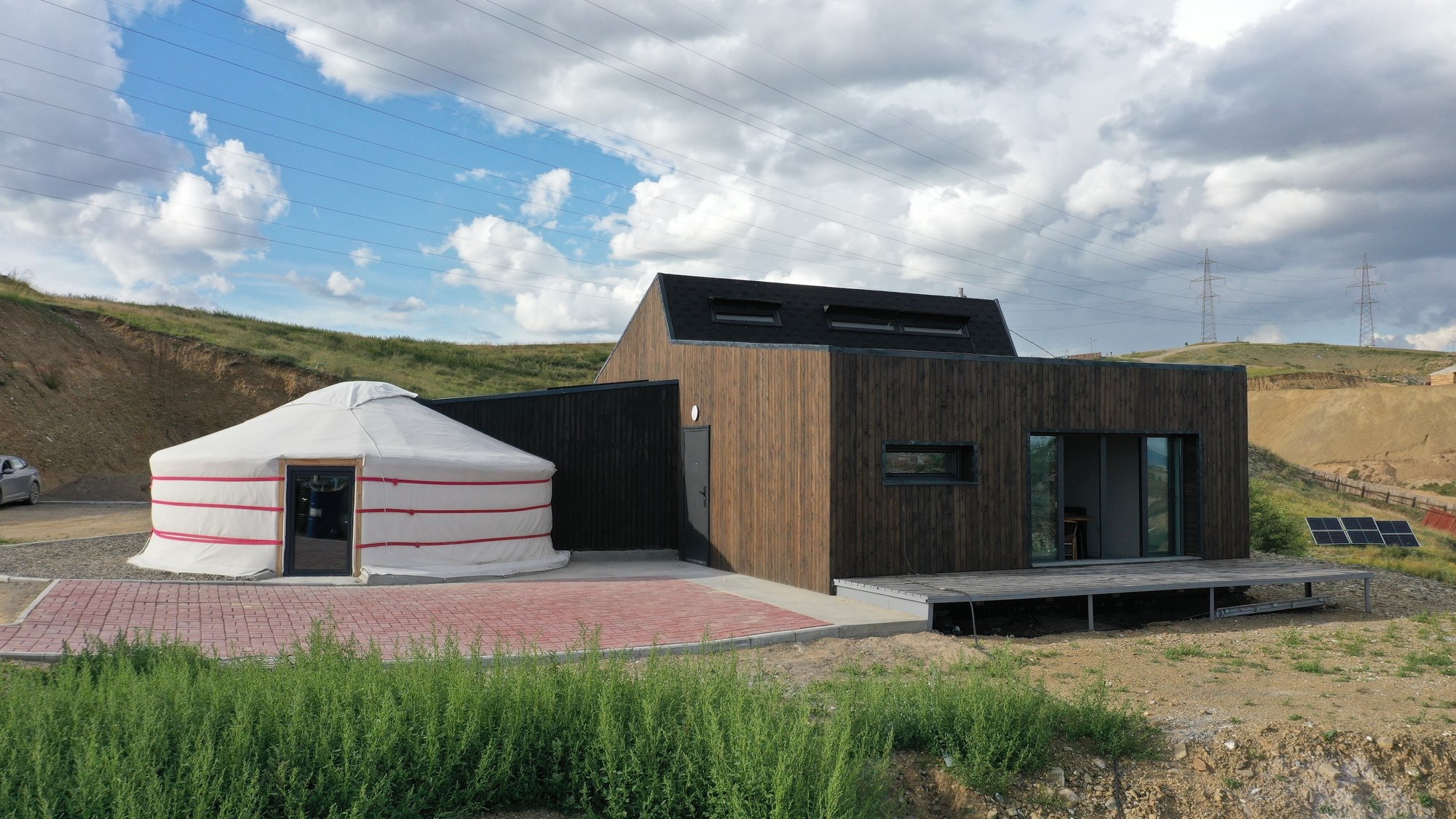
The concept is disarmingly simple: keep the ger, which Mongolians know how to erect, maintain, and love, and attach to it a compact two-story timber volume that provides the rooms and services a ger cannot. At 100 square meters the combined unit is modest, but the ambition is systemic. The project is conceived as a modular kit that can be adapted, expanded, and replicated across thousands of plots. What makes it genuinely interesting is the refusal to choose between tradition and modernization. The ger is not preserved as ornament; it remains a functional living space. The timber box is not imposed as a correction; it extends what the ger already offers.
A Courtyard Between Two Worlds
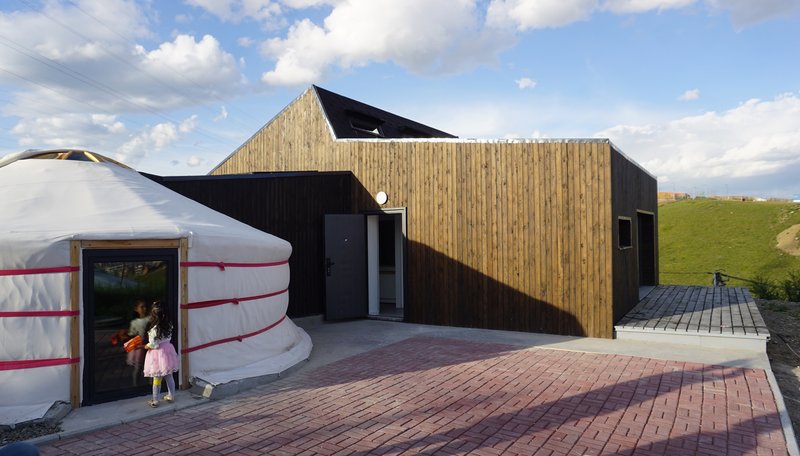
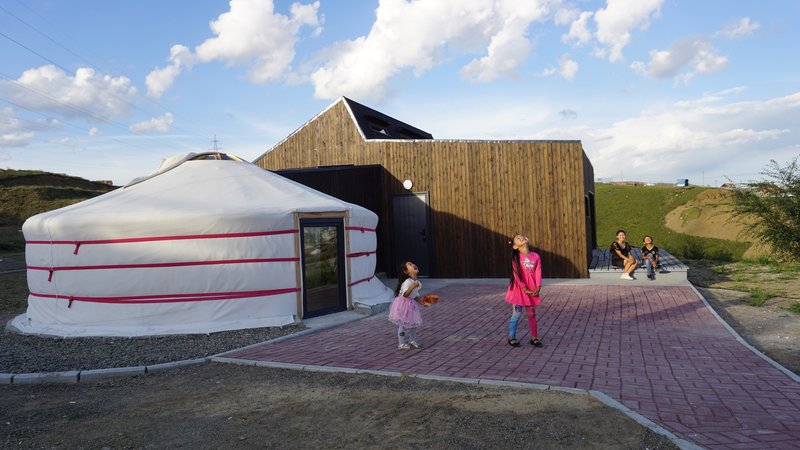
The brick-paved courtyard that sits between the circular ger and the rectangular timber volume is the most important space in the project, even though it is technically outside. It mediates between two geometries, two construction logics, and two ways of inhabiting a plot. Children play here at dusk. The threshold is gentle: you step out of the lattice wall of the ger, cross a few meters of open air, and enter the timber dwelling through a glazed door. In a climate where winter temperatures drop below minus thirty, this courtyard will be sealed or covered for much of the year, but in summer it operates as the social center of the household.
The courtyard also solves a practical problem. Ger districts are typically organized around a fenced khashaa, a family compound. By placing the courtyard at the joint between old and new, the design preserves the compound logic rather than replacing it with a single continuous building. The two structures can be read as independent objects that share a threshold, which matters culturally. The ger retains its identity.
The Ger as Living Room
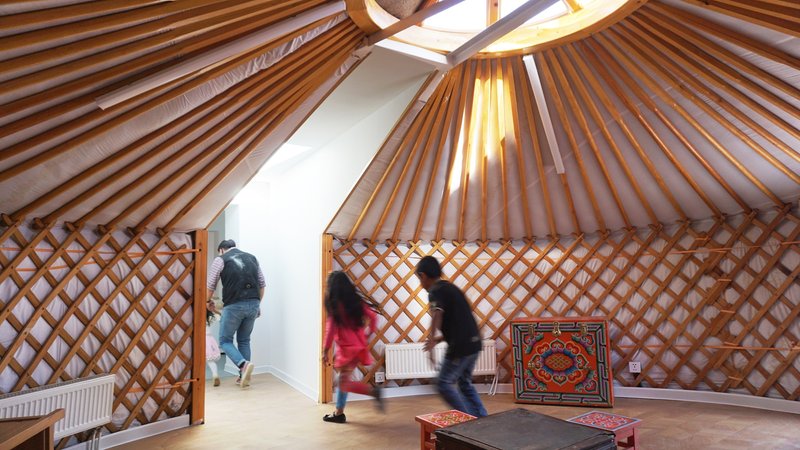
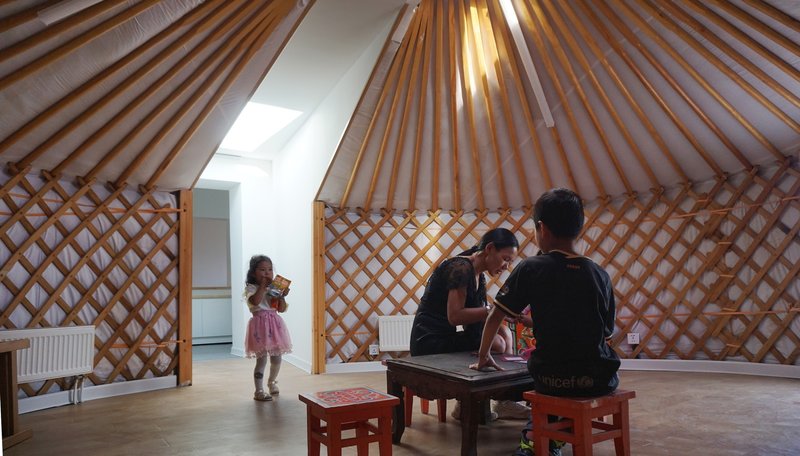
Inside the ger, the radial timber ribs converge on the toono, the circular crown that admits light and vents smoke. The lattice walls are intact, the felt covering is standard. What changes is the role: freed from the burden of being the only room, the ger becomes a generous communal space where the family gathers, eats, and hosts guests. The pleated fabric ceiling and the rhythm of the ribs give it a spatial quality that no rectangular room can replicate.
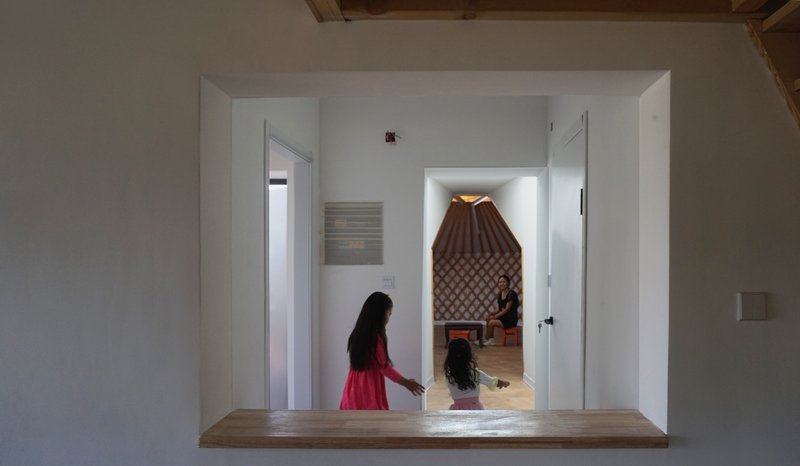
The view through the doorway from the timber volume into the ger interior, with its radial geometry and soft filtered light, is one of the most compelling moments in the project. It frames the traditional structure as something worth looking at and being inside, not as a relic but as an active spatial protagonist in a hybrid dwelling.
Timber Volume: Compact and Vertical
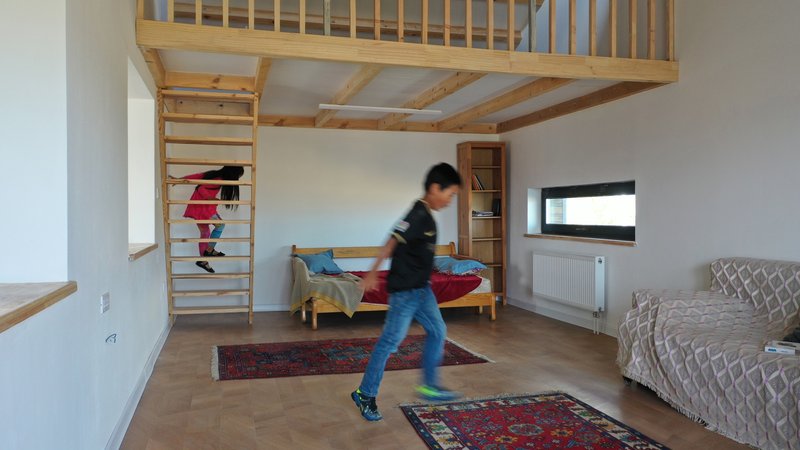
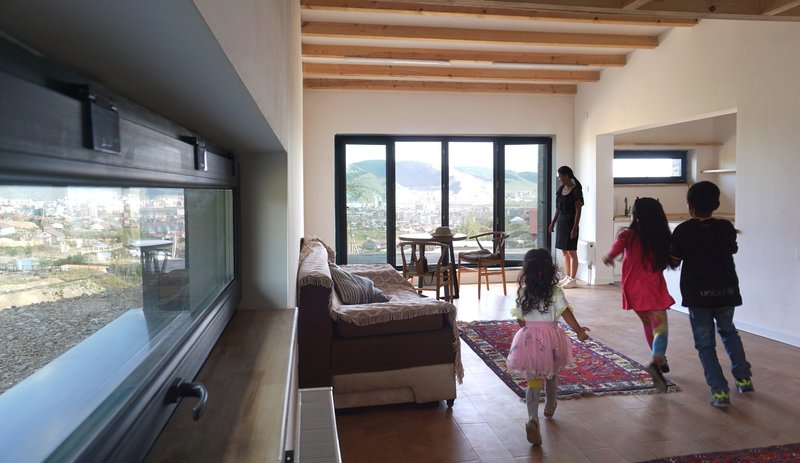
The two-story timber box handles the functions a ger cannot comfortably accommodate: bedrooms, a loft, storage, and services. Exposed timber joists run the length of the ceiling, and a ladder provides access to an upper sleeping platform. The construction is deliberately legible. You can see how the building is put together, which matters for a prototype intended to be built by local labor with available materials.
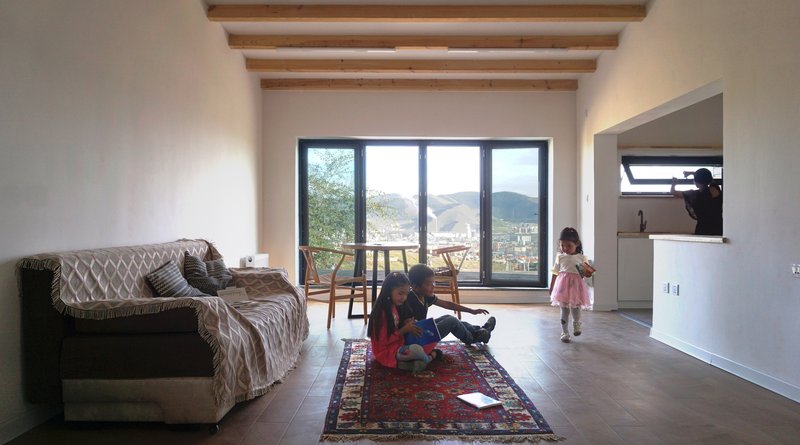
Glazed doors on the mountain-facing wall open the living room to the valley below. A horizontal strip window in one of the upper rooms frames the landscape in a way that is cinematic without being precious. The interiors are warm, simple, and finished in natural timber. There is no drywall, no suspended ceiling, no attempt to conceal the structure. The honesty of the construction is both an aesthetic choice and a practical one: every hidden layer adds cost and complexity that would undermine replicability.
Hillside Context and Urban Scale
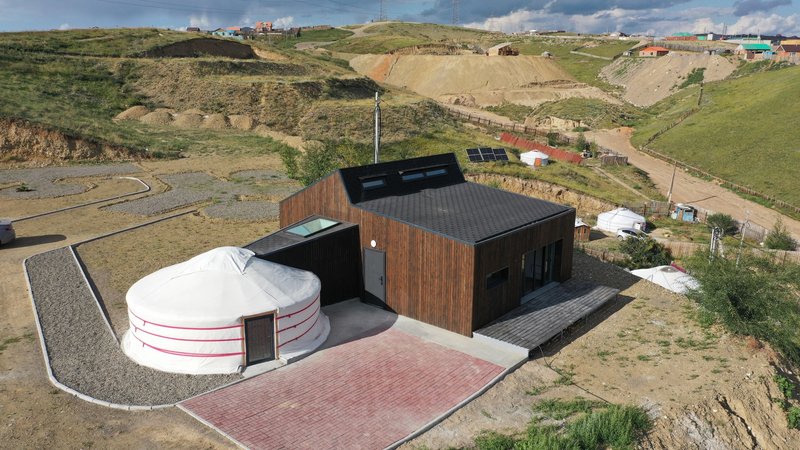
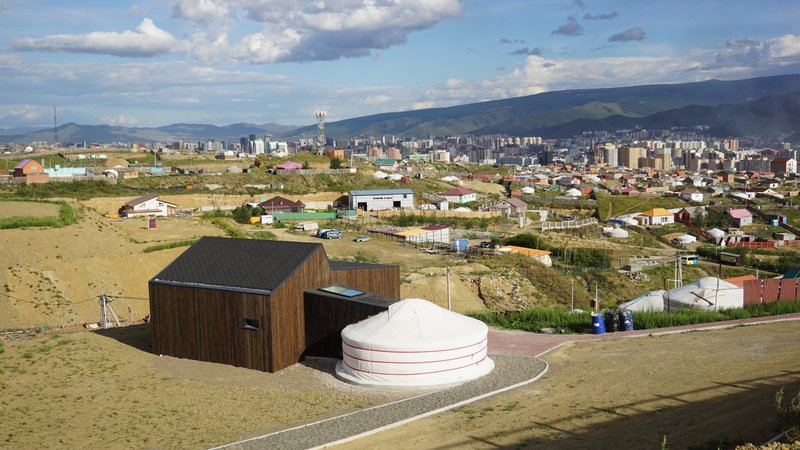
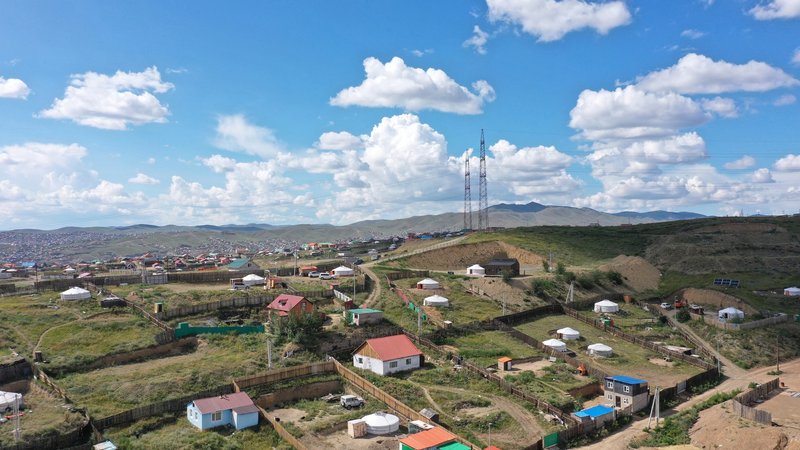
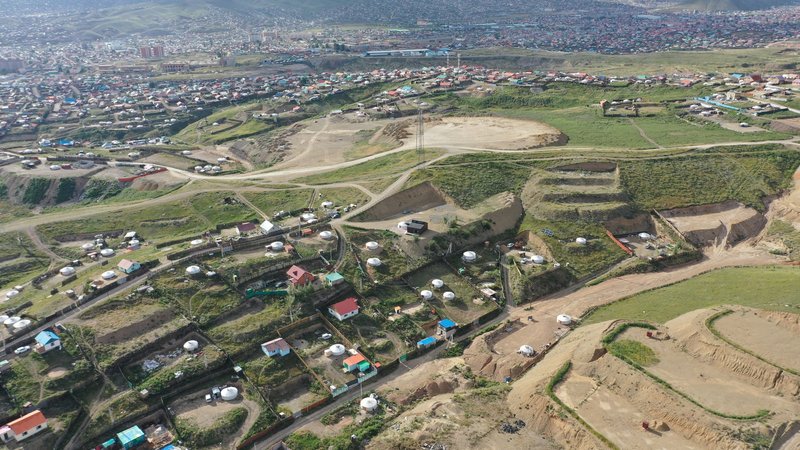
Seen from above, the prototype sits on a hillside plot among the scattered settlements that define the ger districts. The circular white form of the ger is immediately readable against the brown earth, and the dark timber volume anchors it to the slope. The aerial views reveal both the promise and the challenge: the surrounding landscape is vast, the infrastructure is thin, and the distances between households are significant. Any solution that depends on centralized systems will fail here. The Plug-In model works precisely because it operates at the scale of the individual plot.
The panoramic view of the two low structures set against rolling grassland and afternoon sky is a reminder that this is not a dense urban condition. Ulaanbaatar's ger districts are a kind of horizontal city, and any architecture that intervenes must accept that horizontality rather than fight it.
Winter Performance
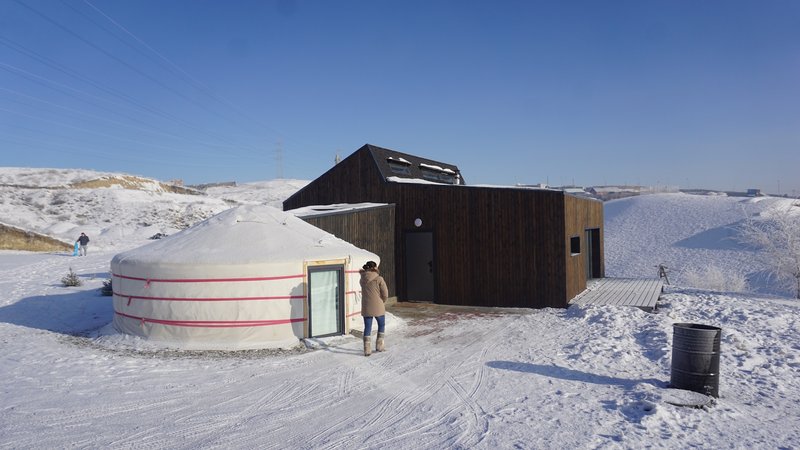
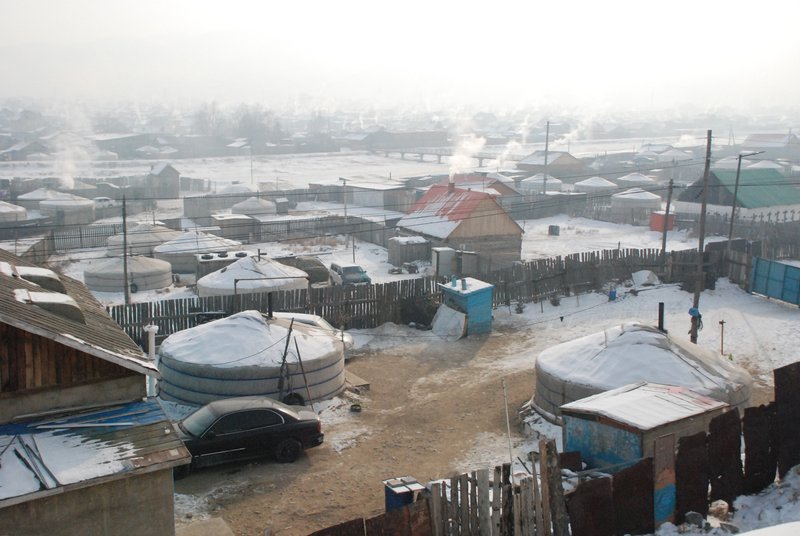
The snow-covered images are the real test. Ulaanbaatar is one of the coldest capitals on earth, and the ger districts are the primary source of the city's catastrophic winter air pollution, because each household burns coal for heat. The dark timber-clad volume adjoining the ger in a white winter landscape is a striking image, but the more important question is thermal: can the timber box be insulated well enough to reduce coal consumption? The project suggests it can, by concentrating sleeping and service functions in a well-sealed envelope while allowing the ger to serve as a daytime gathering space that tolerates more fluctuation.
The street-level winter view of multiple circular ger dwellings with rising smoke columns is a sobering companion image. It shows the status quo: beautiful in its way, but environmentally devastating. The Plug-In does not eliminate the ger or the coal stove, but it begins to shift the ratio of heated volume to energy consumed.
Plans and Drawings
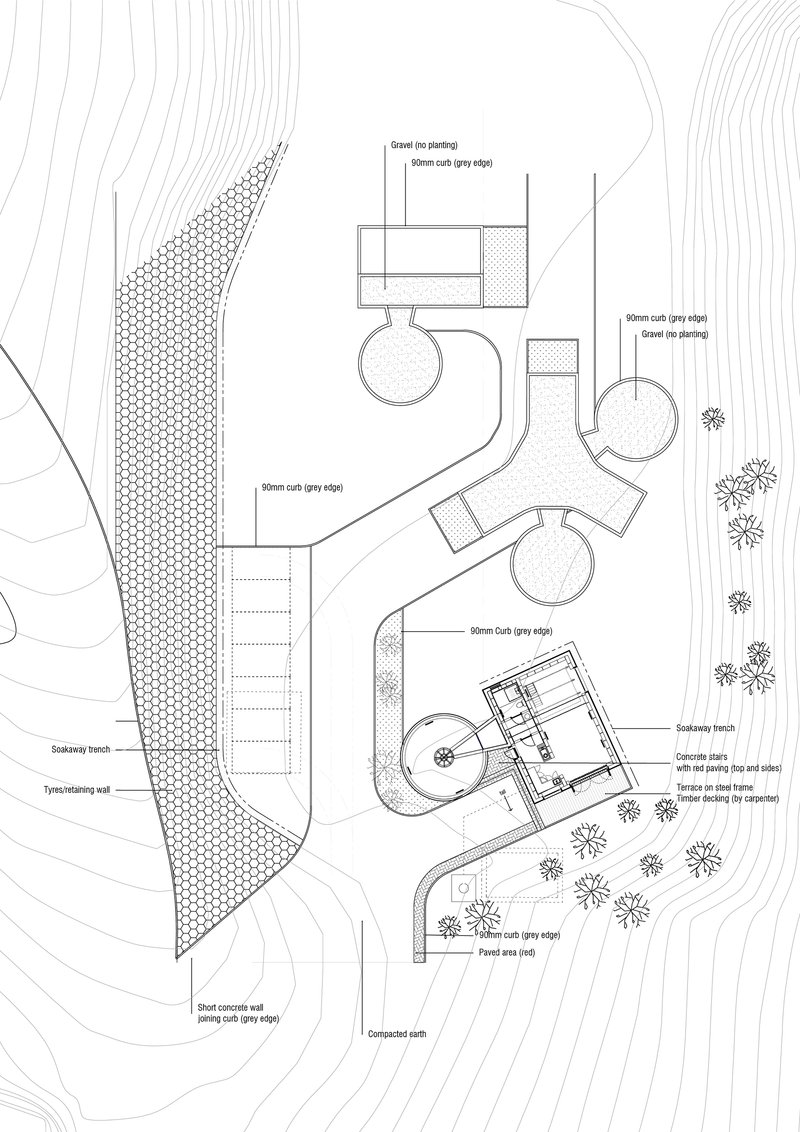
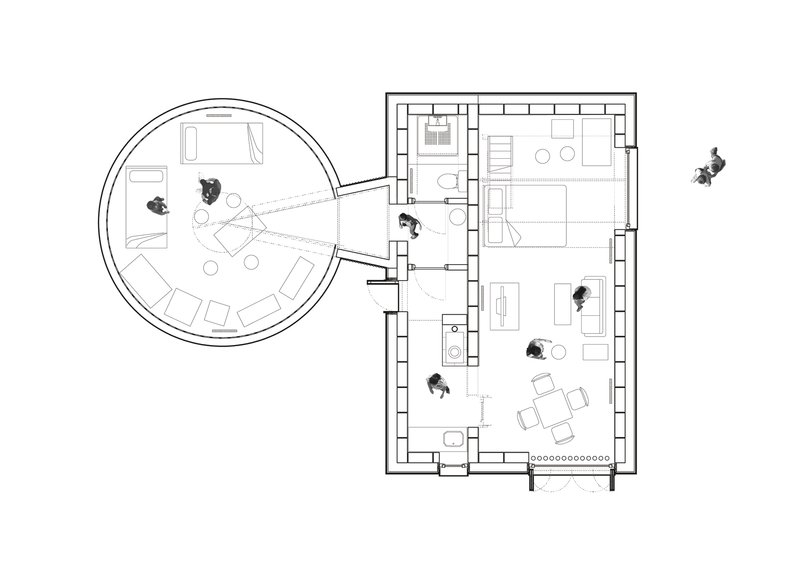
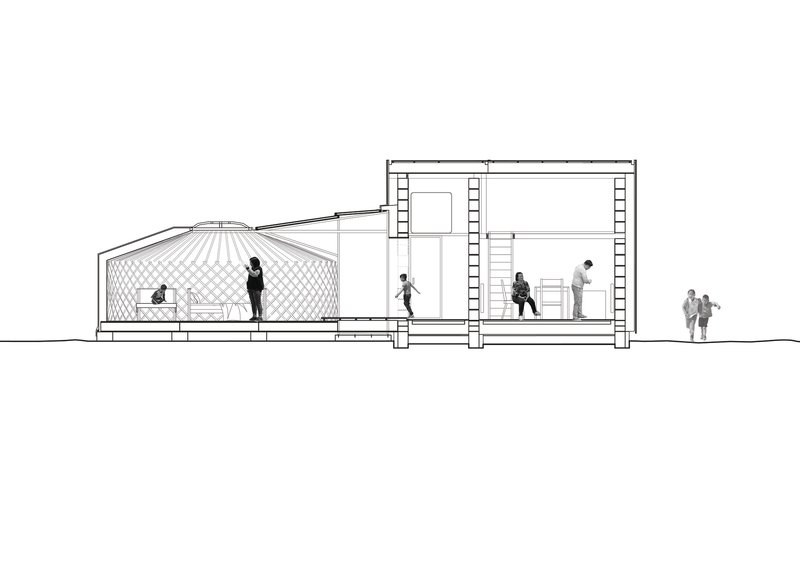
The site plan shows the circular ger and the rectangular volume connected by the courtyard, with pathways threading through topographic contours. The floor plan makes the spatial logic explicit: the ger is one large circular room, the timber box contains a kitchen, bathroom, bedroom, and loft, and the courtyard bridges them. The section drawing reveals the scale difference, with the domed ger sitting low beside the two-story timber frame.
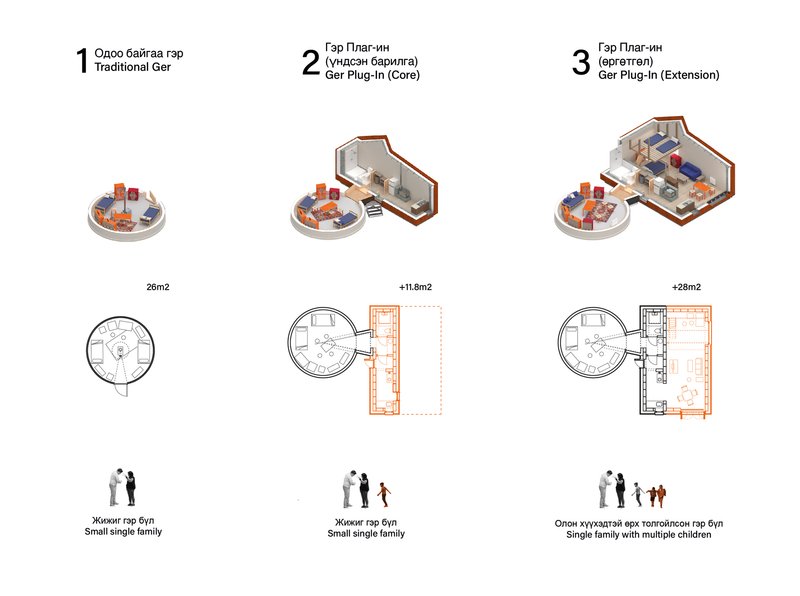
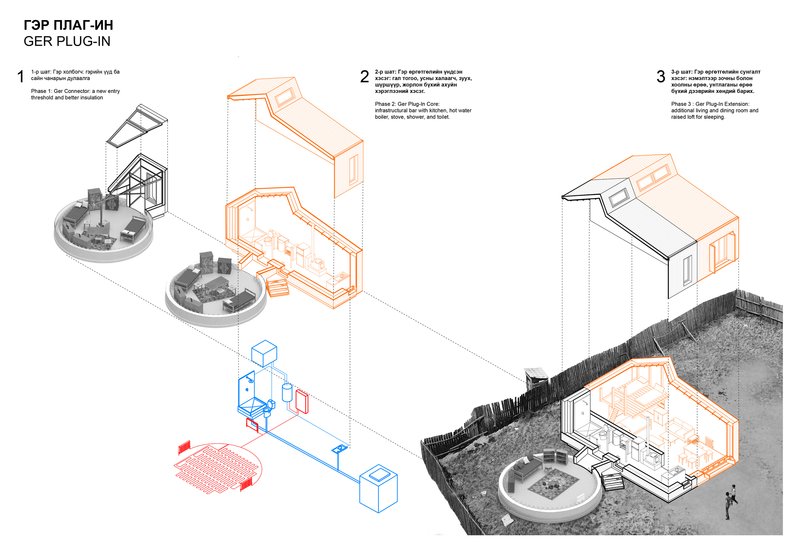
The most revealing drawings are the modular diagrams. Three dwelling types are shown in axonometric view with corresponding floor plans, each representing a progressive spatial expansion. The idea is that a household can start with the ger and a minimal plug-in, then add modules as resources allow. The exploded axonometric breaks down the assembly sequence of the timber unit, showing how panels, frames, and connections come together. This is architecture conceived as a system, not a singular object, and the drawings make the replication strategy legible.
Why This Project Matters
Ger Plug-In 3.0 matters because it resists the two lazy responses to informal settlement: demolish and replace, or romanticize and leave alone. District Development Unit has found a third path that takes the ger seriously as architecture while acknowledging that a felt tent alone cannot meet the demands of permanent urban habitation in an extreme climate. The modular strategy, the honest timber construction, and the courtyard typology all point toward a scalable model rather than a one-off demonstration.
Whether the model actually scales will depend on financing, policy, and the willingness of Ulaanbaatar's government to invest in incremental upgrading rather than wholesale redevelopment. But as a design proposition, the project is rigorous and specific. It answers to a real population, a real climate, and a real cultural context. That specificity is its strength. Architecture that tries to solve everything usually solves nothing. This project picks its problem carefully and delivers a clear, buildable answer.
Ger Plug-In 3.0 by District Development Unit (Joshua Bolchover, Director; Jersey Poon, Project Lead). Located in Ulaanbaatar, Mongolia. 100 m². Completed 2023.
About the Studio
Share Your Own Work on uni.xyz
If projects like this are the kind of work you want to make, uni.xyz is a place to publish your own, find collaborators, and enter design competitions.



Popular Articles
Popular articles from the community

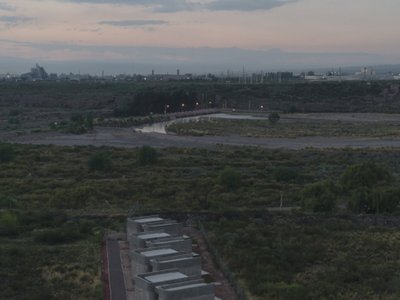
ONA Threads Four Board-Formed Concrete Cabins Along a 260-Meter-Deep Site in Mendoza
At the edge of Argentina's wine country, a set of curved concrete lodges negotiate a razor-thin parcel between city and mountain.

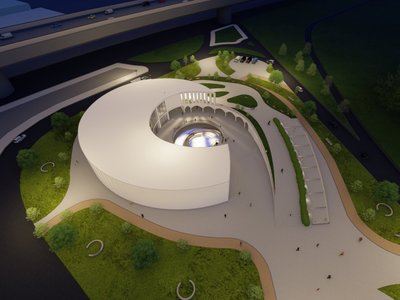
The Heart of Milano: Slow Fashion Architecture for a New Circular Culture
The Heart of Milano turns slow fashion architecture into a civic landmark where learning, making, sharing, and circular culture meets daily.
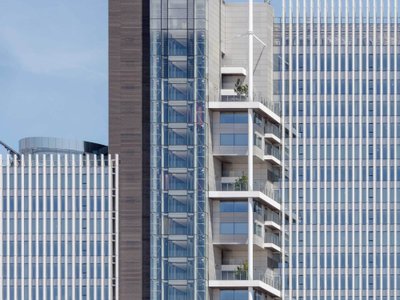
Cro&Co Architecture Builds a 150-Meter Tower on Top of a Seven-Lane Highway in La Défense
Trinity Tower reimagines the office high-rise as a bioclimatic organism threaded with terraces, trees, and public ground in Paris's business district.
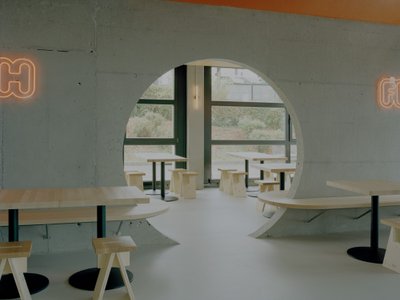
Noue Studio Organizes a Swiss Restaurant Around a Single Concrete Wall
In Granges-Paccot, Switzerland, a 216-square-meter renovation turns raw materials and a central spine into a legible dining experience.

Similar Reads
You might also enjoy these articles
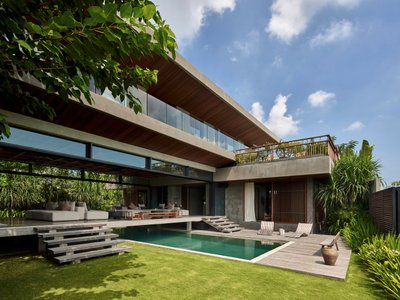
Freebird Residence by Alexis Dornier: A Tropical Modernist Sanctuary in Bali
Floating living pavilion above pool anchors H-shaped tropical villa, blending Japanese minimalism, sustainable strategies, lush landscape, and sculptural interiors.
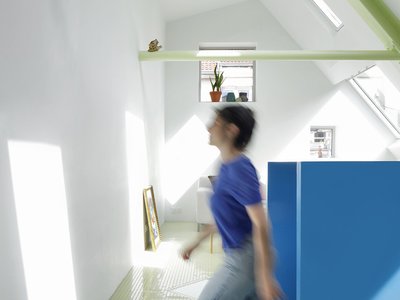
127af Flips a Tiny Bagnolet Rowhouse Upside Down with a Handcrafted Roof Extension
A 55-square-meter terraced house on the edge of Paris gains a luminous upper living floor through lightweight timber and steel.
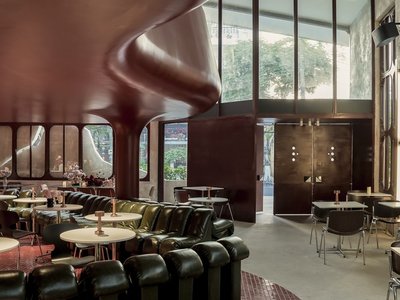
1.61 Design Workshop Wraps a 600-Square-Meter Café in Vietnam in Sculptural Burgundy Drama
Reden Café & Bistro pairs a helical staircase, mosaic floors, and deep red interiors to rethink Vietnamese hospitality space.

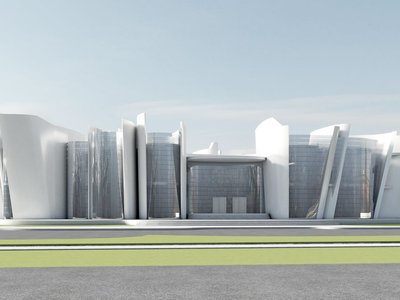
The Unbound Brain: A School Shaped by Cognitive Architecture
Cylindrical learning pods radiate like neurons from a central cortex, turning the floor plan into a spatial model of human thought.




Comments (0)
Please login or sign up to add comments
No comments yet. Be the first to comment!