
Dive - Orphic
Orphic, meaning, mysterious and entrancing; beyond ordinary understanding

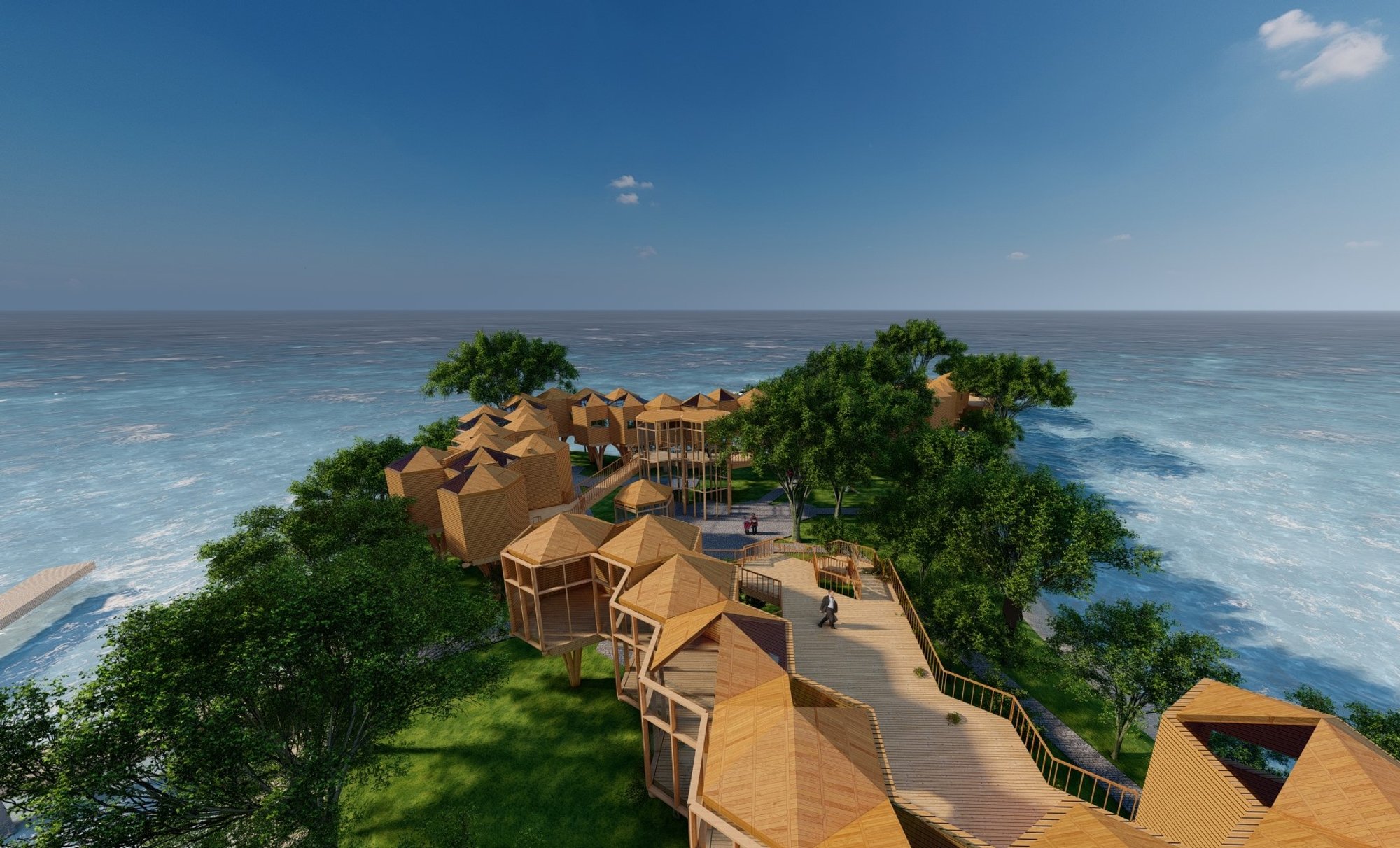
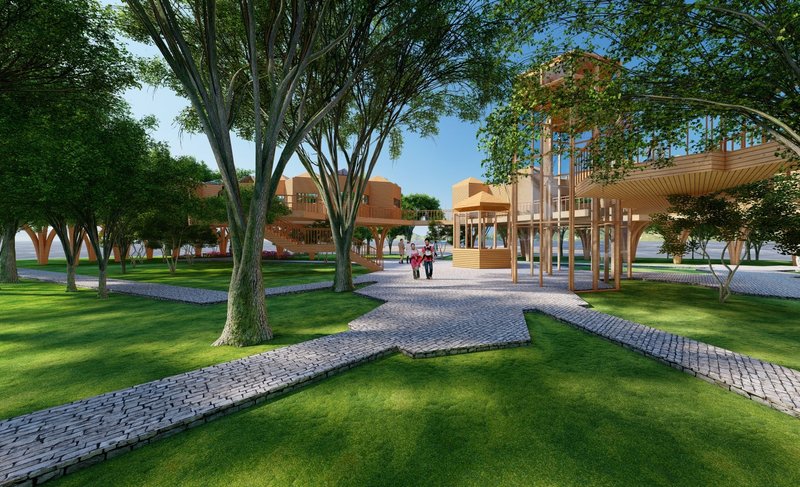
The starting point of the project was the convenient usage of the island, getting the most benefit out of it while maintaining the sustainability whit minimum damage. The first thing noticed when approaching the island with a boat is the long trees that gives the indication that the one is going to step on an un-cultivated land. Once reached to the pier, a narrow pathway takes the visitors into a square that splits up into pathways that each opens up to various kinds of adventures. If confused, the information cabin that sits on the square would be happy to guide.
Every person has their own way of discovering places and gaining memories. Combining one’s soul map and the natural values of the island, a unique yield that can only be found through one’s curiosity is dug in this project. The soul of the project can be found on the numerous experiences that are offered throughout the whole island trip. With many varieties (being more than twenty), each can compose their own experience permutations by the route they choose to take following their instincts.
The architecture wording used in the project was a one befitting and respectful for the island. From ground coverage up until material usage everything was picked up accordingly with the site to better maintain the adaptation through the design and the pursue stages. The most domestic decision that can be seen in the project is the repetitive hexagon unit that creates all of the needed spaces by sticking together in different combinations. Consisting of two floors, 14 hexagonal units on the ground floor and 36 hexagonal units on the upper floor was used in the project. All hexagons are regular and share the same characteristics by having 10.3 m2 area coverage with two-meter-long sides. The units that can be found on the ground floor are the diving and the office units. Moving up to the upper floor, media theatre, exhibition area/ art gallery and café units can be found. Each one having their essential side-units such as restrooms and storage areas. The circulation to the upper floor can be made in three different ways, by stairs by a ramp and by the elevators.
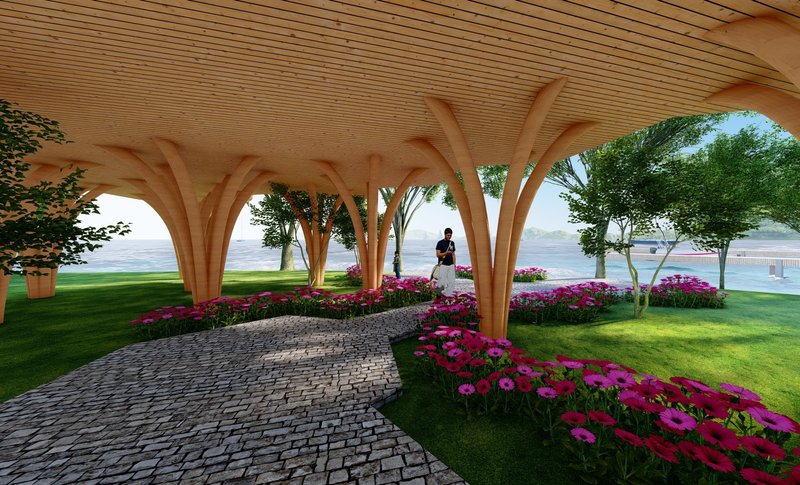
The activities that can be found on the ground floor include walking around the island, viewing the surrounded landscape, sitting on the grass and diving. There are several pathways available so that the visitors pick whichever they like by experience they want to gain at that very moment. The ground floor has two piers and bridge that is connected to the next-door island. Which allows to the visitors to go for a hike on a defined route. The upper floor carries the monumental experience while the ground floor is more related to the nature. The first thing that the visitors face when going up from the ramp is the viewing deck, that lets the visitors gaze into the natural beauties of the site. The next thing is the media theatre, which lets the visitors to experience the sunken city Shi Cheng via virtual layouts. Especially for the ones who do not like to, or not able to dive into the sunken city. Following the path, the visitors are led into the art gallery/exhibition area that have a long narrow shape, putting the exhibition in an order to help better experience the artworks. Starting from paintings moving on to the mini sculptures that are brought from the Shi Cheng city. And ending the exhibition area with a little souvenir shop, for letting people have something to help them better remember this trip.
The carrier system is made out of impregnated wood. Which helps it better compromise with the humid weather. The main carrier has a 6-legged curved shape that harmonizes with the natural looking construction. Every hexagon has its own timber and framed system (that consists of timbers and beams) is well able to carry the walls and the roofs of the units. To help increase the durability, the material used on the base is propylene additive concrete. The frequent timber pattern that lays under each unit helps increase the jungle affect that gives the visitors the feeling of wandering around not knowing what is going to come next.
Orphic, meaning, mysterious and entrancing; beyond ordinary understanding, was chosen due to the hidden structure behind the long spruce trees. And giving a mysterious sensation when approaching the island with a boat.
Saranda Pelingu - Nejla Altom - Ayşe Nur Haldan - Yunus Emre Akdemir




Popular Articles
Popular articles from the community

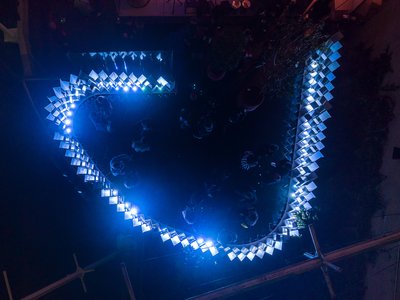
Rojkind Arquitectos and Think Parametric Build a Glueless Pavilion from 67 Interlocking Panels
A serpentine fiber-cement installation in Chapultepec Park celebrates a decade of architectural media in Mexico City.
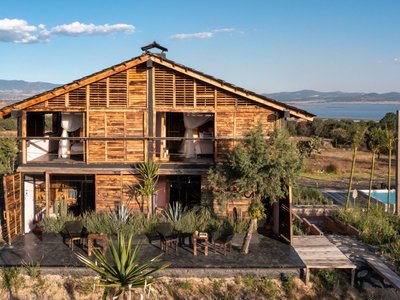
Fausto Terán and Toro Fuse Japanese Craft with Mexican Tradition in a Lakeside Retreat
Nakamura House pairs Shou-Sugi-Ban charred pine with handmade clay tile at the foot of Atlangatepec Lagoon in Mexico.
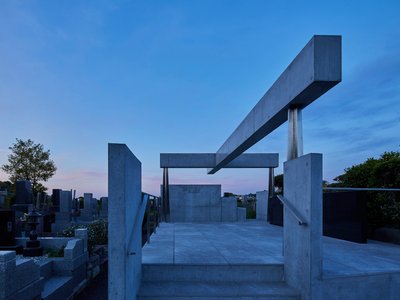
Takeshi Hosaka Architects Suspends a Concrete Cross Above a Yokohama Cemetery
A 28-square-meter burial renovation in Yokohama lifts the symbol of resurrection into the sky so mourners see it against heaven.
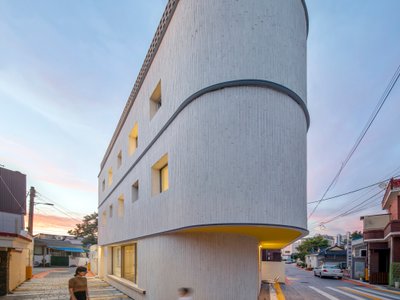
YOAP Architects Round a Corner in Yeongcheon with a Cylindrical Community Hub
A 197-square-meter brick and ribbed-clad tower turns a forgotten alley corner in South Korea into a public garden with a low threshold.


Similar Reads
You might also enjoy these articles

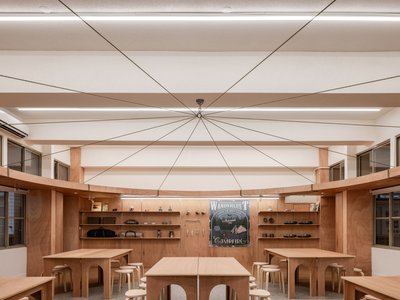
317studio Turns an 87 m² Classroom into a Forest Clearing for Scouts in New Taipei City
A rope canopy, student-made specimens, and campfire geometry replace rows of desks in this Scouting classroom in Xizhi District.
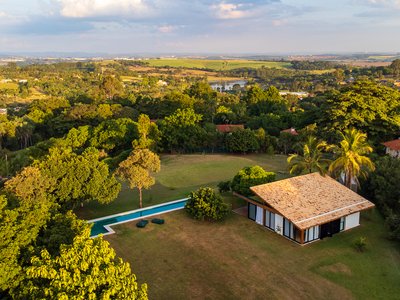
24 7 Arquitetura Builds a Timber Pavilion as a Family's First Act on a 5,000 m² Brazilian Plot
In Jaguariúna, a prefabricated glulam house nestles among mature trees as the opening move of a larger residential masterplan.
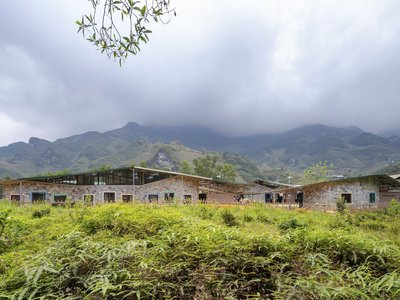
1+1>2 Architects Build a School from 900 Blocks of Hmong Stone on Vietnam's Rocky Plateau
On a barren valley in Ha Giang province, a community quarried its own stone to raise a kindergarten and primary school rooted in Hmong identity.
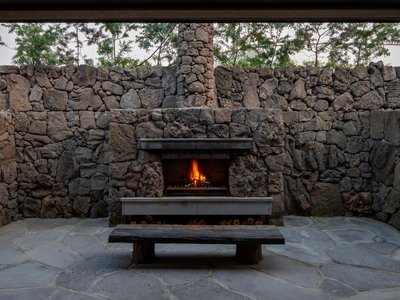
100A Associates Builds a Volcanic Stone Retreat on Jeju Island Rooted in Ritual and Restraint
Watarstay [Wa:Tar] in Bongseong-ri channels Jeju's basalt, reed, and hemp into a 150 m² hospitality space shaped by contemplation.


Explore Cultural Architecture Competitions
Discover active competitions in this discipline




The Global Benchmark for Architecture Dissertation Awards


The Global Benchmark for Graduation Excellence

Challenge to design an urban locus of culture and heritage
Comments (0)
Please login or sign up to add comments
No comments yet. Be the first to comment!