

Domaine Claude Bentz by Studio Jil Bentz: A Seamless Fusion of Winery, Residence, and Commercial Space in Luxembourg’s Mosel Valley
Contemporary winery extension in Luxembourg blending concrete and wood, housing tasting rooms, event space, apartments, and offices with sustainable design.


A Contemporary Winery Extension in the Heart of Luxembourg’s Wine Country
Set amidst the rolling hills and picturesque vineyards of Luxembourg’s Mosel region, the Domaine Claude Bentz is an architectural project that gracefully blends commercial, residential, and cultural functions into one cohesive structure. Designed by Studio Jil Bentz, this 1,500-square-meter building is a modern extension of a longstanding winery estate. Through a refined use of materials and an intelligent spatial strategy, the project reimagines what a contemporary winery can be — not just a space for production and commerce, but also a home and a place for hospitality.
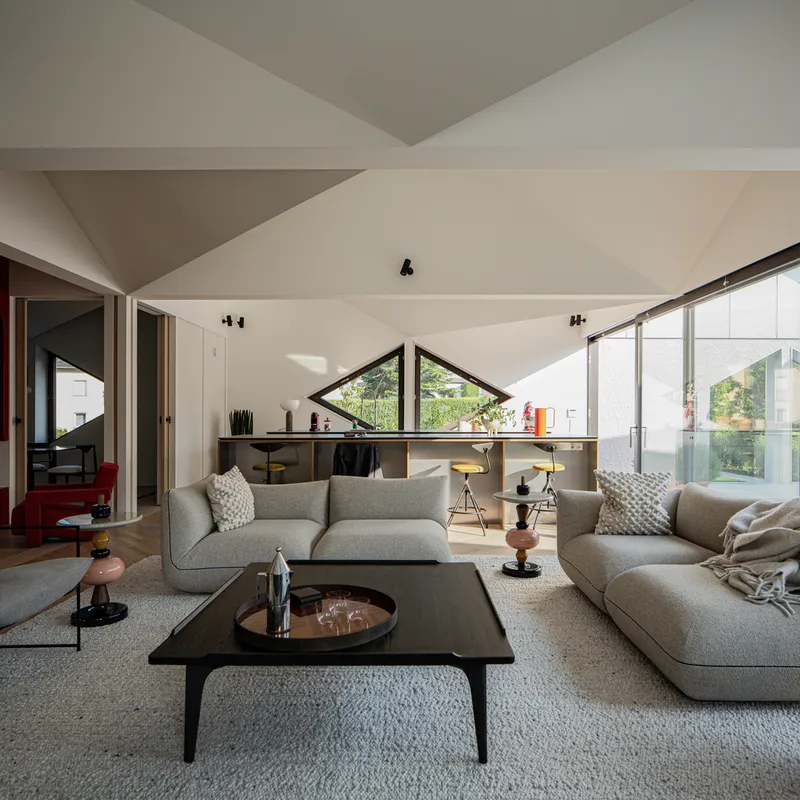
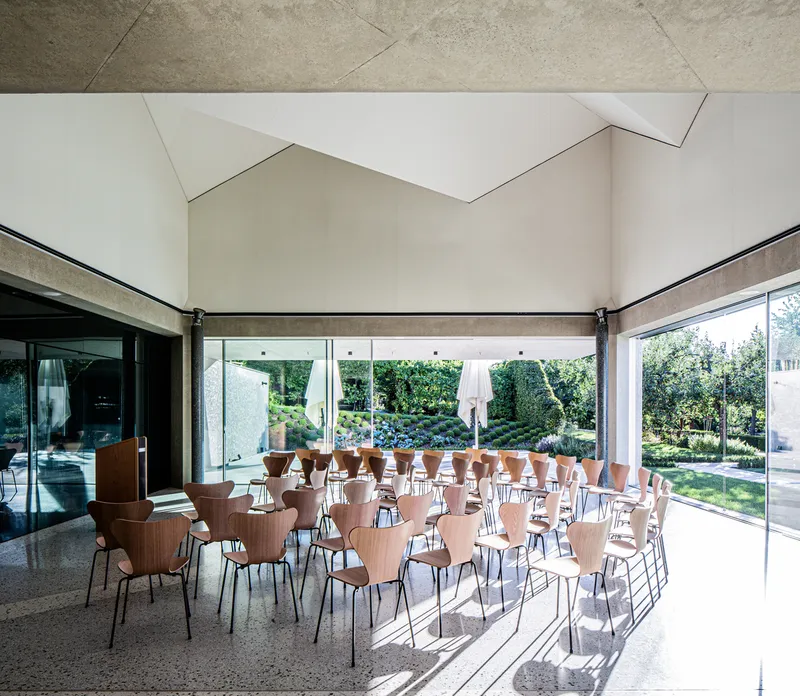
Architectural Concept: Function-Driven Form with a Spatial Twist
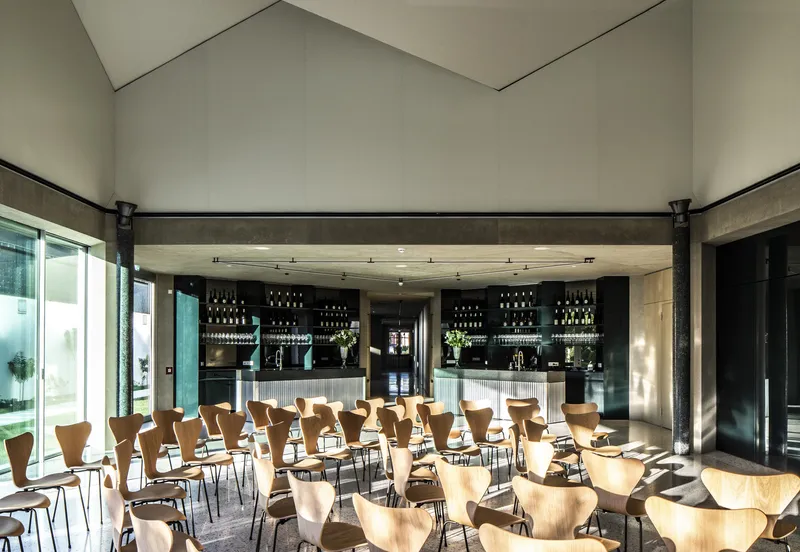
The new addition is conceived as a two-story elongated structure, measuring 71 meters in length. The building is divided into two distinct material layers that reflect its dual functionality: a concrete base housing the public-facing winery functions such as a wine shop, tasting rooms, and an event space; and a timber-clad upper floor containing private residential apartments and office areas.
One of the primary challenges was fitting this diverse program into a narrow and topographically constrained site, all while maintaining a sense of openness and spatial fluidity. Studio Jil Bentz resolved this by adopting the classical architectural principle of enfilade sequences—a layout strategy where rooms unfold in a linear yet visually connected manner.
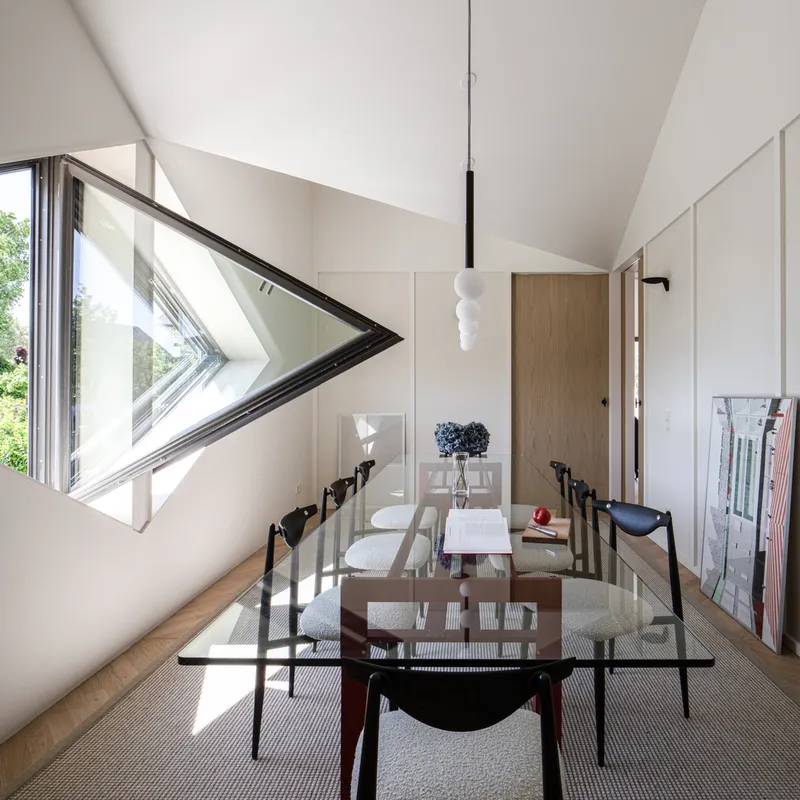

Ground Floor: Diagonal Tectonics and Spatial Openness
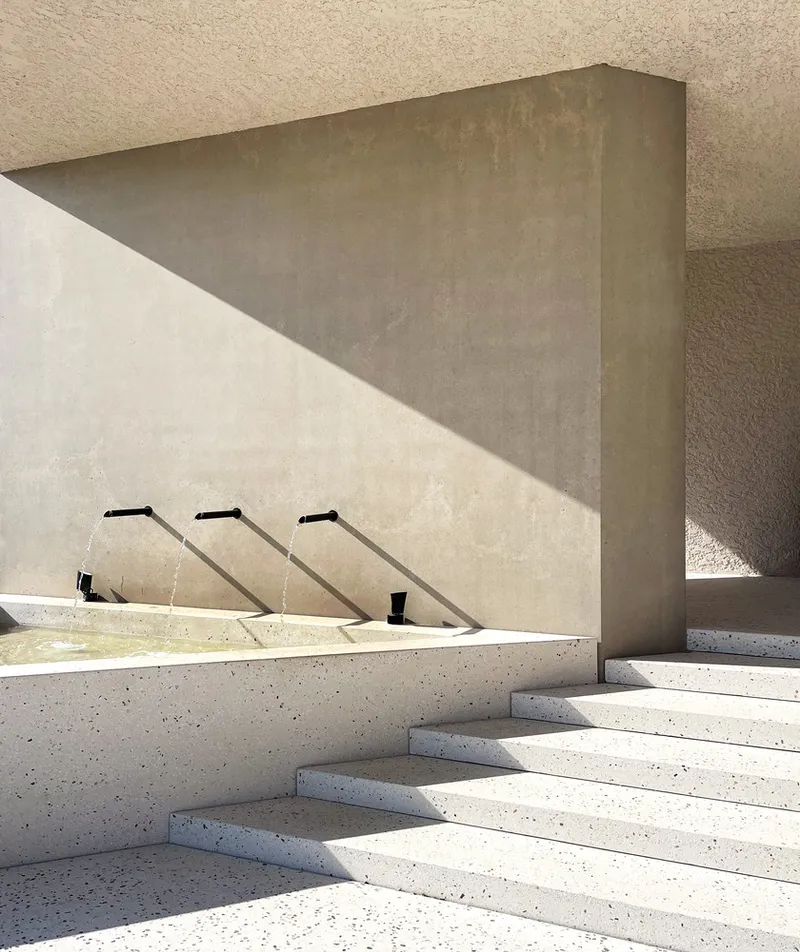
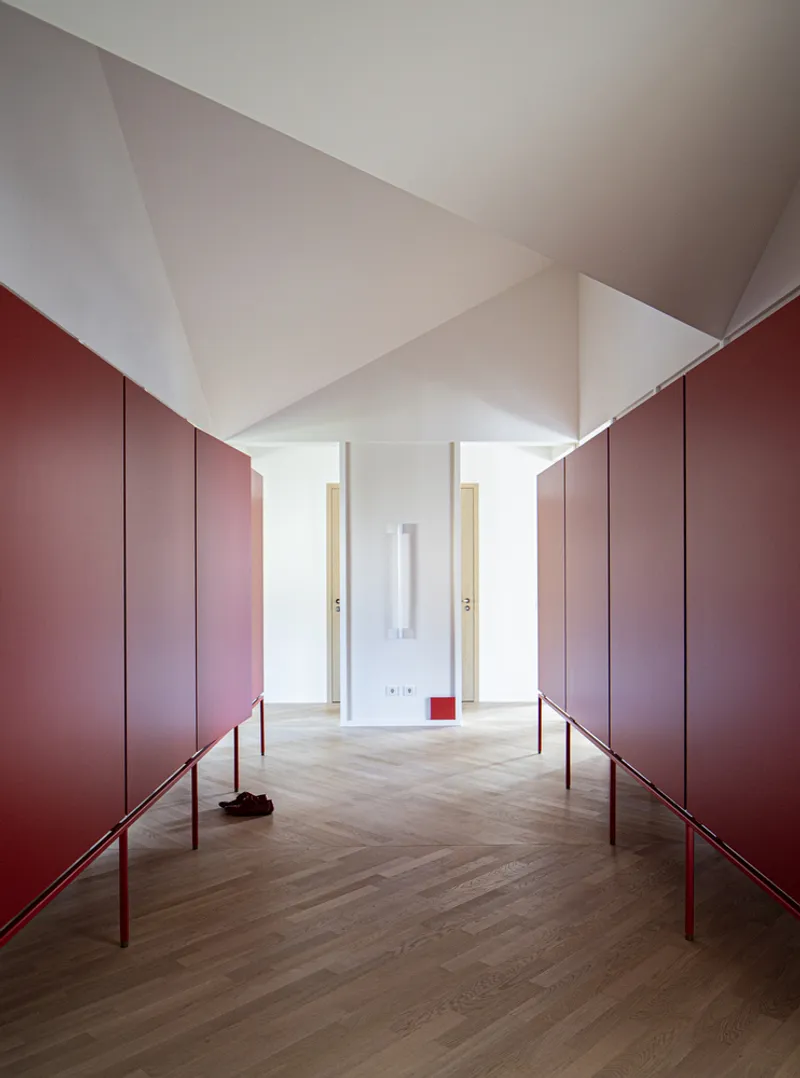
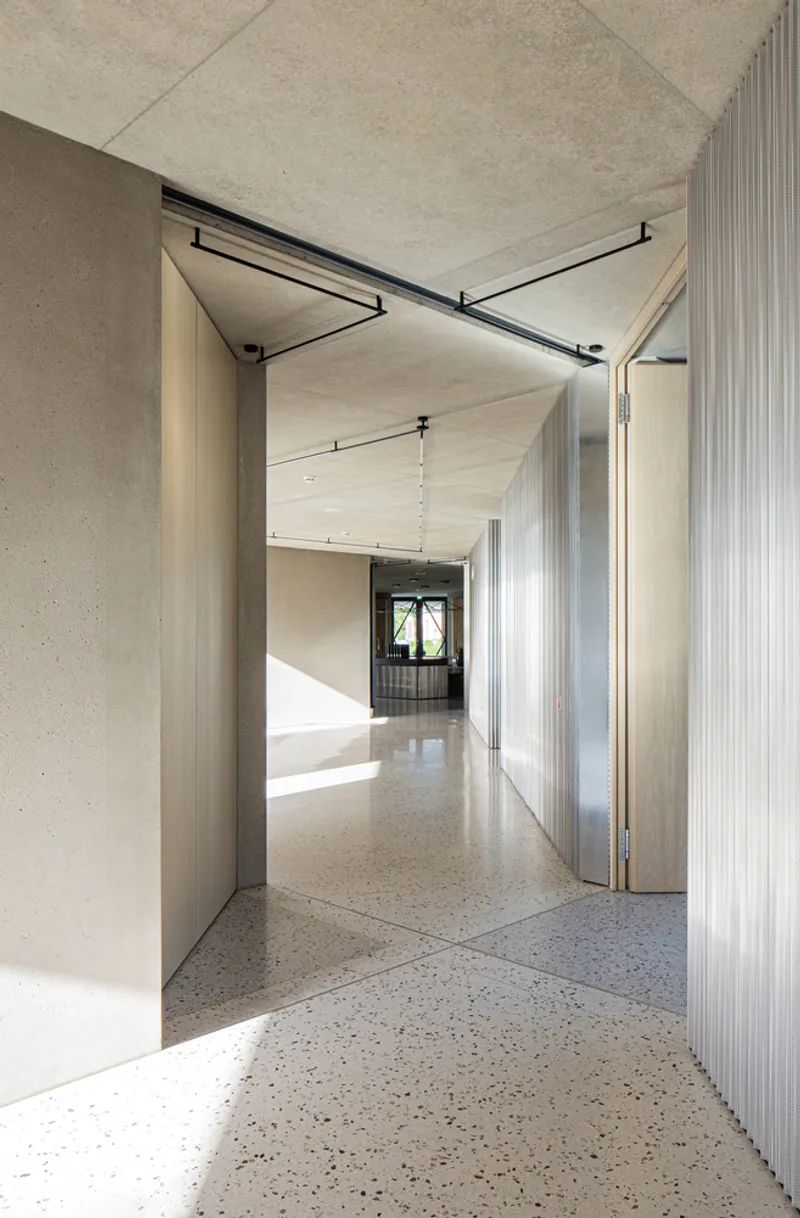
To avoid the monotony of a long corridor typical in such narrow buildings, the ground floor plan features a series of square rooms rotated at 45 degrees. This architectural move opens up unexpected diagonal sightlines, creating a sense of expanded space while preserving clear functional zoning. The spatial rhythm created by this layout also resonates with the dynamic geometry of the sawtooth roof, reinforcing continuity between form and function.
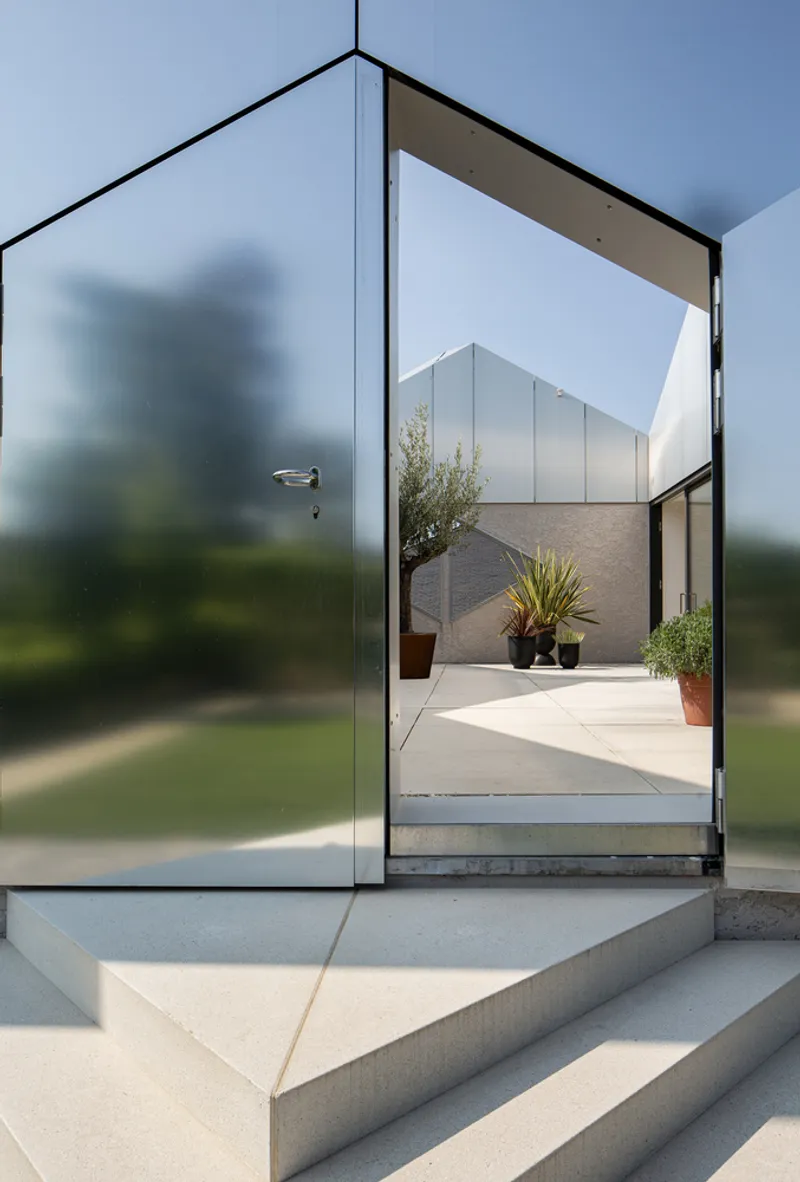
First Floor: A Grid-Based Approach to Privacy and Order
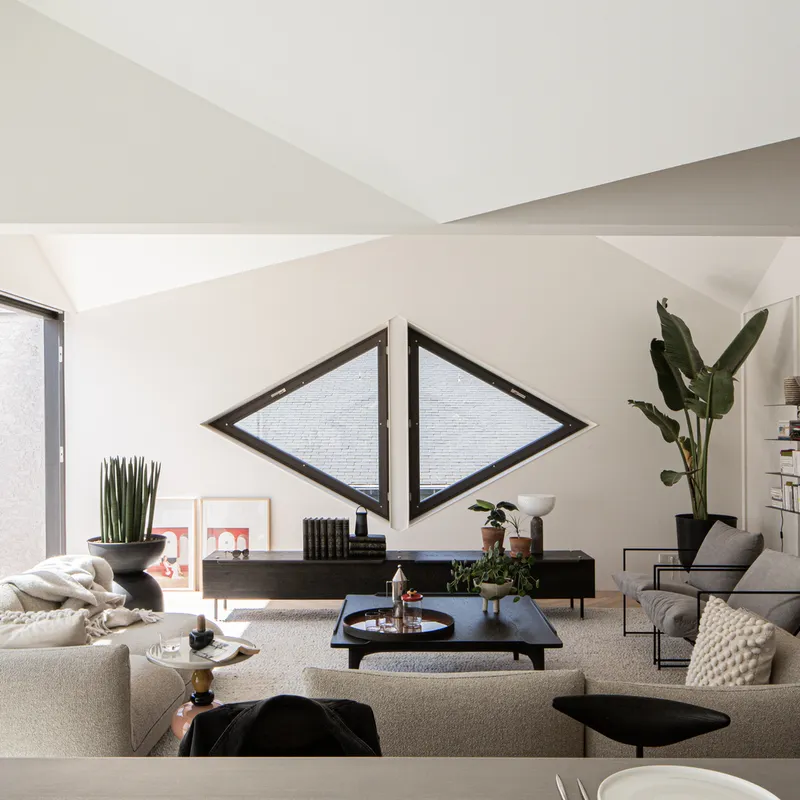
Above, the residential and office spaces are structured within a grid of 18 orthogonal units, forming a clear and hierarchical layout. This rational framework offers contrast to the more dynamic geometry of the ground level, offering calm and privacy for the building’s residential and administrative functions.
Contextual Integration: Dialogue with the Landscape and Heritage
The project does not exist in isolation but rather engages in a deliberate architectural dialogue with the historic winery to which it is attached. The sawtooth roof orientation, façade articulation, and building height all respond to the scale and rhythm of the adjacent buildings. Material selection plays a crucial role in this integration. The concrete aggregates were locally sourced from the nearby river, minimizing the building’s environmental footprint and reinforcing its regional identity within the Mosel Valley.
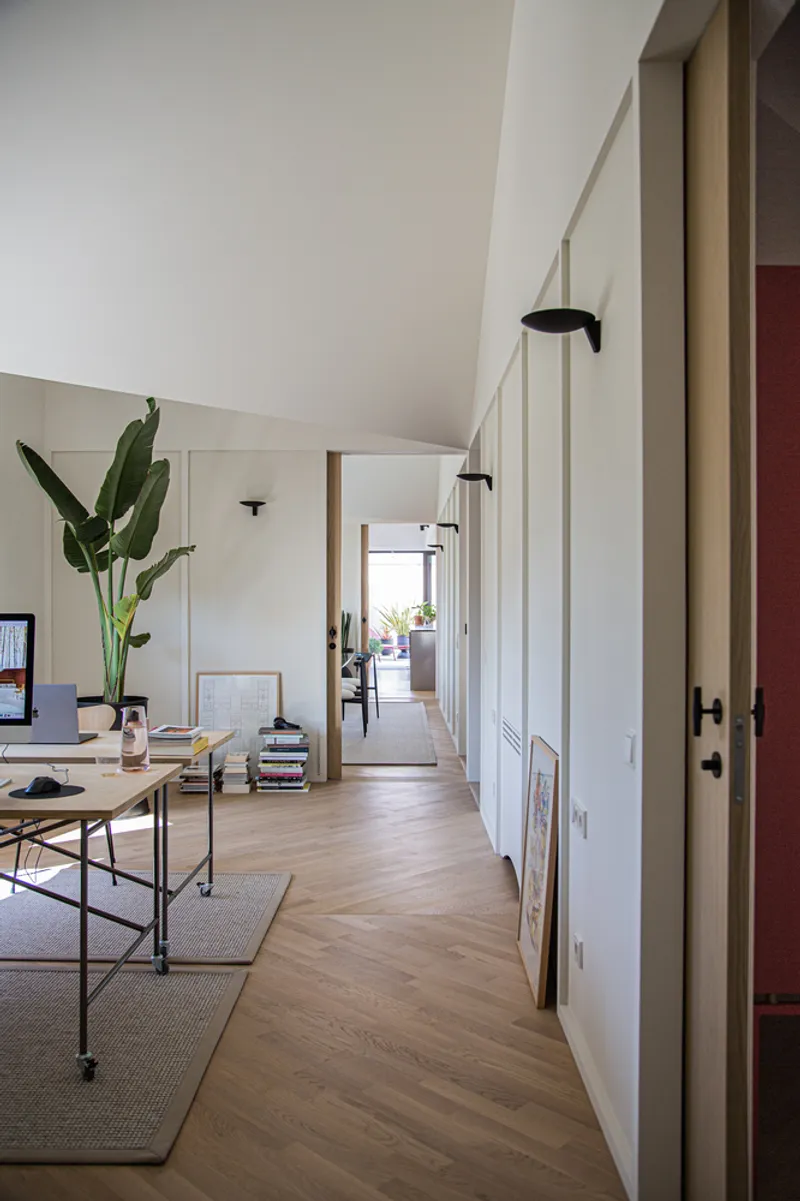
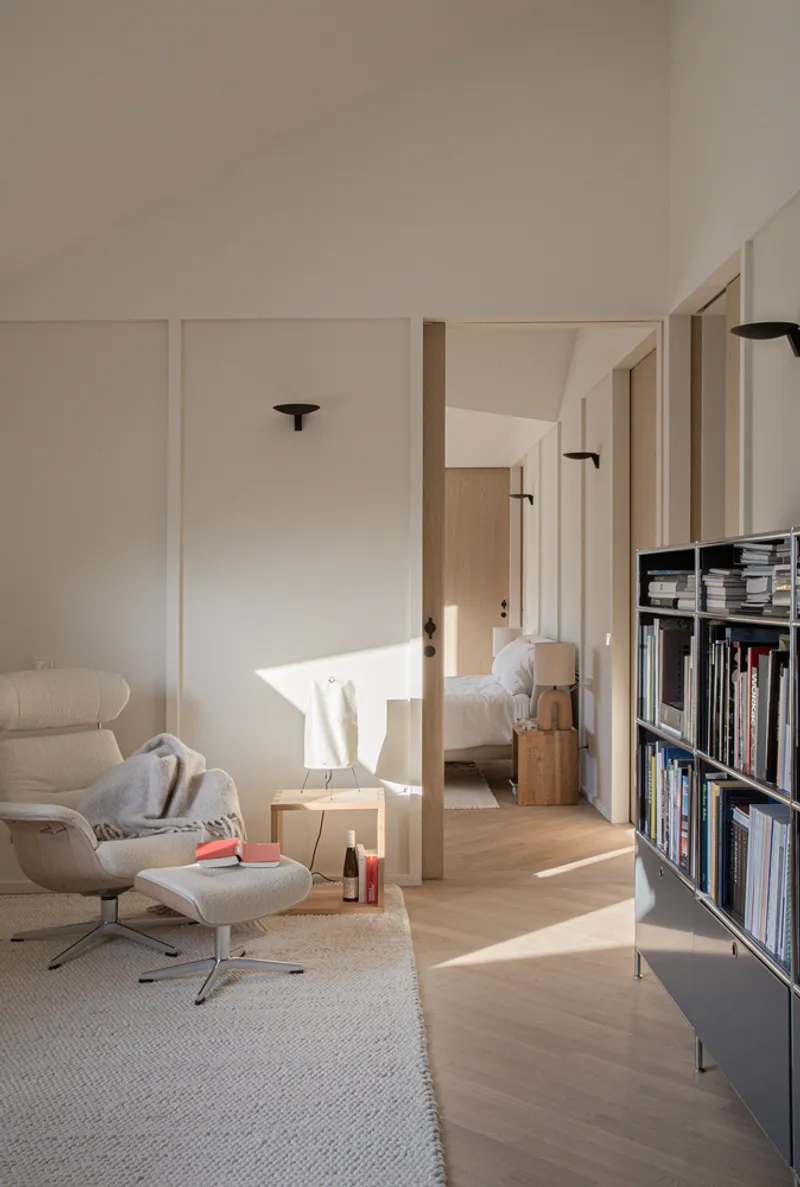
The wood used for the upper floor not only provides a warm, tactile counterpoint to the concrete base but also enhances the building’s energy performance through natural insulation.

Materiality: Environmental Responsibility Meets Architectural Integrity
Studio Jil Bentz paid exceptional attention to the selection and placement of materials. Each component was chosen based on its structural relevance, climatic performance, and aesthetic contribution. From the raw concrete that grounds the building in the terrain to the finely detailed timber cladding that lightens its upper mass, every material speaks to a philosophy of sustainable and context-driven design.

A Multifunctional Landmark Rooted in Tradition and Innovation
Domaine Claude Bentz is more than just a winery extension; it is a multifunctional architectural statement that merges hospitality, commercial functionality, and private living into a single, elegantly crafted structure. Through intelligent planning, regional material sourcing, and respect for both tradition and innovation, Studio Jil Bentz has created a building that is deeply rooted in the landscape and culture of Luxembourg’s Mosel wine region — a space where the experience of wine, architecture, and place come together seamlessly.

All Photographs are works of Studio Jil Bentz




Popular Articles
Popular articles from the community


Co-Life: Senior Housing Design That Reconnects Older Adults With the City
Co-Life reimagines senior housing design through healing gardens, shared streets, workshops, and a sustainable community across generations.

Co-life: Sustainable Architecture for Age-Friendly Community Living
Co-life reimagines sustainable architecture for seniors through courtyards, rammed earth, shared gardens, and spaces designed for belonging.

The Ocean Hive: Sustainable Architecture for a Self-Sufficient Civilization at Sea
The Ocean Hive imagines sustainable architecture at sea, where modular habitats, algae, wave power and ocean waste sustain a growing colony.

Lunar Spiral: Space Architecture Shaped by the Mathematics of the Universe
Lunar Spiral reimagines space architecture through Fibonacci geometry, lunar regolith, levitating habitats, and self-sustaining Moon living.

Similar Reads
You might also enjoy these articles


Hodi-Mandai Geram
Project Function: Preservation and revitalization of the Intangible heritage and socio-spatial identity of the Hodi by Housing, Cultural Memory Center, Sacred Grove, landscape, local tourism economy


Olio Towers: A Mid-Rise for Performers That Fuses Housing, Rehearsal, and Stage
Located blocks from Houston's Theater District, this modular tower stacks living units around a central performance atrium.

Oasis: Modular Green Housing Carved into Dhaka's Urban Fabric
A shortlisted Plugin Housing entry reclaims unauthorized settlements in Dhaka with stepped concrete volumes, green roofs, and ventilation-driven design.

Black Hole: A Floating Megastructure for the Post-Physical Era
Emiliano Mazzarotto envisions a spherical, self-scaling arena where e-sports, digital hotels, and holographic stadiums replace traditional public space.


Explore Commercial Buildings Competitions
Discover active competitions in this discipline



Challenge to reimagine the Iron Throne


Photograph architecture without architects


Illustrate the lost glory of Angkor Wat - Render Challenge


Design challenge to reuse E-waste
Comments (0)
Please login or sign up to add comments
No comments yet. Be the first to comment!