

EME157 Expands a Madrid Home with Vaulted Volumes, Blue Columns, and an Ivy-Clad Facade
The DOMEHOME expansion layers concrete, steel, and vegetation across a multi-level residence on the outskirts of Madrid.


House expansions rarely get to feel inevitable. Most additions read as exactly what they are: afterthoughts bolted onto an existing structure with varying degrees of grace. The DOMEHOME project by EME157 is a different proposition. Here, the expansion does not simply attach to the original house. It absorbs and redefines it, producing a hybrid structure where old and new volumes stack, overlap, and disappear behind layers of ivy and curved rooflines.
What makes DOMEHOME worth studying is how aggressively it commits to material honesty while still producing warm, liveable interiors. Exposed concrete columns, blue-painted steel supports, barrel-vaulted ceilings, and circular skylights are all left visible and celebrated rather than concealed. The result is a home that feels structurally legible from every angle, inside and out, without sacrificing comfort. EME157 treats the expansion as an opportunity to make the entire building more coherent, not just bigger.
The Ivy Equation
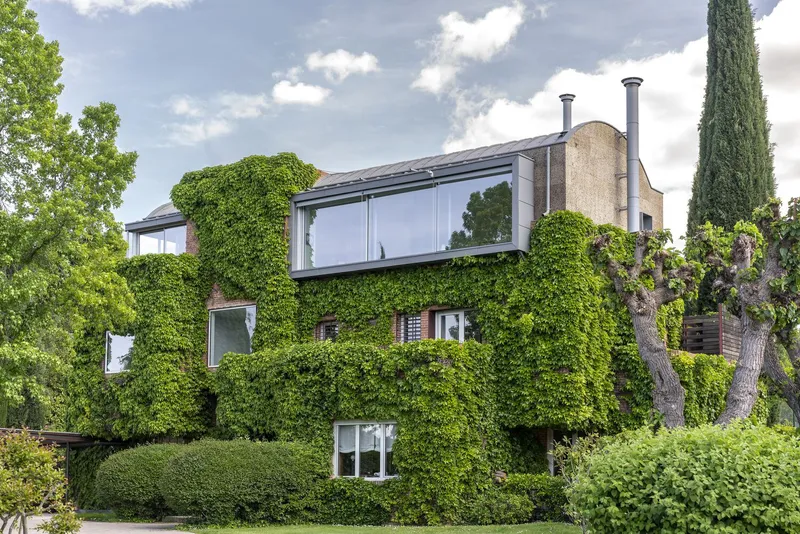
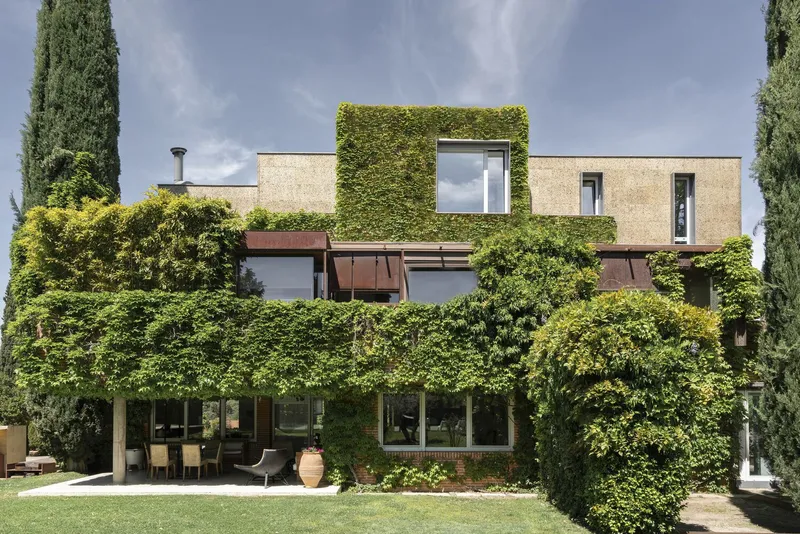
The exterior strategy is simple and effective: let the vegetation do the heavy lifting. Ivy climbs across nearly every facade, softening the boundaries between the stacked rectilinear volumes and giving the building a settled, almost geological presence. Terracotta chimneys and twin metal flues puncture the green canopy, acting as vertical markers that orient the eye upward through the layered terraces.
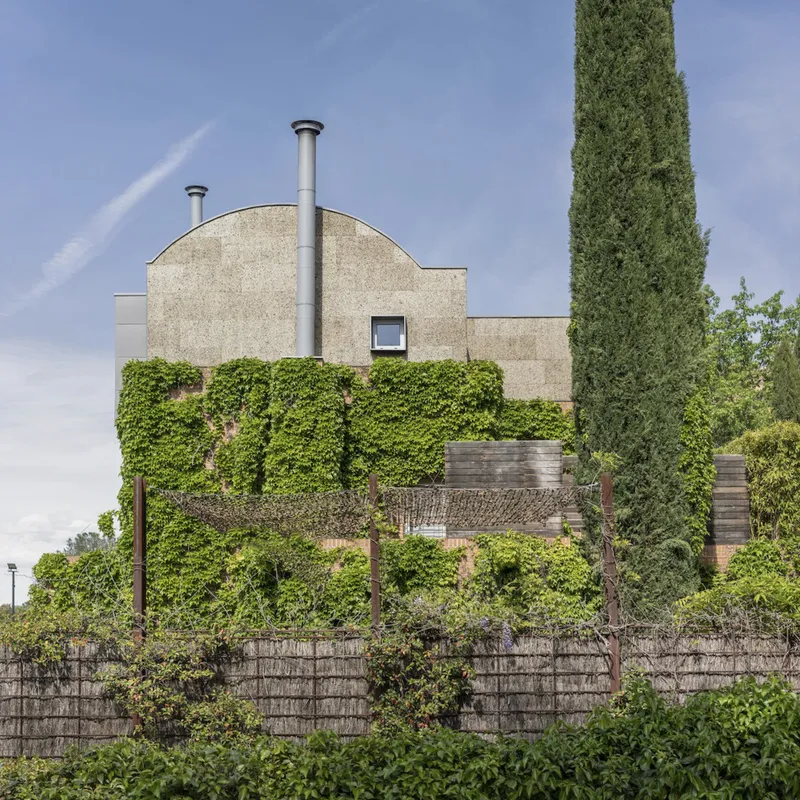
The rear elevation is the more revealing face. A curved vault roof announces the expansion's structural ambition, while a gabion wall at the base anchors the composition in raw materiality. Cypress trees stand sentinel at the edges. None of this reads as decorative; the planting and the stonework are integrated into the building's thermal and structural logic. The facade is not dressed. It is grown.
Concrete Columns as Interior Landmarks
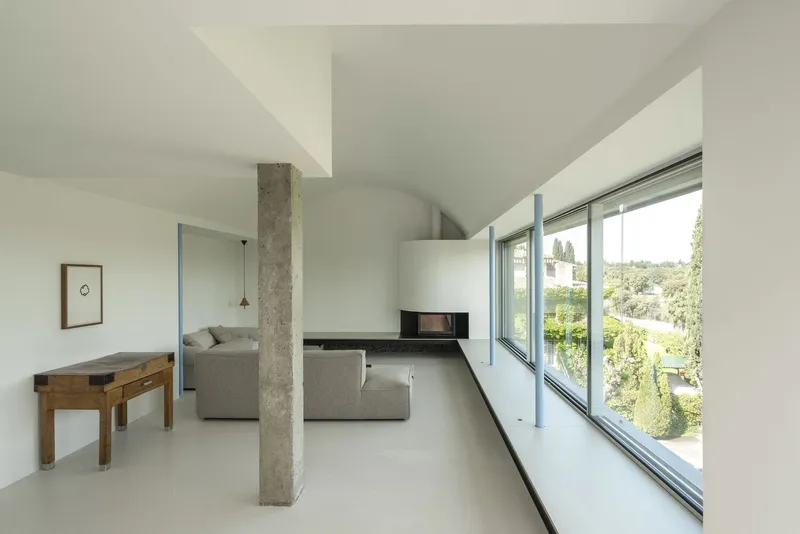
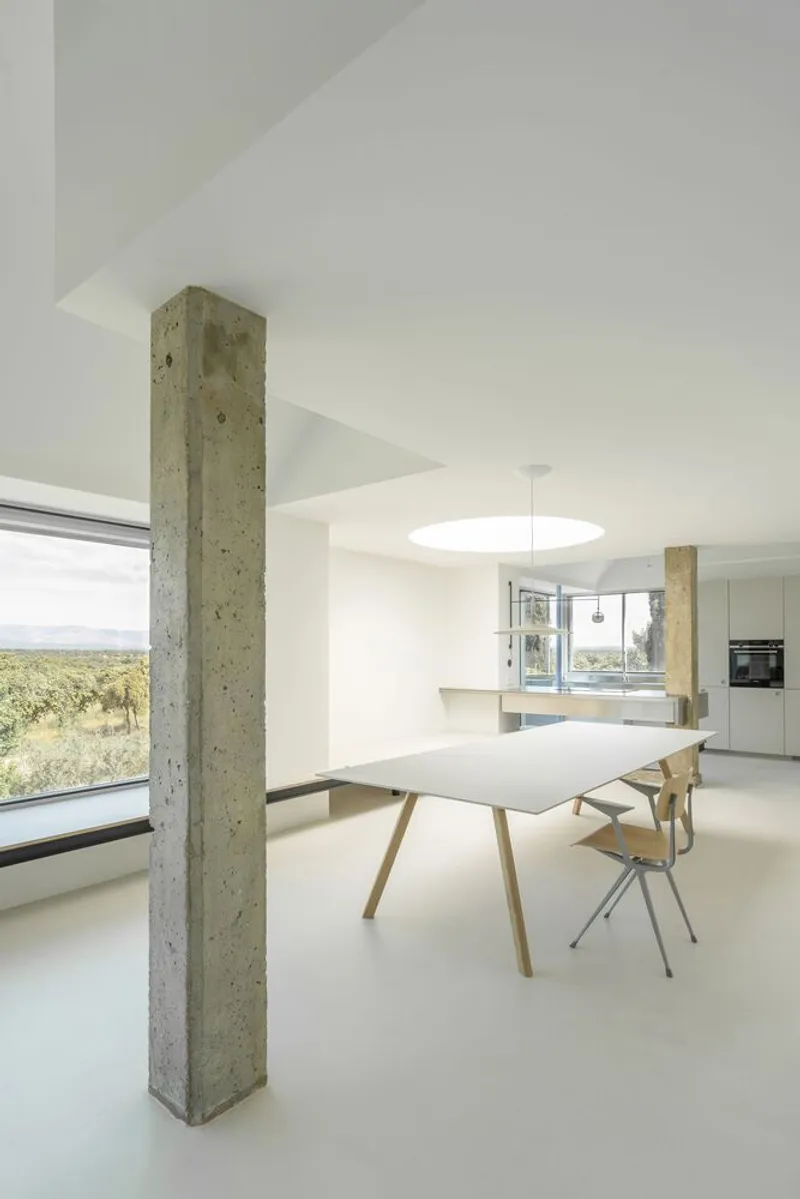
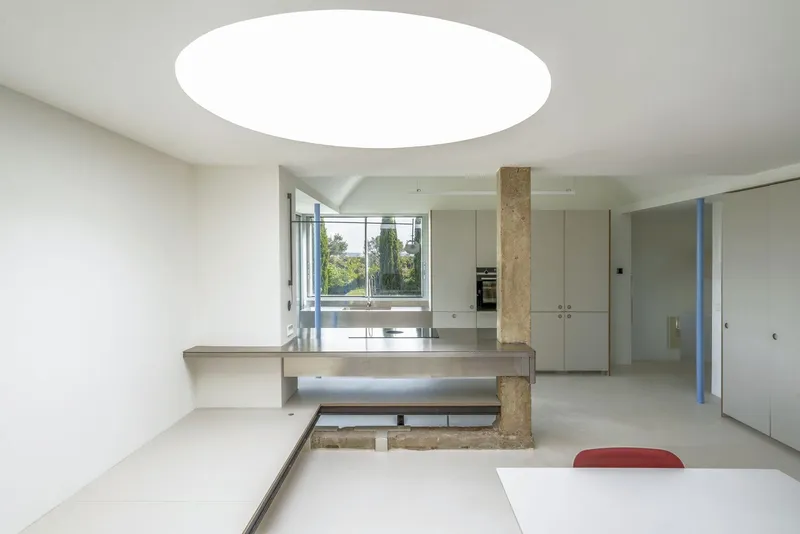
Inside, freestanding concrete columns become the organizing devices of the open plan. In the living area, a single column stands between continuous horizontal windows and a vineyard panorama, dividing the space just enough to create rhythm without erecting walls. The dining zone picks up the same logic: a column anchors the center of a fully glazed corner, turning what could be a simple box into a framed landscape.
The kitchen is where this approach pays off most clearly. A cantilevered counter wraps directly around the exposed column, making the structure part of the furniture. A circular ceiling skylight throws a cone of natural light down onto the work surface. It is a small room with a lot of ideas, and all of them are spatial rather than cosmetic.
Blue Steel and Barrel Vaults
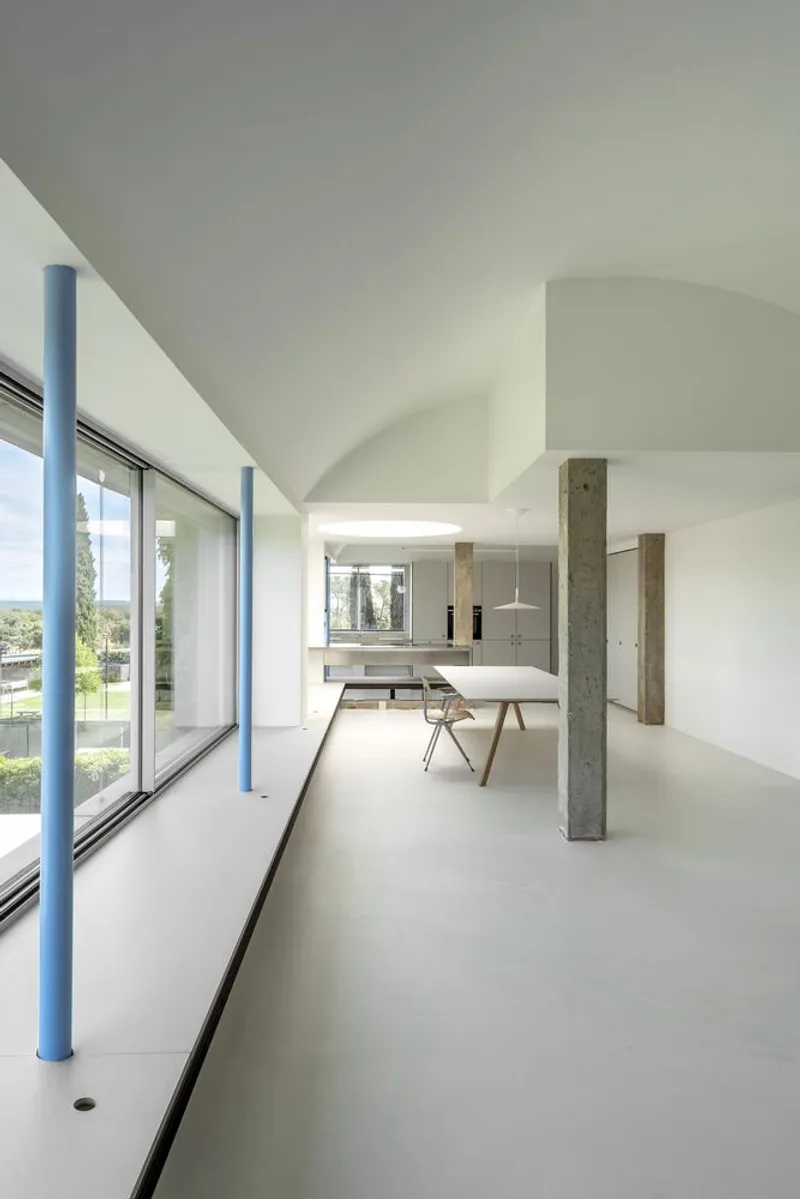
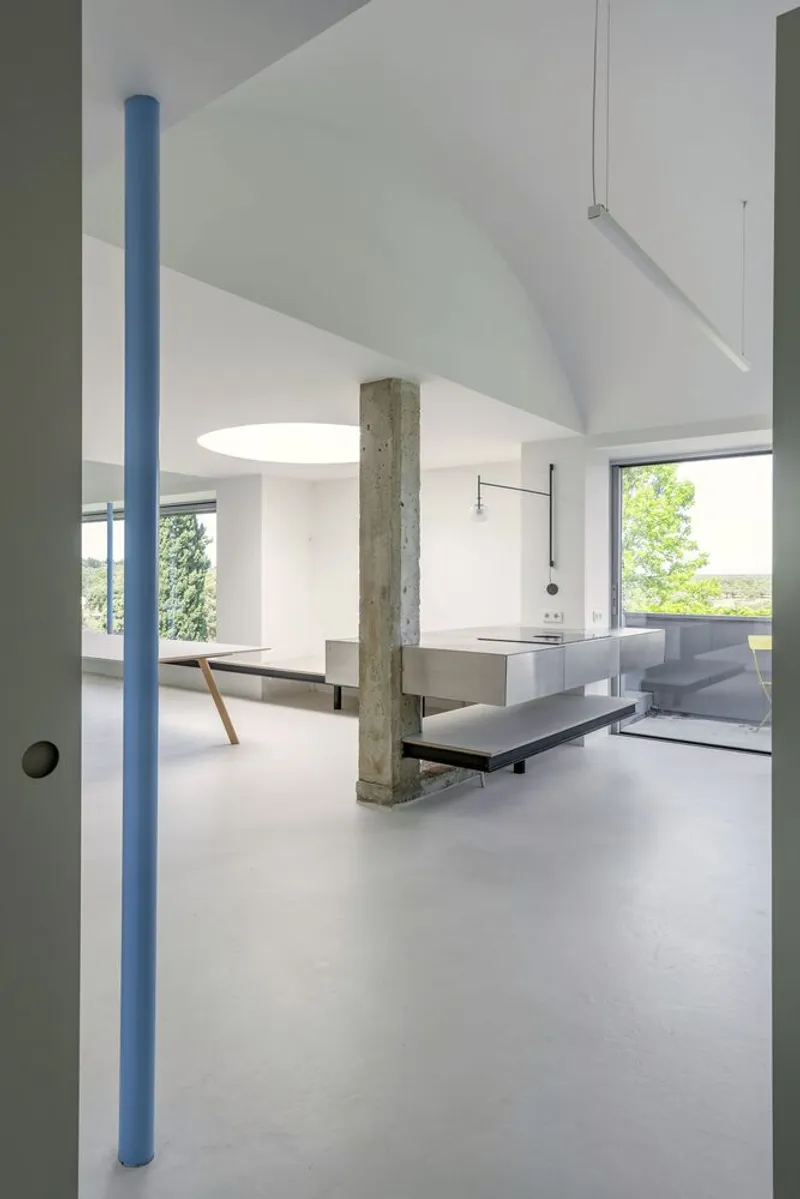
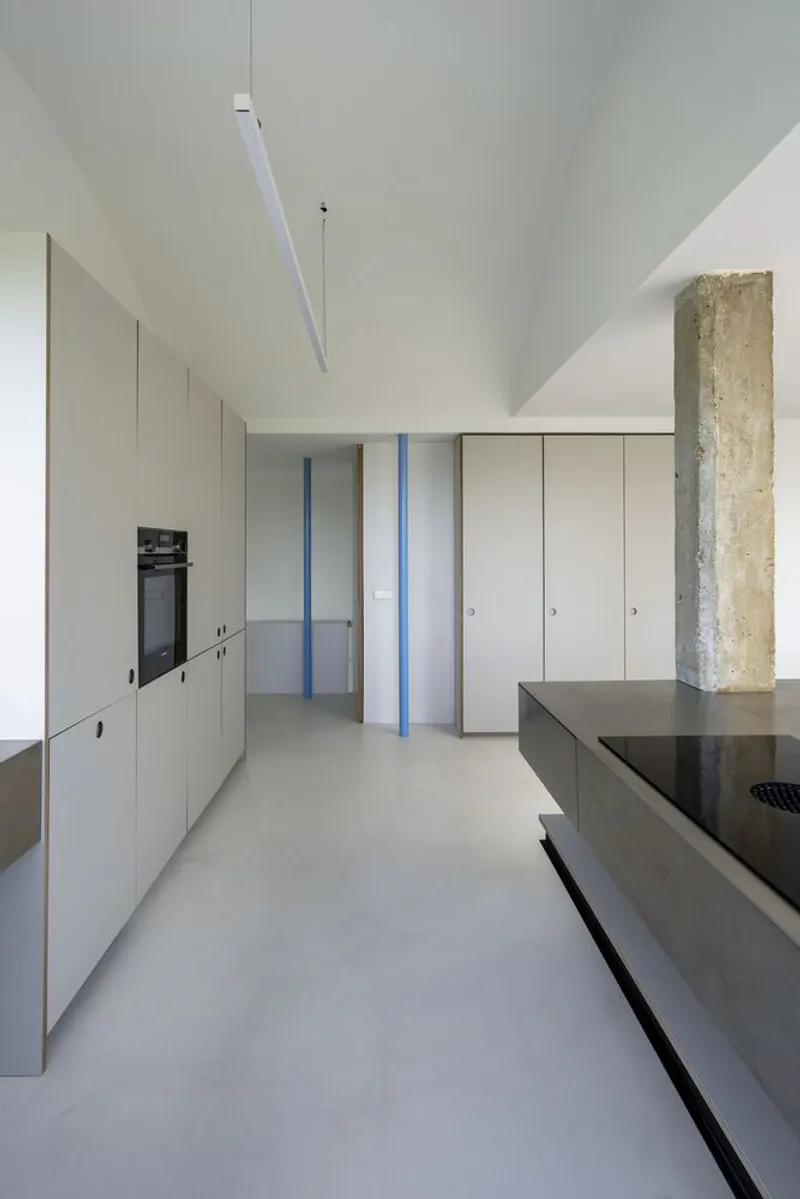
The barrel-vaulted ceiling is the signature move of the expansion. It runs continuously across the main living zone, compressing and releasing the space as it curves overhead. EME157 pairs this white vault with blue-painted cylindrical steel columns that contrast sharply with the rough concrete pillars found elsewhere. The color choice is deliberate and assertive: the blue marks the new structural system, distinguishing it from the existing bones of the house.
A suspended linear lighting fixture traces the vault's centerline in the kitchen corridor, reinforcing the geometry without competing with it. Pale cabinetry recedes, allowing the columns and ceiling to dominate. The effect is industrial and domestic at the same time, a balance EME157 manages through restraint. No surface is overworked. Every element earns its place.
Living with Curves
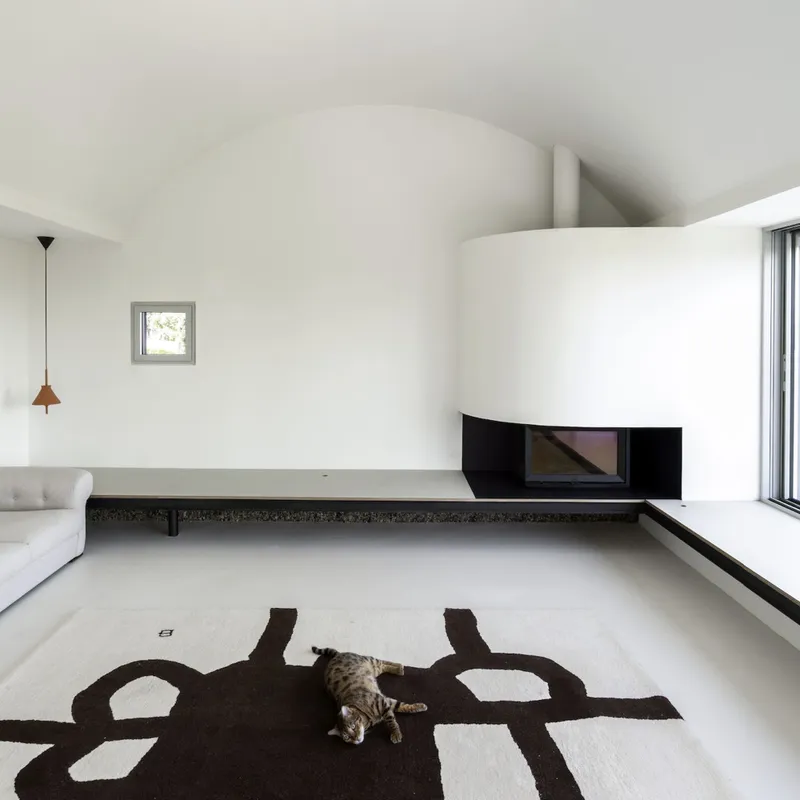
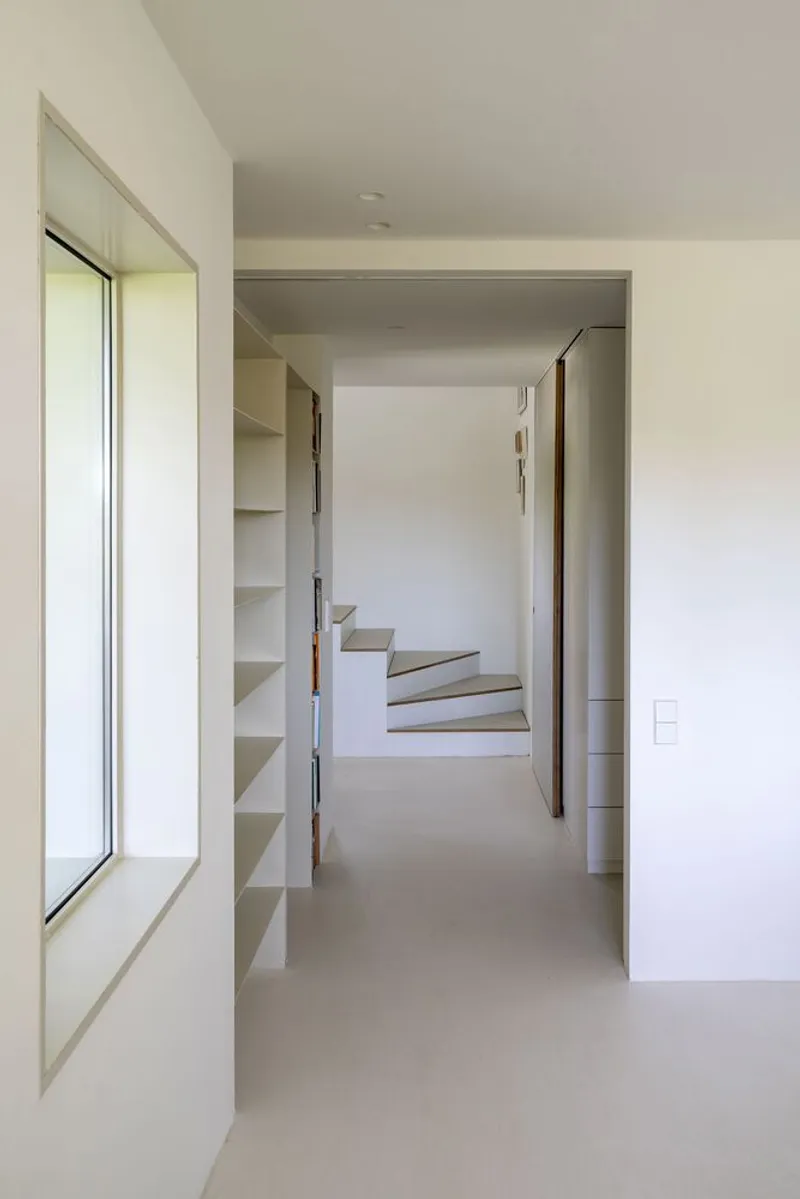
The private rooms feel quieter but no less considered. A living room with curved white walls contains a recessed fireplace that is flush with the plaster, producing a clean, almost sculptural niche. A hallway lined with built-in shelving leads to an angled staircase with a timber handrail, each transition calibrated to slow you down as you move between zones.
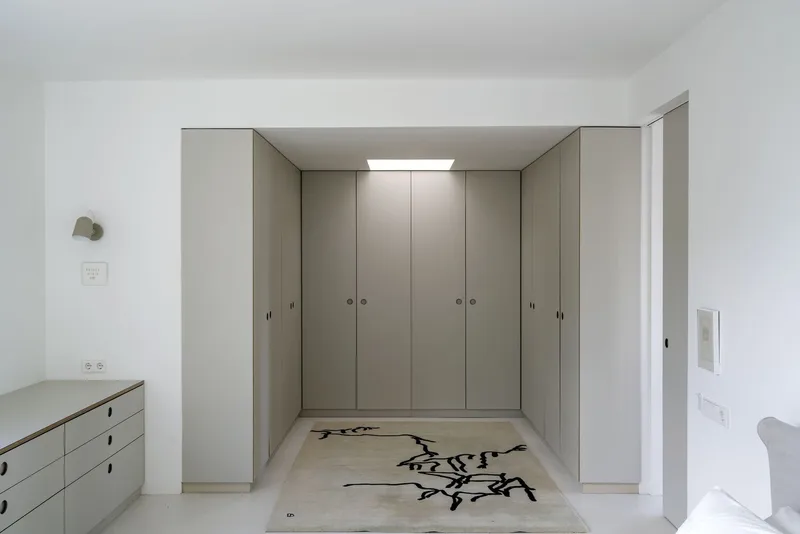
The bedroom operates on a similar principle: floor-to-ceiling storage cabinets create a continuous wall of joinery, punctuated only by a skylight that washes the room in diffused light. A rug with a calligraphic motif adds personality without clutter. These are rooms designed for use, not photography, though they happen to photograph well because the proportions are honest.
The Cylinder in the Bathroom
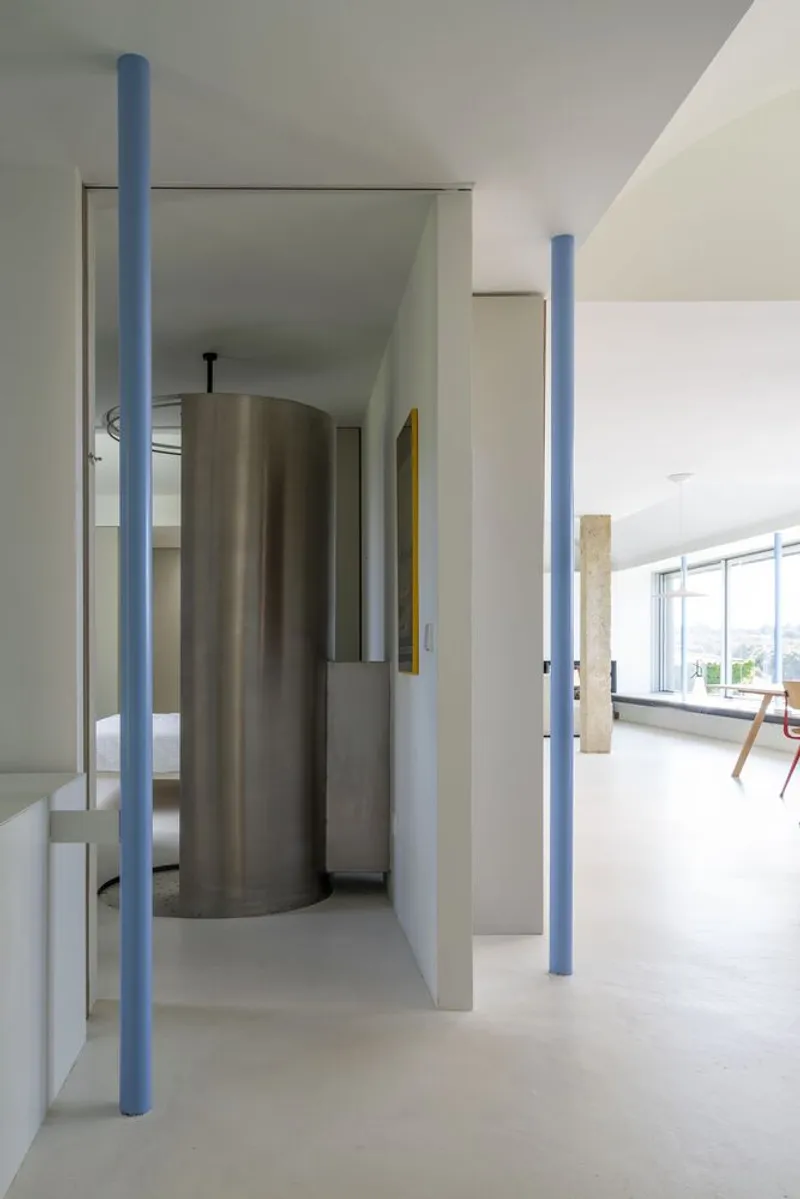
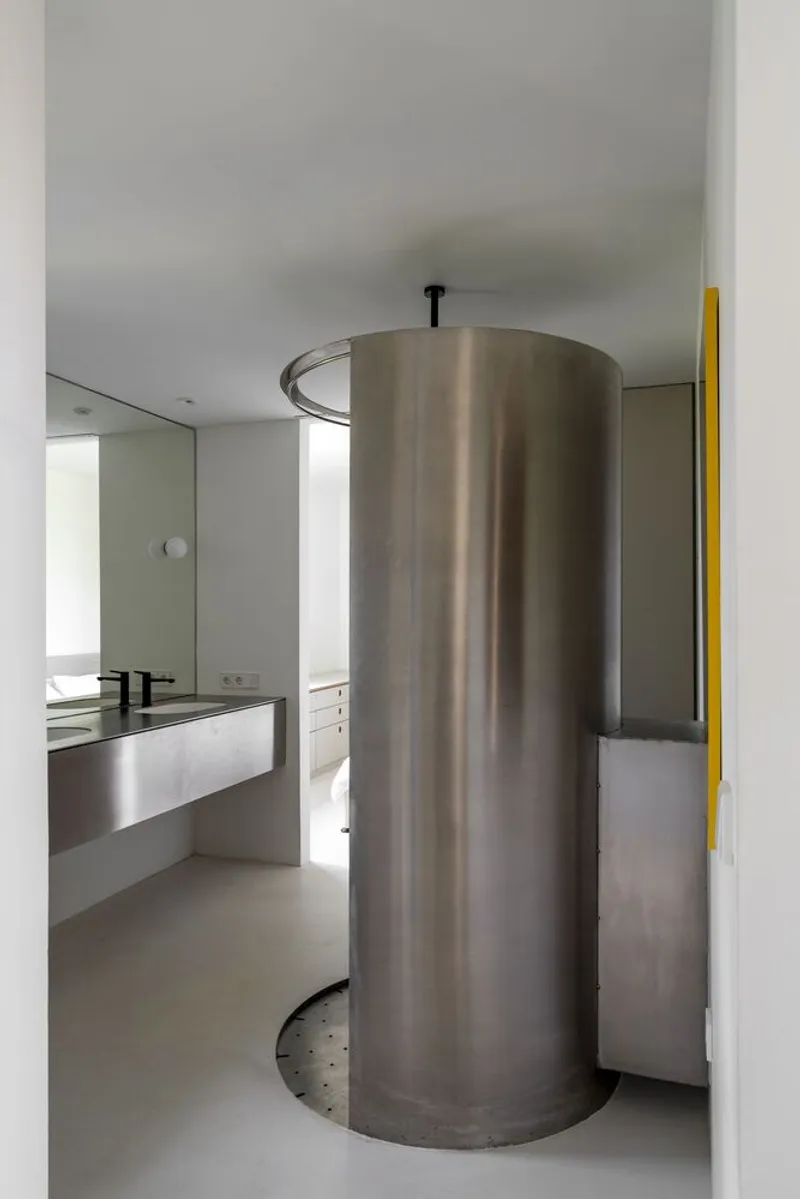
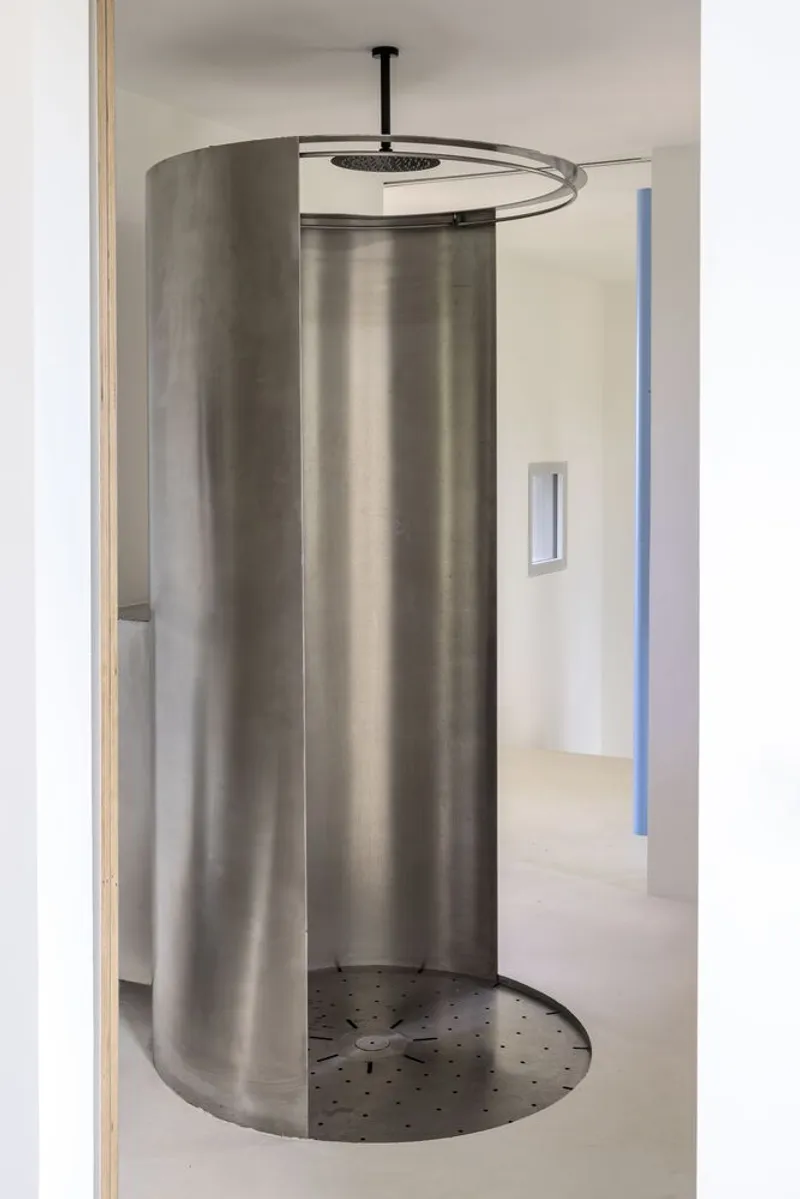
The most unexpected detail in the house is the freestanding cylindrical shower enclosure. Fabricated from stainless steel with a perforated base and a ceiling-mounted circular ring, it stands in the bathroom like a piece of industrial equipment repurposed for domestic life. The blue columns frame it from the adjacent space, creating a layered view that makes the bathroom feel connected rather than isolated.
It is a bold choice, and one that could easily feel gimmicky. But in the context of a house that already celebrates exposed structure and honest materials, the shower cylinder is consistent. It extends the project's logic into a room where most architects default to tile and glass. EME157 clearly does not default to anything.
Plans and Drawings
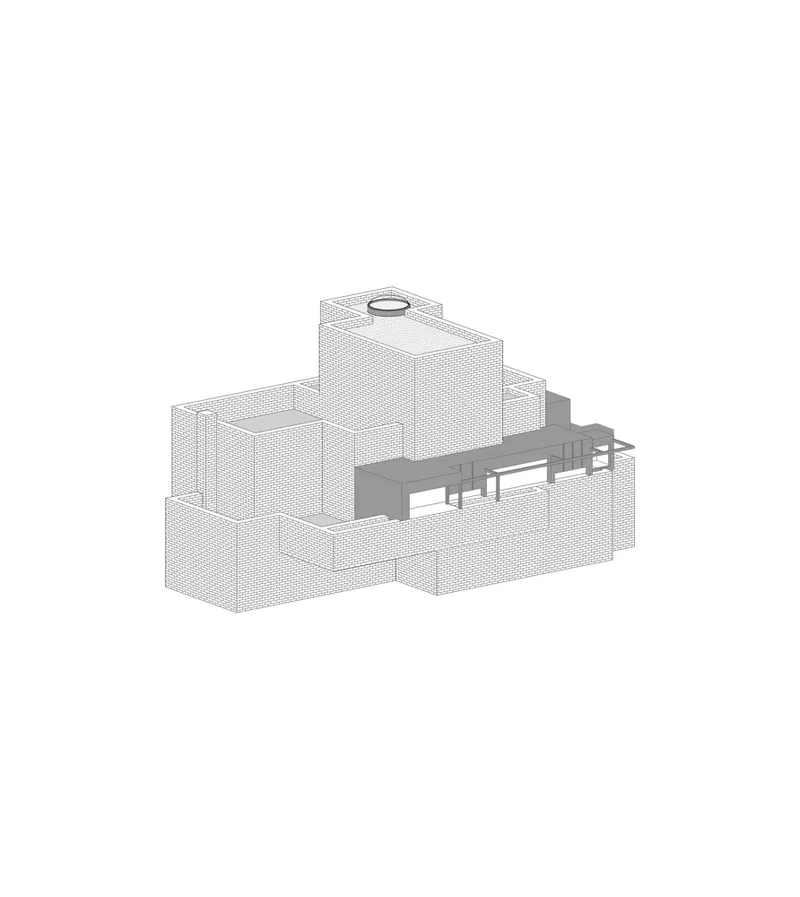
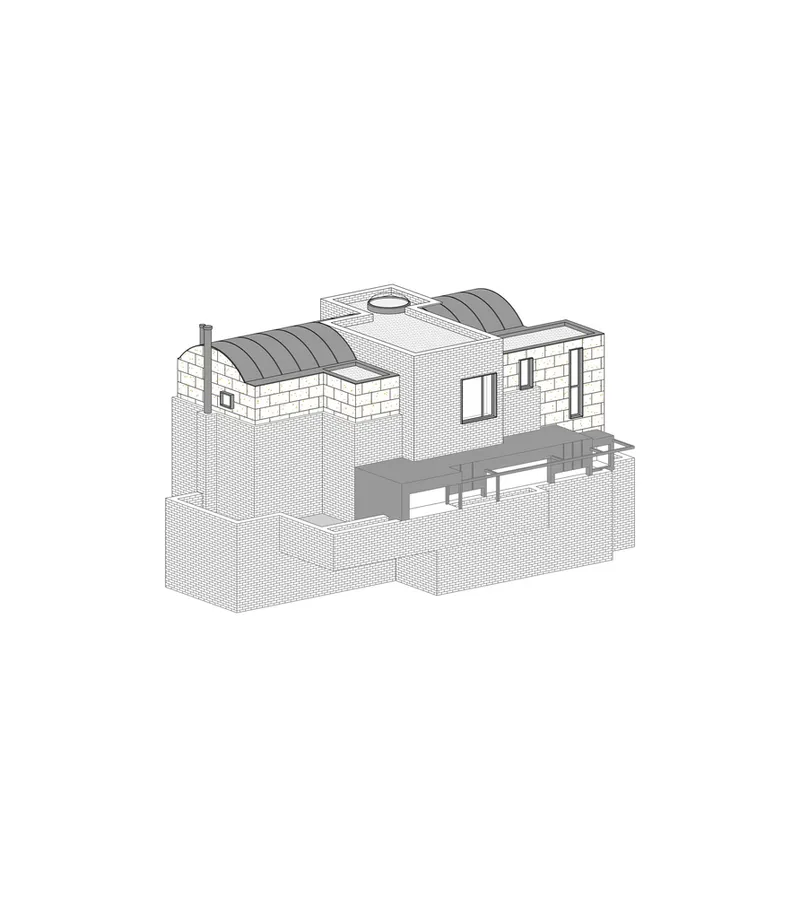
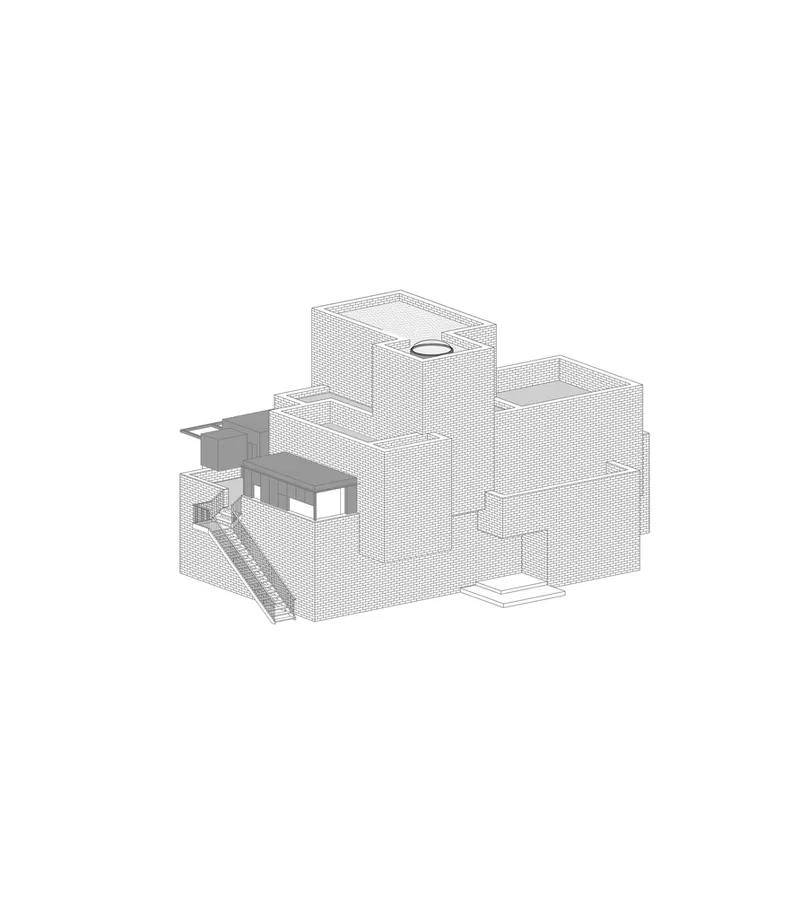
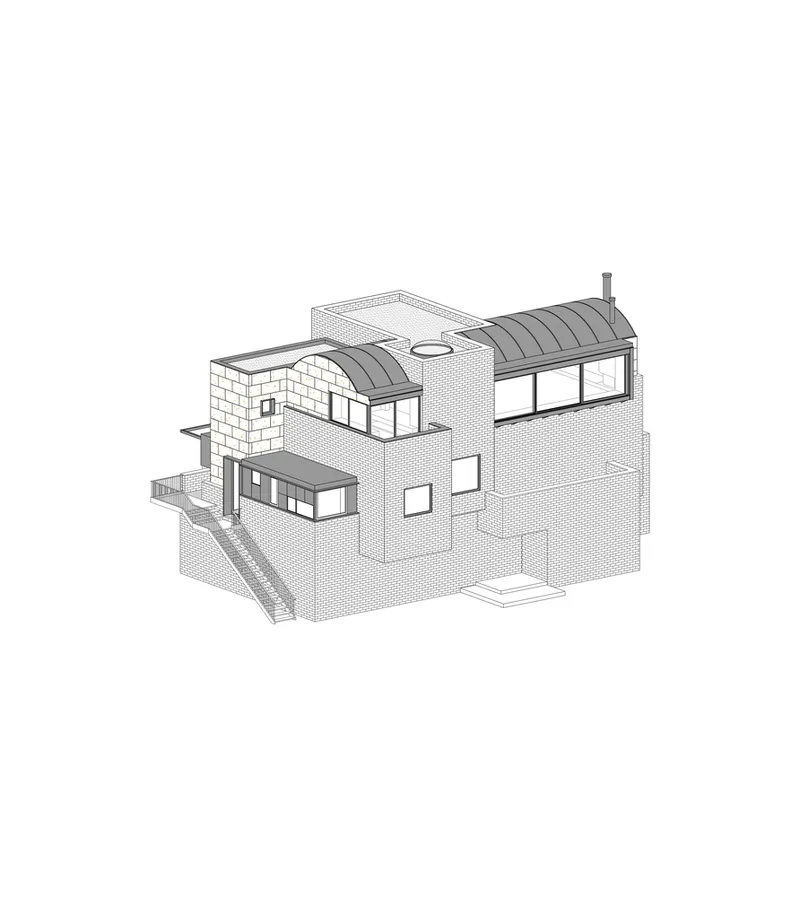
The axonometric sequence is unusually revealing. It traces the expansion process from stacked rectilinear volumes through the addition of the barrel vault and window openings, arriving at a clustered composition with a central cylindrical tower element. Reading the drawings in sequence, you can see exactly how each move generates the next: the vault is not applied on top of the plan but grows out of the structural decisions made at the ground level.
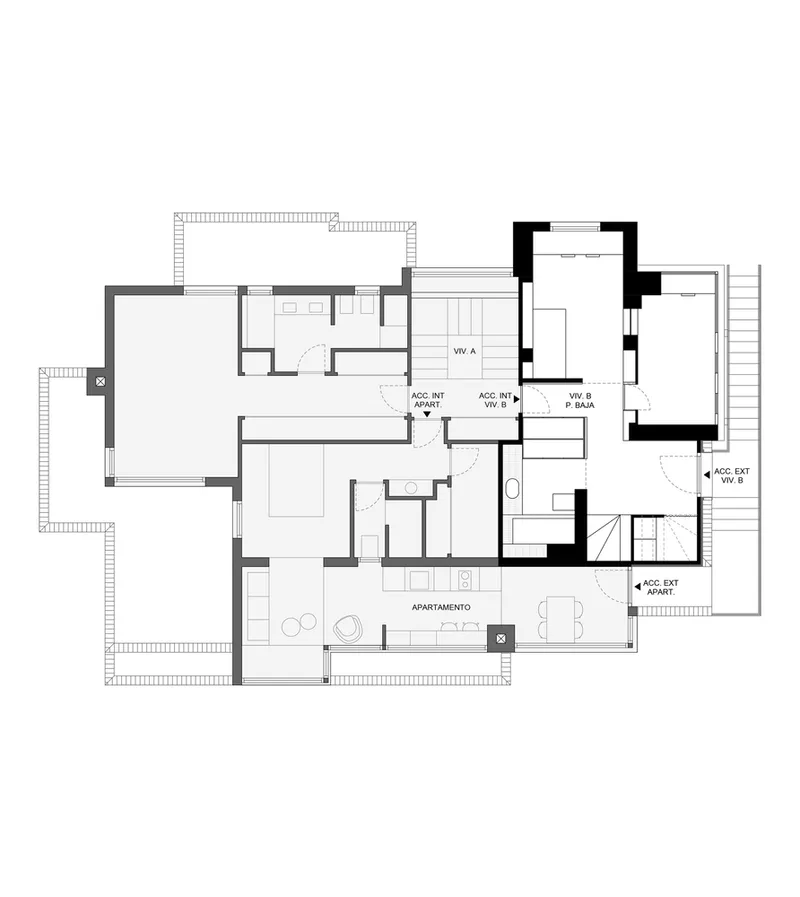
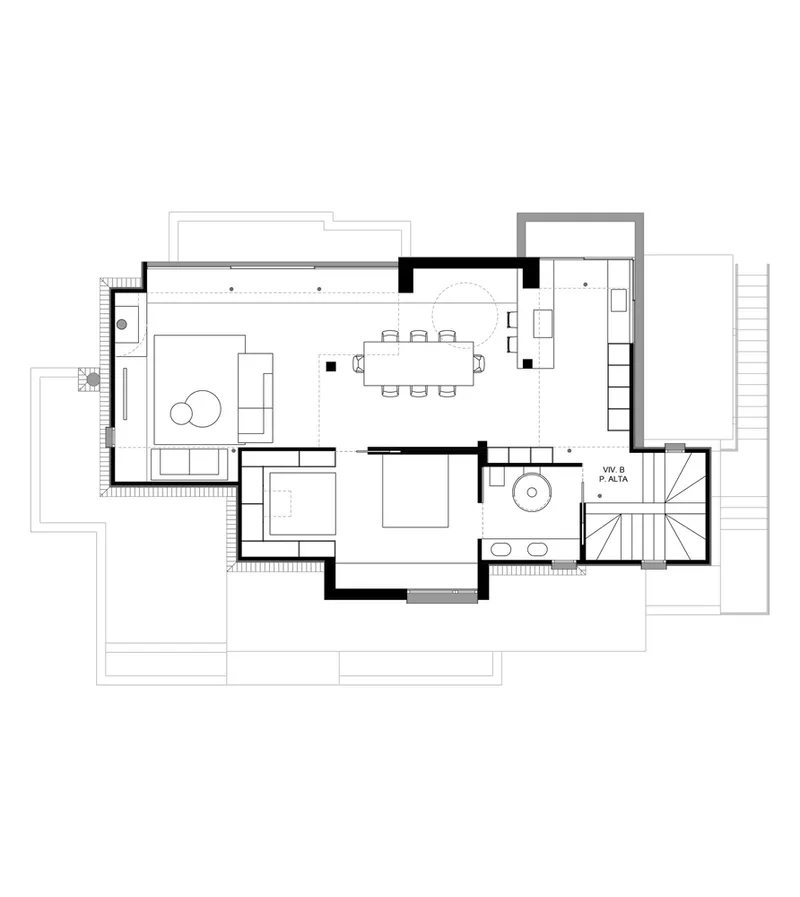
The floor plans confirm what the photographs suggest. The central living area operates as a hinge between terraces, with the spiral staircase providing vertical circulation through the layered volumes. Open living and dining spaces flow into each other, governed by the column grid rather than partition walls. The plans are efficient without being minimal; every square meter has a clear programmatic role.
Why This Project Matters
House expansions are a test of architectural conviction. They require a designer to take a position on what already exists and then make an argument, in built form, for what should come next. EME157 passes this test by refusing to treat the original house as a constraint. Instead, the DOMEHOME expansion uses the existing structure as a springboard, layering new materials, geometries, and spatial ideas onto a foundation that becomes richer for the intervention.
The project also demonstrates that material honesty and domestic warmth are not opposites. Exposed concrete, blue steel, stainless cylinders, and barrel vaults sound like the ingredients of a gallery or a workshop. In EME157's hands, they produce a home where cats sleep on patterned rugs, kitchens wrap around columns, and ivy slowly erases the line between building and garden. That is the real achievement here: not the individual moves, but the coherence of a house that looks like it was always meant to be this way.
DOMEHOME House Expansion by EME157. Madrid, Spain. Photographer: Luis Asín.
About the Studio
Share Your Own Work on uni.xyz
If projects like this are the kind of work you want to make, uni.xyz is a place to publish your own, find collaborators, and enter design competitions.


Popular Articles
Popular articles from the community


David Ortega Stacks a Two-Story Mexico City Penthouse Around a Steel Stair and a Pergola-Shaded Roof Terrace
In Colonia Roma, a 300 m² penthouse uses oak joinery, a planted steel stair and a slatted roof pergola to make a new-build apartment feel like a house.

U.GA Architects Wraps an Oval Rooftop Pool in Curved Board-Formed Concrete on Busan's Jeollidan-gil
In Busan's Jeonpo-dong, a 454 m² mixed-use block stacks a neighborhood facility, guest rooms and an oval rooftop pool inside spiraling concrete walls.

Architekt Andreas Gruber Scatters 23 Dark Timber Chalets Across a South Tyrolean Forest Edge
In Molini di Tures, Amonti Chalets breaks a resort into a hamlet of gabled timber houses, with parking, storage and services pushed into the slope.

David Macias Steps a Doorless Stone and Plaster House Down a Tropical Colombian Hillside
In the humid hills of Colombia, Threshold House replaces the front door with an open void and terraces its 850 m² down the slope instead of fighting it.

Similar Reads
You might also enjoy these articles


Hodi-Mandai Geram
Project Function: Preservation and revitalization of the Intangible heritage and socio-spatial identity of the Hodi by Housing, Cultural Memory Center, Sacred Grove, landscape, local tourism economy


Olio Towers: A Mid-Rise for Performers That Fuses Housing, Rehearsal, and Stage
Located blocks from Houston's Theater District, this modular tower stacks living units around a central performance atrium.

Oasis: Modular Green Housing Carved into Dhaka's Urban Fabric
A shortlisted Plugin Housing entry reclaims unauthorized settlements in Dhaka with stepped concrete volumes, green roofs, and ventilation-driven design.

Black Hole: A Floating Megastructure for the Post-Physical Era
Emiliano Mazzarotto envisions a spherical, self-scaling arena where e-sports, digital hotels, and holographic stadiums replace traditional public space.

Explore Architecture Competitions
Discover active competitions in this discipline

Challenge to reimagine the Iron Throne

Photograph architecture without architects

Illustrate the lost glory of Angkor Wat - Render Challenge

Design challenge to reuse E-waste
Comments (0)
Please login or sign up to add comments
No comments yet. Be the first to comment!