
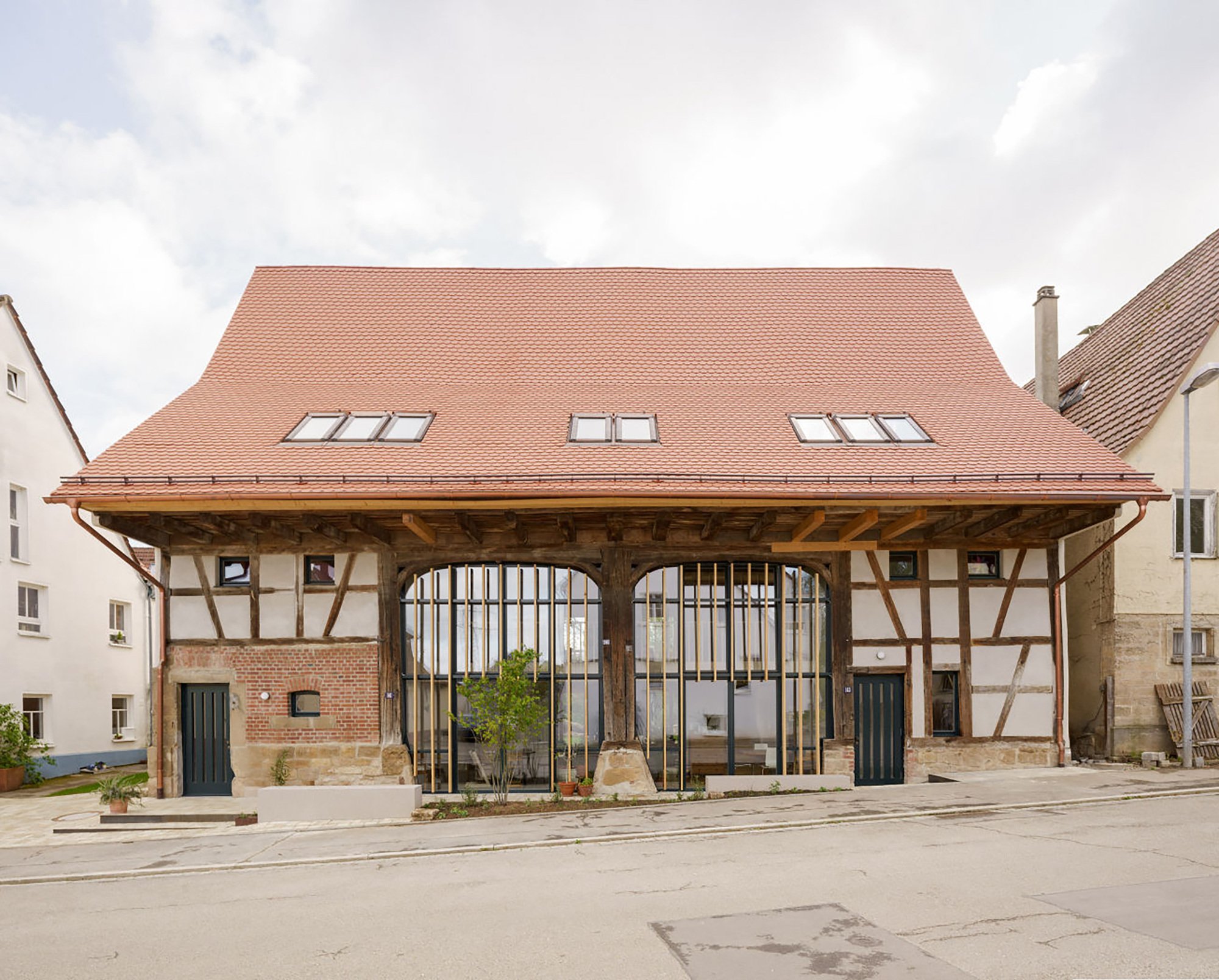
Doppelscheune – A Historic Barn Transformed into a Modern Residential Building by KO/OK Architektur
A historic 1806 barn in Tübingen transformed by KO/OK Architektur into sustainable modern homes blending heritage, craftsmanship, and ecology.

Reviving Heritage Through Contemporary Design
In the southwest region of Tübingen, the historic center of Derendingen is experiencing a remarkable transformation. Once defined by its linear, rural fabric, this neighborhood now stands at the crossroads of urban renewal, where heritage conservation, adaptive reuse, and modern living coexist in harmony.
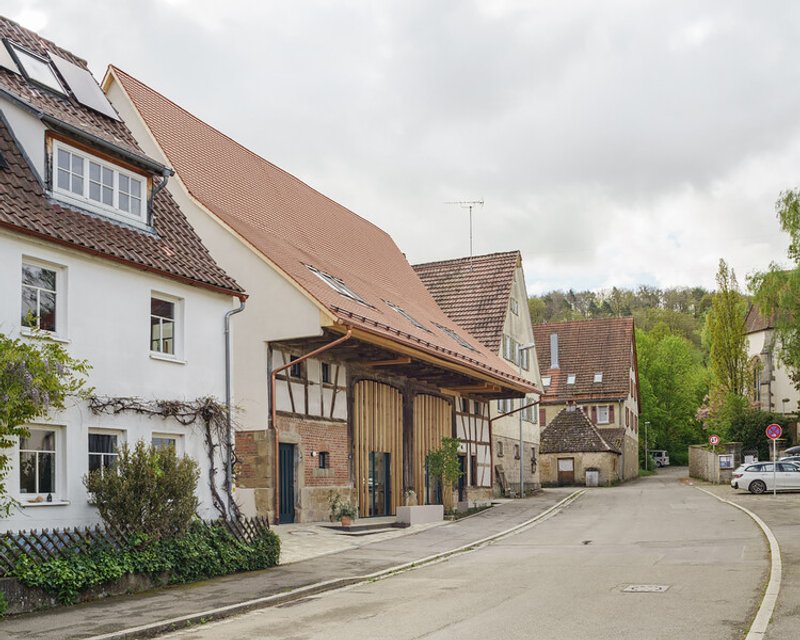
At the heart of this evolving landscape stands Doppelscheune, a listed barn dating back to 1806. Surrounded by the village church, an old schoolhouse, a bakehouse, and former agricultural buildings, this iconic structure has been meticulously reimagined by KO/OK Architektur into a four-unit residential building—a masterful balance of preservation and innovation.
From Agricultural Barn to Modern Residential Space
Thanks to the vision of a private joint building venture, the Doppelscheune project transformed a purely agricultural structure into a sustainable and livable space. This adaptive reuse project presented numerous architectural challenges—ranging from fire safety regulations, structural reinforcements, to historic preservation guidelines. Each constraint demanded careful attention to ensure both safety and authenticity.
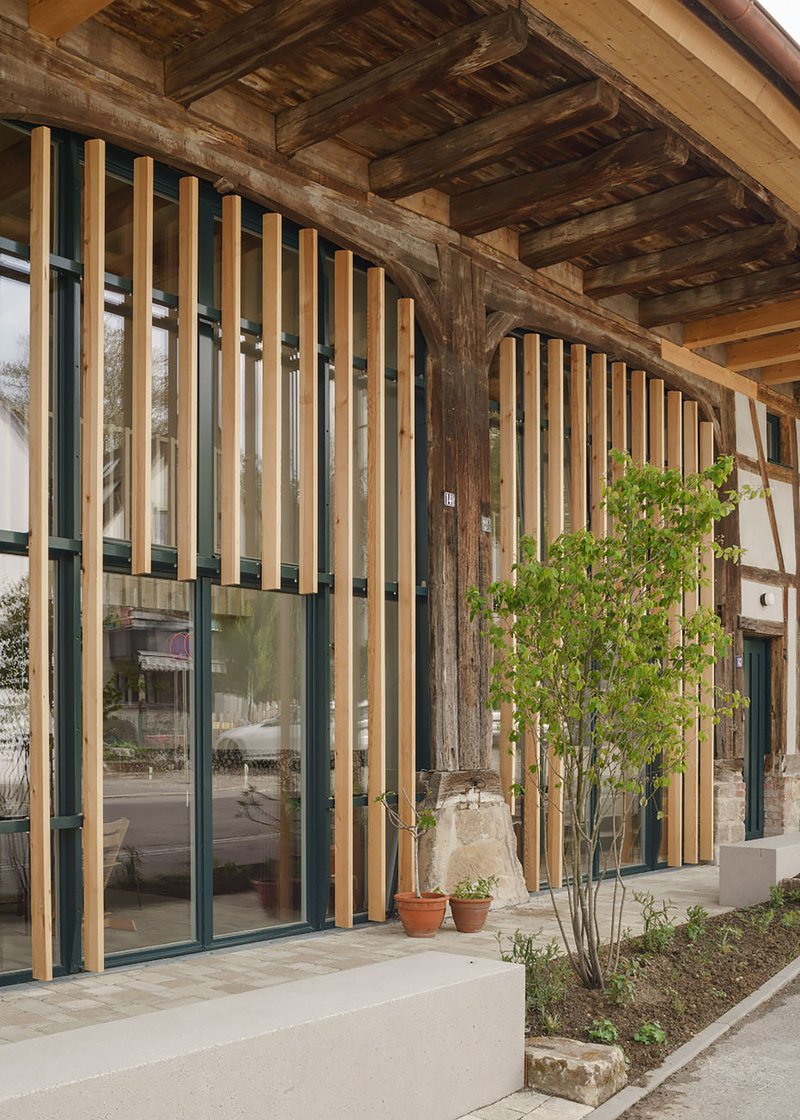
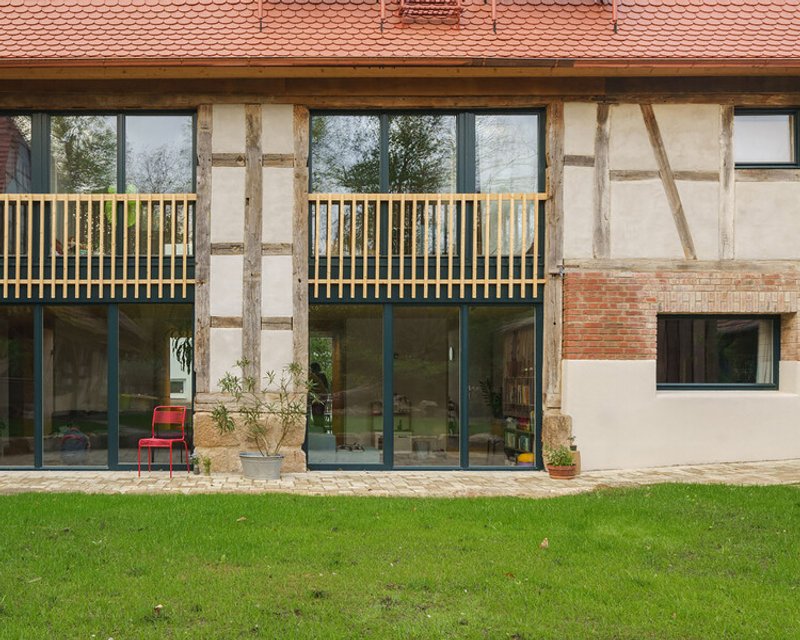
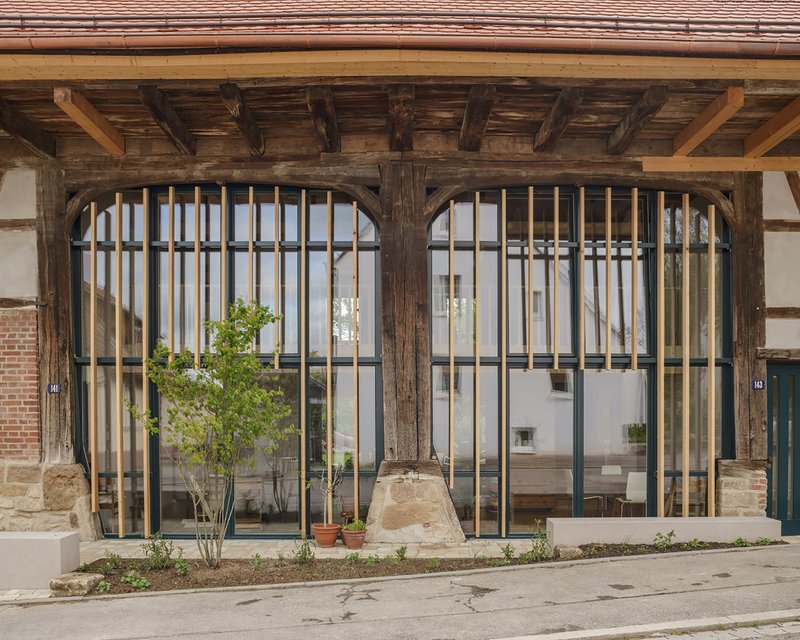
Externally, the transformation is elegantly subtle. The original barn aesthetic has been preserved, with large traditional doors now hidden behind vertical wooden slats. These slats cleverly conceal modern glazing and reveal the living interiors only at night, when the warm glow from within becomes visible through the façade. The half-timbered exterior maintains its rustic simplicity, interrupted only by small windows and stable-style doors that reflect the barn’s heritage.
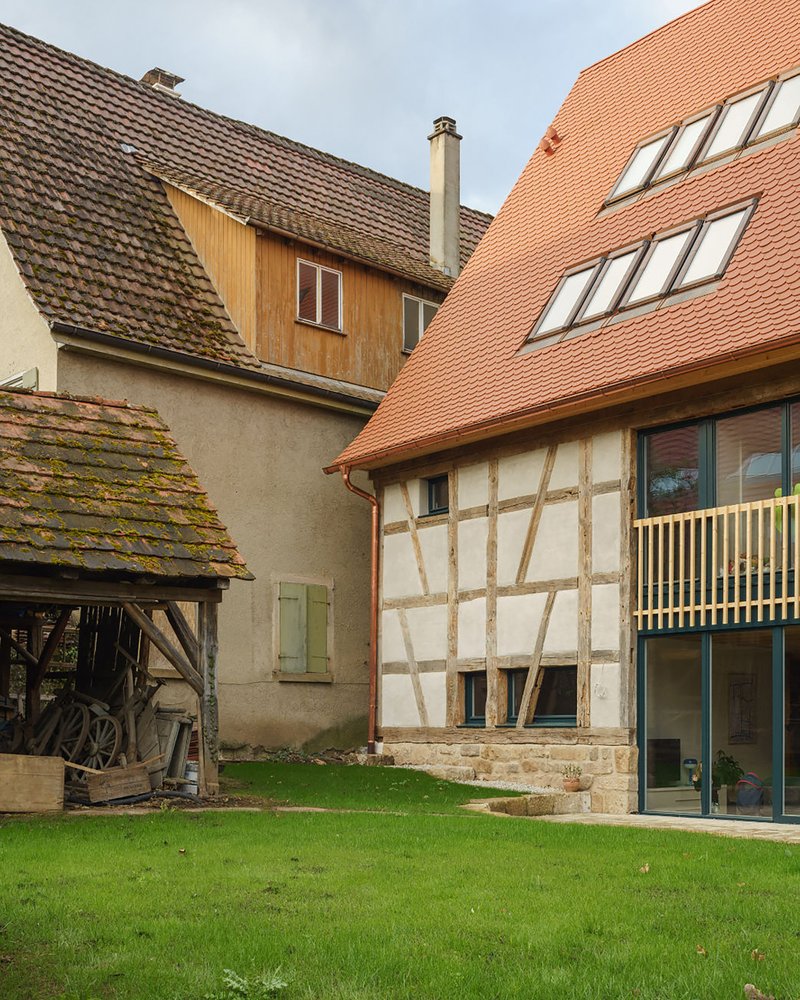
The sandstone and brick plinth walls were meticulously repaired and strengthened. Meanwhile, the roof surface—once expansive and unbroken—was updated with three narrow ribbon windows, providing daylight without disturbing the building’s historical rhythm. All four apartments are accessed through the barn’s original stable doors, reinforcing a sense of continuity between past and present.
Interiors: A Celebration of Space and Structure
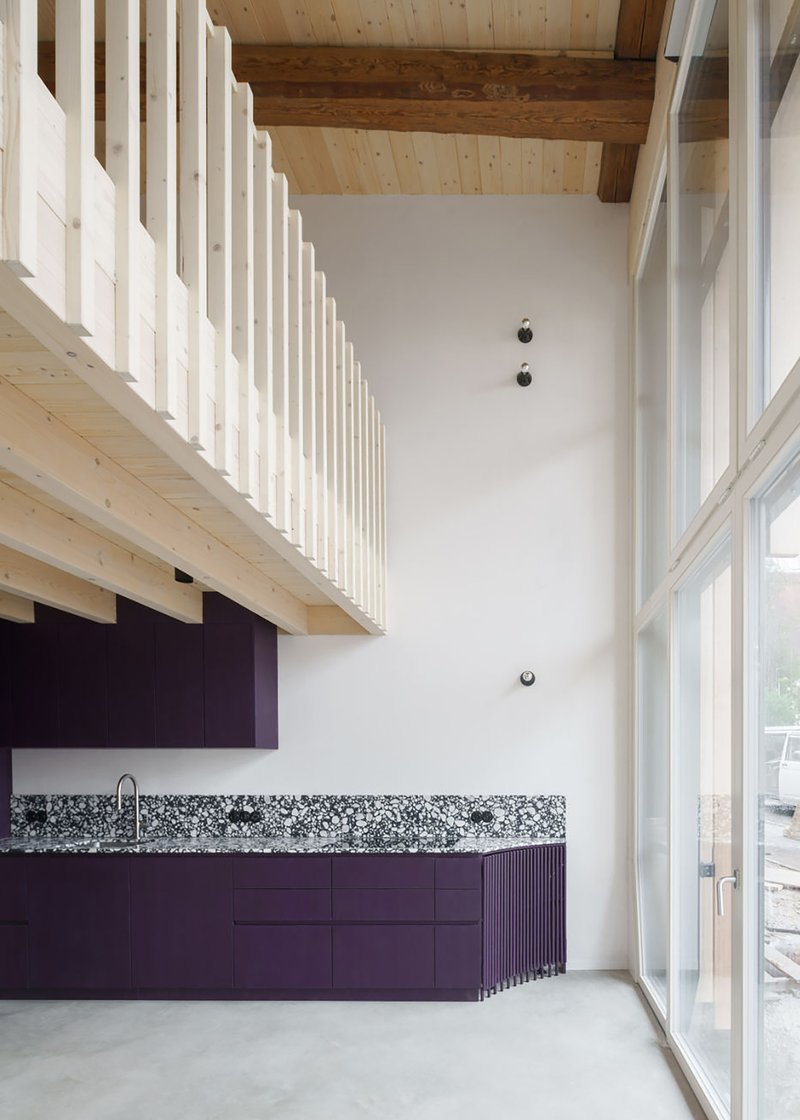
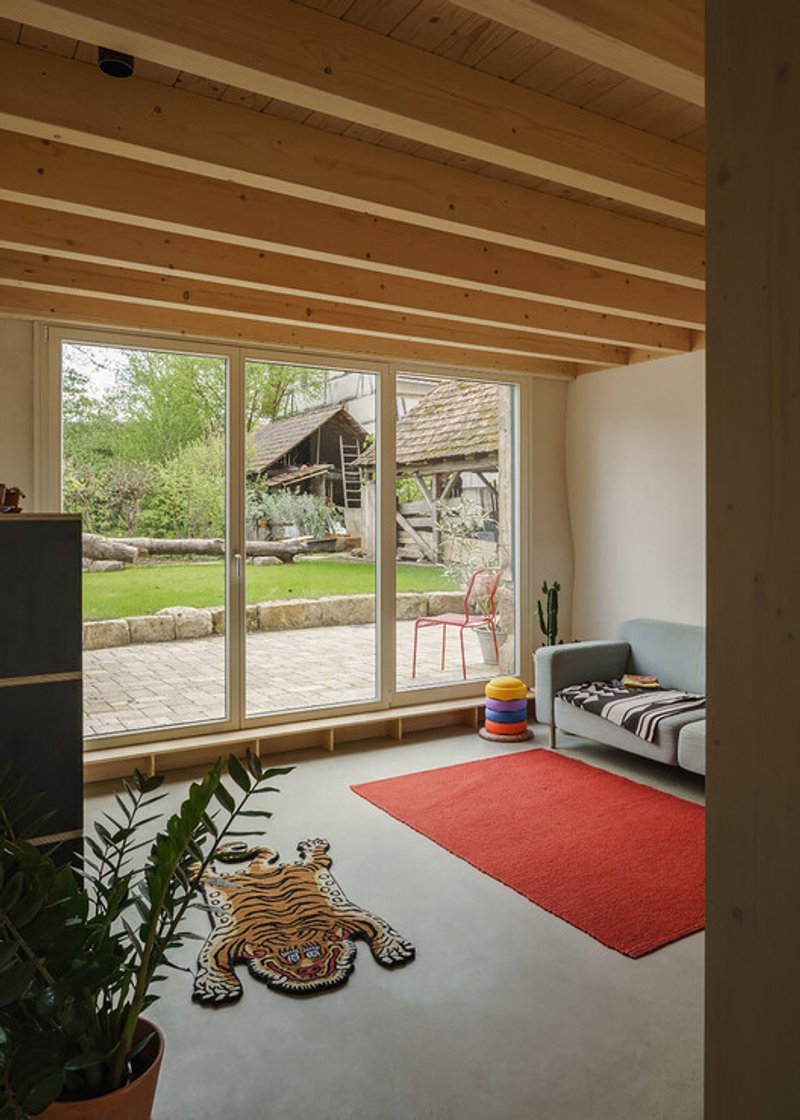
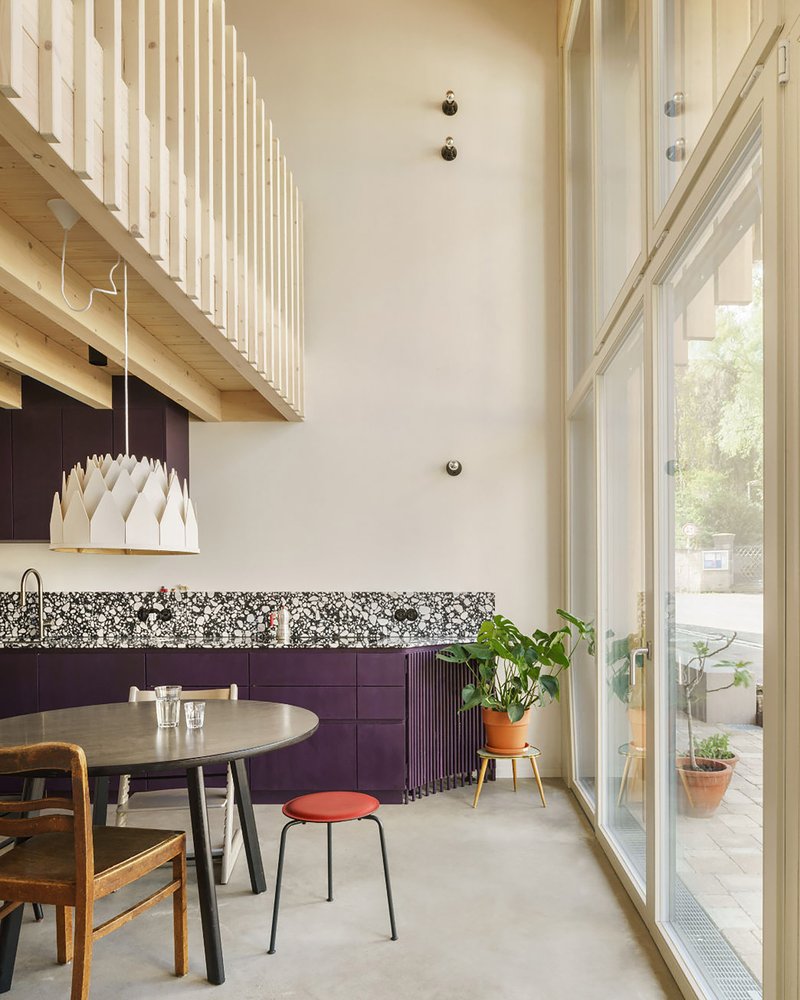
Inside, the design embraces the barn’s inherent verticality. Both ground-floor and attic apartments include double-height living areas with mezzanine galleries, echoing the generous proportions of the original threshing floors. These vast volumes allow light to flow freely, creating an atmosphere that is both airy and grounded in tradition.
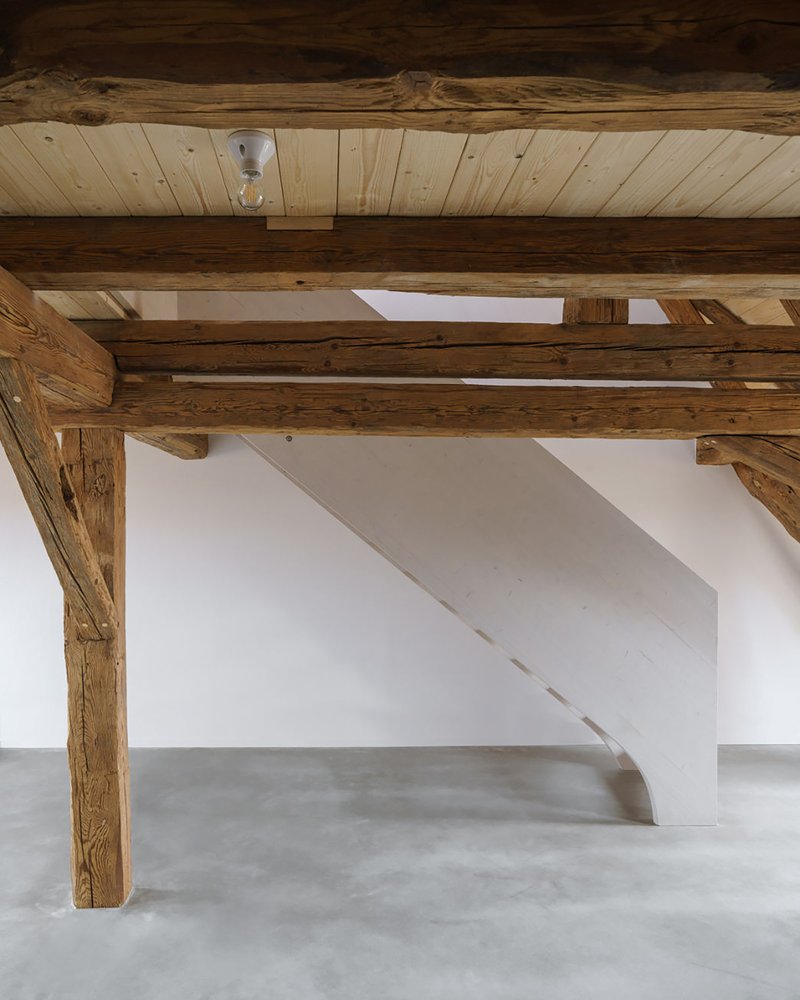
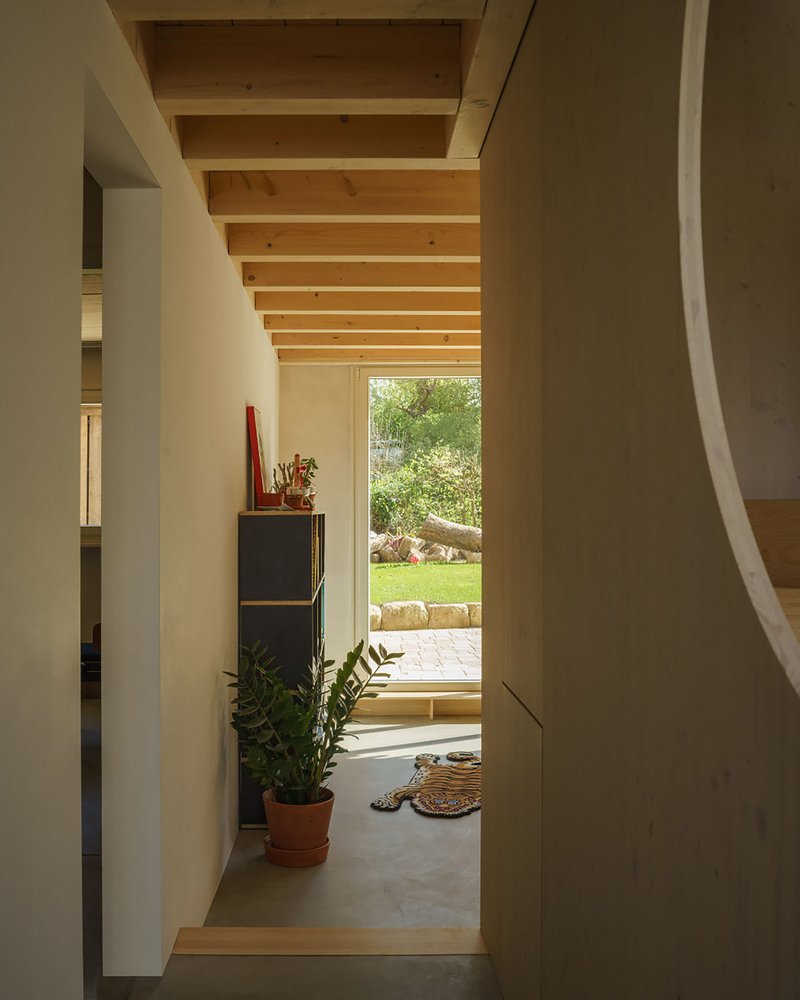
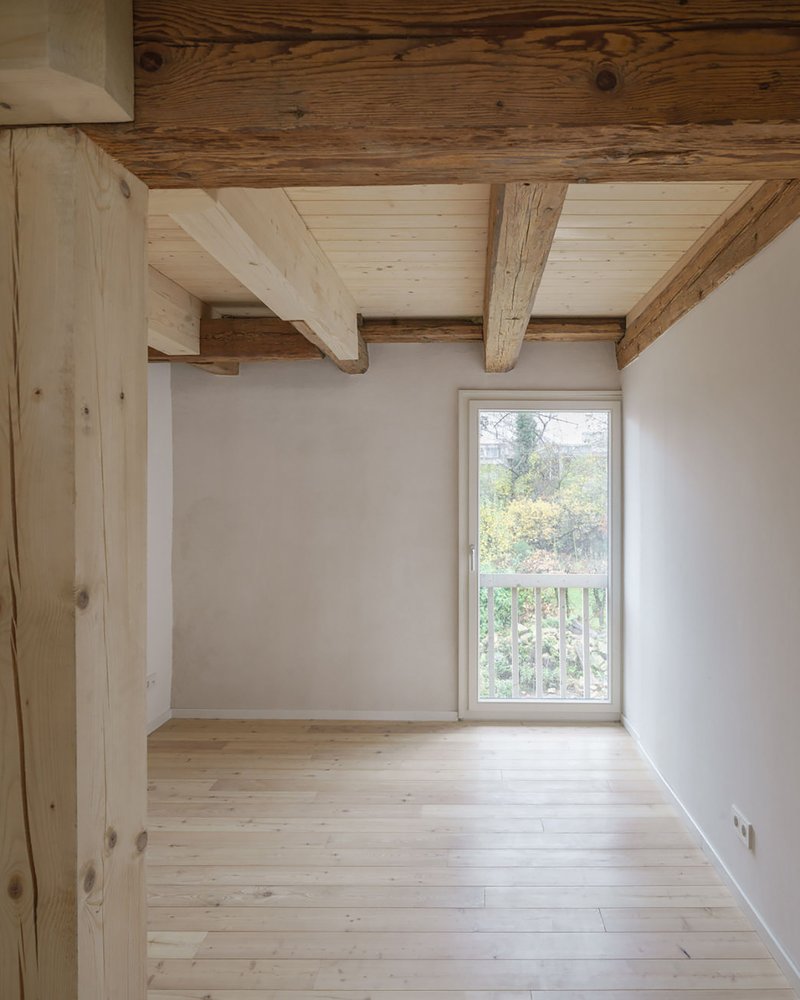
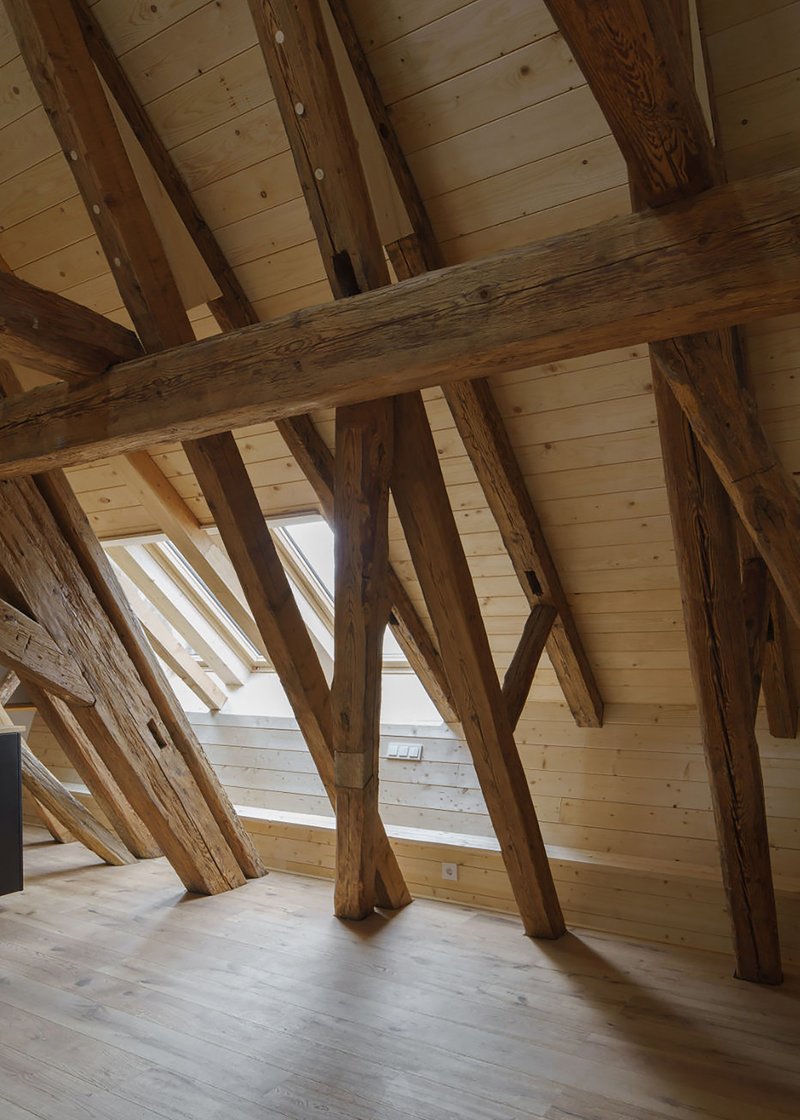
A striking feature throughout the interior is the visible timber framework—meticulously restored and left exposed. The three-story roof truss tells the story of the building’s centuries-old craftsmanship while seamlessly integrating into the modern layout.
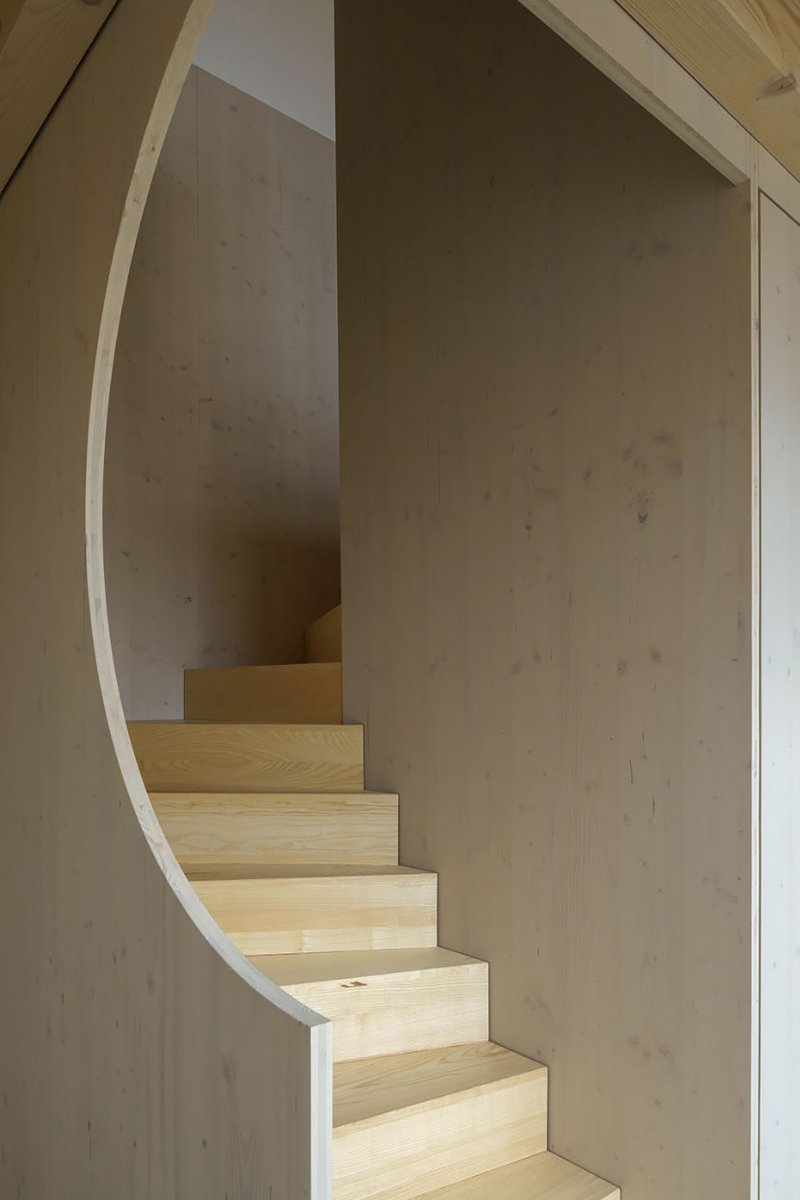
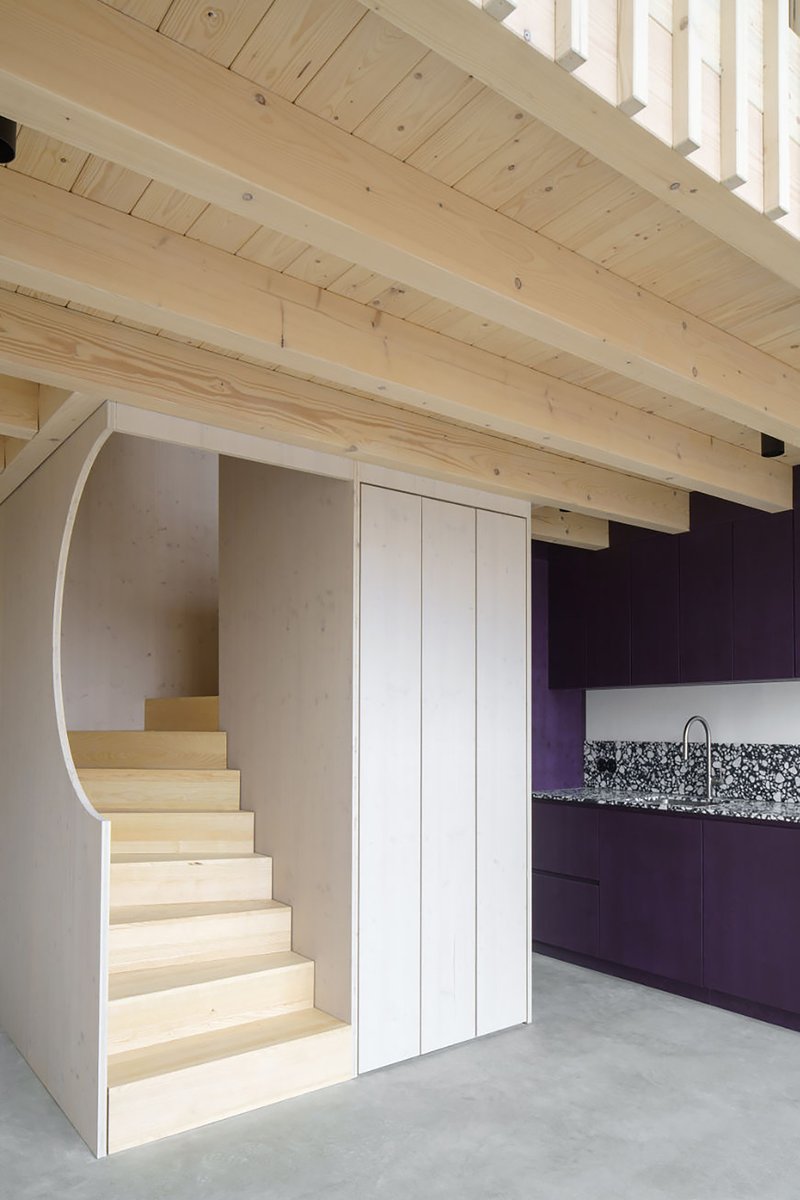
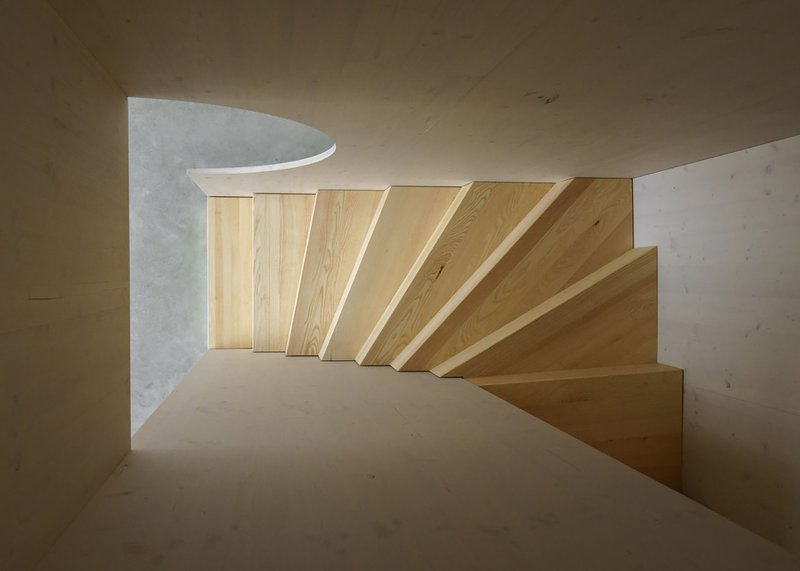
Each unit features a sculptural wooden staircase, serving as a functional centerpiece that connects levels and enhances spatial flow. These staircases are crafted from solid local coniferous timber, assembled using traditional joinery methods, a testament to regional craftsmanship and sustainable material use.
Sustainability and Material Circularity
The Doppelscheune renovation embodies a deeply eco-conscious philosophy. Nearly all existing materials were retained and reused, reflecting the architects’ commitment to sustainability and material circularity.
The outer shell was preserved, while the foundation was carefully reconstructed. Locally sourced timber replaced damaged components, ensuring minimal carbon footprint and supporting regional trades. Walls were insulated using hemp-lime plaster, while interiors were finished with natural lime and clay plasters to regulate humidity and maintain a balanced indoor climate.
Certified as an “Effizienzhaus Denkmal” (Energy-Efficient Heritage Building), the structure combines traditional building techniques with modern ecological standards—demonstrating that energy efficiency can coexist with historical integrity.
An Architectural Dialogue Between Past and Present
The Doppelscheune project by KO/OK Architektur is a shining example of adaptive reuse in contemporary architecture. It showcases how a historic structure can be revitalized without erasing its identity. By combining simplicity, regional materials, and respect for craftsmanship, the project creates a dialogue between heritage and modernity.
Every detail—from the choice of natural materials to the integration of light and space—reflects an architectural philosophy rooted in sustainability, authenticity, and local culture.
Ultimately, this barn-to-home transformation is not just a renovation—it’s a reawakening of memory, a space where the past lives on within the rhythm of modern life.
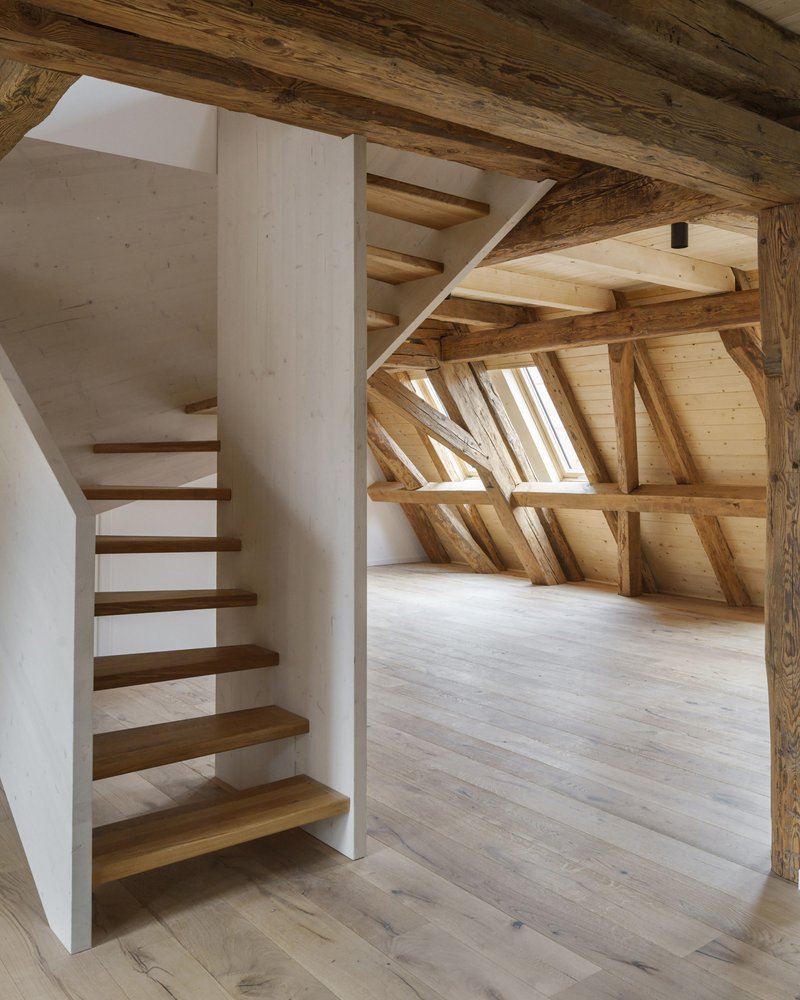
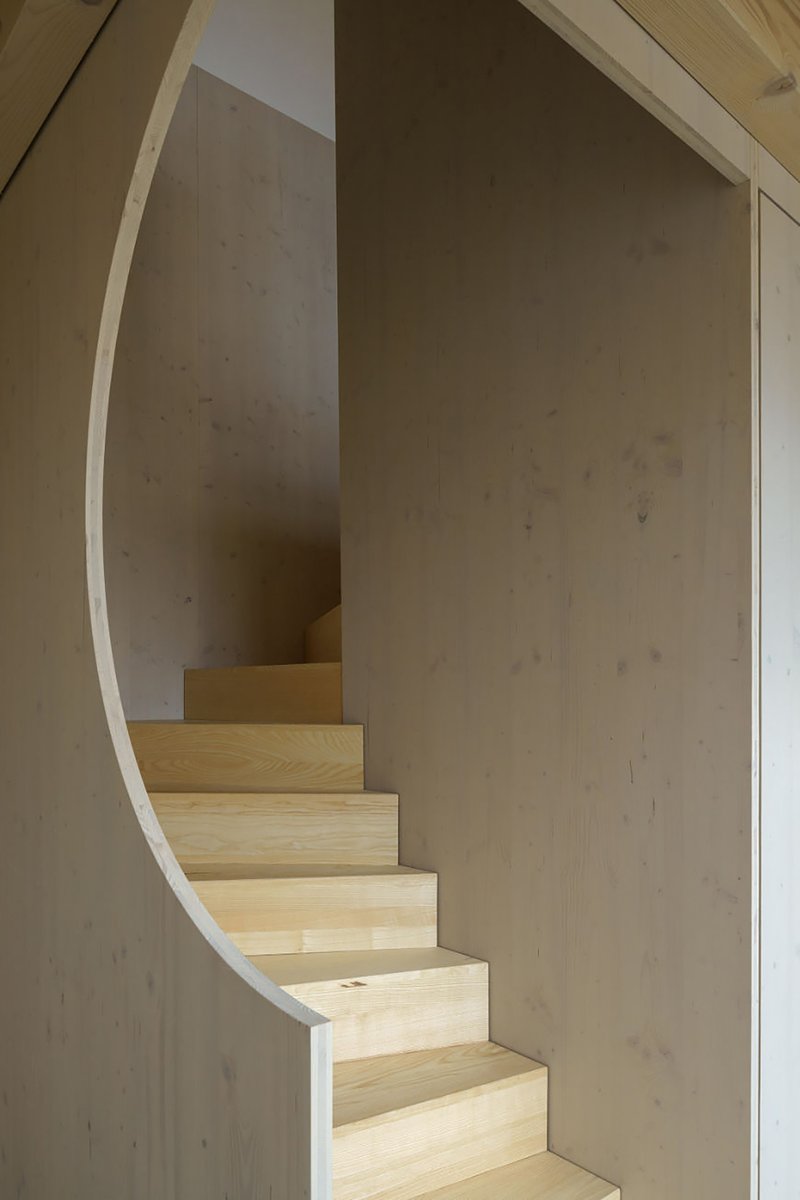
All the photographer are works of Sebastian Schels



Popular Articles
Popular articles from the community

a2o architecten Builds a Concrete and Brick Wunderkammer in the Belgian Countryside
House Be in Flanders treats dwelling as a Romantic act, threading rooms along a central axis that opens gradually toward a restored landscape.
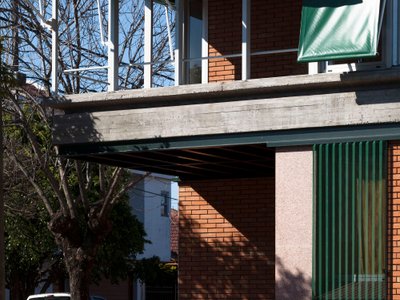
Francisco Cadau Converts a 1970s Corner House in Campana into Four Compact Dwellings
A light steel-and-timber upper volume lands on a brick base, turning a single Argentine home into a tectonic study in railroad vernacular.
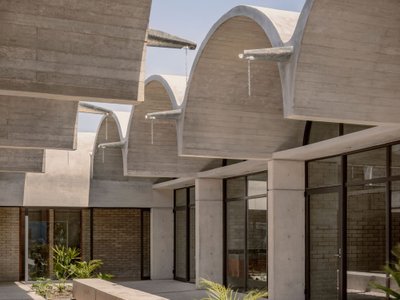
Kiltro Polaris and JC Arquitectura Line Up Six Barrel Vaults for a Health Center in Rural Mexico
A raw concrete clinic in Escárcega, Campeche, uses courtyards between structural bays to ventilate, light, and cool every room naturally.

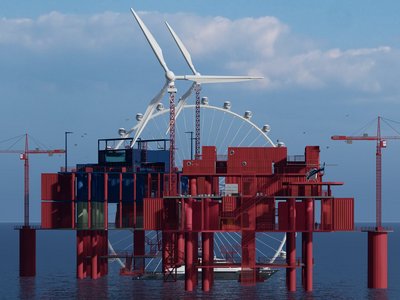
Old Creatures: Adaptive Reuse Architecture Reimagines an Oil Rig as a Sustainable Marine Community
Adaptive reuse architecture transforms an abandoned oil rig into a sustainable marine community for research, living, and culture.
Similar Reads
You might also enjoy these articles

Olio Towers: A Mid-Rise for Performers That Fuses Housing, Rehearsal, and Stage
Located blocks from Houston's Theater District, this modular tower stacks living units around a central performance atrium.
Oasis: Modular Green Housing Carved into Dhaka's Urban Fabric
A shortlisted Plugin Housing entry reclaims unauthorized settlements in Dhaka with stepped concrete volumes, green roofs, and ventilation-driven design.

Black Hole: A Floating Megastructure for the Post-Physical Era
Emiliano Mazzarotto envisions a spherical, self-scaling arena where e-sports, digital hotels, and holographic stadiums replace traditional public space.
Compact & Sustainable Living in Piraeus: A Four-Level Family Home Built Around Light and Air
A narrow townhouse in one of Greece's densest port cities uses a central atrium and passive strategies to house three generations under one roof.
Explore Architecture Competitions
Discover active competitions in this discipline




The International Standard for Design Portfolios


The Global Benchmark for Architecture Dissertation Awards


The Global Benchmark for Graduation Excellence

Challenge to design mud housing for contemporary communities
Comments (0)
Please login or sign up to add comments
No comments yet. Be the first to comment!