

DORAE KNOT Café: Harmonizing Tradition and Modern Minimalism in Mapo-gu, South Korea
Minimalist Korean café blending traditional dorae knot inspiration with natural materials, linear furniture, and elegant marble interiors in Mapo-gu.


Located in the vibrant district of Mapo-gu, South Korea, DORAE KNOT Café, designed by Studio GIMGEOSIL, is a sophisticated exploration of minimalist design infused with traditional Korean motifs. Completed in 2022, this 86 m² café exemplifies how contemporary interiors can honor cultural heritage while providing a cozy, inviting atmosphere for coffee enthusiasts and urban dwellers alike.
Conceptual Inspiration: The Dorae Knot
The café’s name, “Dorae Knot,” originates from one of Korea’s fundamental traditional knots. In Korean culture, a dorae knot symbolizes connection, marking beginnings and endings, and conveys the sense of approaching time or opportunity. This concept is mirrored in the café’s design philosophy: each spatial element is linked, creating a seamless journey for visitors.
This project also marks the first café venture of hospitality expert Ryan Kim, whose extensive experience in diverse hospitality sectors is expressed in the café’s calm yet dynamic spatial language. The design draws inspiration from Kim’s personal ethos, expressed through linear gestaltung, precise grids, and carefully orchestrated natural materials.
Materiality and Interior Design
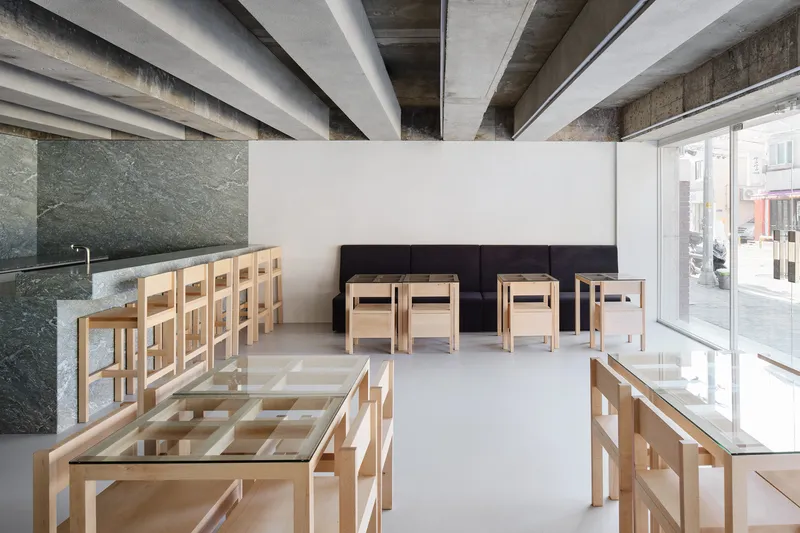
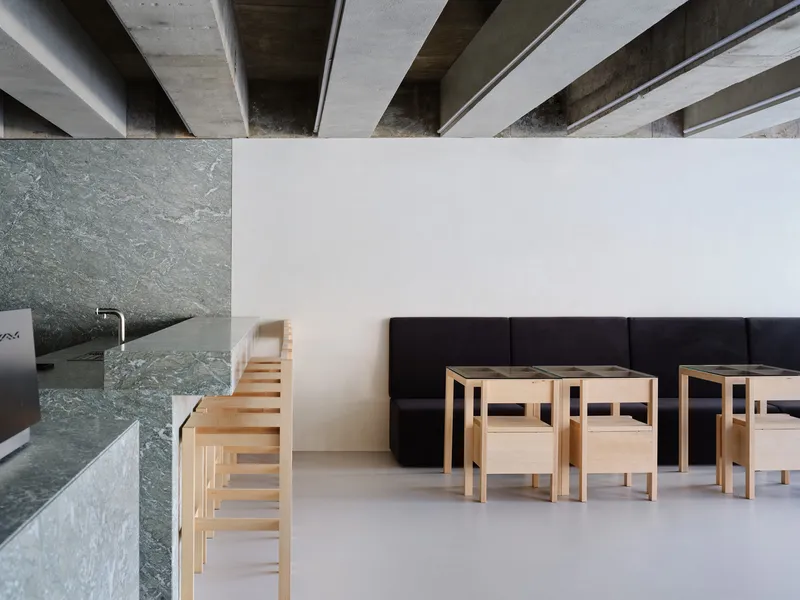
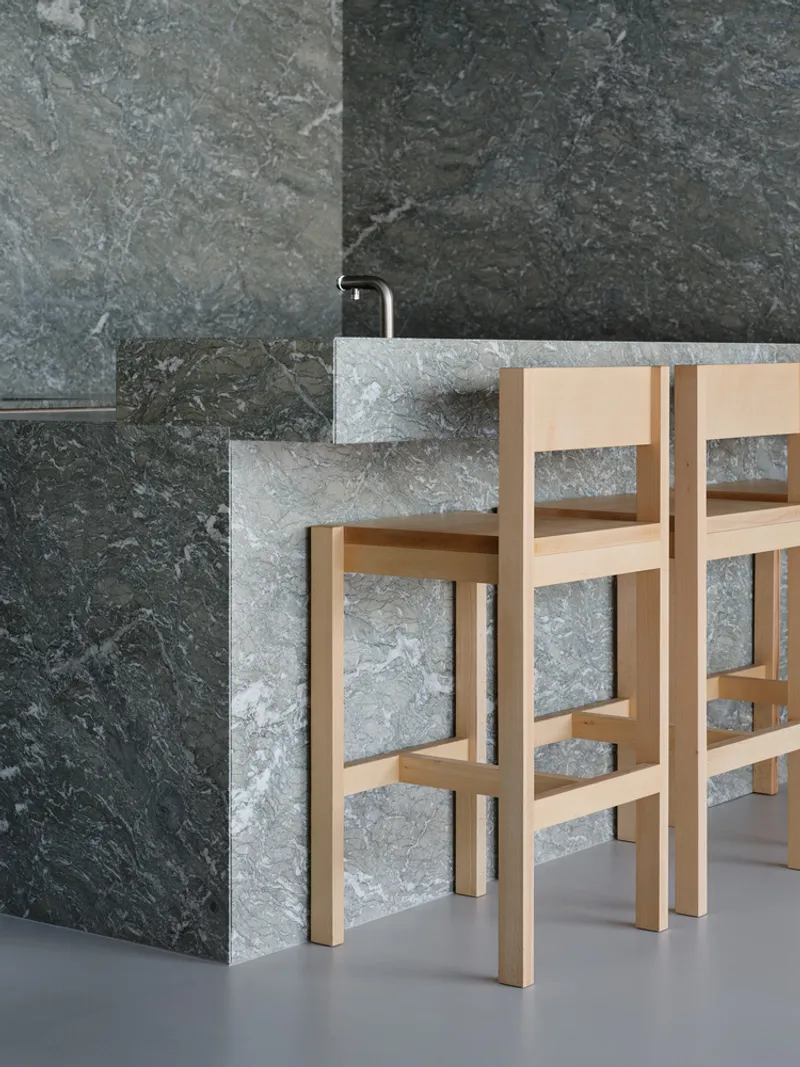
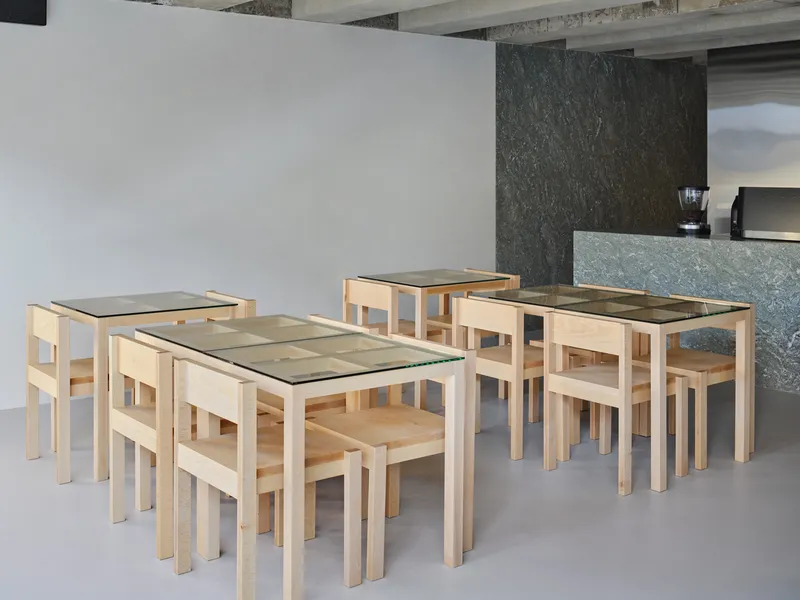
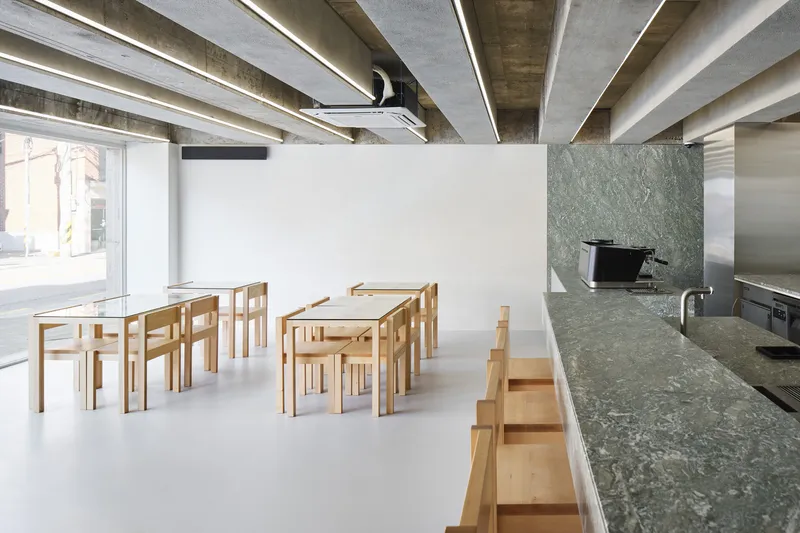
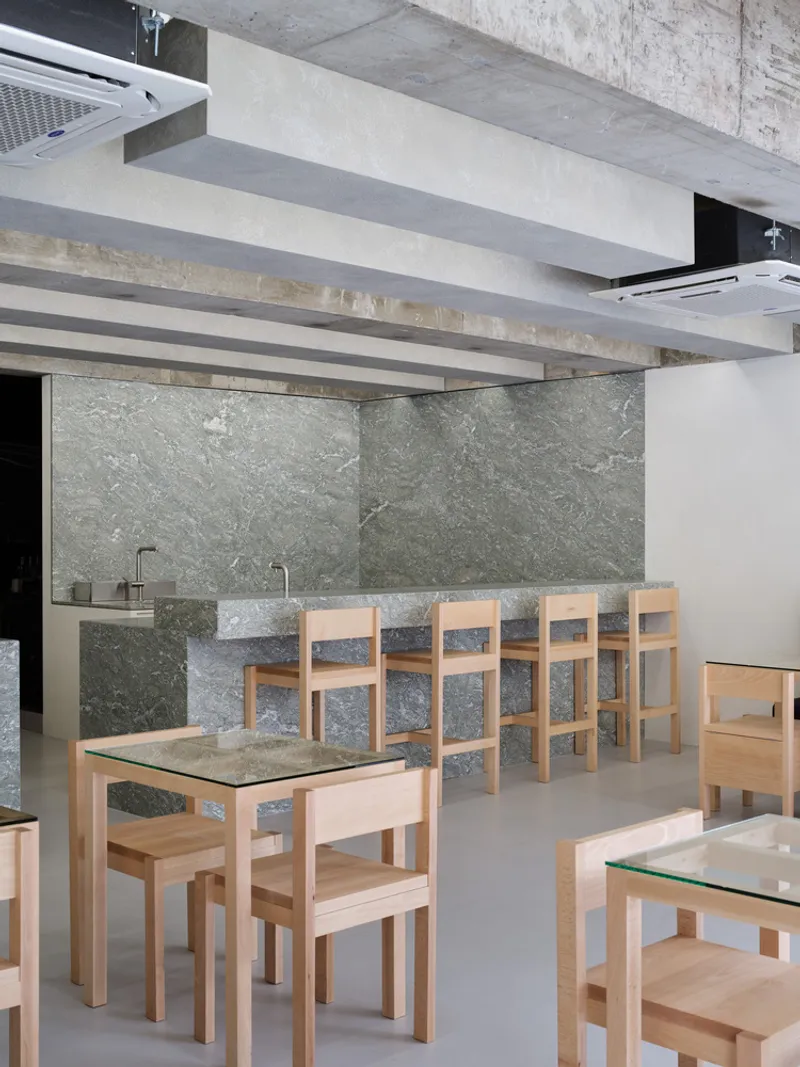
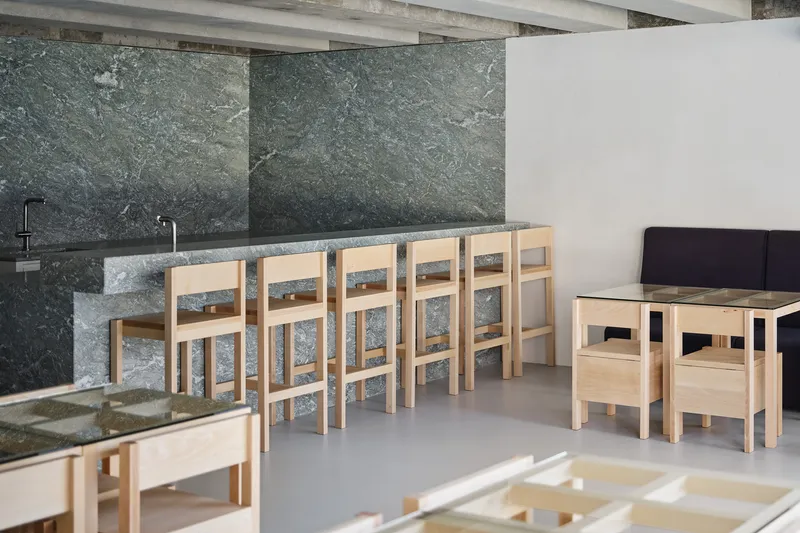
Upon entering DORAE KNOT Café, guests are immediately greeted by linear beech wood furniture, finished in transparent white oil to preserve its bright, soft tones while protecting against wear. Complementing the wooden textures, a black curved sofa upholstered in water-repellent Aqua Polyester Velvet offers durability without sacrificing elegance, while its rounded edges lend a subtle formality to the interior.
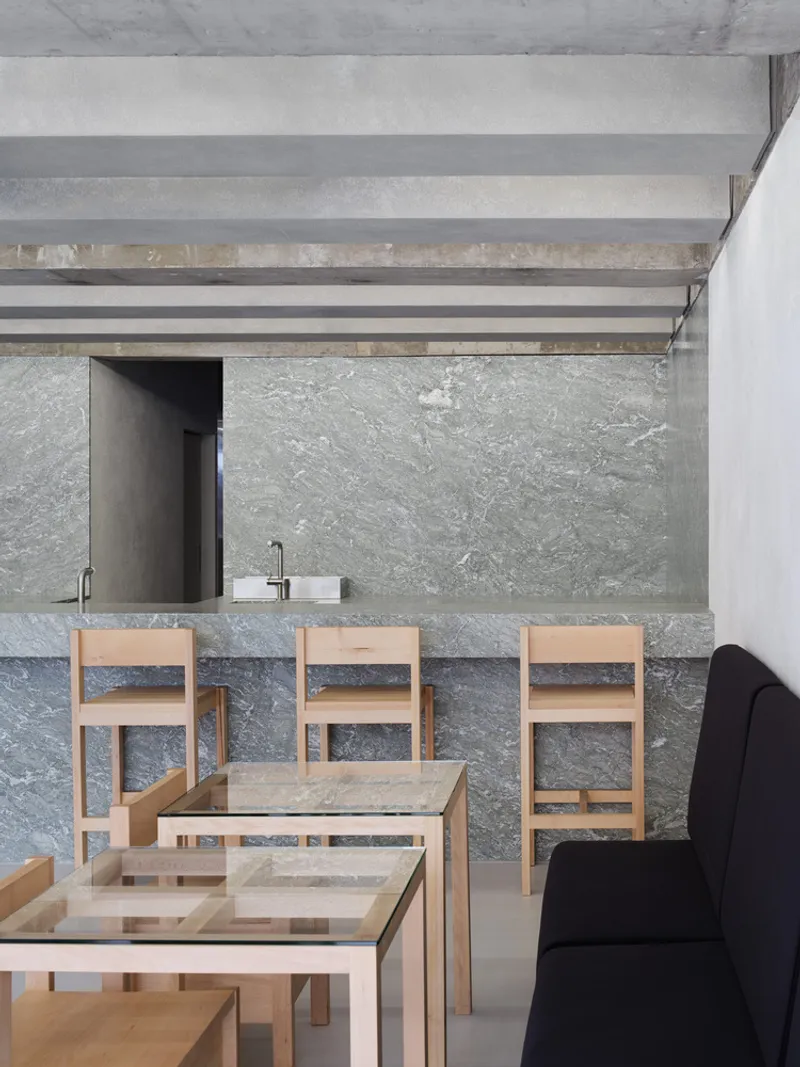
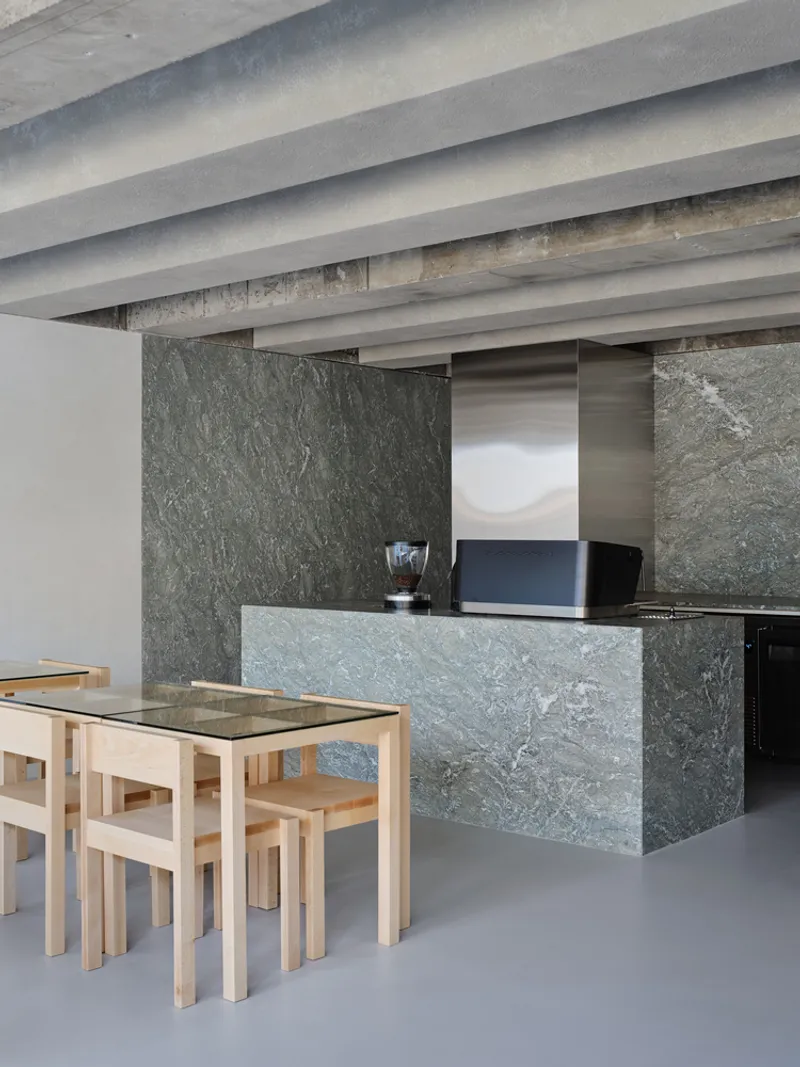
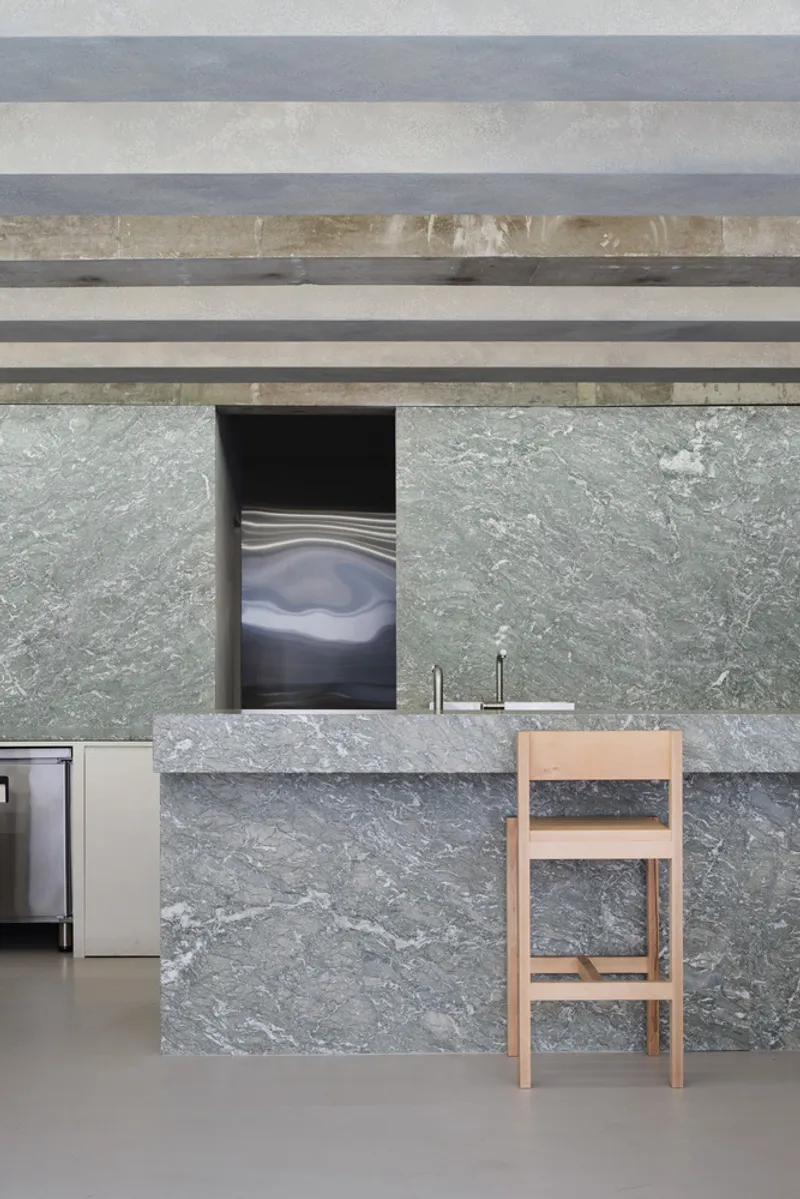
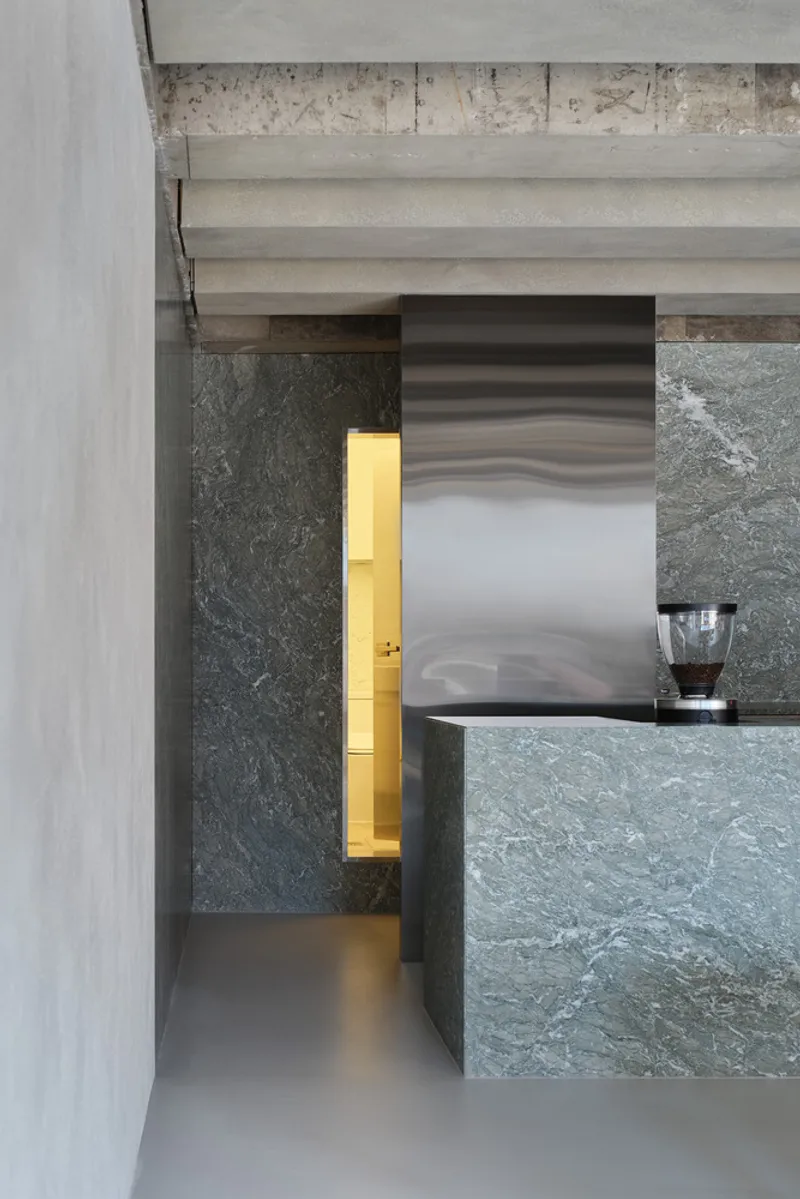
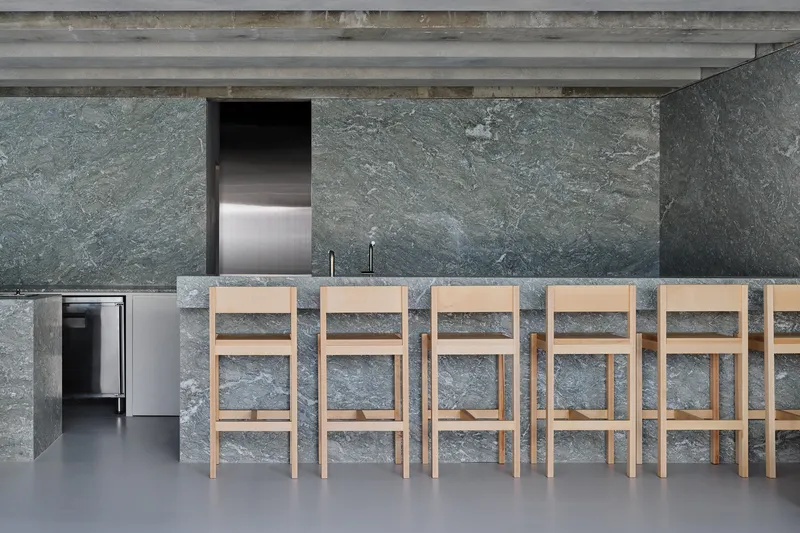
The espresso and filter coffee bar is framed by Verde Antigua marble, chosen for its delicate green hue accented with irregular white and gray patterns. This marble not only adds visual depth but reinforces the café’s calm yet vigorous aesthetic. The design minimizes visible joints, achieving the effect of a continuous marble slab, while the adjacent stainless-steel kitchen wall balances the natural textures with a light, reflective surface.
The café floor, finished in matte self-leveling mortar, maintains a clean, uncluttered appearance, enhancing the serenity of the space. The ceiling’s existing beams are echoed with additional timber elements, plastered with customized color to simulate a concrete texture, harmonizing with the exposed concrete above. Carefully integrated lighting enhances spatial depth while keeping a warm, neutral 4,000K natural white illumination, complementing the cooler materials like marble, stainless steel, and epoxy.
Spatial Experience and Functionality
Every element of the café serves both aesthetic and functional purposes. The linear arrangement of furniture encourages natural movement, while the marble bar’s alignment with the wall subtly delineates zones for staff and guests without interrupting flow. The combination of natural textures, tactile materials, and strategic lighting creates a welcoming, immersive environment, inviting visitors to savor both the coffee and the atmosphere.
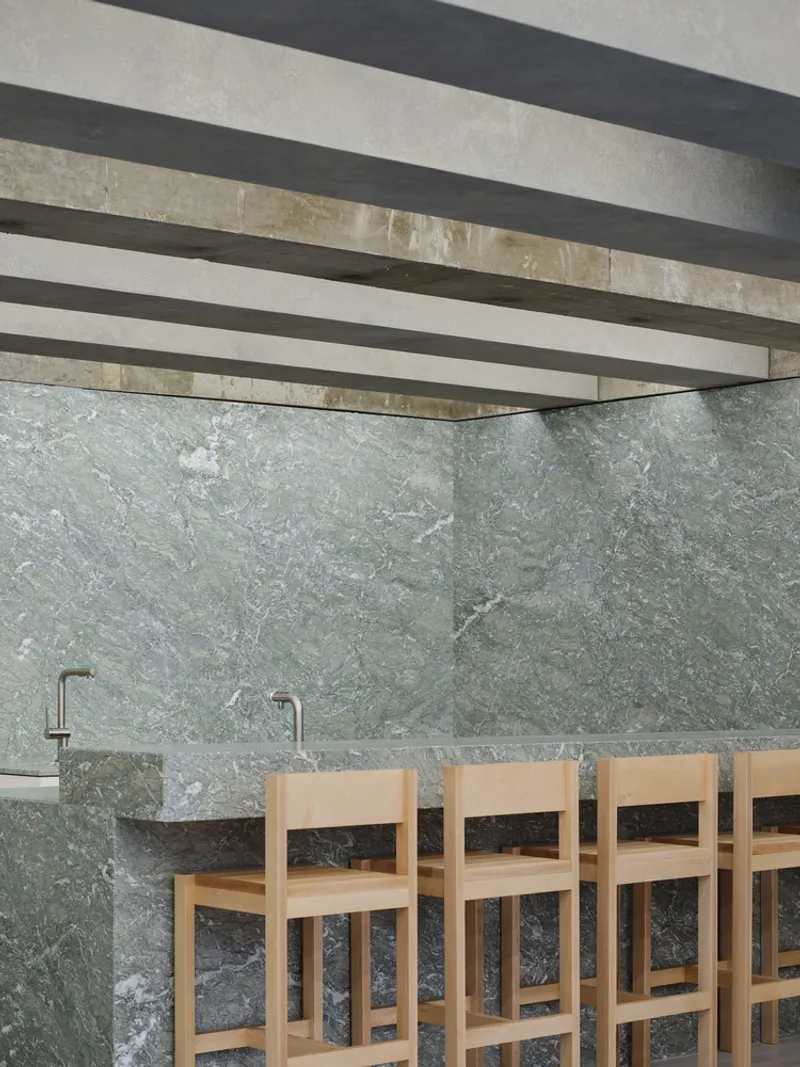
Even the smaller details, such as doorknobs crafted from marble and stainless steel, offer a tactile connection to the space, reinforcing the theme of engagement through materiality. The thoughtful integration of traditional concepts with modern minimalism positions DORAE KNOT Café as a landmark example of contemporary café design in Seoul.
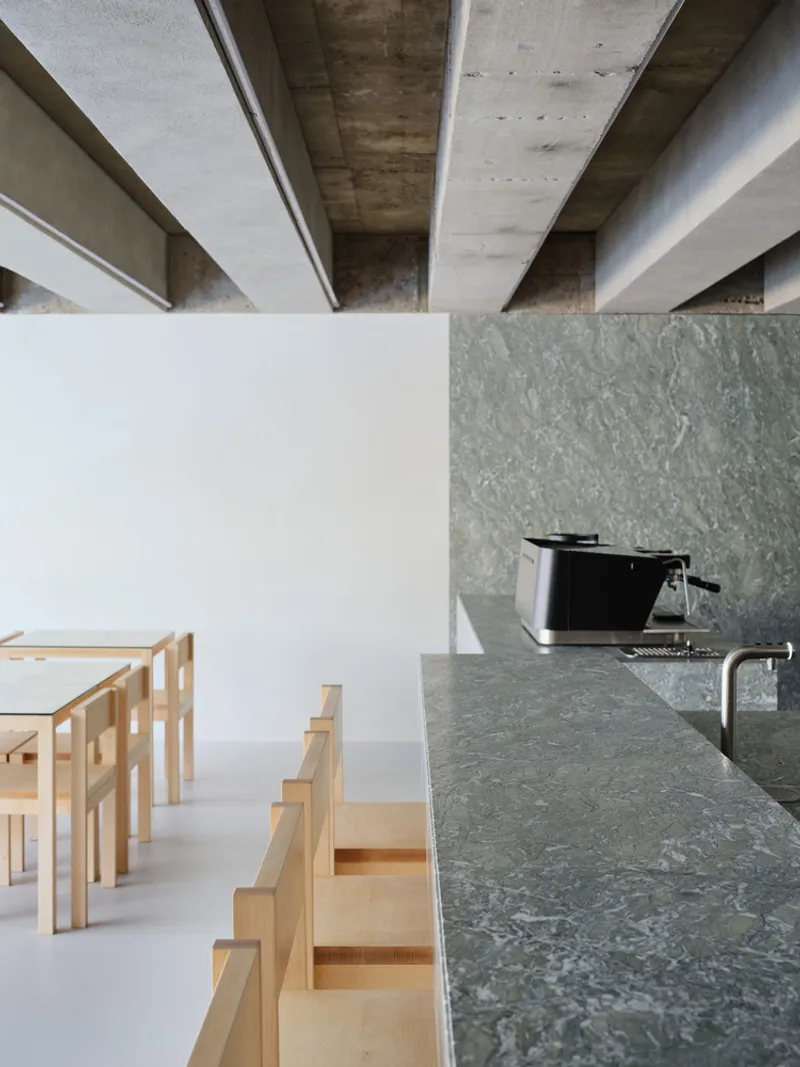
DORAE KNOT Café represents more than just a coffee shop; it is a refined space where tradition meets contemporary architecture, and every design choice: from material selection to spatial planning: reflects a careful balance of elegance, functionality, and cultural homage. This project demonstrates how interior design can elevate hospitality experiences through subtle connections, natural materials, and meticulously curated atmospheres.
All photographs are works of
Donggyu Kim


Popular Articles
Popular articles from the community


Architekt Andreas Gruber Scatters 23 Dark Timber Chalets Across a South Tyrolean Forest Edge
In Molini di Tures, Amonti Chalets breaks a resort into a hamlet of gabled timber houses, with parking, storage and services pushed into the slope.

Openfabric, caarpa and FM Ingegneria Recast the Grounds of the Reggia di Rivalta as a 25-Hectare Public Park
At the Reggia di Rivalta in Italy, a radiating plan of lawns, basins and steel pergolas turns historic palace grounds into an ecological commons.

longwave studio Reorganizes a 112 m² Tainan Apartment Around the Daily Routines of a Family and Two Cats
In Tainan, Taiwan, birch plywood, rust-red furniture and a freestanding plaster wall link arrival, storage, work and family life in one apartment.

David Macias Steps a Doorless Stone and Plaster House Down a Tropical Colombian Hillside
In the humid hills of Colombia, Threshold House replaces the front door with an open void and terraces its 850 m² down the slope instead of fighting it.

Similar Reads
You might also enjoy these articles

andblack design studio Wraps a Three-Generation Ahmedabad Home Around a Planted, Skylit Central Courtyard
In Ahmedabad, a 9,910 sq ft house uses exposed concrete, brick jali and a skylit green court to give three generations both distance and closeness.

Studio Maignan Architects Opens Up a 1930s Toronto Brick House and Crowns It with a Glass-Gabled Loft
In Toronto's Humewood Cedarvale, a compartmentalized 1930s brick house becomes an open, timber-lined family home that climbs toward its garden canopy.

Some Thoughts Clamps Felt and Metal Together to Build a Modular Eyewear Store in Wuhan
A 98 m² MOLSION eyewear shop in Wuhan builds its displays from stacked red and grey felt modules held by custom triangular metal fasteners.

Studio Carré Rebuilds a 70 m² Marais Apartment Around a Red Kitchen Corridor and a 360-Degree Sightline
In the Enfants Rouges quarter of Paris, a 70 m² third-floor flat trades walls for sightlines, terracotta, steel and one fearless coat of red.

Explore Architecture Competitions
Discover active competitions in this discipline

Challenge to design luxury tourism on rails

Challenge to reimagine the Iron Throne

Photograph architecture without architects

VR headsets Storefront design competition
Comments (0)
Please login or sign up to add comments
No comments yet. Be the first to comment!