
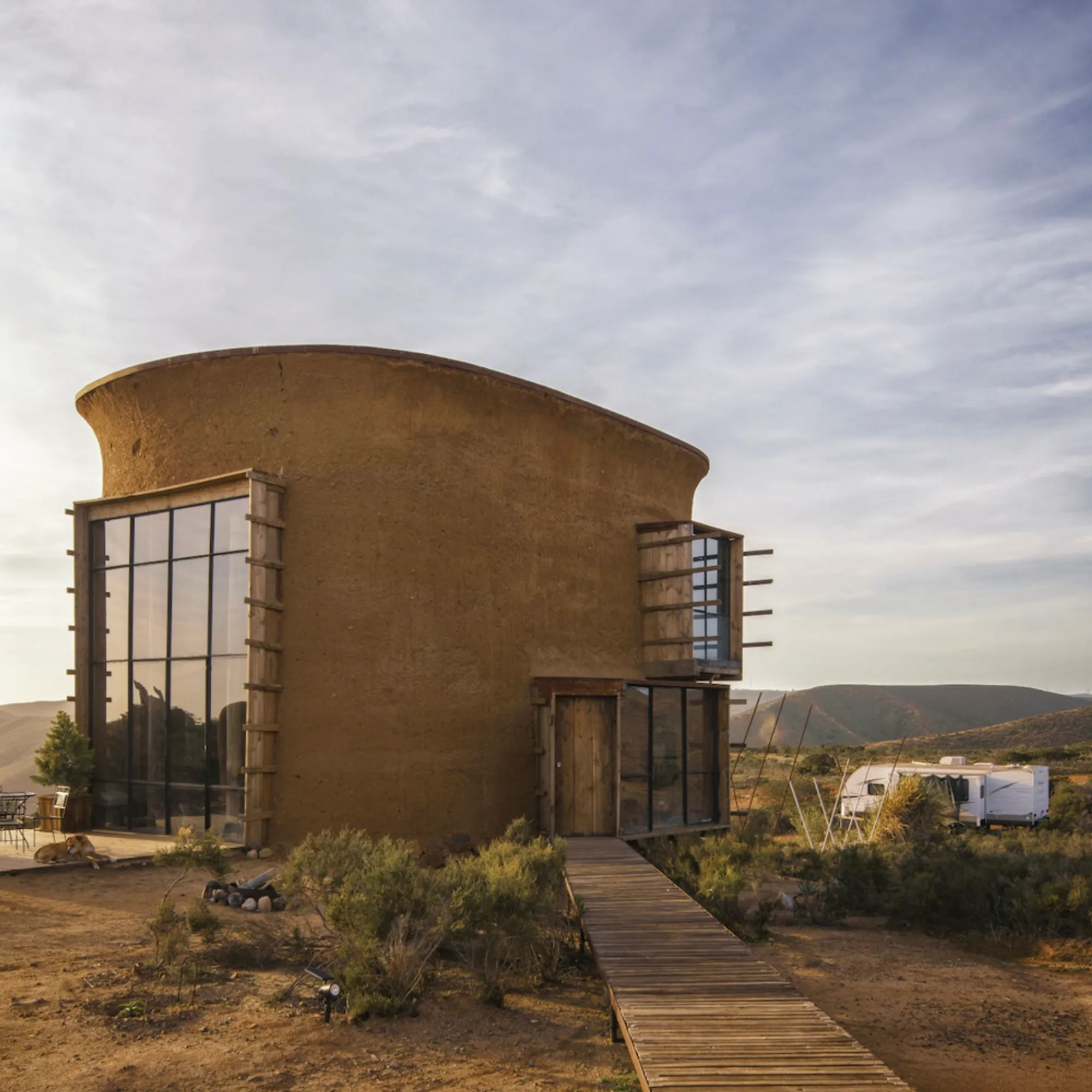
Dos Hijas Gallery by CLACLÁ Taller de Arquitectura
Dos Hijas Gallery blends earthen architecture with sustainability, celebrating nature through handcrafted COB construction and off-grid, eco-conscious living in Mexico.


A Harmonious Dialogue Between Architecture and Nature
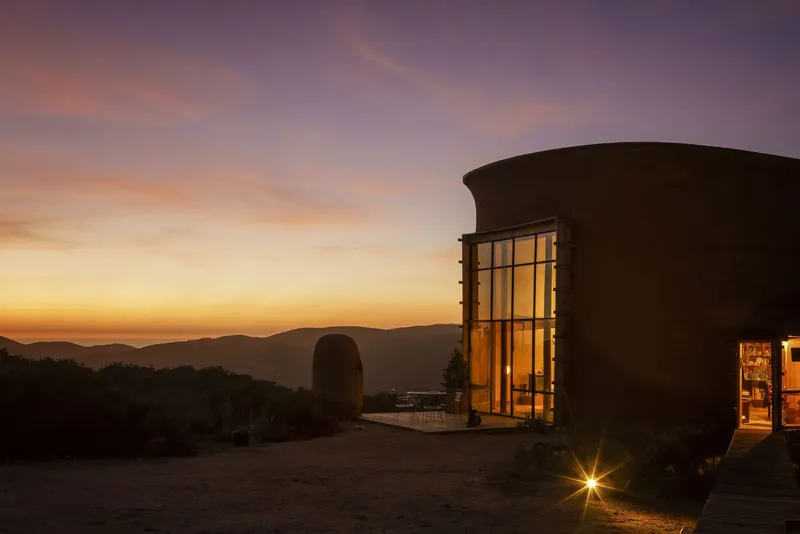
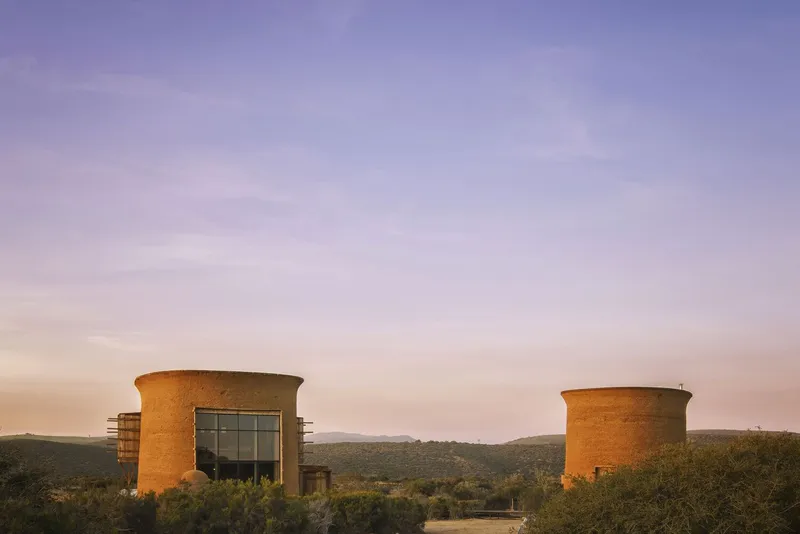
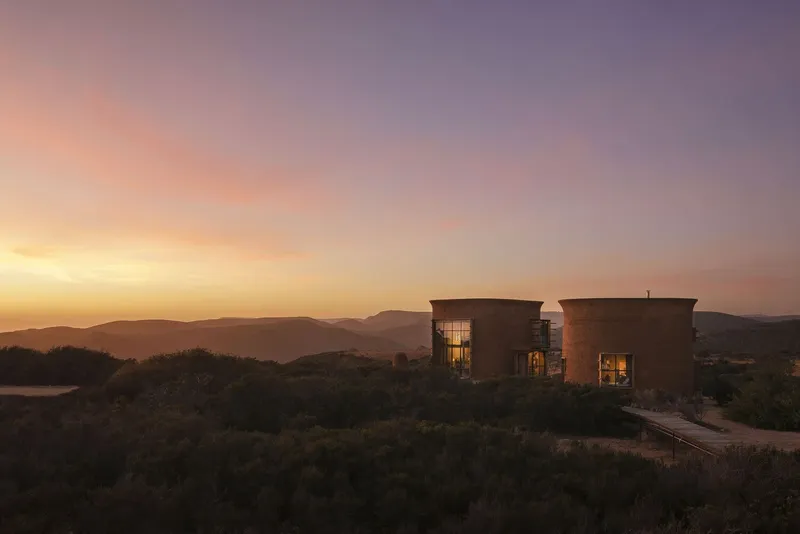
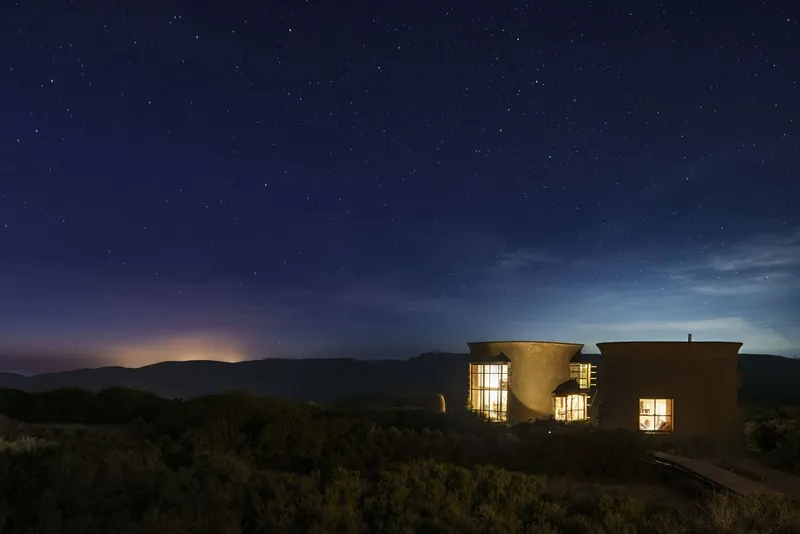
The Dos Hijas Gallery by CLACLÁ Taller de Arquitectura is a sculptural, off-grid sanctuary that honors the traditions of vernacular desert architecture while integrating contemporary design strategies. Situated in Ensenada, Baja California, the project is a thoughtful response to its delicate ecosystem — the coastal scrub — which is increasingly endangered in the region.
A Living Axis of Architecture
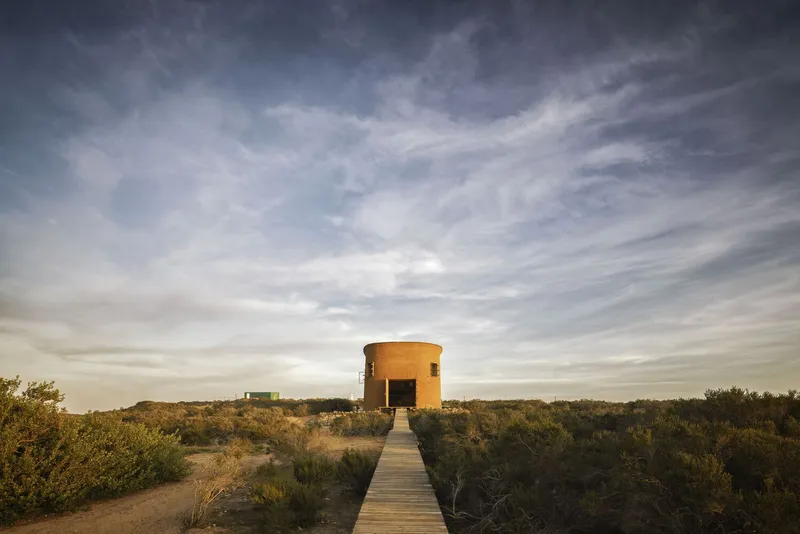
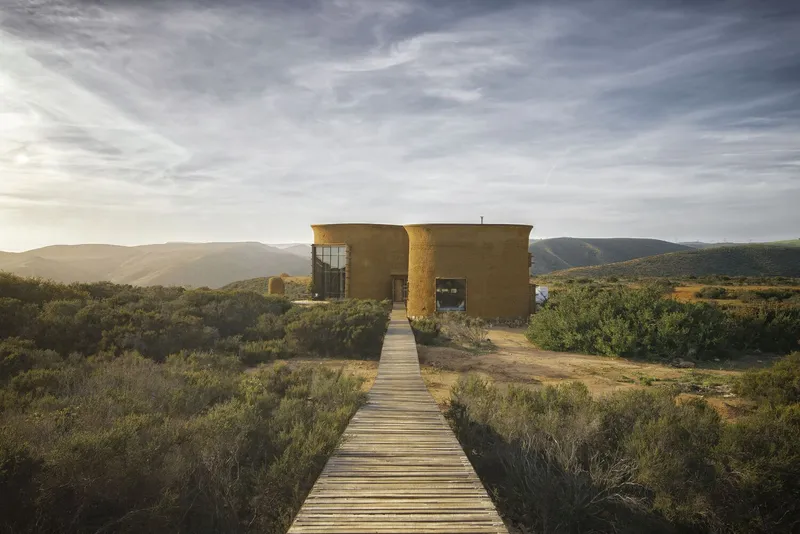
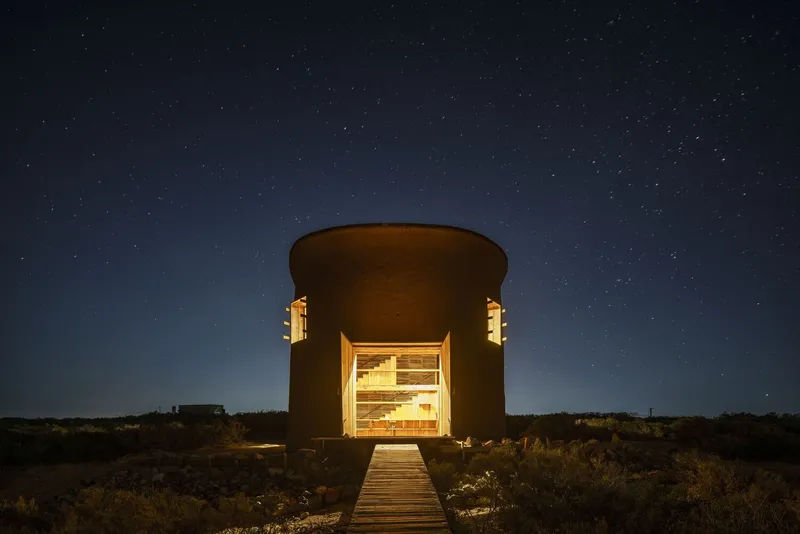
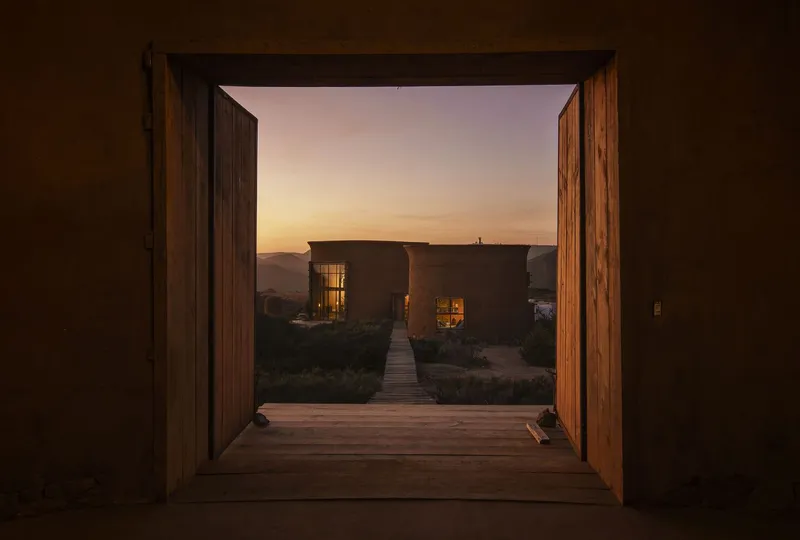
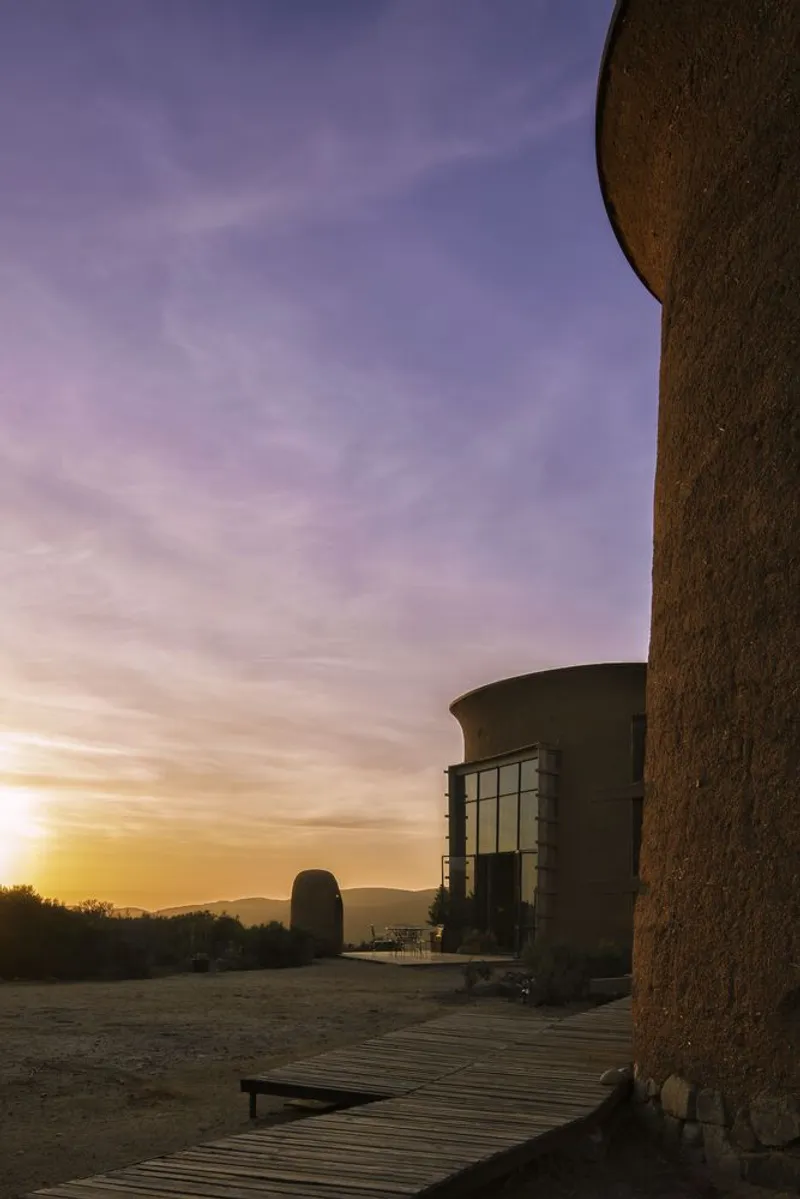
Organized along a central compositional axis, the design acts as a "living machine", where an elevated open-air corridor links the main house, guesthouse, and art gallery. This spine-like structure invites users to engage with the landscape with every transition, turning daily movement into a sensory journey.
Respect for the Land
True to its environmental mission, the construction avoided harming native vegetation. Existing plants were carefully uprooted and later replanted, demonstrating a rare symbiosis between architecture and nature. The approach ensures that the built environment becomes an extension of the terrain, rather than an imposition on it.
COB Construction: Earth, Straw, Granite
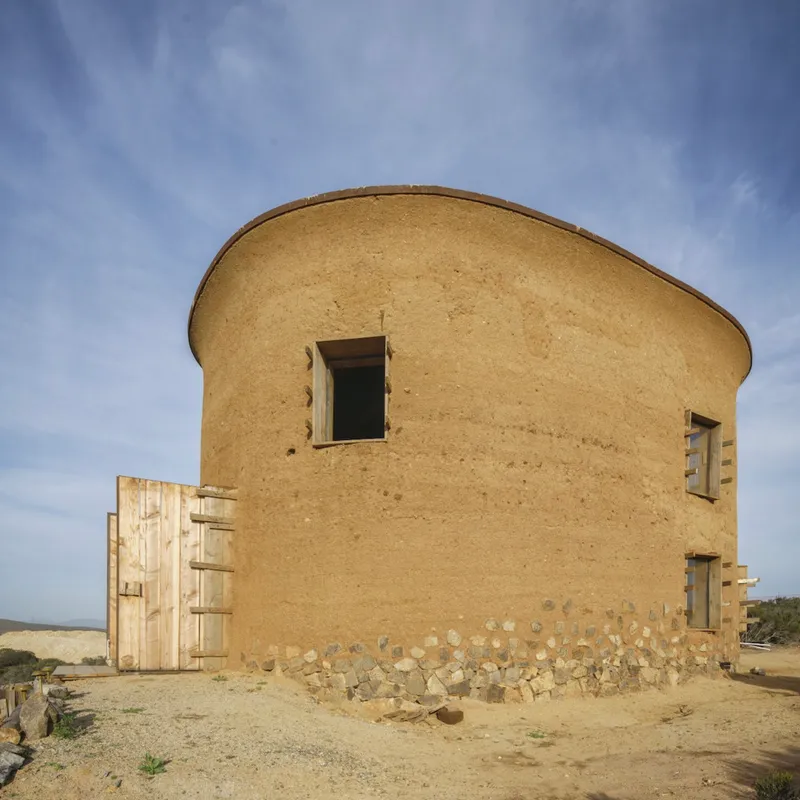
The gallery is constructed using COB, a sustainable and ancestral building technique using clay, straw, and granite. This earthen architecture requires no secondary structure — its thick, tapering walls are hand-shaped and sit atop a stone foundation. These massive forms evoke geological sculptures, as if erupted from the ground by the elemental forces of earth, water, and sun.
Self-Sufficient and Off-Grid
Every detail of Dos Hijas Gallery reflects an ethos of self-sufficiency and sustainability:
- Rainwater harvesting roofs collect and store water.
- Solar panels generate all electrical energy needed.
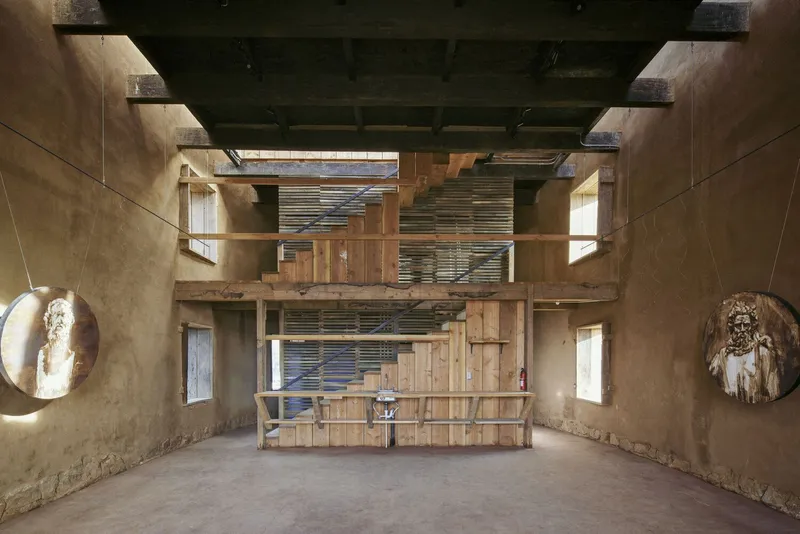
- A passive water treatment system reuses greywater throughout the property.This off-grid design eliminates dependence on city infrastructure, achieving full ecological autonomy.
Tactile Craftsmanship
Every wall, curve, and surface was crafted by hand, embodying the artisans’ patience and the builders’ passion. The structure is crowned by a concrete belt that subtly ties the organic forms together, ensuring both durability and a poetic expression of unity
All the photographs are works of Yoshihiro Koitani



Popular Articles
Popular articles from the community


Co-life: Sustainable Architecture for Age-Friendly Community Living
Co-life reimagines sustainable architecture for seniors through courtyards, rammed earth, shared gardens, and spaces designed for belonging.

Hill & Cross Opera: Sculptural Opera House Architecture Shaped by Tallinn’s Landscape and Identity
Hill & Cross Opera reimagines opera house architecture in Tallinn through its sculptural hill, civic plaza, glass wave and a luminous cross.

The Musturak Paradise: Senior Living Architecture for a Connected Future in Temara, Morocco
The Musturak Paradise reimagines senior living architecture in Temara via private homes, social spaces, culture, community, and shared care.

Conexión: Biophilic Design Reimagines High-Rise Living in Hong Kong
Conexión reimagines high-rise living in Hong Kong through biophilic design, green facades, shared spaces, daylight, water and nature within.


Similar Reads
You might also enjoy these articles


Hodi-Mandai Geram
Project Function: Preservation and revitalization of the Intangible heritage and socio-spatial identity of the Hodi by Housing, Cultural Memory Center, Sacred Grove, landscape, local tourism economy


Olio Towers: A Mid-Rise for Performers That Fuses Housing, Rehearsal, and Stage
Located blocks from Houston's Theater District, this modular tower stacks living units around a central performance atrium.

Oasis: Modular Green Housing Carved into Dhaka's Urban Fabric
A shortlisted Plugin Housing entry reclaims unauthorized settlements in Dhaka with stepped concrete volumes, green roofs, and ventilation-driven design.

Black Hole: A Floating Megastructure for the Post-Physical Era
Emiliano Mazzarotto envisions a spherical, self-scaling arena where e-sports, digital hotels, and holographic stadiums replace traditional public space.


Explore Mexican Design Competitions
Discover active competitions in this discipline



Challenge to reimagine the Iron Throne


Photograph architecture without architects


Illustrate the lost glory of Angkor Wat - Render Challenge


Design challenge to reuse E-waste
Comments (0)
Please login or sign up to add comments
No comments yet. Be the first to comment!