
Dynamic Dojos: Modular Architecture for Sport, Community, and Urban Connection
Dynamic Dojos turns modular architecture into playful temporary frameworks for sport, culture, and social connection across Tokyo city life.

Dynamic Dojos is a compelling example of modular architecture designed not only as a physical structure, but as a social instrument. Developed as the Winner entry of Tokyo Dojo, the project proposes a flexible construction system that can be placed across different urban contexts, from Olympic event sites to commercial streets and local neighbourhoods.
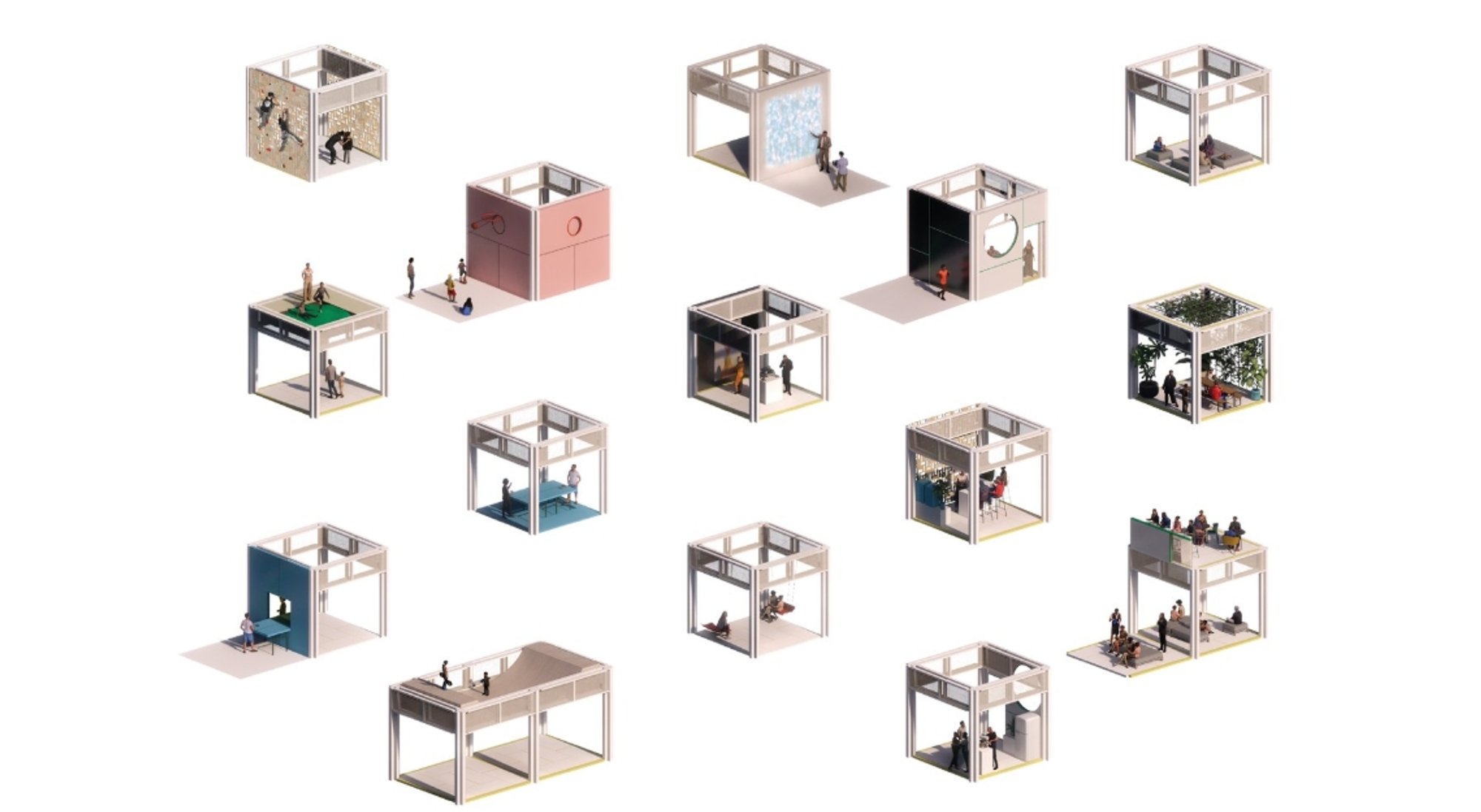
At its core, Dynamic Dojos responds to a growing urban condition: loneliness. The project recognises that many people need spaces where they can safely step out of isolation without being forced into immediate social participation. Instead of designing a single fixed building, the proposal creates adaptable dojo modules that host sport, culture, food, rest, play, and collective watching. These modules allow interaction to happen gradually, naturally, and without stigma.
The result is an architecture of invitation. Dynamic Dojos uses modular architecture to create temporary community spaces that can expand, contract, relocate, and transform according to occasion, context, and user need.
Project by Mathilde Severinsen, Kathrine Vand, Kathrine Vand
Form Follows Occasion
The guiding idea behind Dynamic Dojos is simple and effective: form follows occasion.
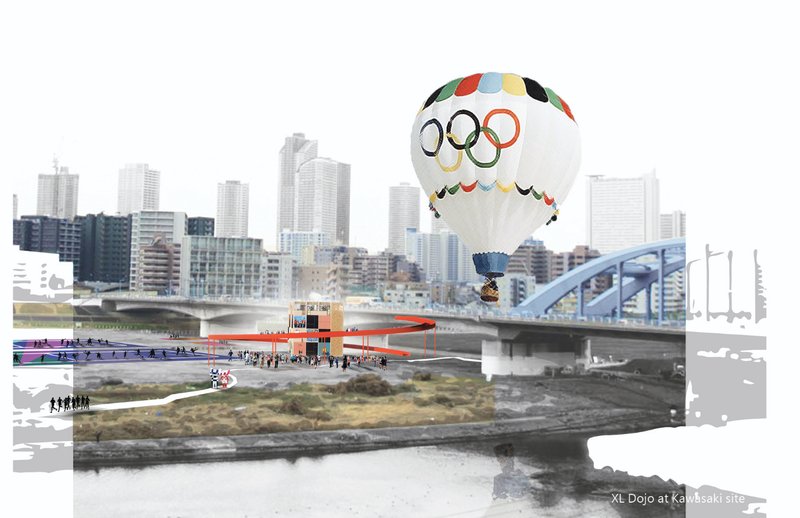
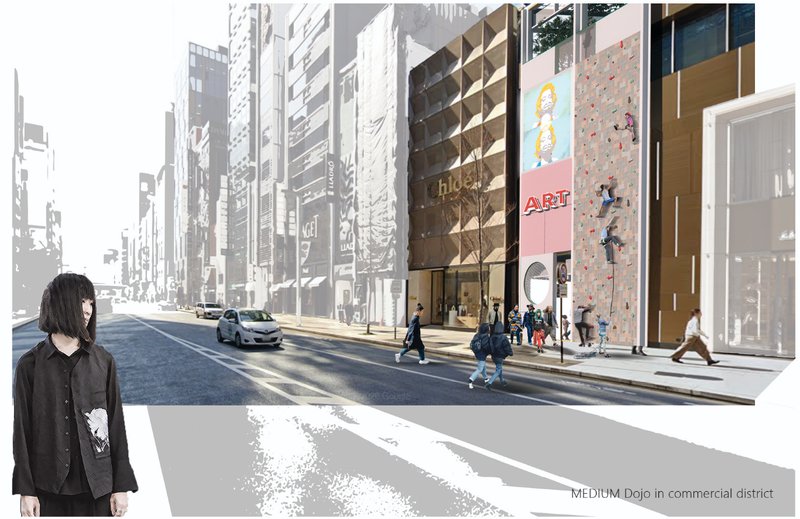
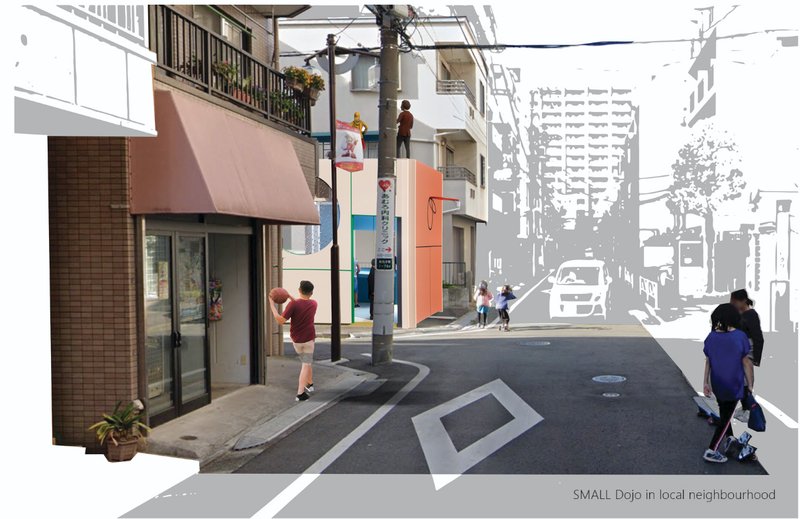
Rather than forcing one permanent architectural form onto every site, the project is based on modular units that can be assembled in different scales. The images show small, medium, and extra-large dojo configurations, each responding to a different social and urban condition.
The small dojo works as a local neighbourhood meeting place. It can occupy a street corner, narrow urban gap, or residential setting. The medium dojo fits into commercial districts, pop-up events, and cultural festivals such as Tokyo Fashion Week. The extra-large dojo is designed for large-scale events such as the Olympic Games, where sport, culture, screenings, and tourism can merge into one temporary civic environment.
This modular approach gives the project its strength. It is not a building with one fixed function. It is a system of architectural possibilities.
Modular Architecture as a Social Framework
Dynamic Dojos uses modular architecture to make public interaction more accessible. Each module is built around a flexible grid that can support multiple activities. These include basketball, table tennis, skateboarding, trampoline, rock climbing, swings, lounge seating, outdoor seating, exhibition spaces, cafe modules, bar modules, interactive screens, and unprogrammed facades.
The design avoids the rigidity of conventional public buildings. Instead, it creates a framework where activities can shift depending on the location, event, and community. This makes the dojo system highly adaptable for dense urban environments like Tokyo, where available public space is often limited, fragmented, or temporary.
The modules are not only containers for activity. They are social catalysts. By placing play, sport, viewing, food, and rest close to one another, the project encourages different user groups to overlap in a natural way.
Addressing Loneliness Through Design
One of the most meaningful aspects of Dynamic Dojos is its response to loneliness. The project identifies different groups at risk of social isolation, including salary workers, teenagers, and retirees. Each group faces different barriers, from poor work-life balance and living alone to social immobility, lack of nurturing spaces, widowhood, or limited social connections.
Instead of treating loneliness as a medical or private issue, the project treats it as a spatial and civic challenge. It asks how architecture can reduce the threshold for participation.
Dynamic Dojos answers this through proximity, visibility, and choice. Modules are placed close to people’s homes and daily routes, making visits manageable. Activities are visible from outside, allowing people to observe before joining. The architecture offers different levels of engagement, so users can participate as spectators, single players, parallel players, or members of a group activity.
This staged interaction is important. A person can begin by watching from a safe distance, then sit closer, then try an activity alone, and eventually join others. The design understands that social connection often begins indirectly.
A Gradual Path from Observation to Participation
The project’s diagrams explain a thoughtful sequence of interaction. It begins with visual connection. A person can see the activity, the surroundings, and other people without immediately becoming part of the event.
The next stage is joining from a personal comfort zone. Platforms, niches, and seating areas allow users to remain slightly separate while still being present. This is followed by closer auditory and visual proximity, where a person watches next to others and begins to feel part of the shared atmosphere.
Finally, users can engage in the same activity and interact physically or socially with others. A basketball hoop, table tennis setup, climbing wall, or swing can become the medium through which conversation starts. The architecture does not demand interaction. It enables it.
This is where Dynamic Dojos becomes more than modular architecture. It becomes a behavioural design system for urban belonging.
Olympic Spirit and Everyday Urban Life
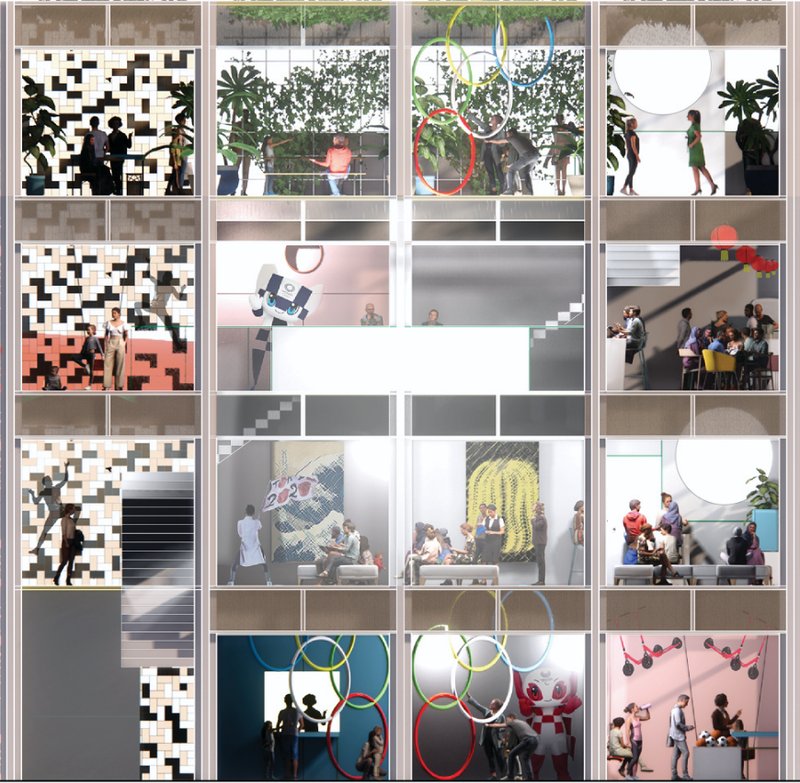
The Tokyo Dojo competition context gives the project a strong relationship with sport and the Olympic Games. The extra-large Olympic Dojo at Kawasaki is shown as a multi-level structure with viewing screens, sport facilities, food counters, lounge seating, cafe areas, bar counters, accessible restrooms, outdoor seating, and play zones.
During the Olympic Games in Tokyo, the XL Dynamic Dojo is imagined as a temporary urban hub for tourists and residents. It hosts Japanese culture, sport activities, and screenings of Olympic events. The structure becomes a place where the energy of the Games can extend beyond stadiums and into the public realm.
However, the project is not limited to the Olympics. Its modular system can remain valuable after the event. Smaller units can be redistributed into neighbourhoods, commercial areas, parks, and vacant urban sites. This makes the proposal relevant as a long-term strategy for community architecture.
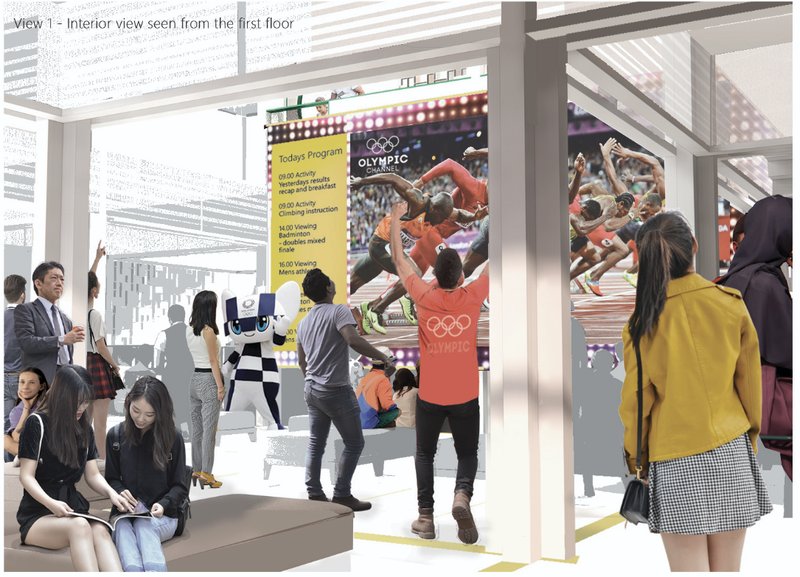
Programs Inside the Dojo Modules
The programmatic diversity of Dynamic Dojos is one of its strongest design qualities. The modules accommodate both active and passive uses, allowing a wide spectrum of users to participate.
Sport-based modules include basketball, table tennis, trampoline, skateboarding, rock climbing, and swings. These activities are intentionally accessible. They do not require advanced skill, expensive equipment, or formal membership. A person can approach them alone or with others.
Cultural and social modules include exhibition space, interactive screens, cafe modules, bar modules, lounge seating, and outdoor seating. These programs support conversation, observation, rest, and informal gathering.
Unprogrammed facades are also important. They allow the architecture to remain open-ended, ready for community appropriation, art, projection, information, or spontaneous event use. This flexibility strengthens the project’s value as modular architecture for changing urban needs.
The XL Olympic Dojo at Kawasaki
The Kawasaki site demonstrates how the system can scale up. The XL Olympic Dojo is located near Maruko Park and integrates with existing recreational amenities such as a playground, boules court, basketball court, football field, pedestrian bridge, and riverside landscape.
The plans show a multi-storey modular structure organised around event viewing, sport, food, seating, and circulation. The section reveals a layered environment where different activities happen vertically and visually overlap. People can climb, watch, sit, eat, play, and move through the structure while remaining connected to the larger event atmosphere.
This vertical stacking gives the project an urban intensity. It condenses multiple public programs into a compact modular frame, making it suitable for dense city conditions.
Temporary, Festive, and Community-Oriented
Juror Kazuma Yamao noted that while the idea of spreading modularized objects may not be entirely new, Dynamic Dojos fits the competition criteria very well by creating new community space through sports experience and the Olympic Games. The juror also recognised its strong appearance in relation to temporariness, community, and festivity.
This comment highlights the project’s most convincing quality. Dynamic Dojos is not trying to be monumental. Its value lies in temporary activation, civic energy, and the ability to bring people together around shared activity.
The architecture is light, repeatable, and event-driven. It can appear where needed, support a moment of collective life, and then shift elsewhere. This makes the project particularly relevant for cities seeking flexible public space strategies.
Beyond the Cube
Juror Florian Busch offered a more critical reading, observing that the entry treats the given site as one of many possibilities, which opens a deeper conversation about the topic. The modularity was described as a logical and good first step, but the juror suggested that the project could have gone beyond the cube to better respond to the diversity of contexts and programs it wants to host.
This critique is useful because it identifies the next level of development for the proposal. The cube offers clarity, simplicity, and repeatability, but urban life is rarely cubic. Different neighbourhoods, events, cultures, and user groups may demand more varied geometries, softer thresholds, or more context-specific forms.
Even so, the project’s modular discipline gives it a strong foundation. The cube becomes a starting point for adaptability. Future iterations could expand the formal language while preserving the system’s core strengths: accessibility, mobility, scalability, and social programming.
Architecture That Nudges Interaction
Dynamic Dojos uses the idea of “nudging” as a design tool. Instead of forcing people into social situations, the project creates small spatial prompts that make interaction easier.
These prompts include local focus, proximity to home, accessible activities, user ownership, volunteering, project awareness, and visible programming. Together, they create conditions where people can step into public life at their own pace.
This is an intelligent approach to community architecture. It recognises that the design of space affects behaviour. A well-placed seat, a visible game, a low-pressure activity, or a familiar neighbourhood module can be enough to initiate connection.
Why Dynamic Dojos Matters
Dynamic Dojos matters because it reframes modular architecture as a tool for emotional and social resilience. In many cities, public life is becoming increasingly fragmented. People may live close to one another but remain socially distant. Dynamic Dojos proposes that architecture can help repair this distance through shared activity.
The project also challenges the idea that major events such as the Olympics should only produce large, centralised infrastructure. Instead, it suggests a distributed network of smaller architectural interventions. These interventions can bring the atmosphere of the event into everyday spaces and leave behind a stronger culture of public participation.
By combining sport, play, food, culture, viewing, and rest, Dynamic Dojos creates an inclusive urban platform. It does not separate spectators from players, tourists from residents, or individuals from groups. It allows all of them to coexist within one flexible architectural system.
Dynamic Dojos is a strong Winner entry of Tokyo Dojo because it understands architecture as both structure and social mechanism. Through modular architecture, the project creates adaptable dojos that can fit different sites, scales, and events while addressing the quiet but urgent issue of urban loneliness.
Its success lies in the way it makes social interaction feel possible. A person can observe, sit, watch, play alone, play beside others, and eventually participate with a group. This gradual path from isolation to connection gives the project emotional depth.
Dynamic Dojos is not just a proposal for temporary Olympic infrastructure. It is a vision for more flexible, playful, and humane public space. By turning modular systems into engines of community life, the project shows how architecture can create new forms of belonging in the contemporary city.




Popular Articles
Popular articles from the community

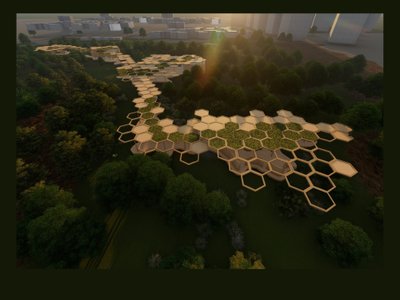
Eco Chapel: A Green Architecture Pavilion Designed in Symbiosis with the Forest
Eco Chapel uses green architecture to weave prayer, learning and reuse into a forest pavilion shaped by modular hexagonal canopies for life.
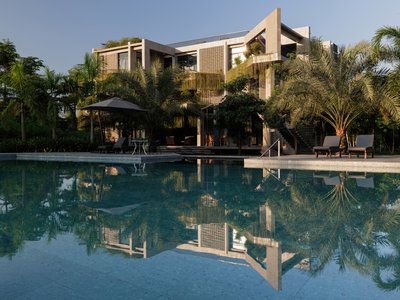
Reincarnation Weaves a Three-Story Retreat into the Green Landscape of Rural Bangladesh
Ara Manor in Narsingdi dissolves the line between domestic architecture and its lush surroundings through screens, courtyards, and planted rooftops.

Milan Crossover: Sustainable Architecture for a New Fashion Culture in Milan
Milan Crossover transforms fashion culture through sustainable architecture, linking material libraries, remake studios, and public runways.
Kawasaki Olympic Sports Center: Sports Complex Architecture Rooted in Community, Tradition, and Movement
Kawasaki Olympic Sports Center reimagines sports complex architecture as a civic park where tradition, training, and community meet locally.

Similar Reads
You might also enjoy these articles
Eco Chapel: A Green Architecture Pavilion Designed in Symbiosis with the Forest
Eco Chapel uses green architecture to weave prayer, learning and reuse into a forest pavilion shaped by modular hexagonal canopies for life.
Kaffeebühnen: Coffee Shop Architecture Designed as a Civic Stage Between Vienna’s City and Park
Kaffeebühnen turns coffee shop architecture into a civic stage, linking Vienna’s park edge, urban life, warm timber yards, and coffee craft.
Healing Façade: Sustainable Architecture for Reforestation, Community, and Sacred Ecology in Ethiopia
Healing Façade reimagines sustainable architecture as a living wall that restores soil, catches water and renews Ethiopia's forest churches.


Urban Forest: A Vertical Ecosystem for 5,000 Workers in Singapore's Changi Business Park
Radially stacked pods and layered green decks turn a 7-acre plot into 47 acres of ecological workspace projected for 2040.





Comments (0)
Please login or sign up to add comments
No comments yet. Be the first to comment!