

East Side River Park by BIG: A Climate-Resilient Waterfront Park Transforming New York’s East River
A climate-resilient waterfront park elevating New York’s East River edge with flood-proof landscapes, community recreation spaces, solar education hub, and ecological restoration.


The East Side River Park — a central component of the pioneering East Side Coastal Resiliency (ESCR) Project — marks a transformative chapter in New York City’s climate-adaptation strategy and public-realm evolution. Designed by Bjarke Ingels Group (BIG) in collaboration with Mathews Nielsen Landscape Architects (MNLA), ONE Architecture & Urbanism, AKRF, and the Lower East Side community, this landmark development reimagines the waterfront as a living shield against climate change while enriching urban life through world-class public spaces.
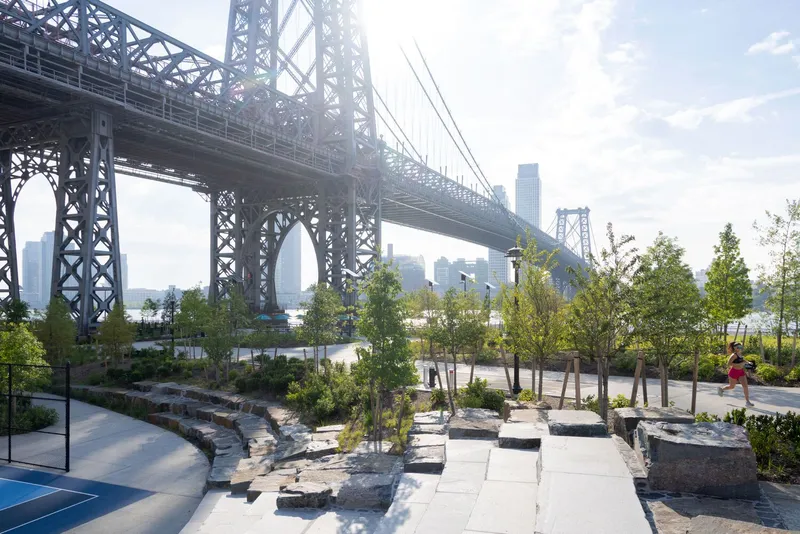
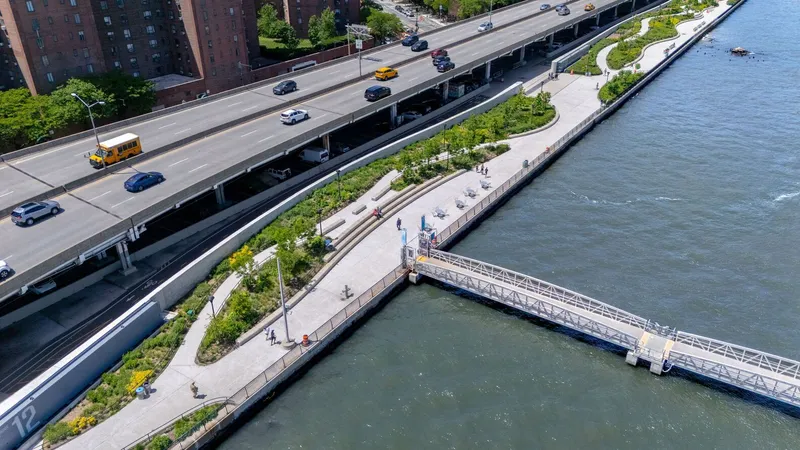
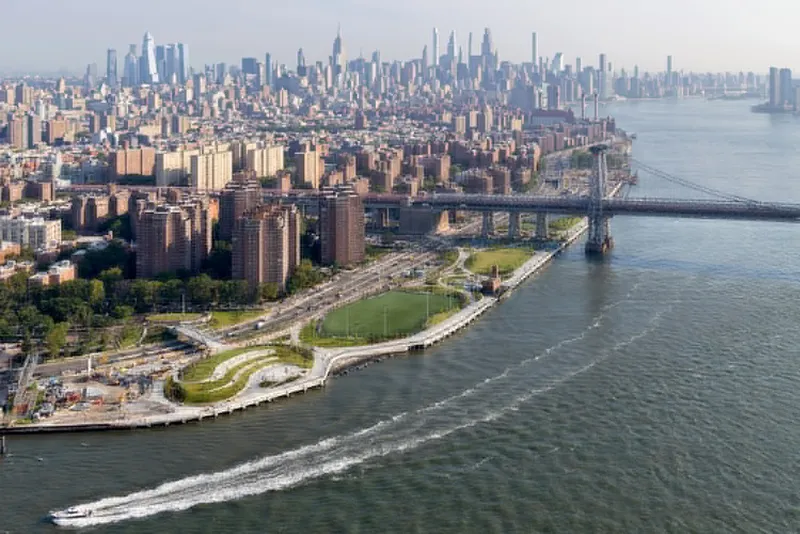
Spread across approximately 2.25 miles (Montgomery to East 25th Street), the $1.45-billion initiative rises as the first major built portion of BIG’s visionary 2014 “BIG U” masterplan — a continuous, protective green belt wrapping Lower Manhattan. The park introduces a new model for climate infrastructure: elevated, community-driven parkland that resists storm surges and tidal flooding while strengthening ecological and social resilience.
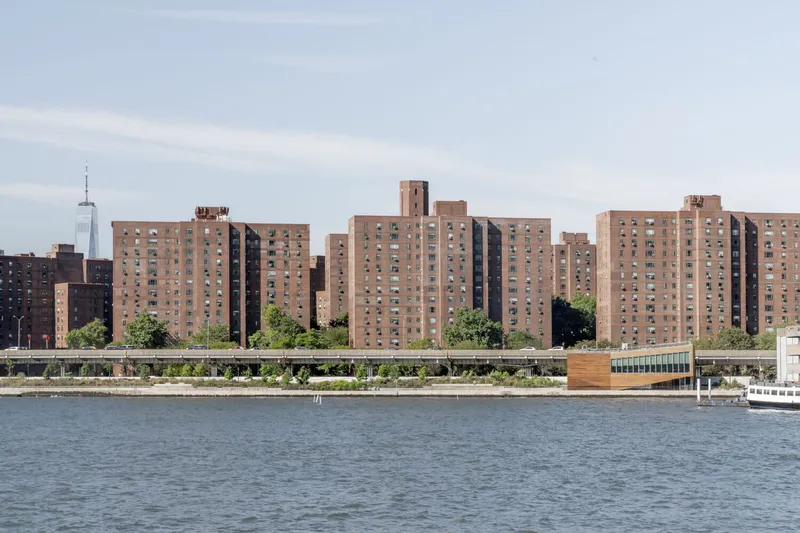
A New Typology: The ‘Parkipelago’
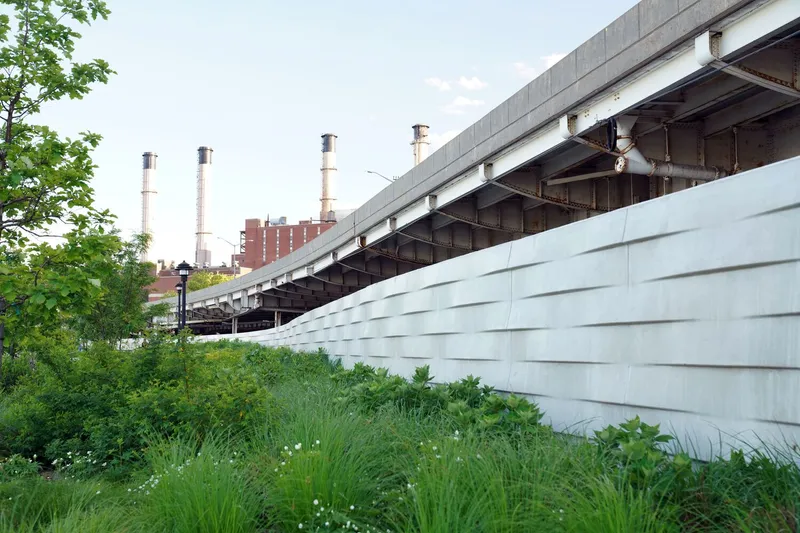
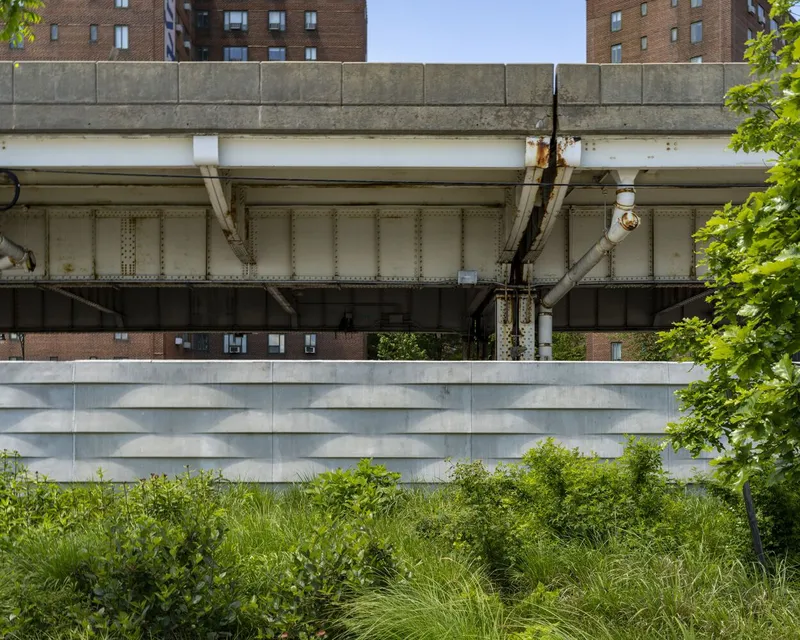
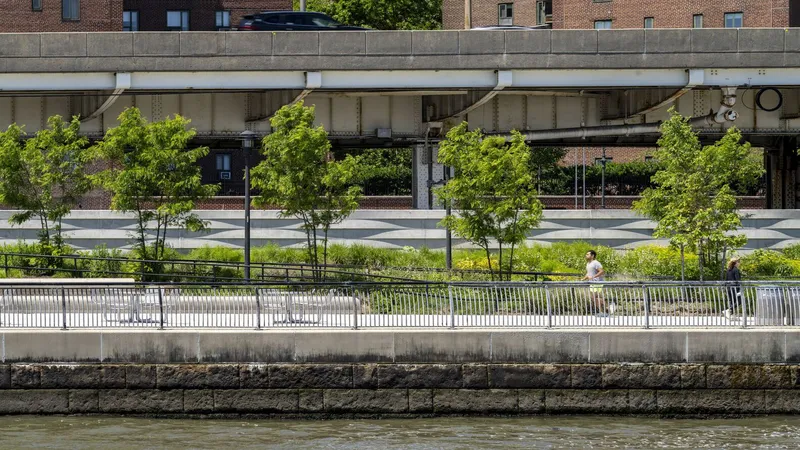
Conceived as a “parkipelago” of interconnected green islands, East Side River Park elevates the waterfront by an average of 8–9 feet to overcome FEMA 100-year floodplain risks. Rather than a monolithic barrier, the design forms terraced, sculptural landscapes that blend seamlessly into the neighborhood, offering accessible, beautifully crafted recreational space.
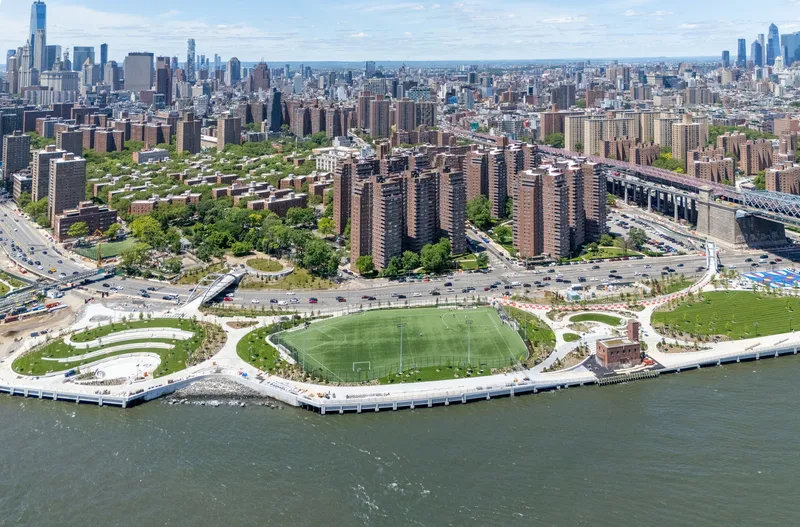
Key flood-resilient elements include:
- Floodwalls and sliding floodgates
- Bridging berms and elevated parkland
- Protected infrastructure powering Lower Manhattan
- Engineered waterfront edges for surge absorption
This integrated approach not only shields more than 110,000 residents, but also protects schools, libraries, transit networks, and power stations — demonstrating how climate infrastructure can be civic infrastructure.
A Reimagined Urban Waterfront for the Community
The project prioritizes community voices, resulting in an inclusive vision rooted in daily life on the Lower East Side. The redesign introduces:
- 600 new trees + 21,000 shrubs and perennials
- New basketball and tennis courts
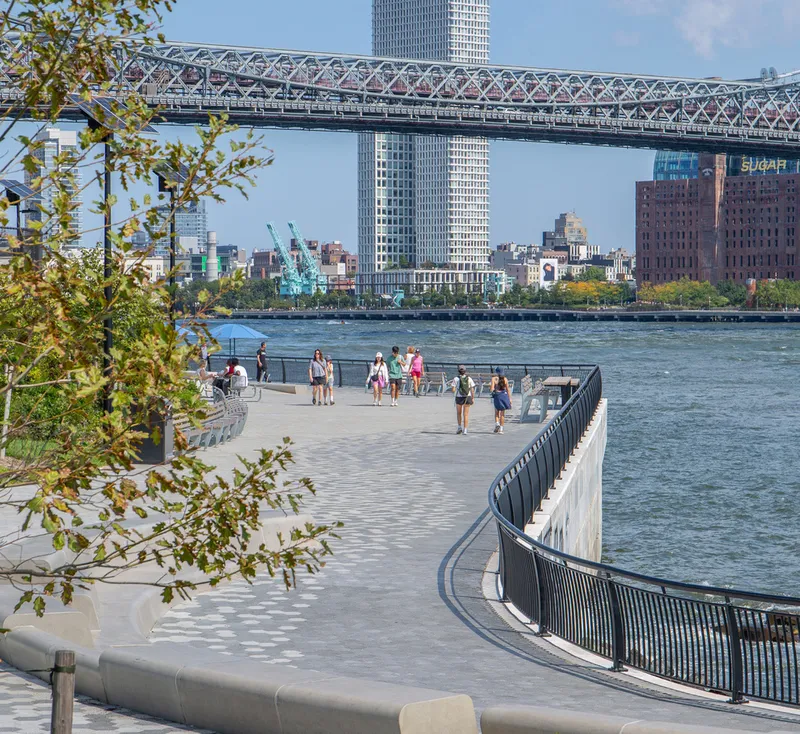
- Multi-use turf field, lawns & waterfront esplanade
- Dedicated nature-play and water-play areas
- Restored amphitheater, picnic + BBQ zones
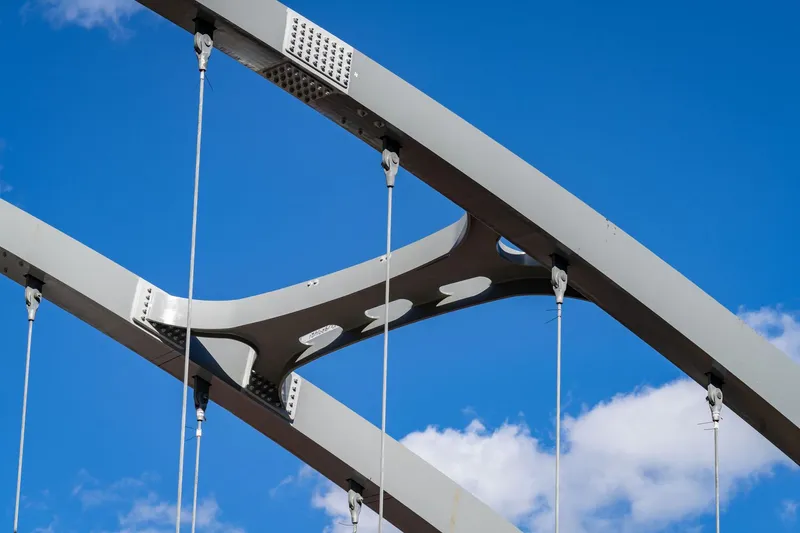
- Two sculptural pedestrian bridges linking across the FDR Drive
Every element supports health, recreation, ecology, and social connection — transforming a once vulnerable waterfront into a dynamic, nature-rich urban retreat.
Solar One Environmental Education Center
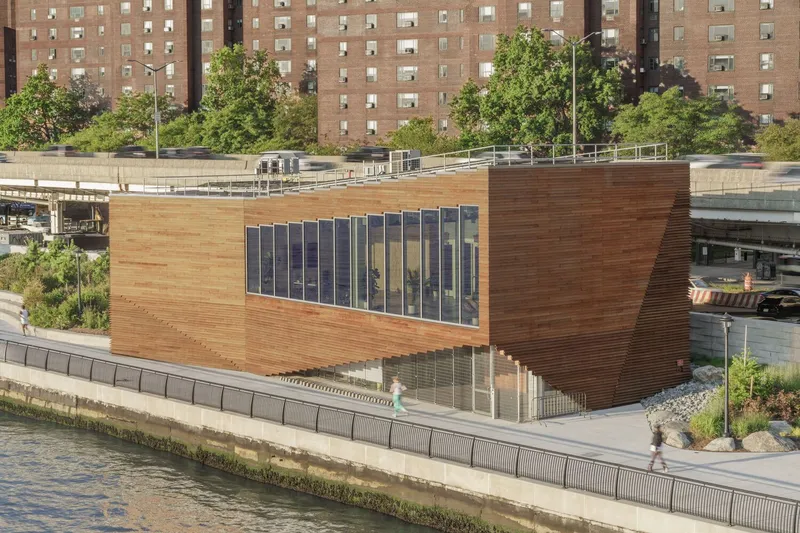
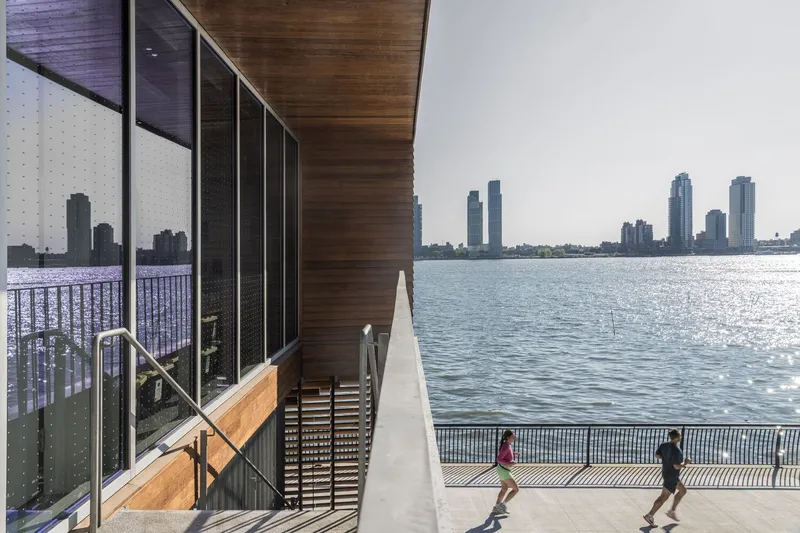
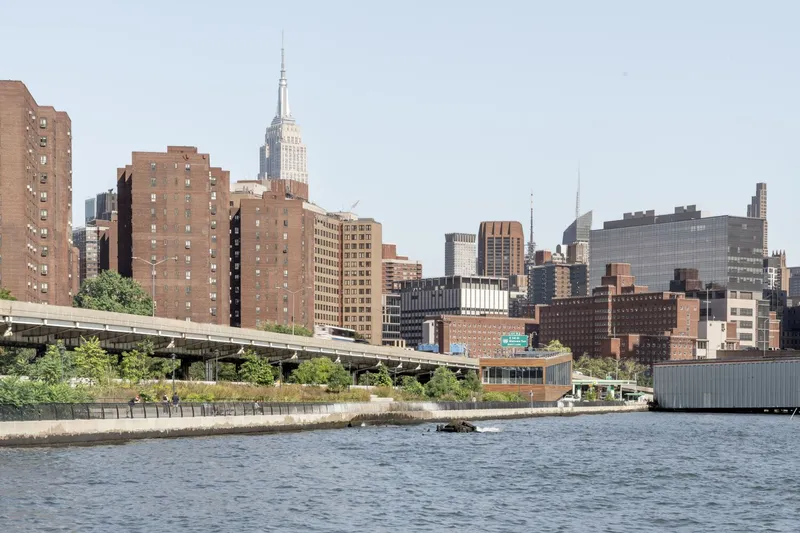
Anchoring the northern edge, the new Solar One Environmental Education Center exemplifies the park’s climate-forward purpose. Designed by BIG with NYCEDC and consulting teams, the 6,409-sq-ft facility is:
- NYC’s first solar-powered educational building with integrated battery storage
- Clad in FSC-certified timber
- Engineered with limited concrete and lightweight steel
- Raised 19 ft above sea level for flood resilience
- Wrapped in triple-glazed, bird-friendly glass
- On track for LEED Silver certification
Serving as a power-resilient community hub and STEM educational center, it stands as both a symbol and tool for a climate-adaptive future.
A Blueprint for Global Coastal Resilience
East Side River Park is part of a network of flood-defense projects shaping New York’s future — including BIG’s North/West Battery Park City Resiliency Project — forming a continuous, fortified coastline.
More than a defense strategy, this project defines a new paradigm for waterfront design, where infrastructure inspires, protects, and invites public life.
All photographs are works of Iwan Baan, Foad Sarsangi, NYCDDC/Matthew Lapiska, © BIG-Bjarke Ingels Group, Jonathan Morefield, BIG/Jeff Tao


Popular Articles
Popular articles from the community


U.GA Architects Wraps an Oval Rooftop Pool in Curved Board-Formed Concrete on Busan's Jeollidan-gil
In Busan's Jeonpo-dong, a 454 m² mixed-use block stacks a neighborhood facility, guest rooms and an oval rooftop pool inside spiraling concrete walls.

Architekt Andreas Gruber Scatters 23 Dark Timber Chalets Across a South Tyrolean Forest Edge
In Molini di Tures, Amonti Chalets breaks a resort into a hamlet of gabled timber houses, with parking, storage and services pushed into the slope.

GROUP A Strips a 1969 Rotterdam Harbor Headquarters to Its Frame and Wraps It in Timber Louvers
In Rotterdam's M4H harbor district, Ferro Offices reuses a 1969 frame, adds one timber storey and reaches BREEAM-NL Outstanding.

Jaramillo Van Sluys Arquitectura and Urbanismo Turn a Demolished Registry Lot in Quito into an Orchard Plaza
In Quito's Centro Histórico, a 2,800 m² plaza exposes the San Agustín convent wall and redraws its lost Augustinian orchard in volcanic stone.

Similar Reads
You might also enjoy these articles


Hodi-Mandai Geram
Project Function: Preservation and revitalization of the Intangible heritage and socio-spatial identity of the Hodi by Housing, Cultural Memory Center, Sacred Grove, landscape, local tourism economy


Olio Towers: A Mid-Rise for Performers That Fuses Housing, Rehearsal, and Stage
Located blocks from Houston's Theater District, this modular tower stacks living units around a central performance atrium.

Oasis: Modular Green Housing Carved into Dhaka's Urban Fabric
A shortlisted Plugin Housing entry reclaims unauthorized settlements in Dhaka with stepped concrete volumes, green roofs, and ventilation-driven design.

Black Hole: A Floating Megastructure for the Post-Physical Era
Emiliano Mazzarotto envisions a spherical, self-scaling arena where e-sports, digital hotels, and holographic stadiums replace traditional public space.

Explore Riverfront Development Competitions
Discover active competitions in this discipline

Challenge to design a portable theatre

Challenge to design a portable music platform

Challenge to design an open learning module for the elderly

Challenge to reimagine the Iron Throne
Comments (0)
Please login or sign up to add comments
No comments yet. Be the first to comment!