

ECHO: A Spatial Echo of Music, Memory, and Creation
A sound born in retreat echoes throughout the place.

Reawakening a Lost Cultural Heart
Once known as the musical heart of Montserrat, the legendary recording studio that brought international artists to the island now stands abandoned, slowly reclaimed by vegetation and time. The volcanic eruptions that transformed large parts of the island also interrupted an important cultural ecosystem, leaving behind physical ruins and fragmented collective memories. ECHO emerges from this condition of absence. Rather than viewing the abandoned site solely as a ruin, the project interprets it as a dormant cultural landscape waiting to be activated once again. The proposal aims to revive Montserrat’s musical heritage while simultaneously creating a new platform for cultural production, exchange, and community engagement. In response to both the competition brief and the island’s historical narrative, the project seeks to reconnect music, people, and place through architecture.
Concept: The Cycle of Retreat, Creation, and Sharing
The conceptual foundation of ECHO is rooted in the relationship between volcanic processes and musical creation. Just as volcanic energy accumulates beneath the earth before emerging to the surface, creative ideas often develop internally before taking form as artistic expression. This analogy inspired a spatial sequence based on three interconnected stages: retreat, production, and interaction. Artists first withdraw into nature, finding solitude within the accommodation units dispersed across the landscape. They then move toward the production spaces, where ideas are transformed into music. Finally, the creative output is shared with others through performances, workshops, and public events. The name "ECHO" reflects this continuous cycle. Sound travels, returns, transforms, and expands through space. Similarly, the project establishes a dynamic relationship between individual creativity and collective cultural experience. Architecture becomes a medium through which ideas resonate, circulate, and generate new connections.
Understanding the Site
One of the most important phases of the design process was understanding the site itself. Before any formal design decisions were made, extensive research and analysis were conducted regarding Montserrat’s geography, culture, housing typologies, climate, and musical history. The site presented both significant challenges and unique opportunities. Located within a dramatic volcanic landscape, the terrain is characterized by steep slopes, dense vegetation, and complex topography. However, these same conditions also offer extraordinary qualities. The site possesses panoramic views, rich forest ecosystems, fertile volcanic soil, and a strong connection to the island’s natural identity. Rather than treating the topography as an obstacle, the project embraces it as a primary design generator. A detailed topographic model was developed to better understand the terrain, allowing architectural interventions to emerge directly from the existing landscape conditions
Design Development and Iteration
The design process evolved through a continuous cycle of investigation, testing, and refinement. Physical and digital topographic models were produced to understand spatial relationships within the site. These studies were followed by numerous massing experiments, conceptual sketches, and programmatic explorations. Throughout the project, the architectural form remained in constant development. Massing models were repeatedly modified and tested against environmental conditions, circulation strategies, and user experience scenarios. This iterative process was essential in achieving a proposal that responds simultaneously to landscape, program, and cultural context. The final design is therefore not the result of a single formal gesture but rather the accumulation of multiple layers of analysis and experimentation.
Building with the Landscape
A fundamental design principle of ECHO is to work with the land rather than against it. The project follows the natural flow of the terrain, positioning structures parallel to existing contours and preserving the continuity of the landscape. Some elements lightly touch the ground through elevated structures, minimizing environmental impact while encouraging natural ventilation beneath the buildings. Other components are partially embedded into the terrain, creating thermal advantages and reinforcing the relationship between architecture and earth. This approach allows the project to maintain the visual and ecological continuity of the site while responding effectively to the tropical climate. By preserving existing topographic patterns rather than flattening them, the design celebrates the unique character of Montserrat’s volcanic geography.
Program as a Creative Ecosystem
The program is organized as a cultural ecosystem where creation, education, accommodation, and performance coexist. Accommodation units provide spaces for artists, musicians, and visitors seeking temporary retreat and creative focus. These units support both individual and collective modes of living, allowing residents to engage with the landscape while remaining connected to the larger community. At the center of the project lies the music production complex, which includes the main recording studio, rehearsal spaces, and supporting production facilities. These spaces function as the creative core of the proposal, where artistic ideas are developed and transformed into tangible works. Complementing these production facilities are a series of cultural workshops dedicated to music, dance, and instrument making. These spaces play a crucial role in preserving and transmitting local traditions, ensuring that cultural knowledge remains active across generations. The project also includes a music café, outdoor gathering areas, a performance stage, and a natural amphitheater integrated into the slope of the terrain. These spaces create opportunities for interaction between artists, residents, and visitors while reinforcing the social dimension of cultural production.
Experience and Community
ECHO is designed as an experiential journey rather than a collection of isolated buildings. Visitors arrive through the forest landscape and gradually encounter the accommodation clusters dispersed throughout the site. The movement through nature encourages reflection and establishes a sense of retreat. As users continue their journey, they transition toward the production spaces, where creative activity becomes visible and collective. The final stage of this sequence occurs in the public performance areas, where music is shared with the community. Concerts, workshops, and cultural events transform individual creation into collective experience. This progression creates a continuous dialogue between solitude and interaction, allowing users to move fluidly between contemplation, production, and participation. At the same time, local residents play an active role within the project. Through workshops, educational programs, performances, and everyday interactions, the community becomes a central participant in the preservation and evolution of Montserrat’s cultural identity.
Learning from Local Traditions
The architectural language of the project is informed by Montserrat’s vernacular housing typologies and climatic conditions. Sloped roof forms reinterpret traditional local structures while responding effectively to heavy tropical rainfall. These roofs facilitate rainwater collection and contribute to passive environmental performance. Material choices and construction strategies seek to balance contemporary architectural expression with references to local building culture. Beyond physical form, the project also draws inspiration from the island’s musical traditions, cultural diversity, and communal ways of life. The architecture becomes a framework through which these cultural narratives can continue to evolve.
A Living System for the Future
ECHO is conceived as a flexible and expandable system capable of evolving over time. New accommodation units, workshops, and cultural programs can be integrated into the framework as community needs change and participation grows.
More importantly, the project is not designed as a static object but as an ongoing process. Its success depends on the continuous interaction between artists, local residents, visitors, and the landscape itself. By reconnecting retreat, creation, and public engagement, ECHO proposes a new future for a place once defined by music. It transforms an abandoned cultural landmark into a living environment where memory is preserved, creativity is nurtured, and culture continues to resonate across generations.


Popular Articles
Popular articles from the community

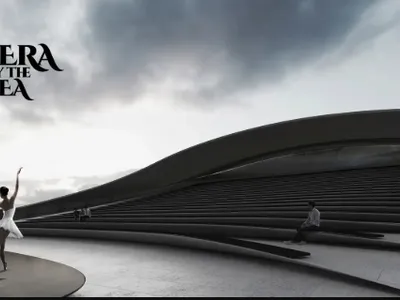
Opera by the Sea Estonia: Three Shells Dissolving Architecture into Tallinn's Coastline
A winning opera house proposal replaces monumental form with interconnected shells that blur the boundary between building, park and Baltic Sea.
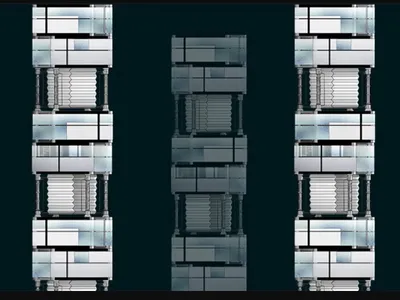
Tsunami Convergenics: Turning Catastrophic Ocean Forces into Underwater Housing Infrastructure
A speculative underwater settlement off the coast of Onagawa, Japan, treats tsunamis and typhoons as energy sources rather than threats.
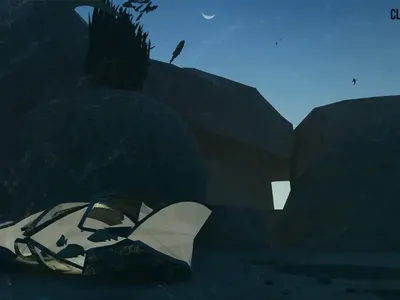
Cloaked Colonization: A Mobile Underwater Habitat That Moves Like a Fish
Micah Abaya's shortlisted EHC Pacific entry reimagines ocean settlement as a dispersed network of self-sustaining architectural organisms.
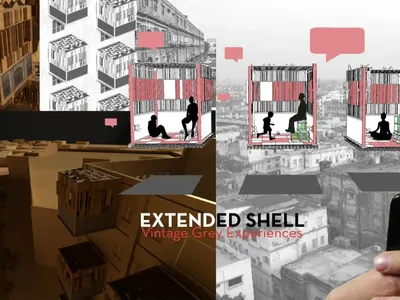
Extended Shell: Retrofitting Kolkata's Balconies as Living Urban Thresholds
A modular retrofit system recovers the social and environmental intelligence of Kolkata's historic verandas for contemporary Park Street residents.

Similar Reads
You might also enjoy these articles

Day and Night Park: A Time-Based Urban Newsstand in Beijing
A temporary urban newsstand in Beijing blending travel, light, and reading through poetic colors, compact form, and community-focused design.

Modernist Patio Renovation in El Masnou, Barcelona by Oliver Segura Arquitectura + Cebrià Arquitectura
Modernist patio renovation blending tradition and innovation with a movable pool, leveled floors, and Catalan materials in El Masnou.

Alto Residencial Coop: Cooperative Housing Development in Santiago de Compostela by Carbajo Barrios Arquitectos
A linear cooperative housing complex blending white volumes and perforated metal façades, enhancing community living, natural light, privacy, and urban integration.
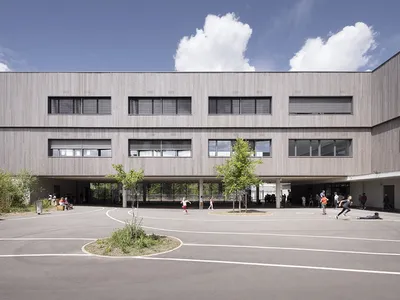
Vil Genis School by BPA ARCHITECTURE – Massy, France
Vil Genis School in Massy, France, features sustainable design, south-facing classrooms, community integration, accessible spaces, and modern educational architecture.

Explore Conceptual Architecture Competitions
Discover active competitions in this discipline


Challenge to reimagine the Iron Throne

Photograph architecture without architects

Illustrate the lost glory of Angkor Wat - Render Challenge

Design challenge to reuse E-waste
Comments (0)
Please login or sign up to add comments
No comments yet. Be the first to comment!