

Echo Mountain Retreat by Tomecek Studio Architecture: A Forest Sanctuary Crafted for Slow Living
Echo Mountain Retreat by Tomecek Studio Architecture is a 2,800 ft² forest sanctuary near Denver, blending wood, glass, and nature-focused, wellness-driven design.


A Quiet Escape Above Denver
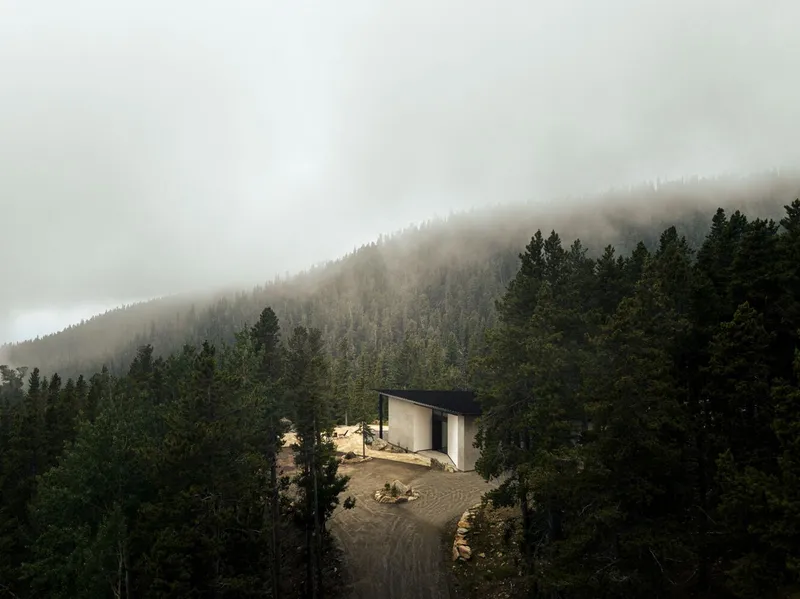
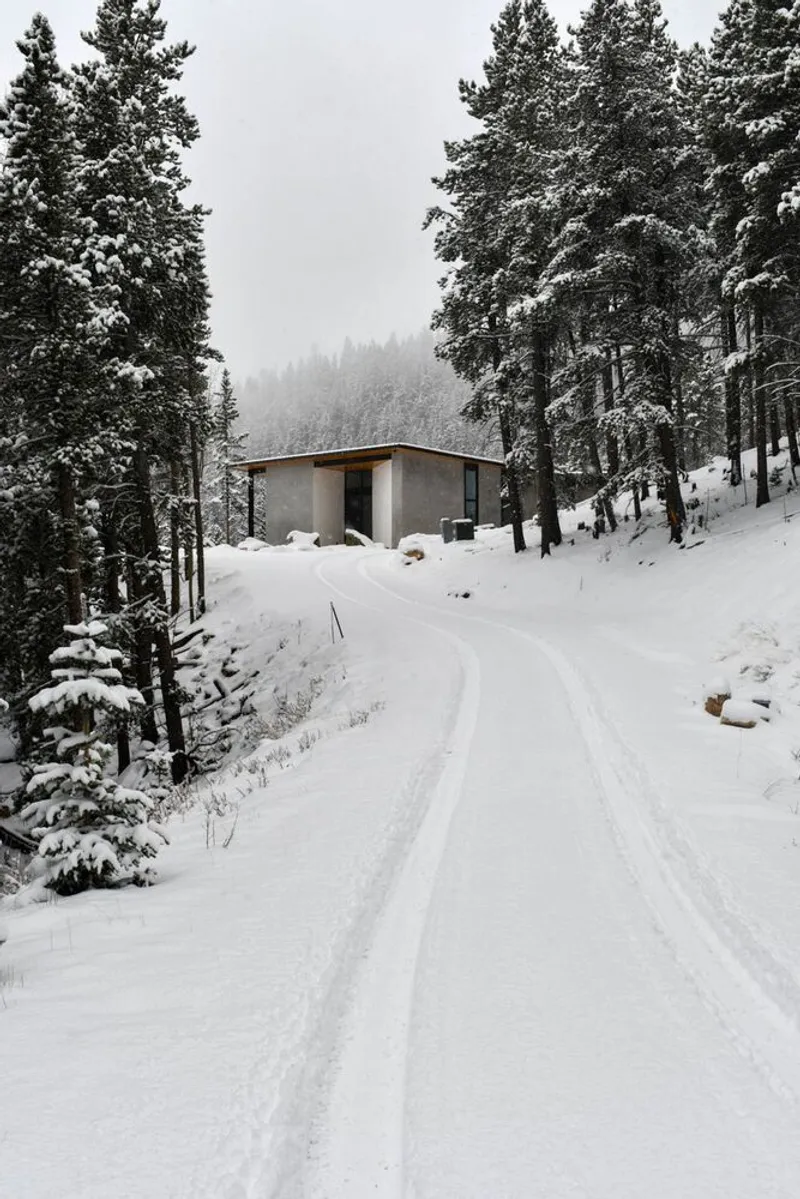
Echo Mountain Retreat by Tomecek Studio Architecture is a 2,800-square-foot mountain sanctuary designed as a restorative escape from Denver’s fast-paced urban life. Located just 45 minutes from the city, the retreat sits within 20 acres of pristine forested land near the peak of Echo Mountain, offering the family of four a place intentionally free from screens—an environment centered on nature, exploration, and mindful living.
Architecture Rooted in Land and Landscape
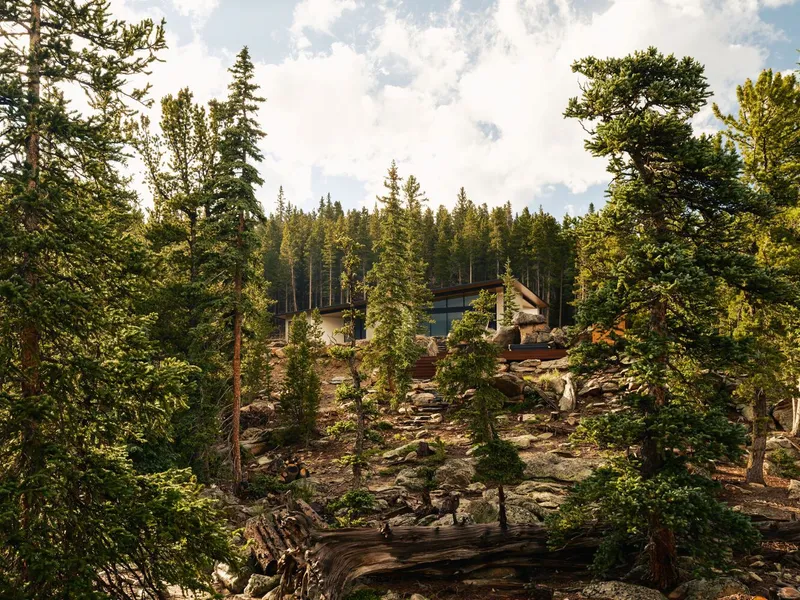
The design responds deeply to the site’s dramatic geography. The property features scattered natural destinations—some with minimal built interventions and others left completely untouched—encouraging visitors to wander, explore, and discover the land’s quiet rhythms.

One of the most striking elements is the geological formation that shapes the site’s character. It begins as subtle rock outcroppings near the home and evolves into a bold hogback ridge with a 150-foot vertical face, grounding the architecture in its rugged mountain context and framing expansive views to the south.
Shinrin-Yoku as a Design Philosophy
Central to the project is the Japanese concept of shinrin-yoku, or forest bathing—an immersive practice centered on the sensory and psychological benefits of spending time in nature. Tomecek Studio Architecture translated this philosophy into spatial form, designing the retreat as a place of stillness, slowness, and sensory engagement.
Programs are purposely fragmented across the property. Rather than concentrating all functions under one roof, distributed elements encourage walking through the forest, observing the changing light, and reconnecting with the natural surroundings. This architectural “scatter” fosters a deeper awareness of the environment and aligns with the family’s goal of living more in rhythm with the land.

Immersive Interiors Framed by Wood, Glass, and Light
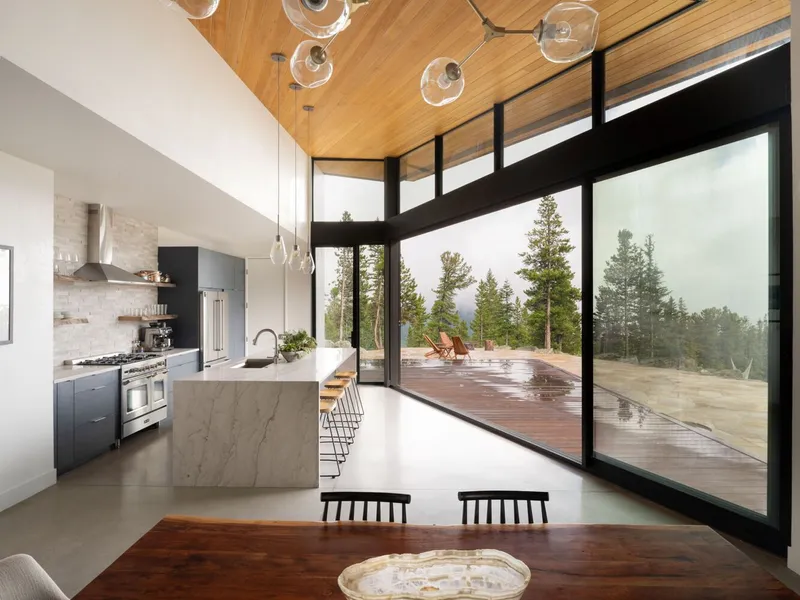
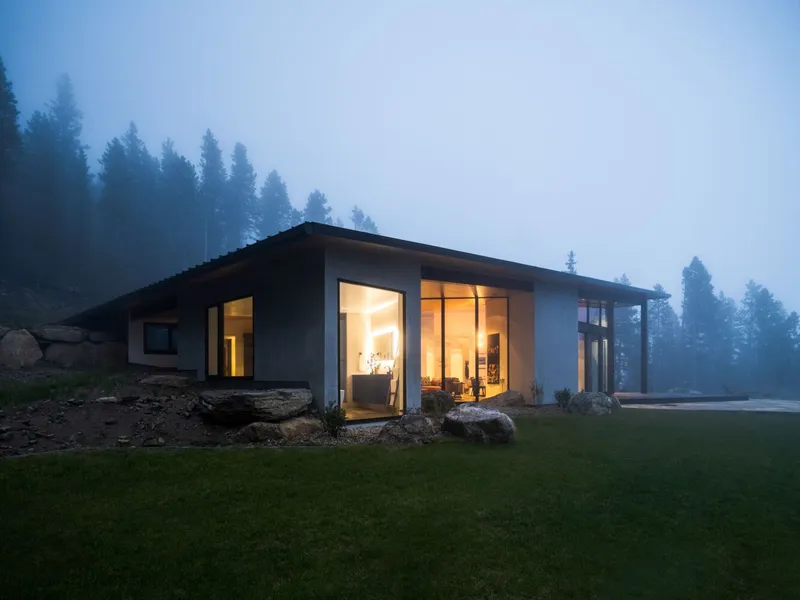
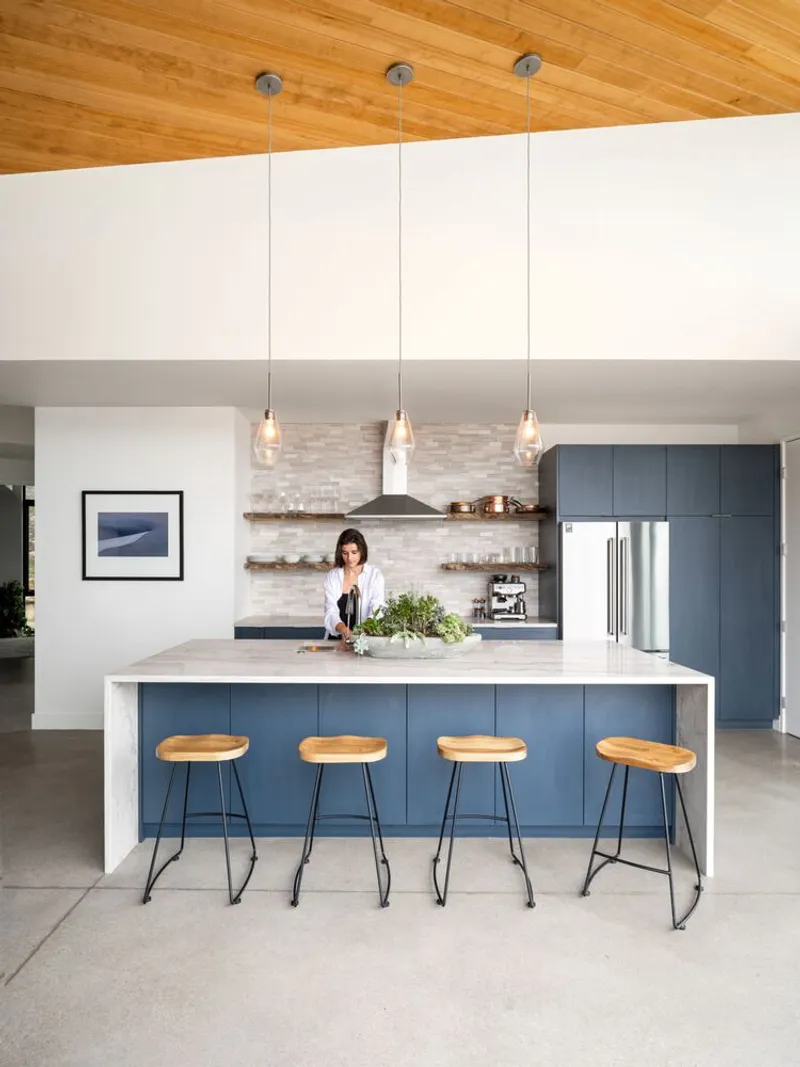
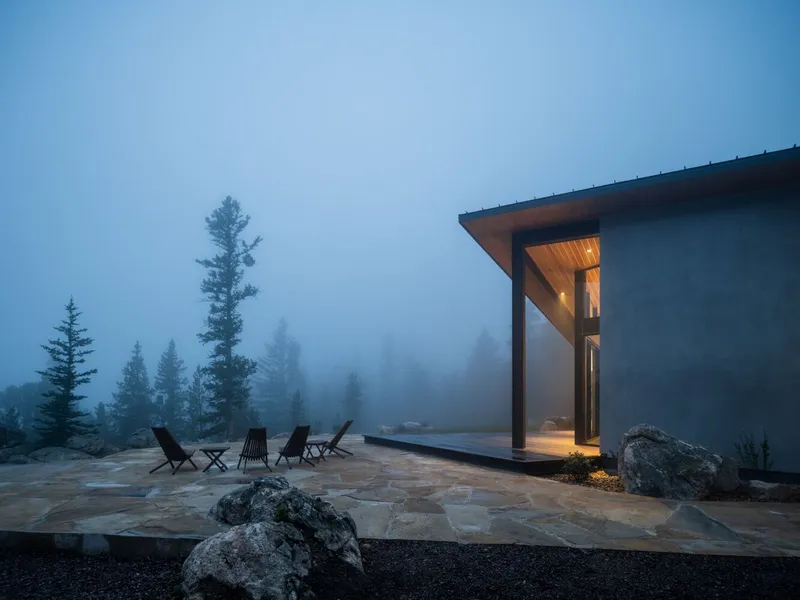
Inside, the design emphasizes a warm, tactile palette. Wood, glass, and exposed beams create a grounded interior atmosphere that balances mountain ruggedness with contemporary comfort. Large glazed openings draw the forest into the home, erasing the threshold between interior and exterior and allowing daylight, shadows, and seasonal changes to shape the experience.

The kitchen and living areas act as the heart of the retreat—spaces where the family gathers without digital distraction. Views extend outward to the trees, rock formations, and sky, reinforcing the architecture’s meditative intention.

Health, Wellness, and Environmental Harmony
Research on shinrin-yoku profoundly influenced the retreat’s design. Studies show that time spent in forests improves sleep, mood, focus, and stress resilience, while mitigating anxiety, depression, and physiological issues like high blood pressure and muscle tension. The retreat becomes not just a weekend getaway, but a wellness-oriented living environment that nurtures physical, mental, and emotional health.

All photographs are works of Parrish Ruiz de Velasco


Popular Articles
Popular articles from the community


The Amber Palace Opera: A Geological Fiction Surfaces on Tallinn's Baltic Waterfront
Pierre Brillard reimagines a Baltic legend as a public landscape, opera house, and waterfront promenade rooted in Tallinn's coastal identity.

Opera by the Sea Estonia: Three Shells Dissolving Architecture into Tallinn's Coastline
A winning opera house proposal replaces monumental form with interconnected shells that blur the boundary between building, park and Baltic Sea.

Opera on the Sea: Driftwood Logic Shapes a Timber Opera House on Estonia's Coast
Trevor Orgill's opera house translates the entangled drift of floating timber into a civic building where wood, water, and music converge.
Extended Shell: Retrofitting Kolkata's Balconies as Living Urban Thresholds
A modular retrofit system recovers the social and environmental intelligence of Kolkata's historic verandas for contemporary Park Street residents.

Similar Reads
You might also enjoy these articles


Hodi-Mandai Geram
Project Function: Preservation and revitalization of the Intangible heritage and socio-spatial identity of the Hodi by Housing, Cultural Memory Center, Sacred Grove, landscape, local tourism economy


Olio Towers: A Mid-Rise for Performers That Fuses Housing, Rehearsal, and Stage
Located blocks from Houston's Theater District, this modular tower stacks living units around a central performance atrium.

Oasis: Modular Green Housing Carved into Dhaka's Urban Fabric
A shortlisted Plugin Housing entry reclaims unauthorized settlements in Dhaka with stepped concrete volumes, green roofs, and ventilation-driven design.

Black Hole: A Floating Megastructure for the Post-Physical Era
Emiliano Mazzarotto envisions a spherical, self-scaling arena where e-sports, digital hotels, and holographic stadiums replace traditional public space.

Explore Meditation Space Competitions
Discover active competitions in this discipline

Challenge to reimagine the Iron Throne

Photograph architecture without architects

Illustrate the lost glory of Angkor Wat - Render Challenge

Design challenge to reuse E-waste
Comments (0)
Please login or sign up to add comments
No comments yet. Be the first to comment!