

École du Zénith: A Landscape-Driven School Redefining Contemporary Educational Architecture in Quebec
École du Zénith blends pavilion-style learning spaces, natural light, and bioclimatic design to create a child-centered, landscape-connected contemporary school environment.


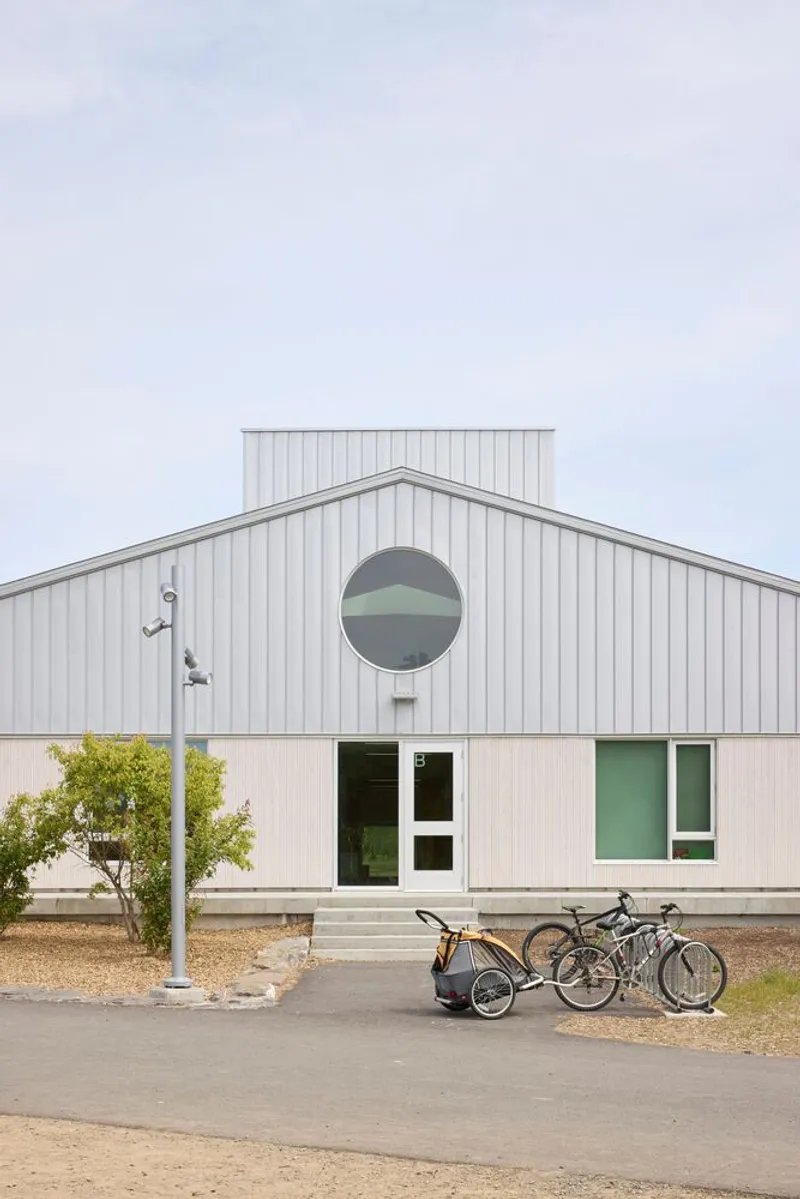
École du Zénith stands as a landmark achievement in Quebec’s educational architecture, designed by the Montreal-based studio Pelletier de Fontenay in collaboration with Leclerc Architects. Emerging from the groundbreaking Lab-École competition: Quebec’s first school design competition since the 1960s: the project reimagines how primary schools can support learning, community, and well-being. Completed in 2023, the new campus introduces a spatial model that merges architectural clarity with a rich sensory connection to the surrounding landscape.
A New Horizon for Educational Architecture
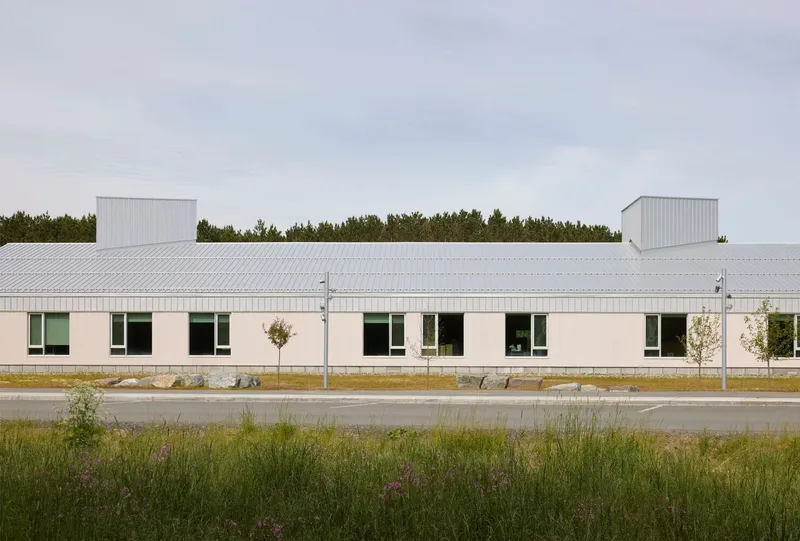
Set within Shefford’s expansive natural surroundings, the school is conceived as a linear architectural horizon. A composition of interconnected pavilions creates a gentle rhythm of volumes and roofs, framing the distant silhouette of Mount Shefford. Each pavilion represents a distinct learning cycle, giving students a strong sense of identity and belonging within their school “home.” This architectural strategy allows children to understand their academic progression spatially, reinforcing continuity and community.
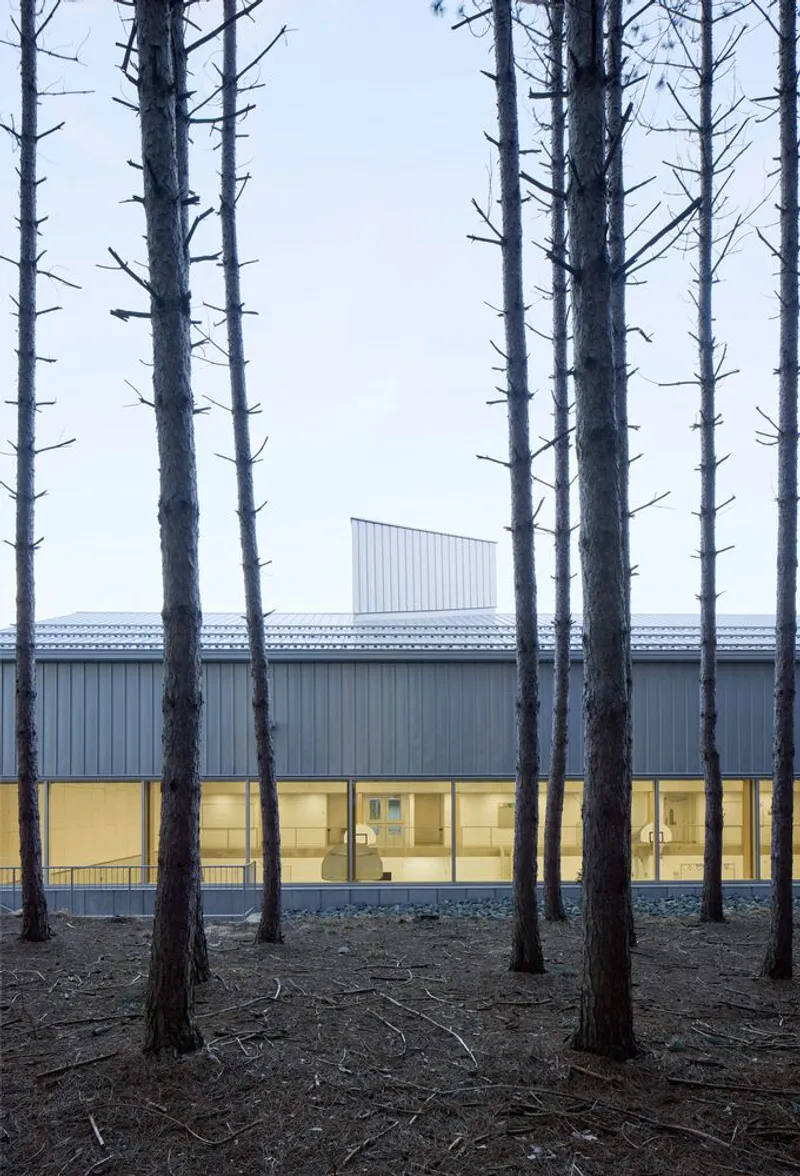
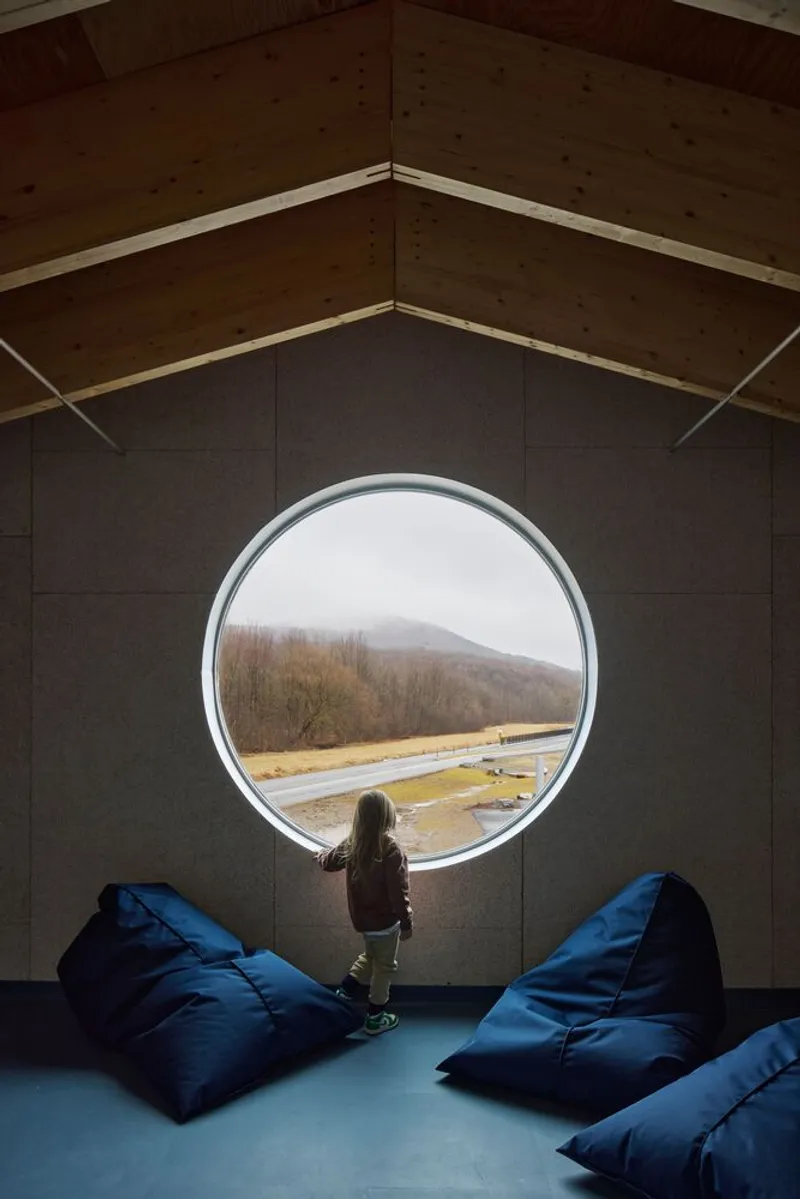
Large windows, deep roof overhangs, and multiple entry points dissolve the boundaries between the interior and the landscape. The architecture prioritizes permeability: letting light, nature, and seasonal changes shape the daily life of the school.
A Central Courtyard as a Social and Ecological Heart
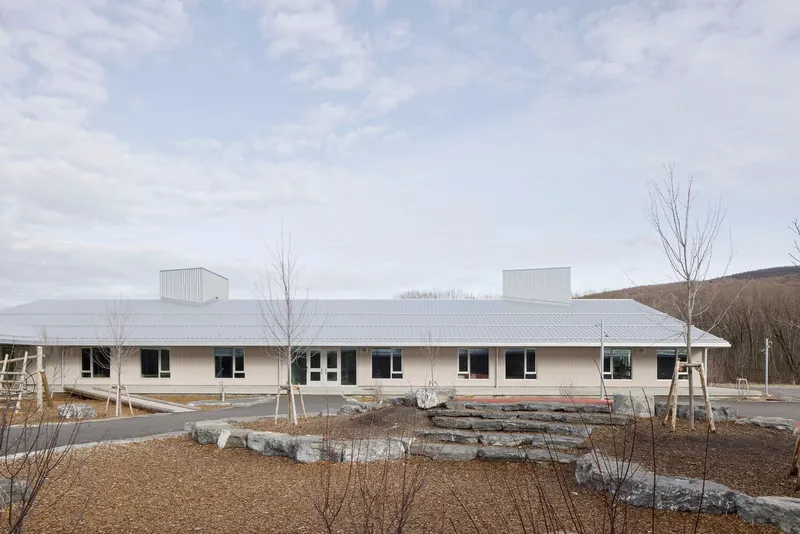
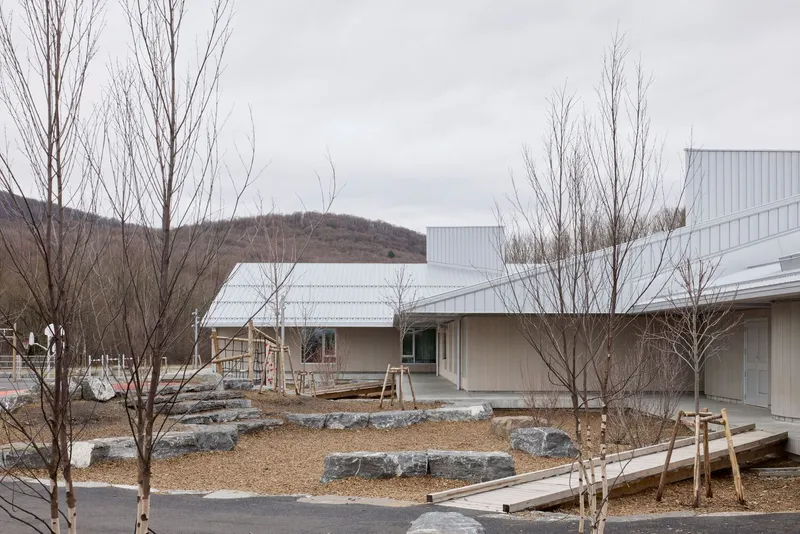
All students enter through a generous inner courtyard, a space conceived as both gathering ground and ecological garden. Designed with local species of mature trees, shrubs, wildflowers, and perennials, the courtyard offers a micro-landscape that evolves throughout the year. Near the kitchen and cafeteria, an edible garden grows as a pedagogical extension of outdoor learning.
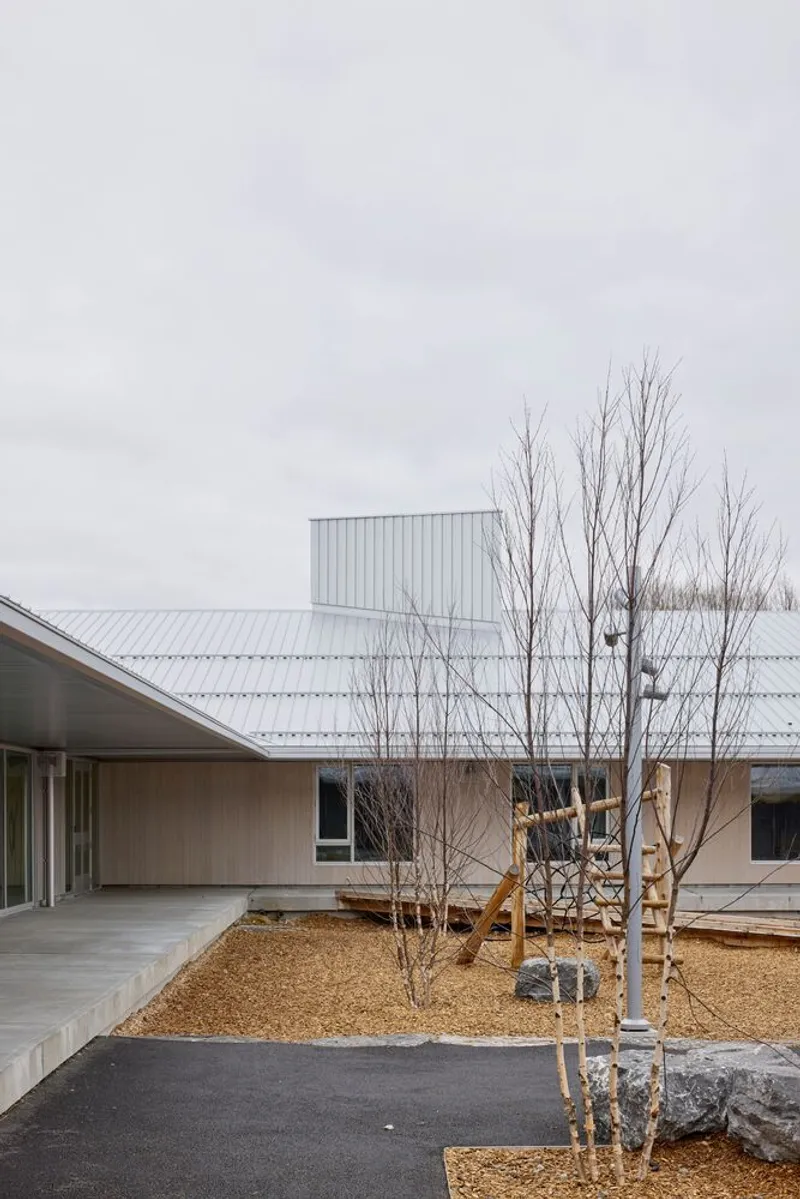
Natural stones placed across the courtyard function as informal seating, play elements, and spatial markers, encouraging children to interpret the space freely. The pavilions’ large overhanging roofs interlock to form a continuous sheltered walkway, allowing circulation around the courtyard in all weather conditions.
Spatial Clarity Enriched by Complexity
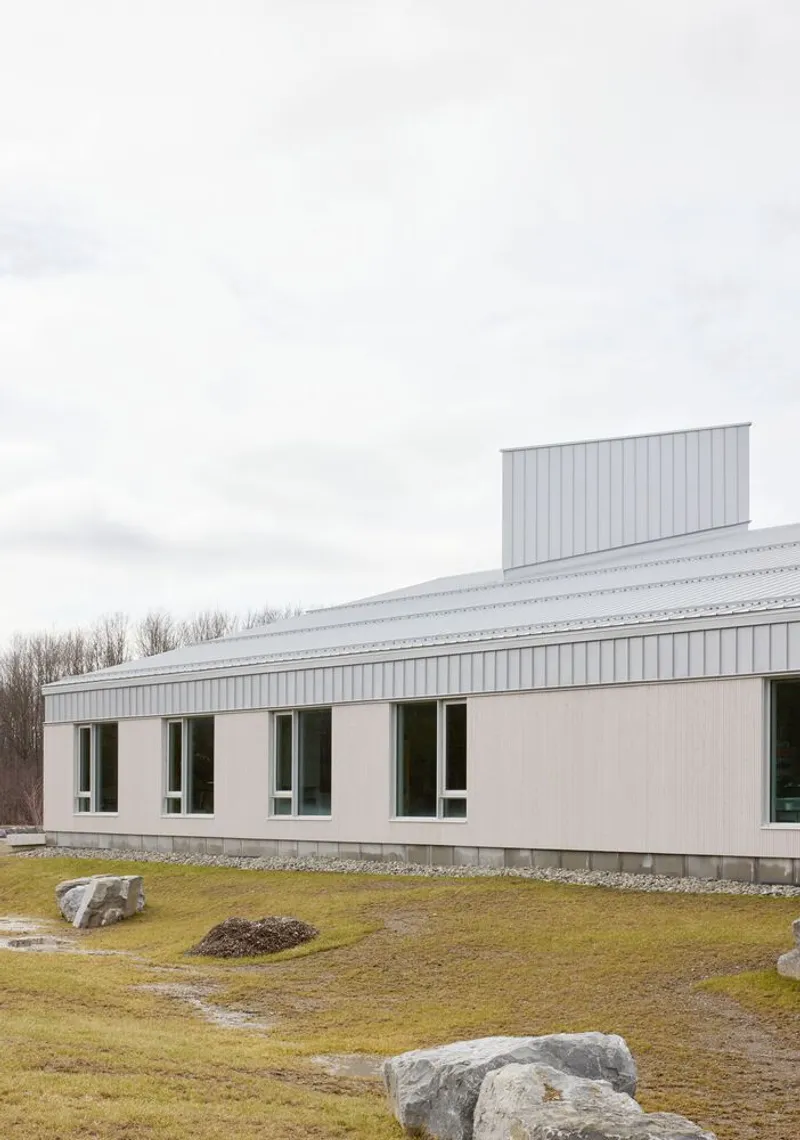
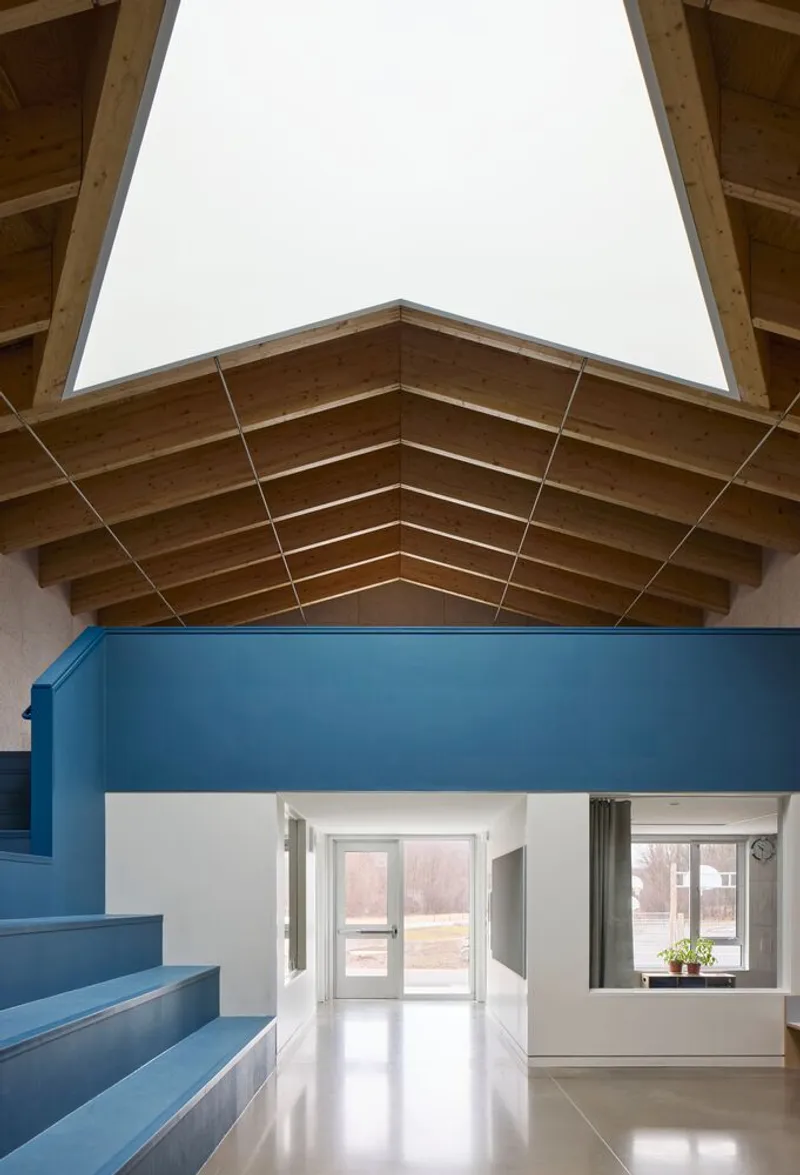
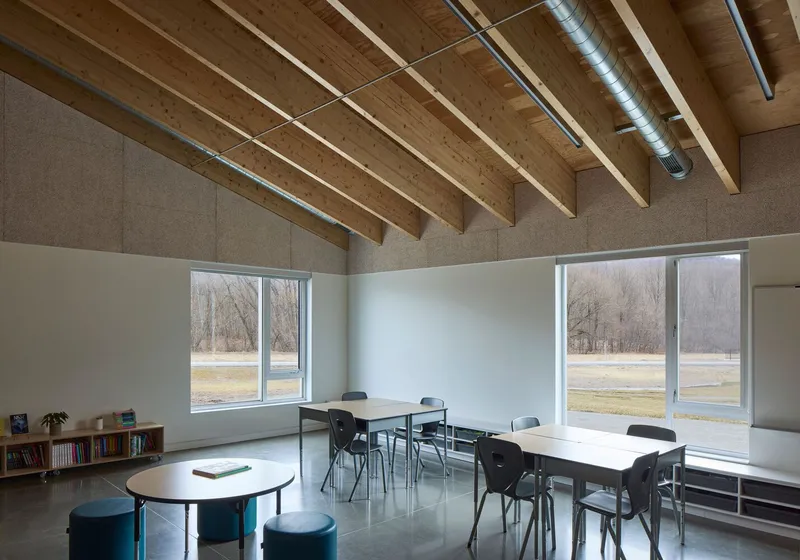
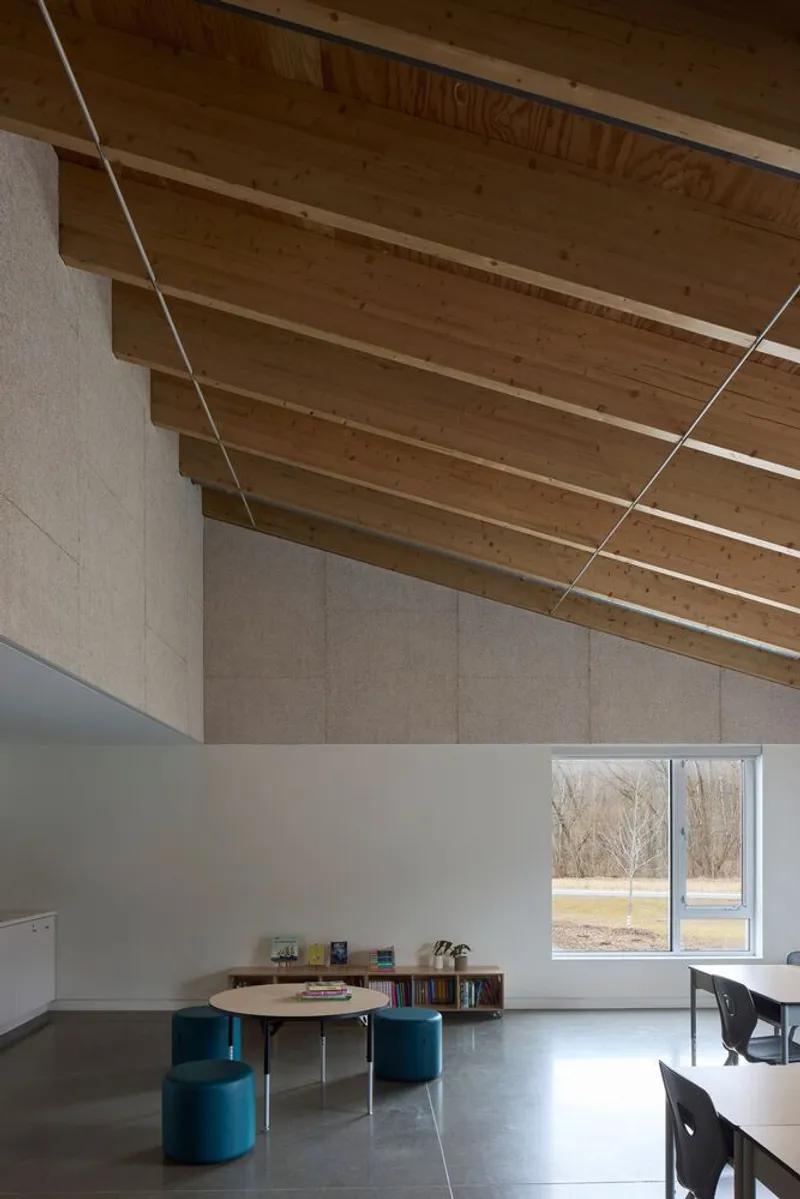
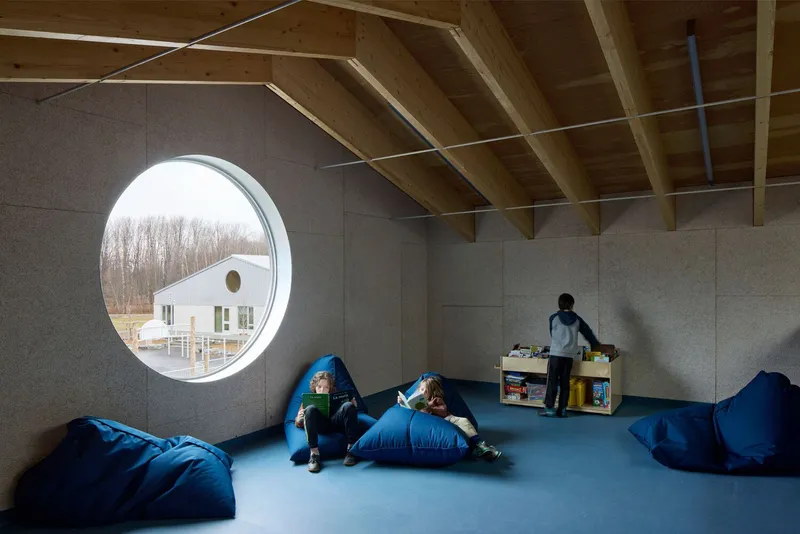
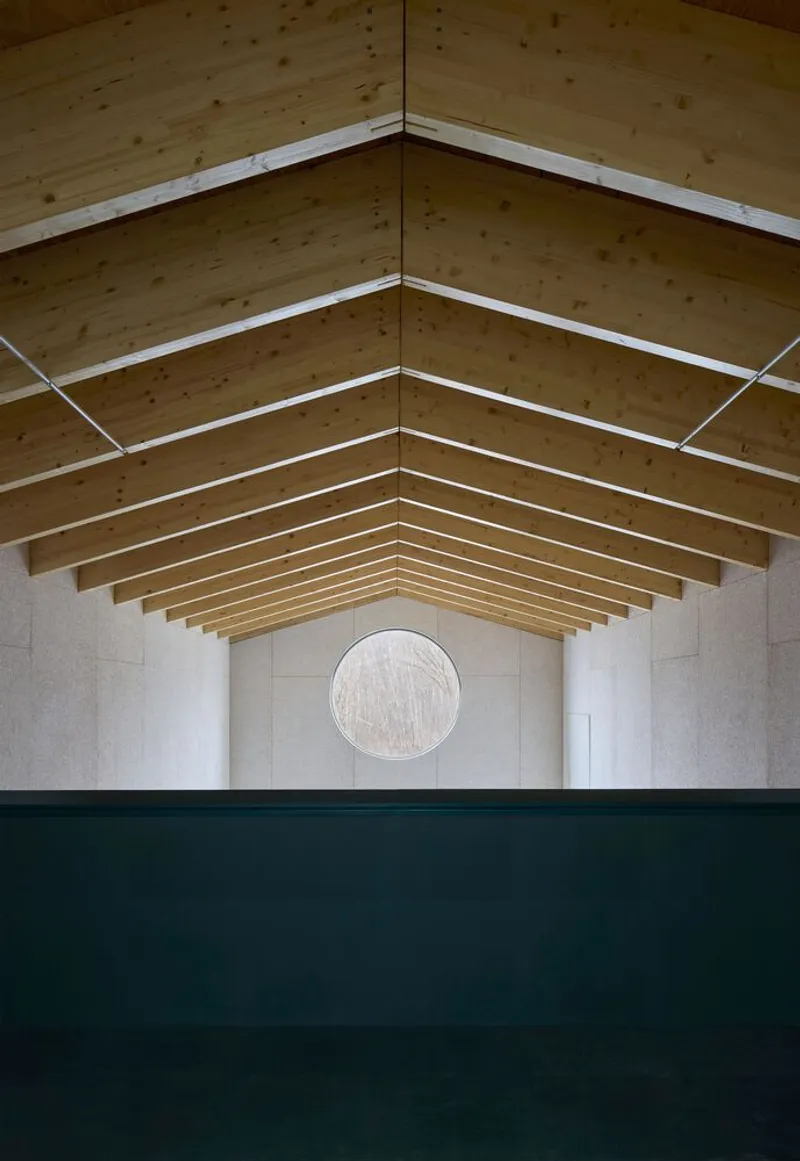
The school’s design balances two architectural intentions: simplicity in organization and complexity in spatial experience. The sloped roofs give classrooms generous ceiling heights and an uplifting sense of openness. Between pavilions, collaborative learning zones rise into double-height spaces, partially extending into mezzanines accessed by bleacher-style stairs. These shared areas, connecting four classrooms at a time, foster teamwork, flexibility, and playful learning.
A Civic Pavilion for Shared Community Functions
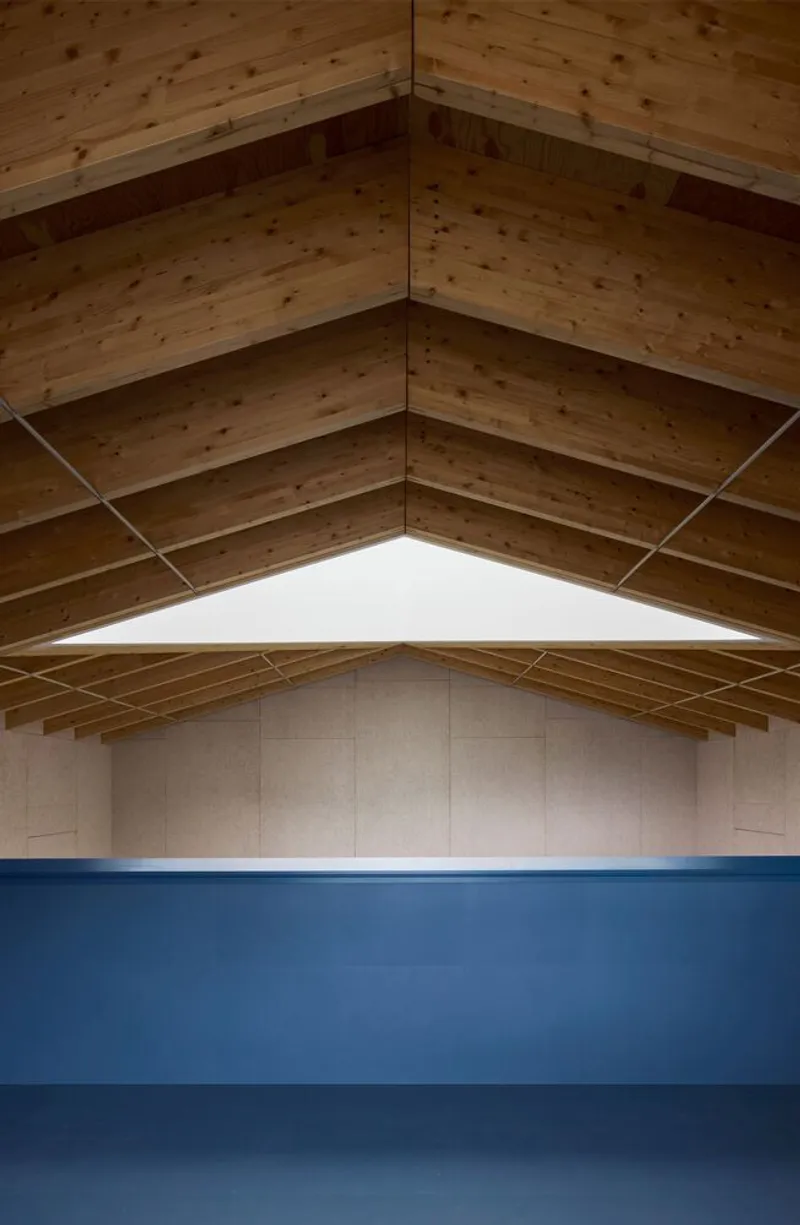
At the heart of the campus lies the main pavilion, which accommodates reception, administration, daycare facilities, and shared program elements. The double-height common space anchors the building, merging everyday circulation with open gathering areas. A sculpted stepped zone transitions from the ground-floor courtyard connection to an elevated, more intimate mezzanine. From here, a dramatic skylight frames Mount Shefford, turning the landscape into an integral part of the architecture.
Below, the gymnasium is strategically placed in the basement, yet remains visually connected to the circulation above, thanks to interior transparency and widened corridors furnished with integrated seating for small-group activities.
Bioclimatic Strategies Rooted in Vernacular Wisdom
École du Zénith uses passive environmental strategies to minimize energy consumption. The classrooms’ expansive openings maximize daylight while eliminating the need for mechanical cooling. Roof overhangs control solar gain, creating comfortable environments throughout the seasons.
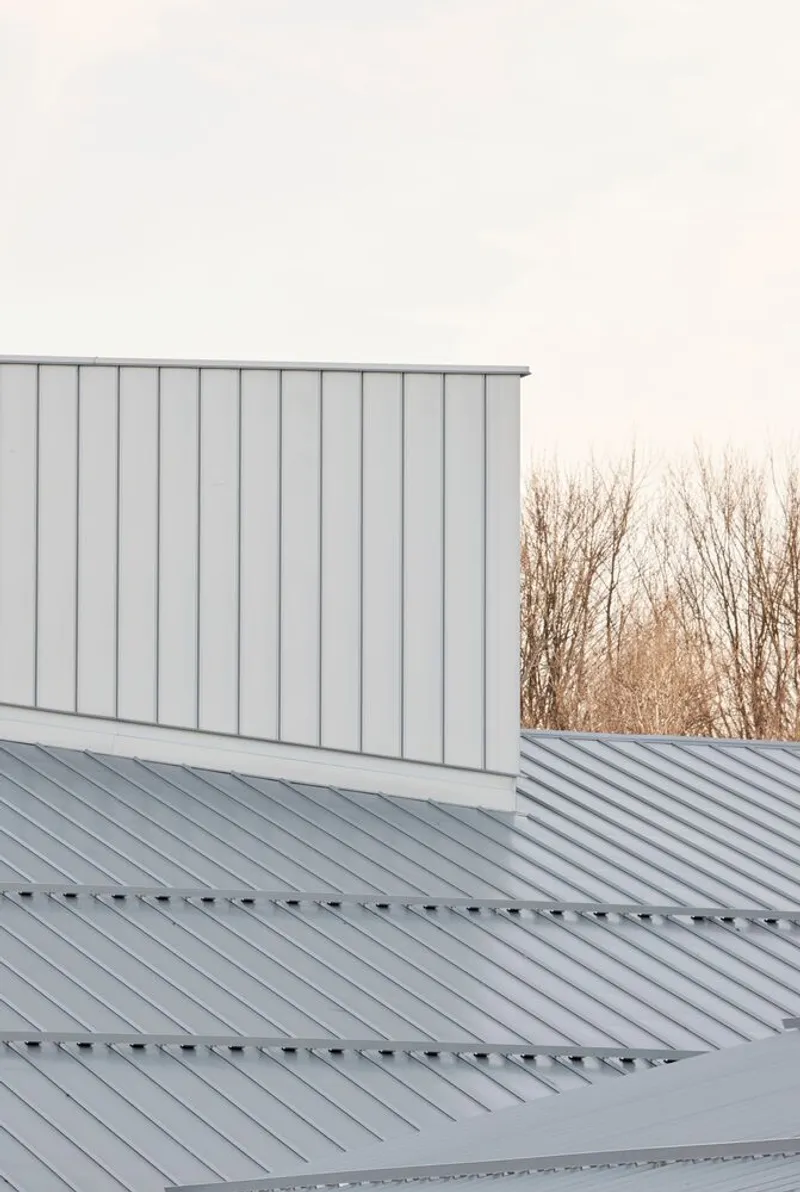
Large triangular chimneys mark each pavilion. More than skylights, these elements function as bioclimatic ventilation devices: warm air naturally rises into the chimneys through the sloped roof geometry before being evacuated. This system reduces energy loads while bathing interior spaces in balanced, zenithal light.
The school’s sloped roofs and low volumes echo the region’s agricultural vernacular, not through imitation, but through archetypal forms that feel familiar and welcoming to children. The design creates a cultural bridge between the school environment and the surrounding community.
A Warm, Welcoming, and Child-Centered Architecture
École du Zénith is more than a school building, it is an immersive landscape-architecture hybrid that elevates everyday learning. Through its careful integration of pavilions, nature, bioclimatic strategies, and flexible interior spaces, the project establishes a new benchmark for educational design in Quebec. It cultivates belonging, curiosity, and environmental awareness, inviting children to learn through both architecture and landscape.
All photographs are works of James Brittain


Popular Articles
Popular articles from the community

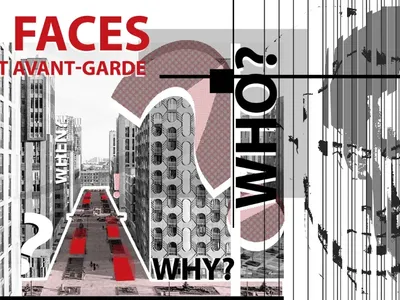
Faces of the Soviet Avant-Garde: Turning Moscow's Street Names into an Open-Air Museum
A network of sculptural installations across a Moscow residential district transforms forgotten architect names into spatial encounters with cultural memor

Extended Shell: Retrofitting Kolkata's Balconies as Living Urban Thresholds
A modular retrofit system recovers the social and environmental intelligence of Kolkata's historic verandas for contemporary Park Street residents.

Temporary Home for Dogs: A Reversed Zoo Rethinks Animal Shelter Architecture
In Bucharest, a sinuous corridor and freed landscape flip the logic of containment, designing a shelter that works to make itself unnecessary.

Opera on the Sea: Driftwood Logic Shapes a Timber Opera House on Estonia's Coast
Trevor Orgill's opera house translates the entangled drift of floating timber into a civic building where wood, water, and music converge.

Similar Reads
You might also enjoy these articles


Hodi-Mandai Geram
Project Function: Preservation and revitalization of the Intangible heritage and socio-spatial identity of the Hodi by Housing, Cultural Memory Center, Sacred Grove, landscape, local tourism economy


Olio Towers: A Mid-Rise for Performers That Fuses Housing, Rehearsal, and Stage
Located blocks from Houston's Theater District, this modular tower stacks living units around a central performance atrium.

Oasis: Modular Green Housing Carved into Dhaka's Urban Fabric
A shortlisted Plugin Housing entry reclaims unauthorized settlements in Dhaka with stepped concrete volumes, green roofs, and ventilation-driven design.

Black Hole: A Floating Megastructure for the Post-Physical Era
Emiliano Mazzarotto envisions a spherical, self-scaling arena where e-sports, digital hotels, and holographic stadiums replace traditional public space.

Explore Pont-Aven School Competitions
Discover active competitions in this discipline

Challenge to design public laboratory

Challenge to reimagine the Iron Throne

Photograph architecture without architects

Illustrate the lost glory of Angkor Wat - Render Challenge
Comments (0)
Please login or sign up to add comments
No comments yet. Be the first to comment!