
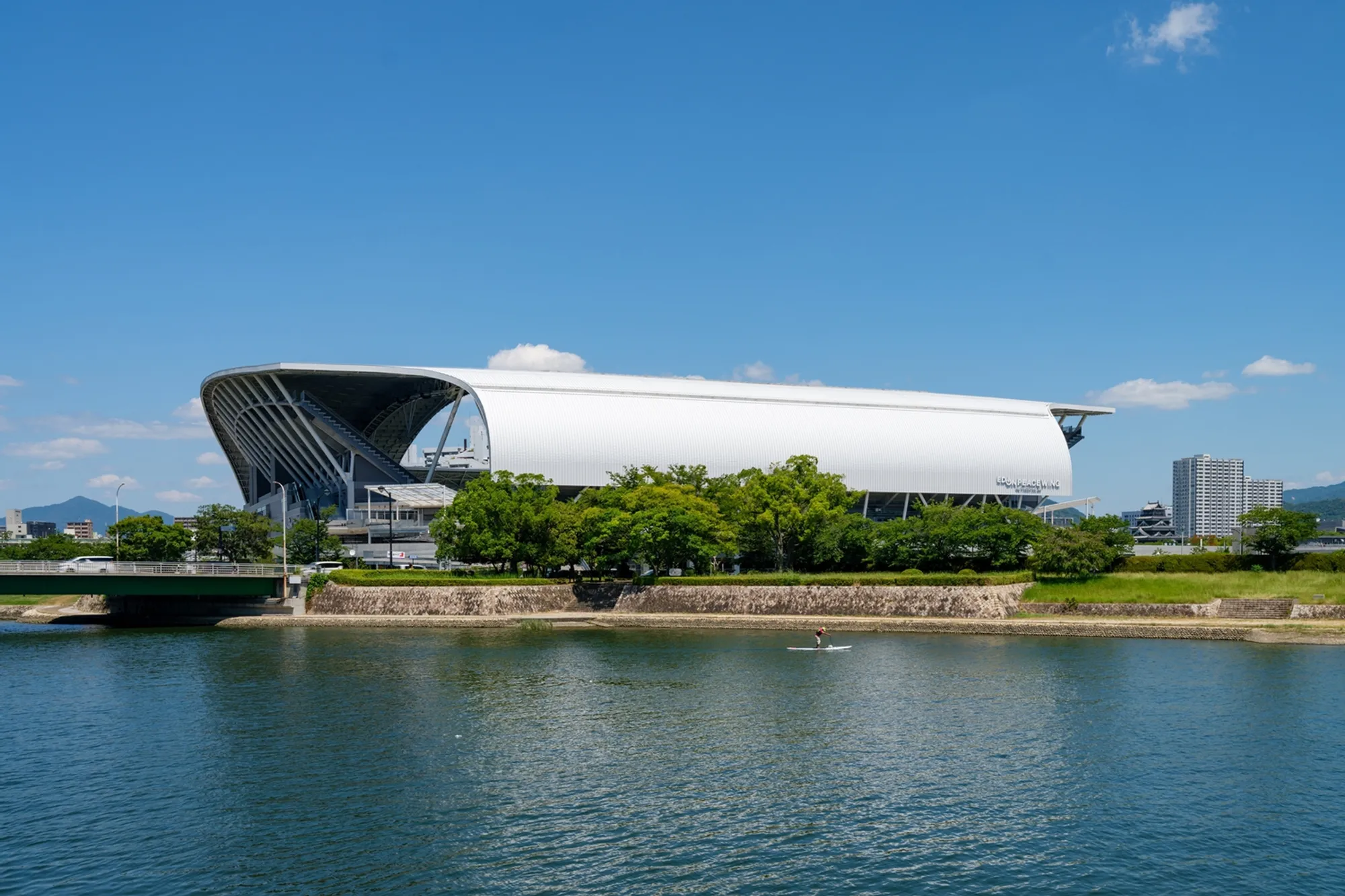
Edion Peace Wing Hiroshima: A Symbol of Peace and Urban Connectivity
Edion Peace Wing Hiroshima redefines urban stadium design, symbolizing peace through dynamic architecture, community integration, and sustainable public space connectivity.


TOHATA ARCHITECTS & ENGINEERS, INC. + ENVIRONMENT DESIGN INSTITUTE + TAISEI DESIGN Planners Architects & Engineers
A New Urban Landmark in the Heart of Hiroshima
Completed in 2023, the Edion Peace Wing Hiroshima stands as a powerful symbol of peace, community, and innovation in architecture. Designed collaboratively by TOHATA ARCHITECTS & ENGINEERS, INC., ENVIRONMENT DESIGN INSTITUTE, and TAISEI DESIGN Planners Architects & Engineers, the 65,878-square-meter stadium redefines what a sports venue can be in an urban context. Located near the iconic Atomic Bomb Dome, this contemporary landmark embodies the spirit of an International Peace Culture City, blending civic vitality with architectural grace.

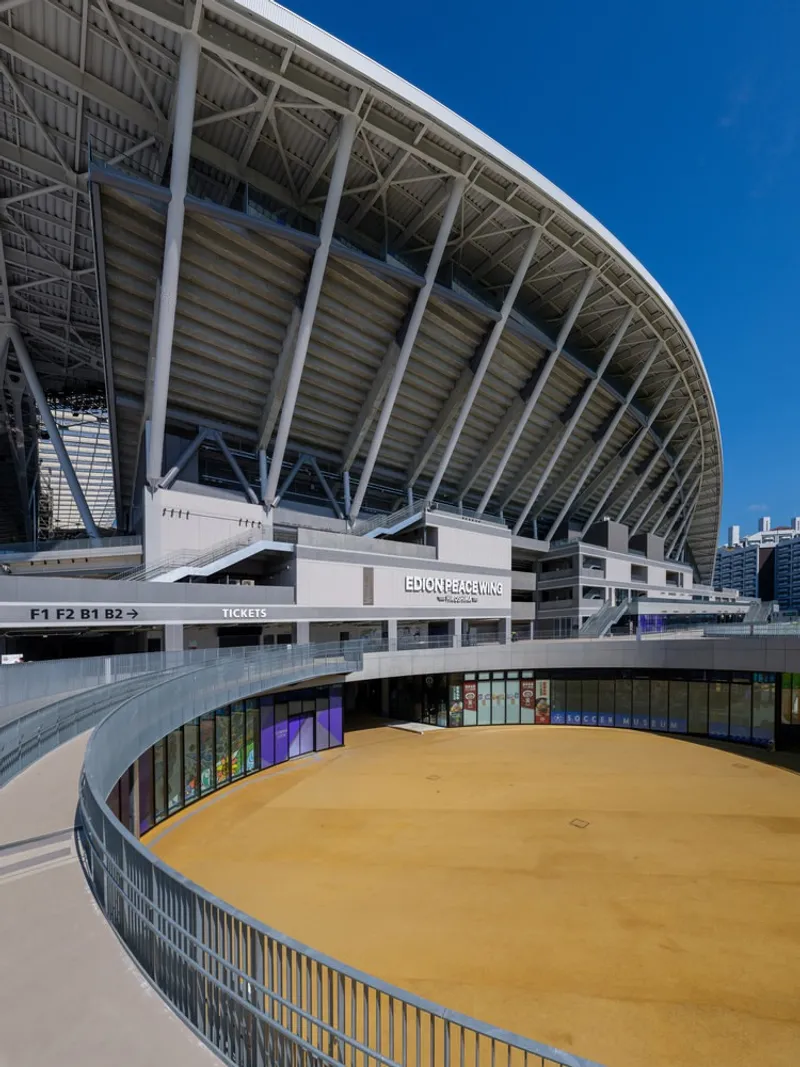
The architects envisioned an “urban stadium park” — not a structure used only on game days, but a vibrant public destination open year-round. The facility houses an athletic field for international matches, spectator stands for 28,500 visitors, circular concourses, a museum, and shops designed to foster social activity beyond sports events.
Connecting the City: Urban Integration and Accessibility
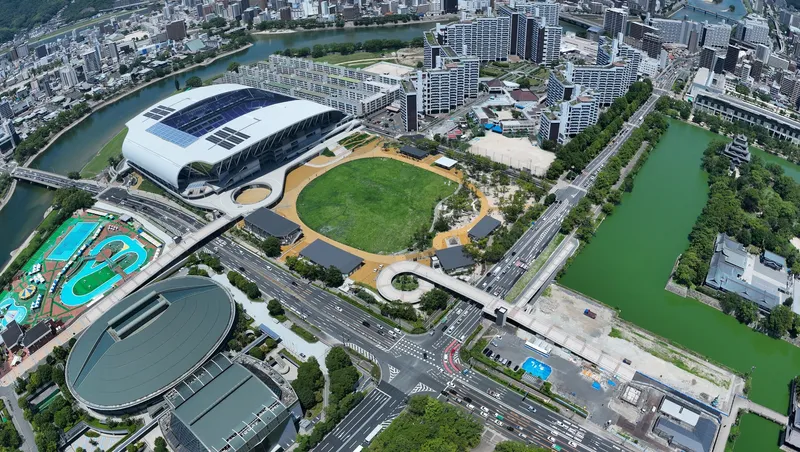
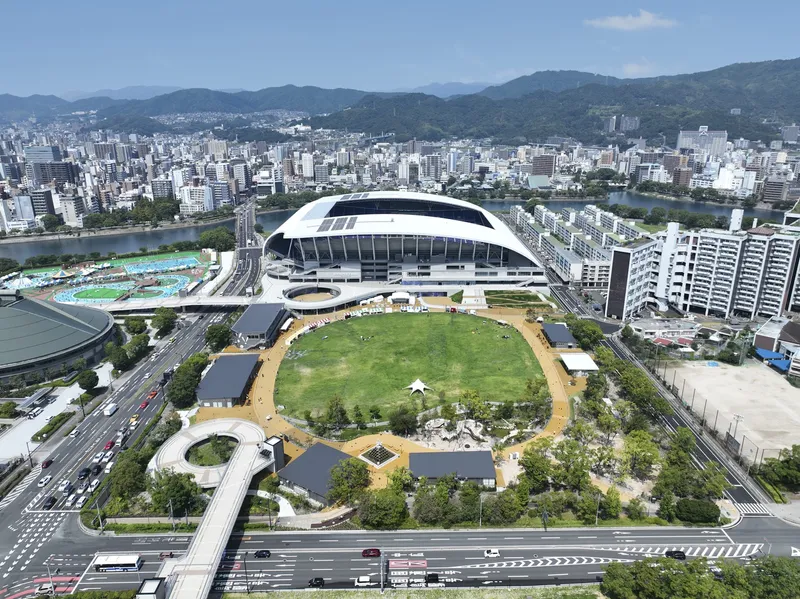
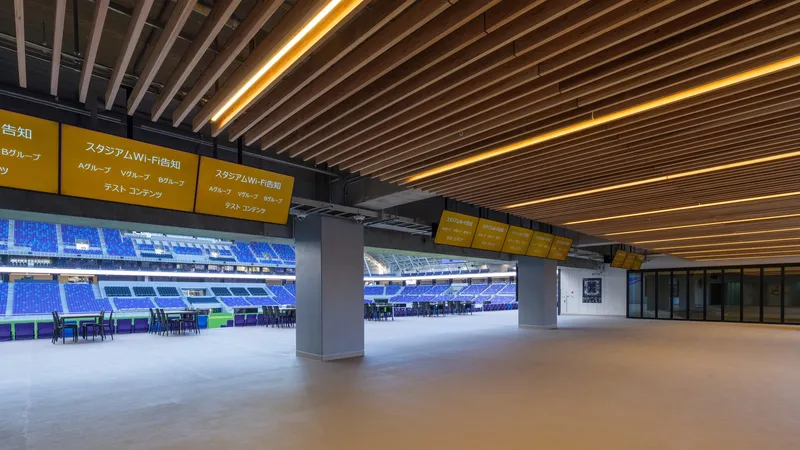
The Edion Peace Wing Hiroshima is oriented north-south to meet international stadium standards and is positioned to the west of Central Park, linking directly to a new Lawn Plaza on the east. A second-floor park concourse allows citizens to stroll between the riverfront of the Old Ota River channel and the park, even on non-event days.
This architectural strategy transforms the stadium into a continuous urban promenade, integrating daily pedestrian movement into the structure itself. On the third floor, a 10-meter-wide main concourse enables smooth circulation during events while also serving as a viewing path that connects multiple areas of the stadium. Together, the dual-level circulation system creates a stadium that feels open, accessible, and civic — a true stadium park woven into Hiroshima’s urban life.
Civic Accessibility and Pedestrian Experience
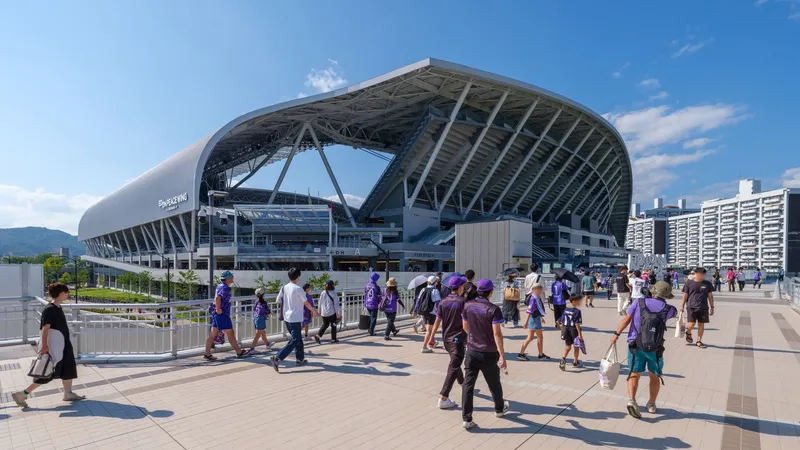
The stadium’s south-facing entrance opens toward Peace Memorial Park, shopping districts, and cultural corridors. A 10-meter-wide pedestrian deck extends along Jonan Street, creating a direct link to the park concourse and encouraging foot traffic from the city center.
On the east side, an 8-meter-wide deck connects visitors to Hiroshima Castle and JR Shin-Hakushima Station, ensuring smooth accessibility for both locals and tourists. The surrounding 2.3-hectare Lawn Plaza was designed as a next-generation urban park, emphasizing disaster preparedness, environmental sustainability, and recreational use.
Design Concept: The “Wings of Peace”
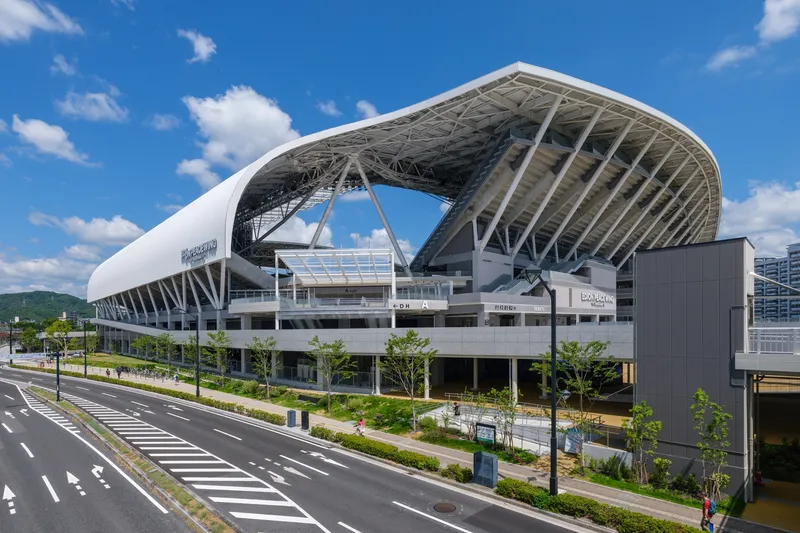
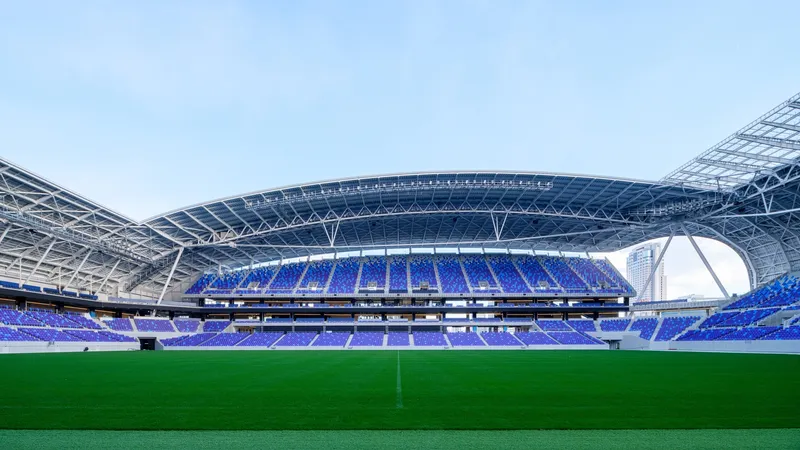
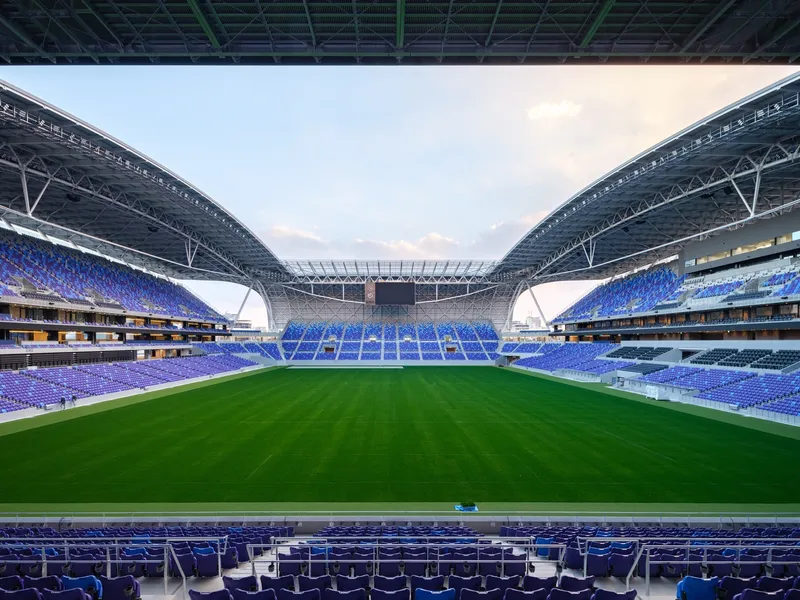
The stadium’s striking roof design embodies the project’s symbolic heart — the “Wings of Peace.” The large, gently curved roof is structured as a beam-string system, resembling a bow about to release an arrow. This imagery references the “Lesson of Three Arrows”, a story from Mouri Motonari, a feudal lord associated with Hiroshima during Japan’s Sengoku period.
From its two open southern corners, the roof’s dynamic form seems to unfold toward the city, radiating energy, unity, and optimism. The design not only provides shelter and comfort but also projects Hiroshima’s message of resilience and peace into the urban landscape.
Everyday Vibrancy and Community Connection
More than just a sports venue, the Edion Peace Wing Hiroshima acts as a cultural and social hub. Facilities such as the Field View Terrace, Stepped Terraces, and open-access retail spaces promote activity, relaxation, and community gathering on both event and non-event days.
Through this integration of architecture, landscape, and public space, the design team created a multifunctional civic infrastructure that supports active living, tourism, and cultural exchange — ensuring the stadium remains alive with people and purpose throughout the year.

The Edion Peace Wing Hiroshima exemplifies a new model for urban stadium architecture — one that transcends sports to embrace peace, community, and connectivity. Its symbolic roof structure, integrated public spaces, and sustainable design principles make it a landmark of civic identity and architectural innovation.
By merging the energy of sports with the tranquility of urban green spaces, this project reaffirms Hiroshima’s role as a city of peace, inspiring both residents and visitors with a powerful architectural gesture that soars beyond the game.

All photographs are works of Kenchikusya, Nacasa & Partners




Popular Articles
Popular articles from the community


The Ocean Hive: Sustainable Architecture for a Self-Sufficient Civilization at Sea
The Ocean Hive imagines sustainable architecture at sea, where modular habitats, algae, wave power and ocean waste sustain a growing colony.

EW PARK: Sustainable Architecture Reimagines the Future of Urban Parking
EW PARK reimagines city parking as a modular wooden tower combining automation, solar energy, electric mobility, and adaptable urban design.

Hill & Cross Opera: Sculptural Opera House Architecture Shaped by Tallinn’s Landscape and Identity
Hill & Cross Opera reimagines opera house architecture in Tallinn through its sculptural hill, civic plaza, glass wave and a luminous cross.

Co-life: Sustainable Architecture for Age-Friendly Community Living
Co-life reimagines sustainable architecture for seniors through courtyards, rammed earth, shared gardens, and spaces designed for belonging.

Similar Reads
You might also enjoy these articles


Hodi-Mandai Geram
Project Function: Preservation and revitalization of the Intangible heritage and socio-spatial identity of the Hodi by Housing, Cultural Memory Center, Sacred Grove, landscape, local tourism economy


Olio Towers: A Mid-Rise for Performers That Fuses Housing, Rehearsal, and Stage
Located blocks from Houston's Theater District, this modular tower stacks living units around a central performance atrium.

Oasis: Modular Green Housing Carved into Dhaka's Urban Fabric
A shortlisted Plugin Housing entry reclaims unauthorized settlements in Dhaka with stepped concrete volumes, green roofs, and ventilation-driven design.

Black Hole: A Floating Megastructure for the Post-Physical Era
Emiliano Mazzarotto envisions a spherical, self-scaling arena where e-sports, digital hotels, and holographic stadiums replace traditional public space.

Explore Architecture Competitions
Discover active competitions in this discipline



Challenge to reimagine the Iron Throne


Photograph architecture without architects


Illustrate the lost glory of Angkor Wat - Render Challenge


Design challenge to reuse E-waste
Comments (0)
Please login or sign up to add comments
No comments yet. Be the first to comment!