
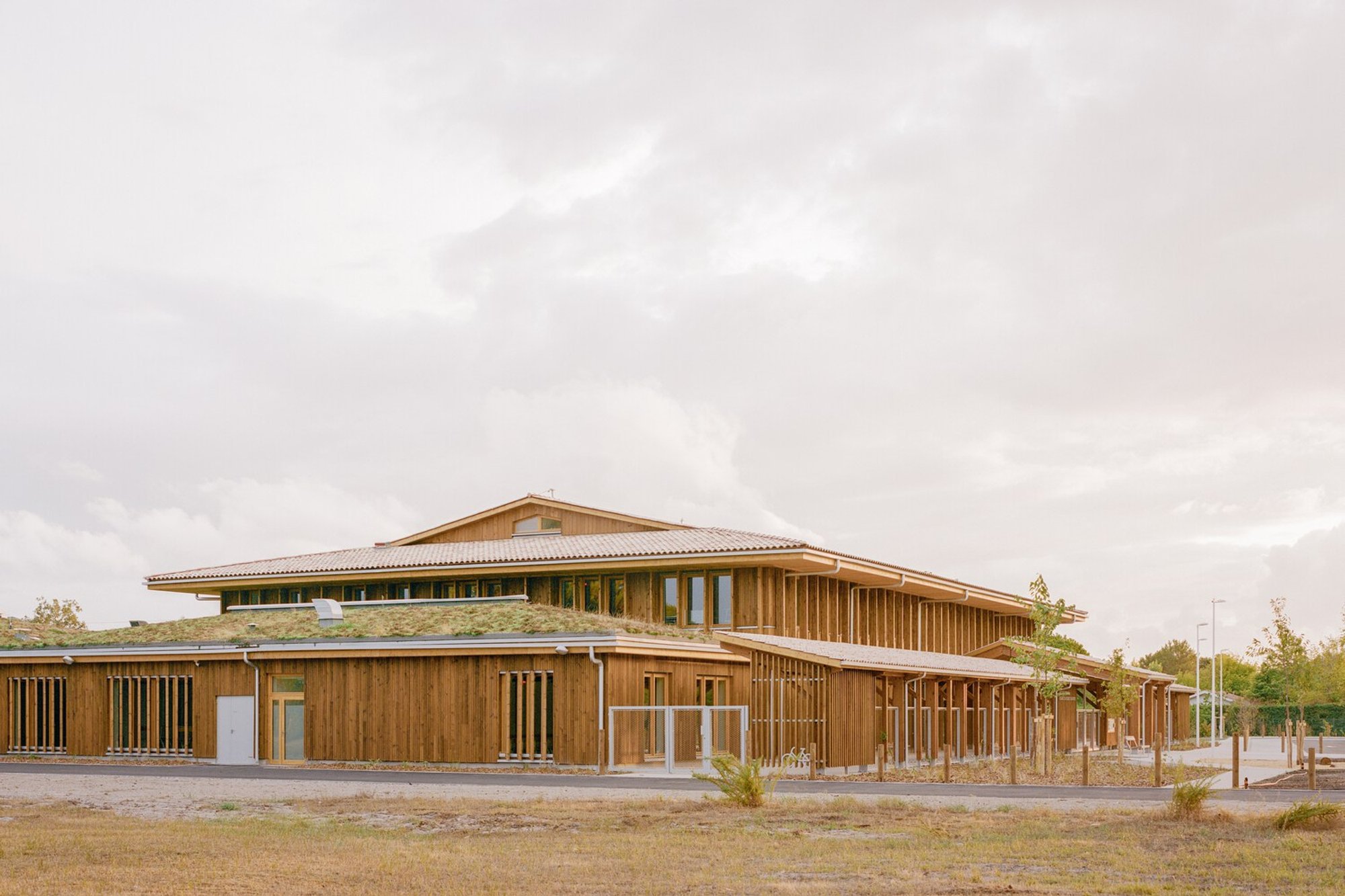
Elisabeth & Robert Badinter Elementary School: A Nature-Integrated Learning Environment in Audenge, France
Nature-immersed elementary school in Audenge with outdoor classrooms, biodiverse courtyards, and bio-based materials, fostering wellbeing, ecological learning, and sustainable education.

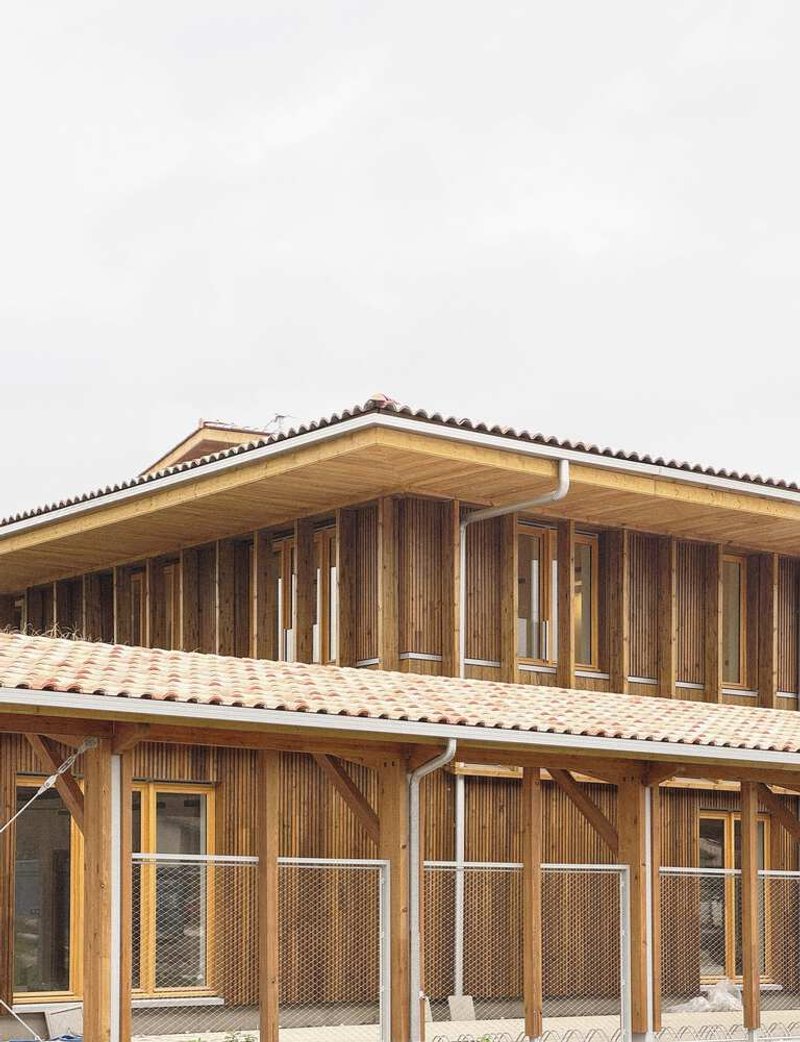
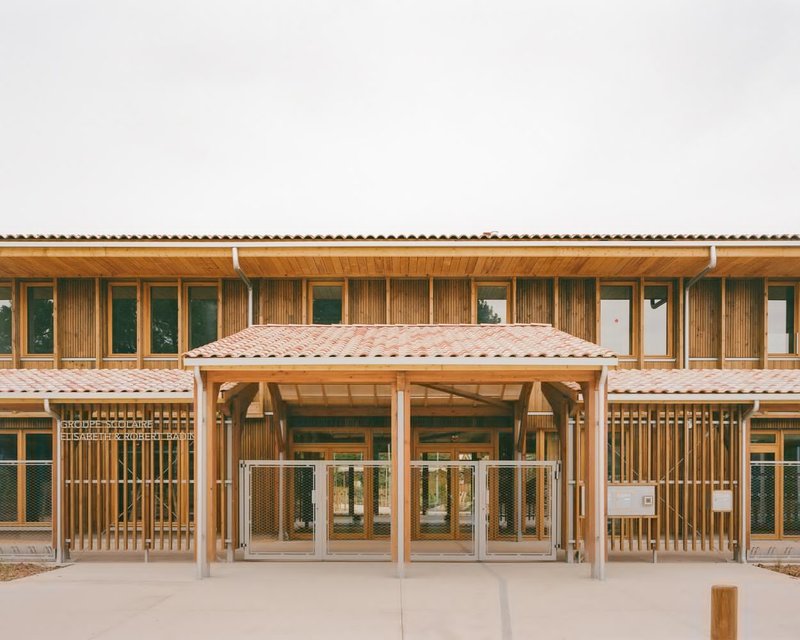
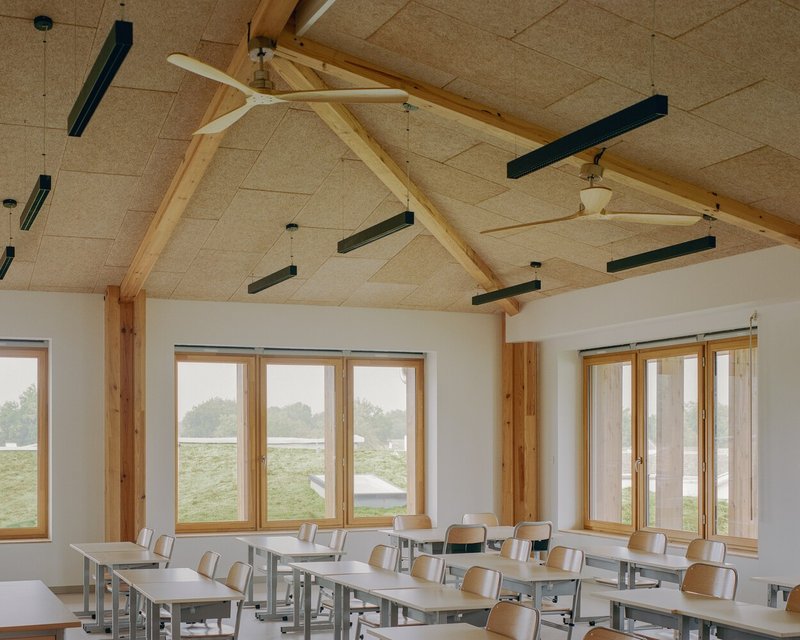
Nestled within the natural landscape of Audenge in southwestern France, the Elisabeth & Robert Badinter Elementary School by Ferron & Monnereau Architects and Atelier Besson Bolze reimagines public education architecture through an immersive connection with nature. Completed in 2025, this 2,800 m² bioclimatic school is a forward-thinking response to the social, ecological, and pedagogical challenges of contemporary education.
Rooted in the philosophy of the 20th-century French “open-air school” movement, the project champions outdoor learning, environmental awareness, and inclusive education strategies designed to nurture wellbeing, equality, and civic responsibility. Here, nature becomes both a classroom and a mentor, shaping daily interactions, play, and discovery.
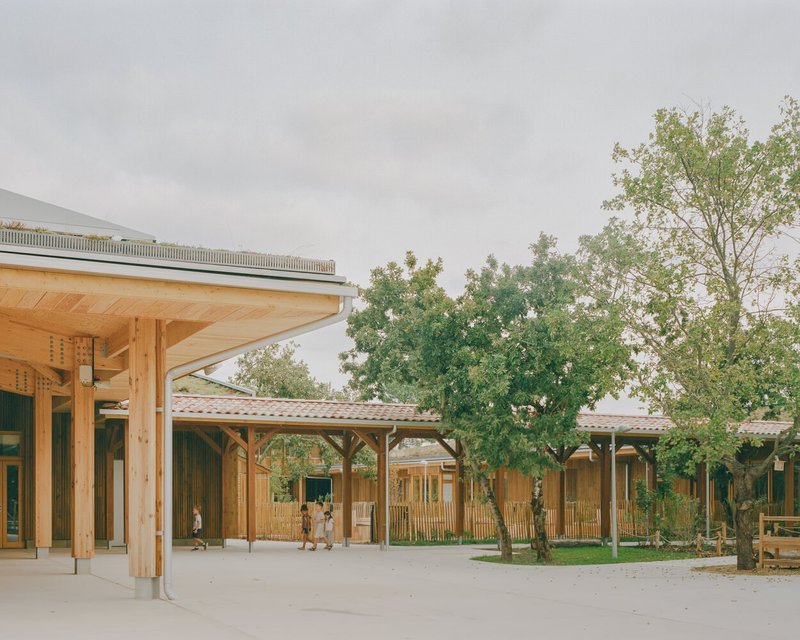
A School Built Around Living Landscape
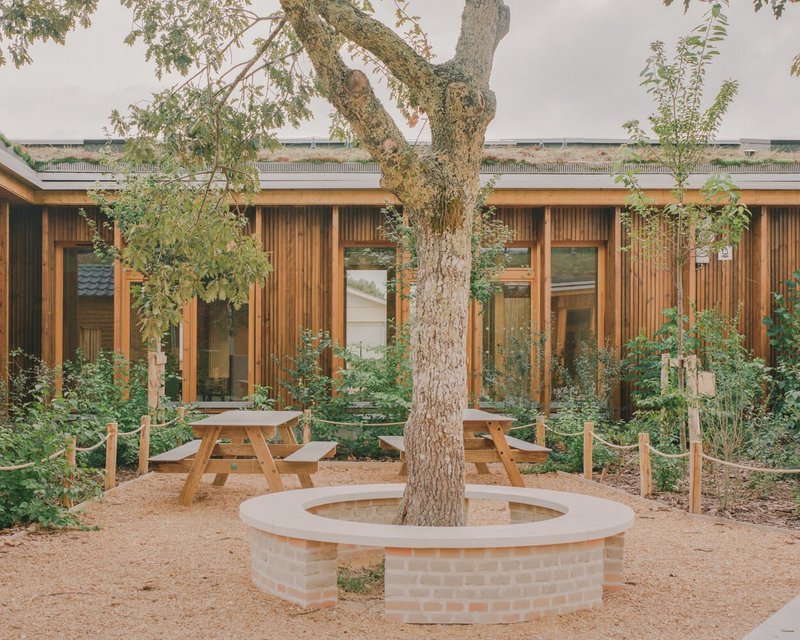
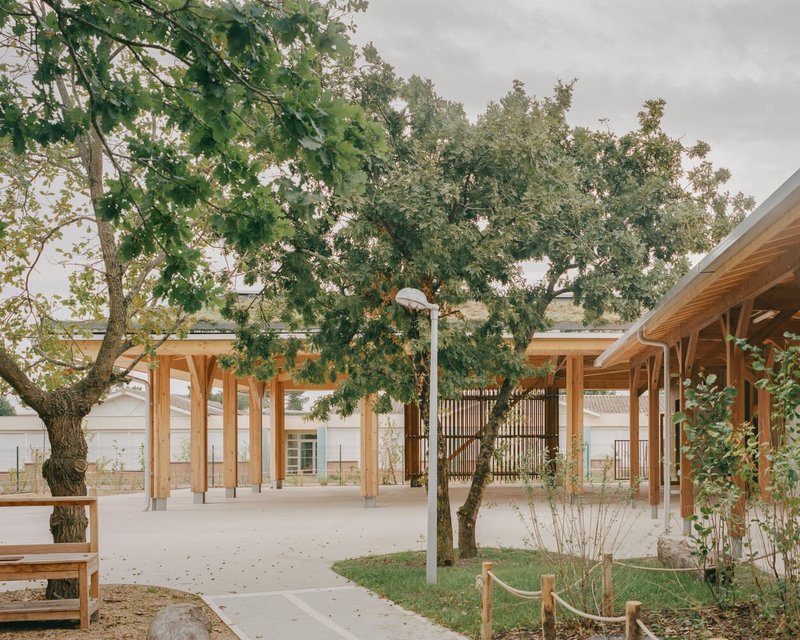
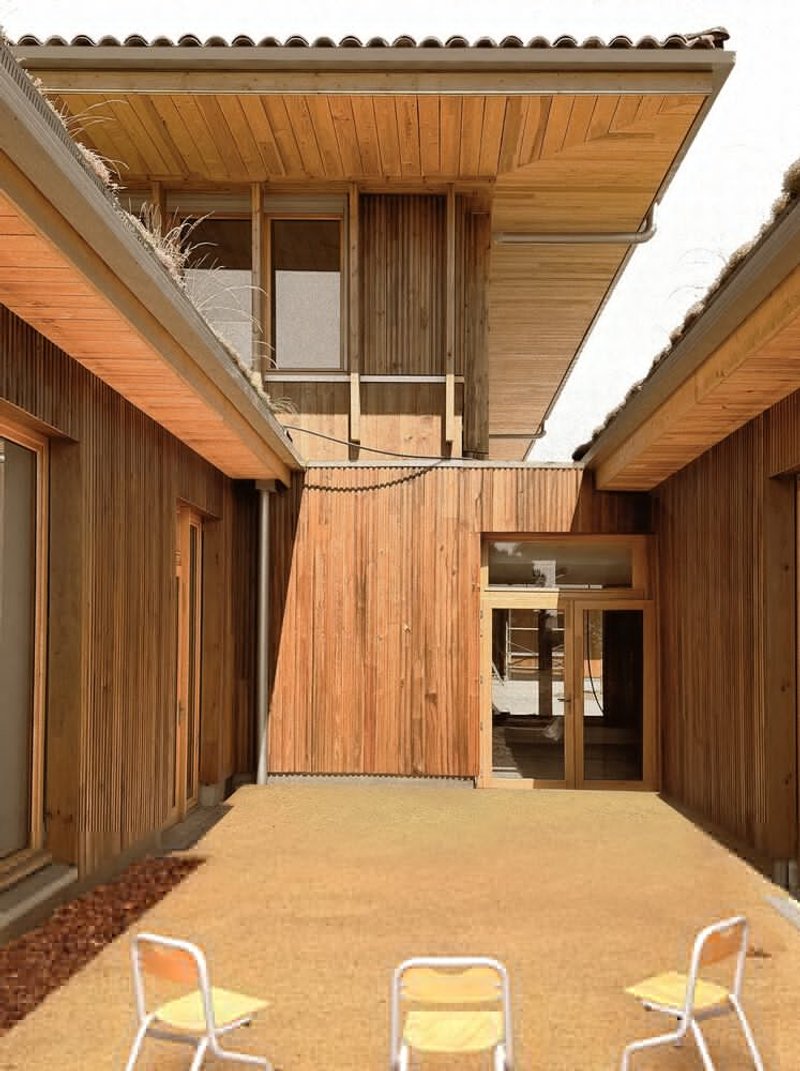
Instead of imposing a building on its site, the architects composed a U-shaped structure around a preserved woodland, creating a protected green courtyard that acts as an ecological heart and a safe learning refuge. The design embraces the existing ecosystem, allowing biodiversity to flourish and forming a seamless transition between the school grounds and the surrounding pine forests of the Landes de Gascogne.
Green roofs extend from the ground floor, creating a biodiversity corridor that connects the campus’s educational woodland with the natural forest beyond. The school becomes part of the landscape—a living, breathing learning environment.
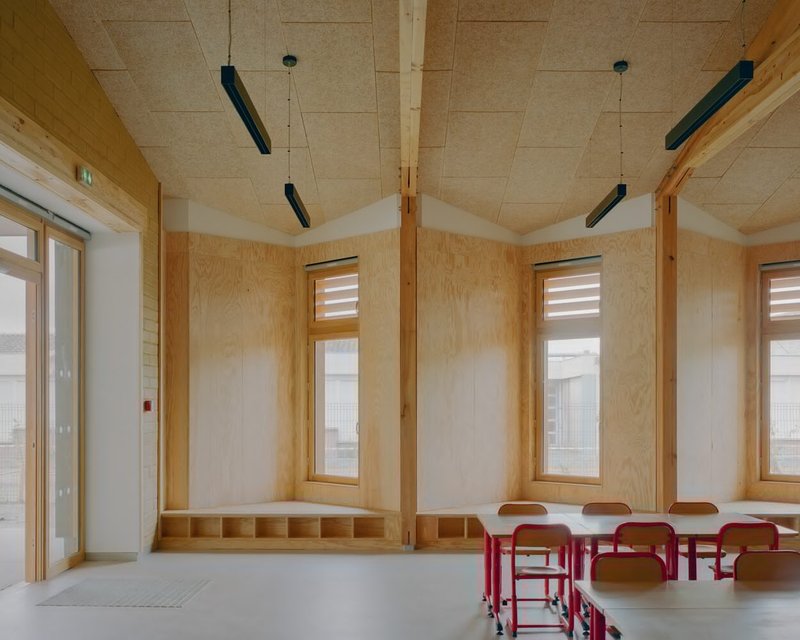
Indoor-Outdoor Learning Continuity
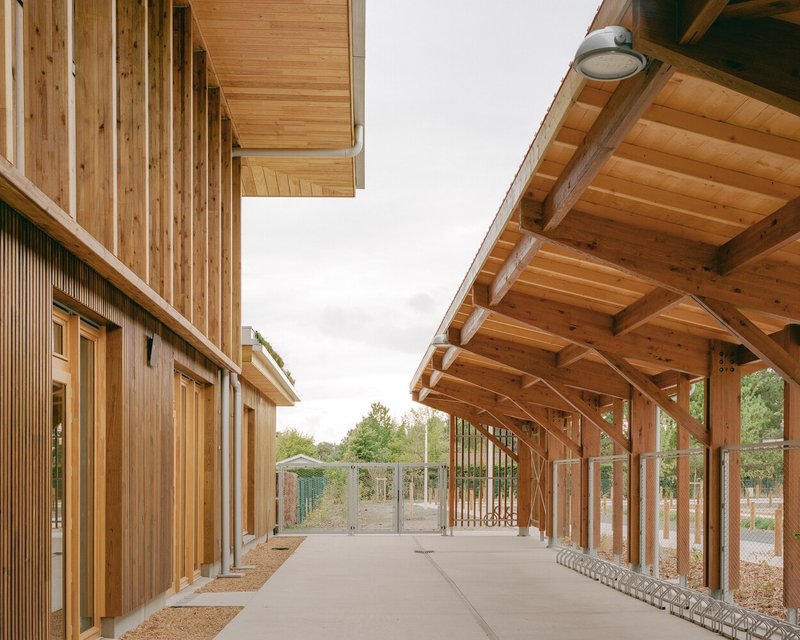
The spatial organization encourages children to move freely between interior and exterior learning settings. Large windows frame nature views and flood classrooms with daylight, while terraces, outdoor classrooms, and “oasis” playgrounds dissolve boundaries between built and natural environments.
Children learn in direct contact with the natural ecosystem—gardening in shared vegetable plots, exploring woodland paths, observing wildlife, and participating in climate and biodiversity education outdoors. This approach supports sensorial learning, ecological awareness, and emotional wellbeing, offering an alternative to traditional, enclosed academic spaces.
Local Materials and Bio-Based Construction
The school sets a benchmark for circular, low-carbon construction by prioritizing locally sourced, renewable, and natural materials. A sustainable palette includes:
- Ultra-local timber from forests in Audenge and Landes de Gascogne
- Raw earth extracted on-site
- Straw insulation from regional agricultural by-products
- Oyster-shell paving from coastal waste streams
- Reused sediment from the Arcachon Basin
This robust material strategy reinforces the building’s connection to place while drastically reducing embodied carbon. The architecture serves as a living showcase of bio-based, geo-based, and reused materials—turning the campus itself into a lesson in environmental stewardship.
Child-Centered, Inclusive, and Future-Forward Design
Designed at a child-friendly scale, the school prioritizes physical comfort, emotional wellbeing, and sensory engagement. Flexible learning spaces support collaborative teaching models, while outdoor environments promote independence, curiosity, and social interaction.
This inclusive setting fosters awareness of climate issues, citizenship, and community values, equipping students to become responsible stewards of their environment and future.
A Prototype for Next-Generation Public Schools
The Elisabeth & Robert Badinter Elementary School embodies a transformative vision for public education in France. It is:
- Bioclimatic and resilient
- Anchored in site and community
- Low-carbon and circular economy-driven
- Human-centered and pedagogically innovative
All photographs are works of Charles Bouchaïb



Popular Articles
Popular articles from the community

GGR Architectes Anchors a New Neighborhood in Frouzins with a Brick and Timber School Complex
A cruciform plan of terracotta brick and exposed wood frames four courtyards for 140 students outside Toulouse, France.
Inside a Timeless Mumbai Residence by Aether Studio
Aether Studio's 2,250 sq ft apartment in Malad, Mumbai uses marble, brass, boucle, and disciplined restraint to build a quiet retreat from the city.
Cro&Co Architecture Builds a 150-Meter Tower on Top of a Seven-Lane Highway in La Défense
Trinity Tower reimagines the office high-rise as a bioclimatic organism threaded with terraces, trees, and public ground in Paris's business district.
R/URBAN DESIGN OFFICE Carves a Communal Living Room from a Tokyo Corporate Dormitory
In Shinagawa's Oi district, a 35-year-old reinforced concrete tower becomes a 49-unit rental residence with shared spaces that redefine cohabitation.


Similar Reads
You might also enjoy these articles

Olio Towers: A Mid-Rise for Performers That Fuses Housing, Rehearsal, and Stage
Located blocks from Houston's Theater District, this modular tower stacks living units around a central performance atrium.
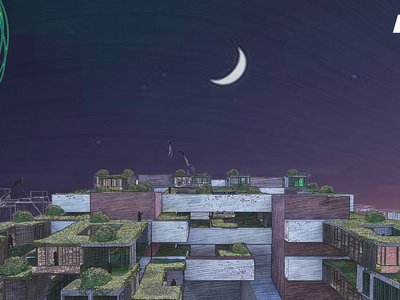
Oasis: Modular Green Housing Carved into Dhaka's Urban Fabric
A shortlisted Plugin Housing entry reclaims unauthorized settlements in Dhaka with stepped concrete volumes, green roofs, and ventilation-driven design.

Black Hole: A Floating Megastructure for the Post-Physical Era
Emiliano Mazzarotto envisions a spherical, self-scaling arena where e-sports, digital hotels, and holographic stadiums replace traditional public space.
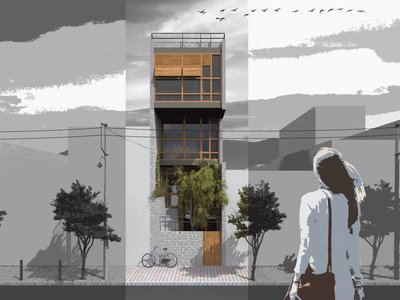
Compact & Sustainable Living in Piraeus: A Four-Level Family Home Built Around Light and Air
A narrow townhouse in one of Greece's densest port cities uses a central atrium and passive strategies to house three generations under one roof.


Explore Architecture Competitions
Discover active competitions in this discipline




The International Standard for Design Portfolios


The Global Benchmark for Architecture Dissertation Awards


The Global Benchmark for Graduation Excellence


Challenge to design public laboratory
Comments (0)
Please login or sign up to add comments
No comments yet. Be the first to comment!