
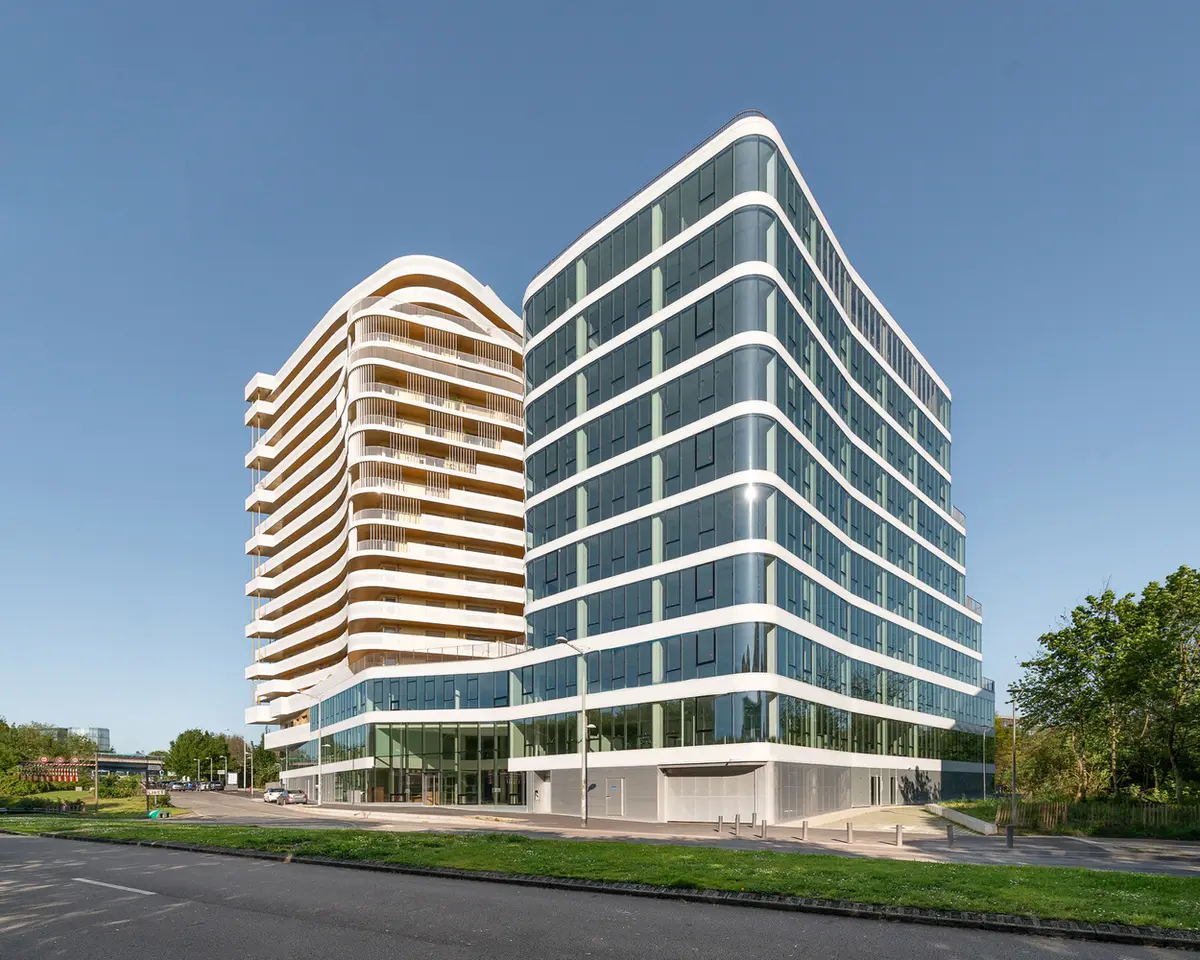
Emblem Building by Hamonic + Masson & Associés: A Landmark of Mixed-Use Urban Innovation in Lille
The Emblem Building in Lille blends curved mixed-use design, offices, residential units, and sustainable landscaping, creating a modern, connected urban landmark.


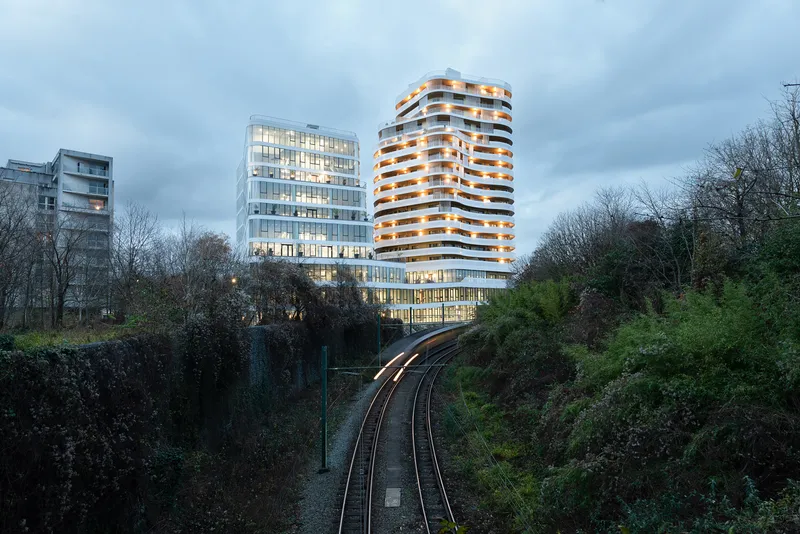
Located at the strategic confluence of road and rail infrastructures near Parc Matisse in Lille, France, the Emblem Building by Hamonic + Masson & Associés emerges as a transformative gateway to the city. Completed in 2024, this 17,000 m² mixed-use architectural project masterfully blends residential, office, and public urban functions, reflecting Lille’s forward-thinking urban ambitions.
Innovative Mixed-Use Design Integrating City and Nature
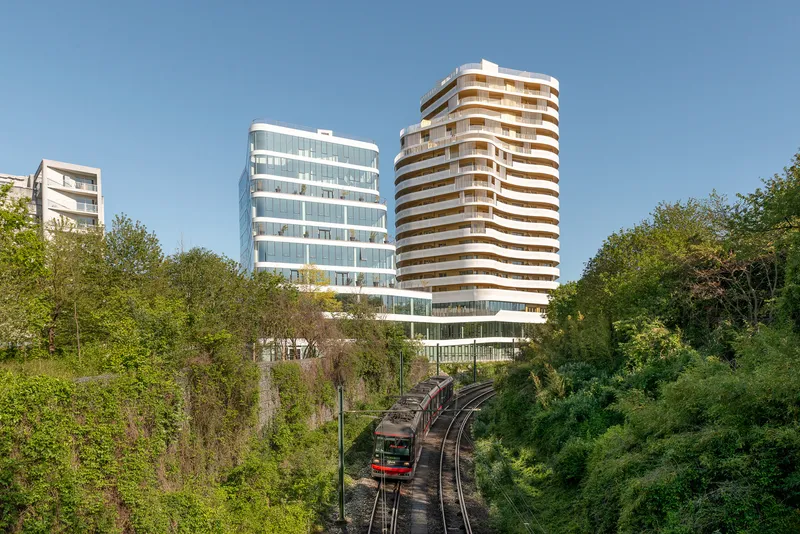
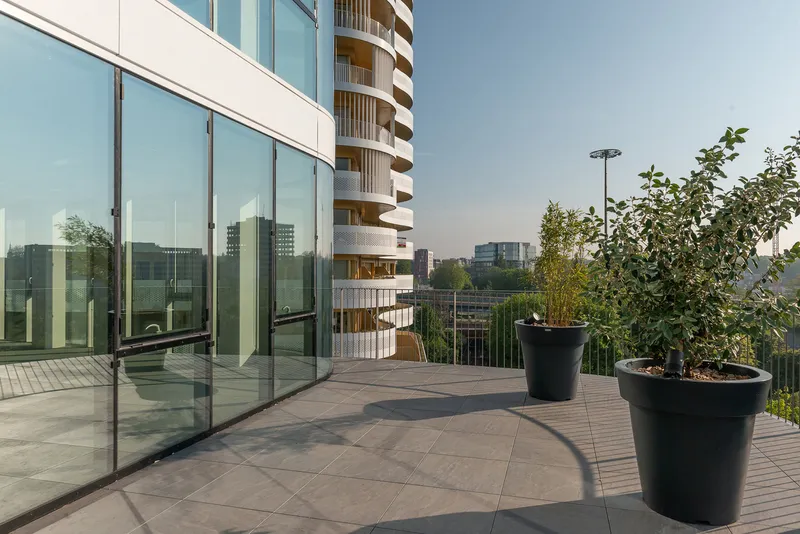
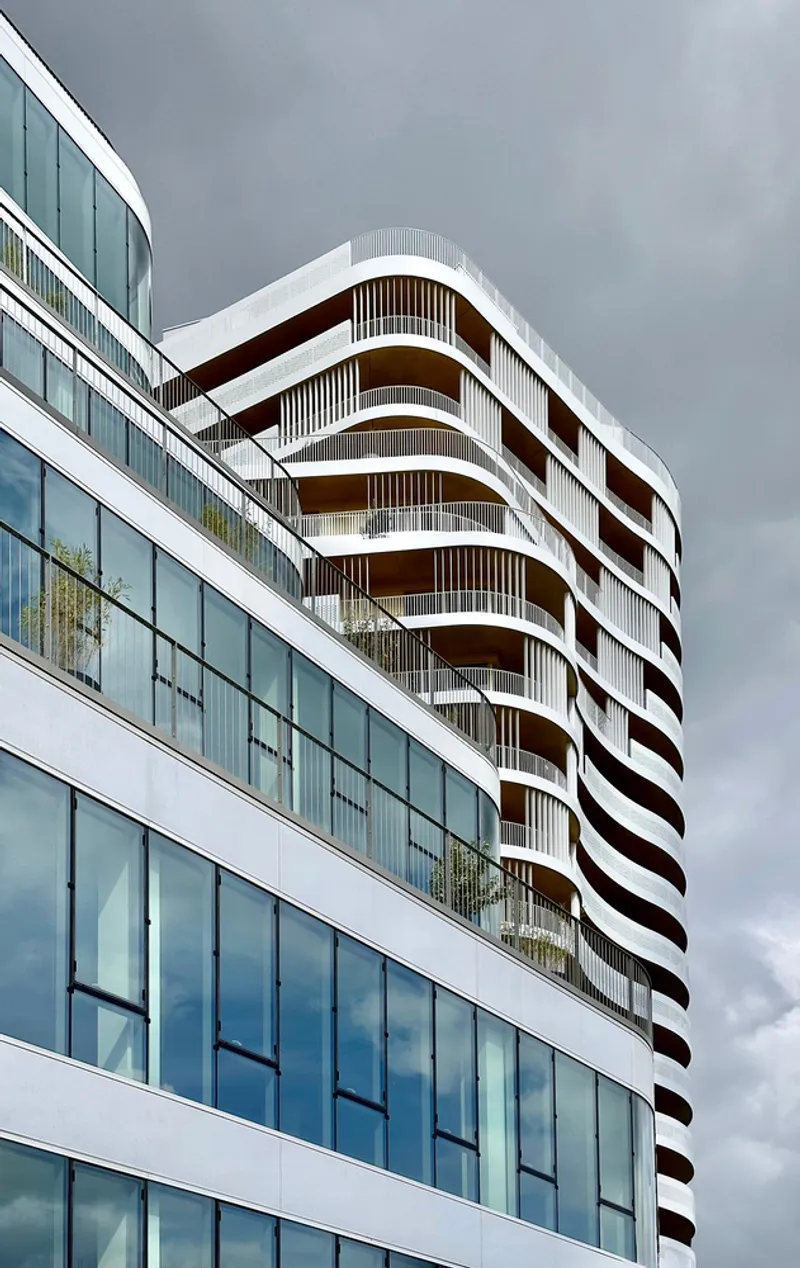
The Emblem Building stands as a true synthesis of urban planning and architectural innovation. Its design responds directly to its context, connecting multiple urban flows: pedestrian pathways, bicycle lanes, vehicle routes, buses, trams, and trains, while harmonizing with the organic landscape of Parc Matisse. The building’s curved morphology ensures seamless integration with the surrounding environment, enhancing local connectivity and urban cohesion.
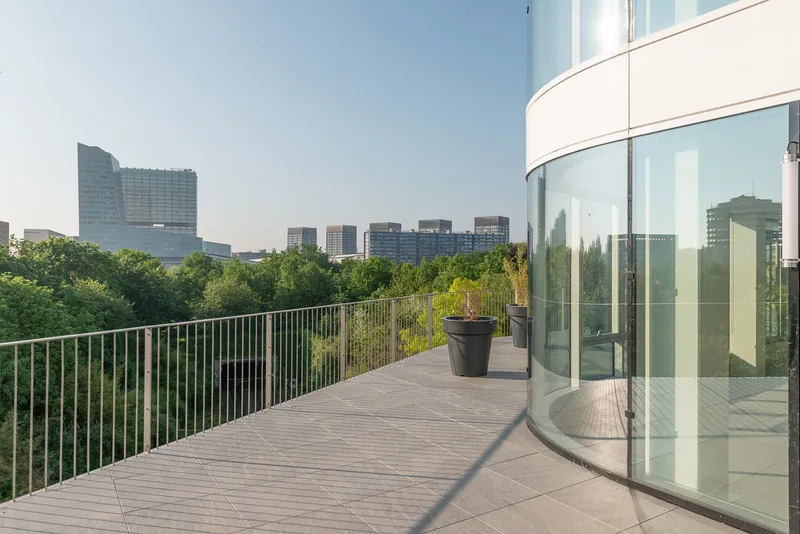
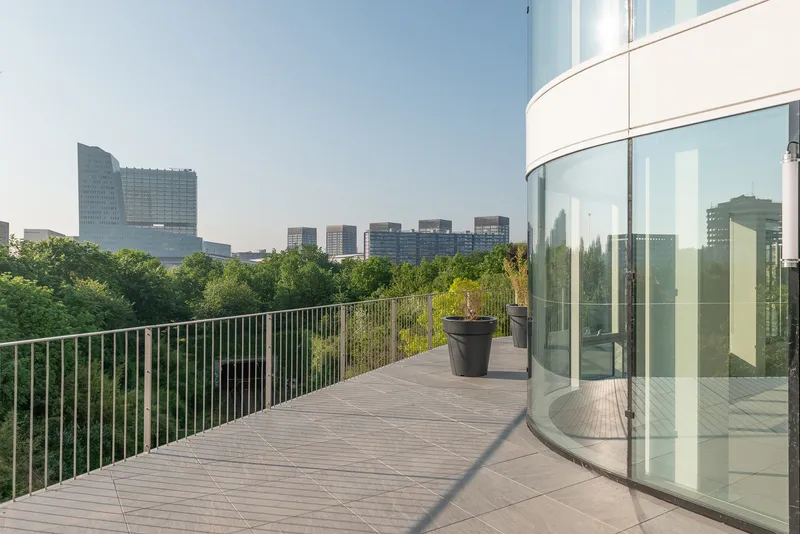
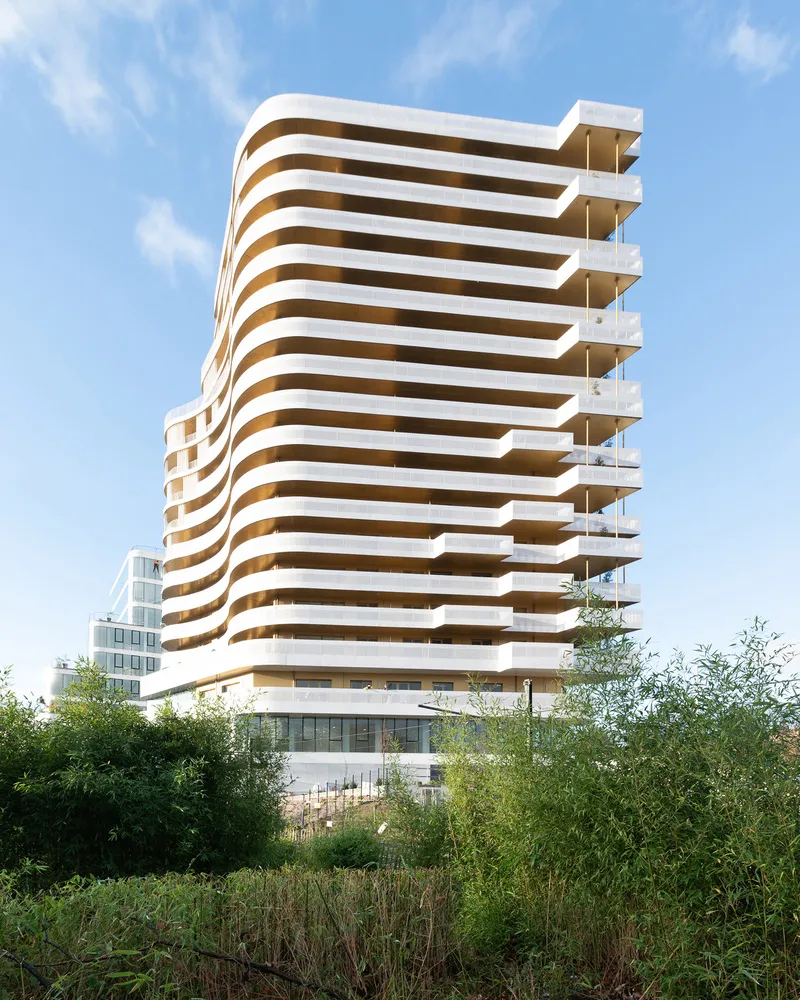
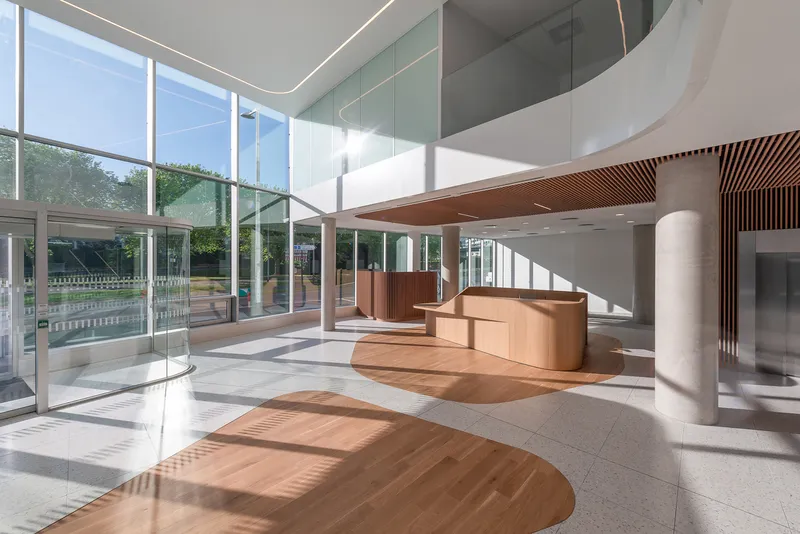
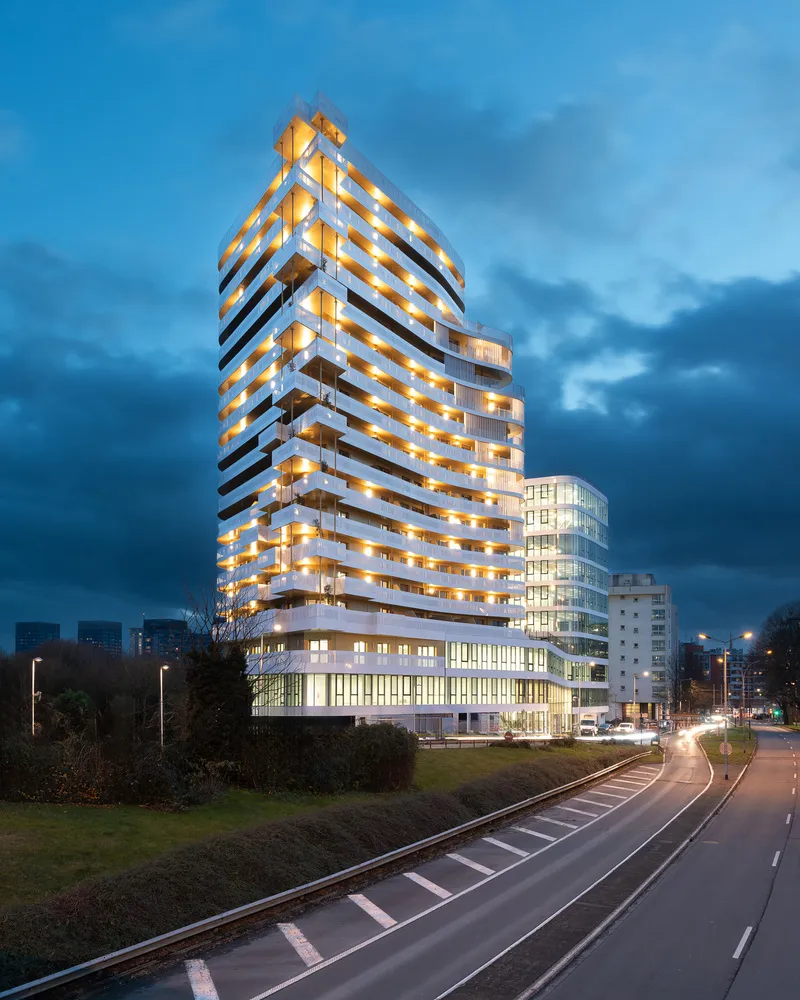
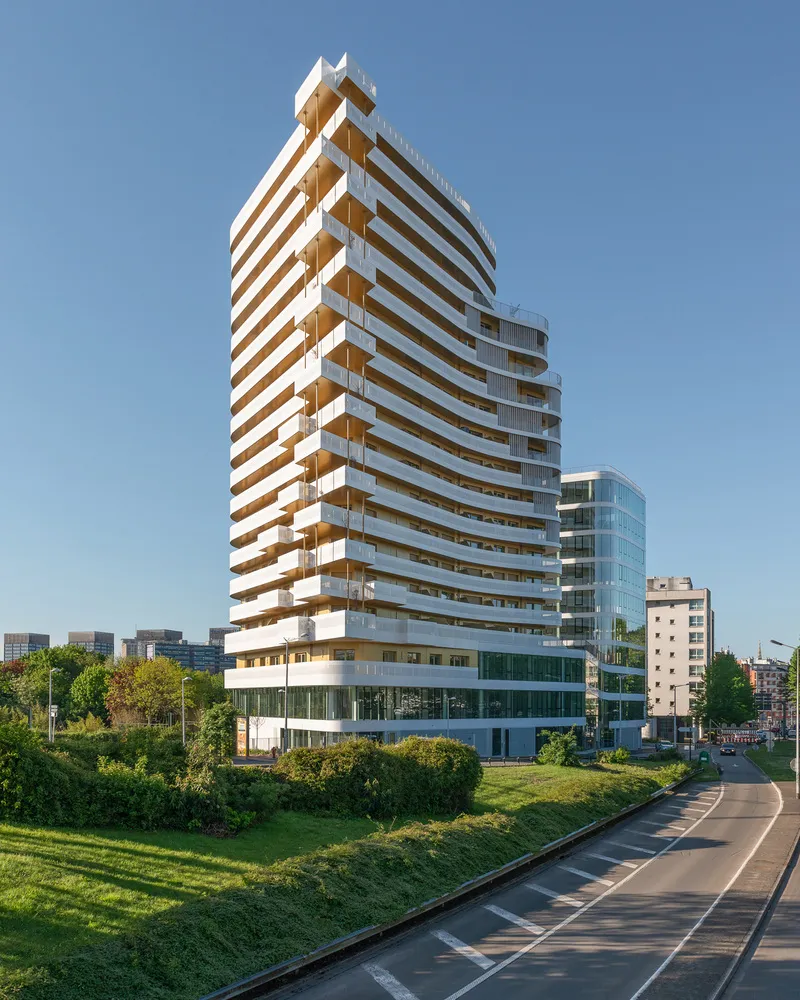
Spanning 17,000 m², the project is divided into 9,000 m² of modern office spaces and 8,000 m² of residential units. The office component occupies a two-floor base arranged around a central patio, with an eight-floor plus mezzanine section along the southern boundary. Residential units rise from the third to seventeenth floor in a tower at the northern end of the site, carefully respecting the city’s 50-meter high-rise limit. A three-level underground parking facility provides functional support without compromising the urban landscape.
Architectural Expression and Urban Impact
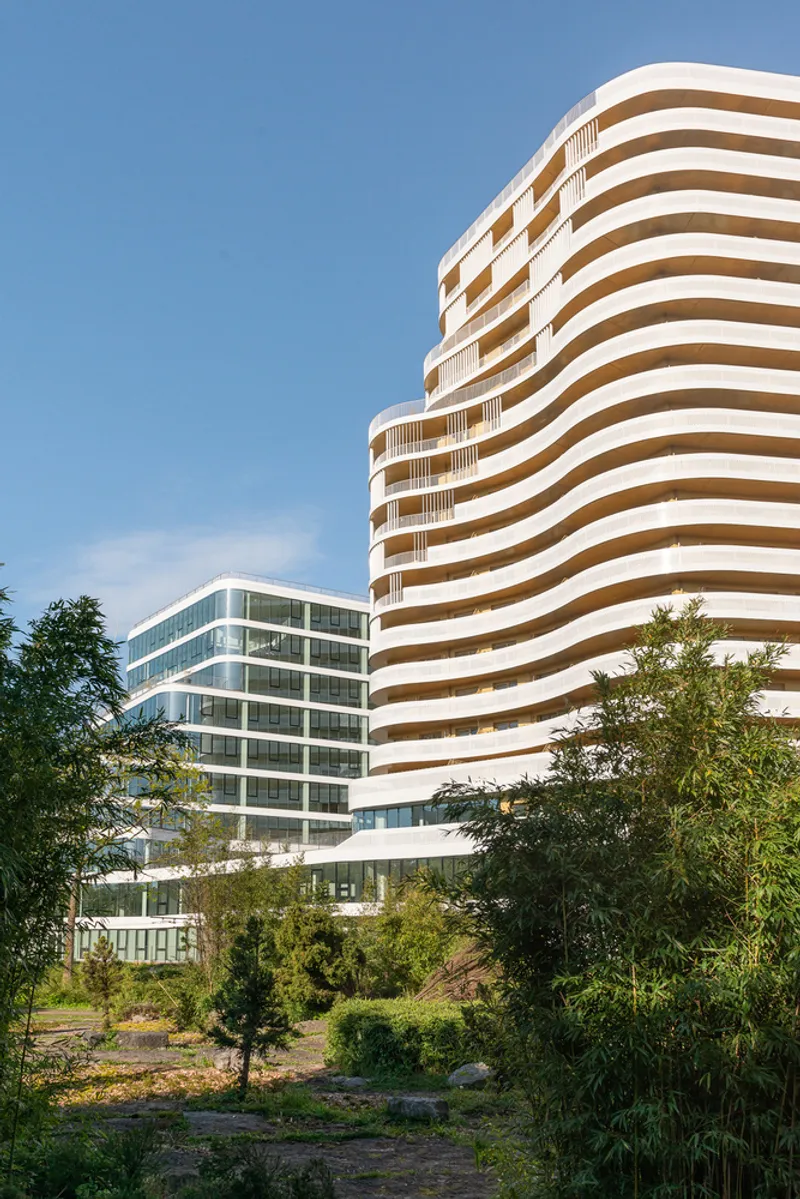
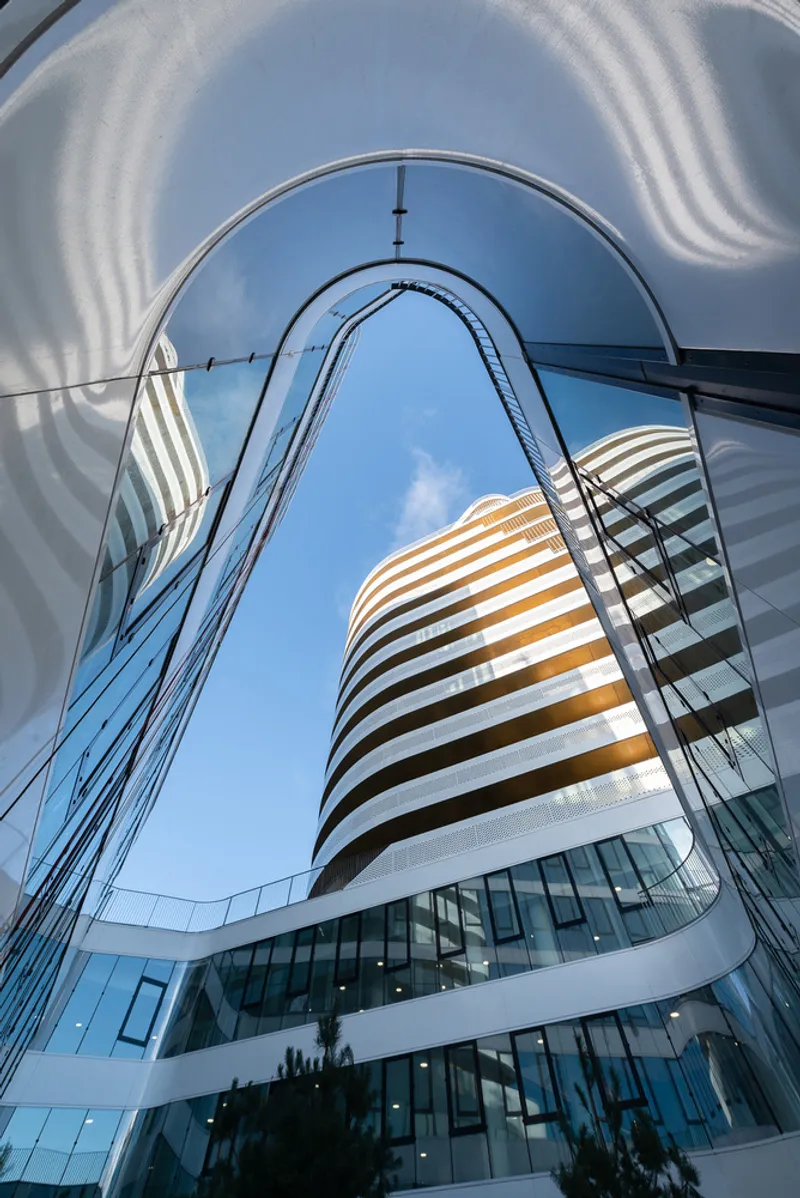
The Emblem Building’s form facilitates a gradual transition in scale, from the 27-meter height of the Matisse gardens to the more imposing height facing the Pasteur roundabout. This structural gradation maximizes natural light, views, and sunlight penetration across all floors, ensuring a high-quality living and working environment.
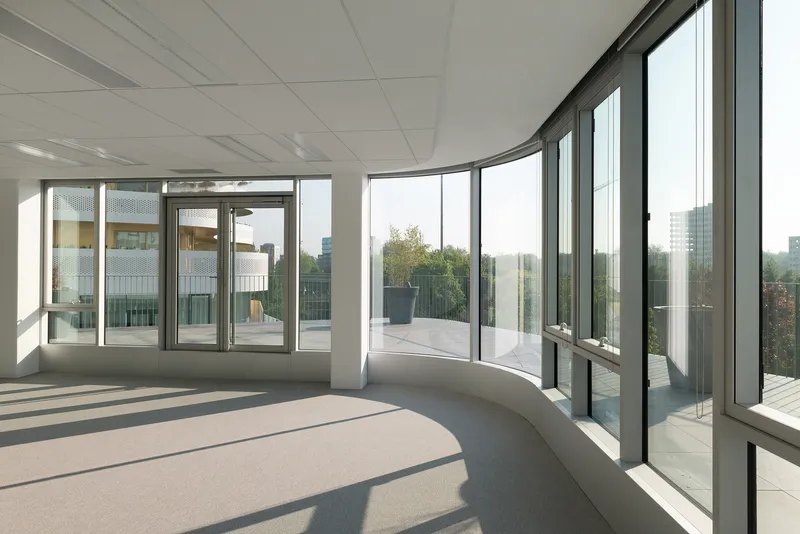
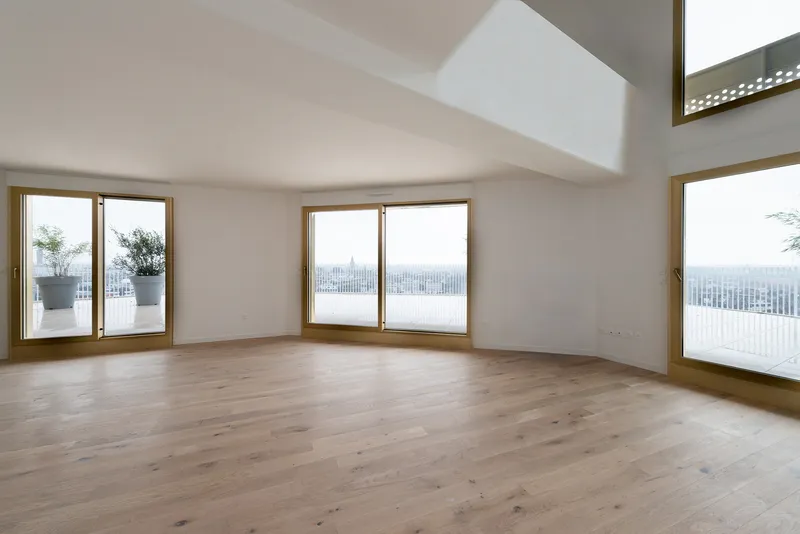
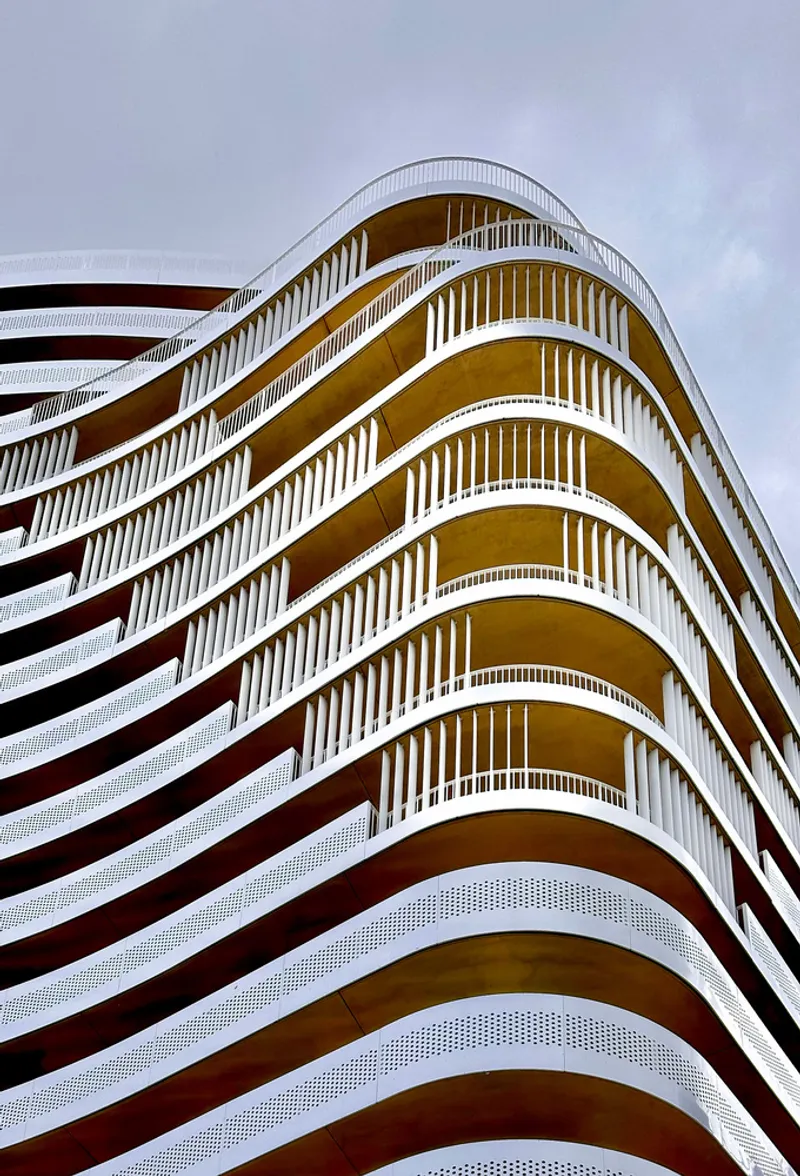
Aesthetically, the building showcases subtle horizontal lines of varying thickness across its emergent sections, delivering a custom, identifiable, and coherent design. The architecture is bold yet not ostentatious, balancing elegance with functionality. The result is a dynamic landmark that enriches Lille’s urban identity, combining innovative architecture with environmental sensitivity.
Sustainability and Environmental Considerations
Environmental and acoustic engineering by Diagobat, combined with landscaping by Atelier Altern, ensures the project meets modern standards of sustainability and environmental responsibility. From optimized light distribution to respectful integration with natural surroundings, the Emblem Building exemplifies how contemporary architecture can respond to ecological and social needs.
A New Urban Landmark
The Emblem Building by Hamonic + Masson & Associés represents more than a mixed-use development: it is a symbol of urban connectivity, architectural innovation, and sustainable design in Lille. Its careful planning, strategic morphology, and environmental considerations make it a vibrant hub for office, residential, and public life, setting a benchmark for future developments in France and beyond.
All photographs are works of
Guillaume Cortade, Clément Bonnérat


Popular Articles
Popular articles from the community


Aquadapt: An Underwater Habitat That Rewrites Its Rooms by the Hour
Curved modules ring the seabed while one shell shifts from breakfast room to cinema, farm and football pitch as residents' needs change.


FCC Arquitectura Expands a Portuguese Granite House with a Board-Marked Concrete Wing
In Portugal, JV House pairs a cleaned-up whitewashed and granite dwelling with a timber-shuttered concrete extension, courtyards and a garden pool.

graciastudio Turns a Viewless Tijuana Lot Inward Around a Courtyard of Concrete, Timber and Trees
In Tijuana, Jorge Gracia's GA2 House stacks a timber-clad private floor over exposed concrete and replaces a missing view with a planted interior patio.

Cube Design Draws an Ecological Corridor Between Two Shenzhen Hills with the Nankai Building
Beside Shenzhen's container docks, the Nankai Building pairs stacked balconies with a climbing green screen to connect two hillsides across its height.

Similar Reads
You might also enjoy these articles


Hodi-Mandai Geram
Project Function: Preservation and revitalization of the Intangible heritage and socio-spatial identity of the Hodi by Housing, Cultural Memory Center, Sacred Grove, landscape, local tourism economy


Olio Towers: A Mid-Rise for Performers That Fuses Housing, Rehearsal, and Stage
Located blocks from Houston's Theater District, this modular tower stacks living units around a central performance atrium.

Oasis: Modular Green Housing Carved into Dhaka's Urban Fabric
A shortlisted Plugin Housing entry reclaims unauthorized settlements in Dhaka with stepped concrete volumes, green roofs, and ventilation-driven design.

Black Hole: A Floating Megastructure for the Post-Physical Era
Emiliano Mazzarotto envisions a spherical, self-scaling arena where e-sports, digital hotels, and holographic stadiums replace traditional public space.

Explore Iconic Building Competitions
Discover active competitions in this discipline

Challenge to design mud housing for contemporary communities

Challenge to reimagine the Iron Throne

Photograph architecture without architects

Illustrate the lost glory of Angkor Wat - Render Challenge
Comments (0)
Please login or sign up to add comments
No comments yet. Be the first to comment!