
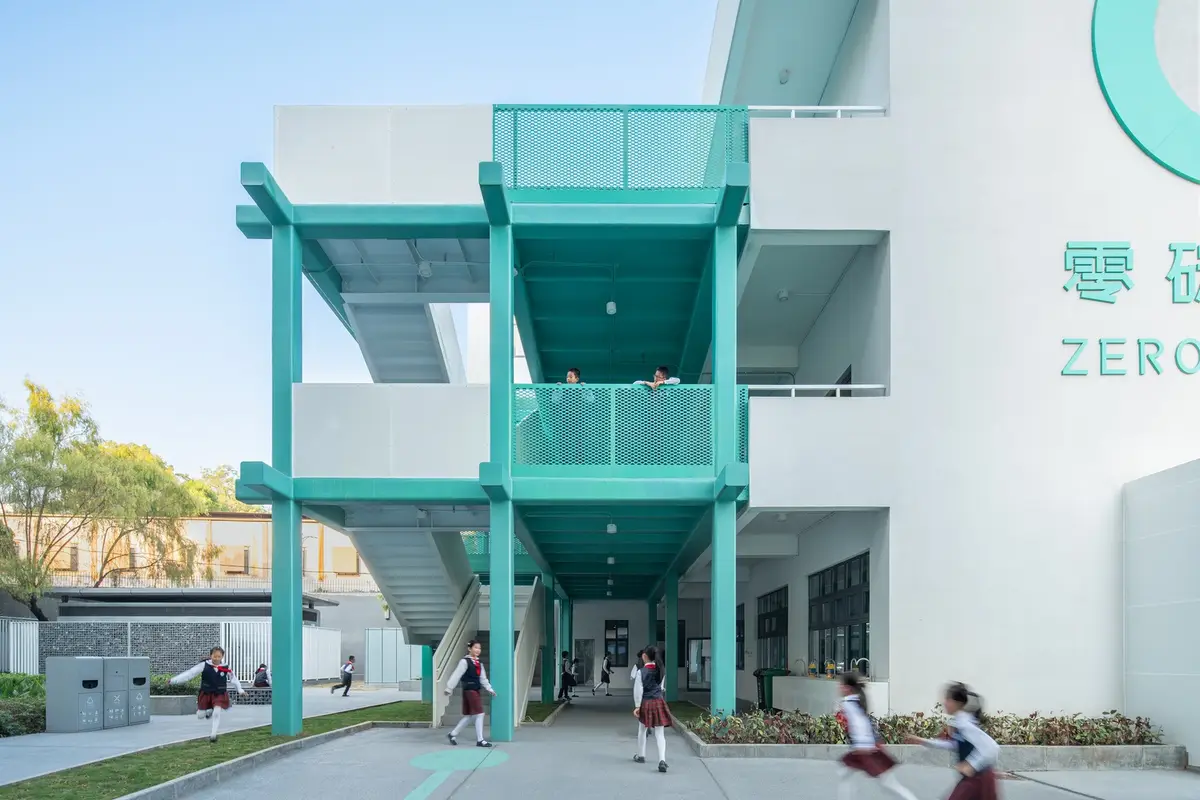
Energy-Efficient School Renovation: The Liu Lian Primary School Retrofit by FORWARD STUDIO
The article highlights the energy-saving retrofit of Liu Lian Primary School, transforming it into Shenzhen's first near-zero-energy campus.


A Vision for Sustainable Education in Shenzhen
Liu Lian Primary School, located in Shenzhen, China, has undergone a groundbreaking energy-efficient school renovation designed to meet the future of sustainable education. This project, led by FORWARD STUDIO, in collaboration with China Construction Science and Industry Corporation LTD (CSCEC) and Jianxue Architecture, sets a new benchmark for near-zero energy campuses. The renovation incorporates advanced energy-saving, carbon-reducing, and zero-carbon technologies, turning Liu Lian Primary School into the first elementary school in China to be part of the PEDF (Positive Energy District Framework) initiative.

The Project Overview: Creating a Near-Zero Energy Campus
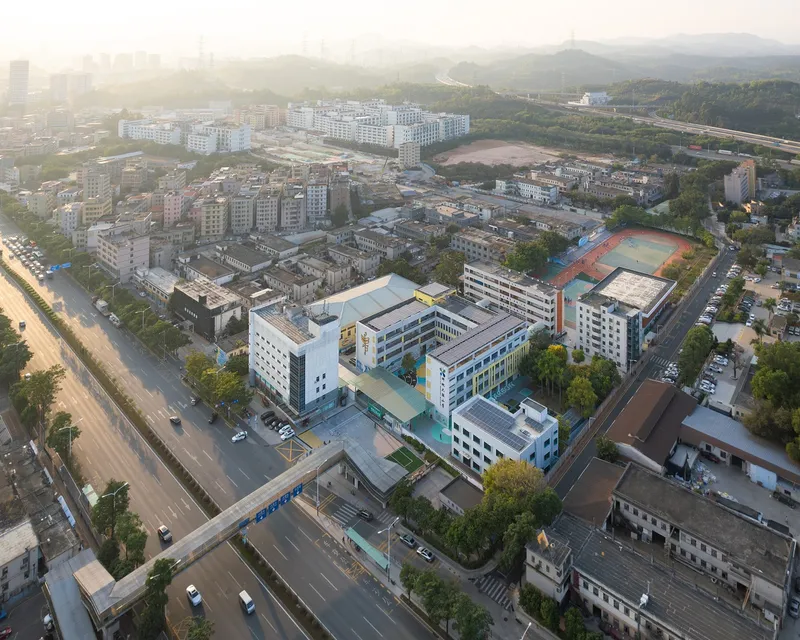
The renovation of Liu Lian Primary School aims to address several challenges, such as aging infrastructure, inefficient space utilization, and insufficient interaction between different campus areas. The school was part of the Five Ones Energy Saving and Carbon Reduction Model Program in Longgang District, which is part of Shenzhen's push toward becoming a model for green, low-carbon development. The goal was to create a campus that fosters environmental stewardship and integrates energy-efficient school renovation practices seamlessly into everyday teaching and learning.

Sustainable Design: Integration of Green Technologies
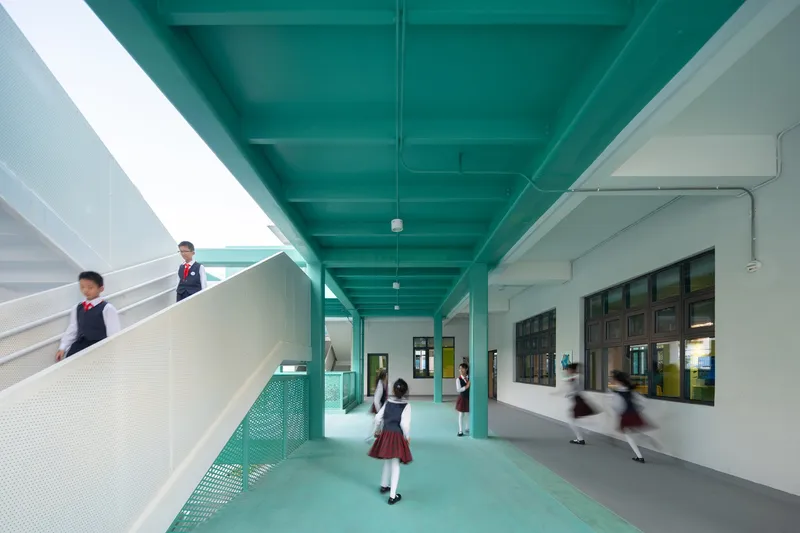
One of the core principles behind the renovation was to create a campus that embodies the values of sustainability and environmental consciousness. This was achieved through several innovative design strategies:
1. Green Box + Carbon Sequestration Garden
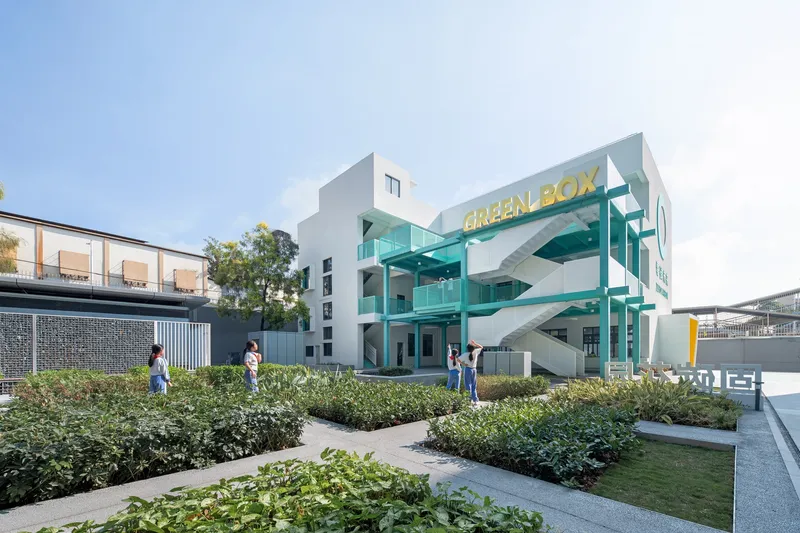
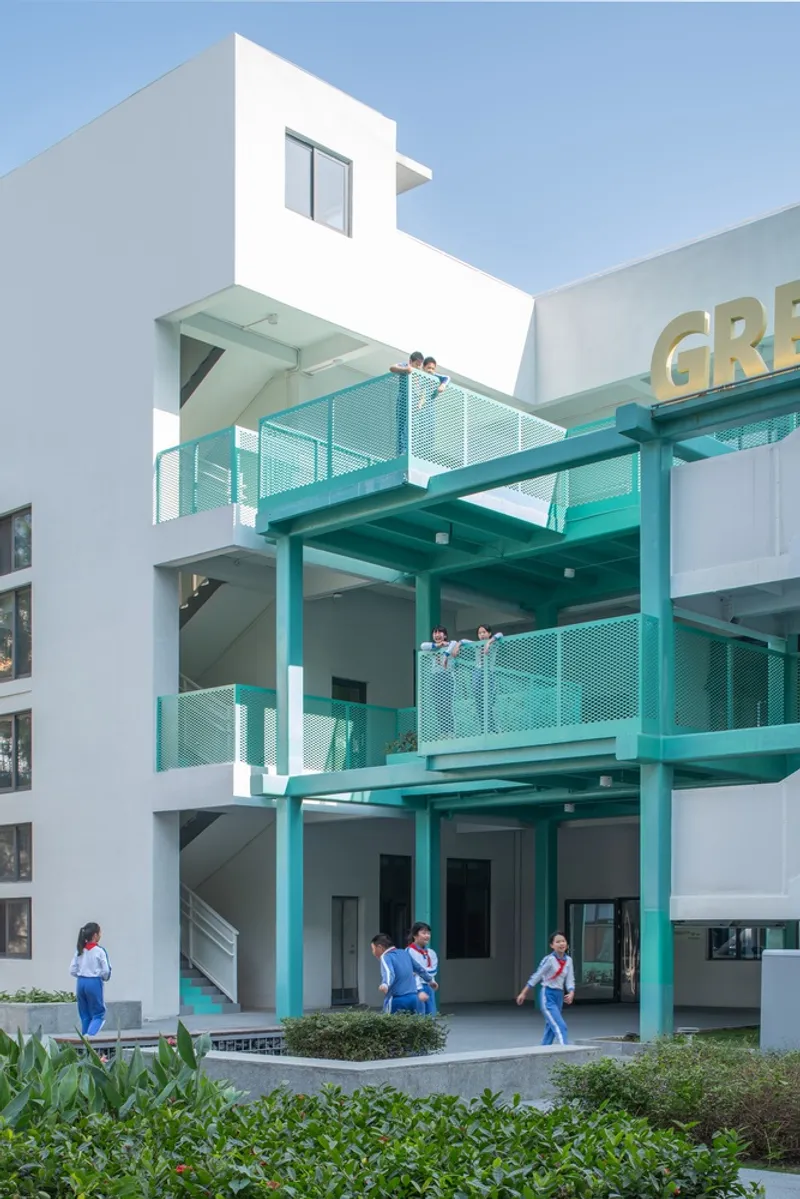
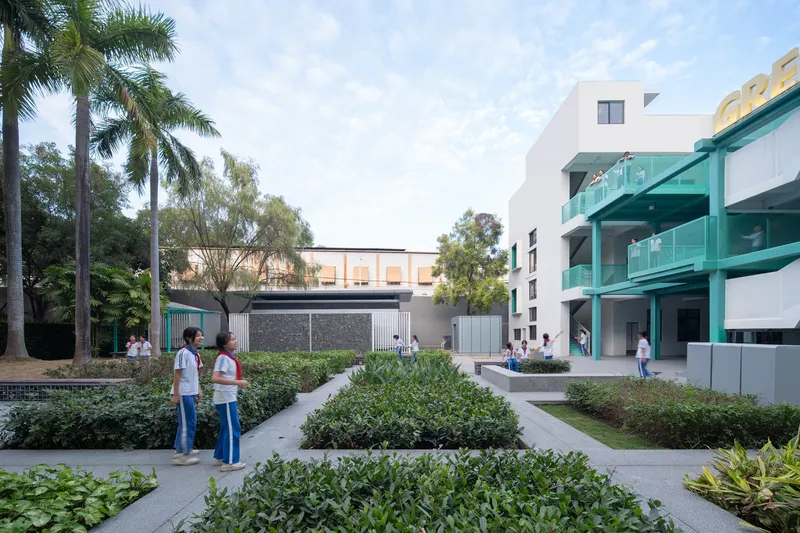
A standout feature of the renovation is the Green Box, a steel structure platform that serves as both a zero-carbon demonstration site and an energy-generating unit. Equipped with solar energy panels and photovoltaic power generation, the Green Box provides the campus with sustainable energy and real-time energy consumption data. Adjacent to this platform is the Carbon Sequestration Garden, which consists of plant modules that have high carbon sequestration values. The garden allows students to engage with nature and learn firsthand about sustainability, fostering a deeper understanding of environmental responsibility.

2. Energy Cube: Intelligent Energy Management
The Energy Cube is another major innovation in the energy-efficient school renovation project. This intelligent energy box integrates photovoltaic power generation, energy storage, and flexible power consumption, acting as the energy control center for the campus. The Energy Cube regulates power from the solar photovoltaic system, energy storage units, and building power consumption, ensuring that the campus operates efficiently and sustainably. It also serves as a model for balancing energy usage, contributing to the city's peak shaving and valley filling initiatives, ultimately reducing urban electricity consumption.

3. Low-Carbon Materials and Building Upgrades
To further enhance energy efficiency, the school buildings were upgraded using advanced materials, such as high-efficiency insulating rock wool, double-layer hollow Low-E glass, and horizontal sunshade models. These materials significantly reduce the energy consumption of the buildings while improving indoor thermal comfort. The school’s enclosure system was enhanced to minimize energy loss, ensuring that the campus remains energy-efficient throughout the year.
Intelligent Campus: Smart Systems for Energy Optimization
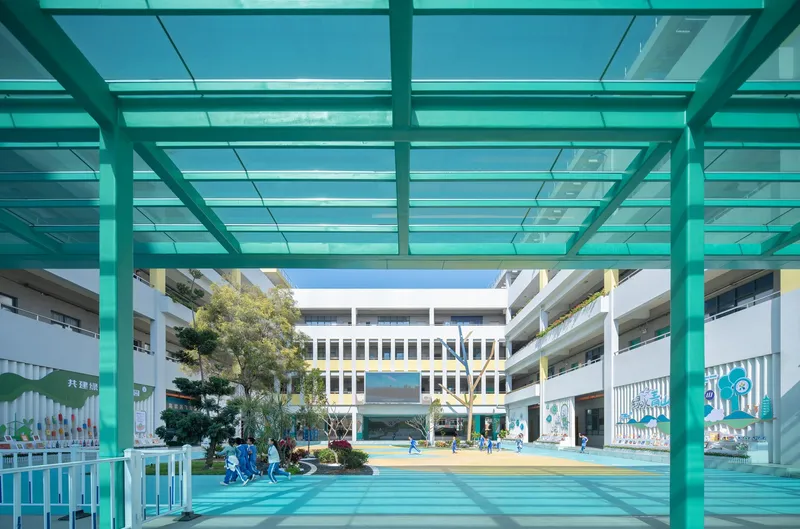
A critical component of the energy-efficient school renovation is the incorporation of smart technology to manage energy consumption and environmental impact. AI-powered systems and intelligent sensors are installed throughout the campus to monitor and manage energy use in real-time. These systems enable the school to visualize and optimize energy consumption, helping to reduce costs and minimize the carbon footprint. Additionally, real-time data collection allows the school to track carbon emissions and energy usage, ensuring that it meets its sustainability goals.

1. Smart Bookstore and Classrooms
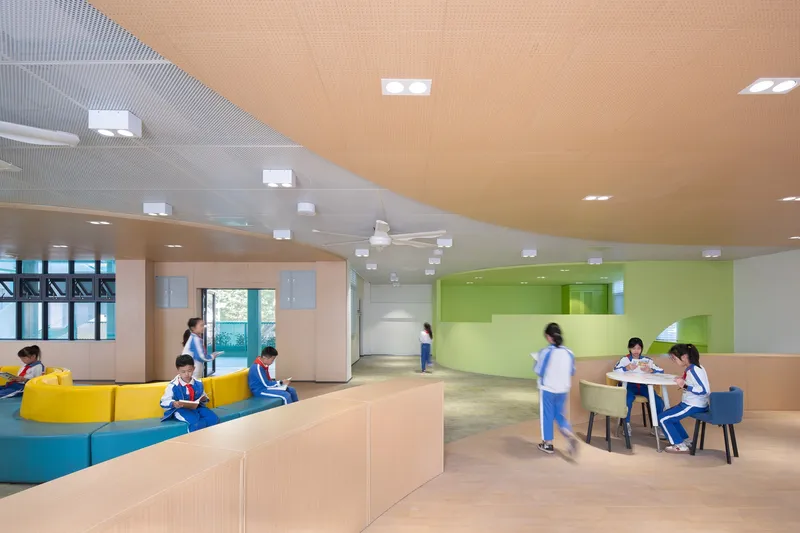
The school's library and classrooms were redesigned to incorporate DC-powered equipment and AI intelligent systems that further reduce energy consumption. This intelligent infrastructure supports the school’s transition into a fully smart campus, where energy savings are maximized, and educational experiences are enhanced.

Impact: Sustainability in Action
The renovation of Liu Lian Primary School has had a significant environmental impact, with the campus now saving 28,000 kWh of electricity annually and reducing 13 tons of CO₂ emissions. This is equivalent to planting 3,250 trees, highlighting the environmental benefits of the school’s sustainable upgrades. The integration of renewable energy resources, such as photovoltaic systems, has increased the campus’s power generation by 5%-30% annually, achieving self-sufficiency in electricity consumption and maximizing the use of renewable energy by 53.77%.
Conclusion: A Model for Future Educational Spaces
The energy-efficient school renovation at Liu Lian Primary School is a forward-thinking project that not only addresses the current challenges of educational space design but also sets the standard for future sustainable school developments. By integrating zero-carbon technologies, smart energy management systems, and green materials, the renovation demonstrates how schools can lead the way in energy efficiency and environmental stewardship. Liu Lian Primary School is not just a place for learning; it is a living, breathing example of how architecture can play a pivotal role in shaping a sustainable future for students and communities.
By focusing on energy-efficient school renovation strategies, this article highlights the innovative work done at Liu Lian Primary School, emphasizing its role as a leader in sustainable education environments. The integration of cutting-edge green technologies, energy-saving materials, and smart systems not only enhances the learning experience but also contributes to a more sustainable urban future.
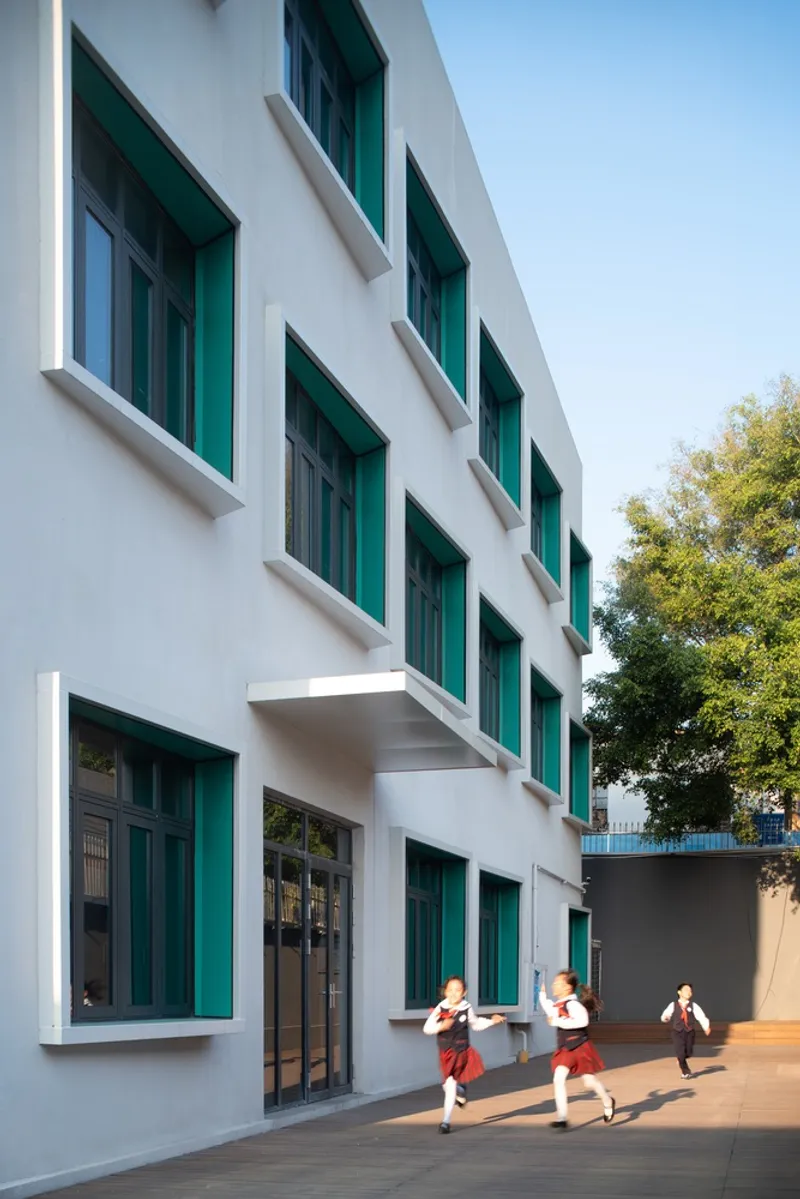

All photographs are work of Tianpei Zeng


Popular Articles
Popular articles from the community


The Ocean Hive: Sustainable Architecture for a Self-Sufficient Civilization at Sea
The Ocean Hive imagines sustainable architecture at sea, where modular habitats, algae, wave power and ocean waste sustain a growing colony.

Play: Fragments of Their World
Familiar architecture becomes modular playground design, creating safe spaces where displaced children can learn, connect, imagine and play.

Lunar Spiral: Space Architecture Shaped by the Mathematics of the Universe
Lunar Spiral reimagines space architecture through Fibonacci geometry, lunar regolith, levitating habitats, and self-sustaining Moon living.

ALGAL REALM: A Bio-Integrated Lunar Habitat Design for Life Beyond Earth
ALGAL REALM reimagines lunar habitat design with algae-powered life support, 3D-printed regolith, and vertical living for a lunar future.

Similar Reads
You might also enjoy these articles


Hodi-Mandai Geram
Project Function: Preservation and revitalization of the Intangible heritage and socio-spatial identity of the Hodi by Housing, Cultural Memory Center, Sacred Grove, landscape, local tourism economy


Olio Towers: A Mid-Rise for Performers That Fuses Housing, Rehearsal, and Stage
Located blocks from Houston's Theater District, this modular tower stacks living units around a central performance atrium.

Oasis: Modular Green Housing Carved into Dhaka's Urban Fabric
A shortlisted Plugin Housing entry reclaims unauthorized settlements in Dhaka with stepped concrete volumes, green roofs, and ventilation-driven design.

Black Hole: A Floating Megastructure for the Post-Physical Era
Emiliano Mazzarotto envisions a spherical, self-scaling arena where e-sports, digital hotels, and holographic stadiums replace traditional public space.

Explore Zero Energy Competitions
Discover active competitions in this discipline

Challenge to design public laboratory

Challenge to reimagine the Iron Throne

Photograph architecture without architects

Illustrate the lost glory of Angkor Wat - Render Challenge
Comments (0)
Please login or sign up to add comments
No comments yet. Be the first to comment!