

Epicure São Luiz: A Sensory Gastronomic Interior by Anik Mourão Arquitetura e Design
Epicure São Luiz blends gastronomy, rustic materials, and immersive interior architecture, creating a sensory culinary environment celebrating Brazilian culture and experience.


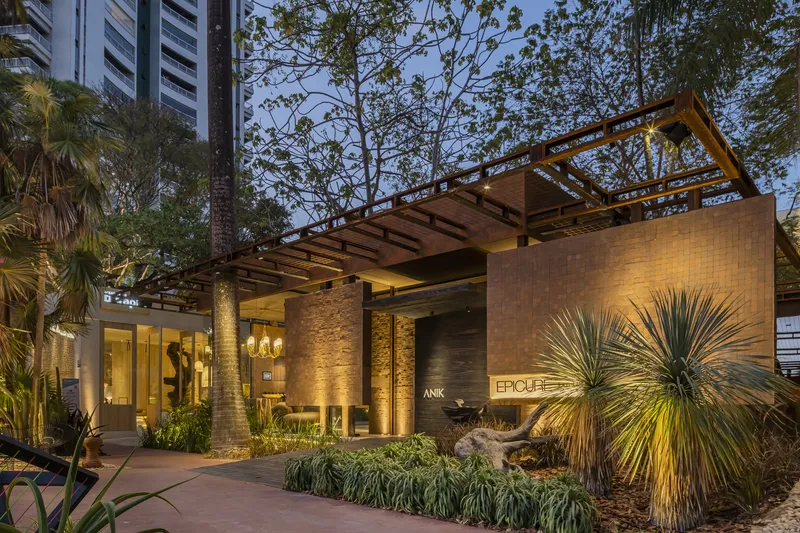
The Epicure São Luiz project, designed by Anik Mourão Arquitetura e Design, presents a refined blend of gastronomy, architecture, and sensory design. Developed for CASACOR Ceará 2022, the interior environment reimagines the concept of a contemporary gourmet space by combining culinary experiences with immersive architectural storytelling. Commissioned by Mercadinho São Luiz, one of the largest supermarket chains in Ceará, Brazil, the project transforms a traditional food environment into a dynamic cultural and gastronomic destination.
Located in Meireles, Brazil, the 1,345-square-foot space celebrates food culture while reflecting the rich traditions of northeastern Brazil. The project merges rustic materials, warm color palettes, and interactive culinary features to create an environment where architecture and gastronomy meet in a sophisticated and experiential way.
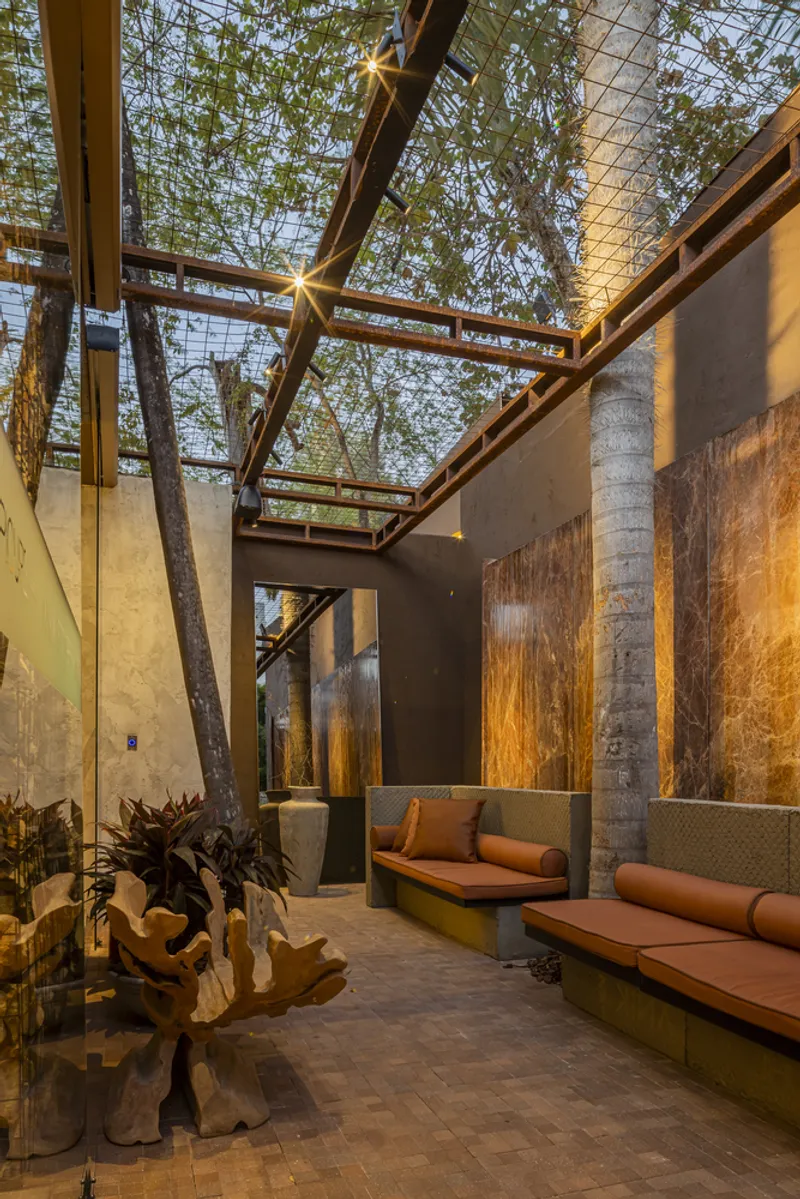
Concept: Philosophy, Gastronomy, and Experiential Design
The concept behind Epicure São Luiz draws inspiration from the philosophy of Epicurus, who associated pleasure with simple experiences, sensory appreciation, and meaningful social interactions. This philosophical foundation merges with the French Epicerie retail tradition, known for curated food products and gourmet culture.
Architect Anik Mourão reinterprets these influences through a contemporary architectural language that blends gastronomic storytelling, spatial warmth, and experiential interior design. The environment introduces a unique kitchen-cinema concept, where guests can watch culinary demonstrations while simultaneously experiencing the preparation of recipes and product showcases.
This innovative format transforms the space into more than a traditional gourmet environment. Instead, it becomes a multifunctional culinary stage, where chefs, brands, and visitors interact in an engaging and intimate setting.
Celebrating Northeastern Brazilian Identity Through Design
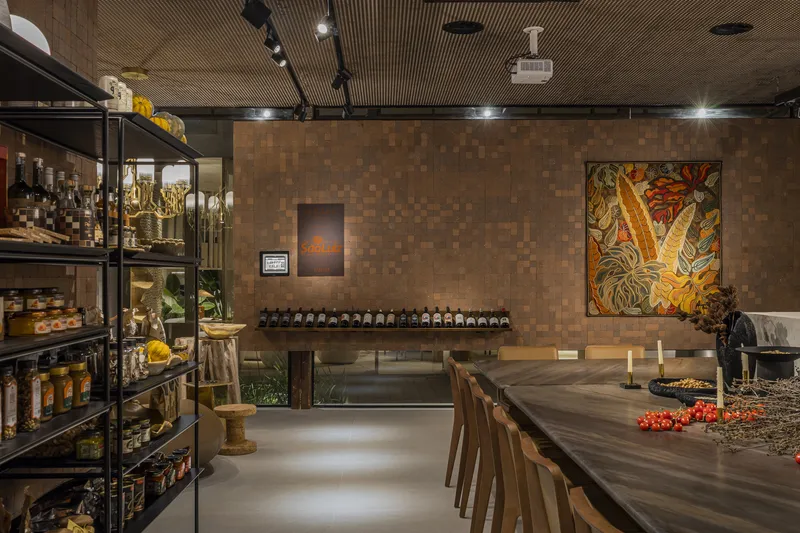
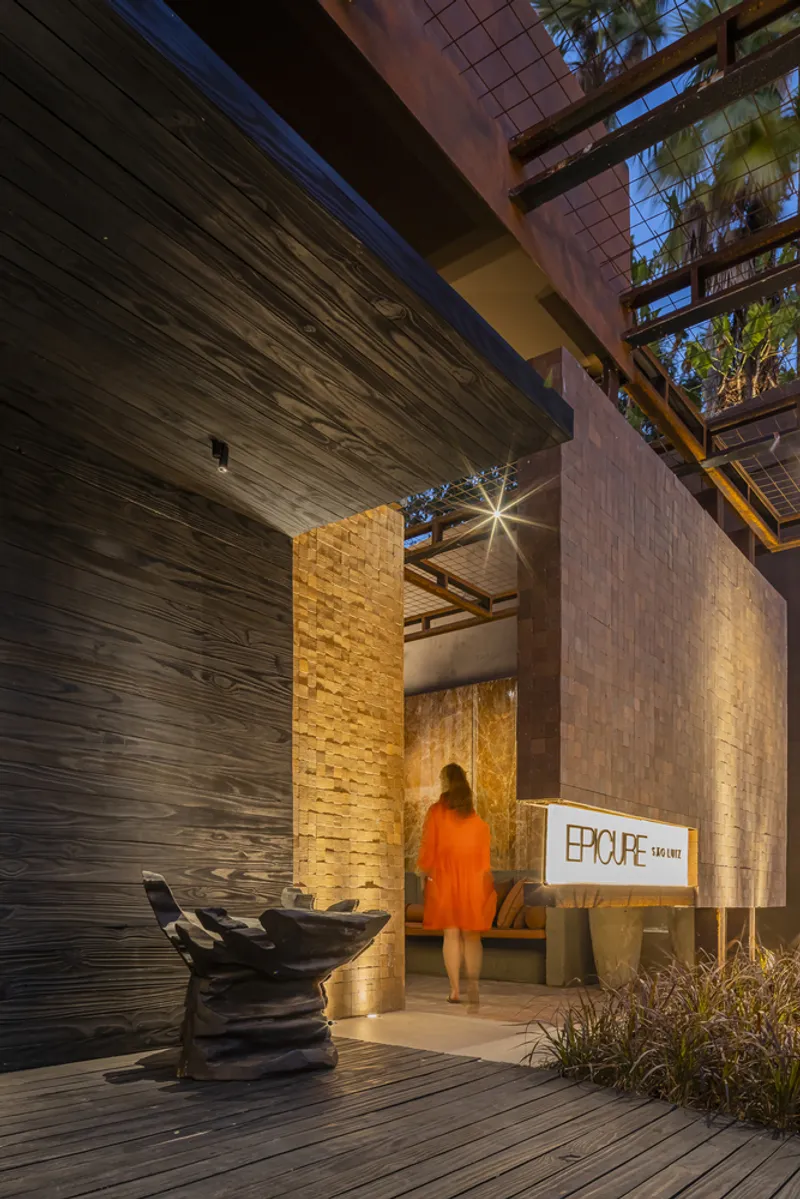
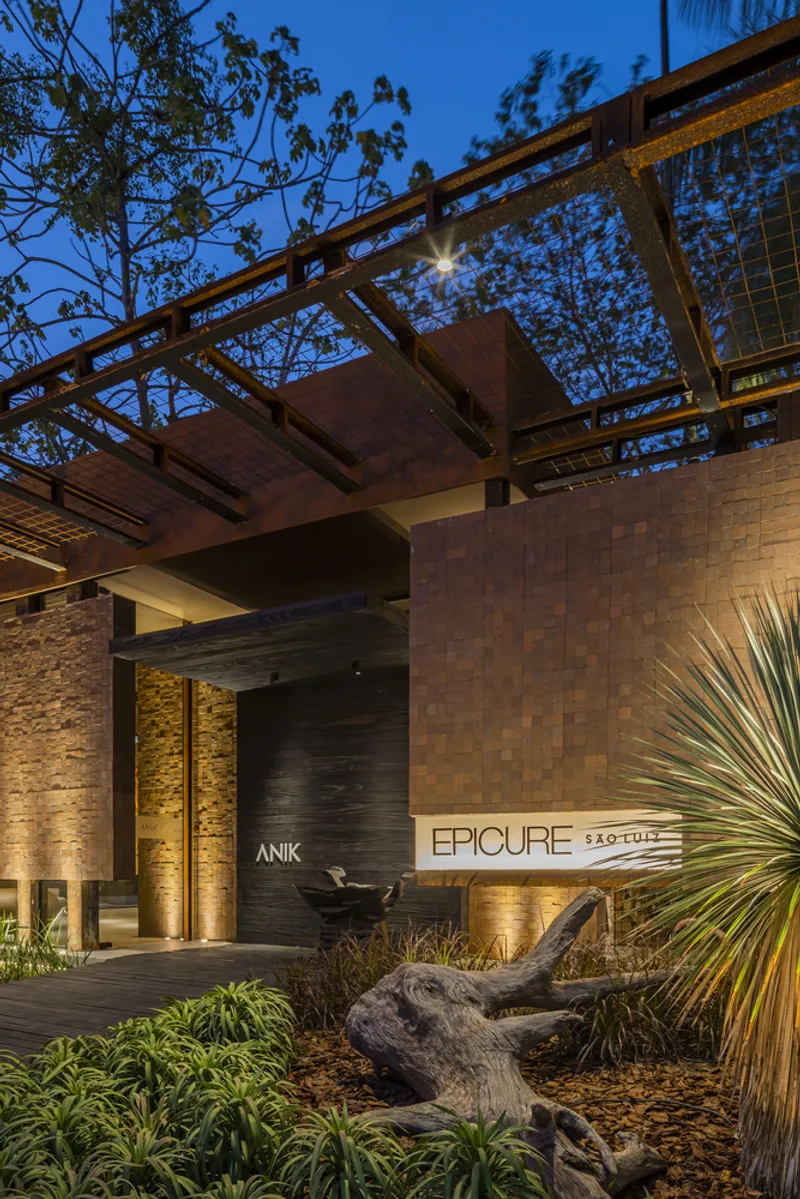
A key aspect of the project is its celebration of northeastern Brazilian culture and materials. The architectural narrative emphasizes local identity through rustic textures, natural stone, warm terracotta tones, and handcrafted elements.
The interior palette revolves around earthy colors inspired by the regional landscape. Terracotta hues, exposed brick, and wooden surfaces dominate the space, creating a warm and welcoming environment that evokes traditional architecture while maintaining a contemporary atmosphere.
These material choices reinforce the project's focus on authenticity, comfort, and cultural connection, allowing visitors to feel as if they are entering a sophisticated yet familiar home environment rather than a commercial exhibition space.
Designing an Immersive Culinary Experience
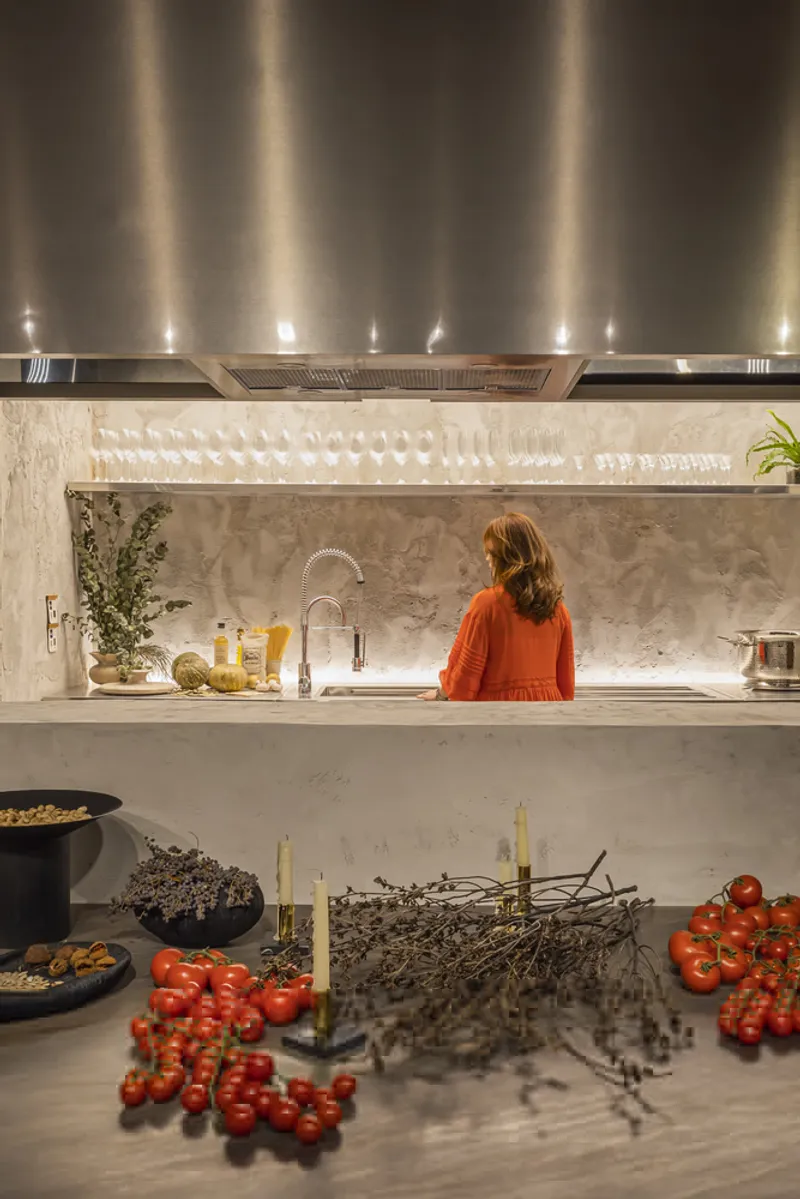
Unlike typical exhibition environments, the design of Epicure São Luiz prioritizes experience and interaction. The layout was carefully designed to encourage conversation, cooking demonstrations, and shared dining moments.
According to Ana Luiza Ramalho, Marketing Director at Mercadinhos São Luiz, the intention was to create a space that extended beyond traditional gourmet environments or tasting areas. The goal was to design a setting where visitors could feel comfortable and immersed in a culinary narrative.
Through this collaboration between brand and architect, the project evolved into a hospitality-inspired interior, where guests can explore products, observe cooking processes, and participate in curated gastronomic events led by guest chefs.
Materiality and Architectural Elements
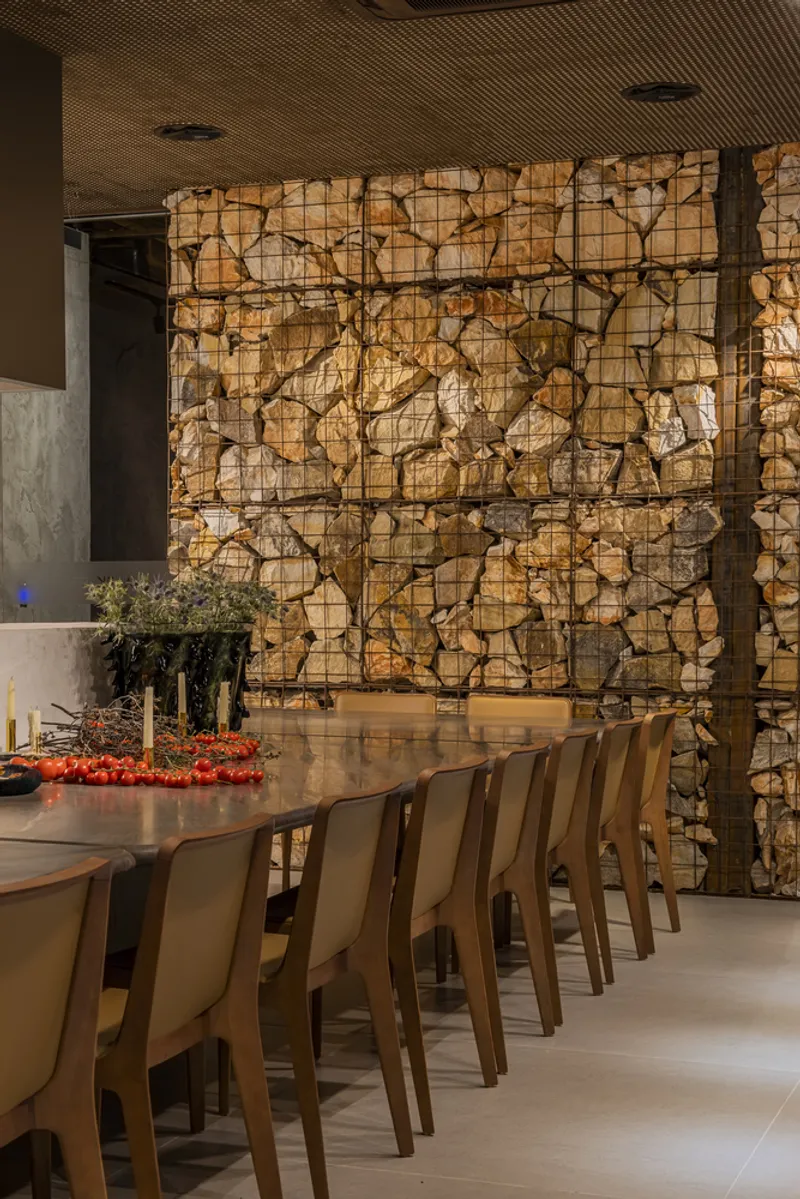
The architectural language of Epicure São Luiz relies heavily on natural materials and tactile surfaces, reinforcing its sensory approach to design. Each element was selected to enhance the spatial atmosphere and strengthen the connection between architecture and gastronomy.
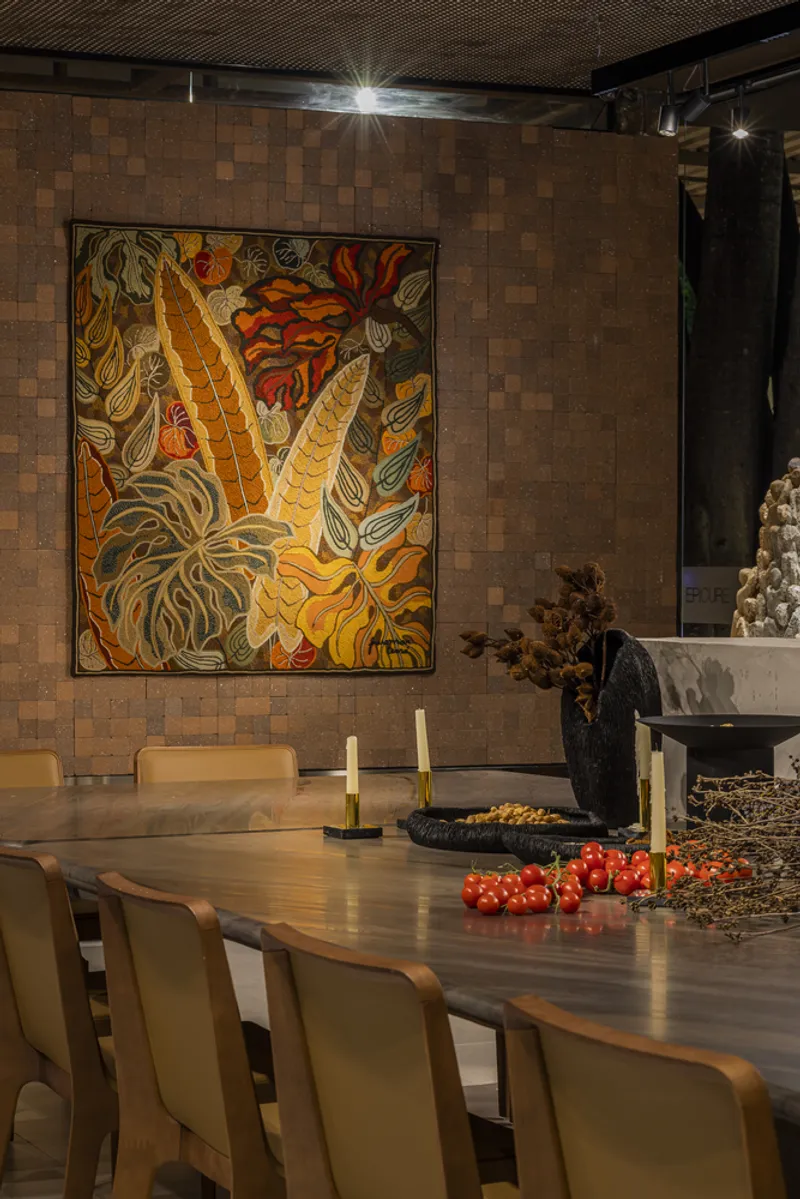
One of the most striking features is the large communal table with sixteen seats, crafted from Elegant Brown quartzite. Suspended by a metallic structure anchored into a concrete wall, the table acts as the central gathering point of the space, symbolizing shared meals and collective experiences.
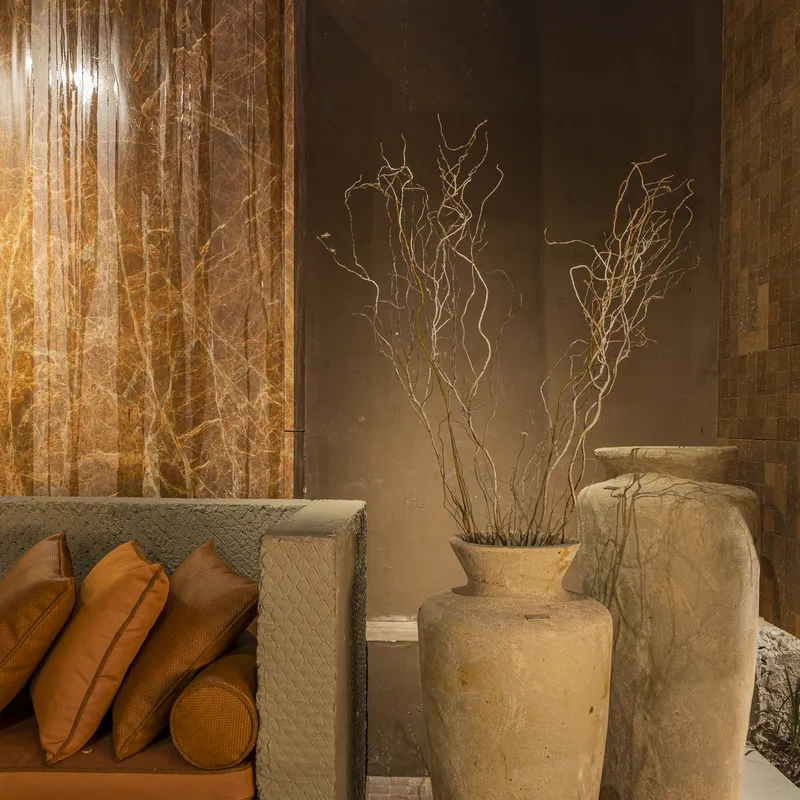
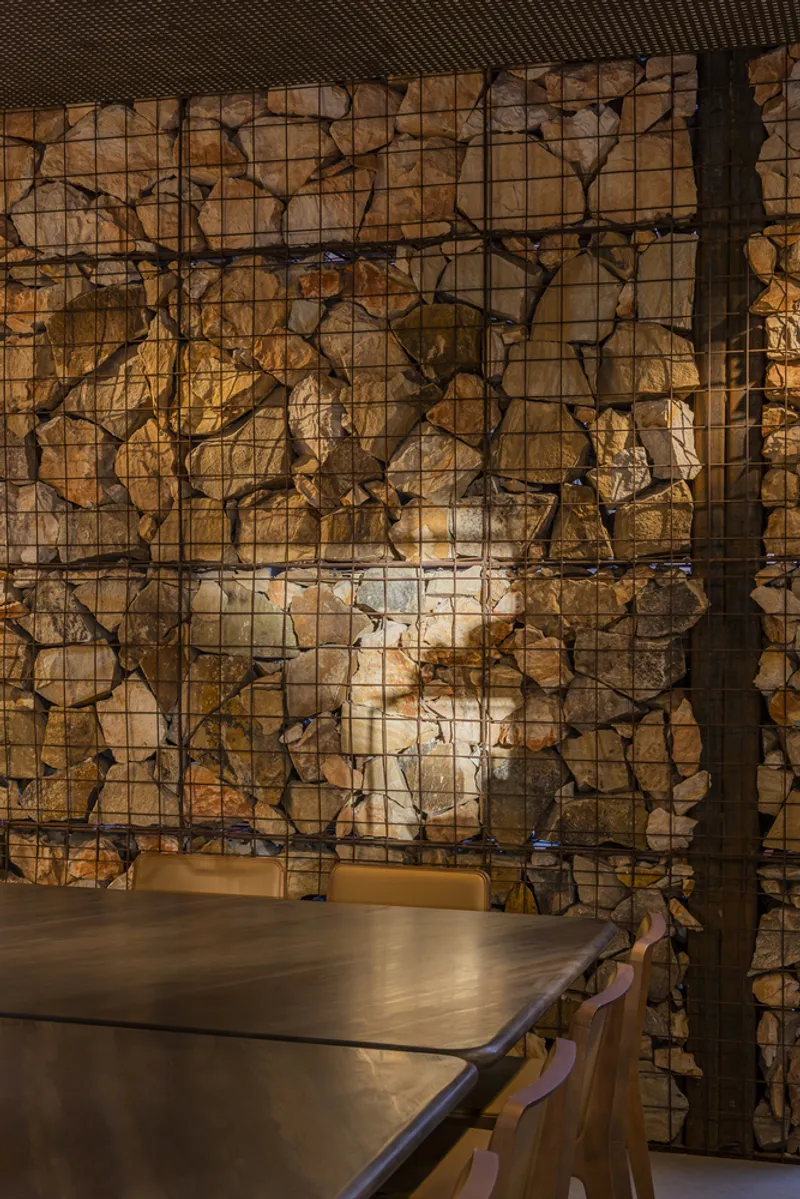
Another remarkable design element is the metal gabion wall, filled with pieces of raw Perla Santana quartzite. This feature introduces a raw, sculptural quality to the interior while celebrating natural stone textures.
Complementing these materials are Arezzo quartzite panels, which guide water toward an exterior reflecting pool. The flowing water adds movement and sound to the environment, enriching the sensory atmosphere and strengthening the project's rustic and organic identity.
Spatial Atmosphere and Sensory Design
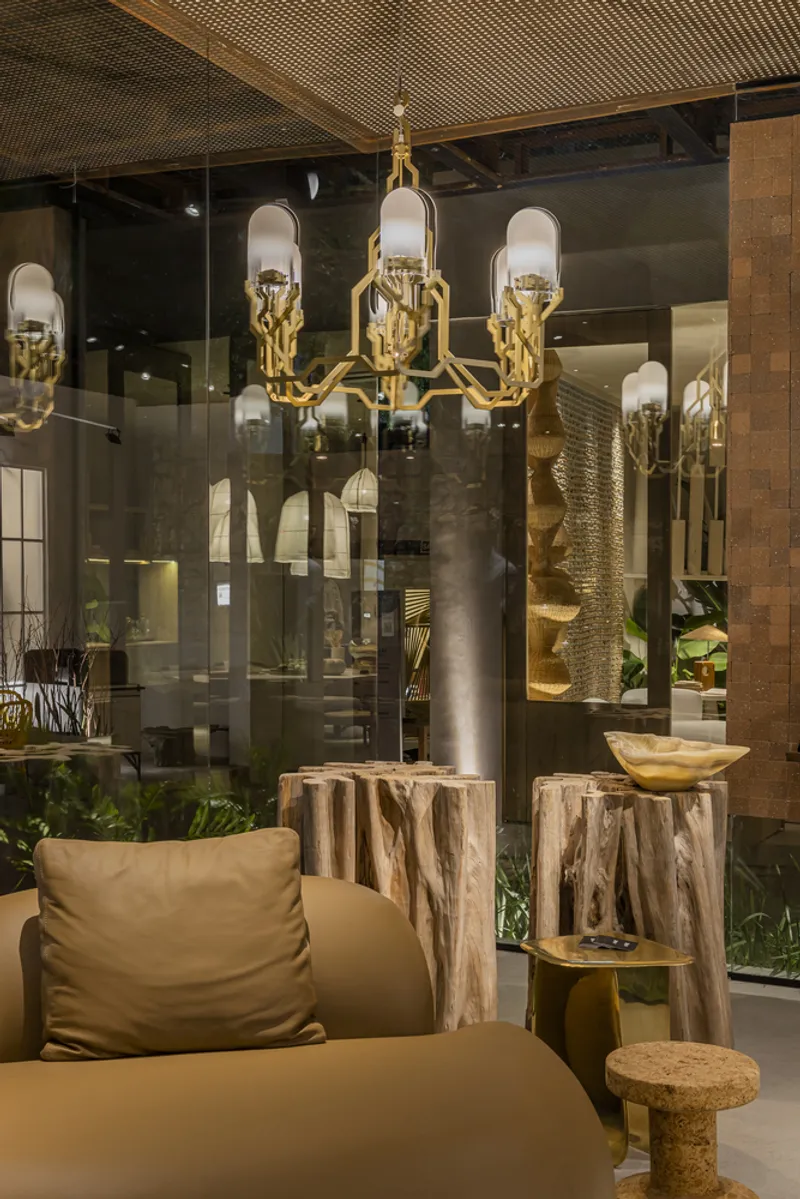
Beyond its visual aesthetics, the project focuses on creating a multisensory environment. The integration of natural stone, warm lighting, wood textures, and water elements transforms the space into an immersive architectural experience.
Visitors move through a sequence of spaces that reveal different perspectives of the kitchen, dining areas, and product displays. This layered spatial organization allows guests to discover the environment gradually, reinforcing curiosity and engagement.
The combination of architecture, gastronomy, and performance elevates the Epicure São Luiz environment into a stage where cooking becomes both a cultural activity and a visual spectacle.
Recognition at CASACOR Ceará
The success of the project was recognized at CASACOR Ceará, where Epicure São Luiz received First Place in the Best Environment for Public and Commercial Use category. The award highlights the project's innovative approach to hospitality design and experiential architecture.
This recognition confirms the impact of Anik Mourão’s design vision, which successfully blends culinary culture, interior architecture, and spatial storytelling into a cohesive and memorable environment.
Architecture as a Platform for Gastronomic Culture
Epicure São Luiz demonstrates how interior architecture can transform commercial environments into immersive cultural experiences. By integrating gastronomy, materiality, and spatial warmth, the project moves beyond traditional retail or exhibition design.
The environment ultimately functions as a hybrid space combining restaurant, culinary studio, and experiential showroom. Through thoughtful design and a strong conceptual framework, Anik Mourão created a place where architecture enhances social interaction and celebrates food culture.
In doing so, Epicure São Luiz stands as a compelling example of contemporary Brazilian interior architecture, where regional identity, natural materials, and experiential design merge to redefine the modern gastronomic space.

All photographs are works of
Felipe Petrovsky


Popular Articles
Popular articles from the community


ETEH Reworks the Shared Spaces of São Domingos School in Brazil Around Timber, Color and Hanging Plants
At São Domingos School in Brazil, 436 m² of hall, refectory and library are recast with timber joinery, a yellow and blue code and trailing greenery.

FCC Arquitectura Expands a Portuguese Granite House with a Board-Marked Concrete Wing
In Portugal, JV House pairs a cleaned-up whitewashed and granite dwelling with a timber-shuttered concrete extension, courtyards and a garden pool.


Singing Woman: An Opera House That Performs Before the Curtain Rises
Ovidiu Cristian Pavel's conceptual opera house translates Estonia's choral identity into a sculpted waterfront landmark facing the Baltic Sea.

The Amber Palace Opera: A Geological Fiction Surfaces on Tallinn's Baltic Waterfront
Pierre Brillard reimagines a Baltic legend as a public landscape, opera house, and waterfront promenade rooted in Tallinn's coastal identity.

Similar Reads
You might also enjoy these articles

Cube Design Draws an Ecological Corridor Between Two Shenzhen Hills with the Nankai Building
Beside Shenzhen's container docks, the Nankai Building pairs stacked balconies with a climbing green screen to connect two hillsides across its height.

Praksis A and Studio Sted Bend a Red Timber Cabin Across the Granite of Norway's Southern Coast
On the southern Norwegian coast, a 105 m² cabin follows the rock on slender posts, pairing red cladding outside with pine, brick and plywood within.

David Ortega Stacks a Two-Story Mexico City Penthouse Around a Steel Stair and a Pergola-Shaded Roof Terrace
In Colonia Roma, a 300 m² penthouse uses oak joinery, a planted steel stair and a slatted roof pergola to make a new-build apartment feel like a house.

PARALELA and LB2 Thread a Public Walkway Through the Base of a Las Condes Residential Tower
In Las Condes, Santiago, the Hamlet Building gives its fenceless ground floor to a 70-metre wooded passage linking two streets and the metro.

Explore Interior Design Competitions
Discover active competitions in this discipline

Challenge to design luxury tourism on rails

Challenge to reimagine the Iron Throne

Photograph architecture without architects

VR headsets Storefront design competition
Comments (0)
Please login or sign up to add comments
No comments yet. Be the first to comment!