
Escher House by Inbetween Architecture: A Layered Transformation of a Heritage Cottage
Escher House is a multi-level heritage renovation blending modern design with playful spatial layering on a sloped site in Canterbury.


Location: Canterbury, Victoria, Australia Project Type: Residential Renovation and Extension Architect: Inbetween Architecture Year Completed: 2019 Project Area: 180 m² Photography: Tatjana Plitt, Peter Bennetts
A Sensitive Renovation in a Heritage Precinct
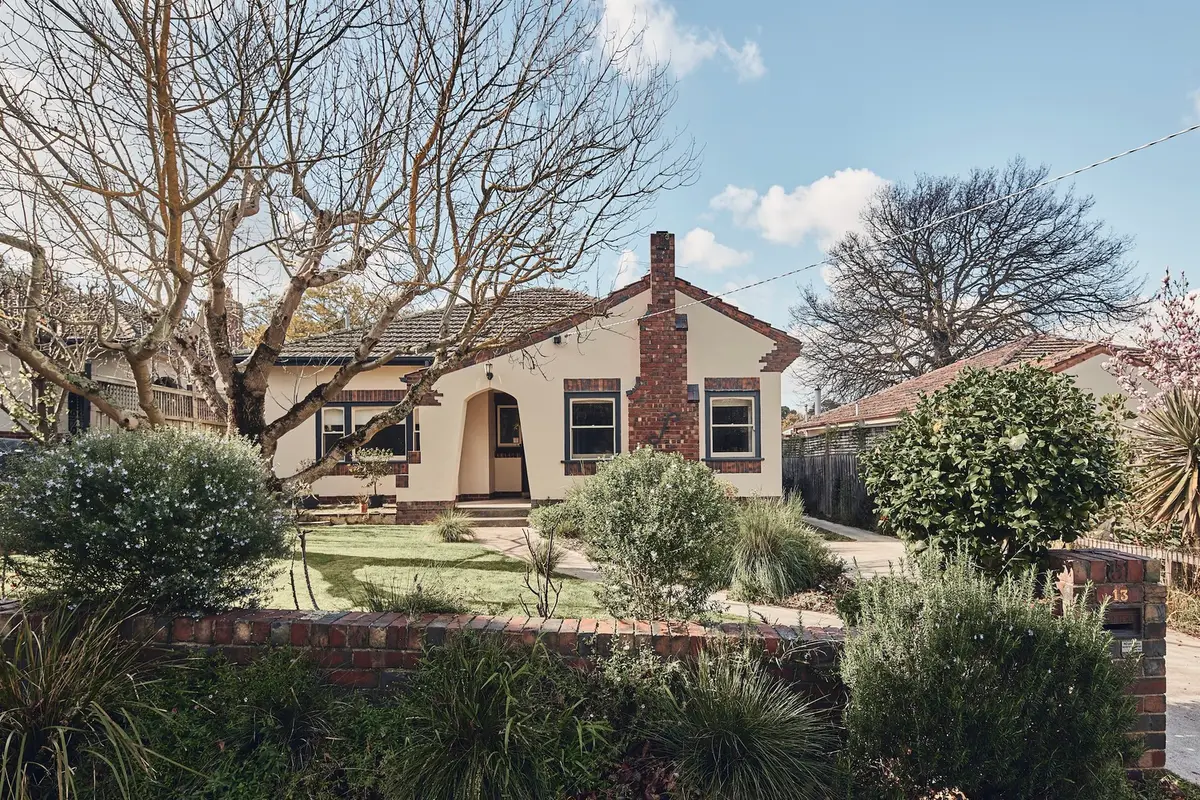
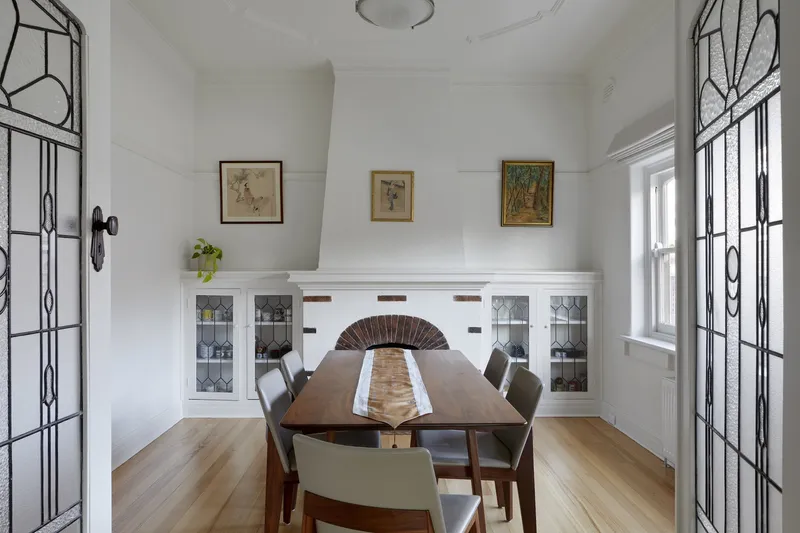
Nestled within the esteemed Hassett Estate in Canterbury—a heritage precinct known for its 1930s interwar architecture—Escher House by Inbetween Architecture is a masterfully layered residential renovation and addition. The project thoughtfully preserves the architectural language of the past while introducing a modern intervention that challenges traditional spatial expectations.
This 180-square-meter residence began as a modest interwar cottage. The renovation retains the integrity of the original structure by preserving two existing bedrooms and the formal living and dining areas located at the front of the home. The rear, however, transforms into a dynamic spatial sequence that includes a master bedroom suite, kitchen and meals area, bathroom, laundry, and a home office/study.
An Escher-Like Play of Levels and Light
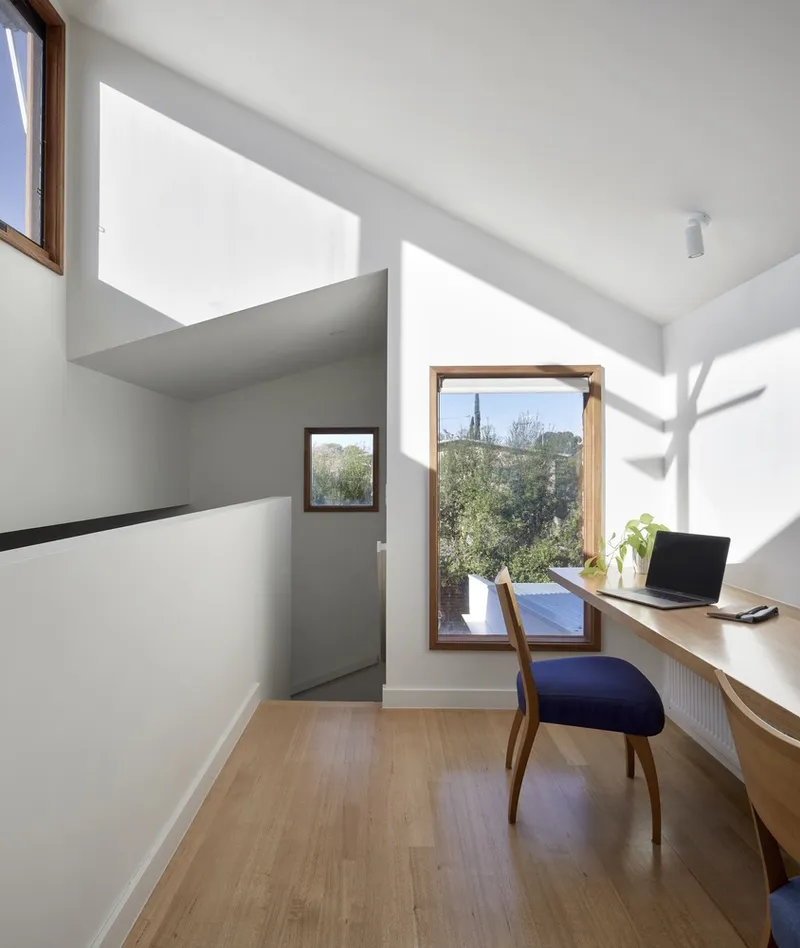
The renovation is as much a spatial experience as it is an architectural one. The design responds to the sloping terrain and heritage overlay constraints by cleverly organizing the extension over four staggered levels. These incremental shifts create a vertical rhythm that evokes the perceptual illusions of artist M.C. Escher, lending the home its name—Escher House.
This manipulation of volume and form introduces an engaging narrative of ascent and descent, transparency and enclosure. Each level interacts in playful tension with the others, offering unexpected visual connections, light-filled voids, and functional interstitial spaces.
Fluid Indoor-Outdoor Connection and Functional Depth
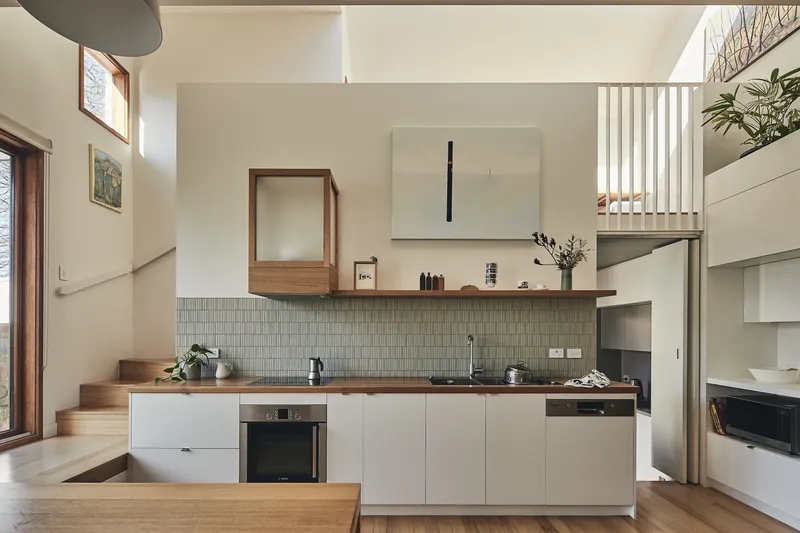
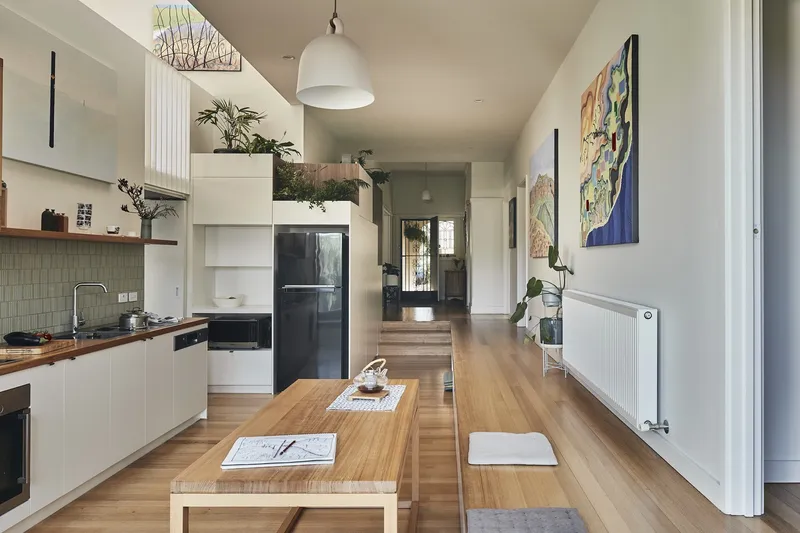
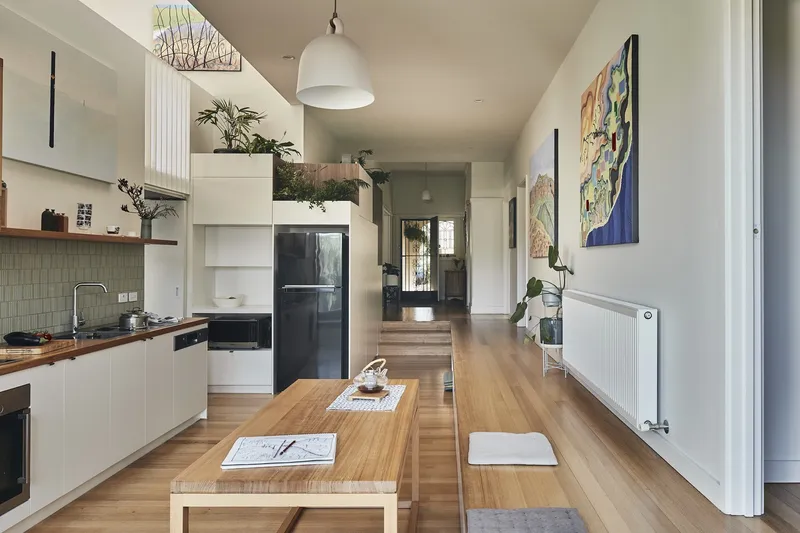
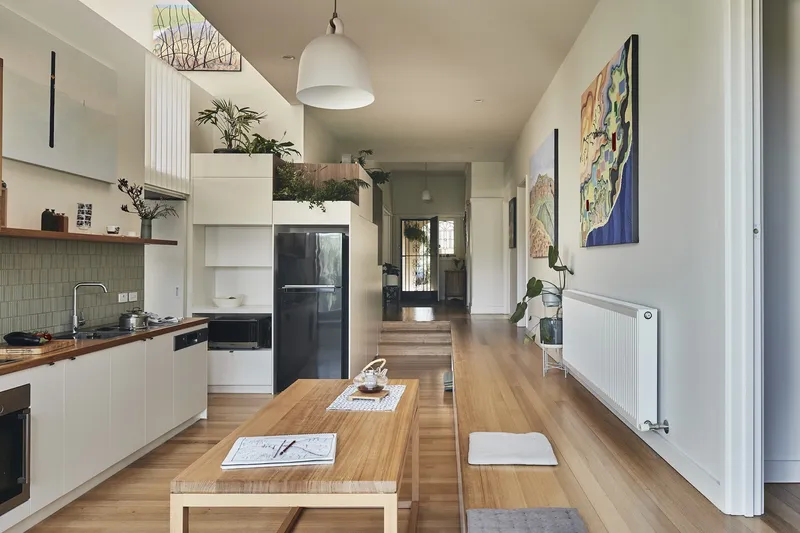
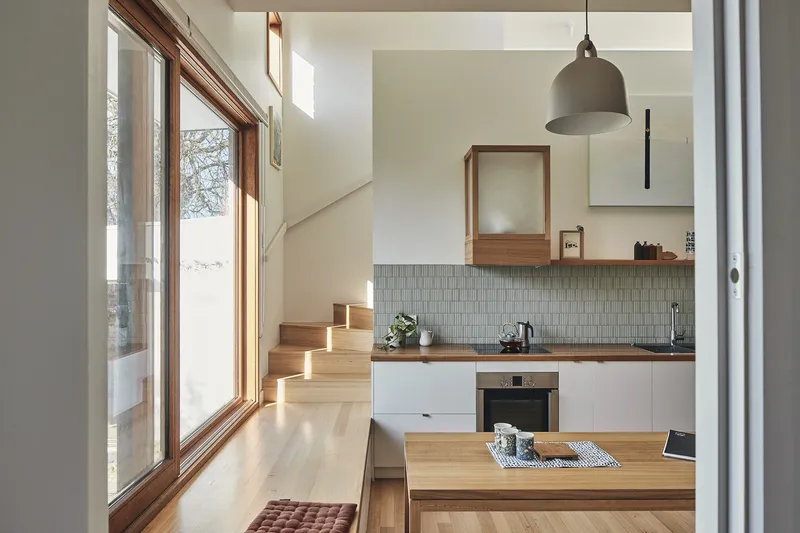
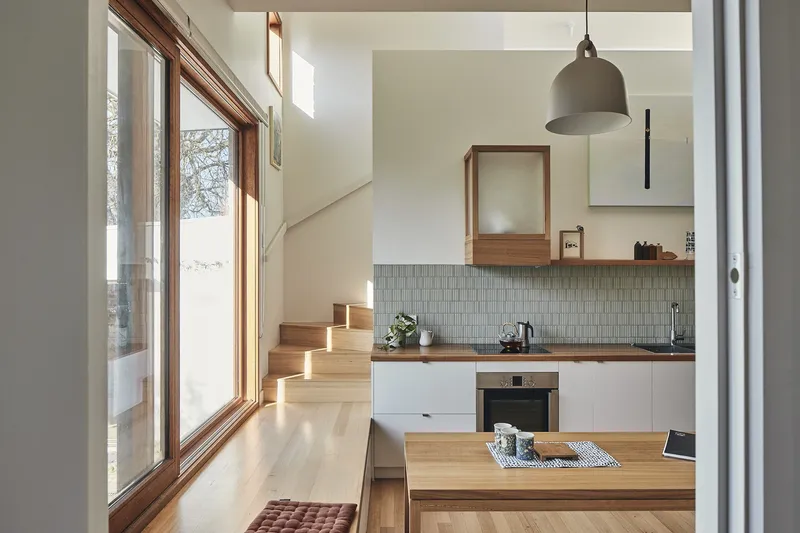
At the rear of the house, the kitchen floor is intentionally lowered, enhancing the spatial relationship with the backyard and creating a seamless transition between interior and exterior. The original floor level continues through the space to form integrated banquette seating and circulation around the meals area—an innovative blend of architecture and interior design.
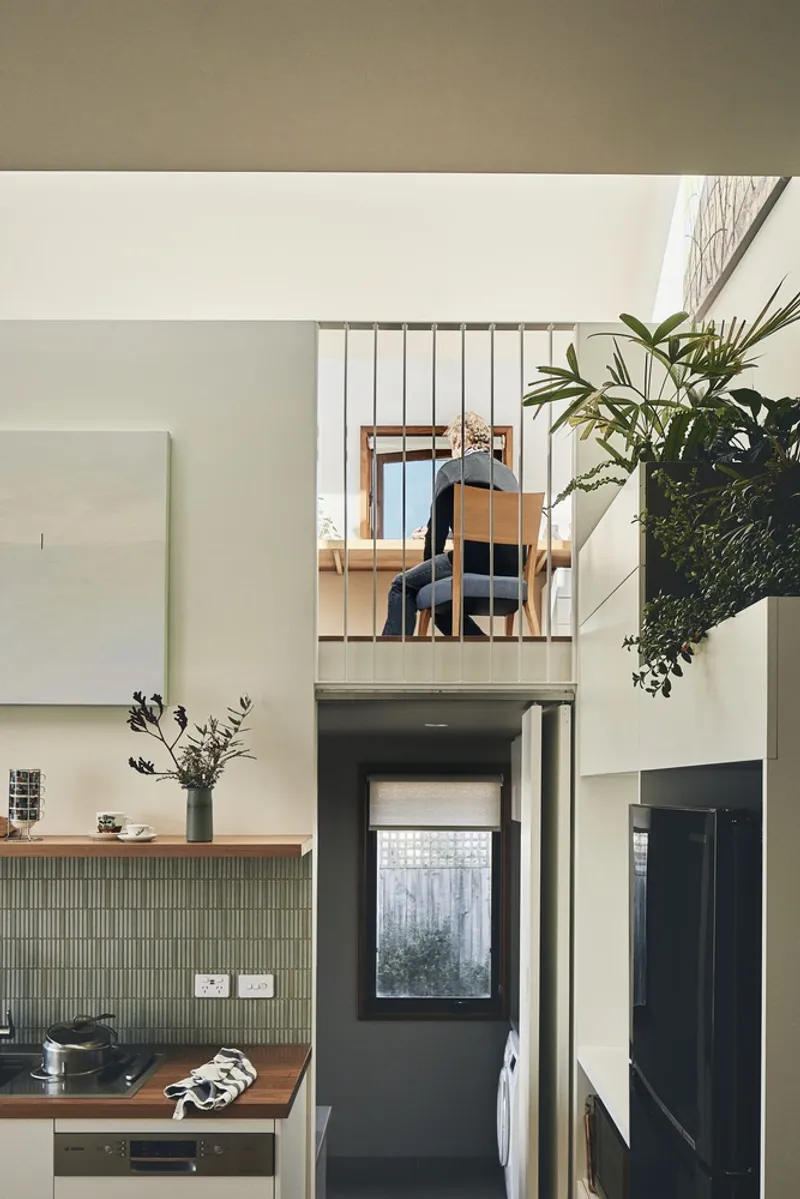
Above, a mezzanine study floats over the kitchen, accessed via a whimsical stair, providing a workspace that remains visually connected to family life below. Beneath it, tucked into the lowest level, is a laundry and butler’s kitchen, revealing the project’s careful attention to vertical efficiency and functional layering.
The interconnectivity of these spaces is enriched by practical features like a pass-through servery window, which links the main kitchen with the concealed butler’s pantry. The result is a home that feels deeply integrated, efficient, and alive with movement.
Heritage Contrast and Contemporary Expression
Materially, the extension adopts a palette of painted brickwork that mirrors the texture of the original cottage but is deployed in a boldly contemporary form. This strategic contrast allows the new architecture to dialogue with the old, rather than mimic it. The outcome is a compelling juxtaposition that highlights the evolution of the home while paying homage to its historical context.
Although the architectural languages diverge—one rooted in the English domestic vernacular and the other in a modernist idiom—the components rest in harmony, unified by scale, proportion, and a shared respect for the site.
A Modern Heritage Home for Contemporary Living
Escher House stands as a thoughtful example of heritage residential renovation that prioritizes both design innovation and contextual sensitivity. It’s a home that doesn’t just respond to its site—it transforms it, unlocking the latent potential of a sloped block through spatial ingenuity.


Popular Articles
Popular articles from the community

Faces of the Soviet Avant-Garde: Turning Moscow's Street Names into an Open-Air Museum
A network of sculptural installations across a Moscow residential district transforms forgotten architect names into spatial encounters with cultural memor

The Amber Palace Opera: A Geological Fiction Surfaces on Tallinn's Baltic Waterfront
Pierre Brillard reimagines a Baltic legend as a public landscape, opera house, and waterfront promenade rooted in Tallinn's coastal identity.

Cloaked Colonization: A Mobile Underwater Habitat That Moves Like a Fish
Micah Abaya's shortlisted EHC Pacific entry reimagines ocean settlement as a dispersed network of self-sustaining architectural organisms.

Opera on the Sea: Driftwood Logic Shapes a Timber Opera House on Estonia's Coast
Trevor Orgill's opera house translates the entangled drift of floating timber into a civic building where wood, water, and music converge.

Similar Reads
You might also enjoy these articles


Hodi-Mandai Geram
Project Function: Preservation and revitalization of the Intangible heritage and socio-spatial identity of the Hodi by Housing, Cultural Memory Center, Sacred Grove, landscape, local tourism economy


Olio Towers: A Mid-Rise for Performers That Fuses Housing, Rehearsal, and Stage
Located blocks from Houston's Theater District, this modular tower stacks living units around a central performance atrium.

Oasis: Modular Green Housing Carved into Dhaka's Urban Fabric
A shortlisted Plugin Housing entry reclaims unauthorized settlements in Dhaka with stepped concrete volumes, green roofs, and ventilation-driven design.

Black Hole: A Floating Megastructure for the Post-Physical Era
Emiliano Mazzarotto envisions a spherical, self-scaling arena where e-sports, digital hotels, and holographic stadiums replace traditional public space.

Explore Architectural Heritage Competitions
Discover active competitions in this discipline

Challenge to reimagine the Iron Throne

Photograph architecture without architects

Illustrate the lost glory of Angkor Wat - Render Challenge

Design challenge to reuse E-waste
Comments (0)
Please login or sign up to add comments
No comments yet. Be the first to comment!