
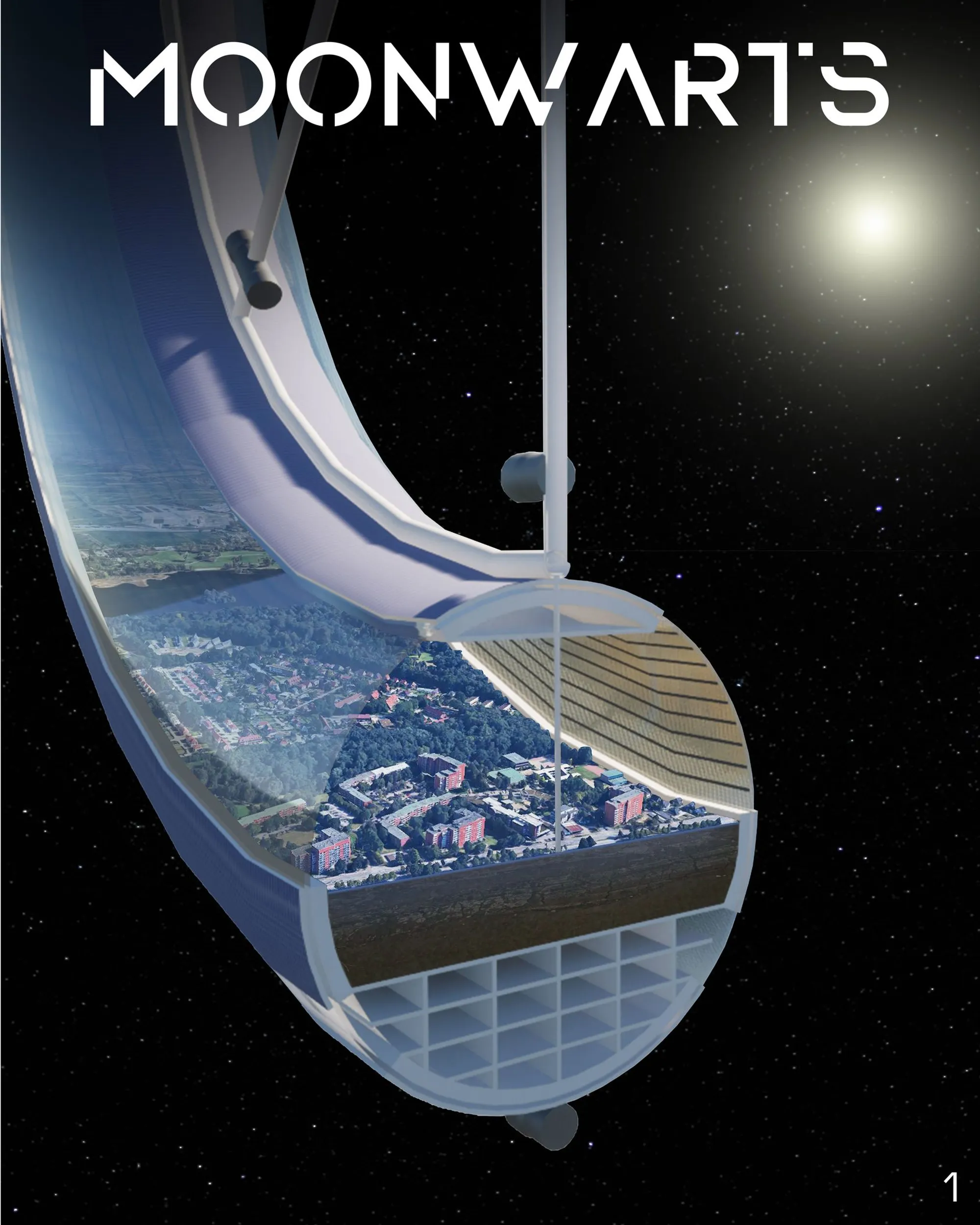
Establishing a Sustainable Life on the Moon: The MOONWARTS Project
MOONWARTS project’s sustainable lunar architecture for future human habitation and space exploration.


The MOONWARTS project, created by Juliane Schnock and Anna Schweim, presents a utopian vision for establishing human life on the moon. As a shortlisted entry in the Moon Base 2124 competition, MOONWARTS is an ambitious attempt to create a self-sufficient, sustainable moon base that offers earth-like living conditions for its inhabitants. This article delves into the architectural design and technological innovations of MOONWARTS, exploring how it addresses the challenges of living in outer space.
The Concept of MOONWARTS
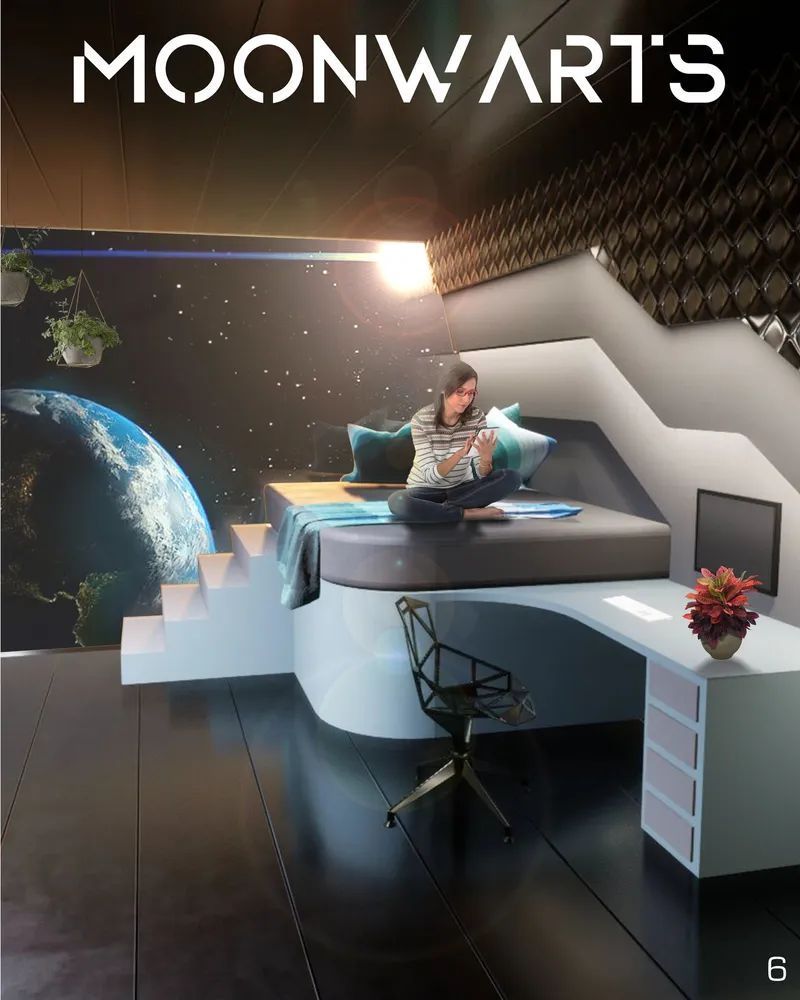
MOONWARTS is designed to be a comprehensive lunar habitat, consisting of a moon base and a rotating ring that serves as a spaceport and living area. The project aims to create a sustainable and long-term opportunity for living on the moon's surface. The primary goal is to simulate earth-like conditions, including gravity, which is essential for long-term human habitation.
Location and Structure
The facility is strategically located at the moon's South Pole. This location is ideal for several reasons: it has abundant ice reserves for water extraction and it receives continuous sunlight, making it perfect for solar energy capture. The structure comprises two main components:
Moon Base: This area houses the moon mining facility, laboratories, and a time capsule. It is connected to the rotating ring by flexible, jointed tubes.
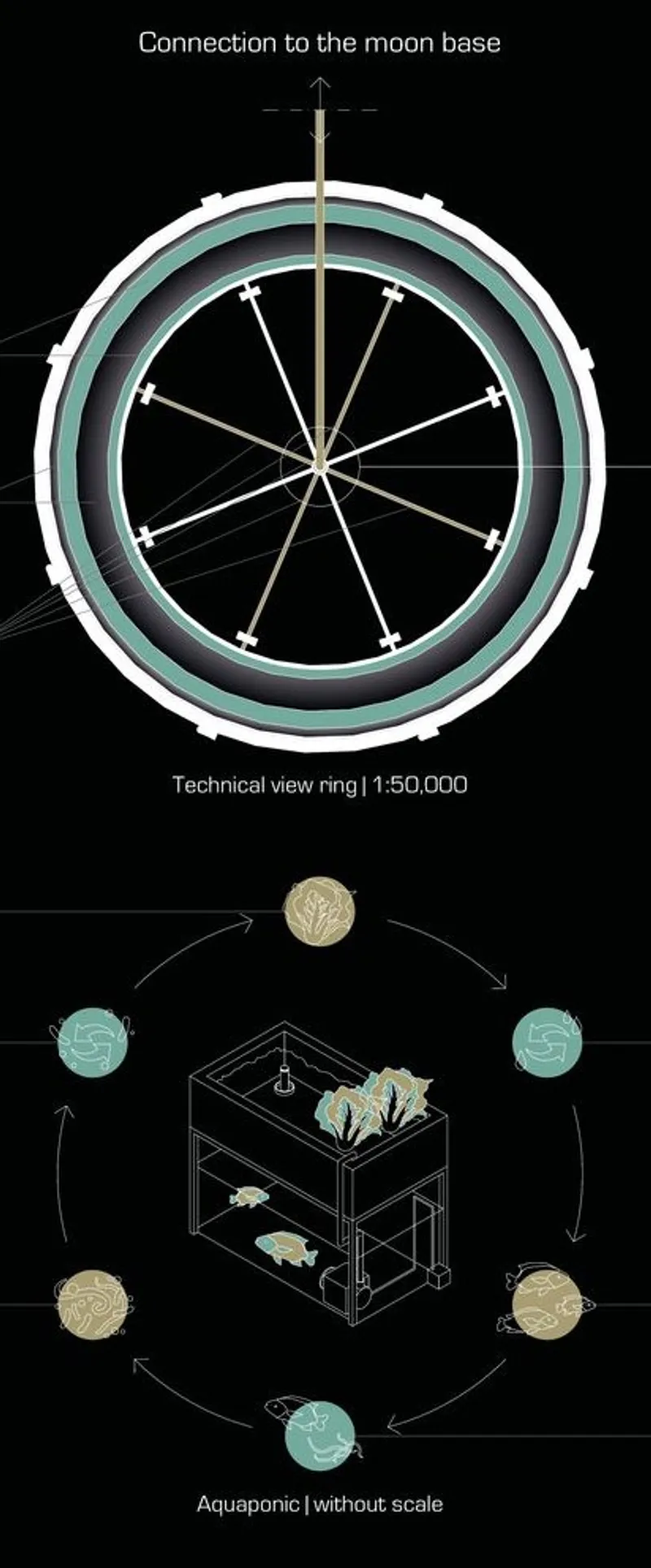
Rotating Ring: This outer ring, which rotates constantly, is where normal life takes place. It includes living areas, tourism facilities, vertical farming, aquaponic farms, a communication center, and a power station.
Simulating Gravity and Overcoming Challenges
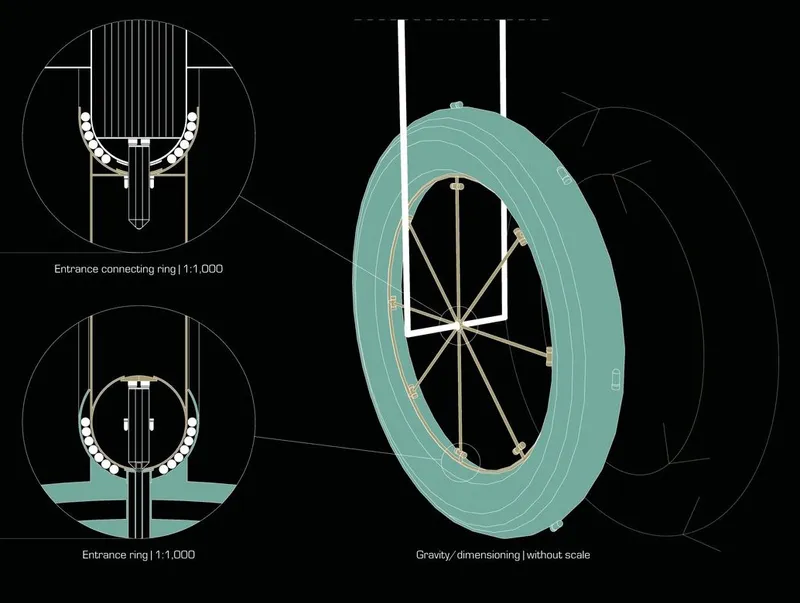
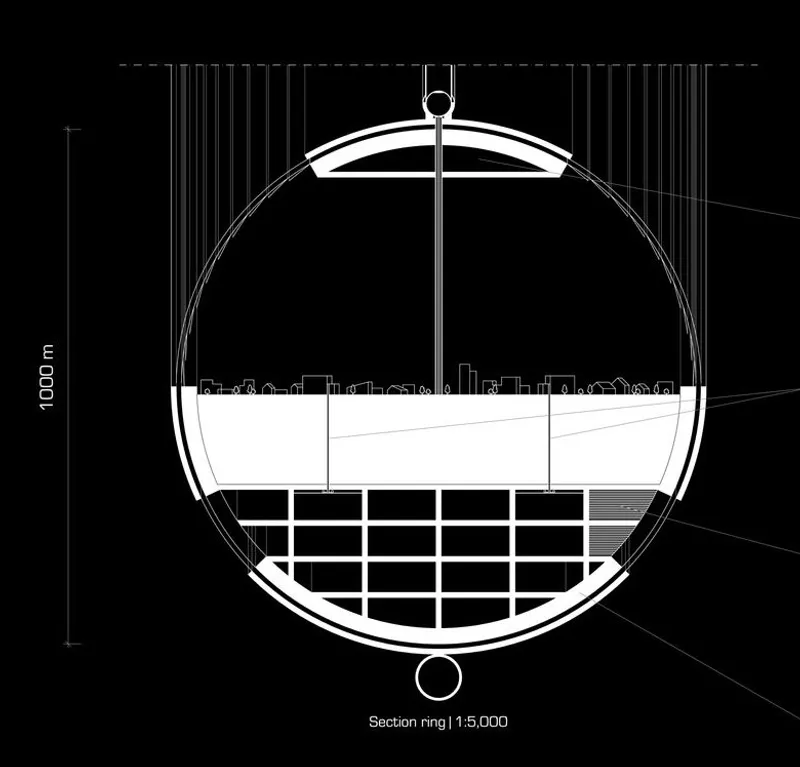
Creating artificial gravity is a critical aspect of the MOONWARTS project. This is achieved through the centrifugal force generated by the rotating ring. The ring has a diameter of approximately 7,156 meters, and it rotates at a speed of around 670 km/h. This setup ensures that the inhabitants experience gravity similar to that on Earth.
Several challenges had to be addressed in the design process:
Temperature Fluctuations: The moon experiences extreme temperature variations, ranging from 127°C to -173°C. The structure must be insulated and protected to maintain a stable internal environment.
Power Supply: The rotation of the ring is powered by electric rocket engines, which require minimal energy once set in motion. Solar panels on the outer shell of the ring harness solar energy to power the entire facility.
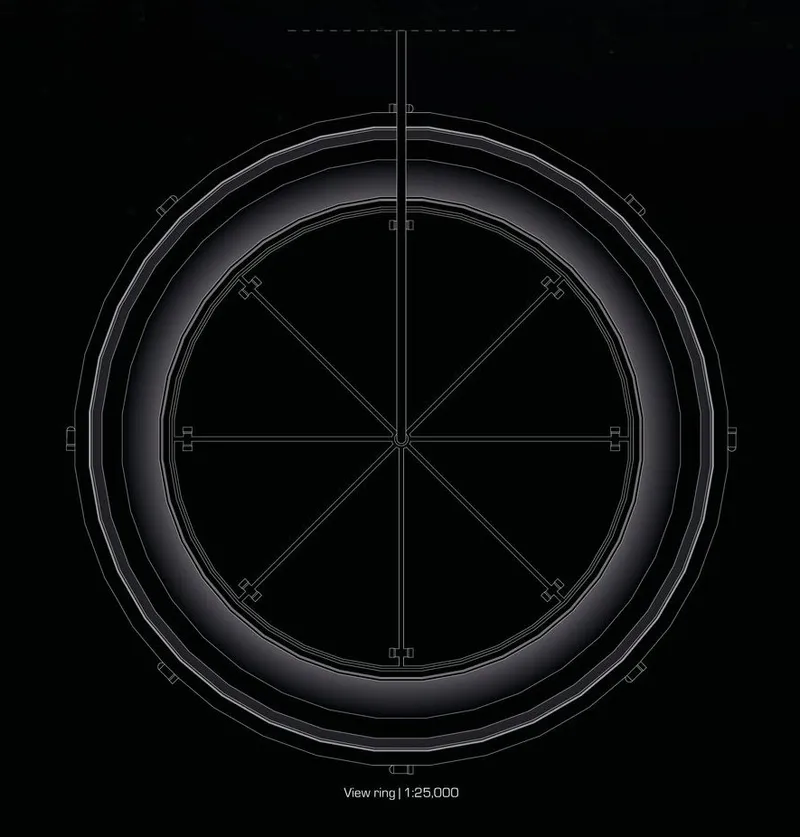
Access and Transport: A smaller inner ring, which can be accelerated and decelerated as needed, allows for easy access to the main rotating ring. The facility also includes a public transport system with elevators distributed evenly throughout the ring.
Sustainable Living Solutions
The MOONWARTS project incorporates several innovative solutions to ensure a self-sufficient and sustainable living environment:
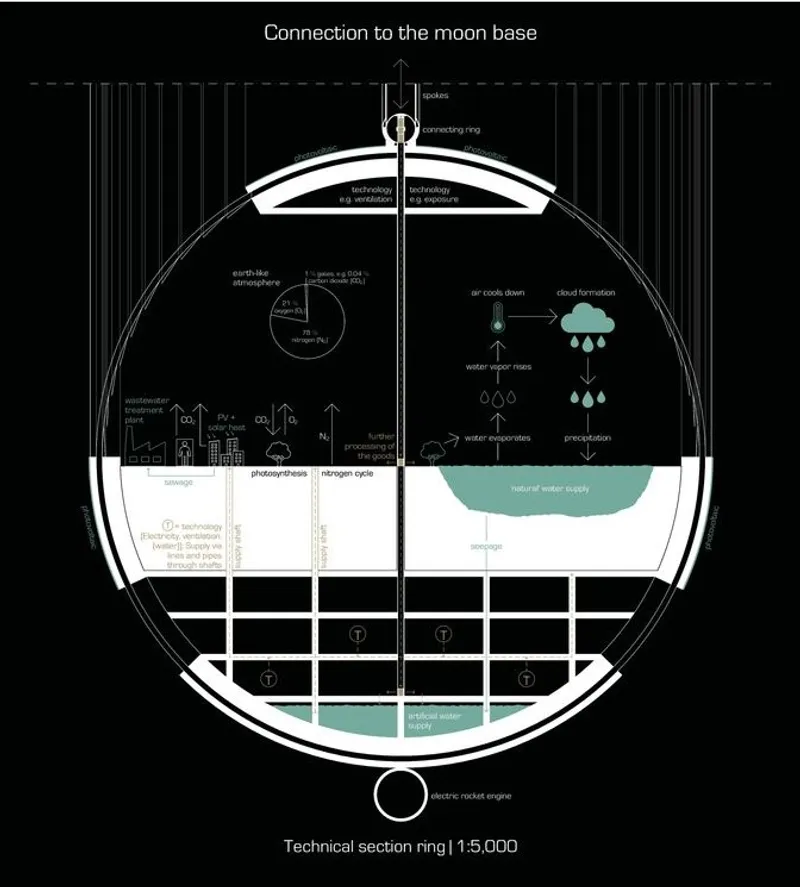
Water Supply: Water is extracted from moon ice, particularly at the South Pole, and transported to the ring. A closed water cycle is established for long-term sustainability.
Food Production: Agricultural land within the ring supports the cultivation of vegetables, cereals, and fruit trees. Vertical farming and aquaponic facilities contribute to a closed-cycle food system, providing fresh produce and fish.
Air Supply: The atmosphere within the ring is created artificially with nitrogen and oxygen, forming an almost closed cycle. Plants are used for CO2 binding, and CO2 filters are utilized initially until the system stabilizes.
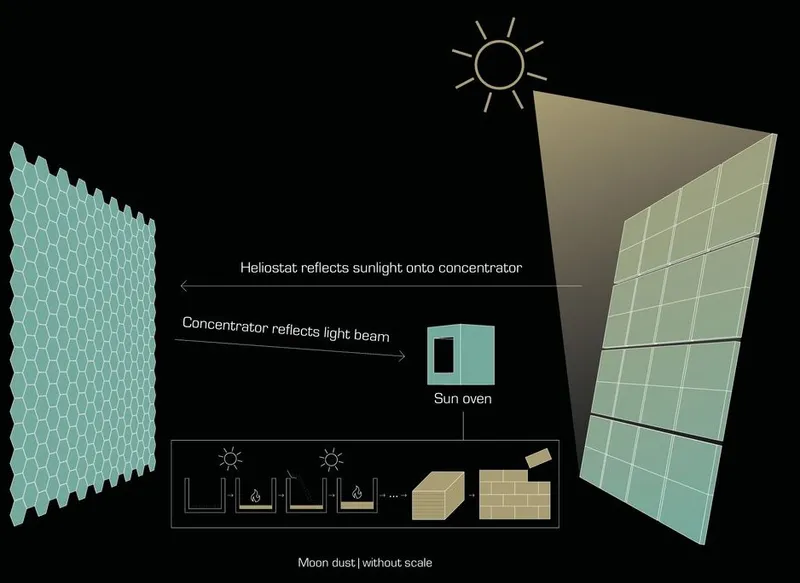
Waste Management: Moon dust, a readily available resource, is recycled and used in construction. It is processed using a heliostat and concentrator system, which directs sunlight to burn the dust into solid components, similar to a 3D printing process.
Technological Innovations
The MOONWARTS project leverages advanced technologies to create a habitable environment on the moon:
Photovoltaic Systems: Solar panels on the ring's surface capture solar energy to power the facility. The South Pole location ensures nearly constant sunlight exposure.
Day/Night Cycle Simulation: Shading elements on the windows simulate a day/night cycle, helping inhabitants maintain a natural circadian rhythm despite the constant sunlight.
Insulated Construction: The ring's outer shell comprises three layers: an inner layer of 30 meters, an insulating vacuum layer of 10 meters, and an outer layer of 10 meters. This construction provides thermal insulation and protection against the harsh lunar environment.
Emergency Accommodations: The ring includes both regular and emergency shelters, ensuring safety in the event of meteorite impacts or other emergencies.
Future Implications
The MOONWARTS project represents a significant step forward in the quest to establish human life beyond Earth. By addressing the fundamental challenges of living in outer space, such as gravity, temperature regulation, and sustainability, MOONWARTS offers a viable blueprint for future moon colonization. Its innovative architectural design and technological solutions pave the way for long-term human habitation on the moon, potentially serving as a base for further space exploration.
The MOONWARTS project exemplifies a futuristic and sustainable approach to lunar living. By creating a self-sufficient habitat with earth-like conditions, it not only supports the extraction of rare elements and space travel but also provides a long-term living opportunity for its inhabitants. As humanity continues to explore the possibilities of space colonization, projects like MOONWARTS will play a crucial role in making these aspirations a reality.



Popular Articles
Popular articles from the community

EW PARK: Sustainable Architecture Reimagines the Future of Urban Parking
EW PARK reimagines city parking as a modular wooden tower combining automation, solar energy, electric mobility, and adaptable urban design.

Co-life: Sustainable Architecture for Age-Friendly Community Living
Co-life reimagines sustainable architecture for seniors through courtyards, rammed earth, shared gardens, and spaces designed for belonging.

Hill & Cross Opera: Sculptural Opera House Architecture Shaped by Tallinn’s Landscape and Identity
Hill & Cross Opera reimagines opera house architecture in Tallinn through its sculptural hill, civic plaza, glass wave and a luminous cross.

The Earth Pod: 3D Printed Homes for Resilient Refugee Communities
The Earth Pod reimagines refugee housing through 3D printed homes made from clay, combining resilience, self-sufficiency, and rapid shelter.
Similar Reads
You might also enjoy these articles

Day and Night Park: A Time-Based Urban Newsstand in Beijing
A temporary urban newsstand in Beijing blending travel, light, and reading through poetic colors, compact form, and community-focused design.

Modernist Patio Renovation in El Masnou, Barcelona by Oliver Segura Arquitectura + Cebrià Arquitectura
Modernist patio renovation blending tradition and innovation with a movable pool, leveled floors, and Catalan materials in El Masnou.

Alto Residencial Coop: Cooperative Housing Development in Santiago de Compostela by Carbajo Barrios Arquitectos
A linear cooperative housing complex blending white volumes and perforated metal façades, enhancing community living, natural light, privacy, and urban integration.

Vil Genis School by BPA ARCHITECTURE – Massy, France
Vil Genis School in Massy, France, features sustainable design, south-facing classrooms, community integration, accessible spaces, and modern educational architecture.

Comments (0)
Please login or sign up to add comments
No comments yet. Be the first to comment!