

Estudiantes House by BRUTAL: A Sustainable Student Housing Project in Ensenada, Mexico
Sustainable student housing in Ensenada by BRUTAL, designed with passive cooling, natural materials, and community-focused, eco-friendly architecture.


A Purpose-Built Home for Future Generations
Casa Estudiantes, designed by Mexican architecture studio BRUTAL, is a thoughtfully crafted residential building designed to support the educational journey of low-income students. Located in Rancho Santa Martha, this three-story student housing project provides a safe, sustainable, and inspiring environment for university students to live, learn, and grow.
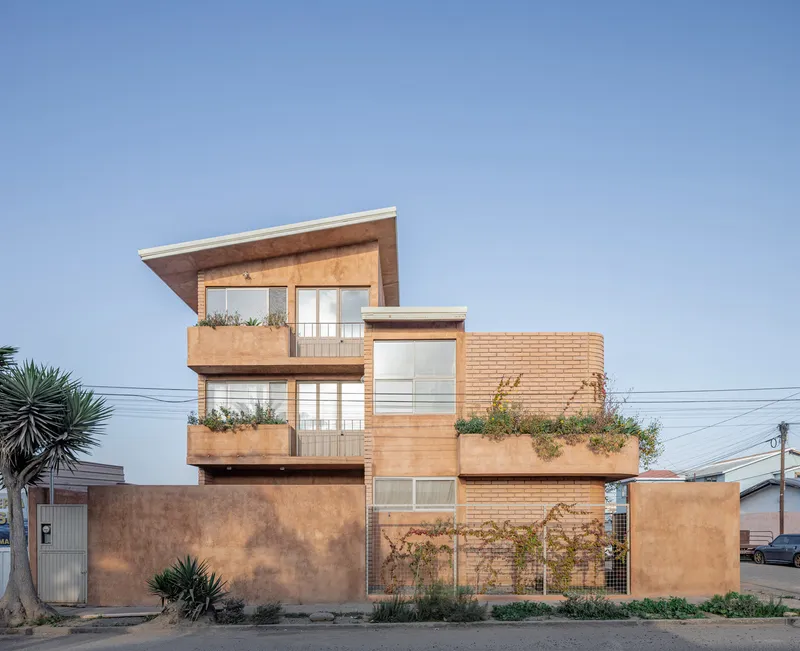
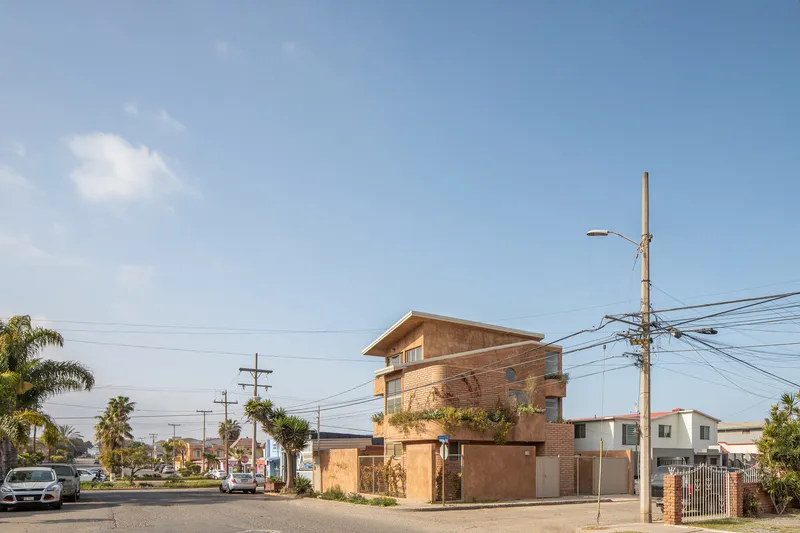
Built with purpose and heart, Casa Estudiantes supports the Rancho Santa Martha initiative, a social project offering educational opportunities to underprivileged youth. This residential facility ensures that students can comfortably continue their university studies while living in a space tailored to their academic and personal needs.
Program and Layout
The architectural program includes:
- Separate dormitories for men and women (each with a bathroom)
- Common living and dining areas
- A fully equipped kitchen
- Caretaker’s room with private bathroom
- Laundry facilities
- Parking space
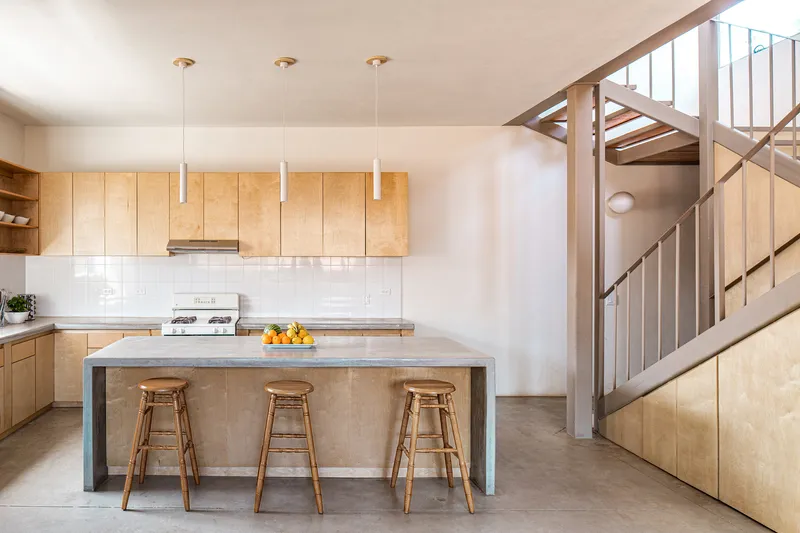
Each dormitory houses four bunk beds, and the caretaker’s room features a queen-sized bed, with a total capacity of 18 residents.
Despite its compact footprint, the design avoids overcrowding by incorporating high ceilings, terraces, and private garden spaces to ensure optimal ventilation and natural lighting.
Smart Circulation & Privacy
A central design feature is the split staircase system—a thoughtful solution to promote safety and separation between male and female residents. Two stairs run in opposite directions within the same visual field:
- The women’s staircase is located directly in front of the caretaker's room.
- The men’s staircase leads first to a communal study area before reaching the dormitory, enhancing social interaction and oversight.
This strategy balances openness with privacy and security—essential for a youth-focused living space.

Sustainable Design & Materials
The construction is rooted in economic and ecological simplicity, thanks to community donations and resource-efficient planning. Key sustainability features include:
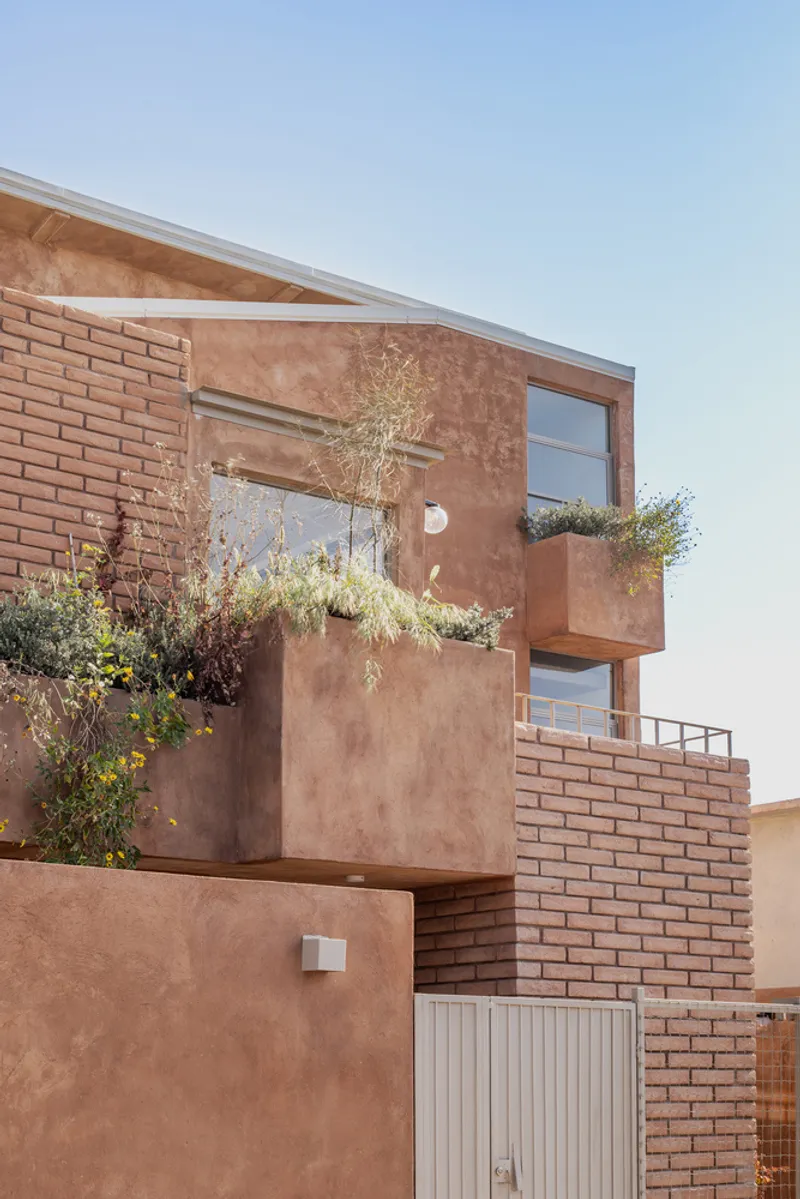
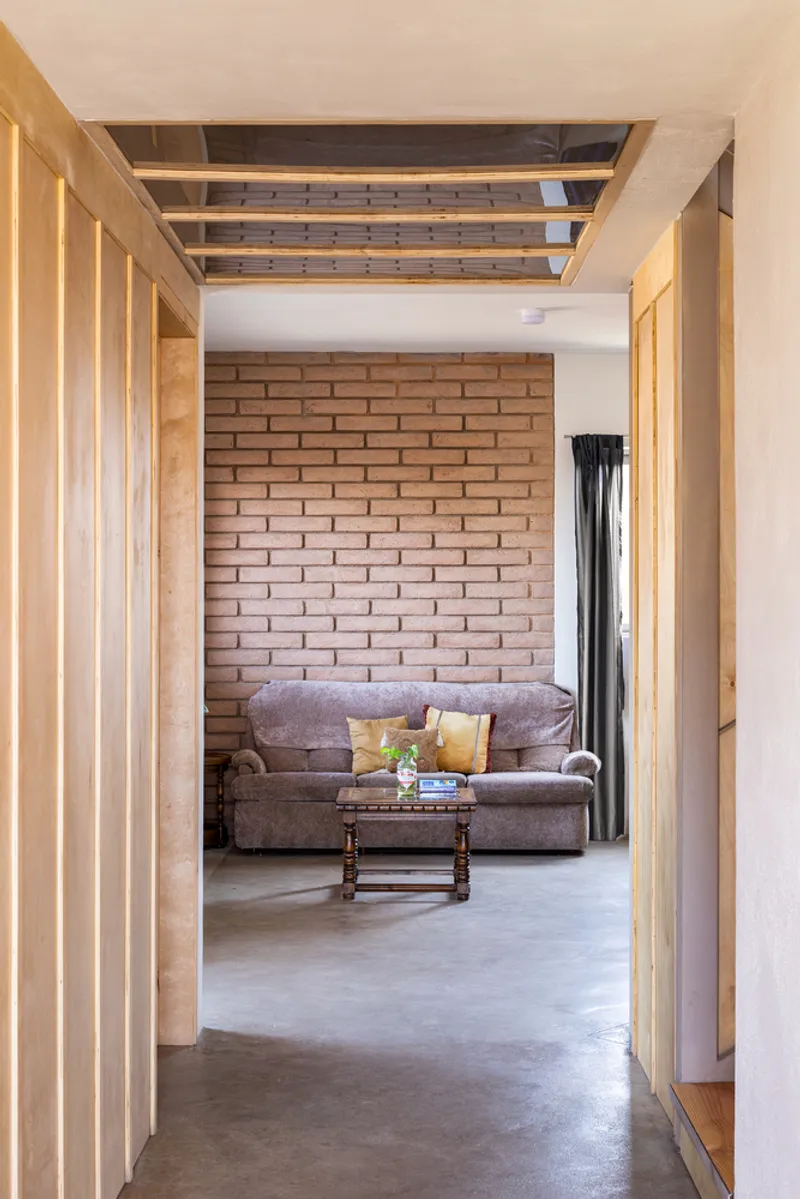
- Walls: Made of Adblock and standard masonry, finished in rough, low-maintenance plaster.
- Floors: Polished concrete indoors; soil and gravel outdoors to support natural drainage and cooling.
- Vegetation: Native and climate-adapted plants minimize water use and attract local wildlife.
- Facades: Draped in climbing plants and agaves to reduce solar impact and provide seasonal beauty.
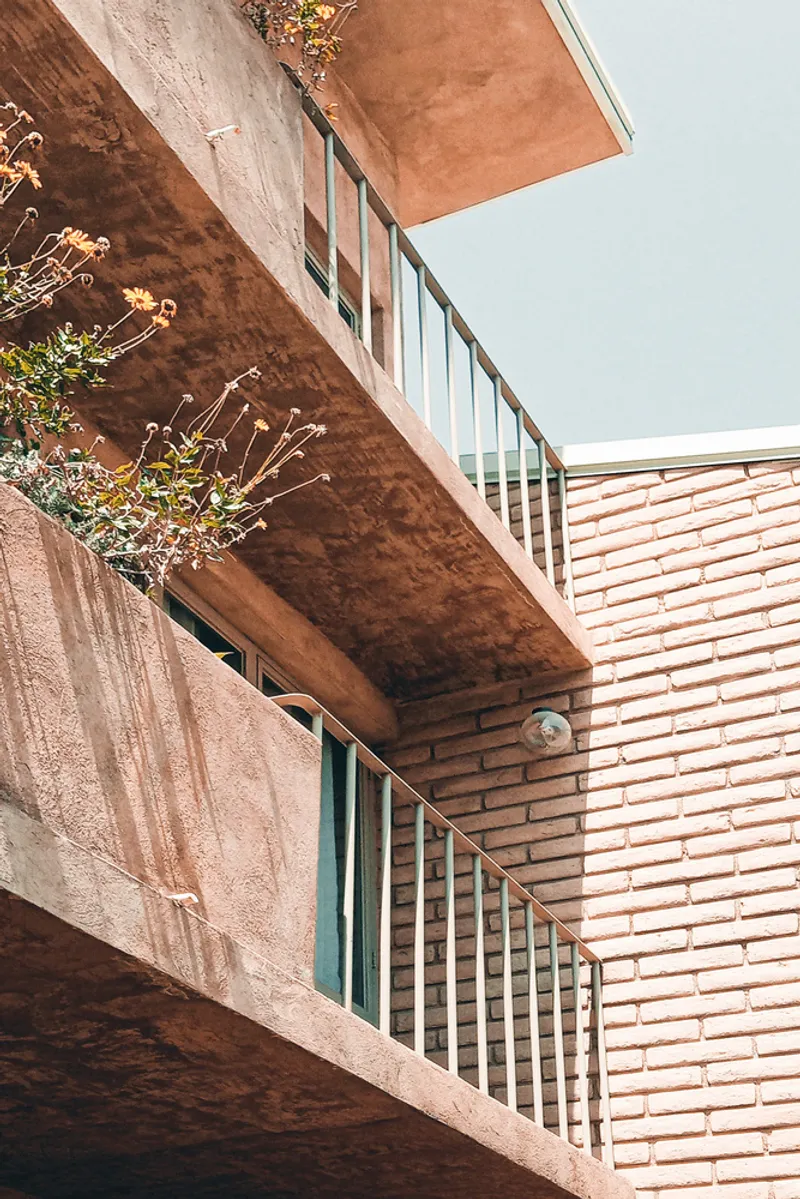
The building uses passive ventilation techniques with staircases acting as airflow channels, maintaining indoor comfort with minimal mechanical intervention.
Urban Integration and Impact
As the only three-story structure in the surrounding area, Casa Estudiantes is sensitively designed to blend into its neighborhood. Key elements include:
- Setback placement from the main avenue to minimize visual dominance.
- Mesh fencing with vine cover on public-facing areas to preserve pedestrian scale.
- Strategic solid fencing only where privacy is essential.
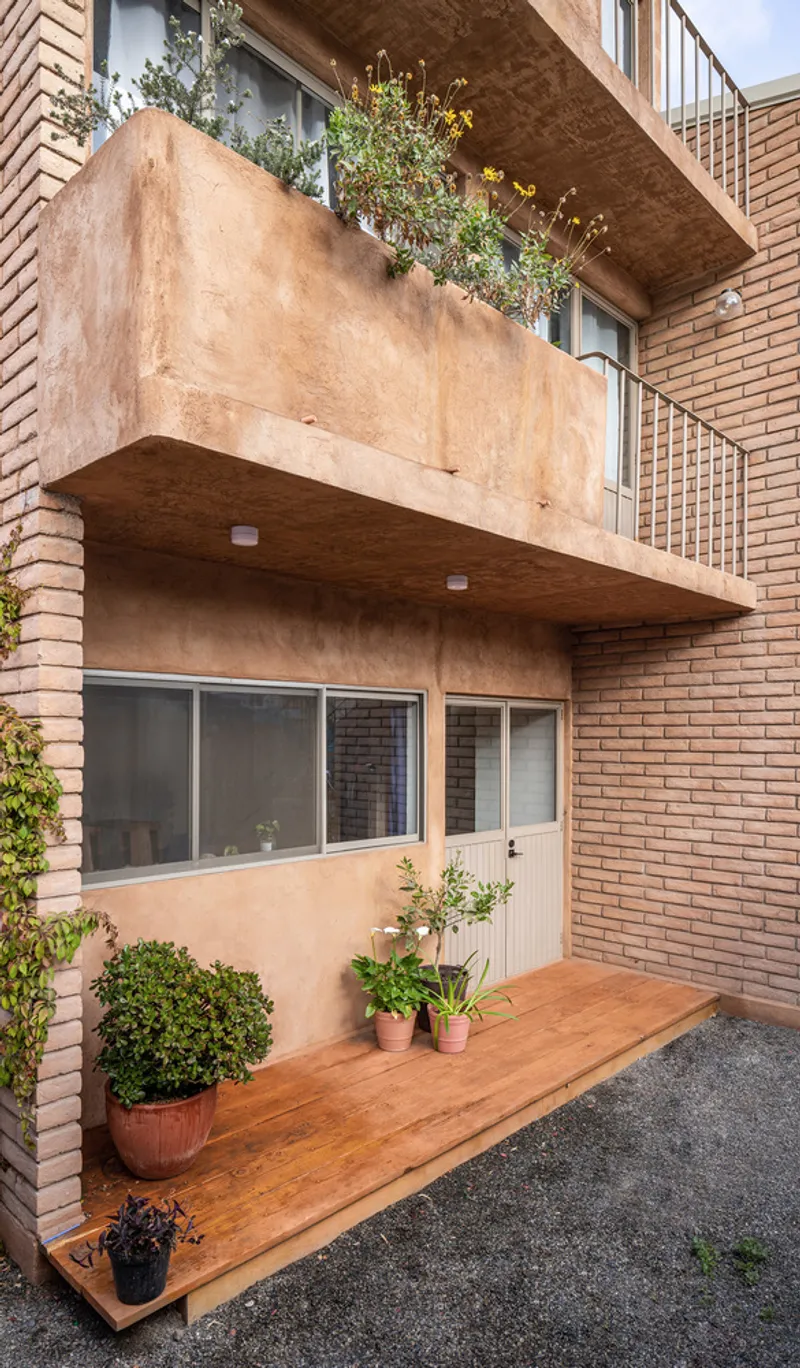
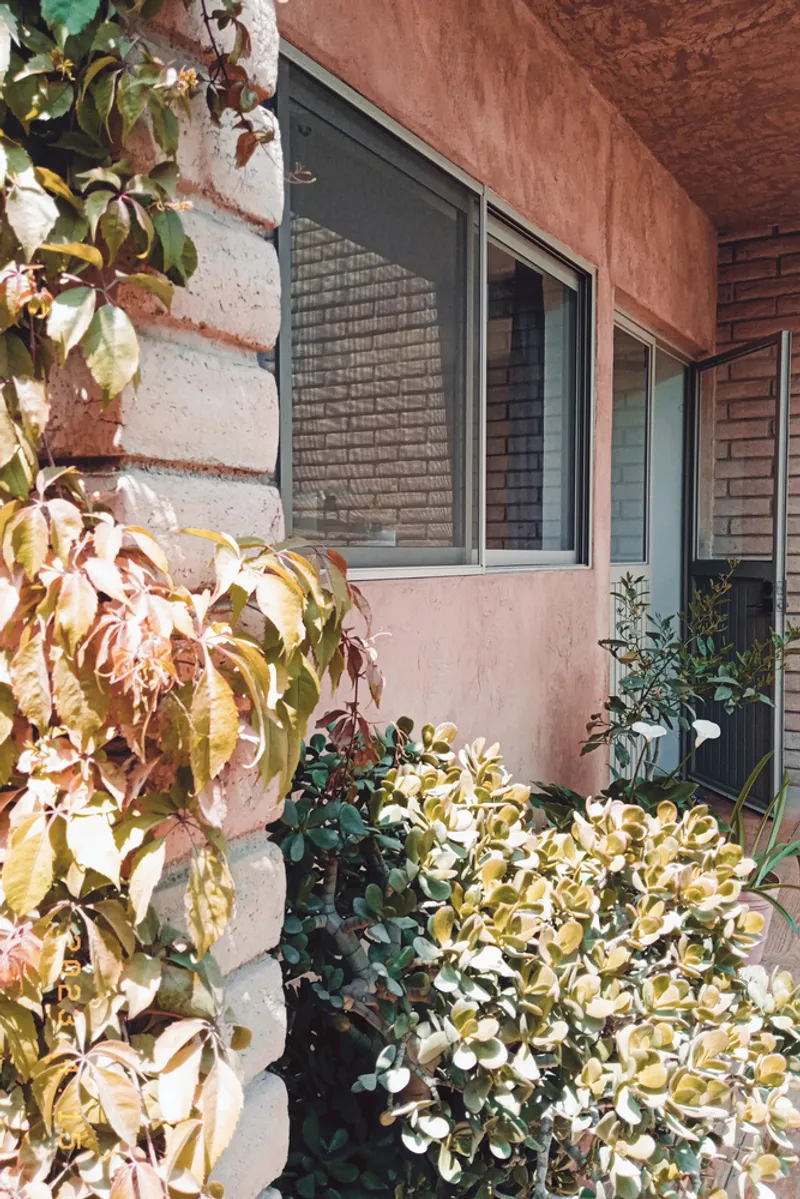
The project’s staggered volume, natural color palette, and vegetation-covered facades create a harmonious blend with the landscape, while also symbolizing growth, resilience, and rootedness.
Gardens as Architecture
For BRUTAL, gardens aren’t just decorative—they are structural elements of the design. The facades and terraces are interwoven with living greenery, offering evolving colors through the seasons. The vegetation also helps:
- Shade interior walls
- Filter air and sunlight
- Create dynamic views from every room
Gardens here are not accessories—they are part of the architecture’s soul.
All the photographs are works of Francisco Palacio


Popular Articles
Popular articles from the community


LT2A and OPEN Architectes Thread a Brick and Glass High School Through a Wooded Belgian Campus
In Braine-l'Alleud, a 3,000 m² wing for Collège Cardinal Mercier pairs pale brick with a glazed colonnade, deferring to a small chapel and a dense wood.

Jaramillo Van Sluys Arquitectura and Urbanismo Turn a Demolished Registry Lot in Quito into an Orchard Plaza
In Quito's Centro Histórico, a 2,800 m² plaza exposes the San Agustín convent wall and redraws its lost Augustinian orchard in volcanic stone.

U.GA Architects Wraps an Oval Rooftop Pool in Curved Board-Formed Concrete on Busan's Jeollidan-gil
In Busan's Jeonpo-dong, a 454 m² mixed-use block stacks a neighborhood facility, guest rooms and an oval rooftop pool inside spiraling concrete walls.

Juan García Correa, John González and Claudia Rueda Sink a Circular Amphitheater into a Manizales Engineering Building
On the La Nubia campus in Manizales, Colombia, the S1 Building folds labs and offices into a hillside of ramped lawns that double as a campus route.

Similar Reads
You might also enjoy these articles


Hodi-Mandai Geram
Project Function: Preservation and revitalization of the Intangible heritage and socio-spatial identity of the Hodi by Housing, Cultural Memory Center, Sacred Grove, landscape, local tourism economy


Olio Towers: A Mid-Rise for Performers That Fuses Housing, Rehearsal, and Stage
Located blocks from Houston's Theater District, this modular tower stacks living units around a central performance atrium.

Oasis: Modular Green Housing Carved into Dhaka's Urban Fabric
A shortlisted Plugin Housing entry reclaims unauthorized settlements in Dhaka with stepped concrete volumes, green roofs, and ventilation-driven design.

Black Hole: A Floating Megastructure for the Post-Physical Era
Emiliano Mazzarotto envisions a spherical, self-scaling arena where e-sports, digital hotels, and holographic stadiums replace traditional public space.

Explore Housing Competitions
Discover active competitions in this discipline

Challenge to reimagine the Iron Throne

Photograph architecture without architects

Illustrate the lost glory of Angkor Wat - Render Challenge

Design challenge to reuse E-waste
Comments (0)
Please login or sign up to add comments
No comments yet. Be the first to comment!